
Which SUV Is Best for Camping? The Short Answer
There is no single "best camping SUV" — the right answer depends on whether you value a flat sleeping floor, off-road clearance, family seating, or fuel economy. But the selection itself is simple once you rank vehicles by the published specs that actually decide comfort in the field: maximum flat cargo length, usable width between the wheel wells, all-wheel drive and ground clearance, accessible power outlets, and long-term reliability.
Sorted by what most campers prioritize, the strongest choices break down by category:
- Best for a true flat sleeping floor: body-on-frame SUVs like the Toyota 4Runner, Jeep Wrangler (4-door), and Lexus GX, whose seats fold into a long, level load floor.
- Best all-around midsize value: the Subaru Outback, Toyota RAV4, and Honda CR-V — efficient, reliable, and big enough for one or two sleepers.
- Best for families: three-row SUVs like the Kia Telluride and Toyota Highlander, which fold down to roughly 84–87 cubic feet while still seating the whole crew on travel days.
If you take only one rule from this guide, make it this: the headline cubic-foot number sells the brochure, but the flat load-floor length and the width between the rear wheel wells are what decide whether you actually sleep comfortably. The rest of this guide explains the criteria that matter, then walks through the top picks in each category and why the published numbers put them there.
The Specs That Actually Matter for Camping
Before naming models, it is worth being precise about why a given SUV earns its place. Marketing leans on a single cargo-volume figure, but campers care about a short list of concrete, published specifications. Rank any vehicle against these and the shortlist sorts itself out.
- Flat load-floor length (seats folded). This is the make-or-break number for sleeping. A six-foot adult needs roughly six feet of flat floor to stretch out front-to-back. Body-on-frame SUVs and longer crossovers clear this; many compact ones fall an inch or two short and need the front seats slid forward.
- Width between the rear wheel wells. The cargo bay is widest across the open floor and narrows between the wheel housings. That narrow width — not the wide-open figure — is what limits a wide mattress or a sheet of plywood.
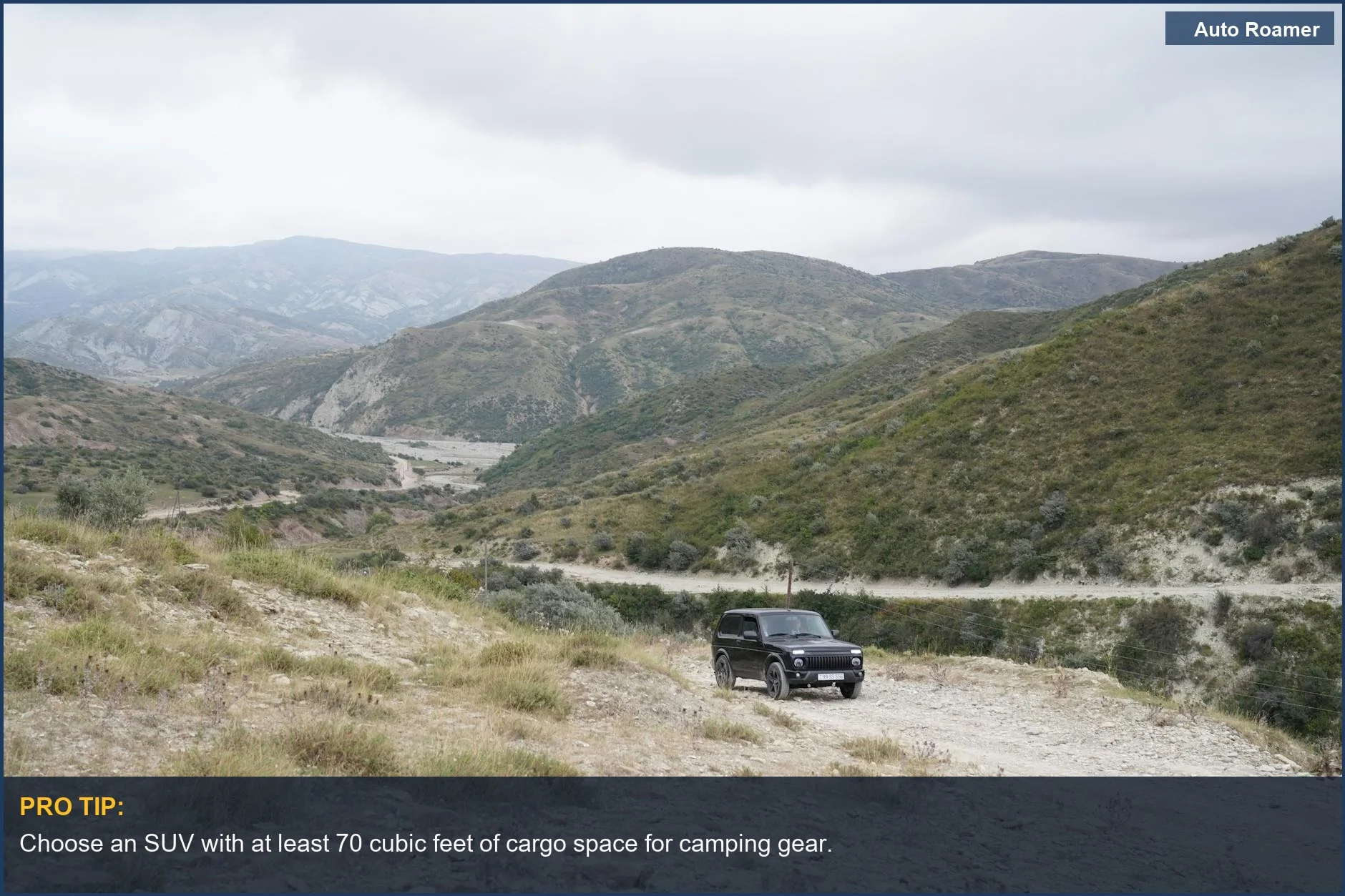
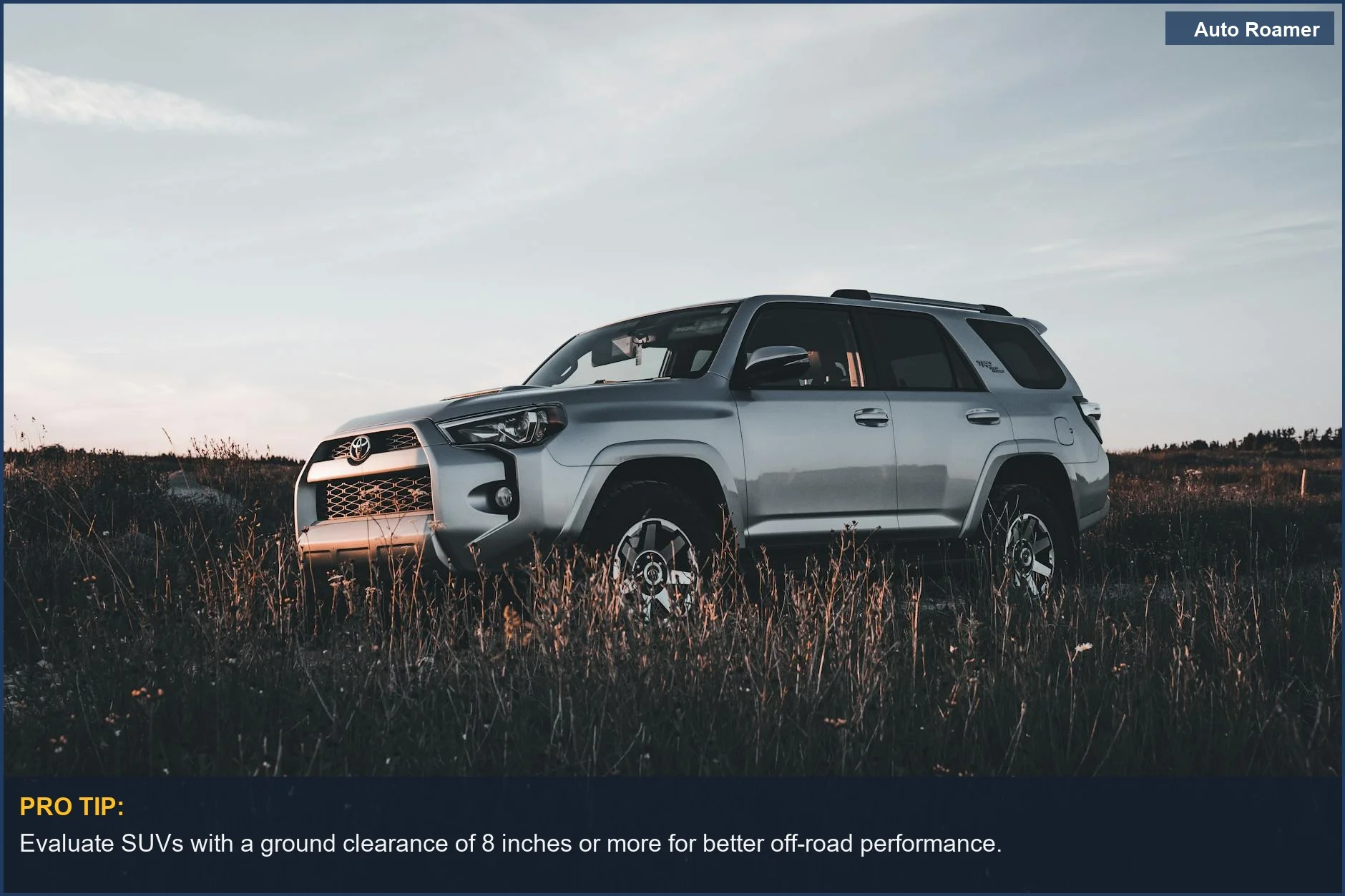
- All-wheel or four-wheel drive and ground clearance. Reaching dispersed campsites on rough forest roads rewards AWD/4WD and clearance. Eight inches is comfortable for most maintained dirt roads; nine-plus inches, as on a 4Runner, opens up rougher trails.
- Accessible power. A 12-volt outlet reachable from the cargo bay, several USB ports, and (on some trims) a 110-volt household outlet let you run a fridge, fan, lights, and devices.
- Reliability and fuel economy. A camping vehicle earns its keep over years and long miles. Brands with strong reliability records and efficient drivetrains lower the cost of every trip.
Volume tells you how much fits; the flat length and wheel-well width tell you whether you fit. Always confirm those two linear measurements with a tape measure in the actual vehicle before you buy a mattress or build a platform.
One more honest caveat: makers publish cargo volumes far more often than they publish exact inside-the-tape linear cargo dimensions. So the reliable method is to use the published volume to build your shortlist, then verify the critical flat length and wheel-well width yourself in the vehicles you are seriously considering.
It also helps to weigh these criteria against how you actually camp. A weekend warrior who sleeps inside the vehicle on maintained gravel roads should weigh flat-floor length and wheel-well width most heavily, and can treat extreme ground clearance as a nice-to-have. Someone chasing remote dispersed sites down rutted forest service roads should flip that order, prioritizing clearance, all-wheel or four-wheel drive, and approach angles, then accepting whatever flat floor the capable platform happens to offer. And a family that mostly uses established campgrounds should weigh seating, total volume, and accessible power above raw trail capability. There is no universally correct ranking — only the ranking that matches your trips, which is why the same five specs produce a different "best" SUV for different campers.
Best for a True Flat Floor: Body-on-Frame SUVs
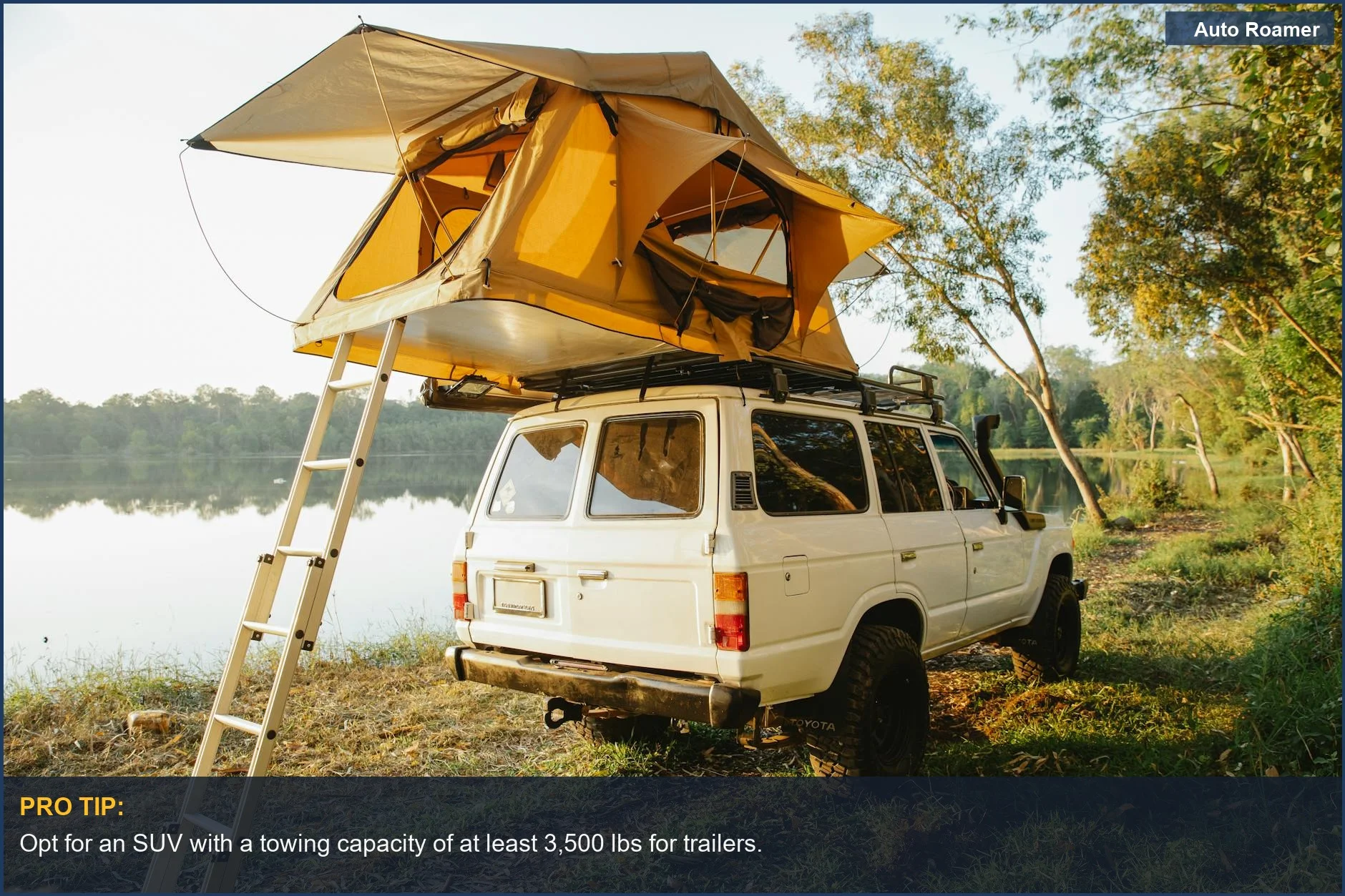
If sleeping in the vehicle is your priority, body-on-frame SUVs are the gold standard. Their boxier interiors and seats that fold into a long, level surface make for the flattest, longest sleeping platforms in the SUV world — and their rugged underpinnings shrug off the washboard roads that lead to the best dispersed sites.
The standouts in this category, by their published specs:
- Toyota 4Runner. Toyota publishes roughly 9 inches of ground clearance and around 89.7 cubic feet of cargo with the rear seats folded. The boxy cargo area and near-flat floor make it one of the most sleepable SUVs on the market, and its body-on-frame build is built for genuine trail use. The tradeoff Toyota's own figures make plain is fuel economy — the 4Runner trades efficiency for capability. See whether you fit in our guide to sleeping in a Toyota 4Runner.
- Jeep Wrangler (4-door / Unrubicon). The four-door Wrangler trades some cargo volume for unmatched trail capability, high clearance, and removable doors and top for open-air camping. Its rear seats fold to create a usable flat floor, and the body-on-frame platform handles serious terrain. Power users will appreciate the available outlets; our rundown of Jeep Wrangler 12V outlet locations and power specs covers where the juice lives.
- Lexus GX. A body-on-frame Lexus that pairs a flat-folding cargo area with luxury appointments. It is the premium pick here: the same go-anywhere bones as a 4Runner-style platform with a far plusher cabin, at a higher price.
The common thread is that body-on-frame construction yields the squarest, longest cargo bays and the highest clearance, which is exactly what flat-floor sleeping and rough-road access reward. The price you pay is at the pump and, on the Wrangler, in on-road refinement.
It is worth being clear about who this category is and is not for. If you sleep in the vehicle most nights you camp, want to reach trailheads and dispersed sites a crossover cannot, and plan to keep the truck for many years and many miles, the durability and flat floor of a body-on-frame SUV pay off repeatedly. If, on the other hand, you mostly camp at established campgrounds reachable on pavement and you commute in the vehicle daily, the fuel cost and firmer ride of these rigs become a tax you pay every day for capability you rarely use. Be honest about your real mileage of rough-road driving before you buy capability you will mostly carry around empty.
Best Midsize Value: Outback, RAV4, and CR-V
For most campers, a body-on-frame rig is more vehicle — and more fuel cost — than they need. The midsize crossover class is where the sweet spot lives: enough flat floor for one or two sleepers, real all-weather traction, strong reliability, and fuel economy that keeps long road trips affordable.
The three that consistently top this category, by published specs:
- Subaru Outback. Subaru publishes about 75.7 cubic feet of maximum cargo space, 8.7 inches of ground clearance, and standard all-wheel drive across the line. That combination — AWD as standard, genuine clearance, and a long, low load floor — is why the Outback is the perennial car-camping favorite. Our Subaru Outback camping guide and Outback cargo dimensions for sleeping cover the fit in detail.
- Toyota RAV4. Around 69–70 cubic feet of maximum cargo, available all-wheel drive, and a hybrid option that returns excellent mileage. The RAV4 is a touch shorter inside than the Outback but compensates with Toyota reliability and the efficiency of its hybrid. See the Toyota RAV4 camping guide.
- Honda CR-V. Honda publishes roughly 76 cubic feet of maximum cargo and around 28 mpg combined on the gas model, with a hybrid that does better still. The CR-V's wide, square cargo opening and flat floor make it one of the more usable compact crossovers for gear and sleeping. The Honda CR-V camping guide has the specifics.
If you want one vehicle that does daily driving, road trips, and weekend car camping without the fuel penalty of a body-on-frame rig, this trio is where the value is. The Outback's standard AWD and clearance give it the edge for unpaved access; the RAV4 and CR-V win on efficiency and resale.
The honest limitation of the whole class is width: most compact crossovers narrow notably between the rear wheel wells, so a full queen mattress fights the space. For two sleepers, two narrow pads usually beat one wide mattress — our roundup of the best car-camping mattresses for SUVs and sedans covers sizing.
A second nuance separates these three despite their similar billing. The Outback is technically a raised wagon rather than a tall crossover, which gives it a longer, lower load floor that many find easier to sleep on and that swallows long items like fishing rods or skis more readily. The CR-V and RAV4 are taller, which buys more vertical room for stacking bins and a higher seating position, but slightly shorter flat floors. None of the three will fold to a perfectly level surface; all benefit from a two-to-three-inch sleeping pad that bridges the small step where the seatbacks meet the cargo floor. If your priority is the easiest flat sleep of the three, the Outback's geometry tends to win; if it is interior headroom and an efficient hybrid for long highway miles, the RAV4 or CR-V hybrid edges ahead.
Best for Families: Three-Row SUVs
Camping with kids changes the math. You need seats for everyone on travel days and a big cargo hold when the back rows fold for sleeping or gear. Three-row midsize SUVs are built for exactly this flexibility, folding down to among the largest cargo volumes in the class.
The family standouts, by published specs:
- Kia Telluride. Kia publishes up to 87 cubic feet behind the first row with both rear rows folded, 46 cubic feet behind the second row, and seating for seven or eight. That maximum bay is among the roomiest in the class, with a near-six-foot flat floor for one or a snug two sleepers. See our Kia Telluride camping guide and the detailed Telluride cargo space and sleeping measurements.
- Toyota Highlander. Up to roughly 84 cubic feet of maximum cargo, available all-wheel drive, and an efficient hybrid option make the Highlander a sensible family hauler that doubles as a camp base. The Toyota Highlander camping guide covers the layout.
- Jeep Grand Cherokee. A capable midsize SUV with available air suspension for extra clearance and roughly 70 cubic feet of cargo with the seats down — a strong pick for families who want more off-road ability than a typical crossover offers. See the Jeep Grand Cherokee camping guide.
The practical pattern with three-row SUVs is to match the seat configuration to the day: ride with everyone aboard and the third row up, then fold the rear rows flat at camp to unlock the full sleeping-and-storage bay. The compromise, as with the midsize class, is width — even these large SUVs narrow between the wheel wells, so plan two pads for two adults rather than one wide mattress.
A realistic family-camping layout in a vehicle like the Telluride or Highlander uses the three configurations across a single trip. On the drive in, everyone rides with the third row up and gear stacked behind it or on a roof rack. At camp, parents often fold the third row to open the deeper bay for cooking gear, coolers, and a fridge while keeping the second row for the kids. For an in-vehicle sleep, the second and third rows fold flat together for one or two adults across the long axis, while children frequently sleep in a rooftop or ground tent alongside. The flexibility to switch among those modes within the same trip is exactly what makes a three-row SUV a practical family base rather than just a big people-mover.
Budget vs. Premium: What More Money Buys
Camping capability does not require a luxury badge, but spending more does change the experience in specific, predictable ways. Knowing what the extra money actually buys keeps you from overpaying for features you will not use — or underbuying and regretting it on a rough road.
Roughly how the spectrum sorts out:
- Value (around the high-$20,000s to mid-$30,000s): the Subaru Outback, Honda CR-V, and Toyota RAV4 deliver the core camping virtues — flat-ish floor, AWD, reliability, efficiency — without premium pricing. For most campers this is the sweet spot.
- Capability step-up (mid-$30,000s to high-$40,000s): the Toyota 4Runner, four-door Jeep Wrangler, Kia Telluride, and Toyota Highlander add a truly flat floor, higher clearance, three rows, or more cargo. You pay more, sometimes in fuel, for real capability gains.
- Premium (around $50,000 and up): the Lexus GX, BMW X5, and Land Rover Defender add luxury, advanced off-road hardware (air suspension, terrain modes), and refined cabins. The camping capability is excellent, but you are paying largely for comfort and badge, not for a meaningfully bigger bed.
The honest line: above roughly $40,000, you are mostly buying comfort, off-road hardware, and refinement — not a fundamentally better sleeping platform. A well-chosen value SUV with a good sleeping pad out-camps a luxury SUV without one.
Wherever you land on price, the accessories matter as much as the badge. A solid roof rack for SUV camping expands any vehicle's gear capacity, and the right air mattress for SUV camping does more for your comfort than another $10,000 of trim ever will.
EV and Hybrid SUVs: The Camp-Mode Option
Electrified SUVs add a genuinely new camping capability that gas vehicles cannot match: the ability to run climate control and power devices for hours from the traction battery without idling an engine. If you want to sleep with the heat or AC running, an EV or plug-in hybrid changes what is possible.
What electrification brings to the campsite:
- Camp mode / cabin conditioning overnight. Many EVs hold a set temperature for hours on battery power — a real advantage over a gas SUV, which can only run AC or heat with the engine running (and that has its own limits, as our guide to how long you can run car AC while parked explains).
- Power export. EVs and some hybrids offer household-style outlets that run camp lights, a fridge, cooking gear, and devices directly — effectively a giant portable power station on wheels.
- Quiet, fume-free overnight power. No idling engine means no exhaust, no noise, and no fuel burn while you keep the cabin comfortable.
The honest tradeoffs are range and charging. Running climate control overnight draws down the battery you also need to drive home, and remote campsites rarely have chargers, so plan your energy budget the way you would plan fuel. For a gas or hybrid SUV without strong onboard export, a dedicated portable power station for car camping delivers most of the same off-grid power without touching the starting battery.
If electrified camping appeals, the practical move is to treat the battery as your power budget: know roughly how much range an overnight of climate control costs on your specific vehicle, and leave a comfortable margin to reach the next charger.
It is also worth distinguishing the two electrified paths, because they camp differently. A full battery-electric SUV gives you the largest energy reserve for overnight climate and power export, but ties you to charging infrastructure that thins out near the best remote sites. A plug-in or conventional hybrid carries a smaller battery but adds a gas engine as a backstop, so you are never stranded by a dead pack and can top up at any fuel station — at the cost of a smaller all-electric power reserve and, usually, no large household power-export outlet. For campers who roam far from chargers, a hybrid plus a dedicated portable power station often delivers the best of both worlds: gas-station range to get anywhere, plus silent, fume-free off-grid power for the camp itself. For campers who stay within charging range and want to run a full air conditioner overnight, a battery-electric SUV's camp mode is hard to beat. Match the powertrain to where you actually go, not to the spec sheet alone.
How to Choose the Right Camping SUV for You
With the categories laid out, the decision comes down to honestly ranking your own needs. Rather than chasing the "best" SUV in the abstract, match the vehicle to how you actually camp — how many people, how rough the roads, how often, and how much you care about fuel and price.
A simple way to land on your pick:
- Start with sleeping needs. Solo or a couple who want the flattest bed? Lean body-on-frame (4Runner, Wrangler, GX). A family that needs seats and a big fold-flat bay? Go three-row (Telluride, Highlander).
- Weigh access vs. efficiency. Frequent rough-road or trail access pushes you toward high clearance and 4WD. Mostly maintained roads and a focus on fuel cost point to the Outback, RAV4, or CR-V.
- Set a realistic budget. Decide whether you are buying capability or comfort above the value tier — remember that a great pad matters more than premium trim.
- Verify the fit in person. Bring a tape measure, fold the seats, and record the flat length and the width between the wheel wells before you commit.
The best camping SUV is the one whose published specs match your real trips and whose folded floor you have actually measured — not the one with the biggest brochure number. Buy for how you camp, then finish the job with a good sleeping pad and a roof rack.
Whichever you choose, the setup matters as much as the vehicle. Browse our SUV camping ideas for layout inspiration, and for a different roomy footprint our Chevy Suburban car camping setup guide shows how a full-size SUV compares. Match the vehicle to your trips, measure the floor, and the "best camping SUV" question answers itself.