SUV vs. Sedan: Why the Two Need Different Mattresses

The single biggest mistake people make shopping for a car camping mattress is treating an SUV and a sedan as the same problem. They are not. An SUV (or wagon, or hatchback) gives you a long, mostly flat cargo floor once the rear seats fold down, so you want a platform-style mattress that lies on top of that floor and bridges the gaps between folded seatbacks and the cargo area. A sedan has no flat floor at all — you are sleeping across the back bench, and the deep footwell behind the front seats is a canyon you have to fill. That calls for a wedge or back-seat mattress built to inflate into that footwell gap.
Here is the quick way to think about it before you read another spec:
- SUV / wagon / hatchback: seats fold flat → platform mattress sized to your cargo dimensions (Luno, Hest).
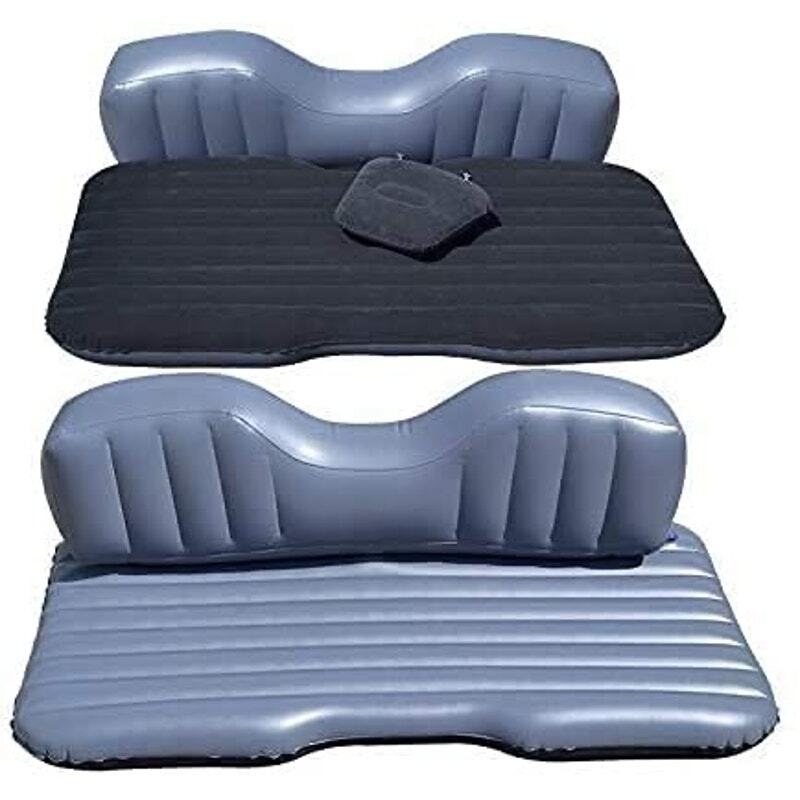
- Sedan / coupe: sleep across the back seat → wedge mattress that fills the footwell so the surface is level (Onirii, Sailnovo, Goplus, FBSPORT).
- Either, occasionally: a roll-out foam pad you can also use on the ground or in a tent (Hest's foam system).
Buy the wrong category and no amount of “comfort” features will save you — you will either be sliding off a too-short platform or rolling into a footwell gap all night.
The Specs That Actually Matter
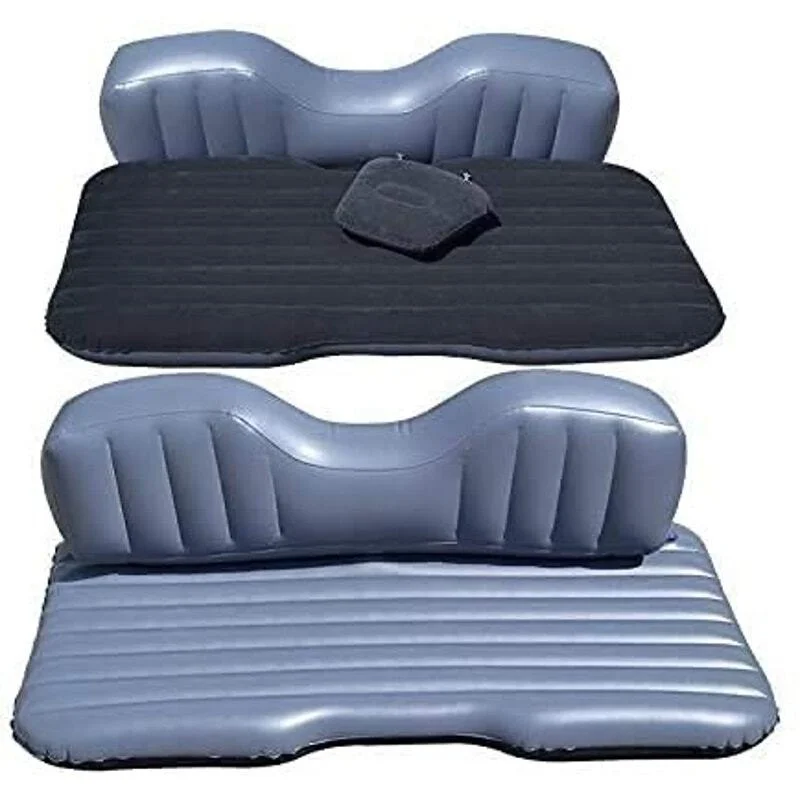
Before the product list, it helps to know which numbers are worth reading and which are marketing noise. Across every car camping mattress, four specs do the real work:
- Fit dimensions. Inflated length and width versus your vehicle's interior. A mattress that is two inches too long forces a curve; one that is too narrow leaves you on a ridge. Measure your cargo floor (SUV) or the gap between front and rear seats (sedan) first.
- Material. Most budget car mattresses are PVC with a flocked (suede-like) top. Flocking is warmer and grippier than bare vinyl. Premium options use thicker oxford fabric (Luno's 200–300 denier) or memory foam (Hest) that resist punctures and feel less like a pool toy.
- Inflation method. A bundled 12V pump that plugs into the car outlet is the difference between a two-minute setup and ten minutes of huffing. Self-inflating foam needs no pump at all but packs much bigger.
- Weight rating. Two-adult mattresses should state 400–660 lb capacity. Multi-chamber designs (Goplus uses eight) keep you level if one section softens overnight.
Rule of thumb: spend on fit and material first, comfort features second. A perfectly contoured mattress in a thin fabric still beats a plush one that does not fit your car.
To be straight with you: I have not lab-tested every one of these in a controlled setting. The recommendations below are built from the manufacturers' published dimensions and materials, the way each design solves the SUV-vs-sedan problem, and the broad pattern of owner feedback — not a staged “we slept on all six” claim.
Best for SUVs: Luno AIR BASE Vehicle Mattress
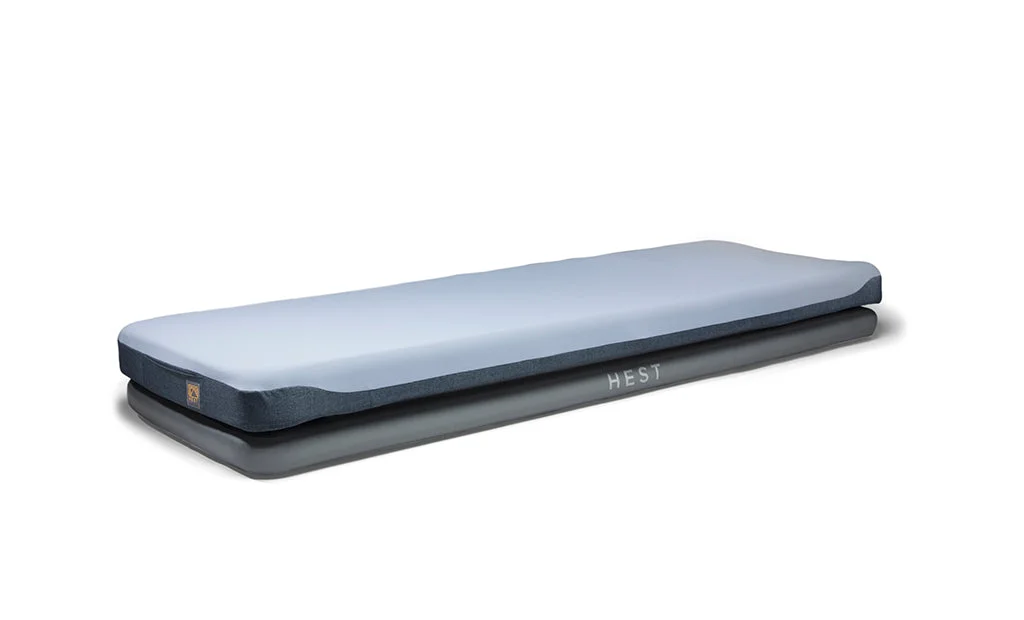
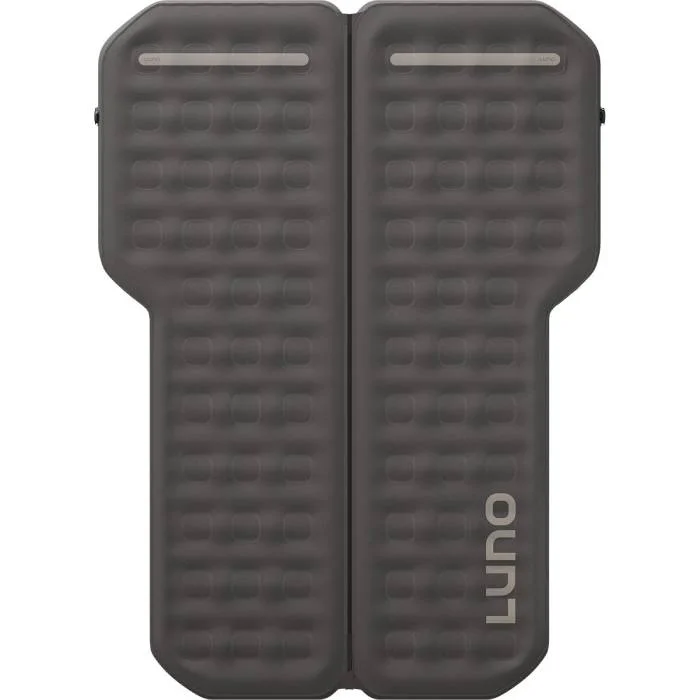
If you are sleeping in the back of an SUV, wagon, or hatchback with the seats folded, the Luno AIR BASE is the cleanest answer. It is a two-chamber platform mattress — inflate both sides for a full bed or one side for a single — and Luno tailors the shape to fill the wheel-well notches and folded-seat gaps that leave generic mattresses lumpy. The 200-denier oxford fabric is genuinely tougher than the PVC on cheaper beds, standing up to pet claws and gear.
It inflates fast off the included 12V pump and lies about four inches thick, which is enough to smooth out a folded-seat seam without eating all your headroom. The honest trade-off: at roughly $130 it is the priciest air option here, and its insulation value is low, so it is a warm-weather tool, not a winter base. For three-season SUV camping it is the one I would point most people toward. See current pricing and your vehicle's fit on its Amazon listing.
Best Premium / Foam: HEST Sleep System
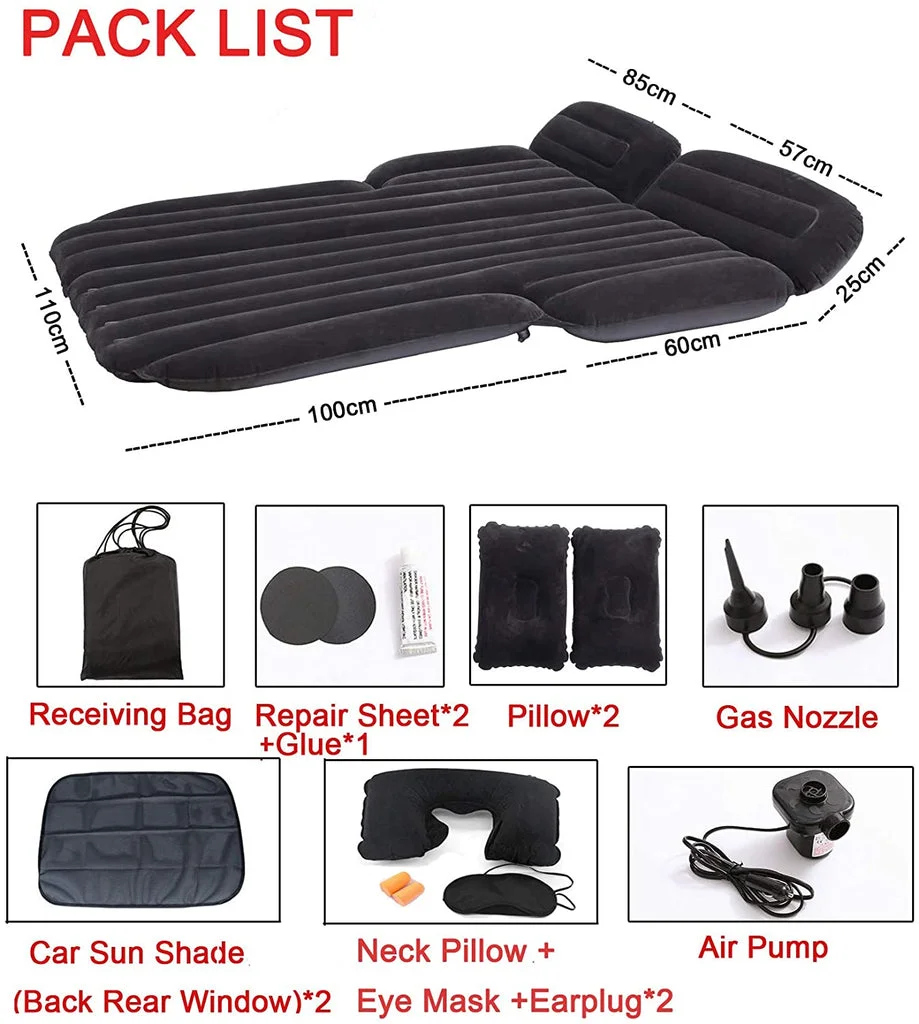
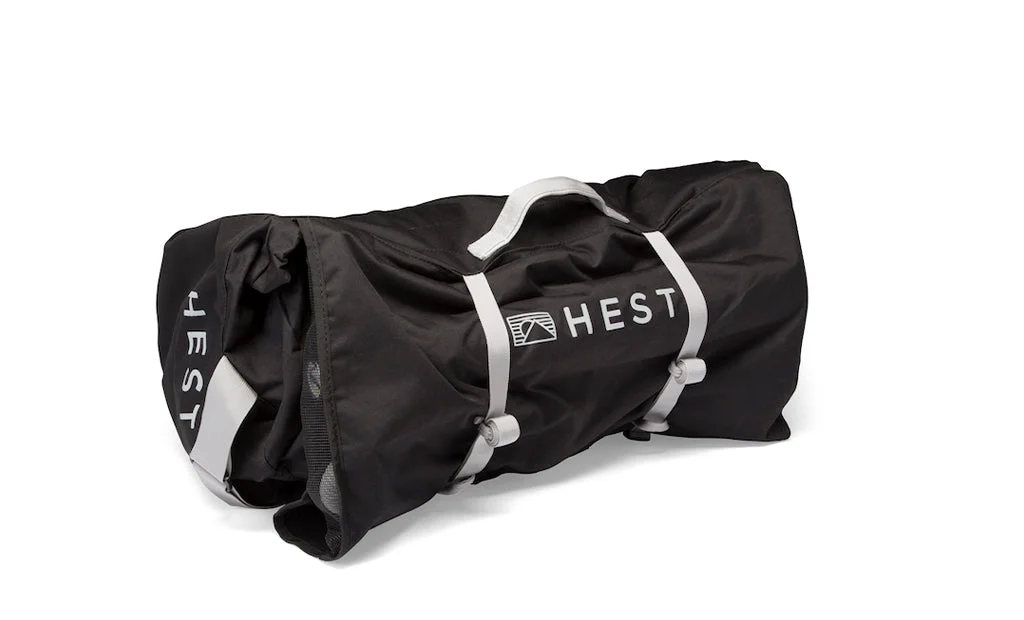
The HEST Sleep System is the outlier — it is memory foam, not air, and that is exactly why it earns a spot. There is no pump, no leak risk, and no two-minutes-of-pumping ritual: you unroll it and it self-inflates into a dense, two-layer foam pad with a built-in inflatable pillow bolster. For an SUV with a flat cargo floor, it delivers the most genuinely bed-like feel of anything on this list, and the cover unzips for machine washing.
The catch is bulk and price. Foam does not deflate to nothing the way an air mattress does, so it eats storage space, and at around $325 it costs more than three of the air options combined. But if you car camp often and you are tired of waking up on a slowly deflating air bed, the durability and comfort are worth it. It also doubles as a tent or guest pad. Check the current price on its Amazon page.
Best for Sedans: Onirii & Sailnovo Back-Seat Mattresses
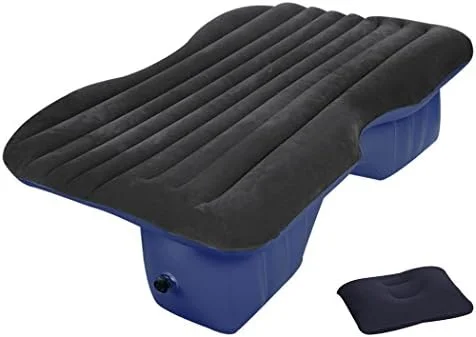
For a sedan, the job is filling that deep footwell so the surface is level across the back. Two designs do it well. The Onirii Automatic Inflatable SUV Air Mattress self-inflates and uses a raised head-block that wedges against the seatback, with thickened PVC and flocking on top; it fits mid- and full-size cars, SUVs, trucks, and minivans, so it is the versatile pick if you switch vehicles. The Sailnovo Car Air Bed is the budget classic at around $50 — a 55×35-inch blue-and-black mattress with a 12V pump that inflates or deflates in about two minutes and two bundled pillows.
Neither is luxurious, and the honest weakness of every footwell-filler is the seam where the wedge meets the seat — you will feel it if you sleep right on top of it. The fix is positioning your torso over the flat span. For occasional road-trip naps and the price, they are hard to beat:
- Onirii Automatic Inflatable Mattress — self-inflating, most cross-vehicle flexible.
- Sailnovo Car Air Bed — cheapest way into back-seat sleeping.
Best Budget Couch-Style: FBSPORT & Goplus
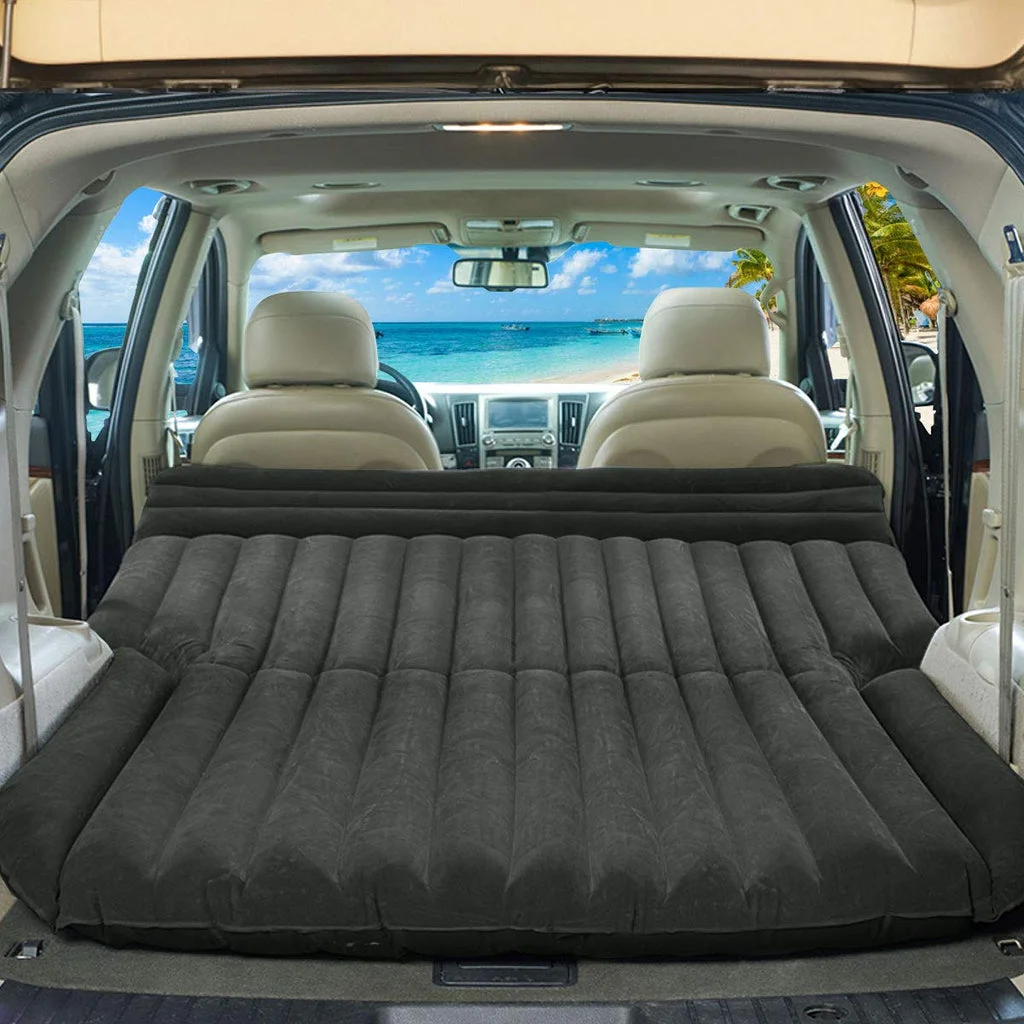
Two more back-seat options round out the budget end. The FBSPORT Universal SUV Extended Air Couch uses an “extended couch” profile — a raised back section plus a flat sleeping span — so it works as a lounger on a road-trip break and a bed at night. It is PVC with a flocked top, ships with two pillows and a pump, and at around $55 it is one of the most popular sub-$60 picks. Owners report it fitting compact SUVs and mid-size sedans like a 2018 Ford Escape with a few minutes of pumping.
The Goplus Car Bed takes a different tack: eight independent air chambers, each with its own inlet, and a stated 660 lb capacity. The multi-chamber design is the real selling point — if one section softens overnight, the others hold you level, which is the most common complaint with single-bladder beds. It has a flocked surface and a 12V electric pump.
Both are honest budget tools, not premium gear; expect to top off the air on multi-night trips. Compare them here:
- FBSPORT Extended Air Couch — doubles as a lounger.
- Goplus 8-Chamber Car Bed — stays level if one section softens.
Gap-Filling Design: The Feature That Makes or Breaks the Night
The phrase you will see over and over — “gap-fill” — is not marketing fluff; it is the whole game. Car interiors are full of gaps: the notch between folded SUV seatbacks and the cargo floor, the canyon of a sedan footwell, the ridge where a rear bench meets the seatback. A mattress earns its keep by spanning or filling those gaps so your body lies on a continuous surface.
SUV platform mattresses fill gaps by being contoured and thick enough to bridge the folded-seat seam from on top. Sedan wedges fill gaps by inflating down into the footwell until it is flush with the seat cushion. When you read a listing, that is the first thing to verify against your own car — a mattress that does not address your specific gap will leave you in it.
One more honest note on insulation: almost none of these budget air mattresses offer meaningful R-value. The air inside chills against the cold floor and pulls heat from your back. If you camp below about 50°F, plan to add a closed-cell foam pad or a thick blanket underneath — the mattress solves shape, not warmth.
How to Choose, and How to Set It Up Right
Put the whole decision together in three steps:
- Measure first. SUV owners: fold the seats and measure cargo length and width. Sedan owners: measure the distance from the front seatbacks to the rear seat and the footwell depth. Buy to those numbers, not to a vague “universal” label.
- Pick your category. Flat cargo floor → platform (Luno) or foam (Hest). Sleeping across a bench → footwell-filling wedge (Onirii, Sailnovo, FBSPORT, Goplus).
- Match comfort to frequency. Occasional naps → a $50–$60 air bed is plenty. Frequent multi-night trips → spend up for Luno's fabric or Hest's foam, which you will not be re-inflating at 3 a.m.
Setup tips that matter regardless of which you buy: clear the floor of hard objects before inflating, do not fully max out the pressure (a slightly under-firm air bed contours better and stresses the seams less), and crack a window for airflow. If you drive a Subaru and want model-specific fit guidance, our companion guide to the best car camping mattress for a Subaru Outback walks through exact dimensions for that platform.
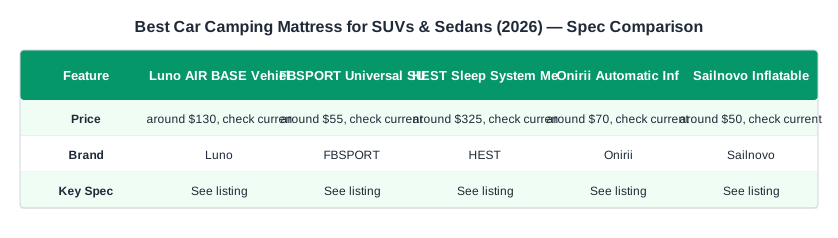
The complete lineup also includes Luno AIR BASE Vehicle Mattress (around $130, check current), Sailnovo Inflatable Car Mattress (around $50, check current), Goplus Car Bed 8-Chamber Back Seat Air Mattress (around $60, check current) — each compared on the same specs and reviewer consensus.