Start with how it attaches to your SUV — not the price
As an Amazon Associate we earn from qualifying purchases.
The fastest way to pick a car-camping awning for an SUV is to stop comparing fabric and start with one question: how does it mount to your roof? Based on published manufacturer specs and what owner reviews and overlanding roundups consistently report, the mount is what decides whether an awning is even usable on your vehicle — everything else is secondary.
An SUV without roof rails or a roof rack is a different shopping problem than one with a sturdy crossbar setup, and a freestanding awning that needs no vehicle attachment at all is a third path entirely. Buy the wrong mount and the nicest fabric in the world sits in the box. Get the mount right and a basic awning serves you for years. So this guide is organized the way the decision actually works: mount first, then deploy style, then the wind and UV realities that separate a shaded lunch from a flapping mess. For the broader kit it pairs with, see our car camping essentials rundown.
The three mounting paths, honestly compared
Owner reviews cluster awnings into three honest categories by how they attach, and the right one depends entirely on what your SUV already has on the roof.
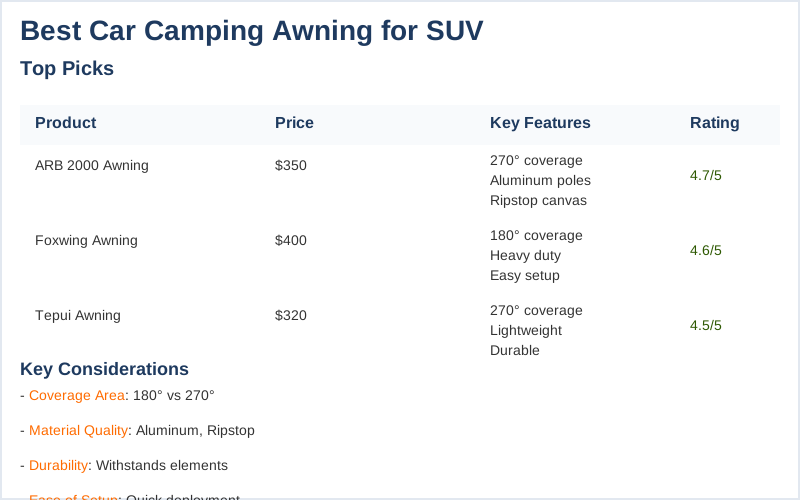
Rail- or rack-mounted awnings bolt to roof rails or a crossbar rack and are the most common overlanding setup. Manufacturer specs typically call for a load-rated rack; reviewers note these deploy fast and feel solid, but you cannot use them if your SUV has a bare roof or only flush rails without a rack. If that is you, budget for a crossbar rack first — that is the real prerequisite, not the awning.
Clamp- or suction-mounted awnings attach to a door frame, gutter, or glass without a permanent rack. Roundups praise them as renter-friendly and cheap to try, but reviewers repeatedly flag that suction and clamp mounts are the most weather-sensitive of the three — fine for shade on a calm afternoon, less trustworthy the moment the wind picks up.
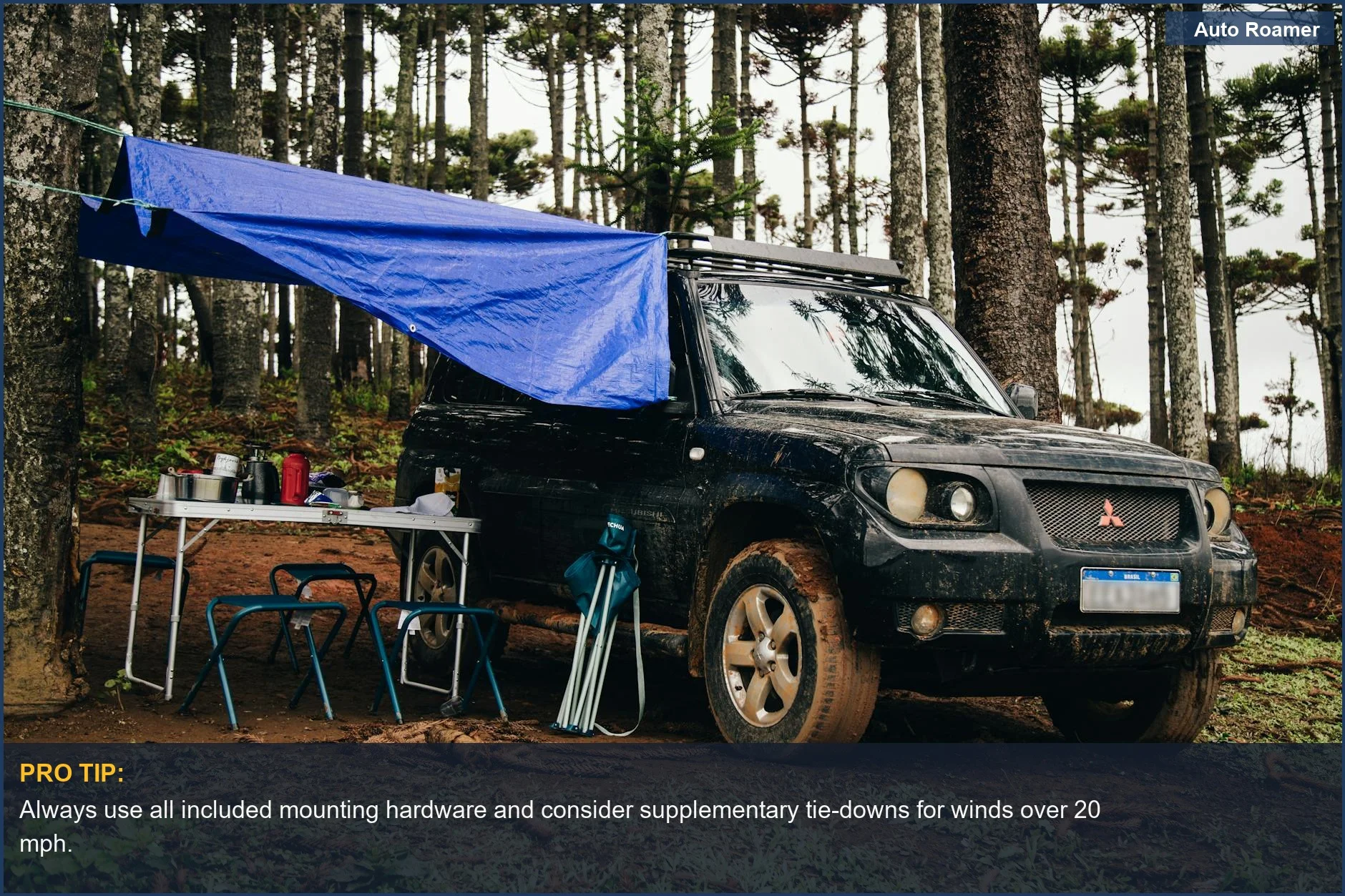
Freestanding shade canopies skip the vehicle entirely: poles and stakes, parked beside the SUV. They work on any vehicle and double as a campsite shelter, but they take longer to pitch and do not travel deployed. Many SUV campers own one pop-up canopy for base camp and skip the vehicle-mounted awning altogether.
Roll-out vs 270-degree batwing: match the deploy to your camping
Among rack-mounted awnings, the split that matters most is deployment geometry, and owner feedback maps it cleanly to how you actually camp.
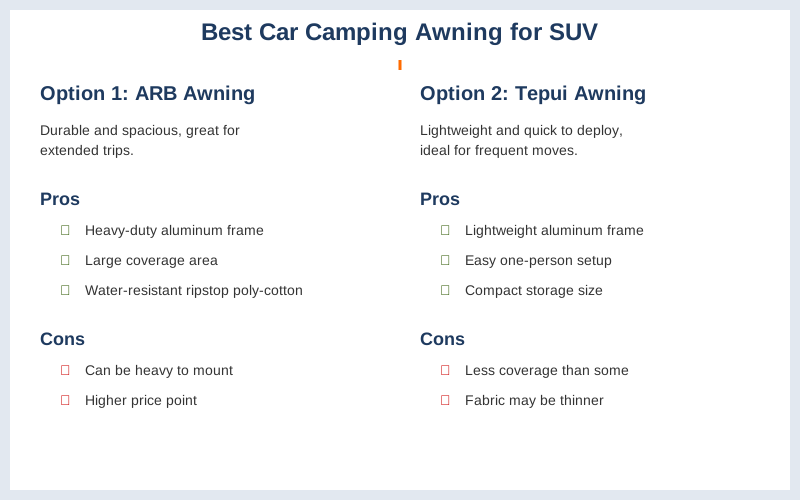
A straight roll-out awning extends a rectangle of shade off one side of the vehicle. Reviewers describe one- or two-minute setup and the lowest price; the trade-off is coverage limited to a single side. For weekend campers who park, eat, and sleep, owners consistently say it is plenty.
A 270-degree batwing wraps shade around the rear and one side of the SUV from a single pivot mount. Roundups note it covers a tailgate kitchen plus a seating area, which overlanders who cook outside value — but it costs more, weighs more, and adds permanent roof weight you carry on every drive whether camping or commuting. If you run a 12V fridge and cook at the tailgate, the wraparound coverage earns its keep; if you mostly want a shaded chair, it is overkill you pay for in fuel and rack capacity.
Wind and UV are where awnings actually fail
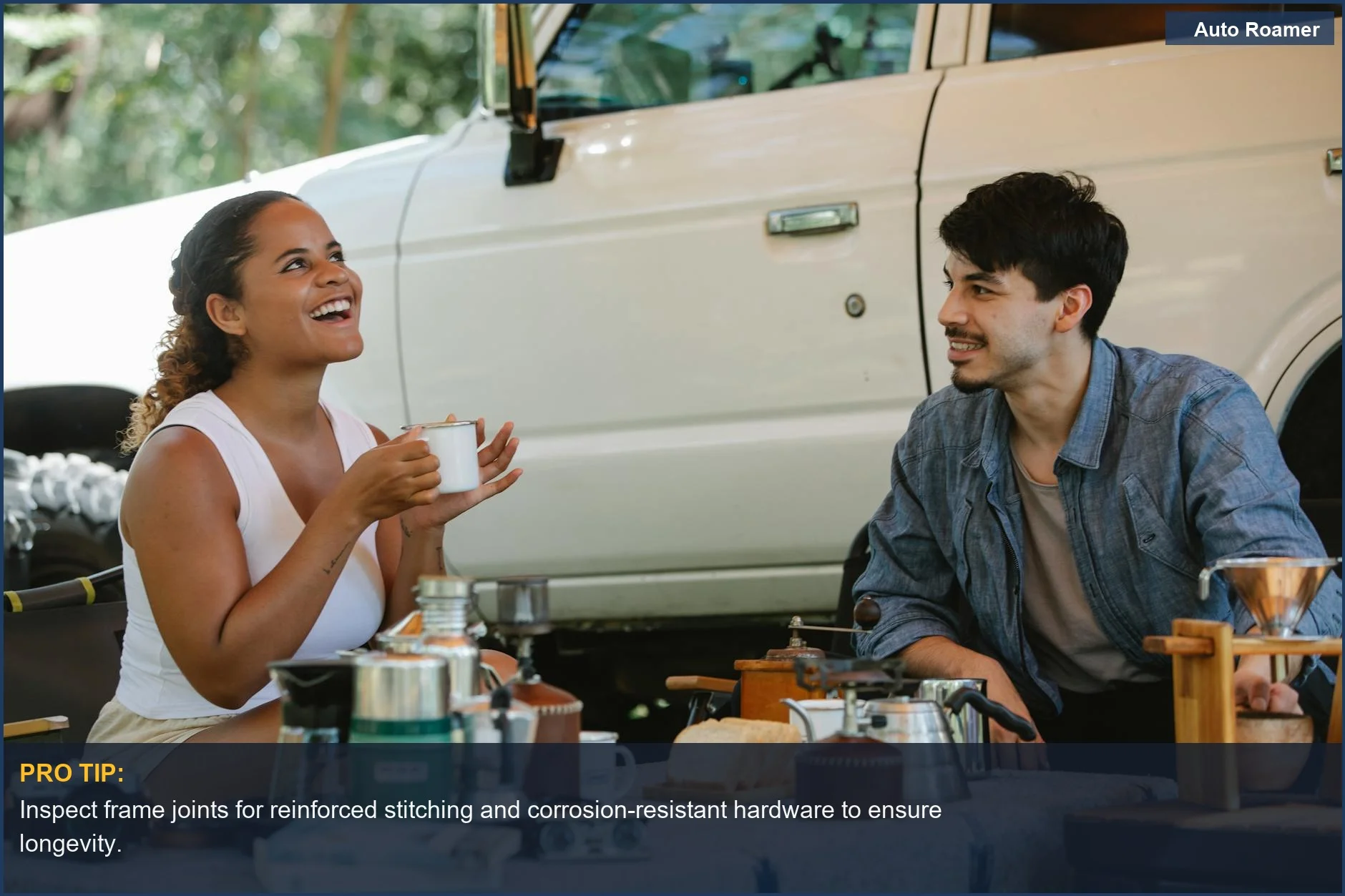
Specs rarely lead with this, but owner reviews are blunt: wind and sun are what break awnings, and the failures are predictable.
For wind, reviewers stress two things — guy lines and stakes used every time, and a willingness to retract early. The most common one-star story is a gust catching an unstaked awning and bending an arm or tearing the fabric. No awning is a storm shelter; the manufacturers say as much in the fine print, and owners learn it the hard way. Keep a set of guy lines and stakes with the awning itself, not in a drawer at home where they do nothing.
For sun, the fabric rating is the durability story. Owners report that thin, low-denier polyester fades and grows brittle after a couple of hard seasons, while heavier ripstop with a real UV or UPF rating holds up. A waterproof rating — a hydrostatic-head number — tells you whether it sheds a passing shower or just blocks sun. Read those two numbers before you read the brand name.
There is also a quieter failure reviewers describe: the cheapest awnings sag and pool water in even light rain because the fabric lacks tension and the arms flex. A pooled awning either dumps a bucket of water on you when you collapse it or tears at the seam. A taut pitch with a slight downhill angle is the owner-tested fix, and it is far easier on a stiffer frame than a flimsy one.
Roof weight and fit: the cost you pay on every drive
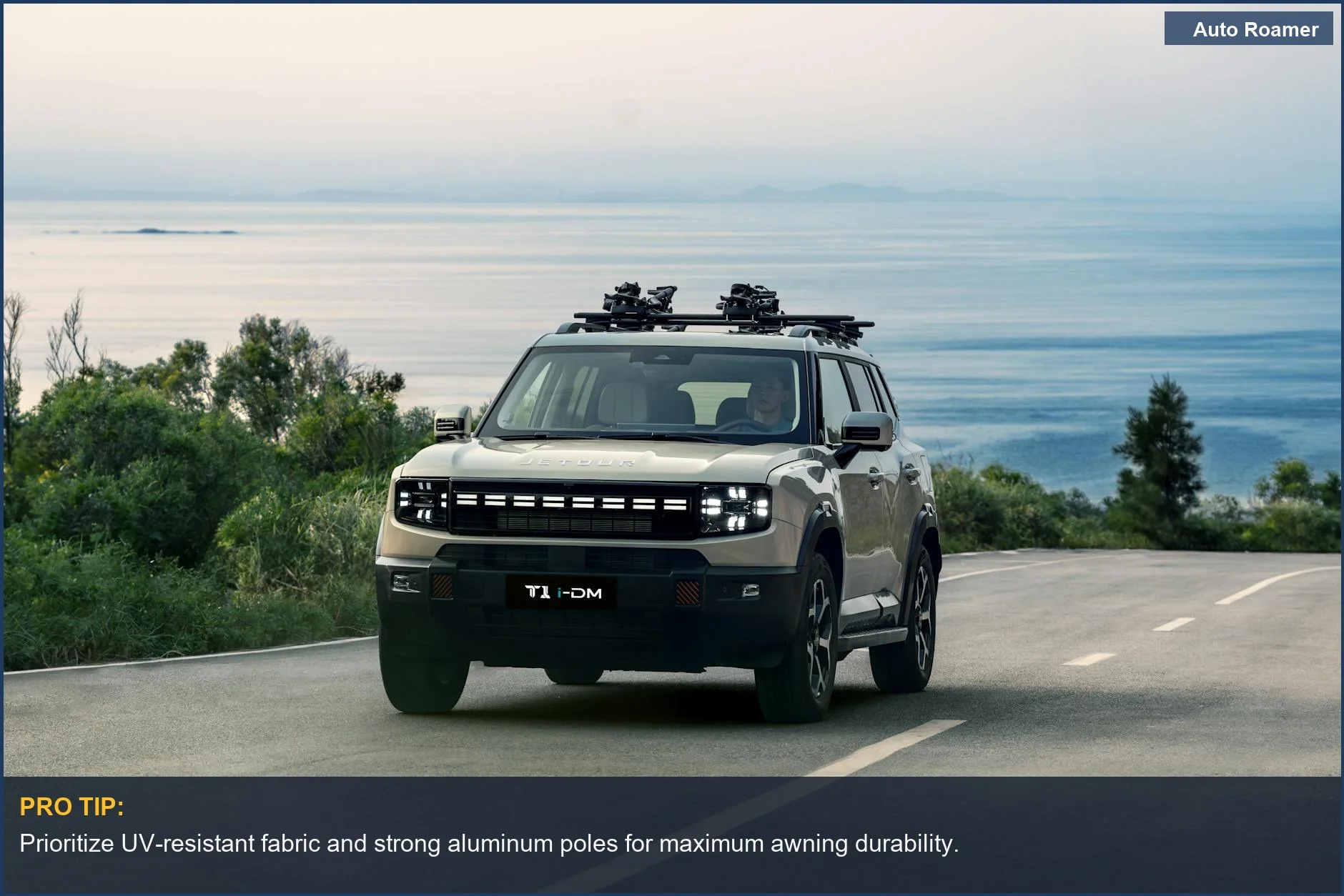
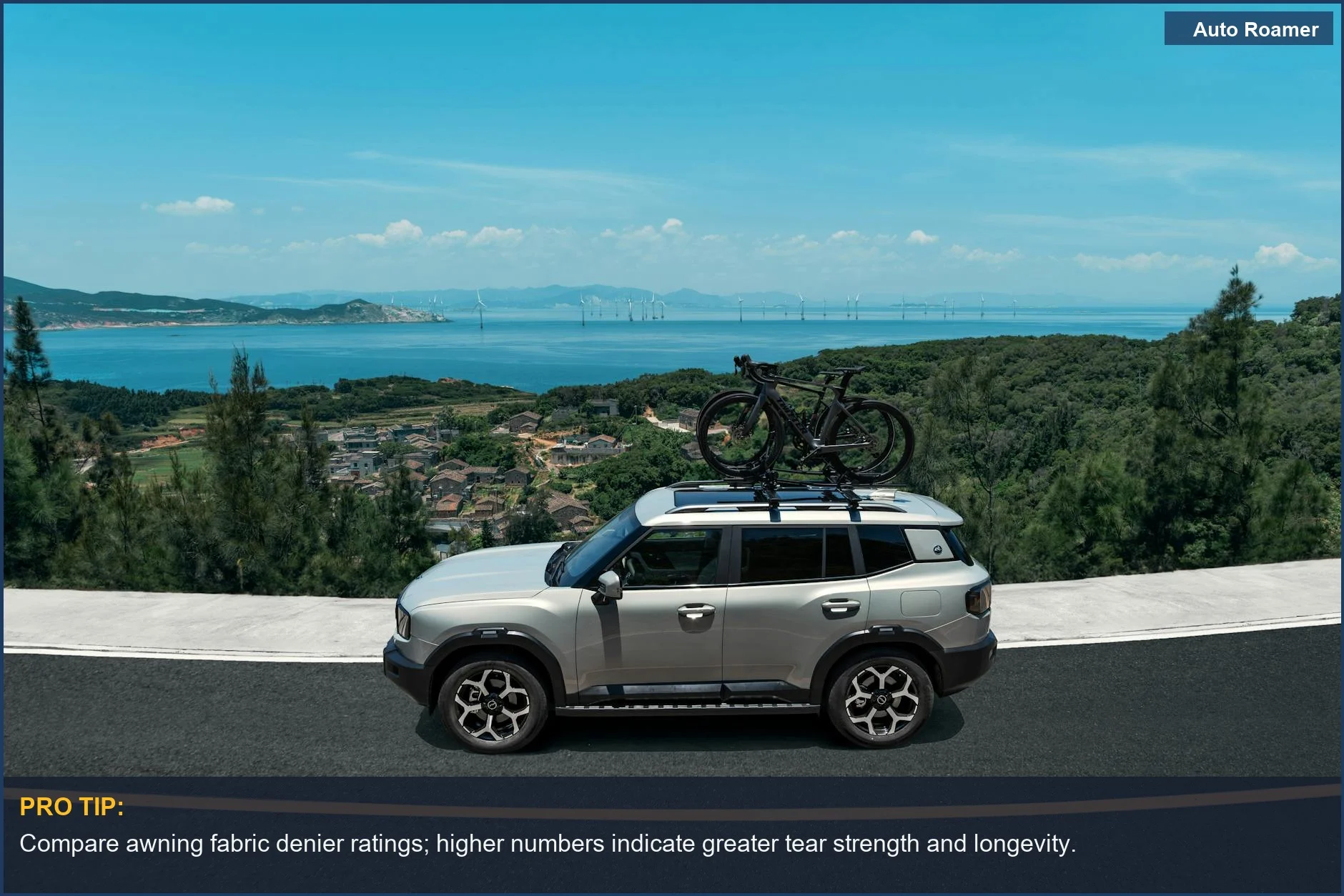
A vehicle-mounted awning is permanent weight on the roof, and that has consequences owners learn after buying, not before. A 270 batwing can run 40-plus pounds before guy lines; on a smaller SUV that eats into the rack's dynamic load rating — the spec that limits what else you can carry up top.
Reviewers also flag mounting-channel compatibility: an awning sold for one rack profile may need adapters for another, and the adapters are rarely advertised up front. The honest move is to confirm your rack's load rating and rail profile against the awning's mounting hardware before checkout, not after the box arrives. If roof load is already tight on your build — say you also run a rooftop tent — a freestanding canopy keeps the weight off the roof entirely and sidesteps the whole compatibility question.
Where the money matters — and where it doesn't
Owner reviews suggest spending where failure is expensive and saving where it is not.
Spend on: the mounting hardware and arms (bent arms end an awning's life), fabric denier and UV rating (the whole durability story), and a real stake and guy-line kit (the difference between surviving a gust and replacing the awning).
Don't overspend on: brand-name LED light strips and gadget add-ons, oversized coverage you will never use, or a batwing when a simple roll-out matches how you camp. Reviewers repeatedly note that the most expensive awning is the one bought for a camping style you do not actually have — the wraparound that shades a kitchen you never cook at.
The bottom line: buy for your roof, then your camping style
For most SUV campers, the honest sequence is: confirm what your roof can mount, pick a rack-mounted roll-out awning if you have a load-rated rack and camp on weekends, and step up to a 270 batwing only if you cook at the tailgate and your rack has the load headroom to spare.
If your SUV has no rack — or your roof load is already spoken for by a tent or box — a freestanding canopy is the smarter buy: it shades any vehicle, doubles as a base-camp shelter, and adds zero permanent weight.
Whatever you choose, stake it and guy it every single time, and read the fabric's UV and waterproof numbers before the badge on the bag. Do that and you are buying shade that lasts, not a one-season disappointment. The awnings owners regret are almost always the ones bought on price and brand alone, mounted to a roof that could not really take them, and then left unstaked in the first stiff breeze. Avoid those three mistakes and almost any decent awning works. Pair it with a good camp table and your tailgate kitchen is set.