Why fit beats comfort with an SUV air mattress
Here is the thing almost no SUV air mattress listing tells you straight: the comfort numbers barely matter if the bed is the wrong shape for your cargo floor. A 5-inch-thick airbed that ends four inches short of your seatbacks still drops your hips into a gap at 2 a.m. The whole game is matching the inflated dimensions to your folded-flat load floor — length, width between the wheel wells, and how the seatback step is bridged.
So this guide leads with fit, not plushness. I compared five real beds on the specs that decide whether you sleep flat: the inflated length and width, thickness, shell material and durability, pump type, packed weight, and price. None of this is a first-hand field test — it is a spec-and-source comparison drawn from each maker's published dimensions and from named reviews at CleverHiker, GearJunkie, Outdoor Gear Lab and Field Mag. Use it to shortlist, then measure your own cargo area before you buy.
One measurement does more than any spec sheet: fold your rear seats, lay a tape from the closed liftgate to the back of the front seats, and note the narrowest width between the wheel wells. Every recommendation below is really an answer to “what fits those two numbers.”
If you want the full method, our walkthrough on how to choose an SUV air mattress size covers measuring the seatback step and wheel-well gap in detail.
The specs that actually decide it
Before the picks, here is what each column on the comparison really means in your vehicle:
- Fits-which-SUV (by cargo dims). Match the bed's inflated length to your liftgate-to-front-seat measurement and its width to your narrowest wheel-well gap. A “universal” rectangle that is wider than that gap will balloon up the sides and tip you toward the middle.
- Inflated dimensions & thickness. Thicker is warmer and more forgiving over a ridged floor, but a 5–6 in bed eats headroom and can over-fill a short cargo area. Three to four inches is the sweet spot for most two-row SUVs.
- Material & durability. Flocked PVC is cheap, warm to the touch and grippy but punctures more easily; Oxford-faced or coated-fabric shells (like Luno's 300-denier) shrug off gear and dog claws far better.
- Pump type. A 12V pump that runs off the cigarette/accessory port is the difference between a two-minute setup and ten minutes of foot-pumping. Built-in pumps are tidy; separate 12V units are easier to replace when they die.
- Weight & pack size. Matters if you store it in the vehicle full-time versus hauling it in and out.
- Price. $60 budget airbeds and $300 purpose-shaped beds are different tools, not better-and-worse versions of the same thing.
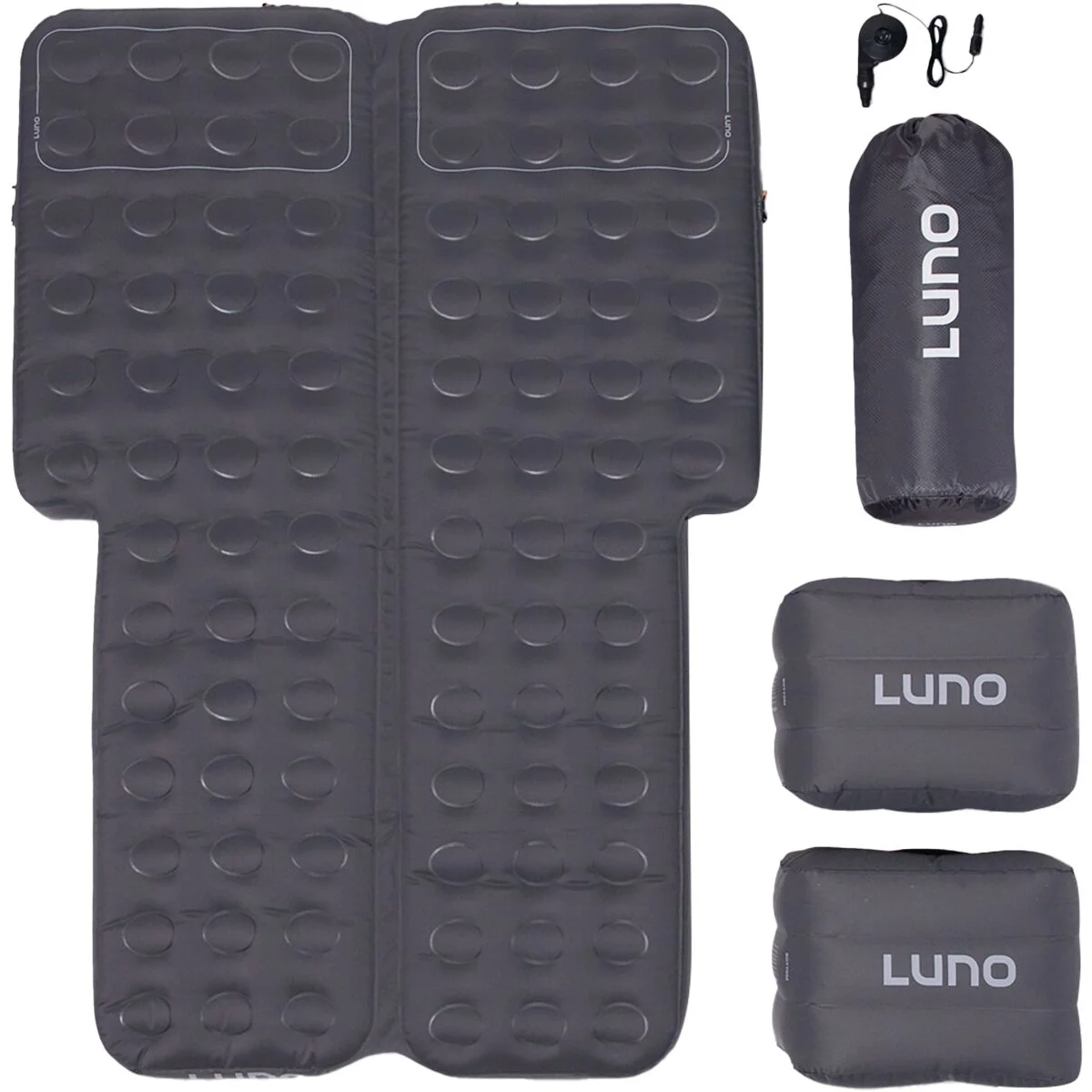
Our top pick: Luno Air Mattress 2.0
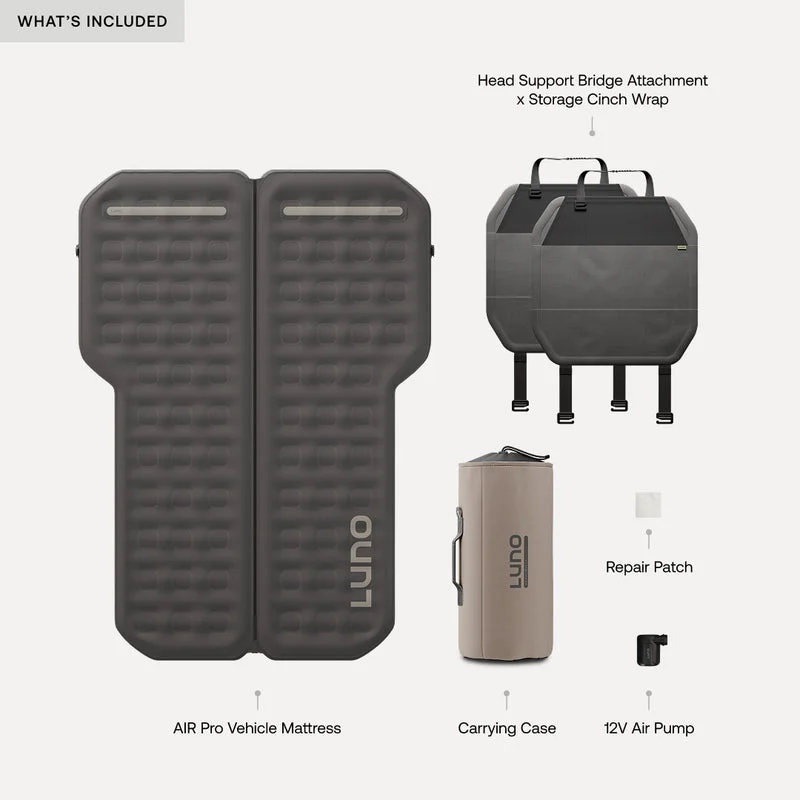
The Luno Air Mattress 2.0 is the one I'd shortlist first, and the reason is exactly the fit problem above: it is shaped to a vehicle, not to a bedroom. Luno publishes fitment for over 1,800 vehicles, and the bed's footwell extenders push usable length down into the gap behind the front seats instead of stopping at the seatbacks. GearJunkie's review of the 2.0 notes roughly 15 inches of added usable length from those extenders, tested in a Subaru Outback.
On the spec sheet that matters:
- Thickness: about 4 in, with footwell extenders adding ~15 in of usable length.
- Chambers: dual, so each sleeper sets their own firmness.
- Shell: 300-denier Oxford — far tougher than bare PVC.
- Pump: 12V, ~2-minute fill off the accessory port.
The honest caveat, flagged in CleverHiker's testing of the Luno line, is thermal: the air-only build sits near a 1.5 R-value, so it is a warm-weather bed unless you add an insulating layer. It is also the priciest here at roughly $300, and its custom fit can crowd out gear storage in smaller SUVs.
If you want one bed that sleeps flat in a two-row SUV with the least fuss, the Luno Air Mattress 2.0 is the safe call — just confirm your model is on Luno's fitment list first.
Best value: DikaSun Car Air Mattress
If you are not ready to spend Luno money, the DikaSun Car Air Mattress is the sensible value pick. It inflates to roughly 69 by 30 inches and about 6 inches thick, with a thick flocked sleeping surface over a waterproof PVC body. DikaSun rates it to 600 pounds, and at 4.5 lb packed it is the lightest bed in this guide by a wide margin.
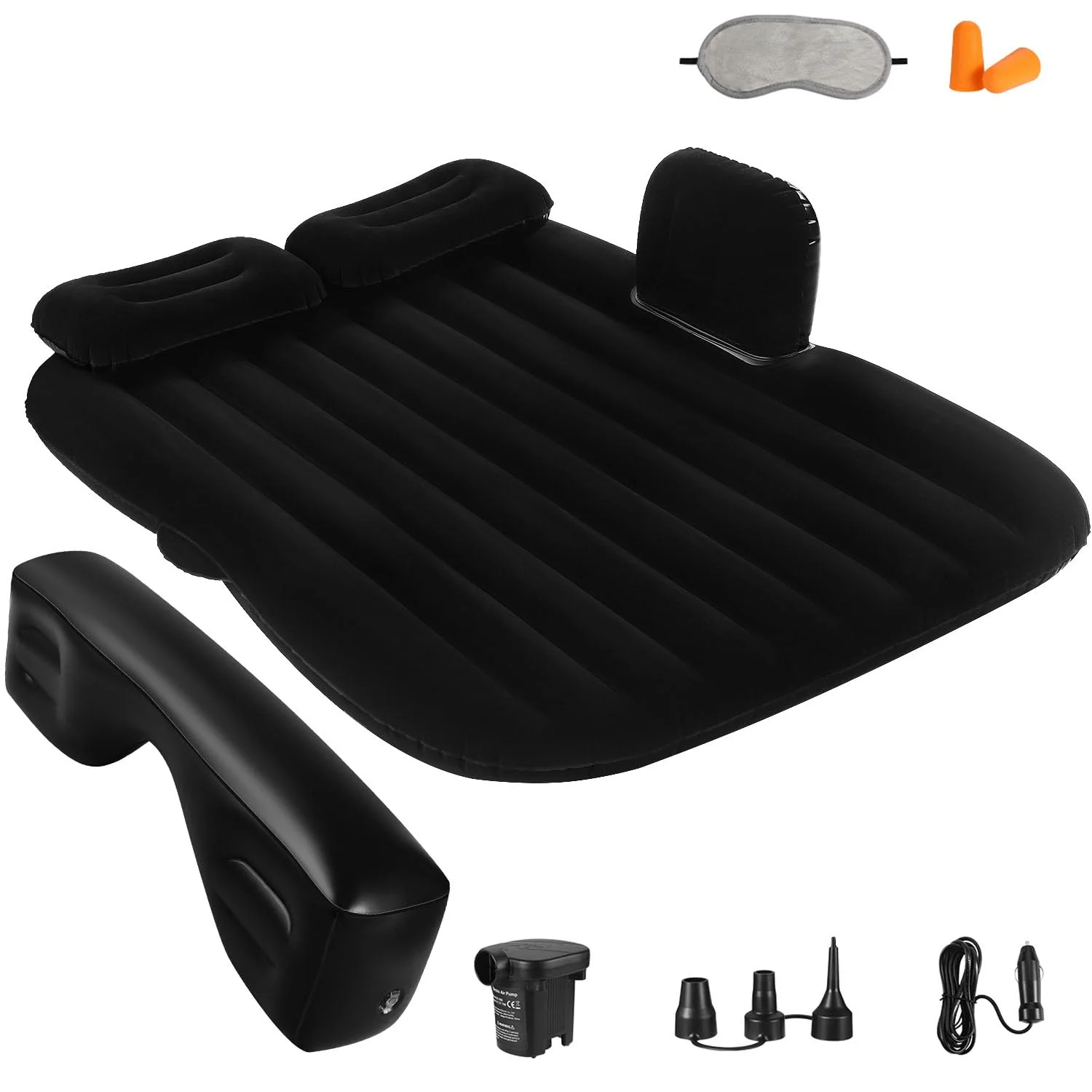
The narrow footprint is the point. At 30 inches wide it drops onto a folded rear seat or into a compact SUV's cargo bay without ballooning up the sides the way a 50-inch bed does, and the kit fills the gaps you would otherwise stuff with a rolled towel: it ships with a 12V electric pump that runs off the accessory socket, two inflatable pillows, two wedge-shaped “pier” pieces for the footwell, a patch kit and a carry bag. It usually lands in the mid-$50s. The trade-off is the flocked-PVC shell — warmer and grippier than coated fabric but more puncture-prone, so keep it off gravel and clip your dog's nails.
Where the DikaSun makes the most sense, in short:
- You camp a handful of weekends a year, not every month.
- You sleep one or two people on a folded rear seat or a compact cargo floor.
- You want a bed, a pump and pillows for under $60 with no second purchase.
For that buyer the DikaSun does most of what the Luno does for less than a fifth of the price. What it will not do is bridge a long cargo floor: 69 inches is short for a six-footer stretched out, so measure before you commit.
Best for two people: QDH SUV Air Mattress
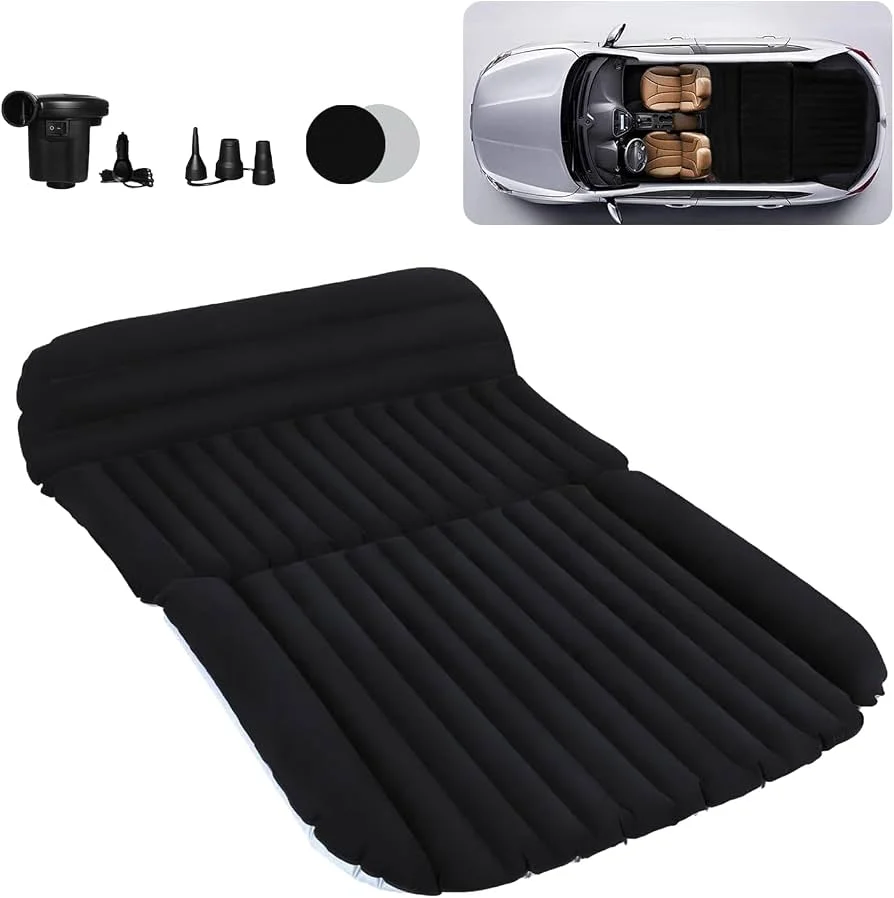
When two adults need to actually fit, width is the spec that runs out first, and the QDH SUV Air Mattress is built around that. It inflates to about 71.7 by 50 by 4.7 inches — a genuinely wide bed — with a three-chamber layout and a thick, double-sided flocked PVC surface QDH rates to roughly 573 pounds. A built-in 12V pump and three nozzle adapters handle inflation off the accessory port.
That 50-inch width is the catch as much as the selling point: measure your wheel-well gap before you buy, because in a compact SUV the QDH will dome up the sides and you'll lose the flatness you paid for. In a mid-size or full-size SUV with a wide, flat folded floor, though, the QDH SUV Air Mattress is the most bed-for-the-money option here for couples, usually around $90.
One more practical note: the three-chamber layout lets you leave the center a touch softer than the outer rails, which keeps two sleepers from rolling into each other on a flat floor — a small trick the single-chamber budget beds simply can't do.
Cheapest way in: Umbrauto Inflatable Car Mattress Bed
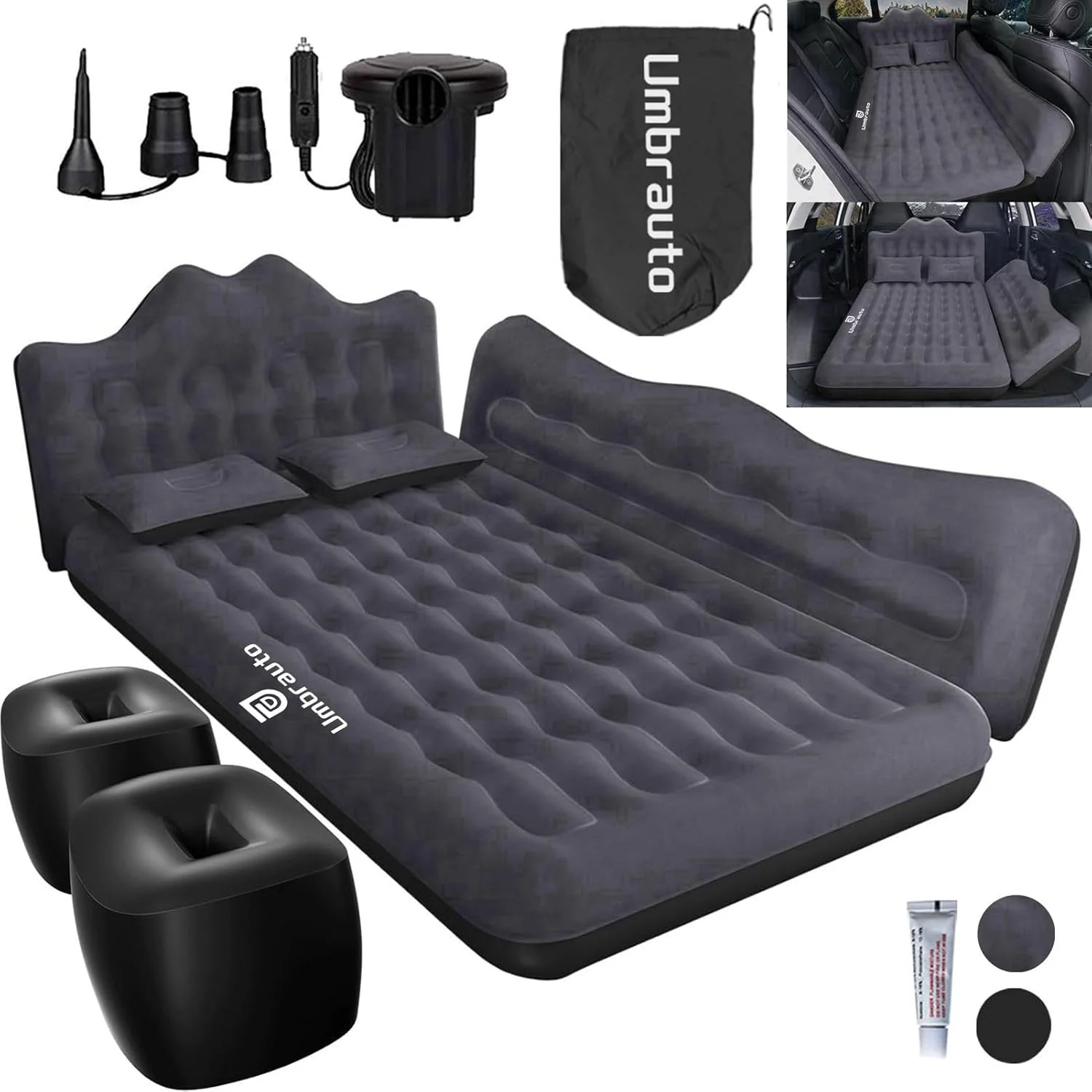
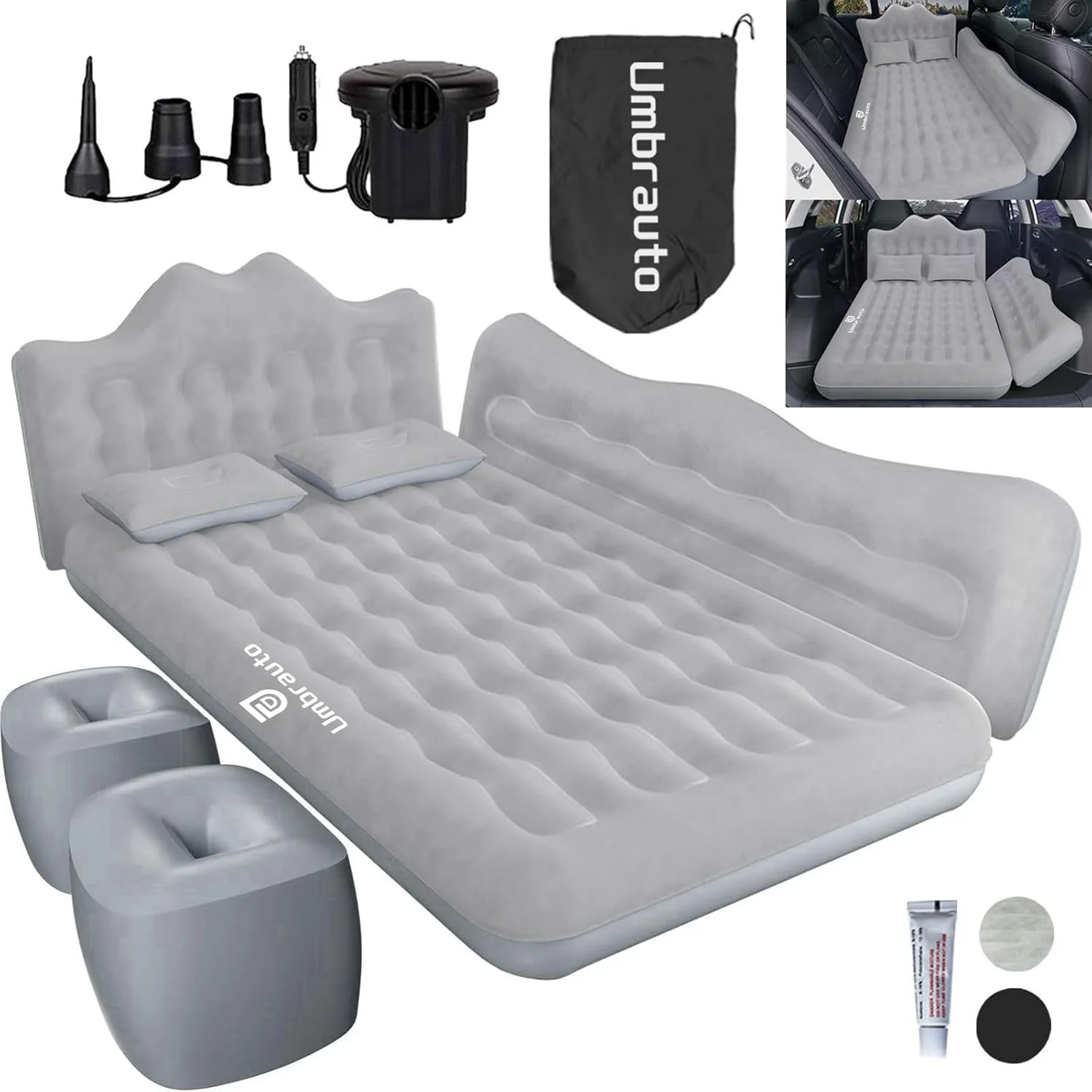
If you just want to try sleeping in your SUV before committing real money, the Umbrauto Inflatable Car Mattress Bed is the low-risk entry point, typically around $60. It is a flocked trunk-and-back-seat airbed that Umbrauto sizes to fit most compact, mid-size and full-size SUV cargo areas, and it comes with an electric pump and pillows so there is nothing else to buy on day one.
Set expectations to match the price: the flocked PVC is the least durable shell in this roundup, the included pumps on budget beds are the first thing to fail, and the fit is “close enough” rather than vehicle-specific. But as a one-trip test or a backup bed that lives in the cargo well, the Umbrauto does the job. Plenty of people start here, learn what they actually want, and upgrade to a Luno or a wide QDH once they know they'll keep car camping.
The cold-weather exception: Exped MegaMat Duo 10
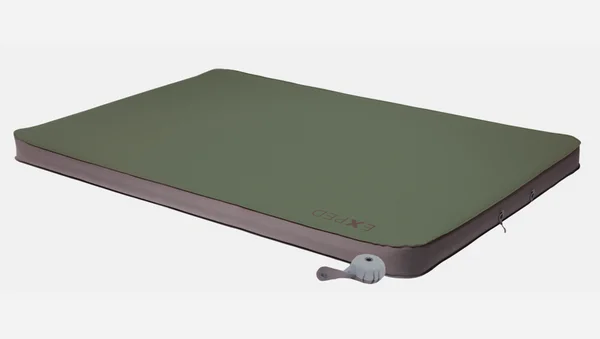
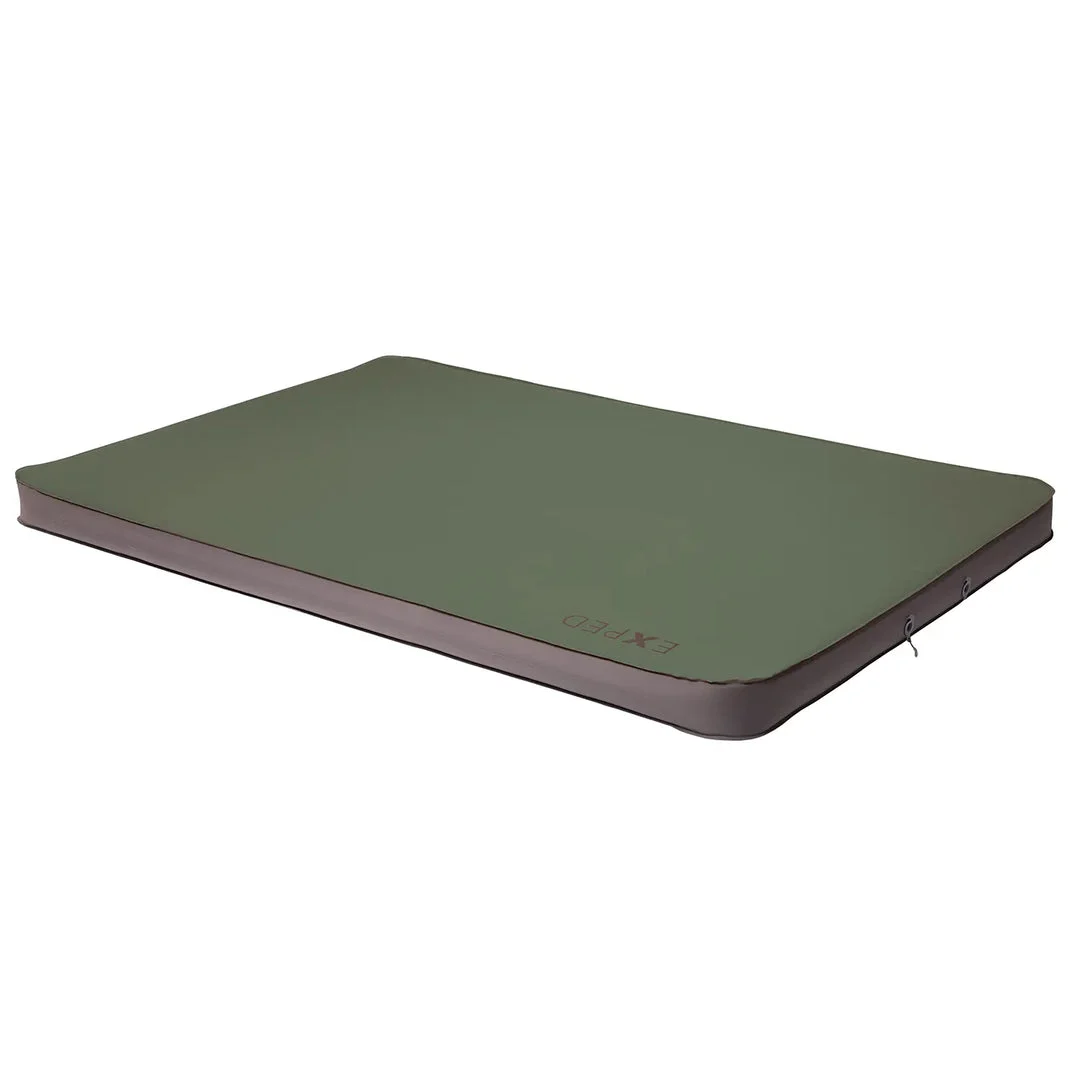
An honest buying guide has to admit when the category itself is the wrong answer. Pure air mattresses are cold — the Luno's roughly 1.5 R-value is typical — because a single chamber of air convects your body heat away. If you camp in shoulder season or the mountains, the Exped MegaMat Duo 10 Sleeping Pad is the bed that actually solves the problem.
It is technically a self-inflating foam-and-air pad rather than a blow-up airbed, but that is the point: open the valves, let the foam draw in air, and you get a thick, high-R-value two-person sleeping surface that holds warmth on a flat cargo floor. It is reviewed well by Outdoor Gear Lab and Field Mag as a near-home-mattress experience. The Exped MegaMat Duo 10 Sleeping Pad needs an already-flat floor (it won't bridge a seatback step the way the Luno does), it packs bulky, and at about $330 it is the priciest here. But if “I was freezing” is the complaint that ends your trips, this is the fix.
Still torn between the two formats? Our breakdown of inflatable vs foam mattresses for car camping walks through the warmth, durability and pack-size trade-offs side by side.
Fit by vehicle: how to read your own cargo area
Brands group SUVs loosely, so translate their categories to your tape measure:
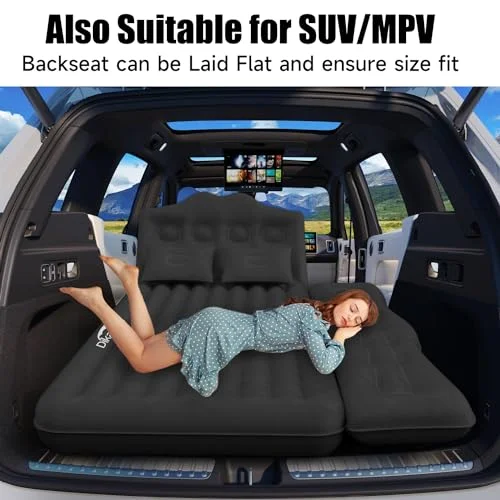
- Compact SUVs (RAV4, CR-V, Forester, Tucson, Escape): typically ~40–45 in of folded-flat width and a short load floor. Favor a vehicle-shaped bed like the Luno or a narrow one like the 30-inch-wide DikaSun; a 50-inch-wide QDH will dome up the sides.
- Mid-size two-row SUVs (Grand Cherokee, Highlander with the third row down, Outback): the sweet spot. Almost everything here fits, so choose on durability and warmth rather than raw size.
- Full-size SUVs (Tahoe, Expedition, Sequoia): wide, flat floors that finally do justice to the QDH's 50-inch width or two single pads side by side.
Two rules cover the rest. First, the seatback step: most folded rear seats leave a small ridge or gap where the seatback meets the cargo floor — a footwell-extending bed (Luno) bridges it, while a plain rectangle needs you to fill the gap with a rolled towel or stuff sack. Second, never inflate to drum-tight: a slightly under-firm air mattress conforms to a ridged floor and sleeps flatter than a rock-hard one that telegraphs every contour.
The honest verdict
For most people the Luno Air Mattress 2.0 is the pick, because it is the only bed here engineered to your vehicle's shape — and fit is the spec that decides whether you sleep. Pay the ~$300 if you'll car camp more than a couple of weekends a year, and add an insulating layer for cold nights.
The rest of the field, matched to who should buy it:
- Tight budget: the DikaSun Car Air Mattress (~$55) gives you most of the experience.
- Just testing the idea: the Umbrauto Inflatable Car Mattress Bed (~$60) is the cheapest honest way in.
- Two adults, wide floor: the QDH SUV Air Mattress and its 50-inch width.
- Cold is the enemy: skip air and get the Exped MegaMat Duo 10 Sleeping Pad.
Whatever you choose, measure first. The best SUV air mattress is the one whose inflated dimensions match your folded-flat cargo floor — and that is a number only your tape measure knows. These picks are compared from published specs and named reviews, not from my own overnight testing, so treat them as a vetted shortlist, not a substitute for fitting it to your own vehicle.