The short answer: type first, size second
For a Toyota Prius, the mattress that fits is a twin-scale sleeping pad no wider than the roughly 43 in gap between the wheel wells, and the type that works is a self-inflating or air pad thin enough to stay stable on a floor that is not truly flat. Fold the rear seats and you get about 65 in of cargo floor, which stretches to roughly 80 in of usable sleeping length once the front seats slide forward — long enough for most adults. The catch is width and levelness, not length.
That single sentence is where most "best Prius mattress" lists go wrong. They rank air beds by comfort scores without ever mentioning that a full mattress is 54 in wide and a queen is 60 in wide, so neither can lie flat between wheel wells that are only 43 in apart. It fits or it does not, and the Prius decides. This guide starts from the car's real measurements, then maps four honest pad choices onto them. To be clear up front: we have not personally slept in or measured these pads inside a Prius. The dimensions here come from Toyota-owner measurements, manufacturer spec sheets, and camper forums, all linked at the end.
The real numbers inside a Prius with the seats folded
Owner measurements of the fourth-generation Prius (2016–2022) and the current fifth generation (2023 and newer) land in the same neighborhood, because the liftback footprint barely changed. With the split rear seats folded, the cargo bay measures roughly 65 in long, 43 in wide, and 24 in tall, opening to about 50.7 cu ft of space. Behind the upright seats you only have around 27.4 cu ft and a floor about 27 in deep — nowhere near enough to stretch out, which is why the seats must come down.
Length is the easy part. Push the front seats all the way forward and recline them slightly, and the flat-ish run from the closed hatch to the seatbacks reaches about 80 in — enough to comfortably clear a six-foot sleeper lying straight. A standard twin mattress is about 39 in wide and 75 in long, so on paper a twin footprint drops right in.
- Width is what ends the fantasy of a "real" bed. At 43 in between the wheel wells, there is no room for the 54 in of a full or the 60 in of a queen.
- You are sleeping on something twin-width or narrower, full stop. The car sets the ceiling, not the mattress you wish you could bring.
If you want the broader logic of picking a pad for a compact wagon, our companion piece on the best car camping mattress for an SUV or sedan covers the same trade-offs across body styles.
The step nobody in the roundups mentions
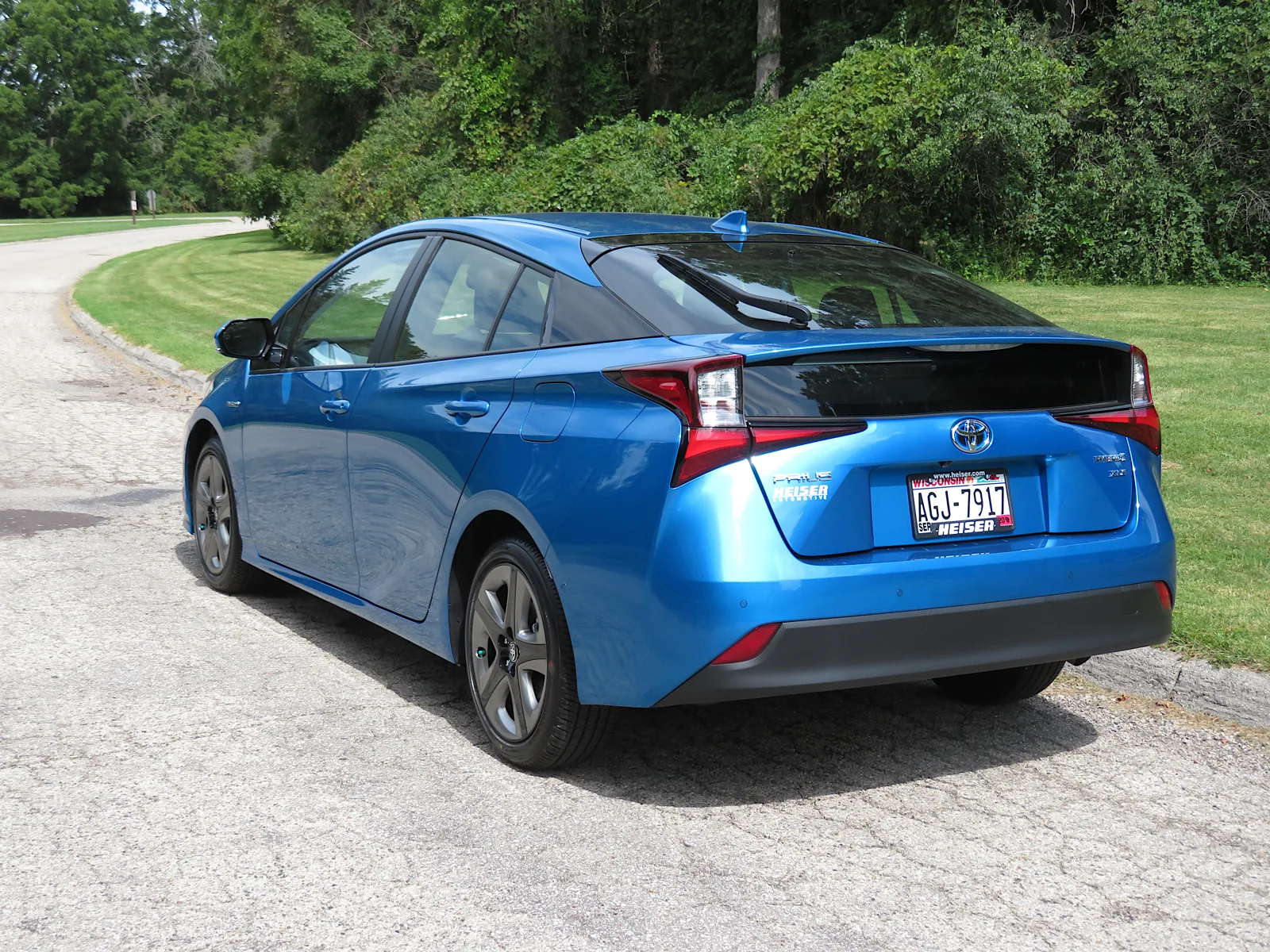
Here is the detail that separates a good night from a backache: the Prius load floor is not flat when you fold the seats. The folded seatbacks sit noticeably higher than the rear cargo floor — owners consistently describe a step of about 4 in and a slight downhill tilt toward the tailgate. So you are not laying a mattress on a level slab; you are laying it across a gentle staircase.
This changes what kind of mattress you want. A tall, squishy air bed exaggerates the step, because your body sinks into the soft section and rolls toward the low end while the raised seatback pushes up under your hips. A pad that is firm and consistent across its whole surface rides over the transition far better. That is why the winning answer for a Prius is usually a self-inflating foam pad or a structured air pad, not a plush inflatable mattress — the same conclusion owners reach after a night of sliding around. The fix for the step itself is bedding or a platform underneath, covered further down.
What mattress TYPE the Prius actually needs
Three families of pad are worth considering, and the Prius floor rules one of them mostly out.
- Tall air mattresses (the ones that need a pump). Comfortable in a tent on level ground, but their height amplifies the 4 in step, they are cold without added insulation, and a twin air bed still fights the wheel-well width. Usable, but the least forgiving choice here.
- Self-inflating foam pads. The sweet spot for a Prius. Open a valve, foam expands, and you get a firm, even surface 3.9 in to 4.25 in thick that bridges minor unevenness and insulates you from the cold cargo floor. Heavier and bulkier packed, but you are storing it in a car, not a backpack.
- Insulated air pads (backpacking style). Thin, structured, and packable. They ride over the step well because they are firm and low-profile, and they vanish into a stuff sack when you need the cargo space back for daytime driving. Slightly less plush than thick foam.
Two smaller factors tip the choice. Insulation matters more than people expect: the Prius floor is thin sheet metal over the spare-tire well and battery, and it wicks body heat on any night below room temperature, so a pad with real insulation earns its place even in mild weather. And storage matters if the Prius is also your daily driver — a thick self-inflating roll eats cargo room you may need for groceries, while a packable air pad disappears into a stuff sack between trips.
So the decision comes down to one question: are you optimizing for the most bed-like comfort on solo trips, or for packability and reclaiming your trunk? The four pads below map onto that split. The same reasoning applies to any compact crossover — see how it plays out in our Mazda CX-5 sleeping guide if you are cross-shopping vehicles.
Comfort-first solo pick: Therm-a-Rest MondoKing 3D
Among the pads still on this list, the Therm-a-Rest MondoKing 3D is the comfort-first choice: thick self-inflating foam that levels the folded-seat floor rather than perching on it.
The trade-offs are real: it is the heaviest and bulkiest pad on this list packed, and its thickness means it sits taller over the seatback step, so you will want it oriented and leveled carefully. For a solo sleeper who camps to actually sleep well, it is the closest thing to bringing your mattress along.
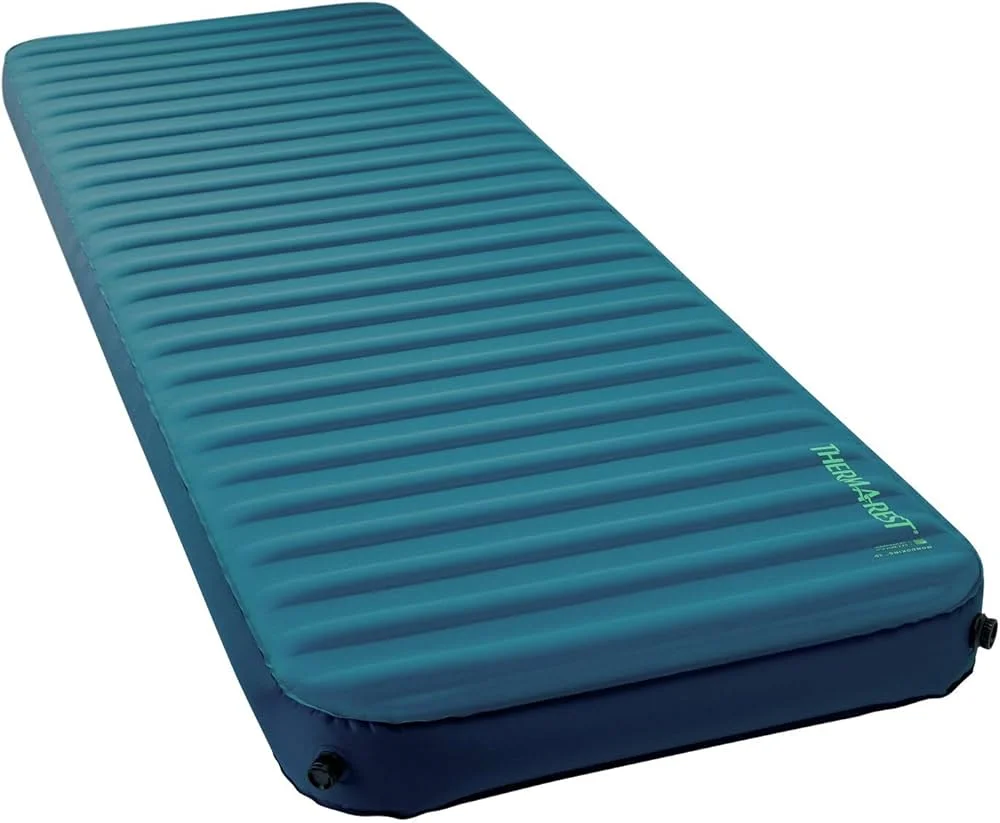
Balanced self-inflating pick: Therm-a-Rest MondoKing 3D
The Therm-a-Rest MondoKing 3D in its Large size is about 77 in long and 25 in wide — again a clean fit for both Prius length and the 43 in width. At roughly 4.25 in thick with an R-value around 7.0, it delivers most of the MegaMat's plush, even-surface feel with a slightly firmer edge that some sleepers prefer for the stepped Prius floor.
Its stretch-knit top and expandable side rails give it a stable, mattress-like surface that resists the roll-toward-the-tailgate problem better than a soft air bed. Like any thick self-inflating pad it is a chunky roll when deflated, so plan on it occupying real cargo space during the day. If you want serious comfort but find the MegaMat overkill on insulation for milder climates, this is the balanced middle.
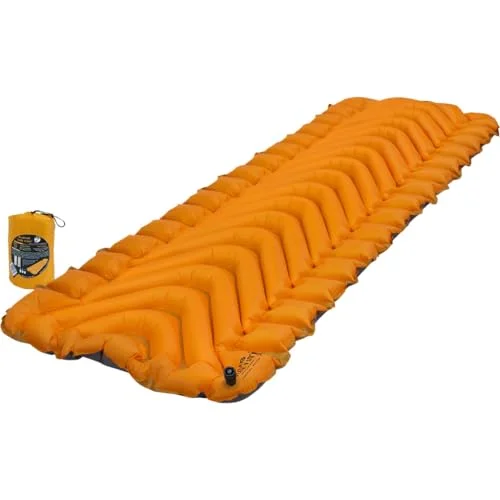
Packable two-up pick: Klymit Insulated Static V Lite
When space and packability matter more than maximum cushion — especially if two people are trying to share the 43 in width — a thin structured air pad is the smarter tool. The Klymit Insulated Static V Lite is about 72 in long and 23 in wide at 2.5 in thick, with an R-value near 4.4. Two of them sit side by side and still leave a sliver of the wheel-well width to spare, giving each sleeper their own defined surface instead of one shared bed that dumps you both into the middle.
Its V-chamber baffles are firm enough to ride over the seatback step, and it packs down to roughly a 5 in by 8 in bundle, so a pair of them frees your cargo bay completely during the day. The trade-off is a thinner, more pad-like feel than the self-inflating options, and at 72 in it is a touch short for the tallest sleepers — fine for most, worth measuring if you are over six feet.
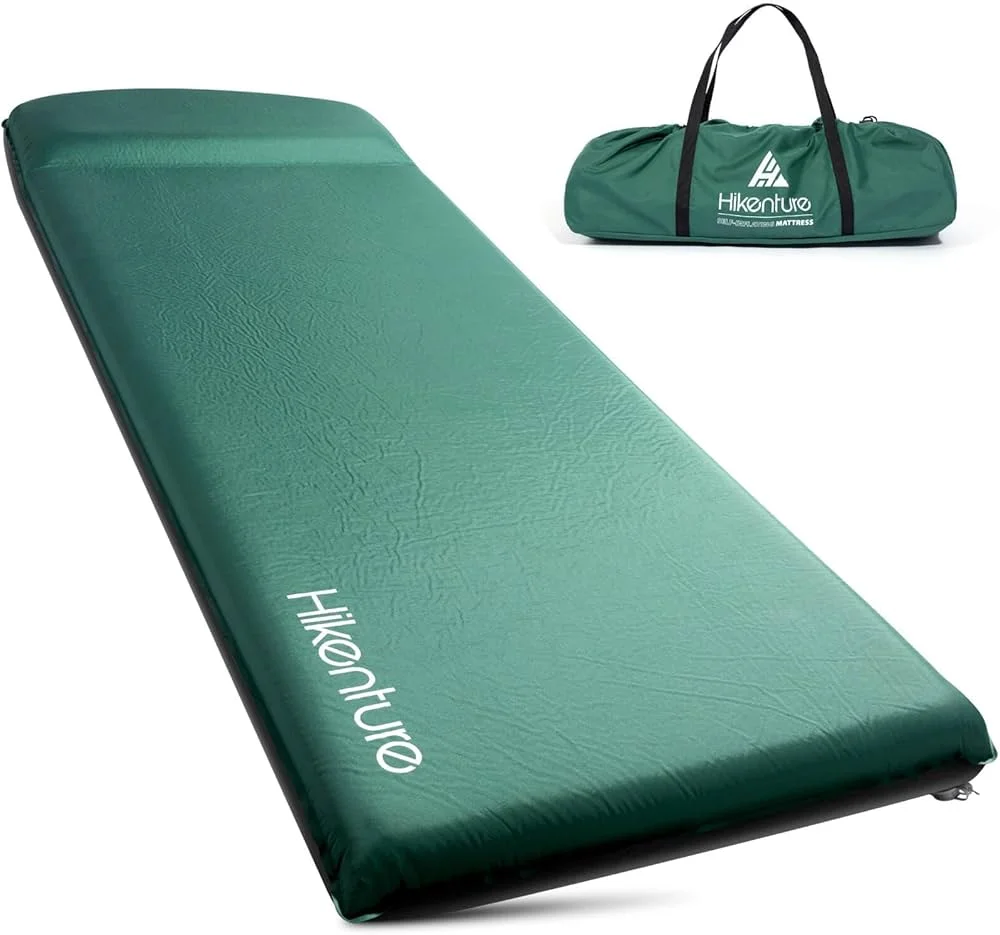
Budget car-camping pick: Hikenture Car Camping Mattress
The Hikenture Car Camping Mattress is a self-inflating pad built specifically for the in-vehicle use case rather than backpacking. Its selling point is a connectable design: two pads zip or buckle together so a couple can build a wider, seam-free surface, and each pad brings its own insulation against the cold floor. That directly addresses the Prius's narrow-and-shared problem in a way single backpacking pads do not.
Treat it as the value-oriented, purpose-built option: not as premium in foam feel as the MegaMat or MondoKing, but designed from the start for sleeping in a car and priced to match. As with any connectable set, confirm the combined and single widths against your own 43 in measurement before committing, since two joined pads can easily exceed the wheel-well gap.
How to level the Prius floor for a flat night
No pad on its own erases the 4 in step where the seatbacks meet the cargo floor, so the real comfort upgrade is dealing with the floor underneath. Three approaches work, from cheapest to most permanent:
- Bridge with bedding. The zero-cost fix owners have used for years: stuff the low cargo well behind the seatbacks with duffels, cushions, or folded blankets until it rises level with the folded seats, then lay the pad over the whole thing. It is fiddly but genuinely effective for occasional trips.
- Build a low platform. A simple plywood deck cut to the roughly 65 in by 43 in floor spans the step, creates a truly flat base, and opens storage underneath. This is the setup serious Prius campers gravitate toward; a self-inflating pad on top of a flat platform is as good as it gets in this car.
- Foam infill. Cut foam blocks or a folded pad to fill the well before your main mattress goes down — a middle ground between loose bedding and a built deck.
One more practical note: if you run an air pump to inflate a pad, most 12V camping pumps plug straight into the car's accessory socket, so you do not need to carry batteries. The RAV4 is a roomier sibling if you keep outgrowing the Prius — our 2025 RAV4 camping guide shows what the extra width buys you.

Can two people really sleep in a Prius?
Yes, but honestly: 43 in of width is tight for two adults. That is narrower than a full mattress, so two sleepers each get roughly the width of a slim twin — workable for a couple comfortable sharing close quarters, cramped for two who like their space. Two narrow pads like the Klymit or a connectable set like the Hikenture make the most of it by giving each person a defined surface.
Length is not the problem: 80 in of usable run means neither person has to curl up. If two-up comfort is a deal-breaker, the Prius is simply the wrong size of vehicle, and a compact crossover is worth a look — our Honda CR-V sleeping guide walks through how much more width that class gives you. For solo travel, though, the Prius is genuinely comfortable once the floor is leveled and the pad is right-sized.
How we researched this (and what we did not do)
Every dimension here comes from published sources, not from us climbing into a Prius with a tape measure. The cargo numbers — 65 in of floor, 43 in between wheel wells, 24 in of height, roughly 80 in of usable sleeping length, and the 4 in seatback step — are drawn from Toyota-owner measurements on Prius forums and vehicle-fit references, which we have linked. The pad specs (thickness, length, width, and R-values like 9.5, 7.0, and 4.4) come straight from each manufacturer's own listings.
We have not slept on these pads inside a Prius or tested them against each other, so we do not claim first-hand comfort rankings. What we have done is line up the car's honest constraints against each pad's honest specs, so you can see which ones physically fit and which type suits the Prius floor before you spend a dollar. Measure your own car — trim and model year vary — and treat these figures as a starting point, not gospel.
The complete lineup also includes Klymit Insulated Static V Lite — each compared on the same specs and reviewer consensus.
See also how to size an inflatable car bed for a snug fit.