What r/CarCamping actually recommends (and what this guide is)
Search “best car camping mattress” on Reddit and the same handful of beds come up over and over.
So this is not another “top air mattress” list. It is an honest read of what the community actually buys, cross-checked against each maker’s published specs and named third-party tests (Outdoor Gear Lab, GearJunkie, CleverHiker, The Inertia, Switchback Travel). I have not slept a night on each of these myself — treat the picks below as a vetted shortlist built from specs and cited threads, not a first-hand field test.
The single number that decides whether you sleep or shiver is R-value — how well the pad blocks cold from the floor. The recurring Reddit mistake is buying a cheap 1.5-R air pad, then freezing the first cool night. Match the R-value to your coldest expected night and most of the choice is made.
If you’re still deciding between formats at all, our breakdown of inflatable vs foam mattresses for car camping walks through the warmth, pack-size and durability trade-offs side by side.
The specs that actually decide it
Before the picks, here is what each column in the comparison really means once you’re lying in the back of your vehicle:
- Type (foam / inflatable / self-inflating). Self-inflating pads — foam with air channels that draw in air when you open the valve — are what the community recommends for car camping: warm, quiet, and they can’t fully deflate on you. Pure inflatable air pads pack tiny and cost less but sleep cold. Closed-cell foam is the cheap, puncture-proof backup layer.
- R-value. The insulation rating. Roughly: 1–2 is summer-only, 4–5 handles three seasons, and 6+ is winter-capable. A 1.5-R air pad over a cold cargo floor is the most common regret in the Reddit threads.
- Packed size. Foam pads are warm but bulky — a MegaMat rolls to about a beach-towel-sized cylinder, while a Klymit air pad packs to the size of a water bottle. In a small SUV or hatchback, that difference is real.
- Weight. Less critical when the car carries it, but it tracks bulk — the warm 4-inch pads run 4–6.5 lb.
- Price. A $96 summer air pad and a $260 all-season foam bed are different tools, not better-and-worse versions of the same thing.
Two more practical notes the threads repeat: bring a 12V or battery pump even for “self-inflating” pads (they self-inflate most of the way, but a few topping-up breaths or a pump gets them firm), and measure your folded-flat load floor before you buy a wide pad — a 30-inch-wide bed domes up the sides in a narrow cargo area.
The pad r/CarCamping swears by - and why it isn't linked here
On the spec sheet that matters, it is a self-inflating foam-and-air pad 4 inches thick, with an 8.1 R-value that’s genuinely winter-capable (the Long-Wide version is rated even higher at 9.5). It packs to about 31 by 10 inches at roughly 4.6 lb in the Medium Wide size, a mini pump is included, and the single runs about $260.
The recurring r/CarCamping line on the MegaMat: it “combines air and foam, so you won’t get cold like you would with just air, and it’s ridiculously easy to fine-tune the firmness” — with the foam muting a partner’s movements as a bonus.
Buy-it-once, all-season: Therm-a-Rest MondoKing 3D
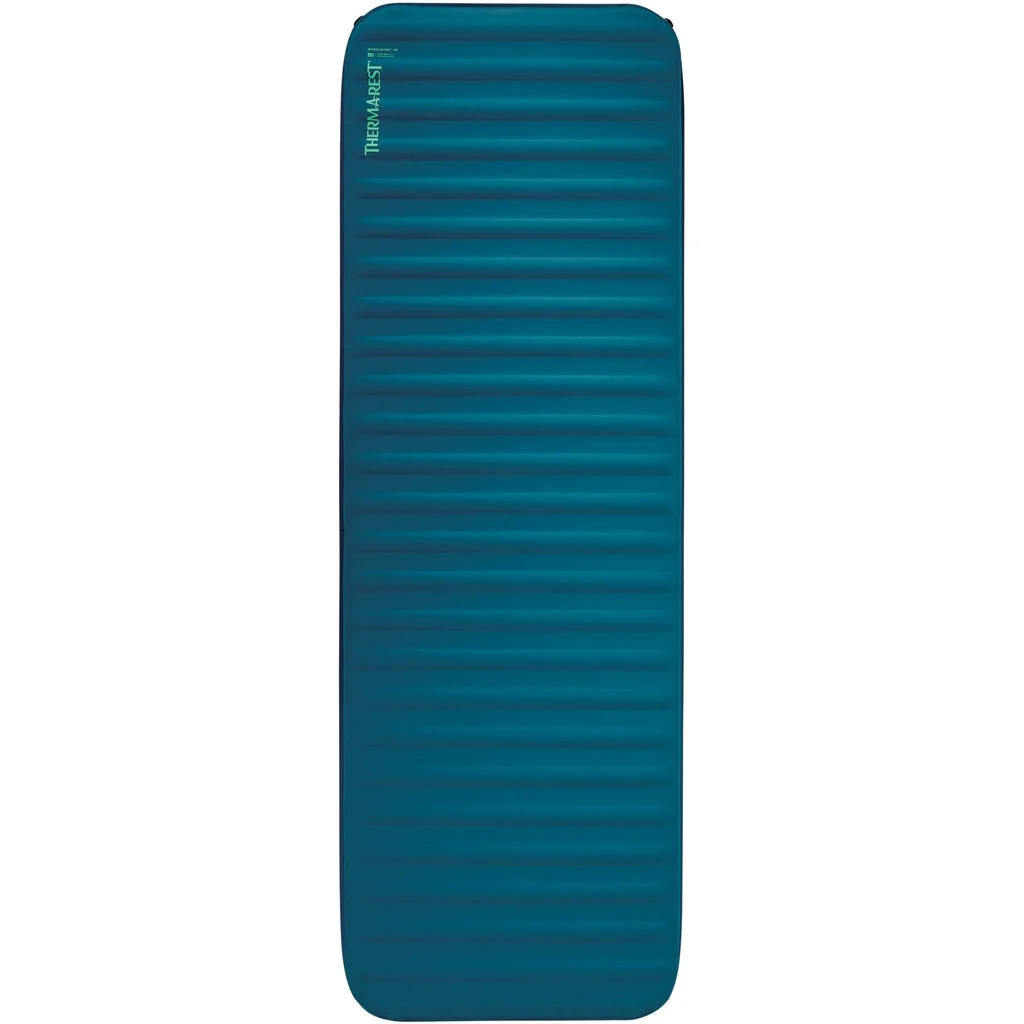
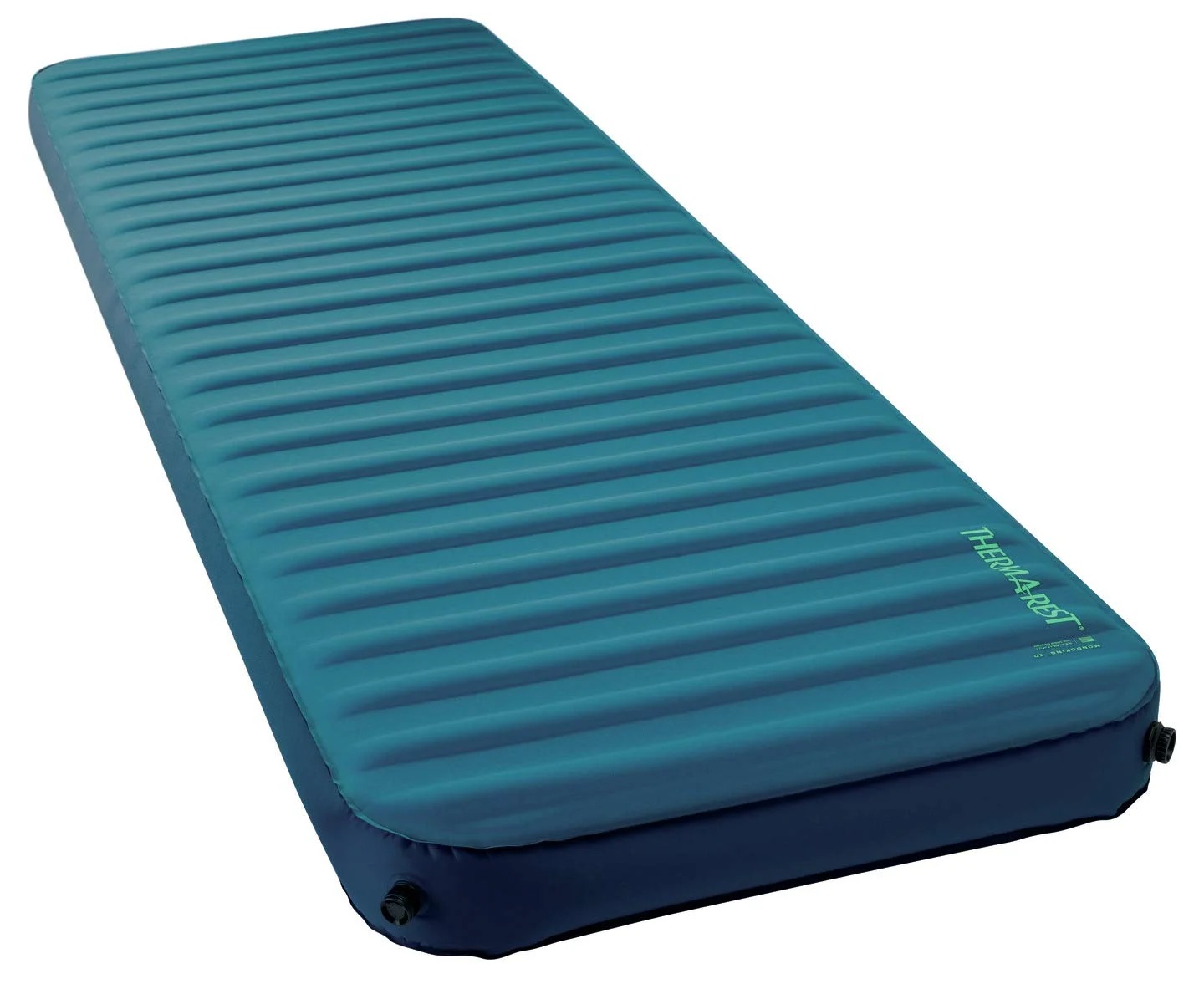
When the Reddit threads argue about durability rather than comfort, the Therm-a-Rest MondoKing 3D is the name that comes up. It is the pad Outdoor Gear Lab has called its overall favorite, praised for a dual-valve system that inflates and deflates fast and a build that owners report lasting season after season — the opposite complaint to the budget pads that spring valve leaks.
It is a self-inflating 4-inch foam pad with a 7.0 R-value (Large), packing to about 26 x 10 in at roughly 4.4 lb, and it usually lands around $259. That puts it a notch below the MegaMat on raw warmth and plushness, but ahead on long-term toughness and a touch more compact.
It makes the most sense for the camper who goes out across seasons and wants a single pad that handles cold nights, who’d rather buy once than replace a leaky budget pad in two years, and who values a fast, fuss-free valve setup over the absolute softest feel. For that buyer the Therm-a-Rest MondoKing 3D is the most defensible long-term purchase in this roundup.
Fastest, least-fuss setup: the valve decides it, not the badge
If the part of car camping you dread is wrestling a pad firm at the end of a long drive, the honest answer is that setup speed here is a valve question, not a brand one. All four picks get you to a made bed; where they differ is how much of the work you do yourself.
The Therm-a-Rest MondoKing 3D is the one built around that problem. Its dual-valve system — the detail Outdoor Gear Lab singles out — inflates and deflates fast, so the pad is close to firm before you have finished unpacking.
The Sea to Summit Camp Plus wins the other half of the chore, the pack-down. Its multi-function valve fills fast, deflates one-way so the mat cannot draw air back in while you roll it, and lets you bleed off a little to fine-tune firmness.
The Klymit Static V Luxe is the outlier: a pure air pad has no foam to self-inflate, so every breath is yours. That is the price of the water-bottle pack size.
The trade to weigh: a self-inflating foam pad does most of the inflating for you and packs bulky; an air pad packs tiny and makes you do all of it.
Whichever you pick, plan on a small 12V or battery pump. Even a self-inflating pad only expands most of the way on its own, and the last stretch is the difference between a bed and a mat.
Budget summer pick: Klymit Static V Luxe
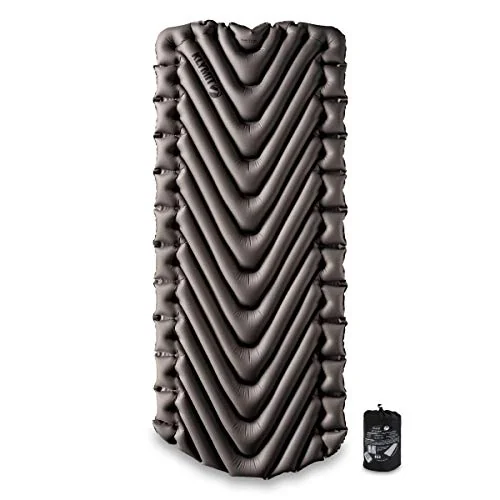
Not everyone needs a $260 foam bed, and the budget answer the community reaches for is the Klymit Static V Luxe. It is a genuinely wide air pad — 76 by 30 inches, about 3 inches thick — that weighs only ~27 oz and packs to roughly 8 x 4.5 inches, the size of a water bottle. For a hatchback or a tight cargo area, that pack size is the whole appeal.
Be honest with yourself about the catch, which SectionHiker and the Reddit threads both flag: the standard Static V Luxe is a low-R-value (~1.5) summer pad. It sleeps cold the moment the ground does, so for shoulder season you either add a closed-cell foam layer underneath or step up to the insulated version (~6.5 R, around $140). At about $96, though, it is the cheapest comfortable way to find out whether you even like sleeping in your car.
Get the Klymit Static V Luxe if you camp in warm weather, want the smallest pack size here, and aren’t ready to spend foam-pad money yet.
The three-season step-up: Sea to Summit Camp Plus
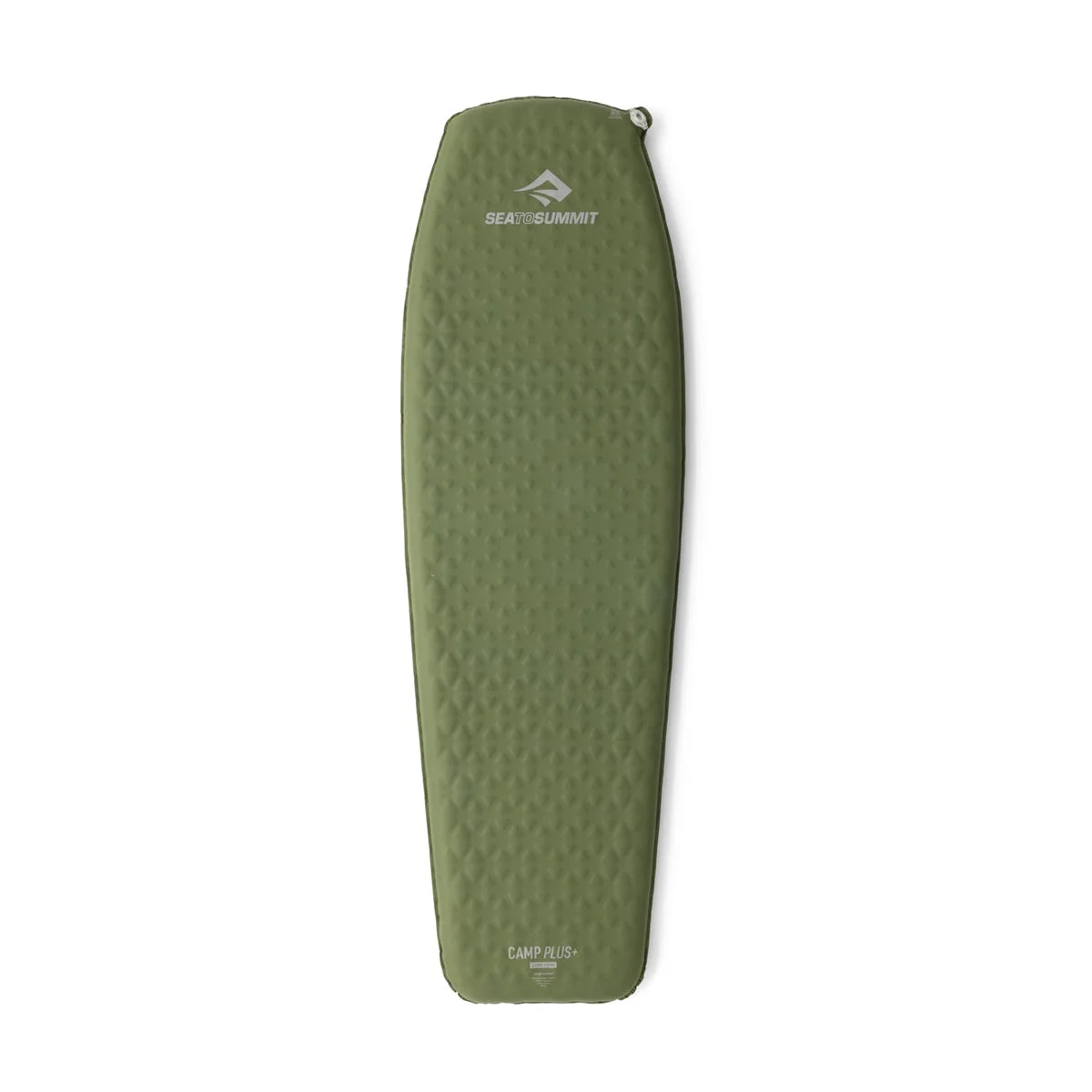
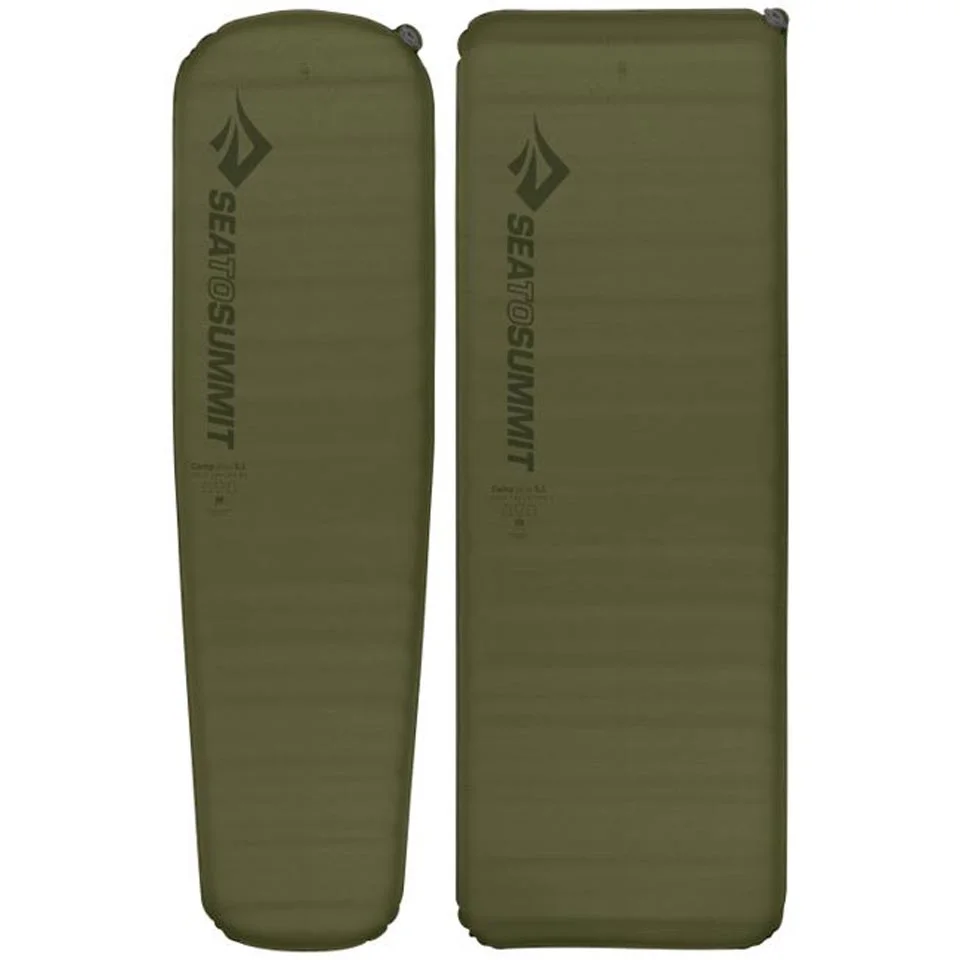
If a bare summer air pad sleeps too cold but a $260 foam bed is more than you want to spend, the Sea to Summit Camp Plus is the sensible middle. It is a self-inflating foam mat, 2.6 inches thick, with an R-value of 4.3 — enough, in Sea to Summit’s words, to “insulate from all but the coldest ground.” That puts it comfortably into three-season territory without the bulk or price of the 4-inch premium pads.
The detail reviewers like is the multi-function valve: it fills fast, deflates one-way for a quick pack-up, and lets you bleed off a little air to fine-tune firmness. The tapered Large runs about 78 by 25 inches, and it usually lands around $109 — a real step up in warmth and packability over a budget air pad for not much more money.
It fits the camper who heads out in spring and fall rather than just peak summer, who wants self-inflating foam warmth without the full bulk of a MegaMat, and who’d rather spend about $109 than $260 and can live with 2.6 inches of loft instead of 4.
It’s also worth knowing the community’s other value-luxury name here: the REI Co-op Camp Dreamer XL (~$179, R 6.6, REI-exclusive) is a warmer, thicker 4-inch bed if you’ll buy direct from REI and don’t mind the extra weight — reviewers do flag occasional valve issues over time, so it trades a little long-term toughness for the lower all-season price.
What the community is really arguing about
Read enough r/CarCamping threads and the same three debates surface. Here’s how to translate them to your own buy:
- Foam vs air. The community consensus for car camping leans hard toward self-inflating foam: it’s warmer, quieter, and can’t go fully flat. The counter-argument is pack size — if your vehicle is small or you also backpack, a compact air pad like the Klymit wins on storage. There’s no universal answer; it’s a warmth-and-comfort vs pack-size trade.
- How much R-value you actually need. The most repeated lesson: don’t under-buy insulation. People who bought a 1.5-R pad for “summer” camping froze on the first cool night, because a vehicle’s metal floor pulls heat fast. If you camp anywhere but reliable summer heat, target R-5 or higher.
- Width and fit. A 30-inch-wide pad is luxurious on a flat floor and a problem in a narrow one, where it domes up the sides. Measure the narrowest point of your folded-flat load floor first — our guide to car camping mattress size by vehicle walks through it.
One more thing the threads agree on: even a self-inflating pad wants a few topping-up breaths or a small 12V pump to get truly firm, and a cheap closed-cell foam layer underneath both boosts warmth and protects the pad from a gritty cargo floor.
The honest verdict
The rest of the field sorts cleanly by who should buy it. For durability and all-season use, the Therm-a-Rest MondoKing 3D (~$259) is the buy-it-once choice. For three-season value, the Sea to Summit Camp Plus (~$109) gives you foam warmth without the bulk — or the REI Co-op Camp Dreamer XL (~$179) if you buy direct from REI. And on a tight budget in warm weather, the Klymit Static V Luxe (~$96) has the smallest pack size of the lot, as long as you add insulation for cold nights.
Whichever you pick, get the R-value right for your coldest expected night and measure your cargo floor before you buy a wide pad. These picks are drawn from published specs, named reviews, and cited community threads — not from my own overnight testing — so use them as a vetted shortlist, then confirm the fit in your own vehicle. If you want a smaller, packable companion for warm trips, our roundup of the best car camping sleeping pads covers the lighter end of the range.