Here's what actually separates these two pads
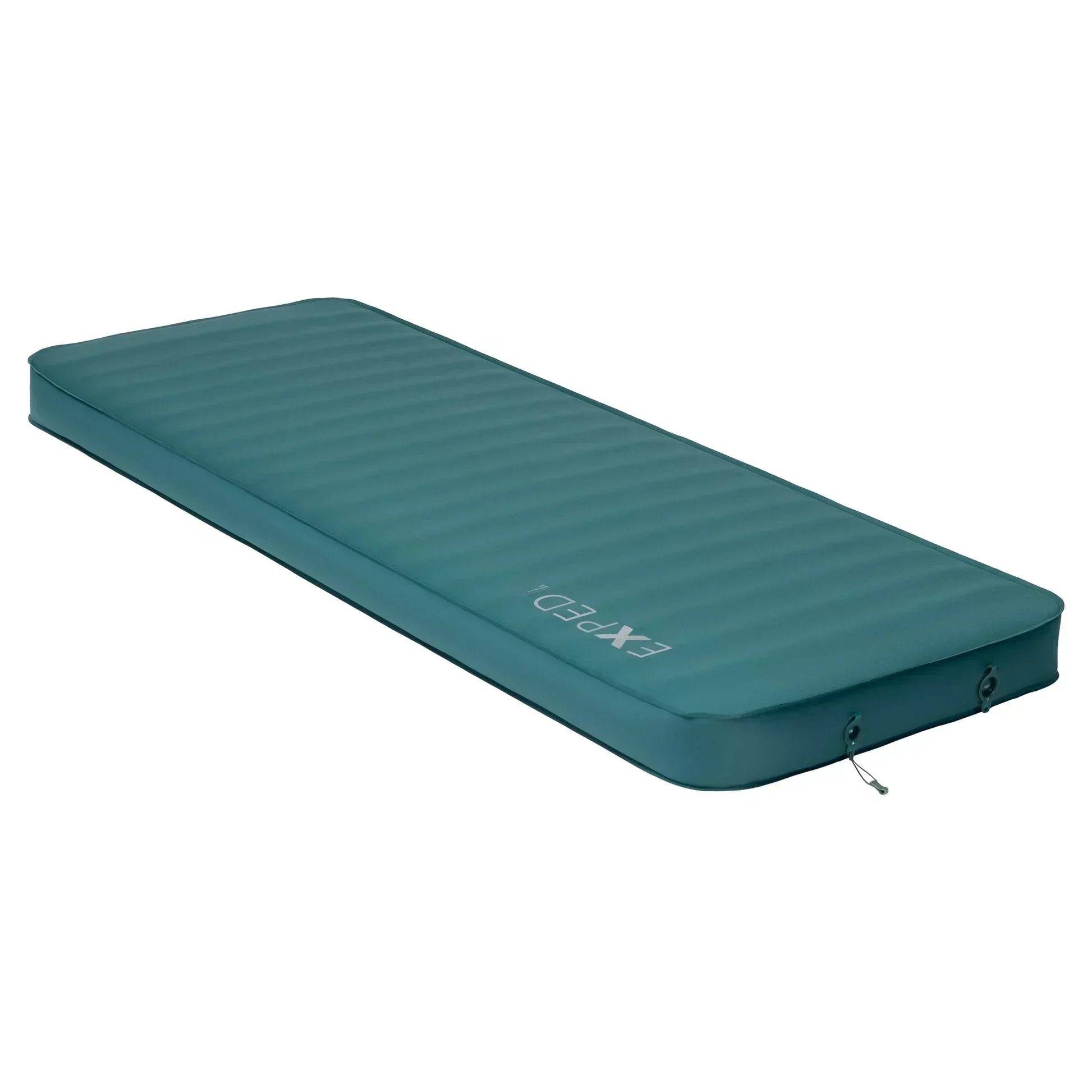
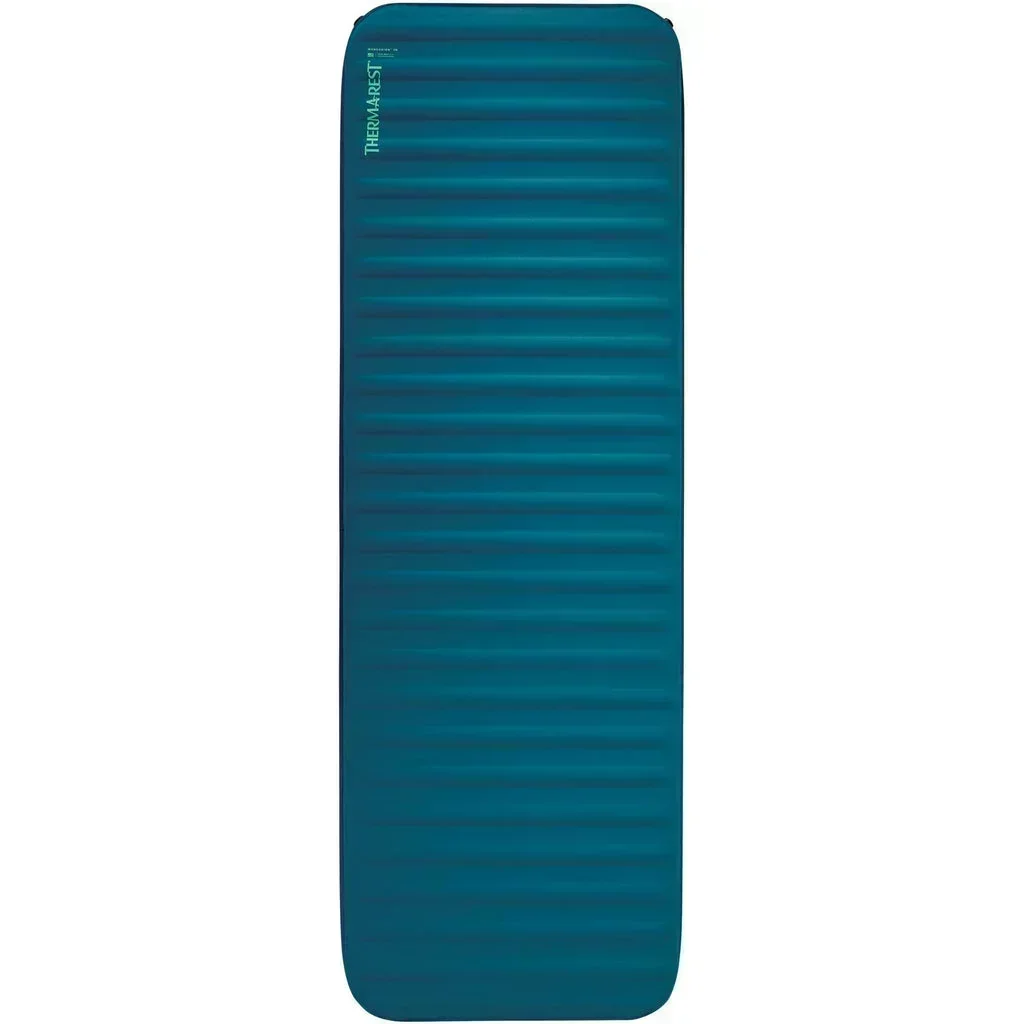
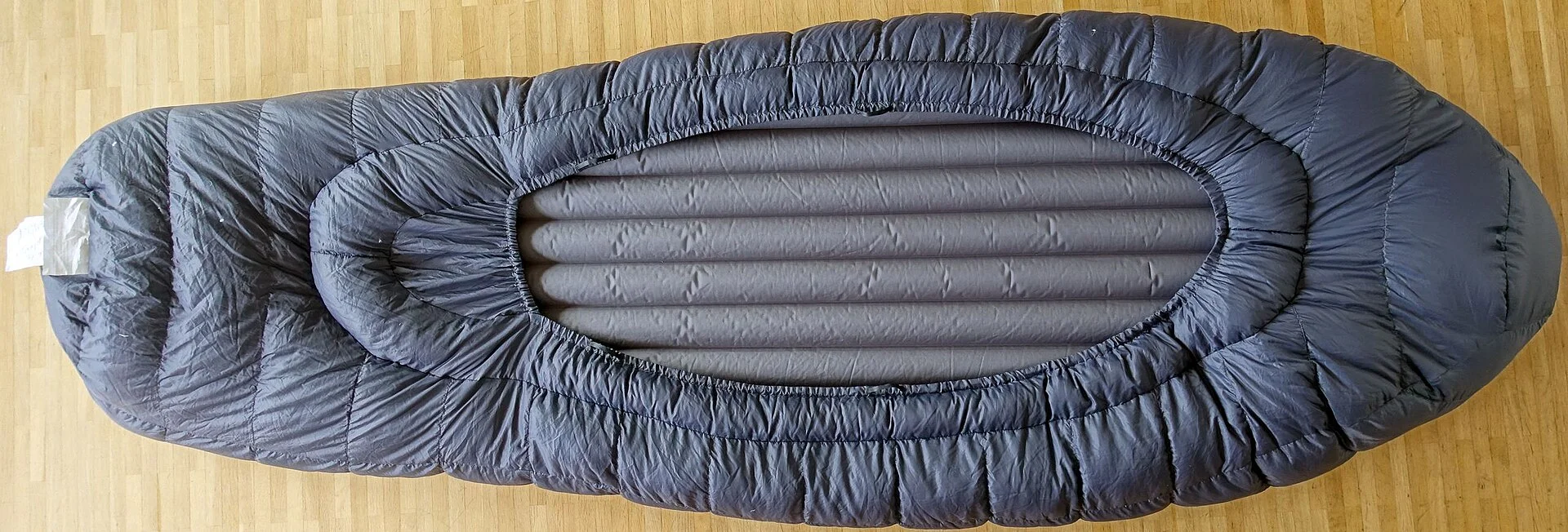
The Exped MegaMat 10 Sleeping Pad wins on raw warmth and a plusher sleeping surface; the Therm-a-Rest MondoKing 3D wins on valve speed and how fast you can pack it down. Pick the MegaMat if cold ground is your enemy, the MondoKing if fighting a stuff sack in the dark is.
I've torn down enough gear to know that spec sheets lie by omission, not by fabrication. Both of these pads are self-inflating slabs about ten centimeters thick, built for one job: making the floor of a tent or the flat cargo deck of an SUV feel like a mattress. Neither is going in a backpack. Anybody who tells you otherwise hasn't carried five pounds of foam a mile.
The real fork in the road is what the two brands optimized. Exped went after insulation and surface feel. Therm-a-Rest went after usability and pack-down. That's the whole comparison in one sentence, and everything below is me showing my work.
Here's the part the marketing pages bury: these pads are close enough that most people would sleep fine on either. The differences only start to matter at the edges, when you're camping in October instead of July, or when your trunk is already 80 percent full of coolers and firewood. That's where a half-inch of packed diameter or a full R-value point stops being a bullet point and starts being the reason you did or didn't sleep. If you're still deciding the whole category, my car camping sleeping pad guide covers the landscape before you commit to a ten-centimeter monster like these two.
Warmth and R-value: the number that matters
R-value is the one number on these spec sheets I trust, because since 2020 both brands test to the same ASTM F3340 standard, so an 8.1 and a 7.0 are measured on the same scale. The MegaMat 10 rates R-8.1; the MondoKing 3D rates R-7.0. That gap is real and it's bigger than it looks.
- MegaMat 10: R-8.1 - the warmer pad by roughly 15 percent in insulating power.
- MondoKing 3D: R-7.0 - still clears four-season car camping with room to spare.
- Both tested to the same ASTM F3340 standard since 2020, so the numbers are directly comparable, not marketing math.
| Spec | Exped MegaMat 10 Sleeping Pad | Therm-a-Rest MondoKing 3D |
|---|---|---|
| R-value | 8.1 | 7.0 |
| Thickness | 10 cm / 4 in | 11 cm / 4.25 in |
| Weight (large/wide) | 5 lb (LW) - 5 lb 11.5 oz (LXW) | 4 lb 6 oz (L) - 5 lb 8 oz (XXL) |
| Packed size | 31.1 x 9.8 in (LXW) | 31 x 10.3 in (XXL) |
| Price | ~$260 | ~$285 |
An R-value above about 5 handles four-season car camping for most people, so both pads clear that bar with room to spare. But R-value isn't linear in how it feels. The jump from 7.0 to 8.1 is roughly a 15 percent gain in insulating power, and on frozen ground in the low 20s Fahrenheit, that's the difference between waking up because you're cold and staying asleep.
Here's what fails first if you undershoot R-value: not the pad, you. The pad works fine; you just leak heat into the dirt all night and blame the sleeping bag. If you're a car camper who mostly goes out in shoulder season and summer, either pad is overkill and you'll never feel the 1.1-point difference. If you're the person who camps in a rooftop tent in November, the MegaMat's extra insulation is the spec worth paying for.
Thickness and the comfort you feel at 2am
On paper the MondoKing is the thicker pad: 11 centimeters (4.25 inches) of loft versus the MegaMat's 10 centimeters (4 inches). A quarter inch. If anyone tells you that quarter inch changes their sleep, they're describing a placebo, not a pad. Both give you enough vertical foam that a side sleeper's hip won't bottom out to the ground, and that's the number that actually matters for the 2am hip-roll test.
What matters more than the top-line thickness is how the foam is built. The MegaMat uses vertically oriented open-cell foam that inflates to a consistent flat plane. The MondoKing uses Therm-a-Rest's StrataCore, which stacks two foam layers with a stabilizing structure between them, so it holds a firmer, more even shape when you press into it. In practice the MegaMat feels a touch plusher and more pillow-top; the MondoKing feels a touch more supportive and structured. Neither is wrong. It's mattress-firmness preference, and I can't pick that for you.
The thing I'll flag from owner consensus: heavier sleepers and stomach sleepers tend to prefer the MondoKing's firmer StrataCore because it doesn't let them sink and taco. Lighter sleepers and people who want the softest possible surface lean MegaMat.
Both let you dial firmness by burping air out through the valve after they self-inflate, which is the real comfort lever here, more than the quarter inch on the spec sheet. Open the valve, lie down, let some air out until your hip settles right, close it. That five-second adjustment does more for your back than any thickness spec, and it's the step most people skip because they think self-inflating means set-and-forget.
One more thing the spec sheet won't tell you: a thicker pad sits you higher off the tent floor, so more air circulates underneath and, on a windy night, more heat gets pulled away from below. That's why R-value and thickness aren't the same conversation. The MegaMat's higher R-value is what keeps that extra height from turning into a cold spot. Height buys comfort; insulation buys warmth, and they're two different columns.
Packed size and weight for car camping
Let me kill the weight conversation first: these pads weigh between roughly 4.5 and 5.7 pounds depending on size, and you are putting them in a car. The weight is irrelevant unless you're carrying gear up from a distant lot, and even then it's a rounding error next to your cooler. Anybody optimizing these two on weight has lost the plot. The MondoKing Large is the lightest at 4 lb 6 oz; the MegaMat LXW is the heaviest at 5 lb 11.5 oz, and both facts will change your life exactly zero percent.
Packed size, though, is where car campers actually feel the trade-off, because trunk space is the real currency. The MegaMat LXW packs to about 31.1 by 9.8 inches. The MondoKing XXL packs to about 31 by 10.3 inches. Length is a wash. Diameter is where the MondoKing is slightly fatter, roughly a half inch more girth, because that StrataCore foam is stiffer and fights compression harder.
That half inch cuts both ways, and this is the part reviewers skip:
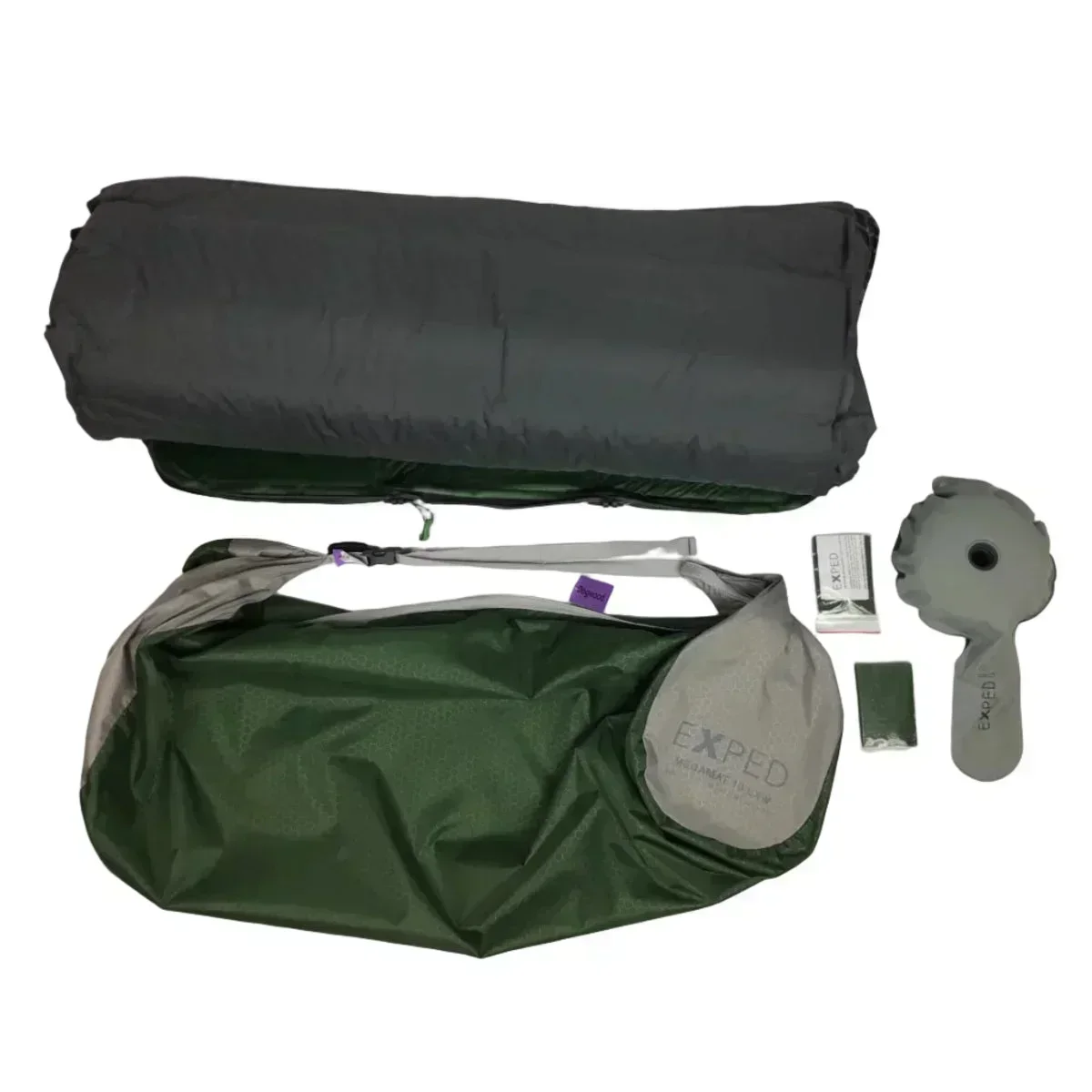
- The MondoKing is fatter packed but easier to pack - its TwinLock stuff sack doubles as a pump sack and the pad drops in without a wrestling match.
- The MegaMat packs marginally smaller but demands more muscle and patience to roll the air out and cram it into its sleeve.
- Break camp fast and hate fighting gear? The MondoKing's slightly larger but more cooperative bundle is the better daily-driver.
- Tetris-ing a packed trunk where every half inch counts? The MegaMat's tighter roll earns its keep.
And be honest about your own patience here, because the pad you dread packing is the pad that ends up staying home. I've seen more good gear abandoned over a fussy pack-down than over any performance shortfall. For the broader question of what fits which vehicle, my SUV and sedan mattress guide gets into trunk geometry, because a pad that packs to ten inches around still has to share space with a cooler, a stove, and a bag of firewood.
Fabric, sizing, and how they sleep
The fabrics are near twins, which tells you both brands landed on the same answer. The MegaMat runs a 50-denier tricot polyester top over a 75-denier polyester bottom. The MondoKing runs a 50-denier polyester knit top over a 75-denier polyester bottom. Same weight class, same durability tier.
The 75D floor on both is thick enough to shrug off a gritty tent bottom or a cargo deck, and the 50D top on both has a soft, brushed hand that doesn't feel like sleeping on a pool toy. That brushed top is the spec that actually matters for how a pad feels against skin and how well a sleeping bag grips it instead of sliding off at 3am.
Sizing is where they diverge in a way worth reading carefully. The MegaMat comes in a wider spread: MW at 72 inches long and 25.6 wide, LW at 77.6 by 25.6, and LXW at 77.6 by 30.3 for the wide sleeper. The MondoKing gives you Large at 77 by 25 inches and jumps straight to XXL at 80 by 30. If you're tall and want extra length without the extra width, the MondoKing XXL's 80-inch length beats everything Exped offers. If you want a shorter, tidier pad for a compact tent, the MegaMat MW has no MondoKing equivalent.
Match the pad to your body and your tent floor, not to the biggest number. A 30-inch-wide pad is glorious until it won't lie flat in a two-person tent and you're sleeping on a curled edge. Measure your tent floor before you buy the wide version of either.
The wide pad you can't lay flat is worse than the narrow one you can.
Inflation, deflation, and setup hassle
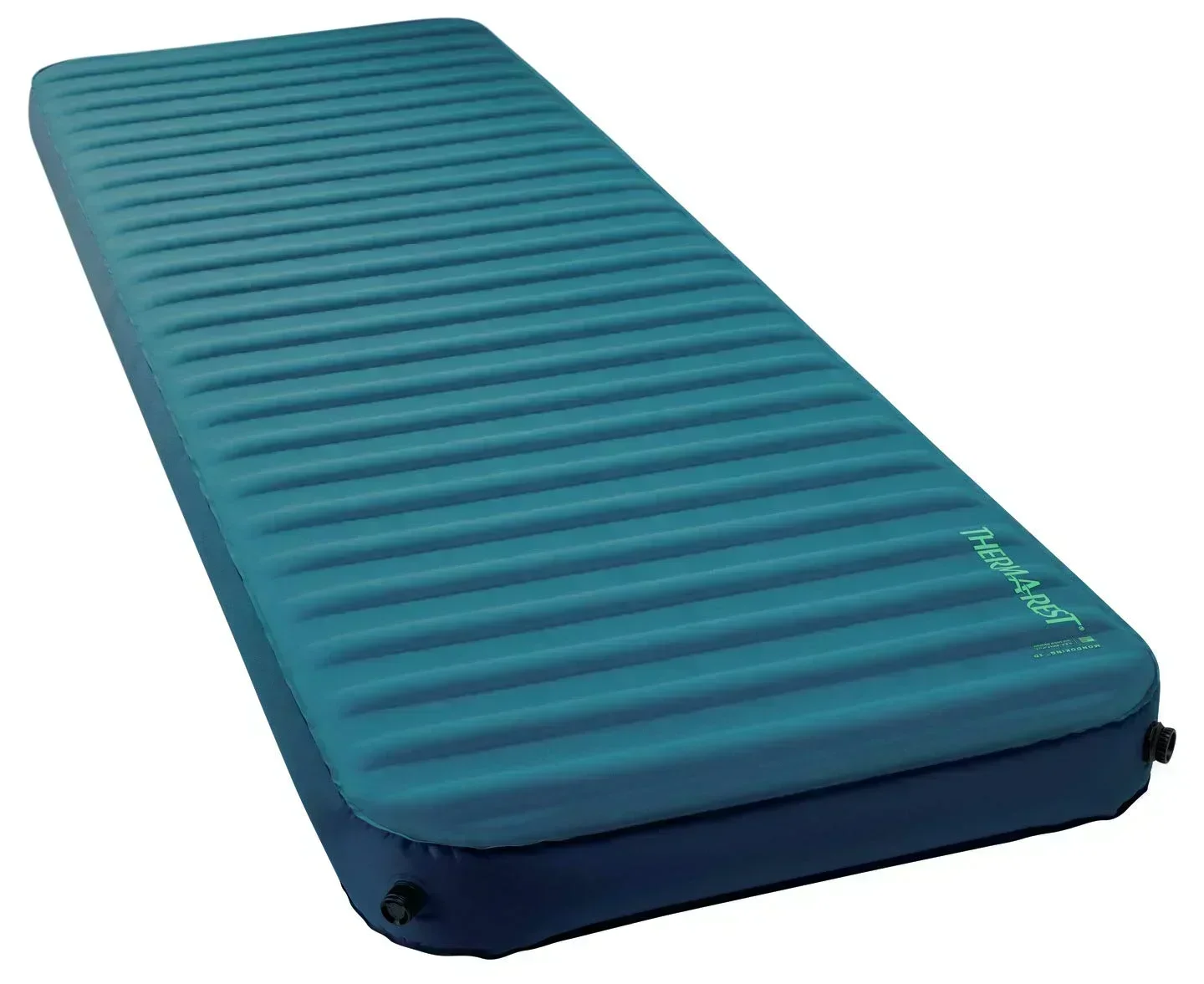
This is where the MondoKing pulls clearly ahead, and it's the spec the MegaMat crowd doesn't want to talk about. Therm-a-Rest's TwinLock valve is a genuinely good piece of engineering: two separate one-way valves, one for inflation and one for deflation, so air rushes in fast when you open camp and dumps out fast when you break it. Therm-a-Rest claims it inflates three times faster and deflates five times faster than the old single valve, and owner reports back that up. Deflation speed is the spec nobody markets and everybody feels, because rolling a stubborn pad that keeps re-inflating is the single most annoying part of breaking camp.
The MegaMat uses Exped's flat valve system with a separate inflation and deflation flap, and it comes with a small hand pump. It works, and it works fine, but it's a step slower and slightly fussier. You self-inflate, top off with the pump or a few breaths, and you're done, but the deflation roll takes more deliberate effort to get the air out before you seal it.
Both are self-inflating, so the honest workflow for either is the same:
- Unroll it and open the valve.
- Walk away for ten to fifteen minutes while it fills itself.
- Top off with the pump or a breath, or burp air out to set your firmness.
Neither requires lung power to get usable. The difference is the tail end. If you camp the same site for days, setup speed barely registers and it's a wash. If you're moving every morning and hate the deflation wrestle, the MondoKing's TwinLock is worth real money, and it earns the difference in price.
Durability: what fails first on a self-inflating pad
Let me tell you what actually kills these pads, because it's never the thing people worry about. Nobody wears out 75-denier foam-backed fabric from normal sleeping. What fails first, on both of these and on every self-inflating pad, is the valve and the seams. A valve that gets grit in it stops sealing. A seam that gets stressed by over-inflation on a hot day starts to delaminate. That's the failure mode, and it's the same story for both brands.
On the valve question, the MondoKing's TwinLock is more complex, which cuts both ways: more moving parts to fail, but Therm-a-Rest's warranty and parts support are the best in the category and they'll send you a valve. The MegaMat's flatter valve is simpler and has fewer failure points, but Exped's support pipeline is slower to deal with. Pick your poison: simpler hardware, or better backup when the hardware fails.
The over-inflation trap is the one I'll hammer, because it's self-inflicted and it voids nothing but your comfort. Never leave a self-inflating pad sealed and inflated in a hot car or a sun-baked tent. Air expands, internal pressure spikes, and you stress the seams and baffles for no reason. Open the valve a crack if you're leaving it inflated in the heat.
Store both pads long-term unrolled and unsealed with the valve open, standing in a closet or under a bed, so the foam keeps its loft and doesn't take a compression set. Do that, and both of these pads outlast the car you're camping out of. Skip it, and you'll blame the brand for a failure you caused. Treated right, a decade of service from either is a reasonable expectation.
One field-repair note worth carrying: keep the patch kit that ships with either pad, and learn to spot a slow leak before it strands you. A pad that goes soft at 3am is almost always a valve that didn't seat or a pinhole from a stray pine needle under the tent floor, not a catastrophic failure. Both are five-minute fixes if you catch them, and both are a miserable night if you don't. Check the valve seats clean and dry before every trip, and sweep the tent floor before you lay the pad down.
Build the sleep system: which pad, which sleeper
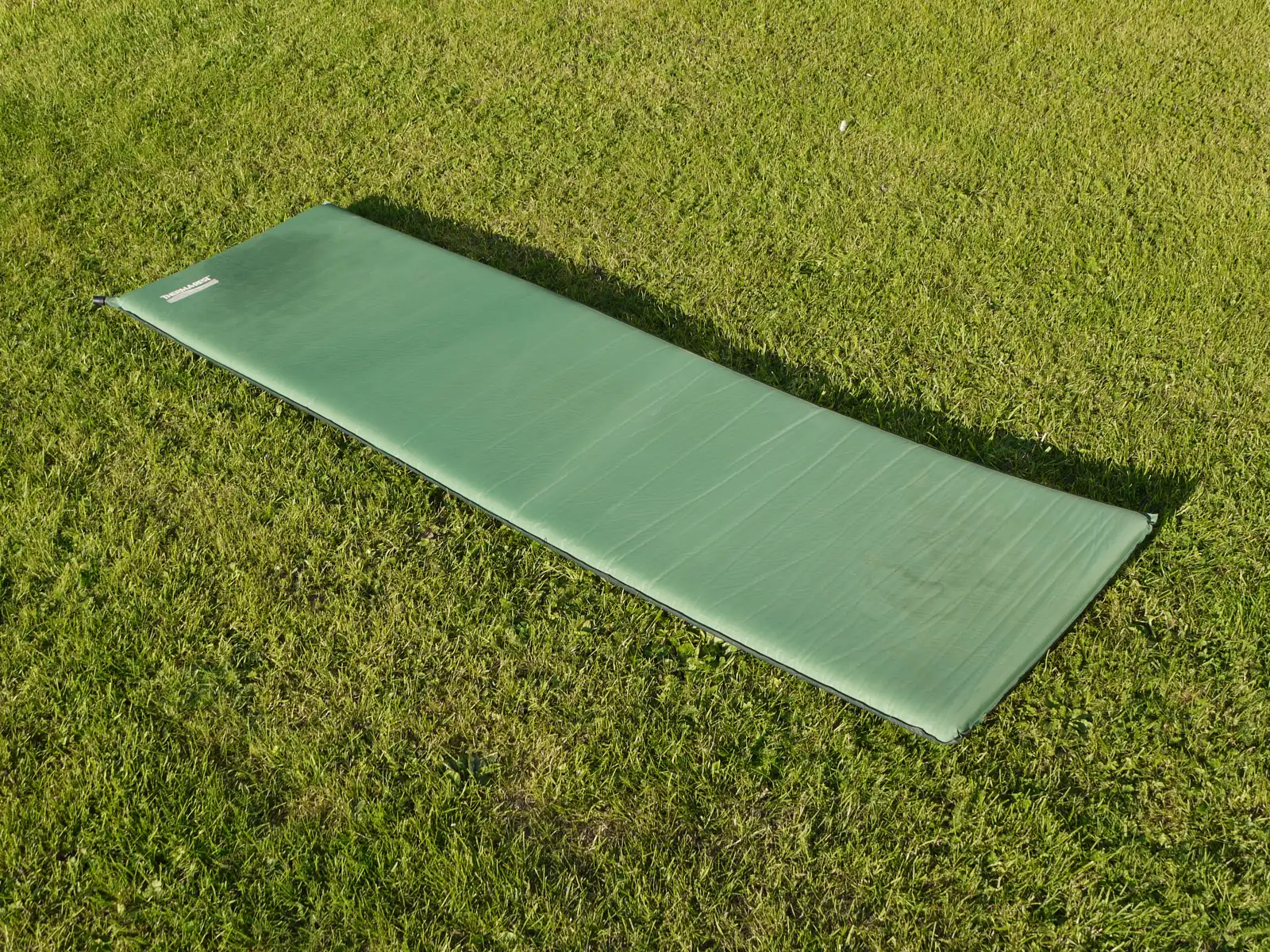
Here's how I'd actually route the decision, no fence-sitting. Buy the Exped MegaMat 10 Sleeping Pad if warmth is your priority: cold-weather car camping, rooftop tents in shoulder season, or you're simply a cold sleeper who'd rather have the R-8.1 buffer. It also gets the nod if you want the softer, more pillow-top surface and the widest range of size options, including that tidy 72-inch MW for compact tents. It packs marginally smaller, too, if your trunk is a jigsaw puzzle.
Buy the Therm-a-Rest MondoKing 3D if usability is your priority. The TwinLock valve makes setup and especially teardown genuinely faster, which matters if you're moving camp every day. Its firmer StrataCore suits heavier and stomach sleepers who don't want to sink, and the 80-inch XXL is the longest pad here for tall folks. You give up a little warmth and gain a lot of daily convenience, and the parts-and-warranty backup is best in class.
The truth is both are excellent, the MegaMat lands about $260 and the MondoKing XXL about $285, and both will make the ground disappear, so you can't really lose this one. The differences are at the margins, and the margins only matter based on how and when you camp. Match the pad to your actual conditions, not to the bigger spec, and pair it with a bag rated for your real overnight lows. A warm pad under a cold-rated bag is a complete sleep system; a warm pad under a summer bag still leaves you shivering. Buy the pad for the ground and the bag for the air, and stop overthinking the quarter inch.
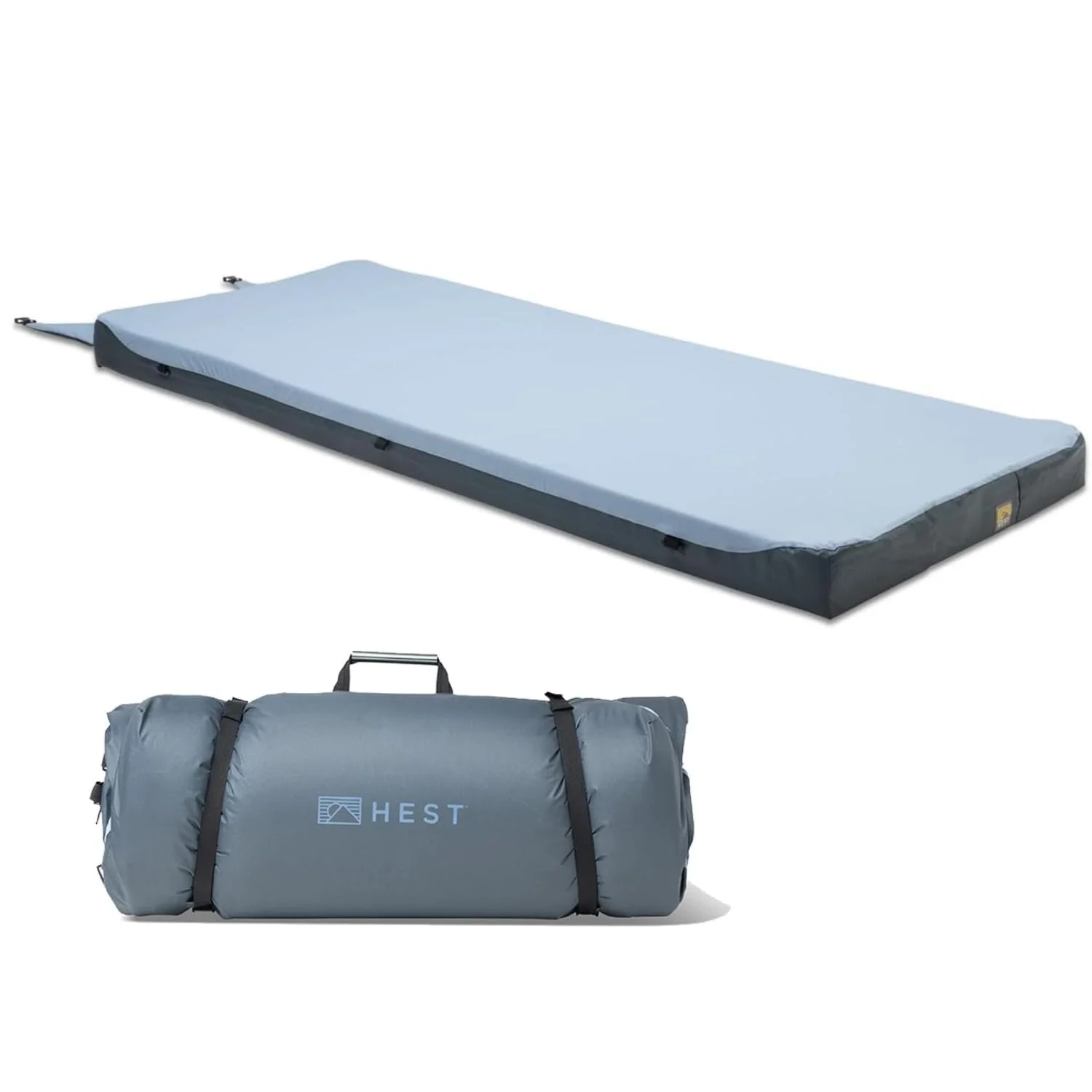
The complete lineup also includes HEST Foamy Wide Camping Mattress Pad, a 78-by-30-inch memory-foam roll-up with no valve to work at all - each compared on the same specs and reviewer consensus.