The real question isn't the brand, it's how it attaches
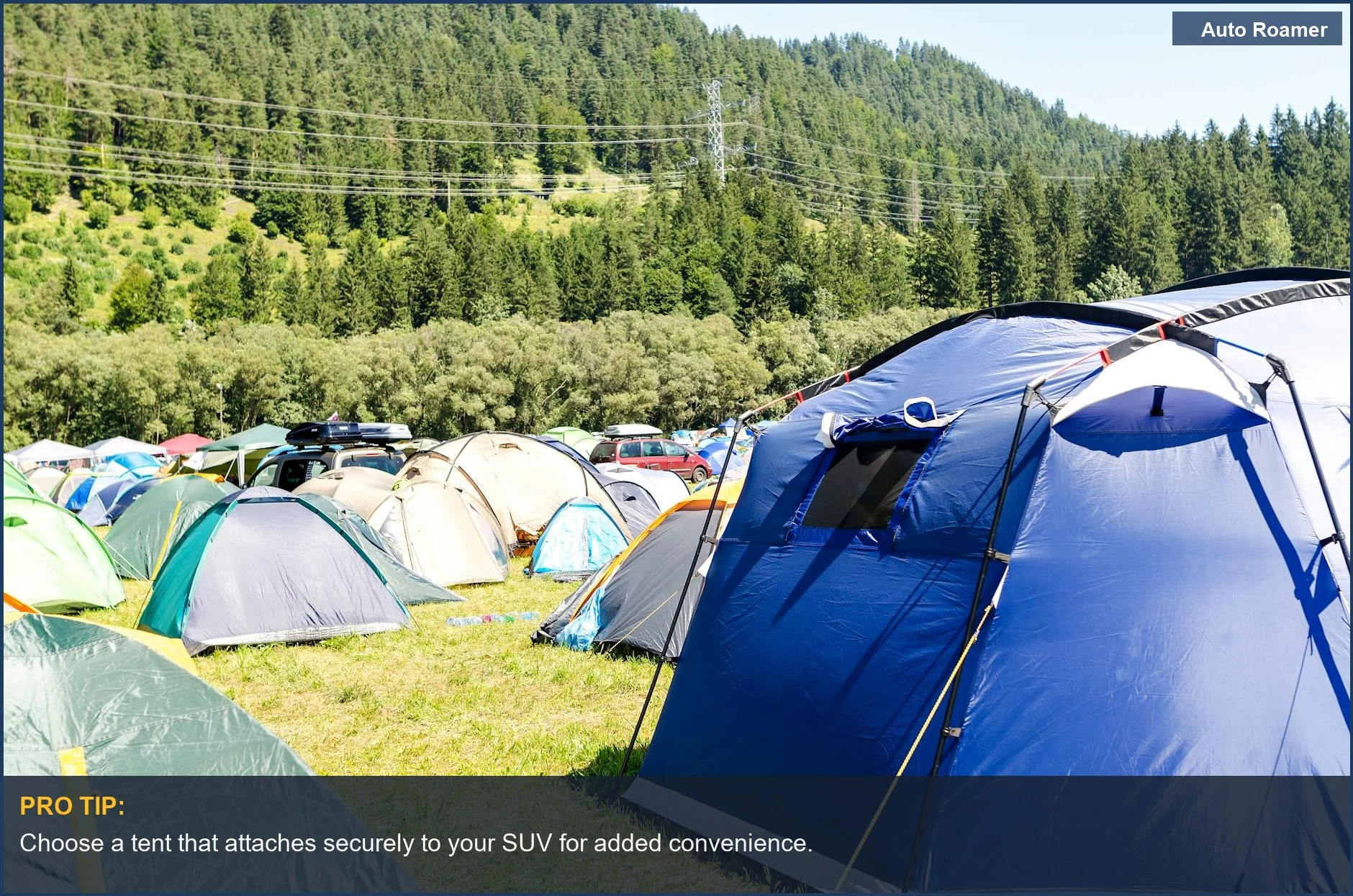
"Best camping tent for SUV" sounds like one question, but it hides the decision that actually matters: how the tent connects to your vehicle. Some tents sleeve directly onto your open hatch so the cargo area becomes a room. Others simply pitch beside the SUV and ignore it. Get that fork right and the brand barely matters; get it wrong and no amount of shopping fixes the mismatch.
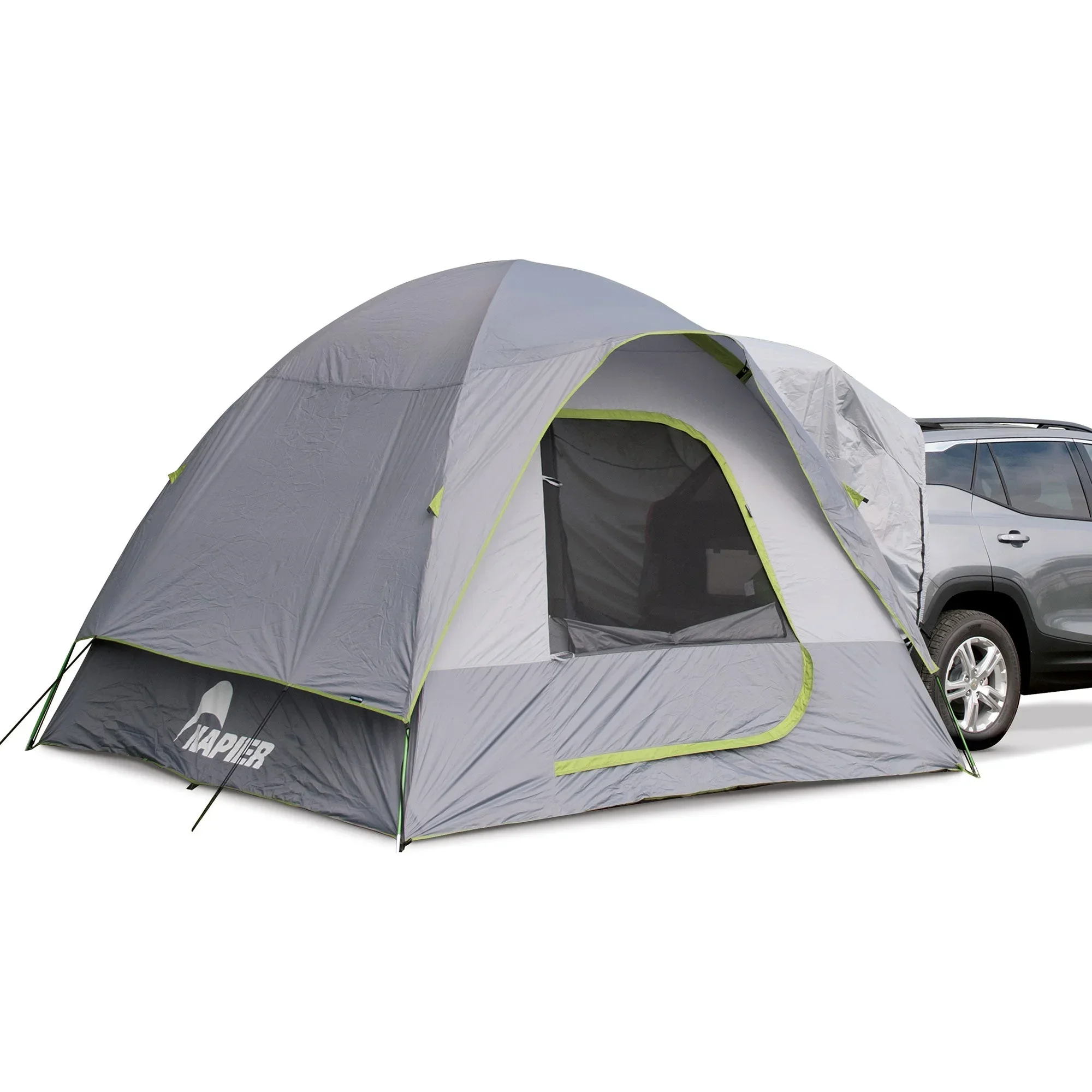
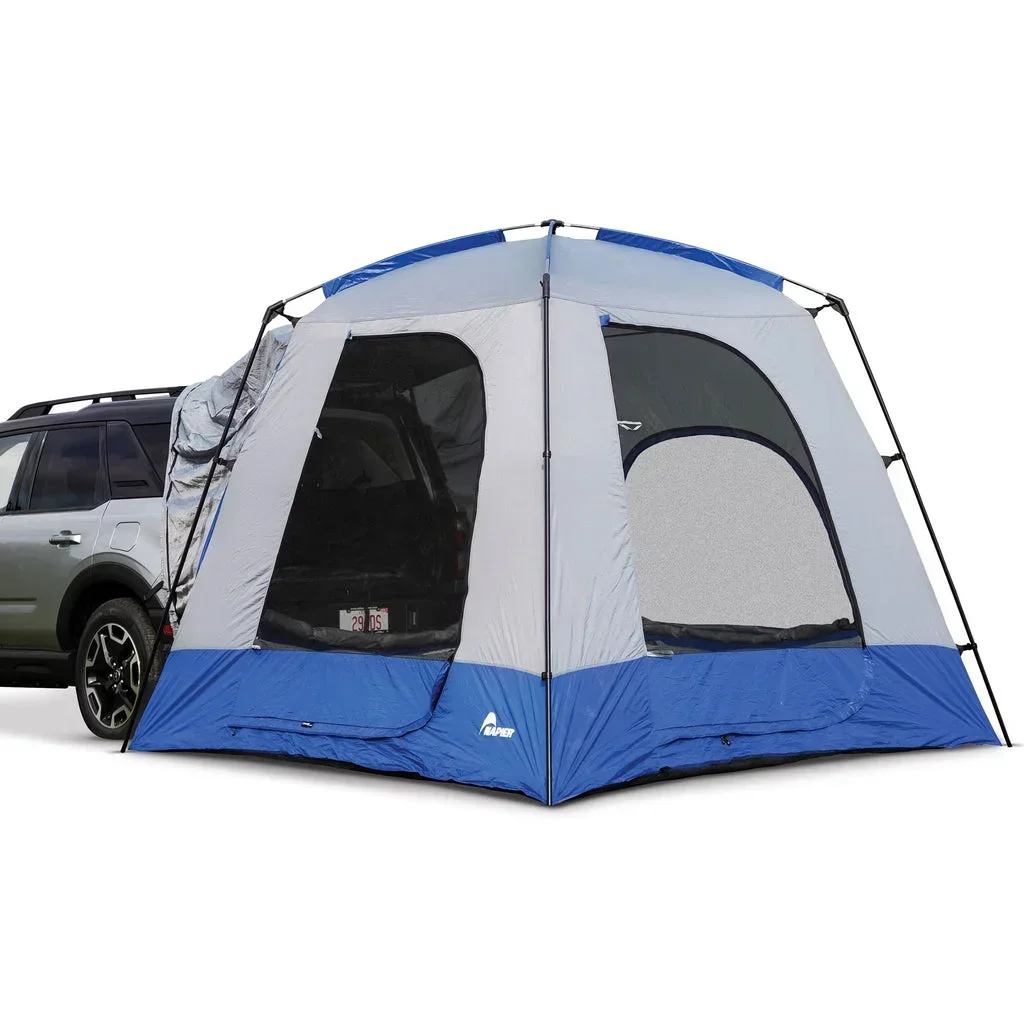
If you want the short answer, the Napier Backroadz SUV Tent is the one to buy for most people: a freestanding 10-by-10-foot cabin with an 88-inch (6 feet 8 inches) peak that docks to your hatch through a universal sleeve and cinches down with adjustable wheel-well and trunk straps, then unclips to stand on its own when you drive off.
This guide's angle is the part most buying guides skip: the attachment system. A universal sleeve and a set of straps are not the same promise, and whether either seals well on your car comes down to two numbers nobody mentions — your tailgate height and your hatch width. We map both, then match five real models to who each one is for.
One honesty note up front: these picks are built from manufacturer specifications, published data and named owner reports, not our own field trials. Where real-world durability or setup speed is the deciding factor, we say what the record shows rather than pretend to a verdict we did not earn.
Three very different tents wear one label
Before any brand comparison, sort the category. Three distinct products get sold under "SUV tent," and they barely compete with each other:
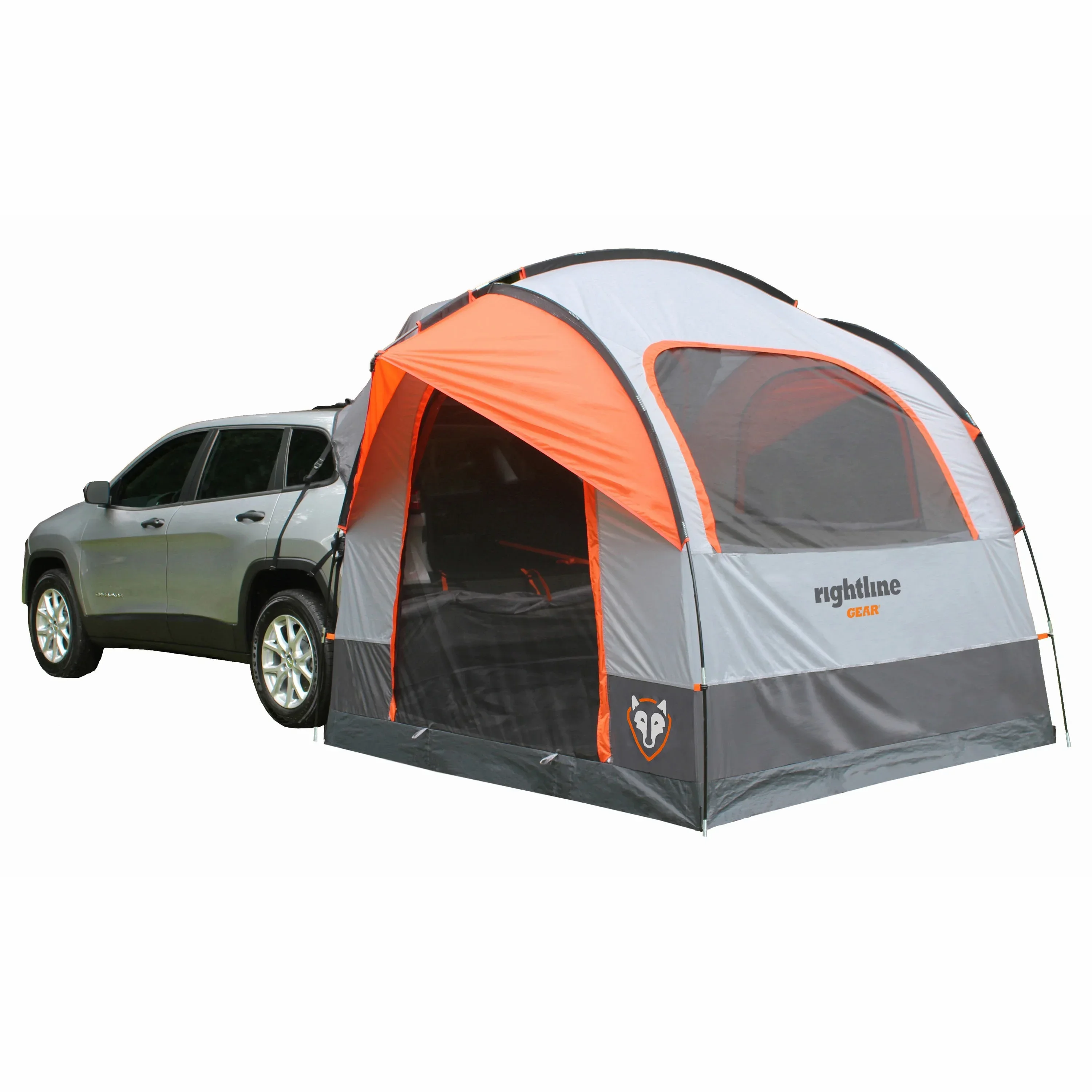
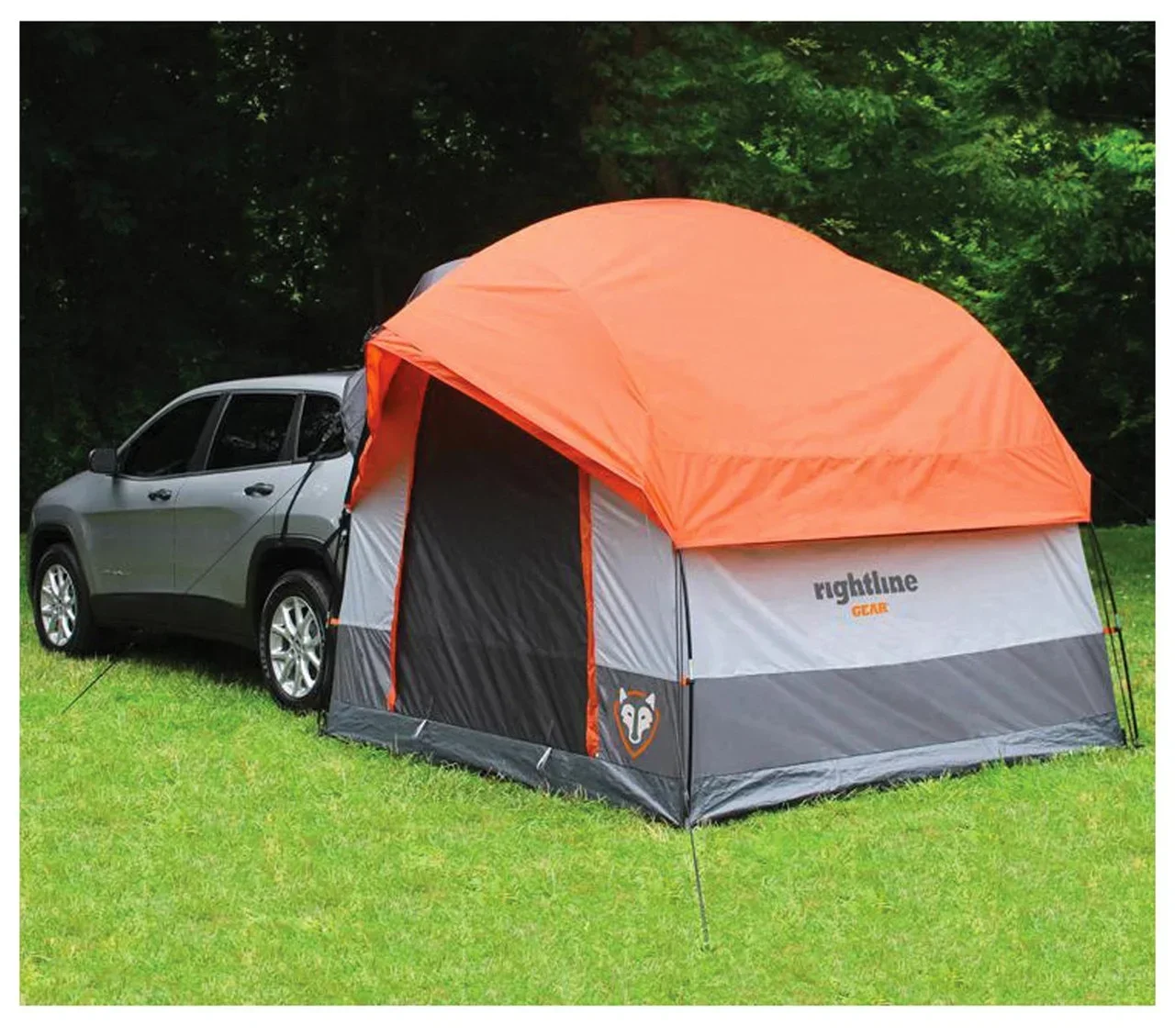
- Attached (hatch/tailgate/cargo-area) tents. A fabric sleeve on the tent's front wall slips over your raised hatch so your cargo area becomes an extra sheltered room. The tent still stands on the ground on its own poles; the sleeve just links it to the car. The Napier Backroadz SUV Tent and Rightline Gear SUV Tent are the classic examples.
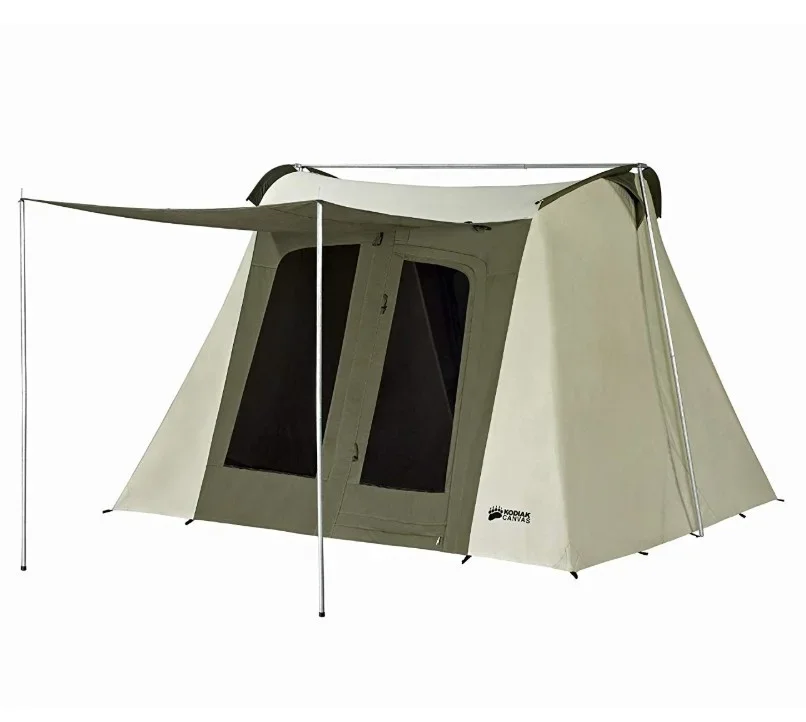
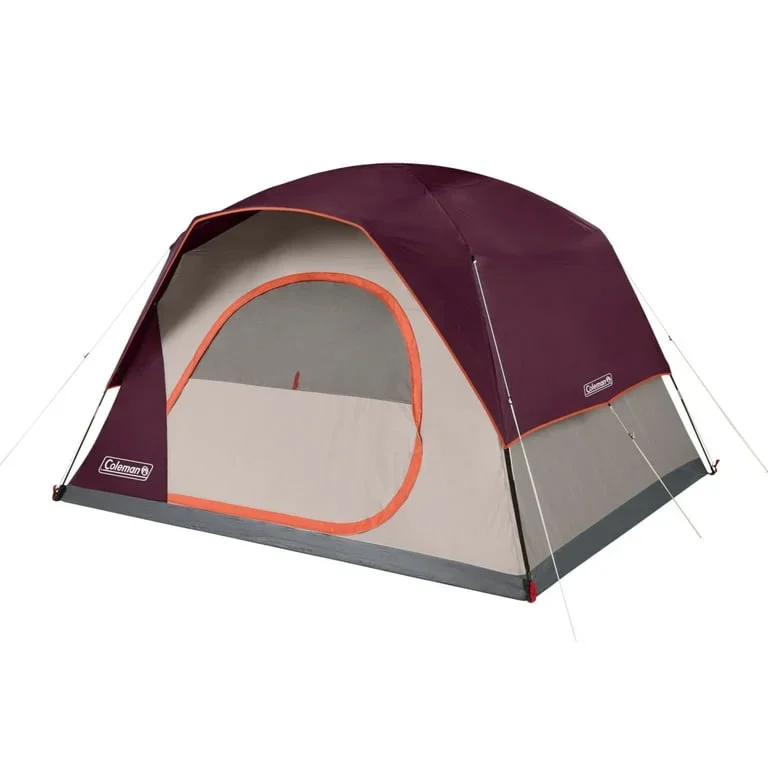
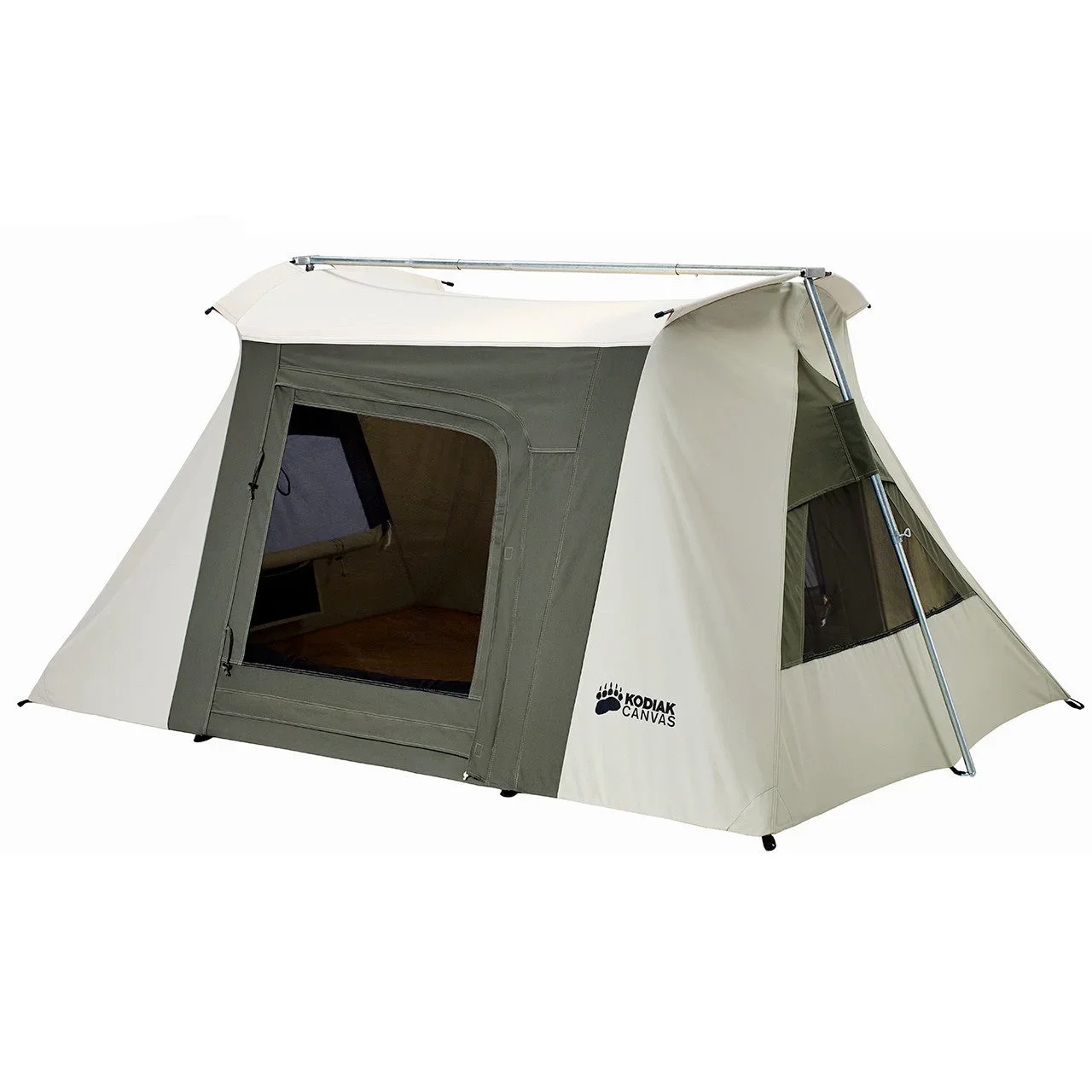
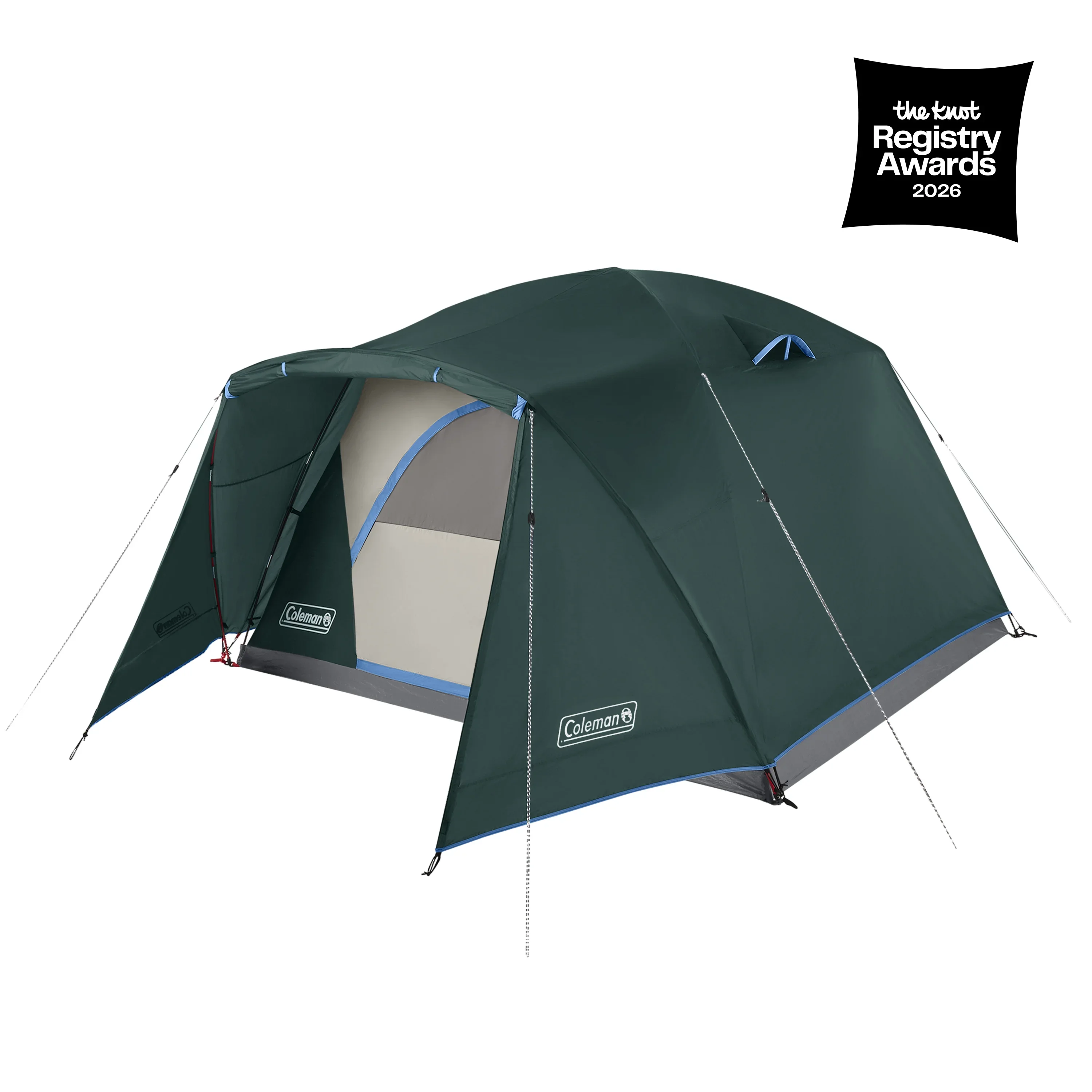
- Standalone tents. These ignore the vehicle entirely and pitch beside it. You give up the whole point of "SUV integration," but you gain flexibility and, at the top end, far better weather protection. The Kodiak Canvas Flex-Bow VX and Coleman Skydome 6-Person are here.
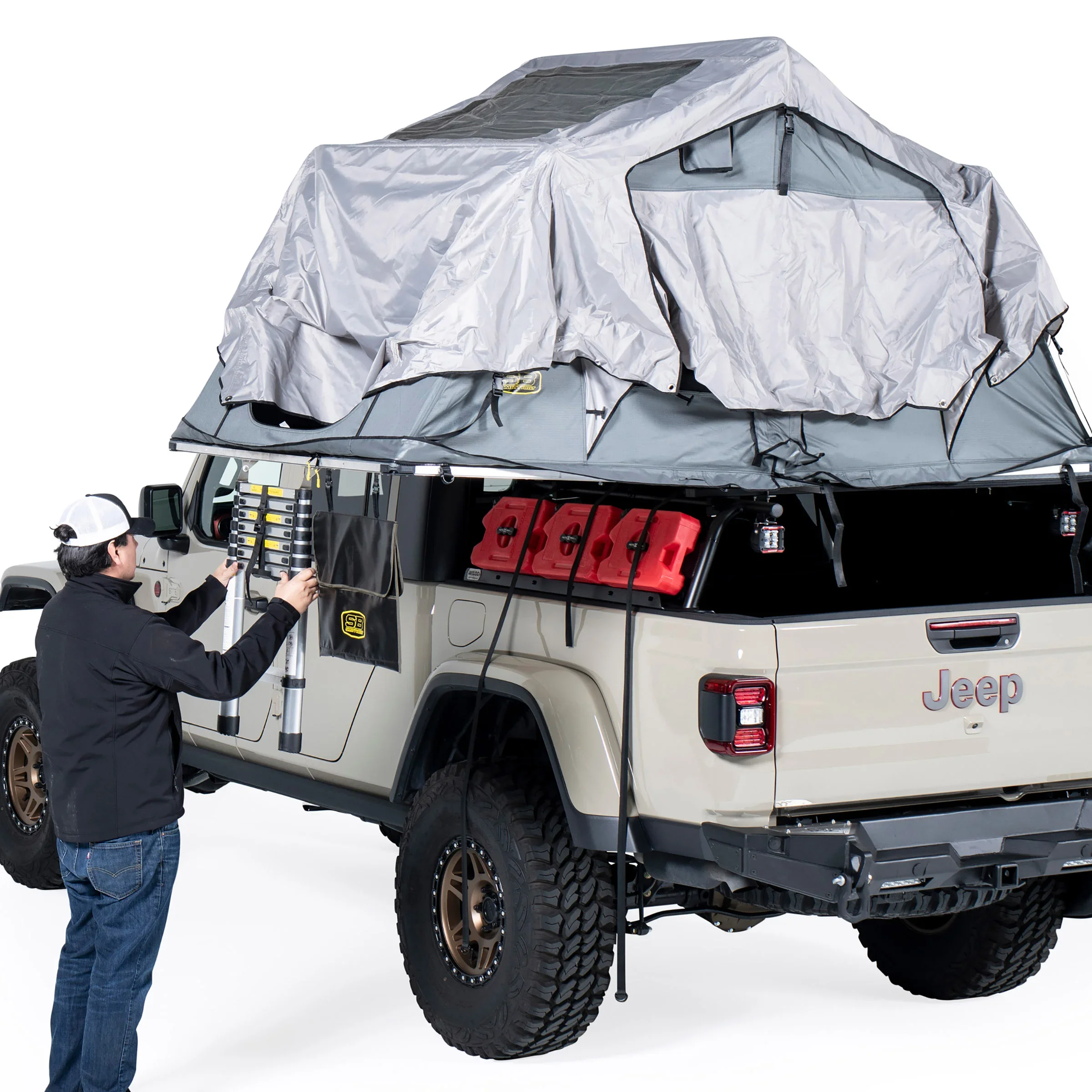
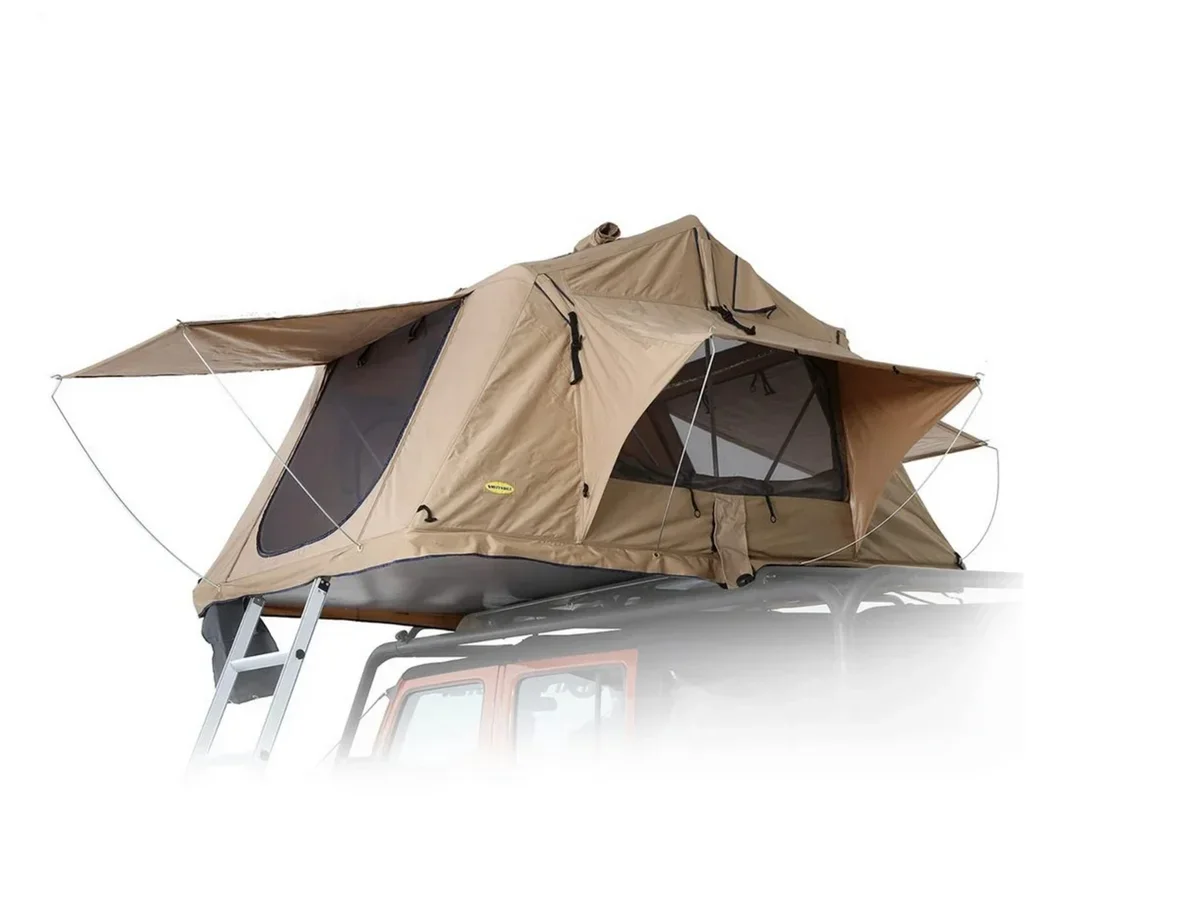
- Rooftop tents. These bolt to a roof rack and sleep you in the air on a built-in mattress. The Smittybilt GEN2 Overlander is the rooftop pick — a different price class and a different camp routine altogether.
Why the category choice dominates: an attached tent turns your SUV into sheltered storage and a wind-block, gold for families who haul gear. A standalone tent is the cheapest and most flexible but abandons vehicle integration. A rooftop tent gets you off cold, wet, uneven ground but costs four figures and lives on your roof year-round, hurting clearance and fuel economy. Decide the row before you shop the brand.
A useful way to think about it: the attached tents buy you integration with the vehicle, the standalone tents buy you flexibility and weather protection, and the rooftop tent buys you comfort off the ground. Each is a genuinely different priority. There is no single "best" that wins all three, which is exactly why a spec table that lumps them together misleads — you have to know which priority is yours before the numbers mean anything.
Sleeve vs strap: how an attached SUV tent actually holds on
Every attached SUV tent uses some mix of two mechanisms, and the difference decides how well it seals and how many vehicles it fits.
- The universal sleeve. A wide fabric tube on the tent's front wall drapes over your raised hatch or liftgate. "Universal" means the tube is cut large enough to swallow a range of hatch openings — forgiving on a small hatch, since you simply tuck the slack, but only as good as its designed maximum on a wide one.
- The strap system. Straps do what a sleeve can't: they hold the tent to the vehicle in wind and pull the seal tight. The Napier Backroadz, for example, adds adjustable wheel-well and trunk straps on top of its sleeve, anchoring it at three points rather than merely draping it. Sleeve-only tents lean more on the closed hatch to pin everything in place.
This is the distinction the spec sheets bury. A sleeve-plus-strap tent like the Napier stays put in a gust and seals more tightly against an imperfect hatch shape. A sleeve-only tent like the Rightline Gear SUV Tent is lighter, cheaper and quicker to pitch, but it rewards a squared-off tailgate and calmer conditions.
Neither approach bolts on permanently. Both stand as freestanding tents you can unclip and drive away from — the sleeve is a connection, not a mount. That freestanding quality is what lets you leave camp set up and take the SUV to a trailhead, which pure rooftop and some budget attached designs cannot do.
Tailgate height and hatch width are what really decide fit
Here is where fit is won or lost, and it has nothing to do with the badge on your SUV. The sleeve has to bridge the gap between the ground-level tent and your raised hatch, so two measurements govern everything.
Tailgate height sets whether the sleeve reaches cleanly. Tall, boxy SUVs and minivans with a high, near-vertical liftgate give the sleeve a squared surface to seal against — the ideal case. The fabric meets a flat plane and closes.
Low, steeply raked crossover hatches are the problem child. The glass tilts back, the opening is short, and the sleeve meets a sloped surface it was never shaped to hug. That is exactly where owners report drafts and rain intrusion at the top corners. It is rarely a defect in the tent; it is a geometry mismatch between a flat sleeve and an angled hatch.
Hatch width is the second number. The sleeve mouth spans a fixed range. If your cargo opening is narrower than the sleeve, you get slack to fold away, which is fine. If it is wider than the sleeve's designed maximum, the tube can't reach the edges and the seal opens up.
Before you trust any "fits most SUVs" claim, open your liftgate and measure the clear opening — width at its widest and height from the bumper to the raised glass. Compare those to the maker's stated sleeve range, not the marketing word "universal."
Straps partly rescue a marginal fit: the Napier's wheel-well and trunk straps pull a slightly-too-large sleeve snug and hold it through wind that would flap a sleeve-only tent loose. On a raked crossover, that extra anchoring is often the difference between a sealed room and a draft you fight all night.
Floor size vs your cargo opening: measure before you buy
The other measurement that decides fit is the tent's floor footprint — against both your campsite and, for attached tents, your cargo opening. Three quick measurements settle it:
- Hatch opening. Width at the widest and height from bumper to raised glass. This is what the sleeve must span, and it is the number "universal" quietly assumes.
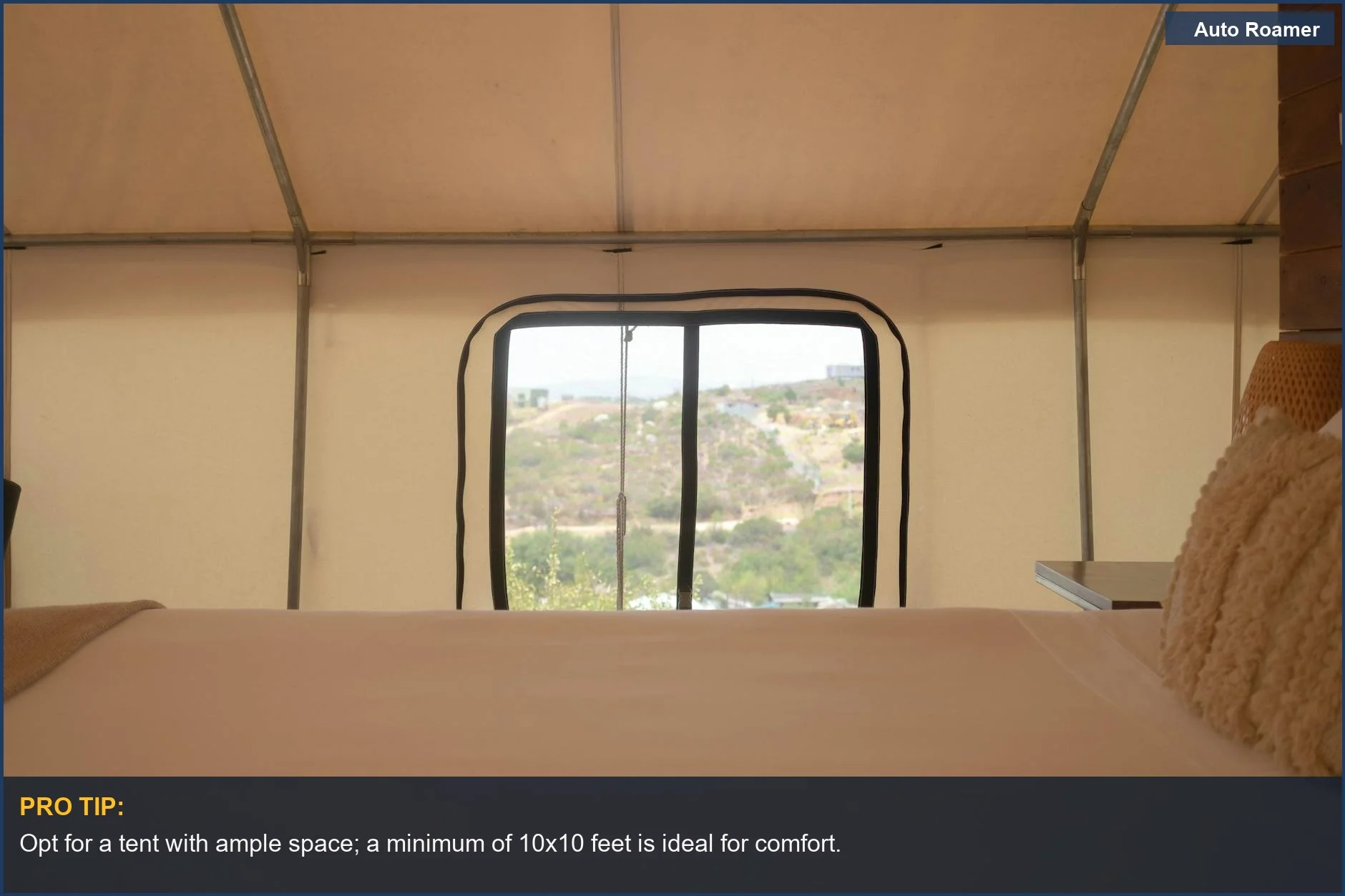
- Tent floor footprint. The Napier is a 10-by-10-foot square; the Rightline SUV Tent is closer to 8-by-8-foot. Pace out that square behind your parking spot and confirm it clears trees, the fire ring and the next site.
- Standing room. Peak height decides whether you dress standing up. The Napier's 6 feet 8 inches lets most adults stand; the standalone Kodiak Canvas Flex-Bow VX runs about 6 feet 1 inch; low dome tents sit well under that.
An attached tent's front edge has to line up with your hatch, so the footprint isn't just about comfort — it sets where the sleeve lands relative to the car. A 10-by-10-foot tent parked too far from a low hatch stretches the sleeve; too close and the poles crowd the bumper. Give yourself room to position it.
One capacity caveat saves the most regret: read the sleeps rating as a maximum, not a comfort number. A tent labeled for five comfortably holds about three adults once you add gear and want to move around. Size up one slot and both the floor and the hatch seal have room to work.
Height matters more than most buyers expect, too. A tent you can stand in changes camp from a crawl-in shelter into a livable room where you dress, cook in the vestibule and wait out a storm without hunching. That is a real part of why the taller attached and canvas options feel worth their premium over a low budget dome, even when the floor square footage looks similar on paper.
Spec table: five SUV tents side by side
| Model | Attachment | Sleeps | Peak height | Weight | Price |
|---|---|---|---|---|---|
| Napier Backroadz SUV Tent | Universal sleeve + straps (freestanding) | 5 | 6 ft 8 in | 25 lb | ~$240 |
| Rightline Gear SUV Tent | Universal sleeve (freestanding) | up to 6 | tall cabin | light nylon | ~$170 |
| Smittybilt GEN2 Overlander | Rooftop hard-mount | 2 | off-ground | ~115 lb | ~$1,050 |
| Kodiak Canvas Flex-Bow VX | Standalone (no attach) | 4–6 | 6 ft 1 in | ~68 lb | ~$650 |
| Coleman Skydome 6-Person | Standalone (no attach) | 6 | dome | light | ~$150 |
How to read this: "Universal sleeve + straps" and "universal sleeve" tents dock to your open hatch so the cargo area joins the tent; "standalone" tents pitch beside the vehicle; the "rooftop" tent bolts to a roof rack and sleeps you off the ground. The price spread runs roughly $150 to $1,050, and almost all of it is the type, not the brand. Figures come from each maker's published specs and named independent reviews (OutdoorGearLab, GearJunkie); they are not our own measurements.
The five picks, matched to how you camp
Five tents, five different campers. None is wrong; each aims at a different attachment style, budget and routine.
Best overall attached — Napier Backroadz SUV Tent. The safe default for the classic "tent that docks to the hatch." Its universal sleeve plus wheel-well and trunk straps give it the most secure attachment here, it sleeps five under a 6-foot-8-inch peak, and it unclips to stand freestanding when you drive off. At roughly 25 pounds across a 10-by-10-foot floor, you pay for versatility, and it fits the widest range of SUVs of anything on this list.
Best value attached — Rightline Gear SUV Tent. Lighter, cheaper and quicker to pitch than the Napier, with a universal sleeve that closes into nearly any SUV or minivan hatch and a roughly 8-by-8-foot cabin. The seal leans more on your closed liftgate than on straps, so it rewards a squared-off tailgate — the buy if you want the attached concept for the least money, around $170.
Best off-the-ground — Smittybilt GEN2 Overlander. A rooftop clamshell that sleeps two on a built-in mattress and pops open in minutes once the rack is mounted. At roughly 115 pounds it needs a properly rated roof rack and adds permanent height, but you never sleep on wet, uneven ground again. Buy it if you camp often and refuse the ground.
Best for weather and durability — Kodiak Canvas Flex-Bow VX. It does not attach to your SUV at all, but its Hydra-Shield cotton-duck canvas out-weathers every nylon tent here, with about 6 feet 1 inch of standing room and roughly 68 pounds of pack weight. Heavy and slow to pitch — the buy when rain performance and longevity beat vehicle integration.
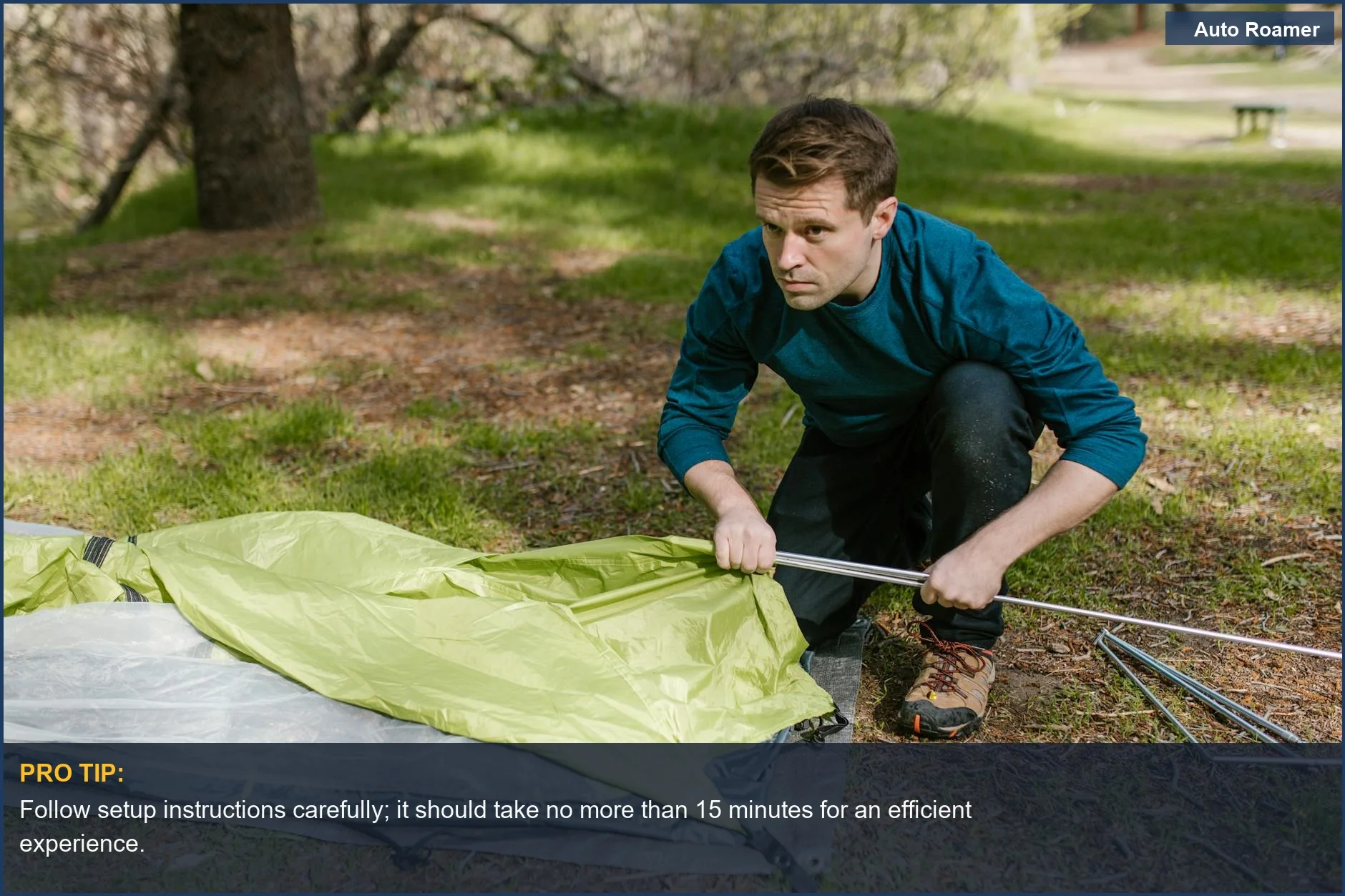
Best budget — Coleman Skydome 6-Person. A six-person dome that pitches in about five minutes and simply parks next to the SUV. No vehicle connection and thinner materials than the Kodiak, but at around $150 it is the cheapest way to shelter a family beside the car.
Nylon vs canvas: what actually keeps you dry
The tents here split not just on attachment but on fabric, and that decides how they handle real weather. It is worth understanding before you buy on price alone.
- Coated nylon and polyester cover the Napier Backroadz SUV Tent, the Rightline Gear SUV Tent and the Coleman Skydome 6-Person. Light, quick to pitch and cheap, they shrug off a passing shower fine. Their limit is sustained, driving rain and hard sun over many seasons, where thin coatings eventually wear.
- Cotton-duck canvas is the Kodiak Canvas Flex-Bow VX's whole argument. Its Hydra-Shield treated canvas breathes, resists interior condensation, and holds up to days of rain and years of UV that thin nylon can't match — at the cost of roughly 68 pounds of pack weight and a slower pitch.
- Rooftop shells like the Smittybilt GEN2 Overlander use heavy poly-cotton fabric built to live mounted outdoors, trading packability for durability.
The practical rule: if you camp fair-weather weekends, nylon is plenty and the attachment convenience wins. If you camp shoulder-season, in the mountains, or anywhere rain sits in for days, the canvas Kodiak's weight is simply the price of staying dry.
This is also why the cheapest tent is rarely the cheapest mistake. Buying budget nylon for genuinely wet, cold trips is the classic regret — the tent works until the weather turns, and then the shortcomings that never mattered on a sunny weekend become the whole story. Match the fabric to the worst weather you actually expect, not the average.
Head to head: sleeve-plus-strap vs sleeve-only vs rooftop
Three attachment philosophies collide in this lineup, and comparing them directly makes the choice obvious.
The Napier's sleeve-and-strap system is the most secure attached seal; the Rightline's sleeve-only design is the cheapest way into the concept; the Smittybilt skips attachment entirely and lifts you onto the roof. Security, price, or off-ground comfort — you are really choosing which one you value.
Napier vs Rightline is the attached-tent fork. The Napier anchors at three points and stands fully freestanding, so wind and a raked hatch bother it less; the Rightline Gear SUV Tent trades some of that security and cabin size for a lower price and a quicker pitch. If your SUV has a tall, squared tailgate and you want the cheapest room-on-your-hatch, the Rightline is enough. If you drive a crossover with a sloped hatch or camp in wind, the Napier's straps earn their premium.
Then there is the rooftop question. The Smittybilt GEN2 Overlander wins on comfort and setup speed once mounted — a built-in mattress, no ground, minutes to deploy. It loses on everything the spec sheet buries: a roof rack rated to carry it occupied, permanent added height that threatens garages and drive-throughs, and a year-round drag on fuel economy even when you are not camping.
Where the reviewers land is consistent: if you camp a few weekends a year with a family, the attached Napier is the rational pick; if you camp constantly, solo or as a couple, and value off-ground comfort, the rooftop earns its four figures. The Kodiak Canvas Flex-Bow VX and Coleman Skydome 6-Person sit outside this fight entirely — they are the answer when weather or budget matters more than docking to the car at all.
What actually goes wrong (and how to dodge it)
Most SUV-tent regret is a mismatch between the attachment and the vehicle, not a defective tent. The recurring complaints from owner reviews and named round-ups fall into four buckets:
- The sleeve won't seal a raked hatch. Steeply sloped crossover glass leaves a gap the sleeve was never shaped to close, letting in drafts and rain at the top corners. Check your hatch angle and the sleeve's stated range before buying.
- The hatch is wider than the sleeve. A cargo opening beyond the sleeve's designed maximum leaves the edges unsealed. Measure your opening width first — "fits most SUVs" is not "fits yours."
- You can't drive off without striking camp. A docked tent pins your hatch. Freestanding attached tents like the Napier and Rightline unclip to stand alone — confirm yours does if you want day trips from camp.
- The roof rack isn't rated. Bolting the roughly 115-pound Smittybilt onto factory crossbars rated below its occupied load is the single most dangerous mistake here. Verify the dynamic and static ratings, not the badge.
Read the one-star reviews closely and the pattern is almost always one of these — a sloped hatch the sleeve could never seal, or a family of five crammed into a tent rated for exactly five — not a torn seam. None of these are defects in the tents themselves, which is exactly why they catch people out. Match the attachment to your vehicle and trip, and most of the horror stories simply never happen to you.
How to choose in about one minute
Answer one question about your SUV and your trips, and the tent falls out:
- Tall, squared tailgate and want a secure room on your hatch for a family? The Napier Backroadz SUV Tent.
- Want that attached concept for the least money? The Rightline Gear SUV Tent.
- Camp constantly and refuse the ground? Pay up for the Smittybilt GEN2 Overlander rooftop and its properly rated rack.
- Need a tent that shrugs off real weather and lasts a decade? The Kodiak Canvas Flex-Bow VX.
- Just need a cheap, fast, big tent beside the car? The Coleman Skydome 6-Person.
The through-line: pick the attachment category first, then confirm the fit with your own tailgate and hatch measurements. The brand is the last decision, not the first.
The verdict
For most people shopping this category, the Napier Backroadz SUV Tent is the pick: the most secure attached tent here thanks to its sleeve-and-strap system, a 6-foot-8-inch peak you can stand under, room for a family across its 10-by-10-foot floor, and the flexibility to unclip and drive off. It is not the cheapest and it does not get you off the ground, but it has the fewest compromises for ordinary SUV camping — and it fits the widest range of vehicles.
If your trips push past that — you camp constantly and want off the ground, you face serious weather, or you just want the cheapest roof over a family — one of the other four is genuinely the better buy, and the attachment-and-fit map above shows exactly why. We drew these lines from manufacturer specifications and named owner reports; we did not run all five in a field, and we won't pretend otherwise.