First, the Basics
The market is flooded with cargo nets that promise 'heavy-duty' performance but deliver nothing more than a tangled mess of low-grade elastic. I've seen nets fail within 43 minutes of highway driving, sending gear scattering like confetti. This isn't just an inconvenience; it's a safety hazard and a testament to the rampant planned obsolescence in the hauling accessory industry. If you're going to secure your valuable equipment to a roof rack, you demand industrial longevity, not a disposable bungee web.
PowerTye emphasizes the necessity of the right net for the job, and I couldn't agree more. Most cheap nets rely on natural rubber bungee cords. These materials are highly susceptible to UV degradation and plasticizer migration, leading to rapid embrittlement and loss of elasticity. They might feel stretchy out of the box, but after a few weeks in the sun, they become brittle strands of failure waiting to happen.
What you need is a net engineered for structural integrity, with material compositions designed to withstand thermal cycling and constant vibration. This means high-tenacity polyester webbing or synthetic rubber with robust UV inhibitors, not the garbage found in most big-box stores.
Mark Thompson, a load security expert, correctly states that 'getting the right cargo net can totally make or break load stability.' Anything less is an insult to common sense and an invitation for your gear to become road debris. I'm looking for components that will outlast the vehicle they're attached to, not something that's landfill-ready before the first oil change.
Top Picks
Finding a cargo net that doesn't immediately scream 'future litter' is a challenge, but a few stand out from the sea of mediocrity. My criteria are simple: material science, structural integrity, and a clear rejection of planned obsolescence. Anything less isn't worth discussing. A comprehensive guide from PowerTye highlights the importance of webbing material, a detail often overlooked by consumers.
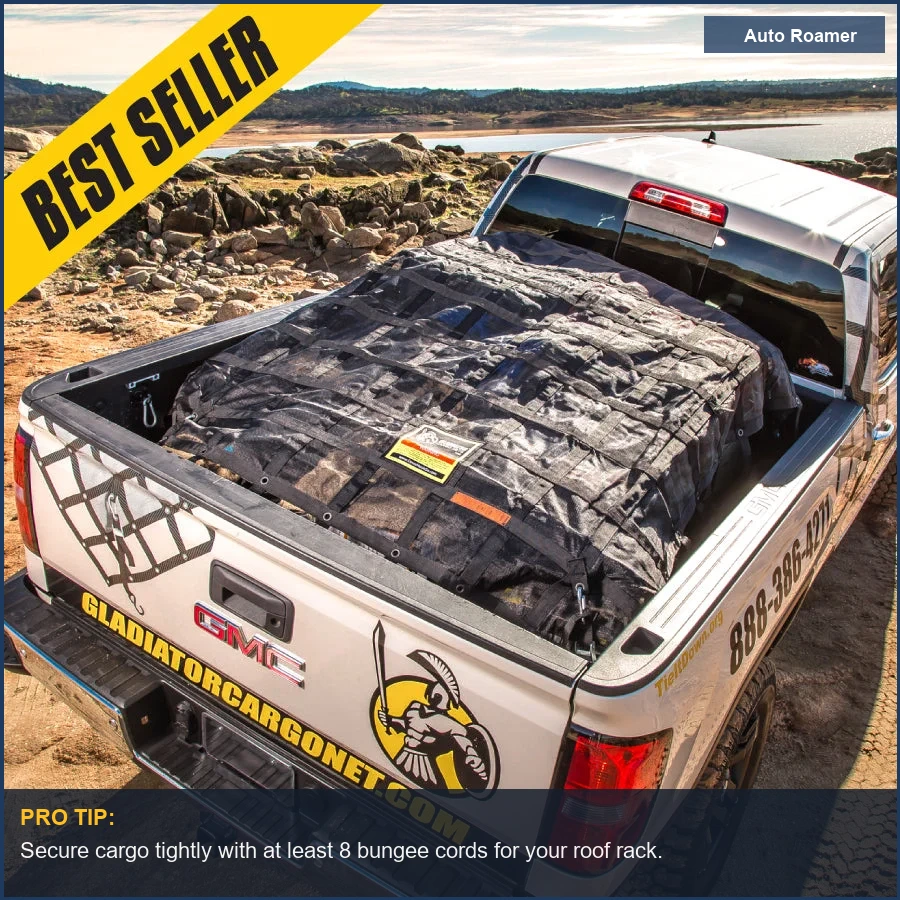
Gladiator Cargo Net (~$120)
Capacity/Key Specs: Rip-stop mesh, NACSS-approved, 278 PSI tear strength, various sizes.
Gladiator emphasizes its heavy-duty construction.
Pros: Uses high-tenacity, knotless polyester webbing for superior tear resistance. The integrated rip-stop mesh prevents small items from escaping, a common failure point for cheaper nets. Hooks are heavy-gauge steel, not stamped tin.
Cons: The initial cost is higher than most, but you're paying for actual engineering.
It's an investment, not a disposable item.
Best-for Use Case: Serious overland enthusiasts or anyone transporting valuable, irregular loads where absolute security is paramount.
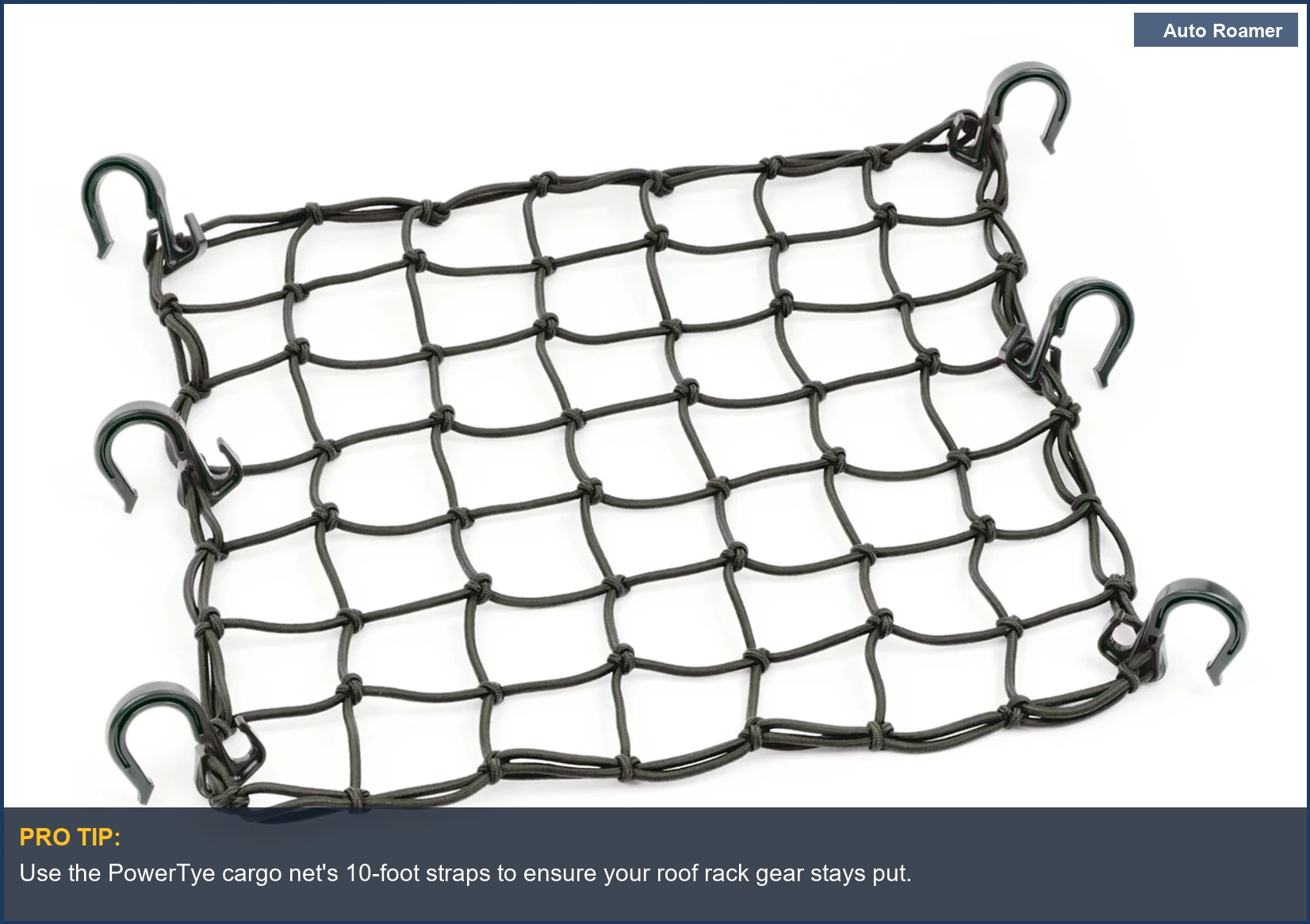
PowerTye Cargo Net (~$75)
Capacity/Key Specs: Heavy-duty polyester webbing, coated hooks, multiple sizes. PowerTye notes their nets are designed for longevity.
Pros: Constructed from UV-resistant polyester webbing, which holds up significantly better to sun exposure than natural rubber. The coated hooks prevent scratching and corrosion, a minor but appreciated detail.
Good tensile strength.
Cons: While robust, some users might find the mesh size slightly large for very small, loose items. It's a minor compromise, but worth noting.
Best-for Use Case: Regular users who need a dependable, workhorse net for general cargo and don't want to revisit the purchase every year.
Thule Stretch Cargo Net (~$60)
Capacity/Key Specs: Elastic webbing, designed for Thule baskets. Thule markets this as a heavy-duty option.
Pros: Integrates well with Thule's roof basket systems, providing a tailored fit.
The elastic material, while still elastic, appears to be of a higher grade synthetic rubber with better UV resistance than generic options.
Cons: Primarily designed for Thule's own products, which limits its universal application.
The inherent nature of elastic means eventual fatigue, though it's delayed here.
Best-for Use Case: Thule roof basket owners who prioritize seamless integration and an above-average elastic net, understanding its inherent material limitations.
Keeper 05060 Heavy-Duty Bungee Cargo Net (~$30)
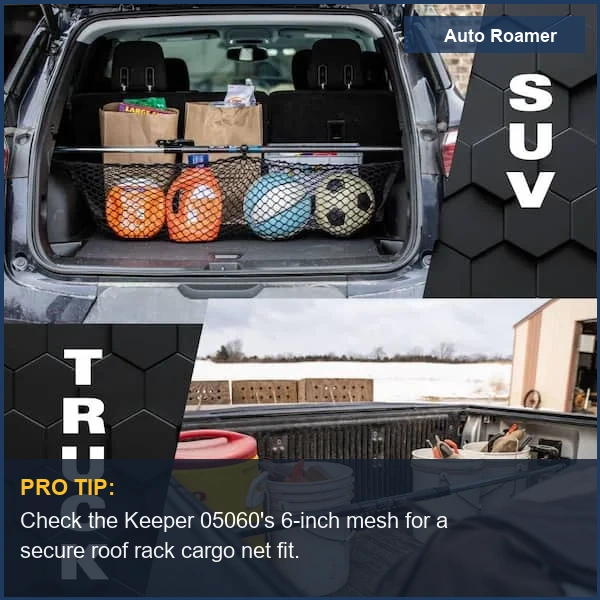
Capacity/Key Specs: 48-inch by 60-inch, 12 ABS plastic hooks.
Pros: The net itself uses a decent synthetic rubber blend for the bungee, offering reasonable initial elasticity. It's a step above the absolute cheapest options.
Cons: The included hooks are injection-molded ABS plastic.
ABS is notorious for becoming brittle with UV exposure and thermal cycling. These hooks will crack and fail, likely within a year, rendering the net useless. This is a classic example of a good material (net) being undermined by an inferior component (hooks). Landfill-ready, courtesy of the attachments.
Best-for Use Case: Someone who understands the limitations and plans to immediately replace the ABS hooks with proper steel or zinc-plated hardware.
Otherwise, avoid.
Erickson Roof-Rack Cargo Net (~$25)
Capacity/Key Specs: 36-inch by 48-inch, 10-hook design. Etrailer provides a closer look at this net.
Pros: The mesh is a relatively tight weave, good for securing smaller items. The bungee cord itself is a thicker gauge than many budget options, suggesting better initial tensile strength.
Cons: My main concern is the unknown material composition of the bungee. Without specific polymer identification, it's impossible to gauge its UV stability or resistance to plasticizer migration.
This makes its longevity a gamble. The hooks are often basic plated steel, prone to rust.
Best-for Use Case: Light, infrequent use where the cost is the primary driver and long-term durability is not a critical factor. Don't expect industrial longevity from this price point.
Quick Verdict
- Material Composition is King: If it's not high-tenacity polyester webbing or a specifically engineered, UV-stabilized synthetic rubber, you're buying a ticking time bomb. Natural rubber bungee cords are an absolute joke for anything beyond a grocery run. Gladiator Cargo Net's rip-stop mesh exemplifies true material strength.
- Hooks Matter More Than You Think: An otherwise decent net can be rendered useless by cheap attachments. Injection-molded ABS plastic hooks are a guarantee of premature failure due to UV degradation and embrittlement.
Demand forged steel, or at least heavy-gauge, corrosion-resistant plated steel hooks. Anything less is a deliberate compromise in structural integrity.
- Longevity Over Initial Cost: The difference between a $25 net and a $120 net isn't just a label; it's a fundamental difference in engineering and material science. The cheaper net will invariably fail, forcing you to repurchase. That's planned obsolescence at its finest.
My expectation for any serious piece of gear is at least 10 years of service, not 10 months.
- Beware of 'Stretch': While some elasticity is useful, excessive stretch in a net often indicates inferior material that will quickly lose its rebound and become slack. This compromises load security. A proper net should be taut and secure, not merely 'stretchy'.
Wirecutter also emphasizes robust gear for road trips.
- 'Universal Fit' is a Red Flag: While some adjustability is fine, a net claiming to fit 'everything' often fits nothing well. Proper load securement requires a net that closely matches your rack dimensions. An ill-fitting net creates slack, leading to shifting cargo and potential failure. Measure your rack; don't guess.