
What Size Cargo Net Do I Need for My Roof Rack?
Figuring out the right size cargo net for your roof rack is less about fancy engineering and more about not watching your camping gear become a projectile hazard. My first attempt involved a net that was too small for my Thule basket, and by the time I hit the highway, my sleeping bag was halfway to Nebraska.
Figuring out the right size cargo net for your roof rack is less about fancy engineering and more about not watching your camping gear become a projectile hazard. My first attempt involved a net that was too small for my Thule basket, and by the time I hit the highway, my sleeping bag was halfway to Nebraska.
It looked like a $75 mistake that could have cost me my gear, or worse.
The honest version is that most nets are stretchy, which is a blessing and a curse. You need a net that can cover your load, but not so much that it sags like a hammock.
This isn't rocket science, it's just basic physics and knowing how to measure your rack before you buy.
I learned this the hard way when a cheap, undersized net from a discount auto parts store decided to go rogue on I-81. The real move is to grab a tape measure and think about the dimensions of what you'll actually be carrying. This is about keeping your stuff on your car, not winning a Tetris championship. Source
The Core Answer
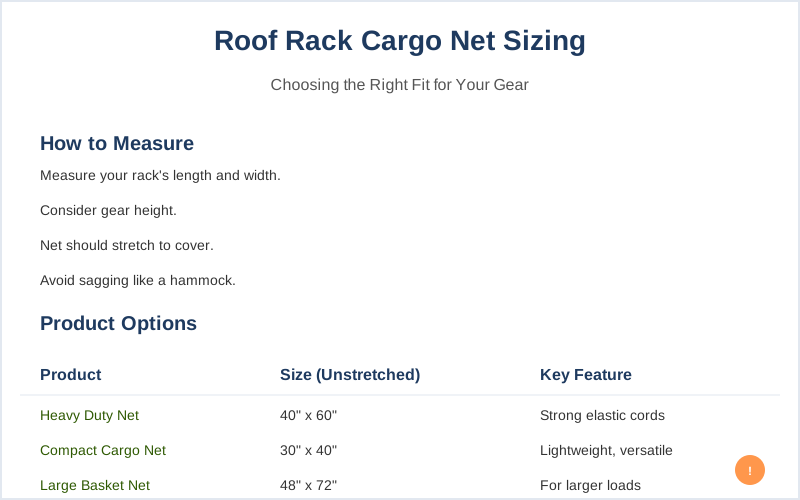
The core answer to choosing a roof rack cargo net size boils down to measuring your rack and then considering how much your gear will actually bulge out. Think of it like buying a fitted sheet; you need it to cover the mattress, but you don't want it pooling on the floor.First, measure the length and width of your roof rack basket itself. This is your starting point. If your rack is, say, 40 inches by 50 inches, you're looking for a net that can stretch to at least those dimensions, and ideally a bit more to create tension. Source
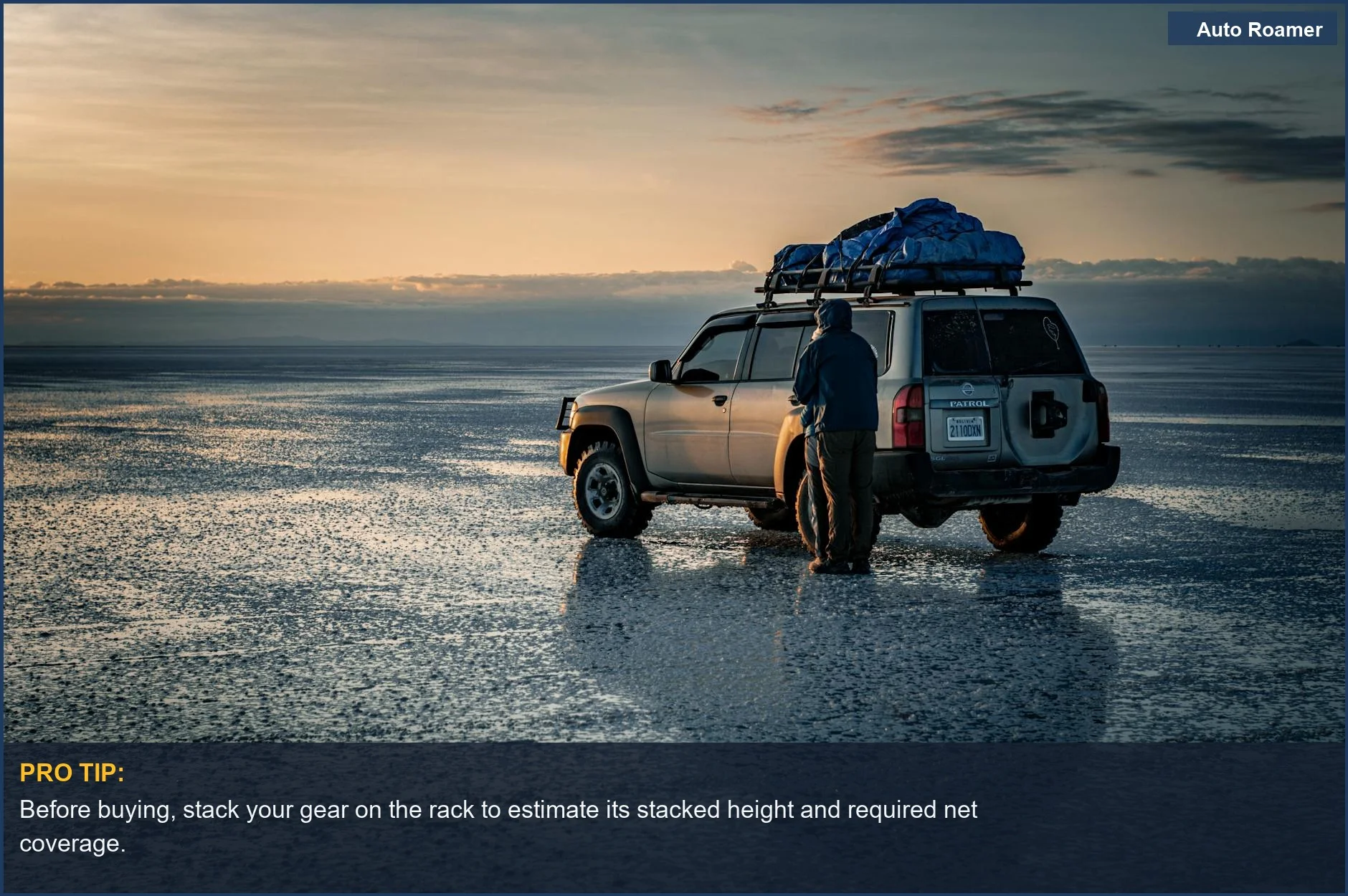
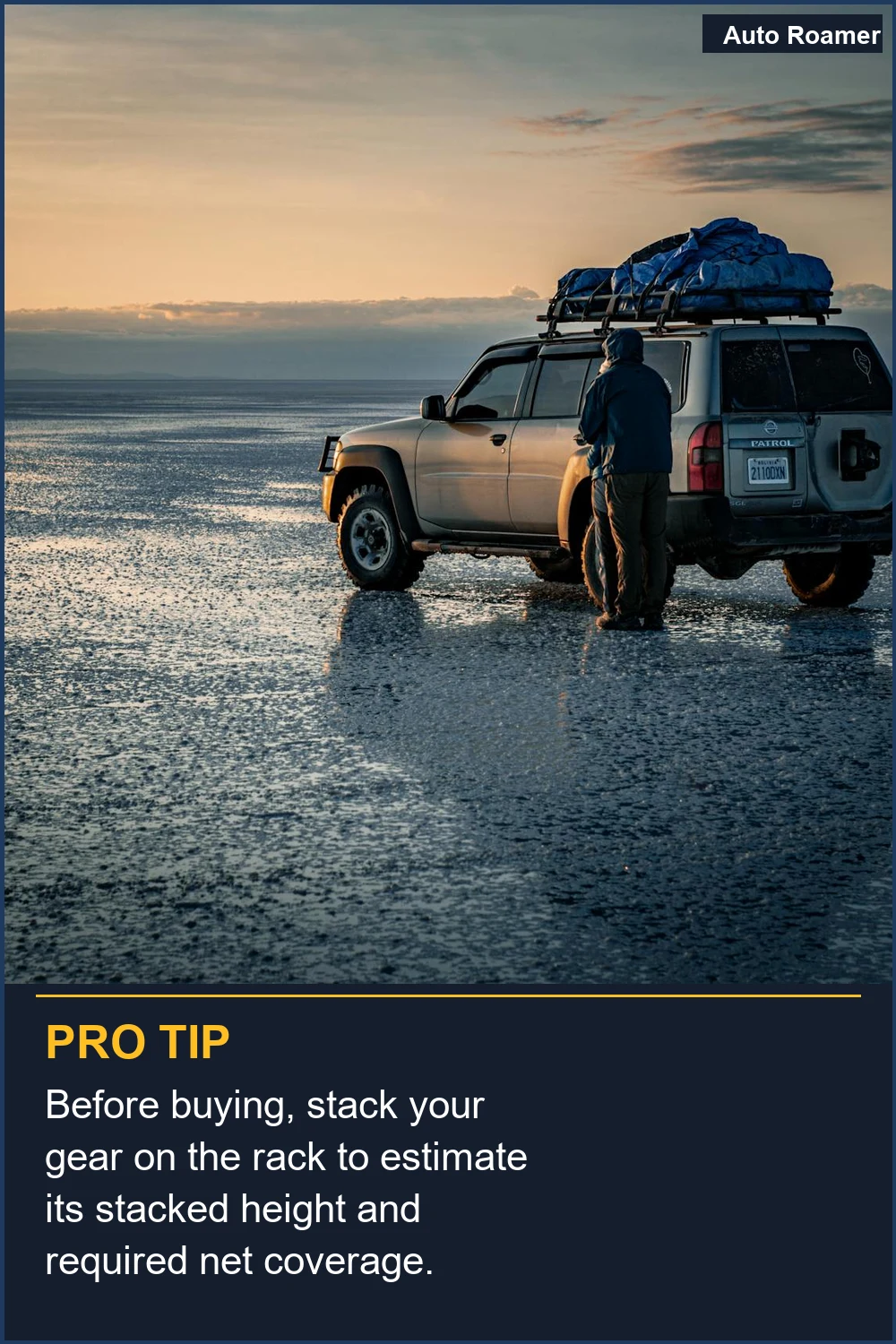
Now, here's where the 'real move' comes in: consider the height of your gear. Are you just throwing a duffel bag on top, or are you stacking sleeping bags, a tent, and a cooler? If your gear sits significantly higher than the rack's rails, you'll need a net that's larger than the rack's footprint to adequately contain it. I once saw a guy's tent escape his roof rack because the net was too small to cover the whole, lumpy load. Brilliant engineering, that.
Many elastic nets are rated by their unstretched and stretched dimensions. A net that's 36 inches by 48 inches unstretched might stretch to 60 inches by 80 inches. You want a net where the unstretched size is close to your rack's dimensions, and the stretched size can comfortably cover your loaded gear. A common size for roof baskets is around 36" x 48" unstretched, which can then cover larger areas. Source
For webbing nets, which are less stretchy, you often need a size that's slightly smaller than the load area if it's designed to stretch over. However, many webbing nets come with adjustable straps that allow you to cinch them down for a custom fit. This is where you might look at nets with attachment points spaced around 18-38 inches apart. Source
The key is to avoid a net that's too small, which will strain the elastic to its breaking point and provide minimal security. It's also not ideal to have a net that's massively oversized, as it can create flapping points or make it difficult to tension properly. A net that's just a bit bigger than your rack, and can stretch to accommodate your load, is usually the sweet spot.
What nobody tells beginners is that a net that's too tight might not cover the full height of your load, while one that's too loose will just sag and offer false security. Think about the volume of your gear, not just the footprint. Source
Ultimately, if your gear sits above the rails of your roof rack, you'll need to add a few inches to your measurement to ensure the net can wrap over it. For example, a rack that's 65" x 38" might need a net that can stretch to accommodate taller items. Source
The Bottom Line
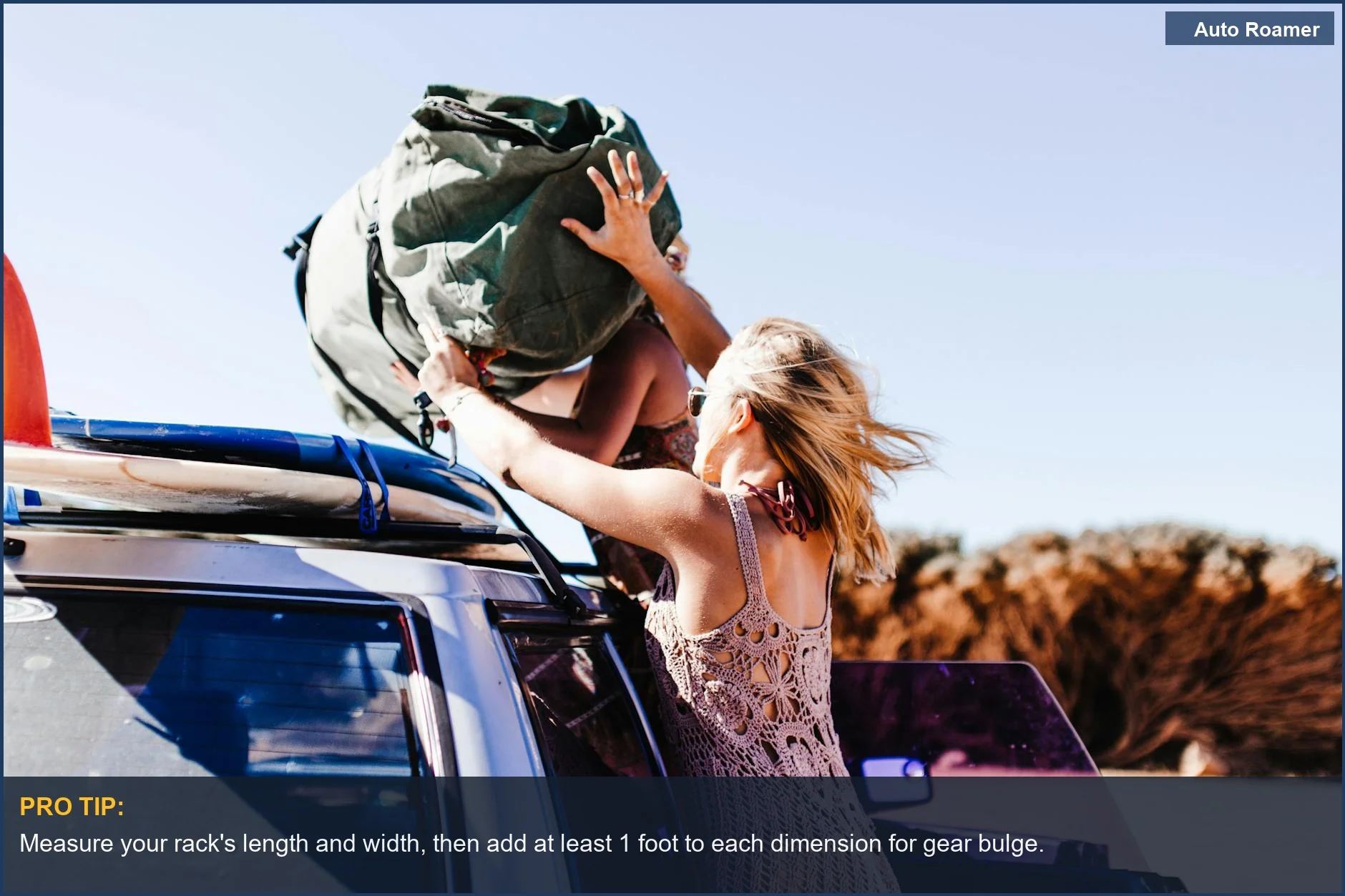
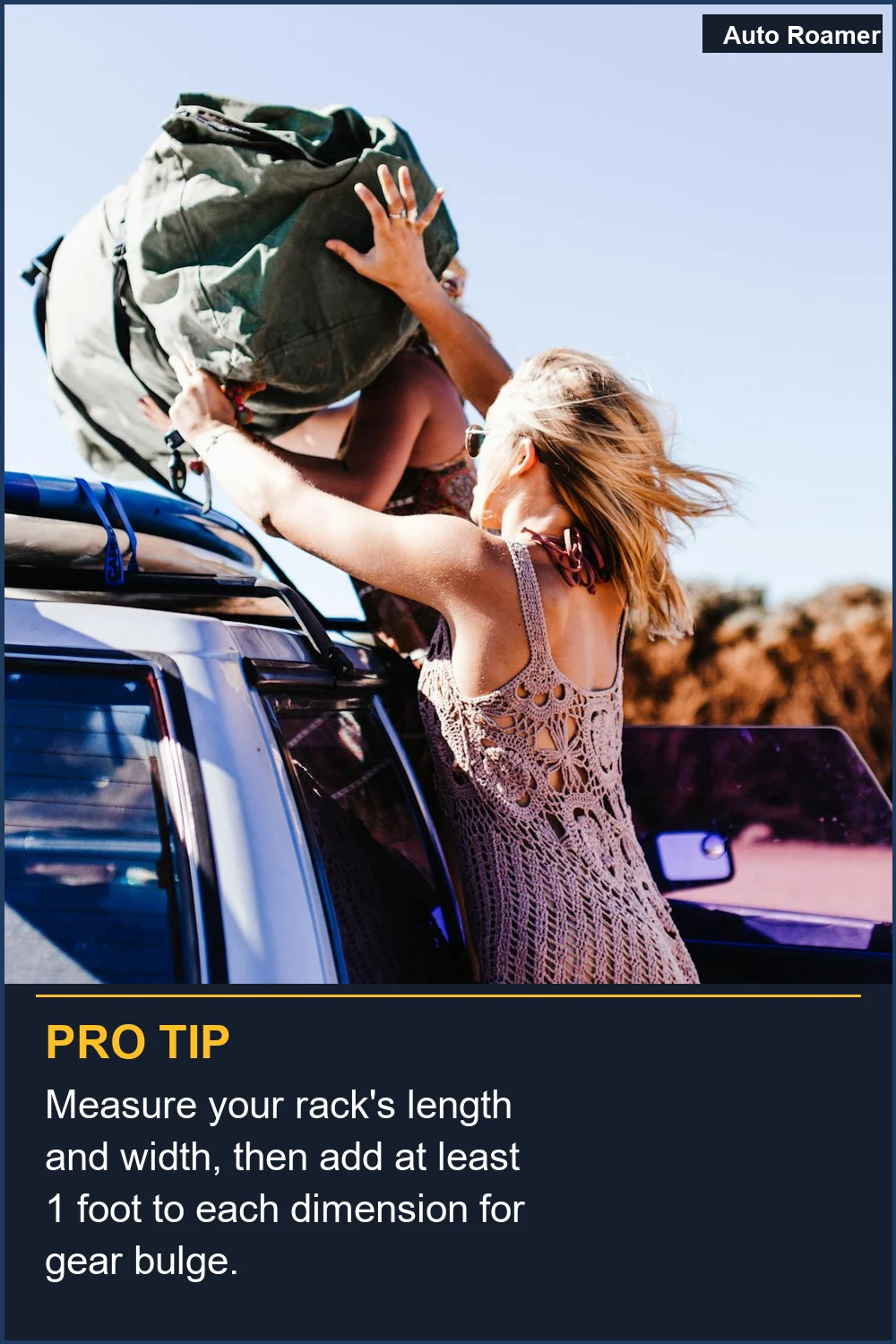
The bottom line is you need to be a detective with your tape measure. Don't just eyeball your roof rack and hope for the best. Measure the dimensions of the rack itself, and then visualize how your camping gear will stack up.My mistake on that first trip was buying a net that was only big enough to cover the rack, not the lumpy, bulging pile of gear I strapped into it. It looked okay when I left, but 30 miles down the road, my sleeping bag was making a break for it. The fix was a larger, stretchy net that could actually hug the load. Source
If your gear sits significantly above the rack's edge, add a few inches to your measurements. This accounts for the 'bulge' factor. It's better to have a net that's slightly larger and can be tensioned down than one that's too small and fighting to hold on. Source
Frequently Asked Questions
If I buy a cheap $20 net from the auto parts store, is it going to fall apart instantly?
Do I really need to measure my roof rack? Can't I just eyeball it?
What if I buy a net that's supposed to fit my rack, but it still feels too loose when my gear is loaded?
Can using a cargo net too small for my roof rack permanently damage the rack or my car's paint?
Myth busted: Do I need a special 'roof rack' cargo net, or can I just use a truck bed net?
🏅 Looking for Gear Recommendations?
Check out our tested gear guides for products that work with this setup:
Sources
- Recommended Cargo Net to Use with Thule Roof Mounted Cargo ...
- Cargo Net Sizing : r/harborfreight - Reddit
- A Complete Guide to Cargo Nets for Trucks, Trailers & Roof Racks
- 65" x 38" Elastic Cargo Net for Extended Roof Basket #18201
- Best Cargo Net for Trucks, Trailers, Roof Racks & More - PowerTye
- Gladiator Cargo Net Size Chart: Find the Perfect Size for Your Vehicle
- Roof Rack 2" Webbing Cargo Nets - By Size - Raingler
- Heavy duty roof rack straps or cargo net recommendations?