The Quick Answer: What a 12V Cooler Actually Is
A "12V car cooler" splits into two very different technologies, and which one you buy decides whether your food is genuinely cold or merely less warm. The first is the thermoelectric (Peltier) cooler: cheap, light, and limited to roughly 36-40°F below the surrounding air temperature (our electric cooler picks for road trips covers the strongest current models of this type). On a 95°F day, that is around 55-59°F inside — fine for sodas, useless for raw meat. The second is the compressor refrigerator, the same vapor-compression cycle in your kitchen fridge, shrunk down and run on 12V DC. It holds a true set temperature — often down to 0°F or lower — regardless of outside heat.
For a road trip where food safety and reliable cold matter, a true refrigerator like the Dometic CFX5 45 is the only category worth your money. Everything below assumes you want real refrigeration, not a glorified insulated box.
The reason matters: a thermoelectric unit cools by passing current through a Peltier plate, which moves a fixed number of degrees away from the air around it. It can never get colder than its physics allows, so its performance collapses on exactly the hot days you most need it. A compressor unit, by contrast, sets a target temperature and works until it gets there. That is the line between a cooler that keeps chicken safe at 40°F and one that lets it drift into the danger zone.
In rough numbers, thermoelectric units run $40-$120, cool only about 40°F below the surrounding air, never freeze, and struggle in summer heat. Compressor units run roughly $180-$1,100, hold a fixed temperature down to freezing, sip power once the box is cold, and survive long trips. The rest of this guide is entirely compressor coolers for that reason.
How this guide was built. Every model here is judged on the specs the manufacturers publish — cooling type, capacity, rated amp draw, temperature range, and battery-protection stages — cross-checked against named testing from Car and Driver and OutdoorGearLab, plus the long-running consensus of full-time vandwellers. What this analysis adds is the number the spec sheet never prints: given a compressor's rated draw, how many days it can actually run off a car battery versus a house battery before it strands you — computed below from the published amp figures so you can size your own power setup.
The Six Specs That Separate Good From Frustrating
The specs that change your trip, roughly in order of importance:
- Cooling type and compressor: a Secop/Danfoss or in-house variable-speed compressor versus a generic one.
- Capacity (liters / quarts): matched to how many days and how many people.
- Power draw (amps at 12V): the figure that determines how long it runs off a battery.
- Temperature range: whether it merely chills or can also freeze.
- Battery protection: the low-voltage cutoff that keeps it from killing your starter battery.
- Single vs dual zone: one compartment, or a fridge and freezer at once.
Two specs deserve extra attention because the marketing buries them. The first is the compressor brand: a Secop (formerly Danfoss) compressor is the standard for efficiency and longevity, and several mid-priced units now use one, which is why those punch above their price. The second is insulation thickness. A box with thin walls forces its compressor to run far more often, which both shortens its life and raises its real-world power draw — so two coolers with identical rated amps can drain a battery at very different rates.
The single most overlooked spec is the low-voltage cutoff. Without a three-stage protection setting, a compressor cooler will happily drain your starter battery until the car will not crank.
Here is how the six published specs line up at a glance:
| Model | Type | Capacity | Freezes? |
|---|---|---|---|
| Dometic CFX5 45 | Compressor (variable-speed) | 45 L | Yes |
| Alpicool C20 | Compressor | ~20 L | Yes |
| ICECO VL45 | Compressor (Secop) | ~45 L | Yes |
| Setpower AJ50 | Compressor | Compact | Yes |
| BougeRV 30 Quart | Compressor | ~30 qt | Yes |
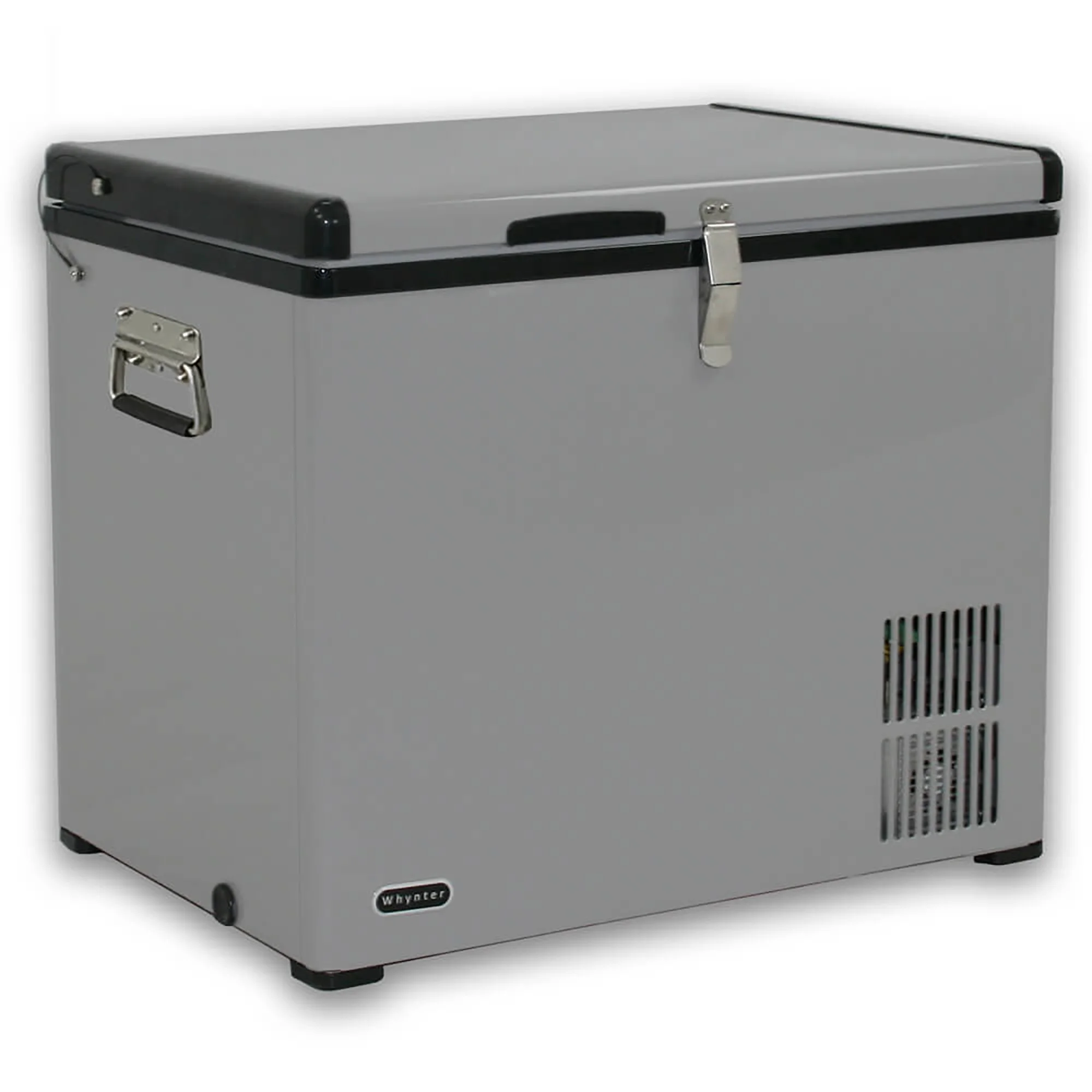
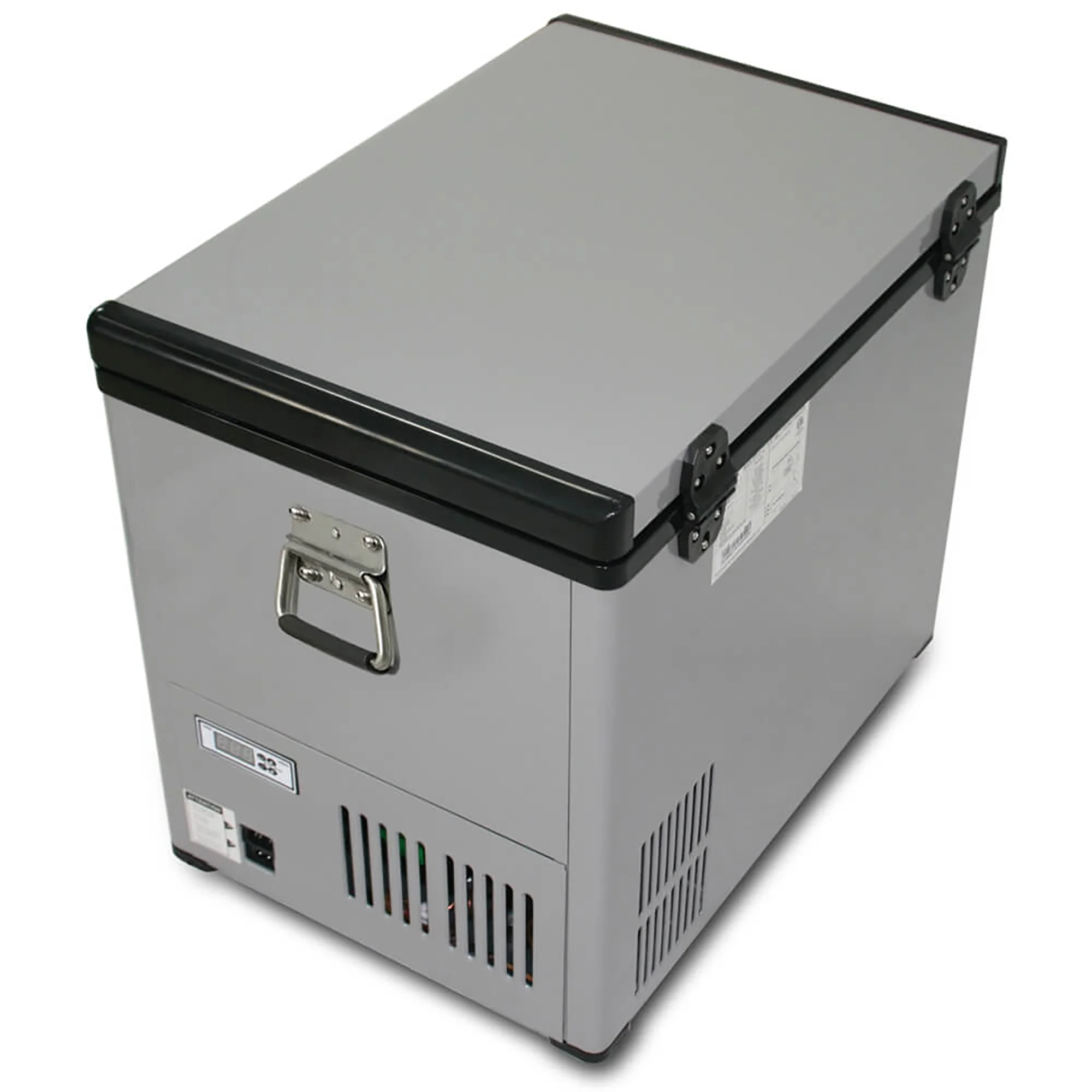
| Whynter FM-45G | Compressor | ~45 qt | Yes (to ~-8°F) |
Best Overall: Dometic CFX5 45
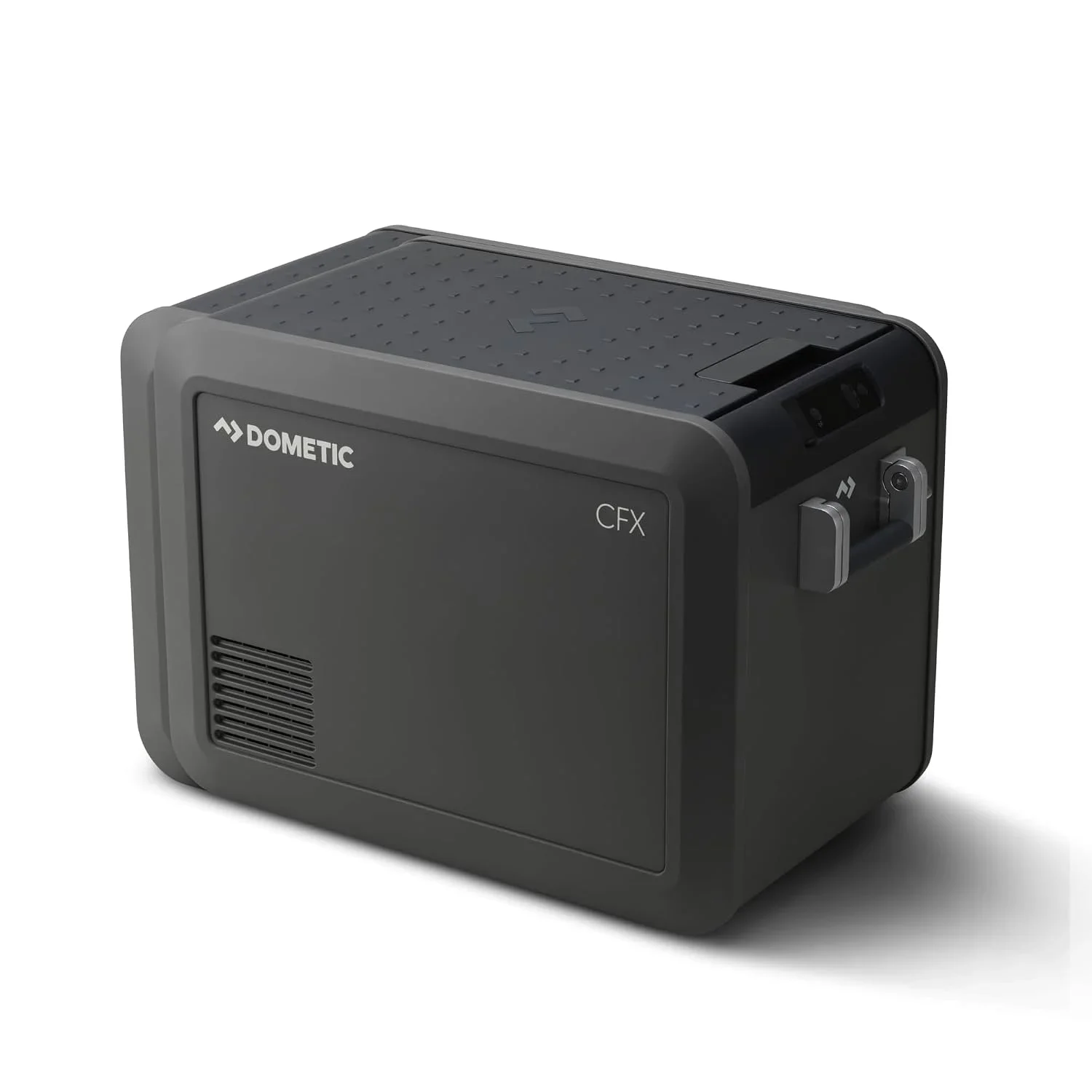
The Dometic CFX5 45 is the benchmark a lot of overlanders measure everything else against, and for good reason. Dometic builds it around a variable-speed compressor that ramps cooling output to load rather than slamming on and off, which keeps both noise and power draw down. The 45-liter (roughly 48-quart) cabinet swallows several days of food for two, and the published temperature range reaches well below freezing, so it works as a fridge or a freezer.
What you pay the premium for is the control electronics: a three-stage battery protection cutoff, an app for monitoring temperature, and insulation thick enough that the compressor cycles infrequently once the box is cold. That low duty cycle is exactly why it draws so little from your battery on a long drive. It is the most expensive unit here, but it is the one least likely to disappoint on a two-week trip.
It also earns its reputation on the details that show up months later: a lid that seals cleanly, a drain plug, and a removable wire basket that keeps produce off the cold floor. Dometic's CFX line is the one most often cited by full-time van dwellers precisely because it tends to keep working after years of vibration, dust, and heat — the conditions that quietly kill cheaper units.
On the spec sheet it is a single-zone, 45-liter (48-quart) compressor unit that reaches about -7°F (-22°C). The honest summary: it is the most expensive pick here and the easiest to recommend for long trips, where its low power draw and dependable electronics earn back the premium over a season of use.
Best Value and Best Compact: Alpicool C20
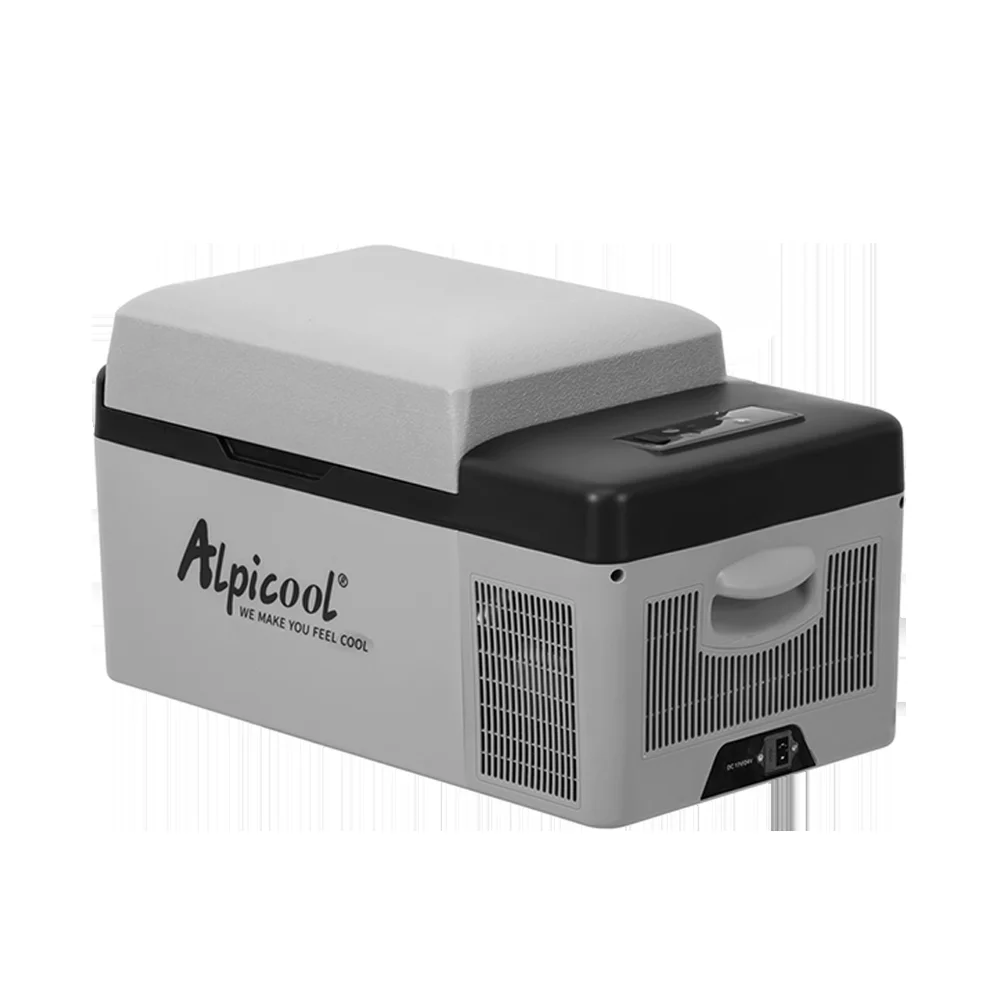
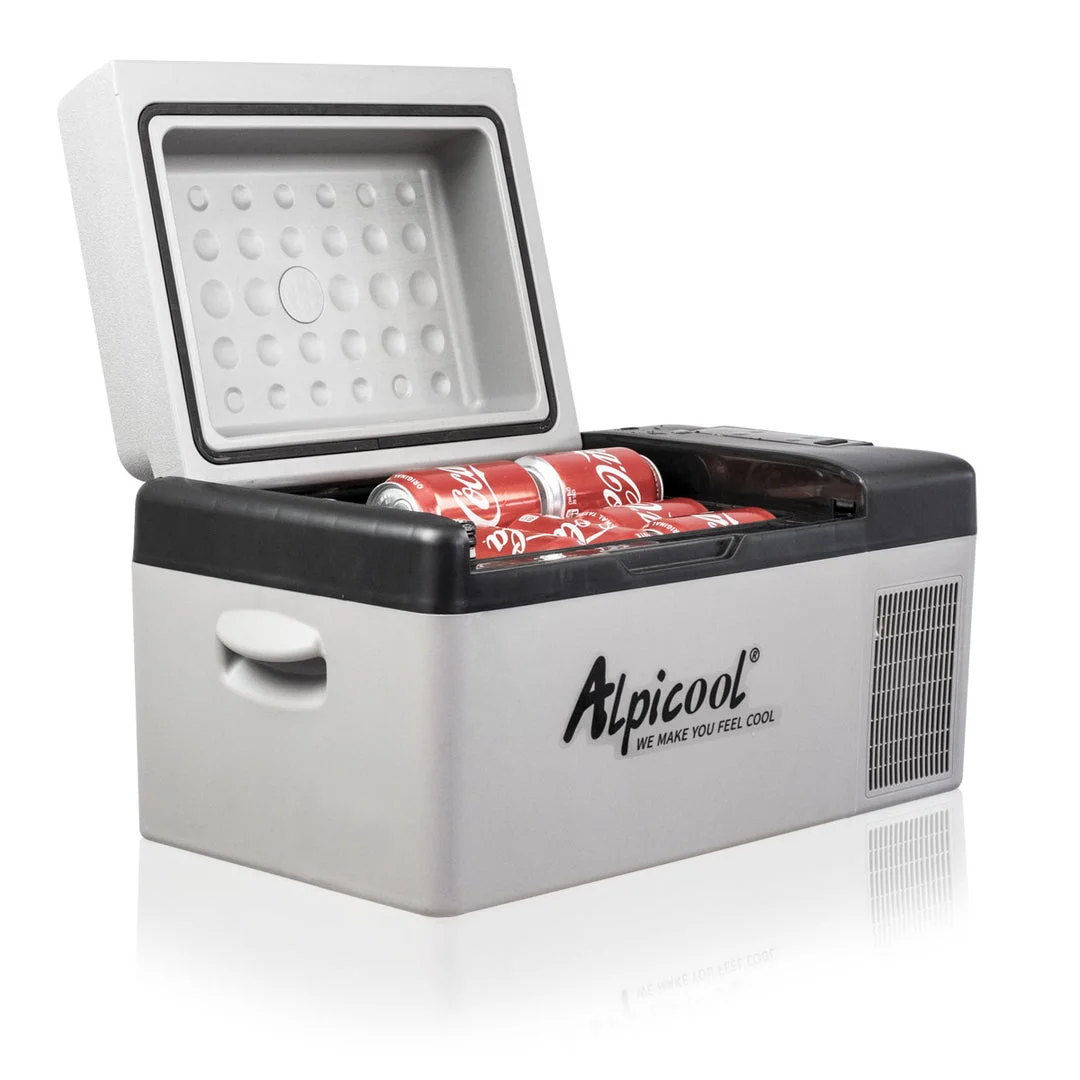
If the Dometic price makes you wince, the Alpicool C20 is where most buyers land. Alpicool sells an enormous volume of compressor coolers, and the C20 hits the sweet spot: a genuine compressor (so it freezes, unlike a Peltier box) in a roughly 21-quart footprint small enough to ride on a back seat or in a trunk well. It has its own low-voltage protection with high/medium/low settings, and it typically costs a third of the premium units. The trade-offs are thinner insulation and a louder compressor, but for weekend trips it is hard to argue with the math.
Neither matches the Dometic on insulation or quiet running, and you will hear the compressor kick in at night. But both deliver the one thing that actually matters — true, thermostatically controlled cold — for a fraction of the price. For someone buying their first 12V cooler to find out how much they will use it, starting with the Alpicool is a sensible, low-regret move.
- Alpicool C20: ~20 L / 21 qt, compressor, three-stage battery protection — the value default.
Best for Overlanding and Freezing: ICECO VL45
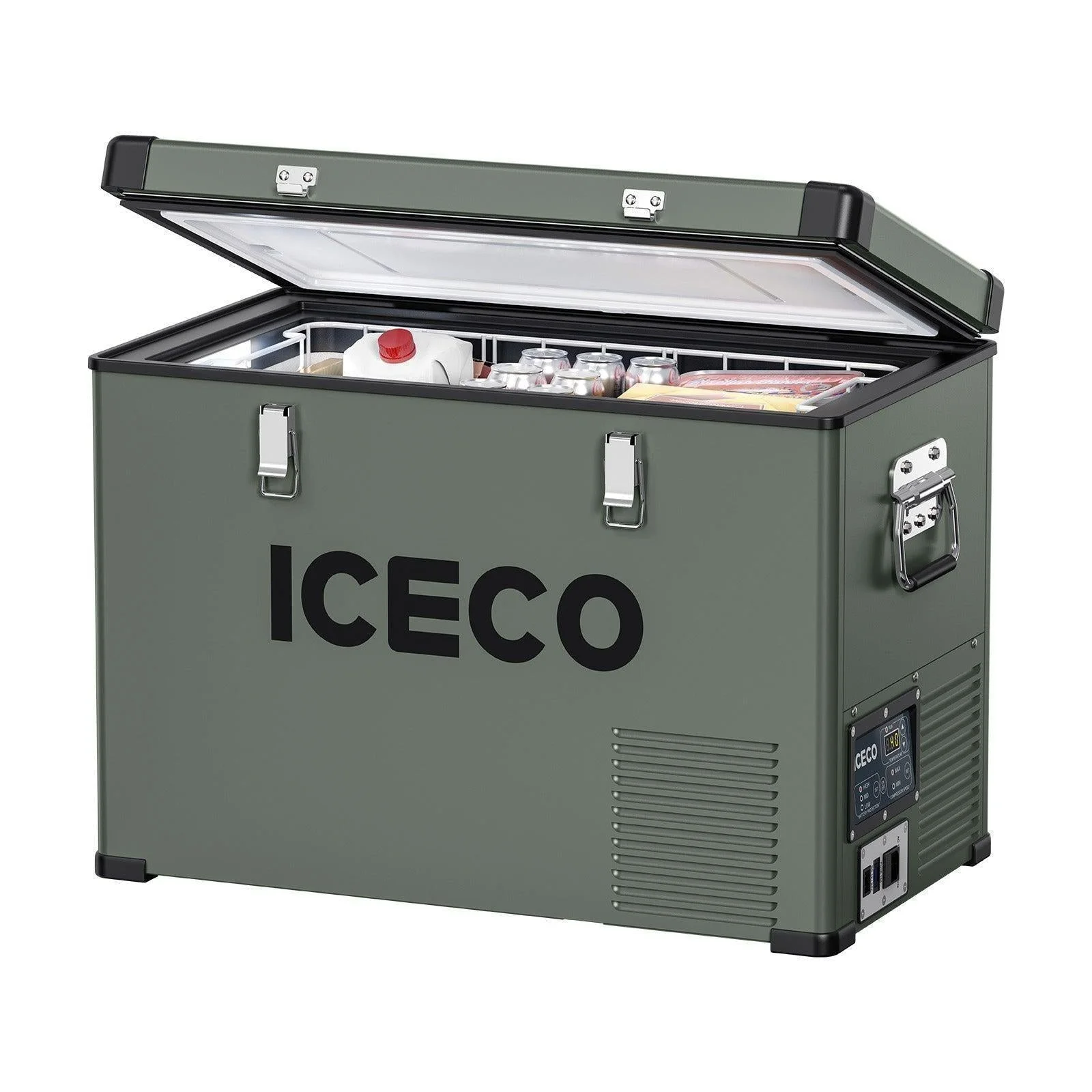
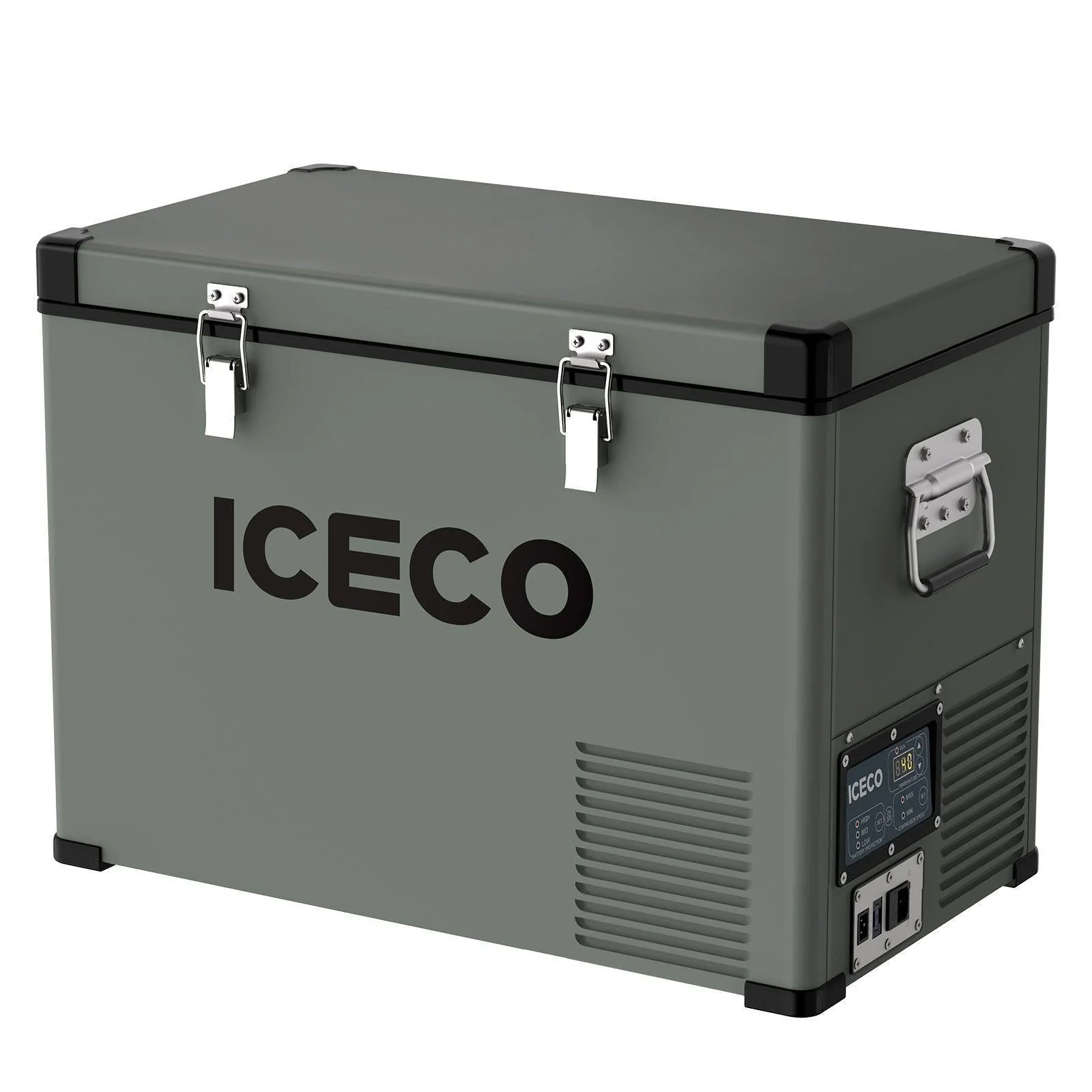
The ICECO VL45 built its reputation on putting a Secop (Danfoss) compressor — the same brand the premium units use — into a mid-priced 45-liter case. That compressor is the part that matters: it is efficient, quiet, and proven over years of vanlife use. The VL45 reaches deep freezing temperatures and its power draw is modest for the capacity, which is why it shows up constantly in vandweller recommendations as the value-to-quality champion.
- ICECO VL45: ~45 L, Secop compressor, freezes hard — the proven mid-price overlander.
Most Versatile: Whynter FM-45G
The Whynter FM-45G is the freezer-first option in this group. Whynter has sold this 45-quart unit for years, and it functions as a deep freezer or a refrigerator depending on the set point, holding temperatures from roughly -8°F up to 50°F. That makes it the pick for anyone who wants to keep ice cream frozen and beverages chilled out of the same box on different trips.
It runs on 12V/24V DC and 110V AC, has a fast-freeze mode, and includes a low-voltage protection circuit. The build is more utilitarian than the Dometic — fewer smart features, no app — but the cooling hardware is dependable and the price sits comfortably below the top tier. If your priority is true freezing capacity at a sane price, this is the one.
In practical terms it is the unit to buy when you genuinely need a freezer in the vehicle — for hunting trips, long hauls with frozen meals, or keeping fish and game cold on the drive home — rather than a refrigerator that occasionally dips toward freezing. The 45-quart capacity and wide -8°F to 50°F range give it the most operating flexibility of any pick here, and the AC/DC inputs mean it transitions from the garage to the highway without a separate power kit.
Power, Wiring, and Not Killing Your Battery
A compressor cooler typically draws 4-6 amps at 12V while the compressor runs, but it does not run continuously — once the box is cold it cycles, so real-world average draw is far lower. Even so, the cigarette-lighter socket is the wrong way to power one for long. Those sockets are often fused for the radio circuit and cut out when the ignition is off, and the thin factory wiring causes voltage drop that makes the compressor work harder.
- Run a dedicated fused line from the battery rather than the lighter socket.
- Give the compressor 2 inches of clearance for airflow.
- Set low-voltage protection to its highest level on a starter battery.
- Pre-cool the box on AC at home so the trip starts with the contents already cold.
Computed: how long a 12V compressor cooler really runs off a battery. The manufacturers rate these at 4-6 amps at 12V while the compressor runs, but it cycles, so what drains your battery is the average draw. Taking the 5-amp midpoint and a duty cycle that rises with heat, daily amp-hours = 5A × duty × 24h, then days of runtime = usable amp-hours ÷ daily amp-hours. Usable capacity is the honest part: a starter battery can only give up about 25Ah before it won't crank, a 100Ah AGM house battery about 50Ah at a safe 50% depth-of-discharge, and a 100Ah LiFePO4 about 90Ah.
| Power source (usable Ah) | Cool night (~25% duty, 30Ah/day) | Warm day (~40% duty, 48Ah/day) | Hot day (~55% duty, 66Ah/day) |
|---|---|---|---|
| Car starter battery (~25Ah safe) | 0.8 day | 0.5 day | 0.4 day |
| 100Ah AGM house battery (~50Ah) | 1.7 days | 1.0 day | 0.8 day |
| 100Ah LiFePO4 (~90Ah) | 3.0 days | 1.9 days | 1.4 days |
The table makes the danger unmistakable: even the efficient units flatten a starter battery in well under a day of parked running, which is the whole reason the low-voltage cutoff and a dedicated house battery or portable power station matter. It also explains why insulation quality — the spec the marketing buries — is worth paying for: a thicker-walled box (the Dometic, the Secop-equipped ICECO) sits at the low-duty end of this table, while a thin-walled value box (the Alpicool C20) drifts toward the high-duty column and needs more battery to reach the same days.
The Verdict: Pick by Use Case
There is no single best 12V cooler — there is the best one for how you travel. After weighing capacity, power draw, and build against published specs, the picks sort cleanly by use case.
- Best overall, long trips: the Dometic CFX5 45 — lowest power draw, best electronics, worth the price.
- Best value: the Alpicool C20 — real compressor cooling for roughly a third of the premium cost.
- Best proven mid-price: the ICECO VL45 — a Secop compressor without the top-tier price.
- Best freezer: the Whynter FM-45G — deep freezing and AC/DC flexibility at a mid-tier price.
Whatever you choose, buy a compressor unit, wire it properly, and set the battery protection. Do that and a 12V cooler stops being a gamble and becomes the most useful upgrade on the trip.