
Where Are the 12V Outlets in a Jeep Wrangler? The Quick Answer
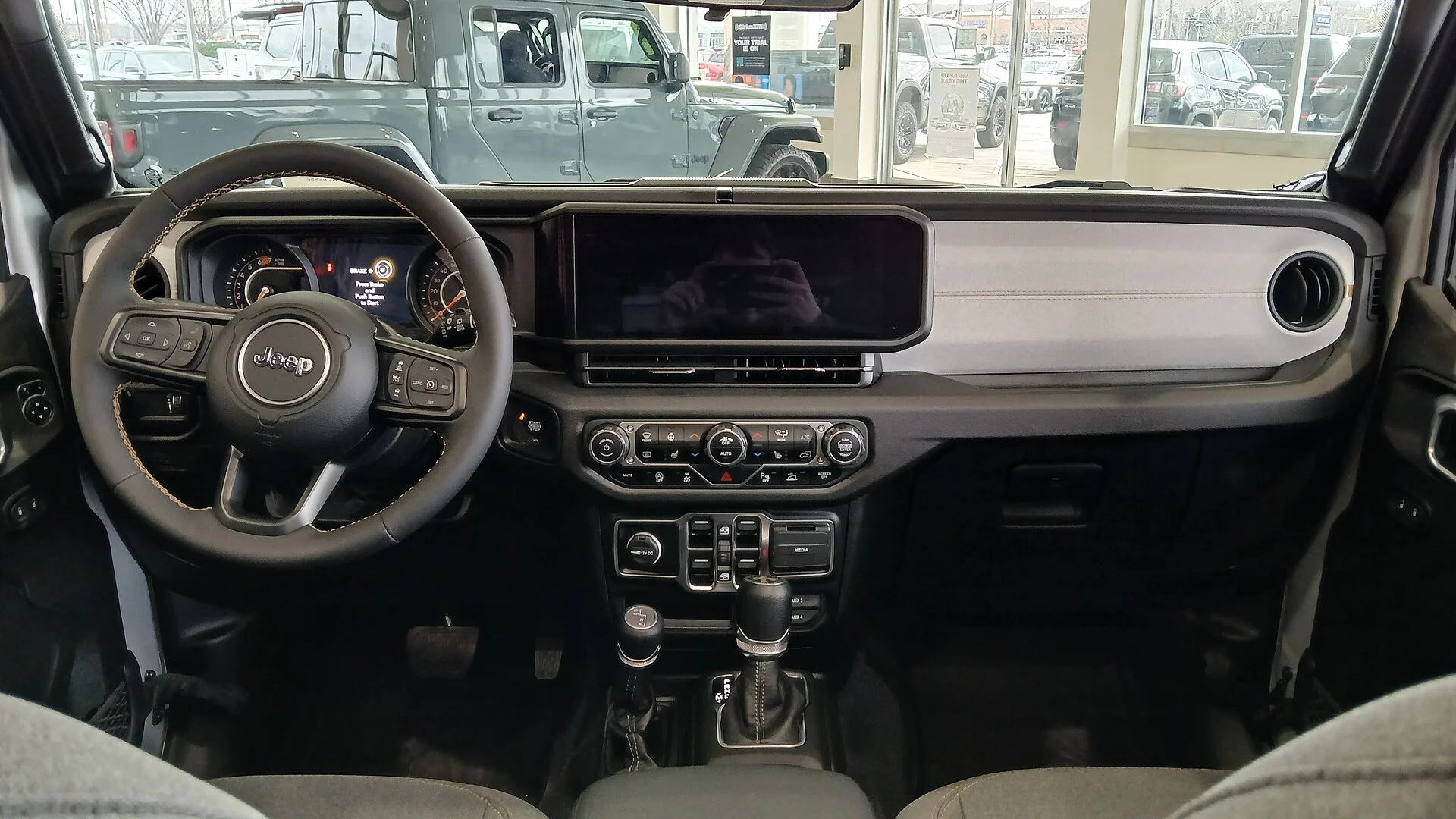
On a modern Jeep Wrangler you will find 12V (cigarette-lighter-style) power outlets in three general areas: the front instrument panel near the climate controls, the center console (often inside or at the rear of it), and — on many models — a rear outlet serving the back seat or cargo area. The exact count and placement depend on the generation and trim, but two to three 12V sockets is typical, each protected by its own fuse in the interior or under-hood fuse box.
If you just need the locations at a glance, here is the layout that holds across most Wranglers:
- Front dash / instrument panel — a 12V socket low on the center stack, near or below the radio and climate controls. This is the most universal one and is usually ignition-switched (live only with the key on or in accessory).
- Center console — a 12V socket inside or at the back face of the console, intended to power devices for front and rear occupants.
- Rear / cargo area — a 12V socket in the back, commonly on the driver's side near the wheel well or, on Unlimited four-door models, integrated with the available subwoofer housing. On the JL generation this rear outlet is frequently the one owners reconfigure to stay live with the ignition off.
Trims vary, so the only authoritative source for your exact vehicle is the owner's manual and the fuse-box legend printed on the fuse panel cover — both list every powered outlet and the fuse that protects it. The sections below break the layout down by generation, explain the amperage and fuse ratings published for these circuits, and cover what you can and cannot safely run from them.
JK Generation (2007-2018): Outlet Locations and Layout
The JK Wrangler — built from the 2007 through 2018 model years, including the two-door JK and four-door JK Unlimited — uses a straightforward 12V layout that changed little over its long run. Understanding it matters because a huge number of Wranglers on the road today are JKs, and their wiring differs from the newer JL in a few important ways.
On a typical JK, working from front to back, you will find:
- A front 12V outlet on the lower center stack, below the radio and climate controls. On most JKs this front socket is ignition-switched, meaning it only supplies power when the key is in the accessory or run position.
- A center-console 12V outlet on many trims, positioned for easy reach from the front seats.
- A rear/cargo 12V outlet on four-door Unlimited models and many Sahara/Rubicon configurations, typically mounted in the rear quarter trim on the driver's side. On JKs equipped with the premium audio package, the rear outlet is often associated with the subwoofer enclosure in the cargo area.
The JK predates the widespread factory USB and Type-C ports of the later generation, so on early JKs the 12V sockets are the primary way to power and charge devices, usually paired with a single auxiliary USB/AUX input in the media hub on better-equipped trims. Owners who want modern charging typically add a 12V-to-USB adapter in one of these sockets rather than relying on a factory USB port that may not exist.
One JK-specific detail worth knowing: because the front socket is ignition-switched, it is not a good choice for anything that must run while the engine is off, such as an overnight trickle of power to a cooler. Owners who need always-on power on a JK generally tap the rear circuit or wire an accessory directly to the battery through a fused line rather than relying on the dash socket. Always confirm which sockets are switched and which (if any) are constant on your specific trim using the manual.
It is also worth noting that the JK spans two distinct interior eras. Earlier JK models have a simpler center stack and fewer charging points, while later JK (often called the JK update years) added more modern infotainment and, on better trims, an extra USB or AUX input. If you are buying a used JK specifically for its power options, check the actual vehicle rather than assuming — trim level and options package affect how many sockets and ports you get more than the model year alone does.
JL Generation (2018-Present): Outlet Locations and the Move to USB
The JL Wrangler, introduced for the 2018 model year and continuing today, kept the familiar 12V socket layout but added a much richer set of USB charging ports, reflecting how device charging shifted away from cigarette-lighter adapters. For anyone deciding what to plug in where, the JL gives you more options than the JK did.
The JL's typical power layout includes:
- A front 12V outlet on the lower center stack, near the climate and media controls — the everyday socket for a phone charger, GPS, or dash cam lead.
- USB-A and USB-C ports up front, and frequently a second bank for rear passengers on higher trims and four-door models. The Uconnect media bin and the area below the climate controls are common locations for these.
- A center-console 12V outlet on many configurations.
- A rear/cargo 12V outlet, commonly on the driver's side of the cargo area; four-door Unlimited models with premium audio often integrate it near the subwoofer housing. This is the outlet JL owners most often convert to always-on (covered below).
- An available 115V household-style AC outlet on certain trims, useful for small mains-powered devices but limited to a modest wattage ceiling (commonly around 150W on the inverter-fed outlet — check your trim's rating before relying on it).
The practical upshot for JL owners is that you rarely need to occupy a 12V socket just to charge a phone — the USB ports handle that. That frees the 12V outlets for the things that genuinely need them: 12V air compressors, portable fridges/coolers, tire inflators, and accessory wiring. It also means the front 12V socket is a better candidate for a permanent accessory like a dash cam, since you are no longer competing with phone charging for it.
The practical JK-to-JL upgrade in power terms is not more 12V sockets — it is the bank of factory USB ports. They take over everyday charging so your limited 12V outlets are free for the higher-value jobs that actually need 12 volts.
Amperage, Fuse Ratings, and the Real Power Limit of a 12V Socket
This is the section that prevents blown fuses and disappointed expectations, so it is worth being precise — and being honest that the exact numbers come from Jeep's published specifications and the fuse-box legend, not from any bench measurement of our own.
A standard automotive 12V accessory socket is wired through a dedicated fuse, and that fuse sets the hard ceiling on how much current the circuit can deliver. Across the Wrangler range, factory 12V outlet circuits are commonly protected by fuses in the 15A to 20A range, with many sources documenting the front and accessory sockets around the lower end of that band. Because power equals volts times amps, a 12V socket on a typical ~15A fuse can supply roughly 180 watts before the fuse is at risk; a 20A circuit allows correspondingly more. Treat the printed fuse rating, not a round marketing number, as your limit.
A few realities to plan around:
- Continuous draw should stay well under the fuse rating. A fuse is sized to protect wiring, not to be run pinned at its maximum. Drawing close to the limit for hours — as some compressors and high-output fridges do — stresses the socket contacts and can pop the fuse.
- The socket connector itself is a weak point. The friction-fit cigarette-lighter plug is mechanically poor for sustained high current; it heats up and can make intermittent contact. For anything pulling more than a few amps continuously, a hard-wired connection is more reliable than the socket.
- Check the fuse legend before you guess. The Wrangler's fuse boxes (an under-hood Power Distribution Center and an interior fuse panel) are labeled, and the owner's manual lists which fuse feeds each outlet. If a socket is dead, a blown fuse is the first thing to check, and you must replace it with the same amperage rating — never a higher one, which defeats the protection and risks a wiring fire.
The single most useful number you can know about your Wrangler's power is the fuse amperage feeding the outlet you plan to use. It is printed on the fuse-box legend and listed in the owner's manual, and it — not the device's marketing wattage — decides whether your gear will run reliably or keep popping fuses.
It also helps to understand the difference between a device's peak draw and its running draw. Many 12V appliances — compressors and fridges especially — spike well above their steady-state current at the instant the motor starts. A fridge might run at a few amps but momentarily pull much more each time the compressor kicks on. A fuse can tolerate brief inrush, but a device whose startup spike repeatedly approaches the fuse rating will eventually trip it, which is why the published continuous rating is a floor for your planning, not the whole story. When you read a device's label, note both numbers if they are given, and size your headroom against the higher one.
Finally, remember that voltage is not perfectly steady. With the engine running, the alternator holds the system near 14 volts; with the engine off, it sags toward 12 volts and lower as the battery discharges. A device's current draw rises slightly as voltage falls to deliver the same power, so a load that sits comfortably under the fuse with the engine running can edge closer to the limit late in a long engine-off session. It is one more reason that sustained high-draw use is better served by a dedicated power source than by a factory socket.
Always-On vs Ignition-Switched: Which Outlets Work With the Engine Off
For car camping and overnight power, the most important distinction is not where an outlet is but when it is live. Wrangler 12V sockets fall into two categories, and knowing which is which prevents both a dead phone in the morning and a dead starting battery.
Ignition-switched (accessory) outlets only have power when the key is in the accessory or run position. The front dash socket is typically wired this way. The benefit is built-in protection: leave something plugged in, walk away, and it cannot drain your battery overnight because the circuit goes dead when you shut off the Jeep.
Always-on (constant) outlets are fed directly from the battery and stay live regardless of ignition. These are convenient for keeping a cooler cold or a device trickle-charging while you sleep — but they will steadily drain the starting battery, so they demand discipline.
On the JL generation in particular, a widely documented owner modification is converting the rear cargo-area outlet from switched to always-on (or vice versa) by relocating the outlet's feed in the fuse box — the rear socket is wired so that this change is relatively accessible, and Wrangler owner forums and write-ups describe the swap in detail. If you do this, you take on the responsibility of monitoring battery drain yourself.
Whichever outlets you use overnight, respect these guardrails:
- A typical Wrangler starting battery has only modest reserve capacity; an always-on draw of even a couple of amps for many hours can leave you unable to start in the morning.
- If you regularly need overnight power, a separate house battery or a portable power station is far safer than running accessories off the starting battery, because it isolates your camp loads from the battery that has to crank the engine.
- If you must use a constant 12V outlet overnight, unplug high-draw devices and keep an eye on total runtime — the goal is to wake up to both a cold cooler and a Jeep that starts.
The Auxiliary Switch (AUX) System on Rubicon and Other Trims
Beyond the standard 12V sockets, many Wranglers — most notably the Rubicon, and available on other JL trims — come from the factory with a bank of auxiliary switches (commonly labeled AUX1 through AUX4) mounted in the overhead area or on the dash. These are not power outlets in the cigarette-lighter sense; they are a far better way to power serious accessories, and overlanders should understand them.
The factory AUX switch system is essentially pre-wired, fused circuits designed for add-on equipment, with the heavy wiring and relays already routed from the under-hood power distribution center to the engine bay and switch panel. Each switch is rated for a defined current load (the AUX channels carry different amperage ratings — some are sized for higher-draw accessories than others, so consult the manual for which switch suits which load), and they are controlled cleanly from the cabin without splicing into existing circuits.
Why this matters for the power question: a 12V cigarette-lighter socket is the wrong tool for high-draw, permanently mounted gear like off-road light bars, an air compressor for on-board air, a winch accessory, or auxiliary lighting. Those belong on the AUX switch circuits (or a properly fused direct-to-battery connection), not on a friction-fit socket that was designed for a phone charger. Using the right circuit is both safer and more reliable.
Think of it as a hierarchy: USB ports for charging small devices, 12V sockets for plug-in portable gear like a fridge or inflator, and the factory AUX switches (or a fused direct-battery line) for high-draw, permanently mounted accessories. Matching the load to the circuit is the whole game.
If your trim did not come with the factory AUX package, aftermarket switch panels replicate the same idea, but the factory system has the advantage of integrated, manufacturer-rated wiring and fusing — which is why it is one of the Rubicon's most praised practical features for anyone building out the vehicle.
Adding Outlets and Powering Accessories Safely
Two factory 12V sockets and a handful of USB ports run out fast once you are running a fridge, a compressor, lights, and charging devices at camp. Expanding your Wrangler's power is straightforward if you follow the same logic the factory uses: the right gauge wire, a fuse close to the source, and a connection matched to the load.
Common ways owners add capacity, from simplest to most involved:
- A multi-socket 12V splitter or powered hub. The quickest option, but it shares a single fused circuit — the total draw of everything plugged in still cannot exceed that one fuse's rating. Fine for several low-draw devices; not a way to magically create more total power.
- An add-a-circuit fuse tap in the fuse box. A fuse-tap adapter lets you pull a new fused feed from a spare slot for a dash cam or a small accessory. Match the tap's fuse to the device, and choose a switched or constant slot depending on whether you want the accessory live with the engine off.
- A direct-to-battery line with an inline fuse. For higher-draw gear, run appropriately sized wire from the battery through a fuse or breaker mounted close to the positive terminal. This is the cleanest way to feed a fridge or compressor without loading the factory sockets.
- The factory AUX switches (covered above) for permanently mounted, switched accessories — the best option when your trim has them.
Whatever route you choose, the non-negotiable rules are the same ones an electrician or the Jeep wiring itself follows: fuse every new circuit as close to the power source as possible, size the wire for the current and the run length, protect connections from moisture and abrasion, and never replace a fuse with a higher-rated one to 'fix' a circuit that keeps blowing — a blown fuse is telling you the load is too high or there is a fault. For anything beyond a phone charger, many owners step up to a dedicated power station so their camp electronics never touch the starting battery at all.
What Can (and Can't) You Run From a Wrangler's 12V Outlet?
The most common real-world questions are about specific appliances: a fridge, an air compressor, a kettle. The answer always comes back to the same math — the device's amp draw versus the fuse protecting the socket — so here is how the popular gear lines up against a typical 15A (~180W) Wrangler outlet.
- Phones, tablets, GPS, dash cams, fans, lights: Easy. These draw a few amps at most and are exactly what the sockets and USB ports are designed for.
- 12V portable fridge/cooler: Generally yes. Most 12V compressor fridges draw well under the fuse limit while running and only cycle the compressor intermittently — but for overnight use the bigger issue is battery drain, not the fuse, so plan power accordingly. See our guide to the best 12V fridges for road trips for typical draw figures.
- 12V air compressor / tire inflator: It depends on the model. Small inflators are fine on a socket; larger, faster compressors can pull 15A or more and should be hard-wired or run from the AUX/direct-battery system rather than a cigarette socket. Our overlanding air compressor guide covers which units exceed socket limits.
- Electric kettle, hot plate, hair dryer, microwave (AC appliances): No, not from a 12V socket. These need hundreds to over a thousand watts — far beyond any 12V outlet, and beyond even the available 115V factory inverter outlet, which is limited to a modest wattage. High-wattage AC appliances require a large dedicated inverter and battery bank.
The deciding question is never the appliance's name — it is its amp draw versus the fuse on the socket you plan to use. Charging and small 12V gear, yes; a fridge with battery management, yes; high-wattage heating appliances, never from a 12V socket.
The honest rule of thumb: a Wrangler 12V outlet comfortably handles charging and small 12V appliances, manages a portable fridge if you watch battery drain, and is the wrong source for any high-wattage heating appliance. When in doubt, find the device's amp draw on its label, compare it to the fuse rating for the socket you intend to use, and leave headroom rather than running the circuit at its limit. For deeper planning on running a fridge off vehicle power, our guide to powering a 12V fridge while camping walks through the battery and runtime math. For off-pavement travel, pack recovery boards for soft ground.