Why air-down/air-up is the cheapest off-road upgrade
Long before you spend money on lockers, bigger tires or a lift, the single most effective thing you can do off-road is let air out of the tires you already own. Drop a street tire from highway pressure to the mid-teens and the contact patch grows, the sidewall softens to swallow rocks and washboard, and traction on sand and slick rock improves out of all proportion to the effort. It costs nothing. The catch — the entire reason this category exists — is that you must put that air back before you hit the pavement, and a gas-station pump is rarely at the trailhead.
So the compressor is the tool that makes airing down practical. The decision isn't really about which brand is 'best' in the abstract; it's about matching flow and duty cycle to the size of your tires and how many you air after each trip. A weekend warrior on 31s needs a very different machine from someone running 37s who airs four tires at every trailhead.
I leaned on the tester consensus here — Car and Driver's bench numbers, the long-running Expedition Portal compressor threads, and years of owner reports on r/overlanding — rather than pretending I dyno'd every motor myself. Where a spec is marketing and where it's real trail performance, I say which.
What actually matters when you buy
Four numbers decide whether a compressor is a joy or a twenty-minute chore at the trailhead:
- CFM (flow), sized to your tires. Up to ~33-inch tires, ~2 CFM airs up fine. On 35s and bigger, owners converge on the 5–6 CFM class so each tire takes a couple of minutes, not ten.
- Duty cycle. A 33% duty-cycle rating specs out to roughly 10 minutes of running in every 30, with the remainder for cooling — that is what the rating itself means; a high-duty or 100%-rated unit just keeps going. Airing four big tires back to back is where a low duty cycle bites.
- Durability and sealing. Trail dust kills cheap compressors. Sealed (IP-rated) motors, brass fittings and a real on/off pressure switch are why the ARB and VIAIR units survive years.
- How you carry/power it. Clamp-to-battery, a cigarette plug (weak, avoid for big tires), an on-board hard mount, or a cordless built-in battery each suit a different rig and workflow.
The temptation is to read only the CFM number on the box, but the four interact. A high-CFM motor with a low duty cycle airs one tire fast and then makes you wait while it cools — so the real-world time to air four tires can be worse than a slower unit that simply doesn't stop. A sealed motor that survives years of dust matters more than a few tenths of a CFM you'll never notice. And the carry/power method decides whether you actually use the thing: a unit you have to unbolt or hard-wire stays home on the days you'd have aired down. Weigh all four against how you really wheel, not against the spec sheet's biggest font.
The picks, by how you wheel
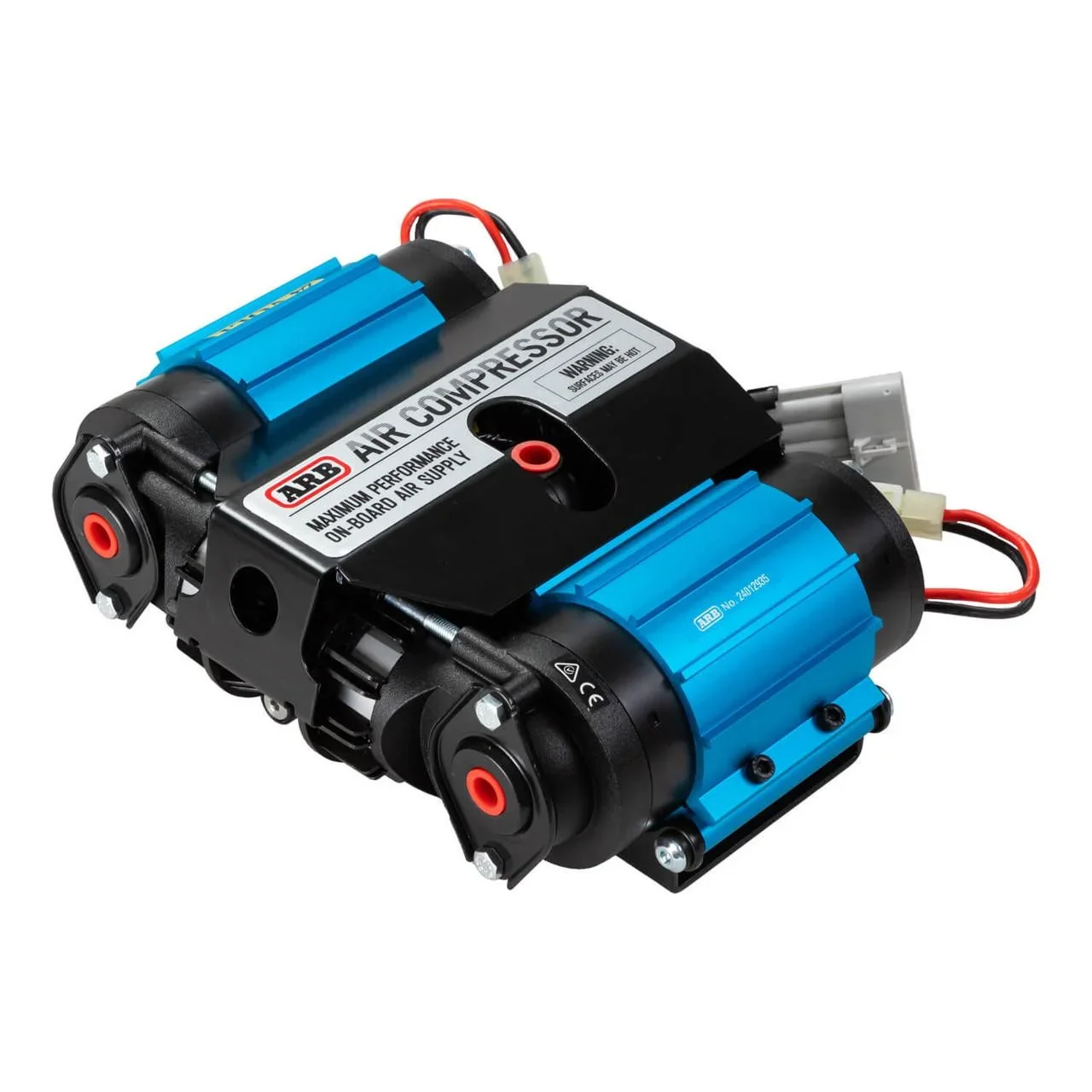
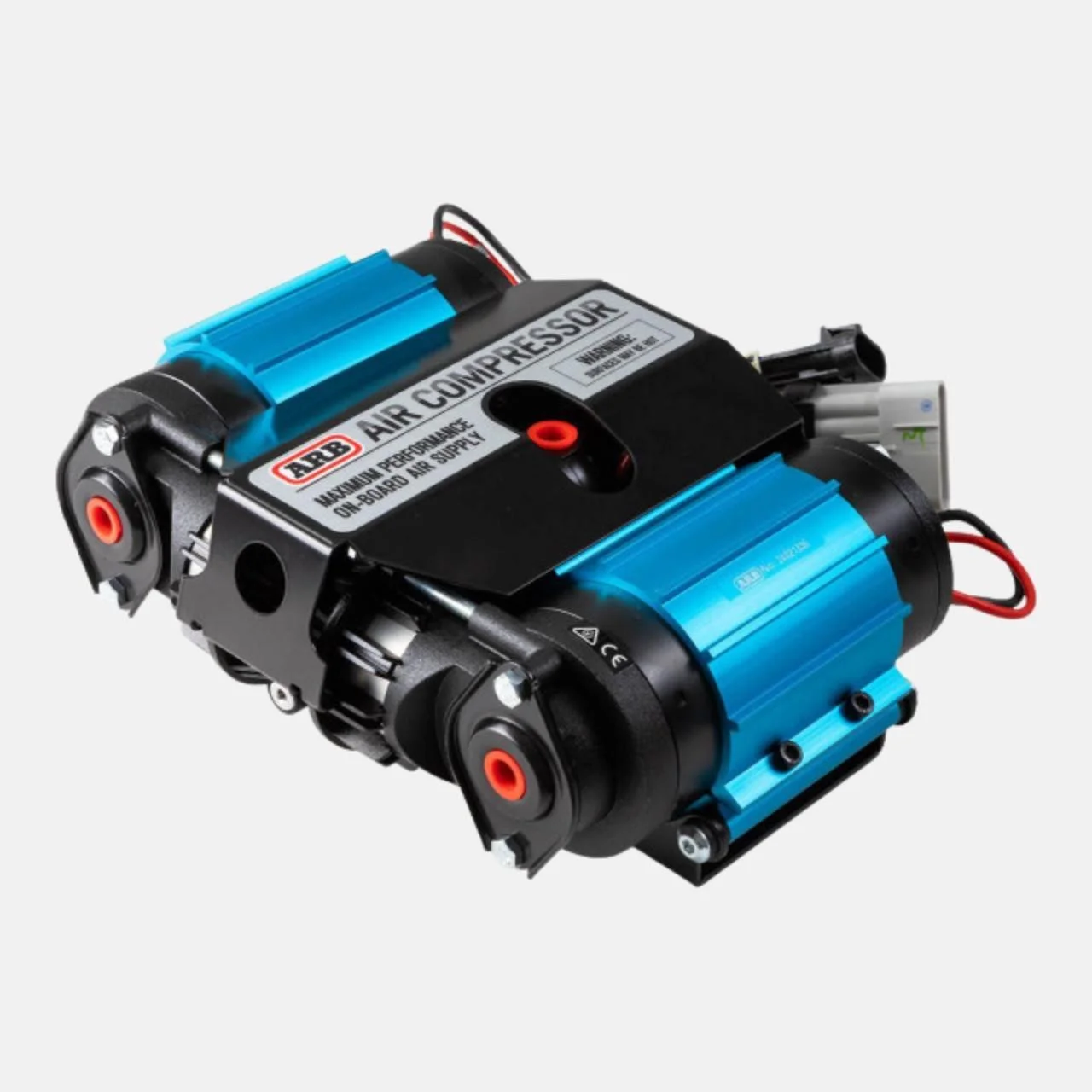
The ARB Twin (CKMTA12) is the trail gold standard for a reason: two motors, roughly 6.16 CFM, a 100%-class duty cycle and the sealed, fused durability that survives years of dust. It's overkill on 31s and exactly right on 37s, and it doubles as the air source for ARB lockers in a full build.
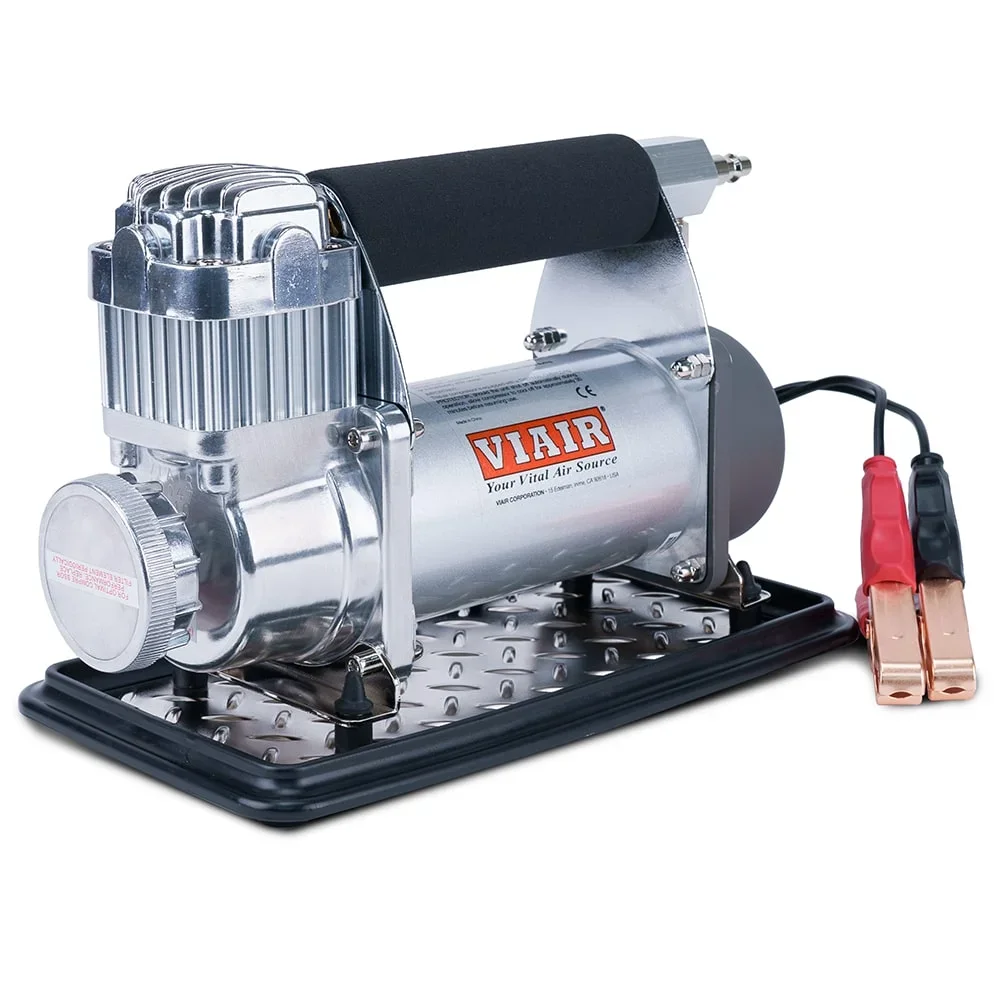
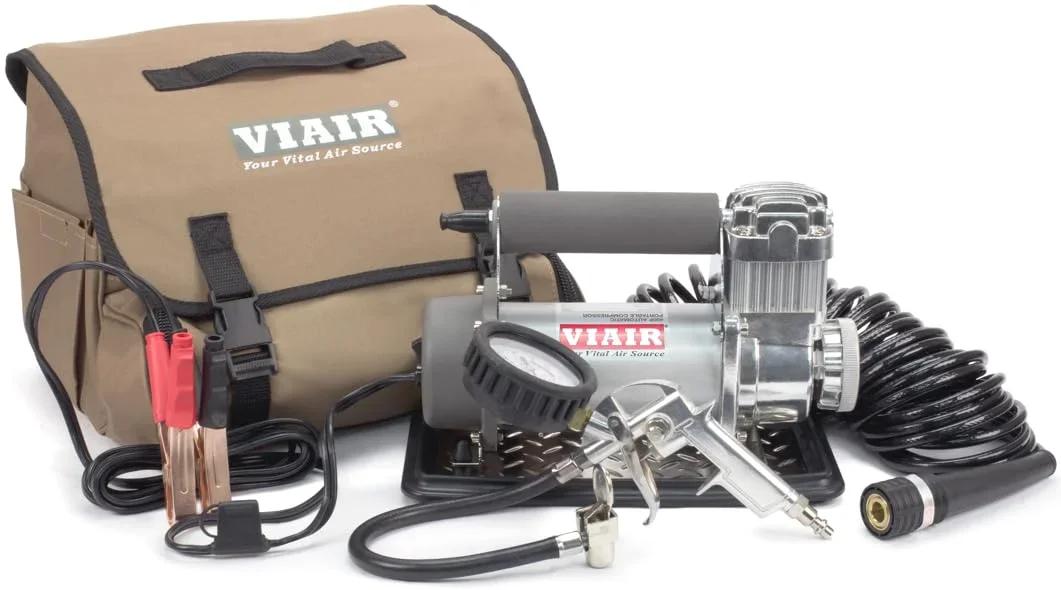
The VIAIR 400P-Automatic is the proven mid-tier: ~2.3 CFM, a genuine auto shut-off so you can walk away, a sand-tray base and clamp-to-battery leads. Testers have leaned on VIAIR for years because the numbers it claims are the numbers it delivers.
The Morrflate Maxflate solves a different problem: it airs (and deflates) all four tires at once through a single hose tree, turning a fifteen-minute chore into one stop. If your annoyance is time, not capability, it's the smartest money here.
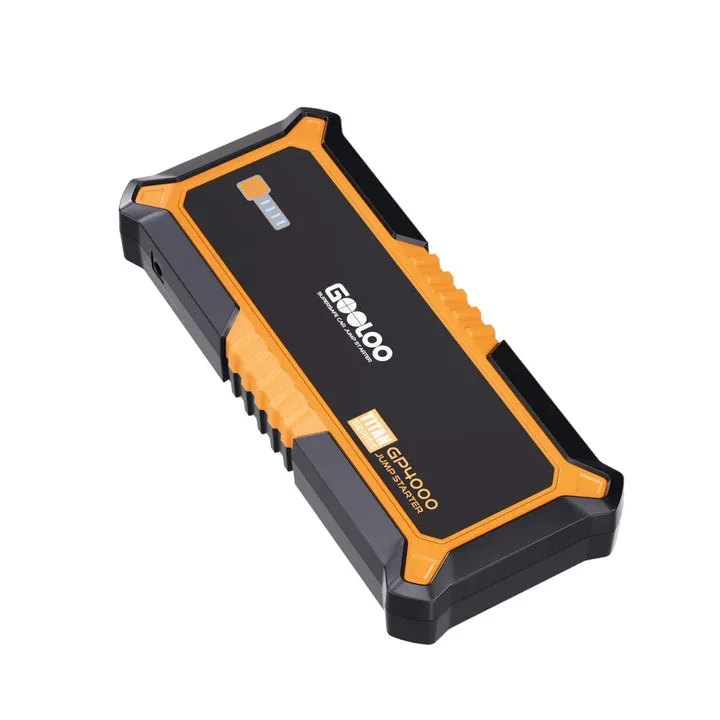
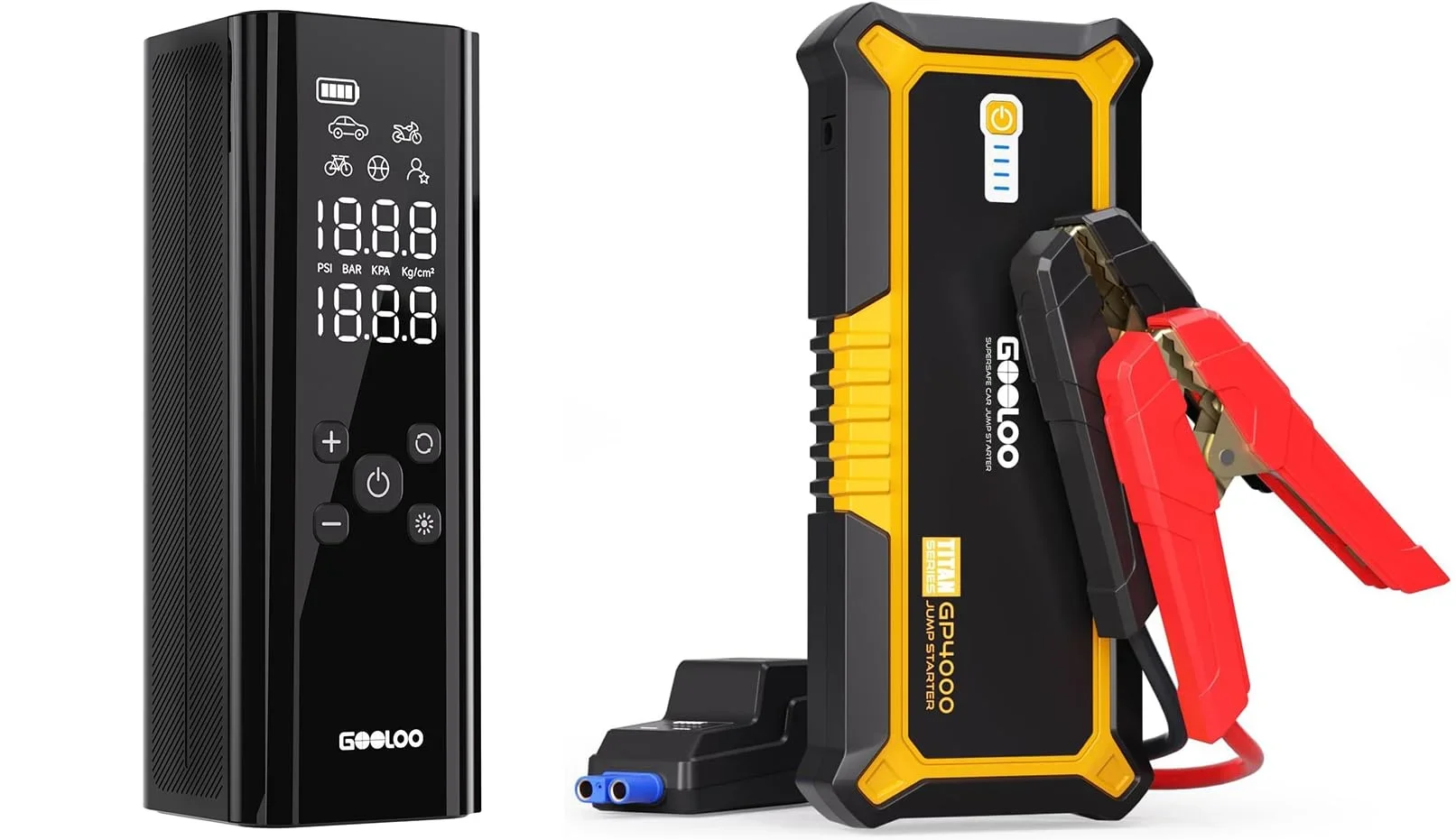
And the GOOLOO GP4000 is the cordless budget pick — a built-in battery for quick trail top-offs without clamping to anything. It won't air four 35s, but for a small SUV on mild trails it's a genuinely useful, packable backup.
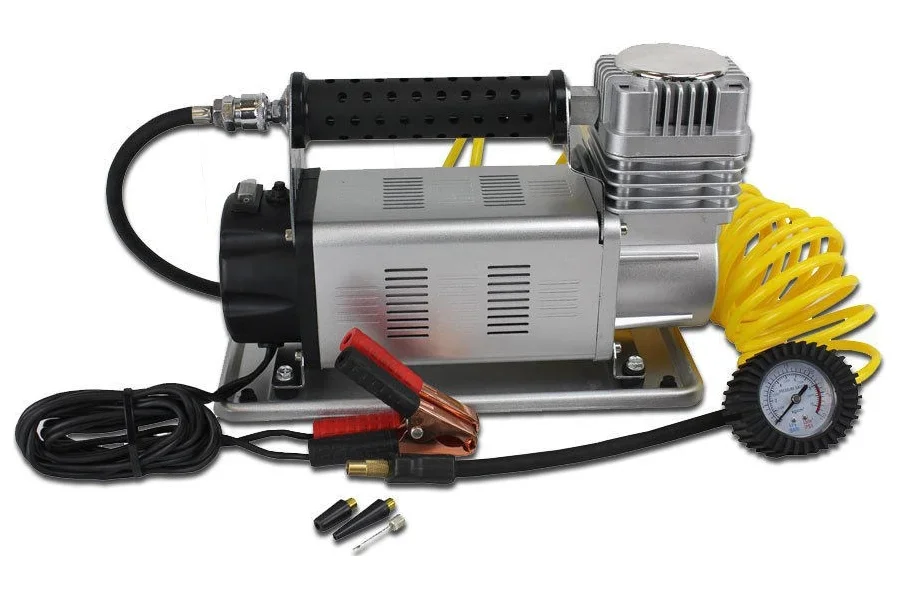
The ALL-TOP 12V Dual Cylinder Air Compressor is the dual-cylinder middle ground: two cylinders on one motor head, an LCD panel that lets you preset a target pressure and walk away, and a 150 PSI rating that is far more than tyres ever need. Treat the 12.35 CFM on the box as a free-air marketing figure, not a number you will see at 30 psi — that gap is exactly the duty-cycle trap above. Judged honestly it sits between the VIAIR and the ARB: faster than a single-cylinder portable on 33s and 35s, cheaper than a twin, and the preset shut-off is the feature you will actually use.
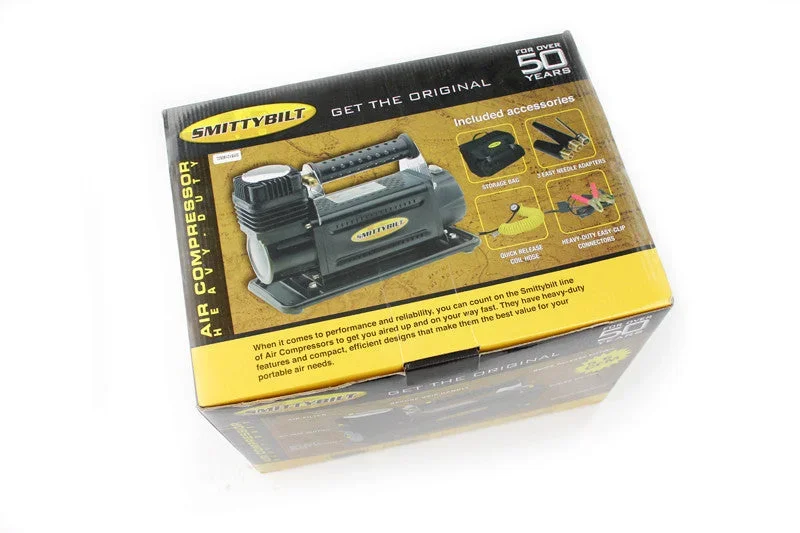
The Smittybilt SB2780 is the honest floor of the category. Its listed flow is 2.54 CFM — VIAIR-class, not ARB-class — so it is a 31s-and-33s tool that clamps to the battery and gets you back to highway pressure without a gas station. It is not the high-flow bargain the internet sometimes calls it, and pretending otherwise is how people end up disappointed at the trailhead on 35s.
Head to head: the ARB Twin against a budget single
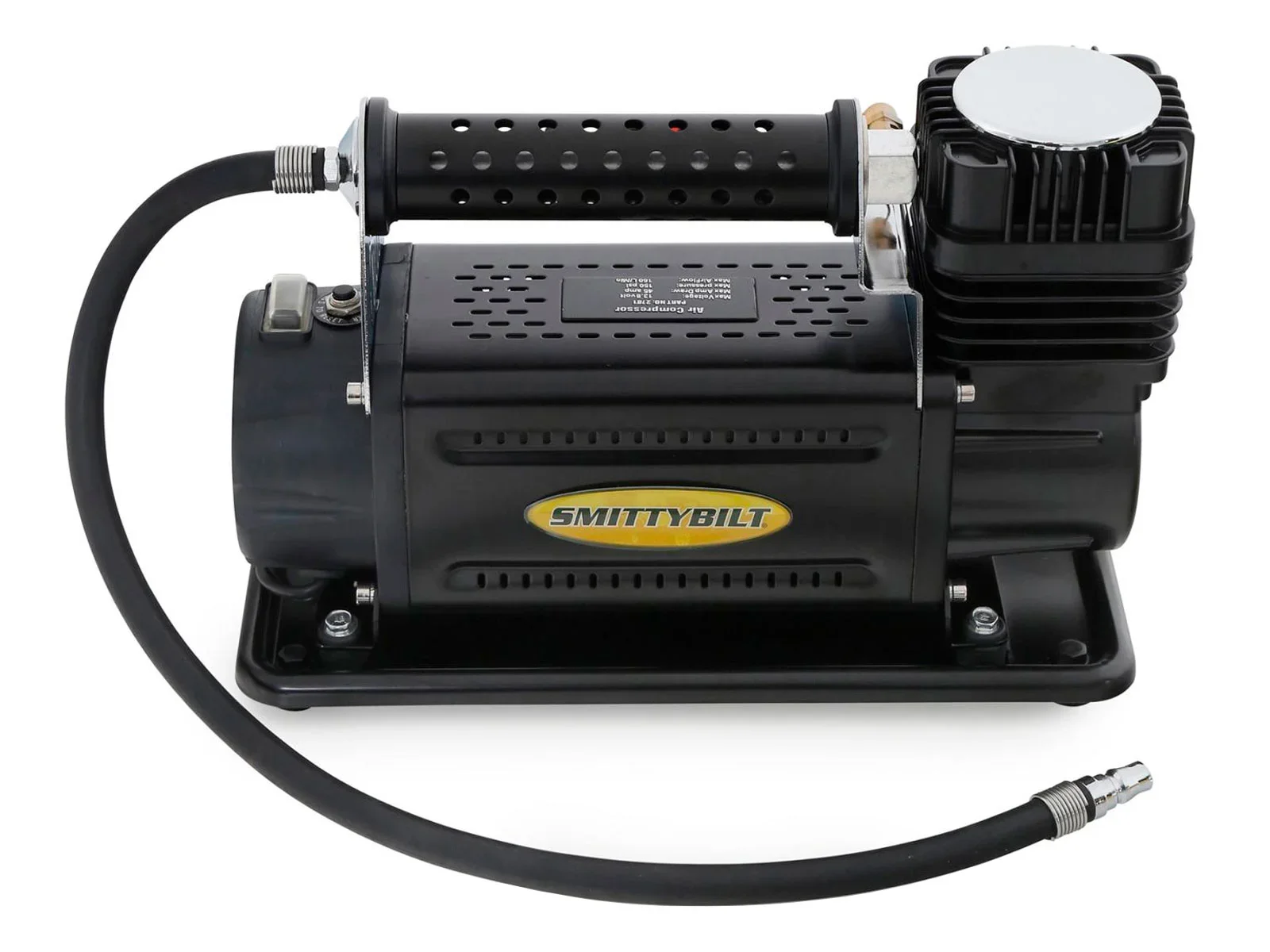
Put bluntly: if this is a buy-it-for-life tool on a serious build, the ARB Twin earns its premium — two motors, roughly 6.16 CFM, and a duty cycle that does not make you wait. A budget single like the Smittybilt SB2780 is a different tool with a different job: at 2.54 CFM it is roughly a third of the ARB's flow, so on 35s you are standing at each tire for several minutes instead of one.
What it buys you is the ability to air back up at all, for a fraction of the money, which on 31s or 33s is the whole point. Buy it to prove out whether you like wheeling; buy the ARB when standing around has become the thing you resent.
There's a third path worth naming, because it changes the question entirely: the Morrflate Maxflate four-tire kit. Instead of buying more CFM to make each tire faster, it airs all four at once through a single hose tree, so a modest compressor inflates a whole rig in roughly the time a single hose does one tire. For people whose real complaint is standing around at the trailhead — not raw capability — that's a smarter use of money than chasing the highest CFM number. Pair it with even a VIAIR 400P and the time problem largely disappears, which is a reminder that 'best compressor' depends on what's actually annoying you.
What goes wrong (and how to avoid it)
Buying on the cigarette plug. The 12V accessory socket can't feed a real compressor airing big tires — it pops fuses and starves the motor. Clamp straight to the battery or hard-wire it. Ignoring duty cycle. A cheap high-CFM claim with a 15% duty cycle means you air one tire, then wait — the spec sheet hides the cooling time. Letting dust in. Unsealed budget motors ingest trail grit and die; an IP-rated unit or a stored-in-a-case habit pays off.
Forgetting a deflator and an accurate gauge. A compressor without a fast deflator and a trustworthy gauge is half a kit — you'll spend longer airing down than up. And storing it loose so the hose chafes and the fittings crack; keep it in its tub.
A few more that catch people out:
- Trusting the built-in gauge. The cheap gauges on budget units run optimistic — you think you're at 35 psi and you're at 30, which matters for both tire wear and highway safety. Carry a separate, accurate gauge and trust that instead.
- Fighting the thermal cutoff. Run a low-duty-cycle unit hard in summer and it trips mid-tire to protect the motor — that's the spec working, not a fault. Give it the cooling time it needs rather than cursing it.
- No plan for the fittings. Trail vibration backs off cheap connections and chafes coiled hose against sharp edges; a quality chuck, brass fittings and a dedicated tub keep the kit alive.
None of this is exotic — it's the boring discipline that keeps the compressor working on the day you've aired down forty miles from the nearest pavement and absolutely need it to air you back up.
How to choose in one minute
The whole guide compressed to your rig:
- Serious build, 35s+, lockers: ARB Twin CKMTA12 — ~6.16 CFM, buy once.
- One do-it-all portable for 33s and 35s: ALL-TOP 12V Dual Cylinder Air Compressor — preset the pressure, walk away.
- Proven mid-tier, walk-away auto shut-off: VIAIR 400P-Automatic — ~2.3 CFM.
- Cheapest way to air back up at all: Smittybilt SB2780 — 2.54 CFM, 31s and 33s.
- Hate standing around more than you want capability: the Morrflate Maxflate four-tire kit.
The verdict
Whatever you buy, pair it with a fast deflator and an accurate gauge, clamp it straight to the battery, and air down before the trail and up before the highway. Do that and the cheapest performance upgrade in off-roading is yours every single time you leave the pavement — no lift, no lockers, no new tires required.
One closing tip from everyone who's done this a while: practice once in the driveway before the trail. Clamp the leads, run the unit, time how long a tire takes, and learn the chuck and the deflator with clean hands and good light — not bent over a buried tire forty miles out. Five minutes of dry-run turns a fumbling first recovery into a calm, two-minute routine, and that confidence is half of what airing down well actually requires.
For most overlanders the dual-cylinder ALL-TOP is the one to put your money on first — it airs real off-road tires without fuss, presets its own cut-off, and costs far less than a twin-motor on-board setup you don't yet need. Step up to the ARB Twin if you run 35s and bigger or you're feeding air lockers; step down to the Smittybilt SB2780 only if budget rules and you accept 2.54 CFM — a slower airing-up, not a cheaper fast one.
The complete lineup also includes ARB Twin Air Compressor ($430), GOOLOO GP4000 Portable ($90) — each compared on the same specs and reviewer consensus.