Setting the Scene
The debate between inflatable and foam mattresses for car camping often boils down to a single question: what kind of sleep do you actually need after a day on the trail? It's not just about a soft place to land; it's about whether you want to feel like you're sleeping on a cloud or just a slightly less lumpy patch of ground.
A $20 closed-cell foam pad can leave you waking up with your hip bone grinding into the ground. That's when I knew I needed to figure this out. Source
The Core Answer
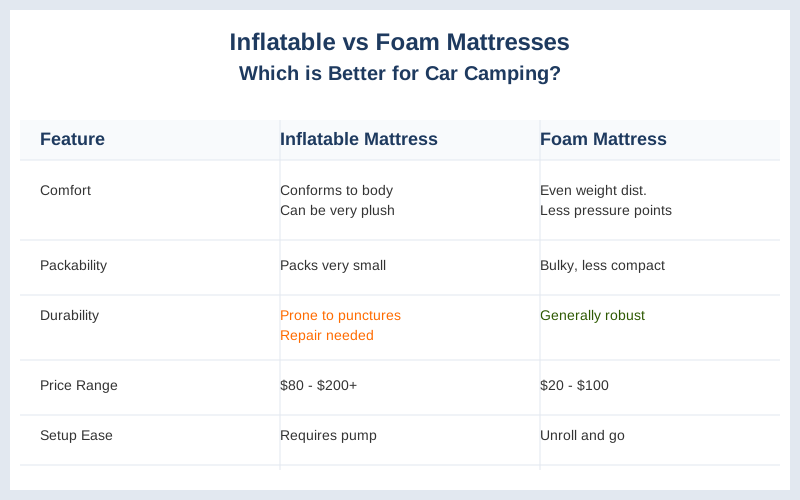
Look, nobody is going to hand you a bubble level at the campsite to check your mattress flatness. The real move for car camping comfort is understanding what each type of mattress offers, and what it doesn't. Foam pads, like the 3-inch thick memory foam I ended up with after my initial disaster, are basically portable pieces of your home mattress.
They're generally more comfortable because they distribute your weight evenly, meaning your hip bone doesn't feel like it's trying to escape your body. Source
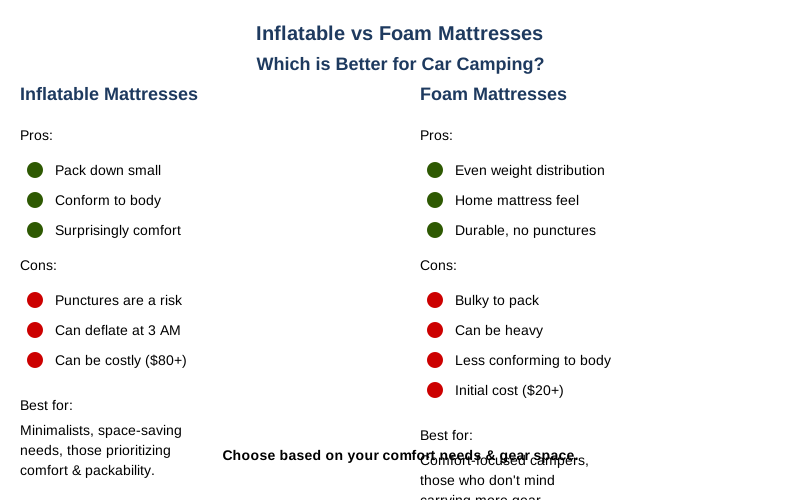
My friend, who's more of a minimalist, swears by his inflatable pad. These are basically fancy air mattresses designed for camping. They pack down incredibly small, which is a lifesaver if you're crammed into a small car with all your gear. The honest version is that they can be surprisingly comfortable, especially the thicker ones that conform to your body. Source
However, inflatables have a rookie mistake waiting to happen: punctures. A single rogue pine needle can turn a sleeping pad into a sad, deflated pancake at 3 AM in the middle of nowhere. Suddenly, my $80 investment felt like a $0.50 beach ball. The repair kit is essential, but it's still a gamble. Source
Foam, on the other hand, is pretty much indestructible. You can roll it, fold it, shove it in the back of your overloaded SUV, and it'll still be there. It's also warmer out of the box, with a better R-value, which is important when you're camping in anything less than perfect weather. My first foam pad was bulky, but newer, more compact versions exist. Source
So, the core answer is: if space is your absolute top priority and you're willing to risk a puncture, go inflatable. If comfort and durability are non-negotiable, and you can spare the space, foam is your best bet. Some people even swear by hybrids, which combine both, but that's usually the $500 version of sleeping. Source
Why This Matters for Your Setup
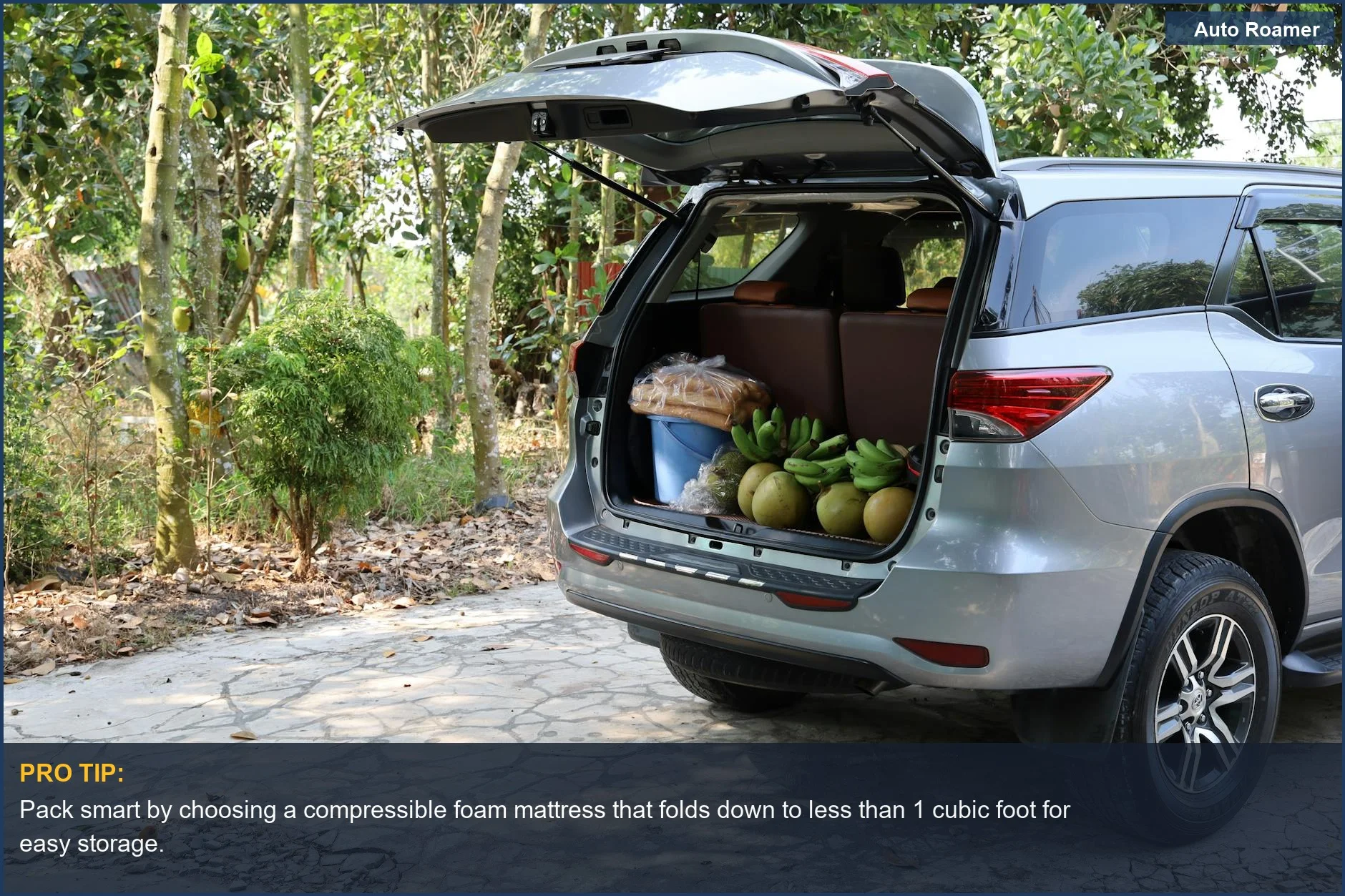
Why this matters for your setup is pretty simple: your car's cargo space is a finite resource. Cramming a full-size foam mattress into a Subaru Outback for a weekend is tougher than it sounds. It barely fit, and I couldn't see out the back window for the entire drive. That was a rookie mistake. Source
Here's the field notes version:
- Inflatable: Packs down smaller than a loaf of bread. Perfect for tiny cars or when you need every inch of space for, say, a cooler full of adult beverages.
- Foam: Generally bulkier. If you've got a truck bed or a larger SUV, you've got more leeway. But even compact foam options exist.
- Durability: Foam is tough. Inflatables are prone to leaks.
- Comfort: This is subjective, but foam usually wins for consistent comfort. Inflatables can feel a bit 'boingy' if not fully inflated.
- Maintenance: Foam requires zero maintenance. Inflatables need patching kits and careful handling.
I've woken up on the ground more times than I care to admit because of a slow leak.
Basically, choose based on how much you're willing to sacrifice comfort for space, or vice-versa. Source
Making the Right Choice
Making the right choice for your car camping mattress isn't about picking the 'best' one, it's about picking the best one for you. Based on my trail-and-error, here's the breakdown:
- Foam is King for Comfort: If you value a consistent, plush sleep and don't mind the bulk, foam is your go-to. It's like bringing your bed with you.
- Inflatables Win on Space: For tight vehicles or minimalists, inflatables are a game-changer.
- Consider the Weather: Foam generally offers better insulation right out of the box. You might need a higher R-value inflatable for colder nights.
- Your Car is the Limit: Measure your sleeping area! Don't be like me and try to force a mattress that's too big.
Just pack that patch kit.
Ultimately, a good night's sleep makes or breaks a camping trip. Don't skimp here. Source