Hard-Sided or Soft-Sided? The Short Answer
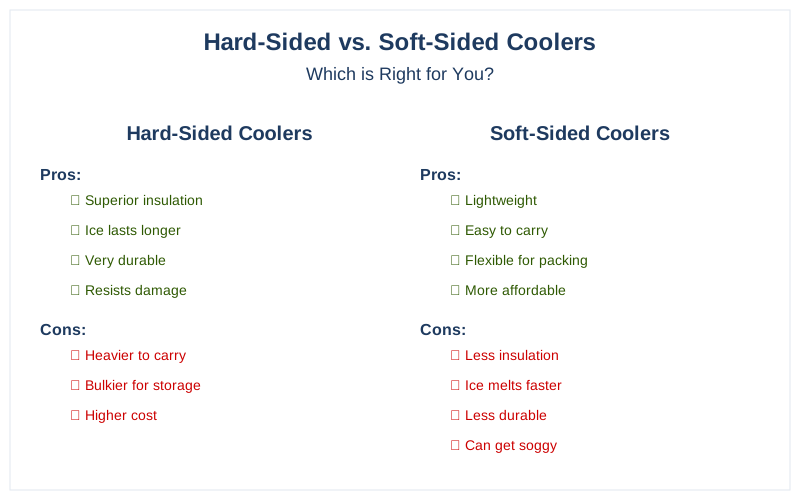
For car camping, the choice comes down to one trade-off: ice retention and durability versus weight and packability. A hard-sided cooler — a rigid box with thick foam walls — is the better pick when you need ice to survive multiple days, you want a container tough enough to sit on or stand on, and you can live with the bulk and weight. A soft-sided cooler — an insulated bag with a zip lid — wins when you want something light, compressible, and easy to carry, and you only need to keep things cold for a few hours up to roughly a day.
Both keep food and drinks cold; they just sit at opposite ends of the same physics. Thicker, rigid insulation holds cold longer but adds weight and takes up fixed space. Thinner, flexible insulation packs small and carries easily but loses the cold battle sooner. Almost every difference below — ice life, how much abuse it takes, how it packs in your trunk, even price — traces back to that single wall-thickness-versus-portability tension.
The rest of this guide breaks down each factor in detail, shows where a 12V electric fridge quietly beats both, and ends with clear recommendations by trip type so you can buy once and stop guessing.
Ice Retention: Days vs. Hours, and Why
The simplest way to remember it: a hard cooler is measured in days of ice; a soft cooler is measured in hours. Everything about insulation thickness and sealing follows from that one gap.
Ice retention is where the two diverge most sharply, and the reason is straightforward thermodynamics. A cooler keeps ice frozen by slowing the rate at which outside heat reaches the inside. The thicker and more continuous the insulation, and the better the lid seals, the slower that heat transfer — and the longer the ice lasts.
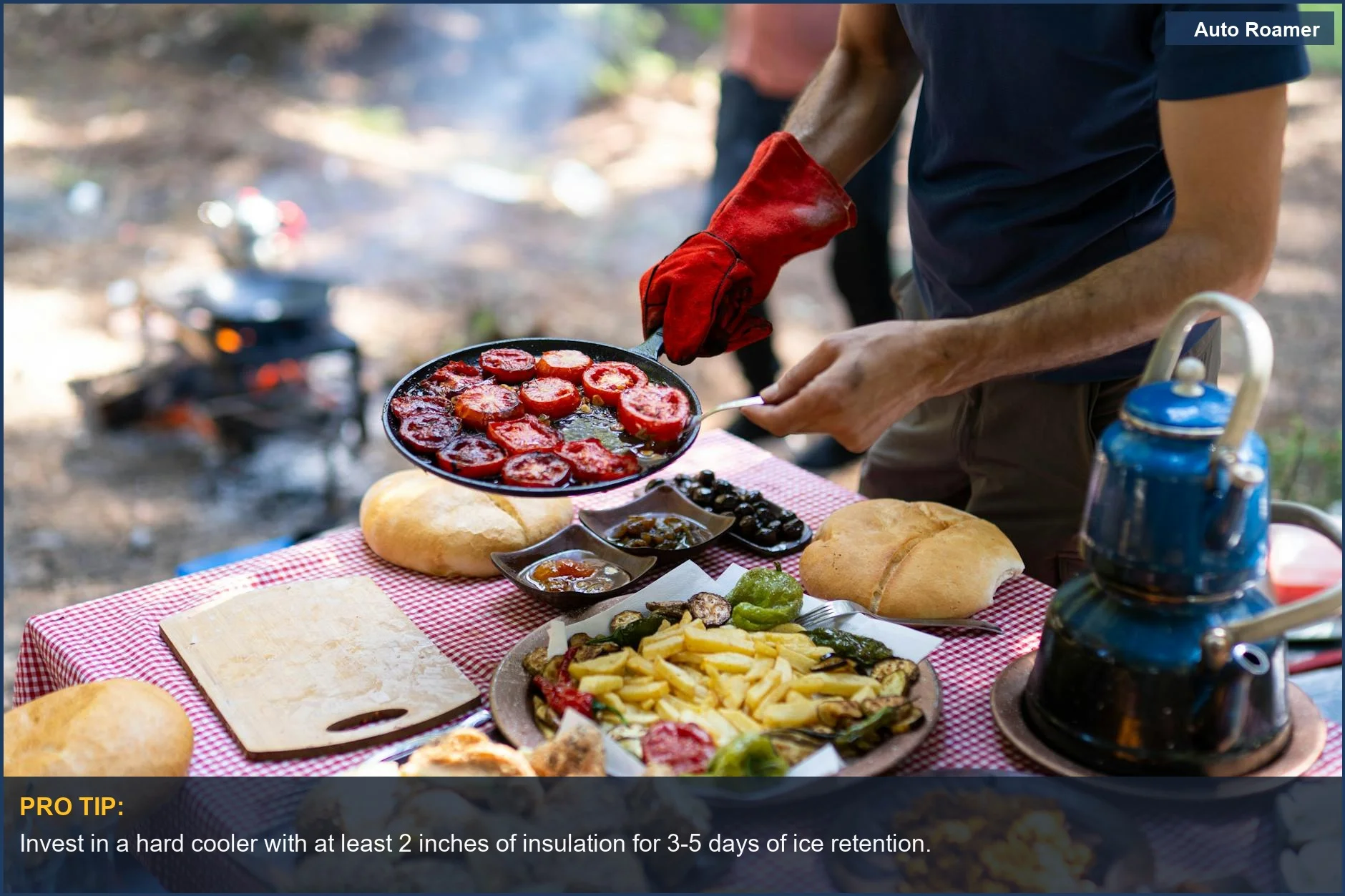
Hard-sided coolers use rigid walls with substantial foam insulation, often an inch or more thick, plus a gasketed lid. Standard hard coolers commonly hold ice for roughly 1 to 3 days in warm conditions, while heavily insulated rotomolded models — built with thick foam encased in a seamless plastic shell — are frequently rated for ice retention measured in many days under good conditions. Manufacturers and cooler retailers generally describe premium rotomolded coolers as holding ice for five days or more when pre-chilled and packed well.
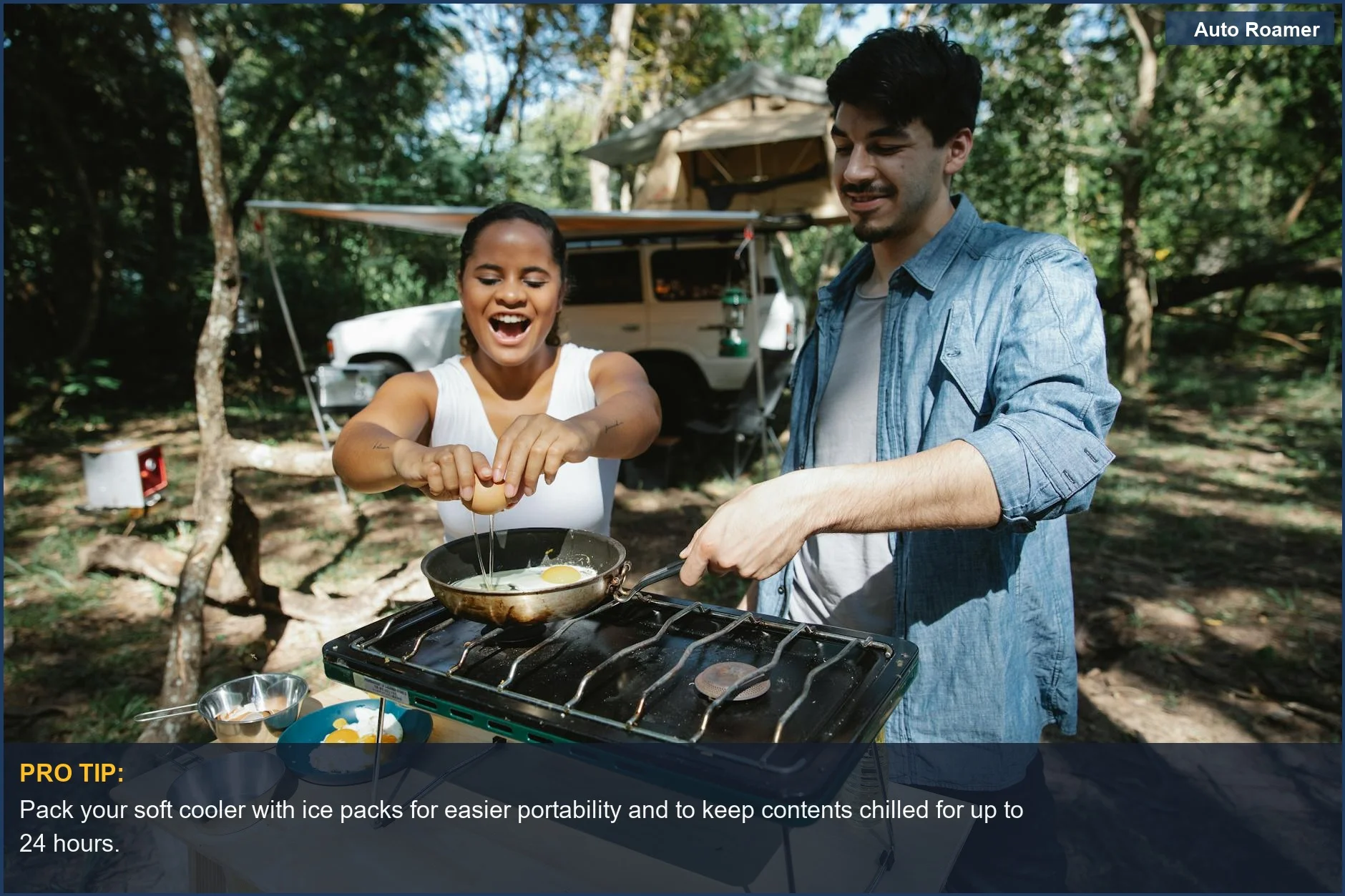
Soft-sided coolers trade thick walls for flexibility. Their insulation is thinner, and a zippered top rarely seals as completely as a gasketed hard lid, so warm air finds its way in faster. In practice, most soft coolers keep contents cold for a span measured in hours — commonly up to about a day for the better-insulated bags, and considerably less for thin, cheap ones. That's fine for a beach afternoon or a single overnight, but it's not built for a long weekend in the heat.
The exact numbers always depend on factors you control: pre-chilling the cooler, the ice-to-contents ratio, how often you open the lid, and the outside temperature. But the underlying ranking holds regardless of technique — thicker, rigid, well-sealed insulation simply outlasts thin, flexible insulation. If multi-day cold is the priority, the hard cooler is the structurally better tool.
It helps to understand why the seal matters as much as the foam. Heat doesn't just conduct through the walls — it also rides in on warm air every time you open the lid, and it leaks through any gap around the rim. A gasketed hard lid clamps shut against that gap, so once you close it the cold stays put. A soft cooler's zipper, by contrast, almost always leaves a thin path for air exchange, and the thinner walls give heat a shorter route inward. Two coolers with the same nominal insulation can perform very differently purely on how well they seal, which is a big part of why premium hard coolers pull so far ahead.
You can stretch either cooler's performance dramatically with technique. Pre-chilling — dumping a sacrificial bag of ice in the night before to drop the cooler's own walls to temperature — can add a meaningful chunk of ice life because the ice you pack in the morning isn't wasted cooling warm plastic. Block ice melts far slower than cubes thanks to its lower surface area, so a mix of block ice for longevity and cubes for packing around food is a common pro move. Keeping the cooler in shade, packing it full so there's little warm air space, and minimizing how often you open it all compound. These habits help a soft cooler more in relative terms, but they can't close the structural gap — a well-managed hard cooler still wins a multi-day contest by a wide margin.
Durability and the Sit-On Test
Durability is the second clear win for hard-sided coolers, and it shows up in real campsite life. A rigid cooler shrugs off being tossed into a truck bed, stacked under other gear, or bumped against rocks. Many rotomolded models are built tough enough to double as a seat, a step, or a small table — the sit-on test that no soft cooler can pass. That structural strength is a genuine feature when you're improvising furniture at camp.
Hard coolers also tend to carry more hardware that benefits from a rigid body: robust latches, tie-down slots so you can strap it down or lock it, sturdy handles, and sometimes a drain plug for easy emptying. Premium models are commonly rated bear-resistant when used with the right locks, which matters in some backcountry and overlanding settings.
Soft-sided coolers are more vulnerable by design. The fabric shell can snag, tear, or puncture, the zipper is a wear point, and the interior liner can eventually crack or leak as it flexes over years of use. They're not fragile for normal use — a quality soft cooler will survive plenty of trips — but they won't take the same blunt abuse, and you can't stand on one. If your cooler lives in a rough-and-tumble truck bed or gets handled hard, the rigid box is the safer long-term investment.
There's a maintenance angle too. Hard coolers are easy to rinse out and dry; a soft cooler's fabric and seams can trap moisture and develop mildew if it's stored damp. Neither is hard to care for, but the rigid plastic is simply more forgiving of neglect.
Durability also shows up in the parts you don't think about until they fail. On a hard cooler, the hinges, latches, and lid gasket are the components most likely to wear, and on a budget model a snapped latch or a flattened gasket can quietly ruin ice retention long before the body gives out. Premium coolers use rubber T-latches and replaceable gaskets precisely because those are the stress points. On a soft cooler, the failure order is usually zipper first, then the interior liner at the corners where it flexes most. Knowing where each type tends to break helps you inspect a used cooler intelligently and care for a new one — a little silicone on a gasket or a zipper lubricant goes a long way toward keeping either type sealing properly for years.
Weight, Portability, and Packing in the Trunk
This is where the soft-sided cooler earns its keep. The same thick walls that make a hard cooler hold ice for days also make it heavy and bulky. A large rotomolded cooler can be a genuinely awkward two-person carry once it's loaded with ice and food, and its rigid shape claims a fixed block of trunk space whether it's full or empty.
A soft-sided cooler is light, has a shoulder strap or grab handles, and is easy for one person to sling and walk to a campsite, a trailhead, or a picnic spot away from the car. When it's empty, many soft coolers collapse or fold flat, so they store in a fraction of the space and don't dominate your trunk on the drive home. For tight packing — a small car, a full load of camping gear, a Tetris-style trunk — that flexibility is a real advantage.
Consider the carry distance honestly. If you back the car right up to your campsite, the hard cooler's weight barely matters and its ice advantage dominates. If you have to haul gear any meaningful distance on foot — even fifty yards over uneven ground, repeated trips — a heavy hard cooler stops being a feature and starts being a chore. Matching the cooler to how far it actually has to travel is one of the most underrated parts of the decision.
Shape matters as much as weight when you're loading a vehicle:
- Hard cooler: fixed footprint, flat top you can stack on, but no give — it won't squeeze into an odd gap.
- Soft cooler: conforms to the space around it, fills gaps, and compresses when empty, but can't be stacked on and may get crushed under heavy gear.
Capacity, Cost, and Long-Term Value
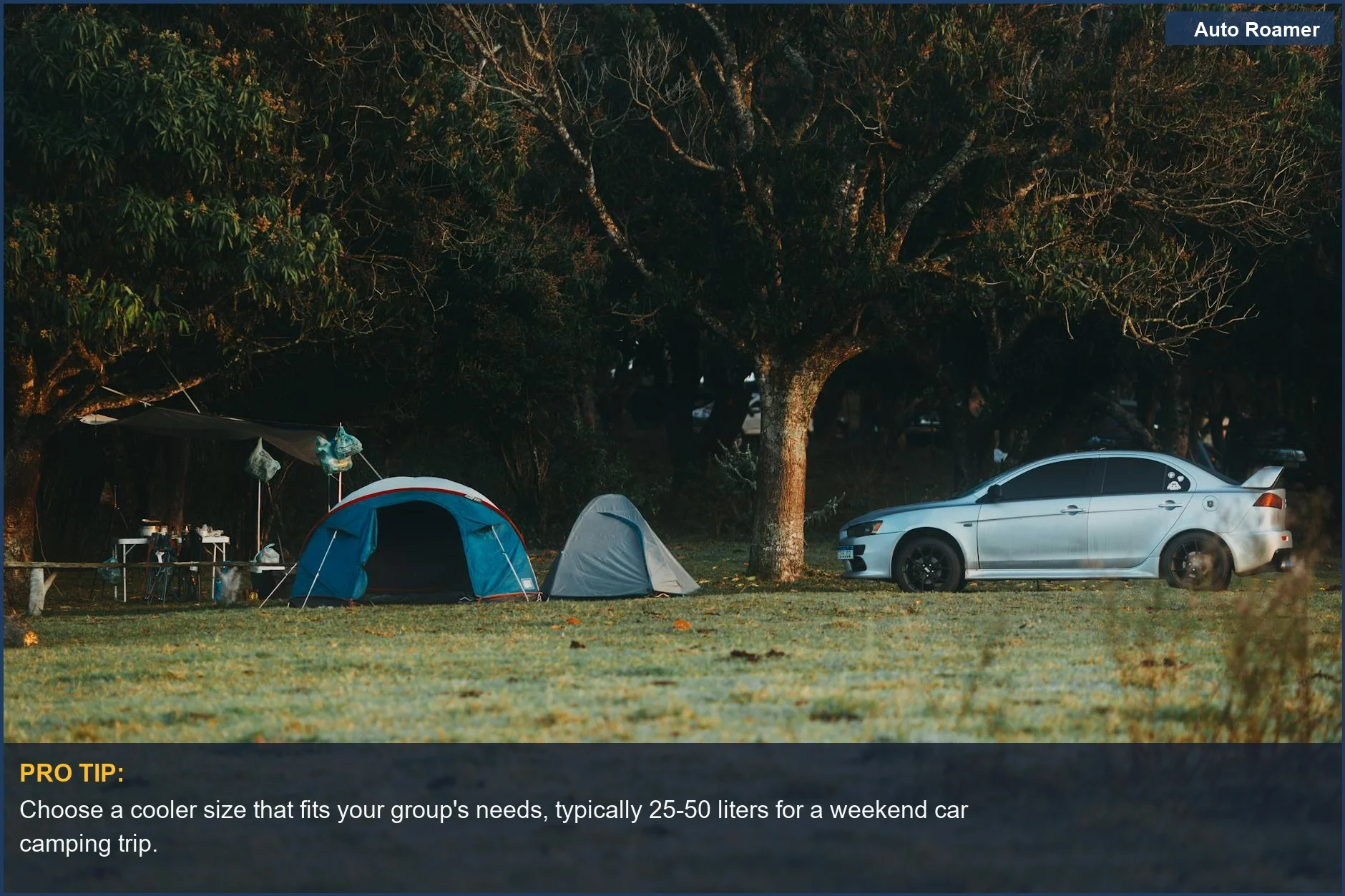
Capacity. Both types come in a wide range of sizes, but they use their volume differently. A hard cooler's rigid walls mean a portion of the exterior dimension is insulation, so a big external box can have a somewhat smaller usable interior than you'd expect — the trade you make for ice life. Soft coolers devote more of their bulk to interior space relative to their packed footprint, but they top out smaller at the high end; you'll find enormous hard coolers for group trips, while soft coolers cluster in the personal-to-medium range.
Cost. Entry-level versions of both are inexpensive, but the ranges separate at the top. Basic hard coolers are cheap, while premium rotomolded models climb well into the hundreds of dollars. Soft coolers span budget to premium too, but a high-end insulated bag generally costs less than a high-end rotomolded box. If raw price is the deciding factor, a soft cooler usually gets you in the door for less.
The real cost question isn't the sticker price — it's cost per year of use. A cheap cooler that fails in a season is more expensive than a sturdy one that lasts a decade.
Long-term value tends to favor the durable hard cooler if you camp regularly. A well-built rotomolded box can last for many years of hard use, and better ice retention means fewer mid-trip ice runs and less spoiled food along the way. A flimsy cooler — soft or hard — that leaks, loses its seal, or tears after a season ends up costing more in replacements and wasted ice. Buy for how often and how hard you'll actually use it: occasional day-trippers rarely need a premium box, while frequent multi-day campers usually recoup the cost.
There's a hidden running cost worth factoring in: ice itself. A cooler that burns through a bag of ice every day on a long trip quietly adds up in both dollars and detours to find a store, and it can leave you stranded with warm food if the next town is far. A cooler that holds ice for the whole weekend lets you pack once and forget it. Over a season of camping, the better-insulated box can pay for a chunk of its premium just in ice you didn't have to buy and food you didn't have to throw out. This is also where the powered 12V option starts to look attractive for heavy users — no ice cost at all, just electricity you're often generating by driving anyway.
One more value lever is warranty and serviceability. Premium hard coolers frequently carry multi-year warranties and sell replacement parts (latches, gaskets, drain plugs, hinges), so a single failed component doesn't junk the whole cooler. Budget coolers and most soft coolers are effectively disposable — when the zipper or liner fails, you replace the unit. If you want a buy-it-for-life tool, factor repairability into the price comparison, not just the sticker.
Leaks, Condensation, and the Everyday Annoyances
The small daily frustrations differ between the two, and they're worth knowing before you buy. A hard cooler contains melted ice water cleanly: the rigid body holds the water, a drain plug lets you empty it without lifting the whole thing, and the sealed lid keeps moisture inside rather than weeping onto your car. The main annoyances are weight when full and the puddle you create when you do drain it.
A soft cooler is the more likely culprit for messes. As the interior liner ages or the zipper degrades, soft coolers can seep — and constant dampness sitting in a car's carpet or upholstery is exactly how mildew and a permanent musty smell take hold. A quality soft cooler with a leakproof, welded liner avoids most of this, but cheaper bags are a known offender. If you'll leave a cooler in the car between trips, the leak risk is a real reason to favor a rigid box or a higher-end soft cooler with a sealed liner.
Condensation affects both. Any cold container in warm, humid air will sweat on the outside, so plan to set either type on a towel or a mat rather than directly on a tent floor or car carpet. Drainage habits also matter: emptying meltwater periodically and replacing it with fresh ice keeps contents colder and reduces the soggy-food problem inside the cooler.
There's a subtle difference in how meltwater behaves inside each type, too. In a hard cooler, the pooled water actually helps once it's cold — chilled water transfers cold to your food efficiently, which is why many experienced campers don't rush to drain a hard cooler unless the food is floating or going soggy. In a soft cooler, that same standing water is more of a liability: it presses against the liner and seams, accelerating any seepage, and the bag has no clean drain, so you end up tipping it out awkwardly. The practical upshot is that draining strategy differs by type — keep the cold water in a hard cooler within reason, but empty a soft cooler more proactively to protect both the contents and your car. Packing food in sealed, waterproof containers makes either approach foolproof and is the single best habit for avoiding a waterlogged lunch.
A few habits cut down the mess with either type:
- Use a leakproof drain or empty the cooler before it overflows.
- Keep food in sealed containers or bags so meltwater can't reach it.
- Set the cooler on a mat or towel to catch condensation in the car.
- Dry a soft cooler fully before storing it to prevent mildew.
Rotomolded vs. Standard Hard Coolers
"Hard-sided" isn't one category — there's a meaningful gap between a basic injection-molded hard cooler and a premium rotomolded one, and it changes the comparison. Understanding the difference keeps you from overpaying or under-buying.
A standard hard cooler is the familiar inexpensive box: a plastic shell with a modest layer of foam insulation. It's light for a hard cooler, cheap, and perfectly capable of keeping ice for a day or two — ideal for occasional weekend campers and casual use. Its limits are thinner insulation, a lid that may not seal tightly, and lighter-duty latches and hinges.
A rotomolded hard cooler is made by rotational molding, which produces a thick, seamless, one-piece shell that's then filled with substantially more foam insulation. The result is dramatically better ice retention (often many days), near-indestructible construction, a tight gasketed seal, and heavy-duty hardware — at a much higher price and noticeably more weight. These are the coolers built for long trips, hot climates, and rough handling.
The honest guidance: a standard hard cooler is plenty for most casual car campers who park near the site and stay a night or two, while a rotomolded cooler is worth the premium if you regularly take multi-day trips, camp in heat, or need a box that survives serious abuse. Don't pay rotomolded prices for occasional picnic duty — but don't expect a budget box to hold ice through a hot four-day weekend either.
Use Cases and Where a 12V Fridge Beats Both
Specs only matter once you map them onto how you actually camp. A few common scenarios make the choice obvious.
- Long multi-day trip in warm weather: a hard-sided cooler — ideally rotomolded — is the clear pick. You need ice to last, you'll likely park near camp, and the durability is a bonus.
- Day trip, beach run, or short hike to a picnic spot: a soft-sided cooler is ideal. It's light, easy to carry, and a few hours of cold is all you need.
- Overflow or a second cooler: a soft cooler makes a great companion to a hard one — drinks you grab often go in the soft bag so the hard cooler's lid stays shut and its ice lasts.
- Tight-packing small car: a soft cooler's collapsibility wins when trunk space is the binding constraint.
There's a third option that quietly outperforms both for many car campers: a 12V electric cooler or fridge. Instead of insulating against heat, it actively refrigerates, running off your car's 12V outlet or a portable power station. The advantages are real: no ice at all (no melt water, no soggy food, no mid-trip ice runs), consistent set temperatures you can dial in, and indefinite cold as long as it has power. The trade-offs are cost, weight, and the need for a power source — it draws current, so on a multi-day trip without driving you'll want a battery or solar setup to avoid draining the car.
The practical rule: if you take frequent or long trips and have a way to power it, a 12V fridge can be the best of both worlds — set-and-forget cold without the ice logistics. If you camp occasionally, want the lowest cost, or don't want to manage power, a good cooler — hard for ice life, soft for portability — is still the simpler, cheaper answer.