What Size Cooler Do You Need for Car Camping? The Direct Answer
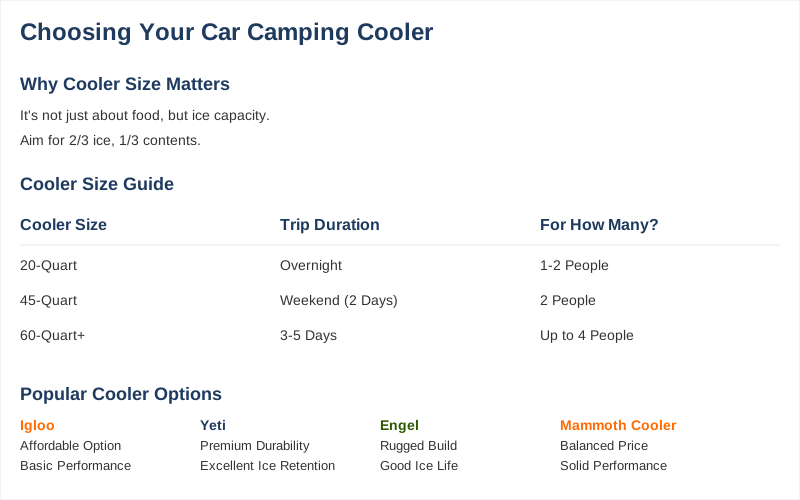
For most car campers, the right cooler size comes down to a simple rule of thumb: plan on roughly 10–15 quarts (about 10–14 liters) of cooler capacity per person per day, then round up to the next standard size that fits your trunk. That allowance already accounts for the cold-pack space you need, because a camping cooler is mostly ice by volume — not food. Using that guideline, a solo weekender wants something in the 20–28 quart range, two people for three days land around 45–50 quarts, and a family for a full week needs 65 quarts or more.
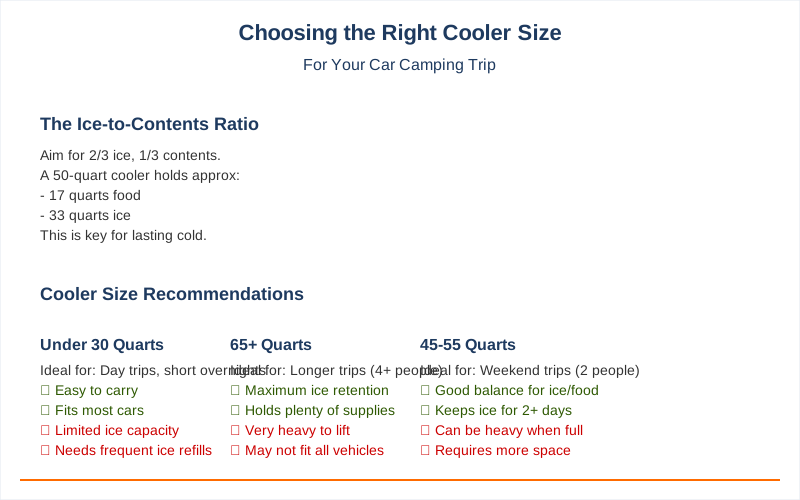
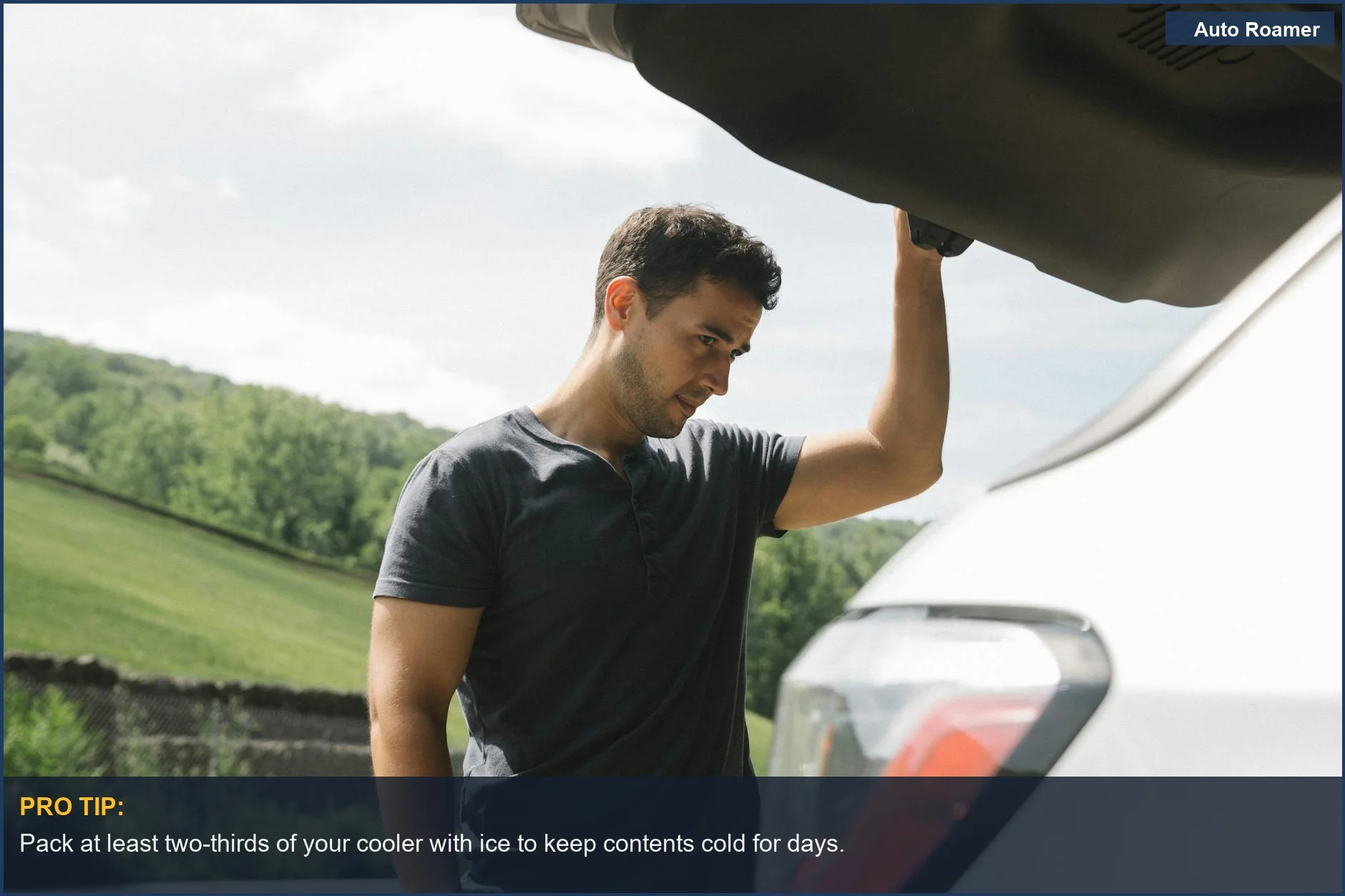
The reason the per-person-per-day number runs higher than the food you actually pack is the ice. Effective cold retention depends on keeping roughly a 2:1 ratio of ice to contents — about two-thirds of the interior volume as ice and one-third as food and drinks. A 45-quart cooler is therefore not holding 45 quarts of groceries; it is holding around 30 quarts of ice and 15 quarts of contents. Size the box to the ice, and the food fits.
Trip length is the other half of the equation. A weekend trip lets you start with a single full ice load and never re-buy; a week-long trip either needs a much larger cooler or a plan to top up ice every few days. The practical move is to pick the size that carries enough ice for your longest stretch between resupply points, not the one that merely fits your food.
Here is the quick-reference sizing most published guides converge on, useful as a planning starting point rather than a rigid prescription:
- Solo, weekend (1–2 nights): 20–28 quarts
- Two people, 3 days: 45–50 quarts
- Small family (3–4), long weekend: 50–65 quarts
- Family, full week: 65–85 quarts (or two coolers)
- Large group (6+), extended trip: 85–125 quarts or dual coolers
One more constraint overrides all of the above: your vehicle. The biggest cooler that holds the most ice is useless if it blocks your rear visibility or swallows the cargo space you need for sleeping gear. The rest of this guide turns these starting numbers into a choice that fits your people, your trip, and your trunk.
Capacity Per Person, Per Day: How the Math Actually Works
The per-person-per-day figure is the backbone of cooler sizing, so it is worth understanding where it comes from rather than treating it as a magic number. It bundles three things into one allowance: the food and drinks one person consumes in a day, the ice needed to keep that volume cold, and a little dead space that every packed cooler inevitably carries.
Start with consumption. A day of car-camping food and drinks for one adult — breakfast items, lunch, dinner ingredients, and a few cold beverages — occupies roughly 4–5 quarts of actual contents. Apply the 2:1 ice ratio on top of that and you are at about 12–15 quarts of total cooler volume per person per day. That is why the rule of thumb lands where it does: it is the contents figure multiplied out to include the ice that keeps them safe.
Multiply across people and nights and the size becomes obvious. The arithmetic is deliberately generous because under-sizing is the more common and more painful mistake — an over-packed cooler with too little ice runs out of cold by day two:
- Contents per person per day: about 4–5 quarts.
- Add ice at 2:1: roughly triple it to 12–15 quarts total.
- Multiply by people and days, then round up to the next standard cooler size (coolers come in steps like 28, 45, 65, 85 quarts).
A worked example: two people for three days. Contents are about 4.5 × 2 people × 3 days = 27 quarts of food and drink across the trip, but you do not need all of it cold from minute one, and ice is the real driver. Sized for sustained cold, two people for three days comfortably fit a 45–50 quart cooler — enough ice to ride out the trip without a mid-trip resupply, with room for the contents.
The honest takeaway: size for the ice, not the groceries. The single most common cooler mistake is buying for how much food you want to bring and forgetting that two-thirds of the box has to be ice for any of it to stay cold.
Treat these as planning numbers, not guarantees. Real consumption varies with your menu, how many drinks you keep cold, and whether you cook elaborate meals or live on sandwiches. The framework gives you a defensible starting size; your own packing list fine-tunes it.
The 2:1 Ice Ratio and How Long Ice Lasts by Cooler Size
If there is a single concept that separates a cooler that holds cold for days from one that is slush by lunch, it is the ice-to-contents ratio. The widely cited target is two parts ice to one part contents by volume, and it is not arbitrary: ice is the only thing in the cooler actually doing the cooling, so the more of it you pack, the longer the cold lasts.
Cooler size and ice life are directly linked through physics. A larger, fuller cooler has a smaller surface-area-to-volume ratio and a bigger thermal mass, so the ice inside melts more slowly than the same ice in a small box. This is why a packed 65-quart cooler can hold ice noticeably longer than a half-empty 28-quart one, and why filling empty space with extra ice (or even crumpled material) extends retention.
Typical published and owner-reported ice-life figures, for an inexpensive hard cooler kept in shade with a proper 2:1 load, look roughly like this — premium rotomolded coolers (Yeti-class) commonly hold ice meaningfully longer, while cheap thin-walled boxes fall short:
- Small (20–28 qt): roughly 1–2 days of usable ice in moderate weather.
- Medium (45–50 qt): commonly 2–4 days when packed full and kept shaded.
- Large (65–85 qt): frequently 4–7 days for well-insulated models with a full ice load.
Two levers stretch any of those numbers. Block ice melts slower than cubes because it has less exposed surface area, so a mix of a large block plus cubes to fill gaps outlasts cubes alone. And pre-chilling matters more than most people expect: dumping ice into a warm cooler spends the first several hours just cooling the plastic walls instead of your food. Chill the cooler with a sacrificial bag of ice for a few hours first, then load it.
The size implication is straightforward. If your trip is longer than a cooler's typical ice life and you cannot resupply ice, you need either a bigger cooler, a higher-insulation model, or a 12V powered cooler that does not rely on ice at all — covered later in this guide. Match the box's ice-holding capacity to your longest stretch without resupply, and the cold lasts the whole trip.
Trip Length: Weekend, Long Weekend, and Week-Long Sizing
The number of nights you will be out changes the sizing calculus more than almost anything else, because ice life is finite. A cooler that is perfect for an overnight is undersized for a week, and a cooler sized for a week is a heavy, space-hogging inconvenience for a single night. Match the box to the trip.
For a weekend (1–2 nights), a single ice load lasts the whole trip in most coolers, so you can size tightly. A solo camper does well with 20–28 quarts; two people are comfortable at 45–50. The goal here is the smallest box that still holds a 2:1 load for two days — no point lugging a 65-quart cooler you cannot fill.
For a long weekend (3–4 nights), ice life starts to bite. A medium cooler kept shaded and packed full can make it, but the margin is thinner, so round up rather than down: two people are better served by a 50–65 quart cooler than by a stuffed 45. A small family at this length is squarely in the 65-quart territory.
For a full week (5–7 nights), one cooler rarely holds enough ice for a group without resupply. The realistic options are a large 65–85 quart high-insulation cooler, a dual-cooler setup, or a powered 12V fridge that never needs ice. Here is how the common configurations line up:
- Weekend, 1–2 people: one 20–50 qt cooler, single ice load.
- Long weekend, 2–4 people: one 50–65 qt cooler, packed full, kept shaded.
- Full week, family or group: 65–85 qt high-insulation cooler, or two coolers, or a 12V fridge plus a small ice cooler for drinks.
The thread running through all of this is resupply. If you will pass a store or campground with ice every couple of days, you can size for that interval instead of the whole trip and save weight and space. If you are remote with no resupply, size for the entire duration — or sidestep the ice problem entirely with a powered cooler.
Weather is the wildcard that should nudge you to round up. The same cooler that holds ice for four days in mild spring conditions can lose a full day or more of ice life in a summer heatwave, especially if it spends afternoons parked in direct sun. If your trip falls in hot weather, treat the upper end of each size range as your floor rather than your ceiling, and lean harder on shade, block ice, and pre-chilling. Sizing with a little extra ice headroom is cheap insurance against arriving at day three with a cooler full of lukewarm water.
Hard, Soft, and Electric Coolers: Sizing Implications of Each Type
Cooler type is not just a question of how cold it gets; it changes how you should think about size, because each type carries its capacity and its cold differently. The three main categories — hard-sided, soft-sided, and electric — each suit a different slice of car camping.
Hard-sided coolers are the default for car camping and the type all the sizing math above assumes. Their rigid, insulated walls hold ice longest and stack well in a trunk, but their stated quart rating includes thick walls, so the usable interior is a bit smaller than the number suggests. When sizing a hard cooler, take the quart figure at face value for the 2:1 math — the walls are already baked into the rating — and prioritize models with thicker insulation for longer trips.
Soft-sided coolers trade ice life for packability. They squash into tight cargo areas, weigh little, and make an excellent second cooler for drinks or a day's snacks, but their thinner insulation means shorter ice retention — typically a day or less. For sizing, treat a soft cooler as a supplement: a 20-quart soft bag alongside a hard cooler handles drinks so you open the main box less often, which actually extends the hard cooler's ice life.
Electric coolers (thermoelectric or compressor 12V units) change the calculus entirely because they do not depend on ice. That frees up the two-thirds of volume that would otherwise be ice, so a 30-quart electric cooler holds far more food than a 30-quart ice cooler. The trade is power: they draw current and need a 12V source or power station. We cover the powered option in depth below and in our guide to the best 12V car coolers for road trips.
Quick rule: a hard cooler for the main food load, a soft cooler as a drinks sidekick, and an electric cooler when you want real cold for days without chasing ice. Many experienced car campers run a hard cooler plus one of the other two.
The sizing lesson across all three is that quart numbers are not directly comparable between types. Thirty quarts of electric capacity is mostly food; thirty quarts of ice-cooler capacity is mostly ice. Decide the type first, then size within that type using the per-person-per-day rule adjusted for whether ice is part of the volume.
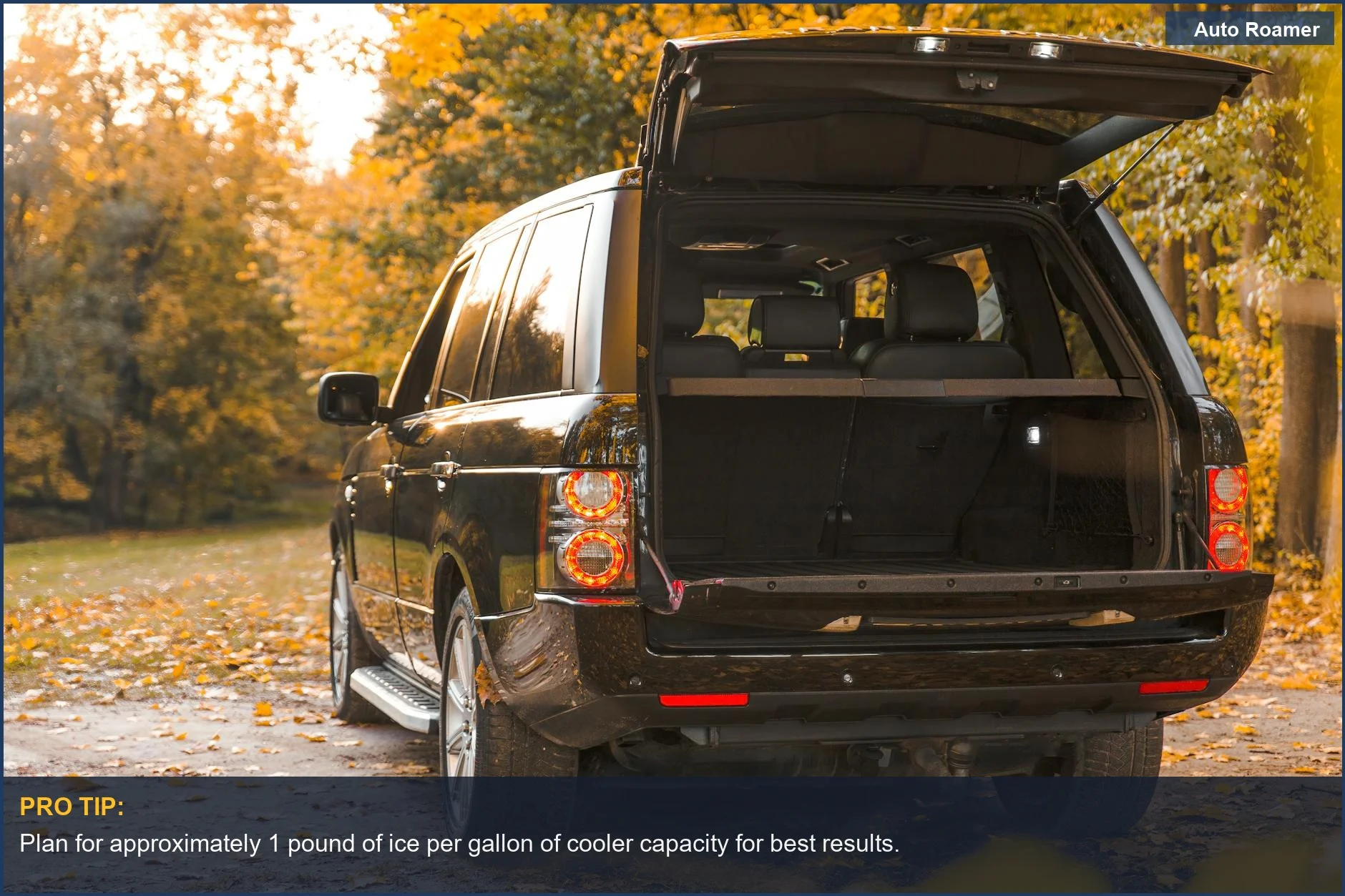
Trunk and Cargo Fit: Why the Biggest Cooler Is Usually the Wrong One
Sizing a cooler purely by ice capacity ignores the constraint that strands more car campers than any other: the cooler has to physically fit your vehicle and still leave room for everything else. A box that maximizes cold but blocks your rear window or eats your sleeping space is the wrong size, no matter how much ice it holds.
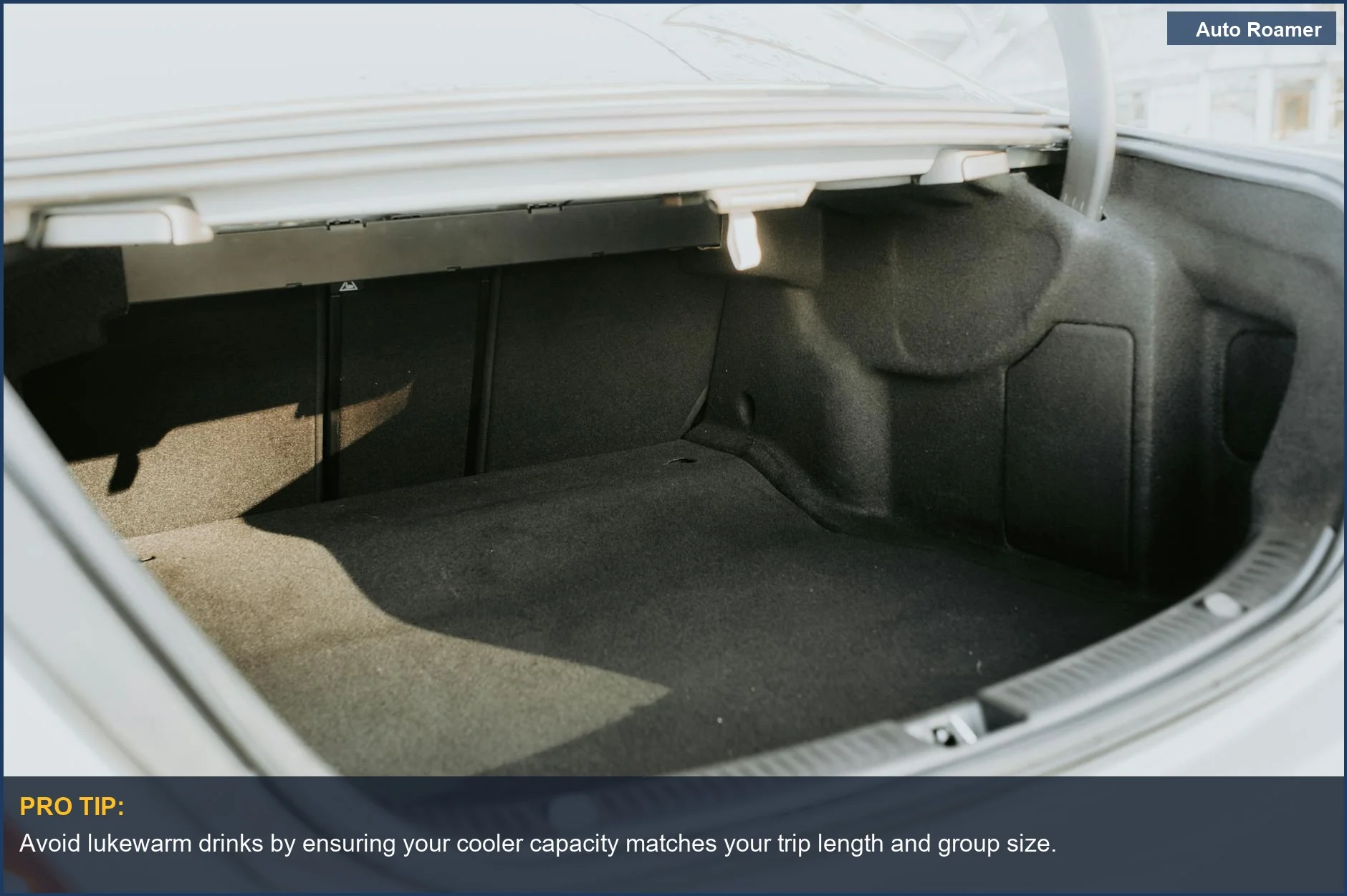
Measure before you buy. Coolers are sold by quart capacity, but what matters in a trunk is exterior length, width, and height — and rotomolded coolers have thick walls that make the outside dimensions considerably larger than the interior. Pull a tape measure to your cargo area, note the usable space with the seats in your travel configuration, and compare against the cooler's exterior spec, not its quart rating.
Orientation and access matter too. A cooler you can only open by unloading half the trunk becomes a meal-skipping nuisance. Plan for a cooler you can reach — either at the tailgate edge or accessible from a door — and remember it gains 30–100+ pounds once loaded with ice. A few practical fit checks before committing:
- Rear visibility: a tall cooler behind the seats can block the rear window — keep the loaded height below your sightline.
- Weight you can lift: a full 65-quart cooler can top 80–100 lb; be honest about hauling it solo.
- Remaining cargo: leave room for tent, bedding, and gear — the cooler should not claim the whole trunk.
- Access angle: position it so the lid opens without a full unload.
This is where many people discover that two smaller coolers beat one giant one: a 45-quart and a 28-quart stack and shift to fit awkward cargo spaces in a way a single 85-quart monolith cannot. It also lets you keep one cooler in the cabin for easy access and one in the trunk for bulk. The fit constraint, in short, often points toward the dual-cooler strategy covered next.
The Dual-Cooler Strategy: Splitting Food and Drinks
Once you are sizing for more than a couple of nights, the single best ice-life upgrade is not a bigger cooler — it is a second one. Running two coolers, one for food and one for drinks, solves the biggest avoidable cause of ice loss: frequent lid openings.
Every time you open a cooler, cold air spills out and warm air rushes in, forcing the ice to re-cool the interior. Drinks are the worst offender because people reach for them constantly throughout the day. By isolating drinks in their own cooler, the food cooler stays shut for hours at a time, and its ice can last days longer than it would if it doubled as the drink dispenser.
The strategy also lets you size each box for its job. The food cooler can be a high-insulation hard cooler sized by the per-person-per-day food math; the drinks cooler can be a cheaper or softer box, since you will resupply its ice more often anyway. A common, effective split:
- Food cooler: the better-insulated, larger box; opened rarely; sized for the trip's meals at 2:1 ice.
- Drinks cooler: a smaller or soft cooler; opened often; topped with ice as needed and easy to reach.
This split usually means you can run two medium coolers instead of one oversized one, which fits more vehicles and is far easier to lift. For a family for a week, a 65-quart food cooler plus a 28-quart drinks cooler often outperforms a single 100-quart box on both ice life and convenience — and it spreads the weight across two manageable loads instead of one back-breaker.
There is a packing benefit too. With drinks living separately, you can organize the food cooler by meal — bottom layer for dinner items you will not touch until evening, top layer for the day's lunch and snacks — so you reach in once, grab what you need, and close it. That kind of disciplined access is far easier to maintain when the cooler is not also doubling as the drinks station that someone opens every twenty minutes. Over a multi-day trip, the cumulative difference in ice retention from fewer, shorter openings is substantial.
The dual-cooler approach pairs naturally with a powered cooler too: a 12V fridge for perishables that must stay genuinely cold, and a cheap ice cooler for drinks you do not mind being merely chilled. That hybrid is increasingly popular for longer, remote trips where no single ice cooler can carry the whole load.
Overpacking, Underpacking, and the 12V Fridge Alternative
Two opposite mistakes sabotage cooler performance, and both trace back to ignoring the ice ratio. Underpacking the ice — cramming in food and skimping on ice — is the classic rookie error: the ice melts fast, the food warms, and the trip becomes a series of ice runs. Overpacking the cooler with far more than you need carries its own penalty: dead weight, wasted trunk space, and a box too heavy to move, often half-full of food going slightly warm in the corners ice cannot reach.
The honest sweet spot is a cooler sized so it ends up packed roughly two-thirds ice, one-third contents, full enough that there is little air space but not so crammed that ice cannot circulate cold. A cooler that is the right size is one you can pack to that ratio for your specific trip — which is exactly why the per-person-per-day math matters more than buying the biggest box on the shelf.
There is, however, a way to step off the ice treadmill entirely: a 12V compressor fridge. Because it actively refrigerates rather than relying on melting ice, it holds a steady temperature for as long as it has power, needs no ice at all, and devotes its whole interior to food. That makes its quart rating worth far more than an equivalent ice cooler's:
- No ice means no 2:1 penalty — a 30 qt fridge holds 30 qt of food, not 10.
- Steady cold for days — runtime is limited by power, not ice melt.
- The trade-off is power draw — it needs a 12V source or power station, and that draw must be planned for.
The catch is that power draw, and getting it wrong can flatten a car battery. If you are weighing a powered cooler, our explainer on electric cooler power consumption and the deep dive on how long a 12V cooler runs off a car battery walk through the amp-hour math, and our power station guide covers sizing a battery to run one.
So the final sizing decision is really two decisions: ice cooler or powered fridge, then how big within that choice. For weekend and short trips with easy ice access, a right-sized ice cooler is simplest and cheapest. For long, remote, or hot-weather trips where ice is a constant chore, a 12V fridge sized to your food load — with a power plan behind it — is the more reliable way to keep food cold for the whole trip.