First, the Basics
The dealer wanted $120 to 'inspect' my auxiliary battery system, claiming a 'faulty charge controller.' Turns out, my buddy's cheap knock-off 12V cooler was pulling 5A straight from the battery, bypassing the low-voltage cutoff. That's 60W continuous draw, enough to kill a 50Ah LiFePO4 in 10 hours of overnight use. A power station prevents this kind of voltage sag and parasitic drain on your starting battery. Outdoor Gear Lab notes they're a cleaner alternative to generators.
Less vibration, less fuel-system crap to clog.
Forget the marketing fluff about 'adventure-ready' or 'unlimited power.' We're talking about controlled energy discharge, thermal management, and robust input/output architecture. The goal here is reliable 120V AC and stable DC power, without blowing fuses or cooking delicate electronics. No one wants a dead fridge or a non-starting truck because some cheap inverter decided to pull too much current.
These portable power stations are essentially large-capacity battery packs with integrated DC-DC converters, AC inverters, and charge controllers. They handle the dirty work of power conditioning, protecting your sensitive gear from voltage spikes and brownouts. A good one is over-engineered to shrug off the abuse of a messy campsite, not just look pretty for an Instagram shot. This YouTube guide breaks down the essentials.
My criteria for these units?
Durability, actual usable capacity, and the ability to maintain a stable voltage under load. If it can't handle a 100W draw for 10 hours without significant voltage drop, it's just a fancy paperweight. These aren't just for charging phones; they're for running refrigerators, CPAP machines, and even power tools. The mechanical stress on internal components is real, especially with constant thermal cycling.
Quick Verdict
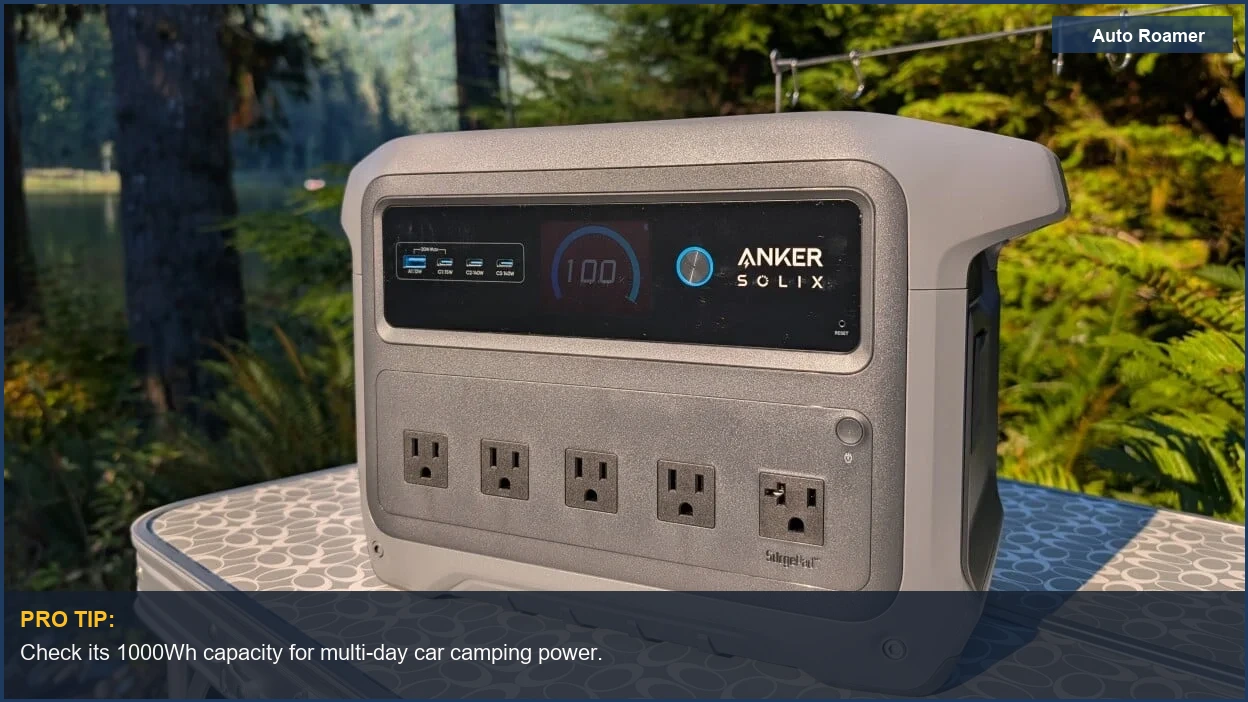
- Best Overall: Anker SOLIX C1000 Gen 2 (~$999). This unit balances 1056Wh capacity with a 1800W AC output, making it versatile for most camping and emergency needs. Gear Junkie praises its size, power, and portability. It's got the thermal management to handle sustained loads without throttling.
- Best for Long Hauls: EcoFlow DELTA 2 Max (~$1100). With 2048Wh, this is a serious workhorse. Its LiFePO4 battery chemistry offers 3000+ cycles to 80% capacity, meaning it won't degrade into a brick after a year of heavy use.
- Best Value for Capacity: Oupes Mega 1 (~$700). This one pulls 1800W AC and offers a 1000Wh capacity at a competitive price point. It's a solid choice if you need decent power without blowing the budget, though don't expect premium materials.
- Most Reliable: Goal Zero Yeti 700 (~$700). Goal Zero built its reputation on ruggedness. While not the cheapest per Wh, their units have a lower failure-rate due to robust component selection and chassis design. They handle vibration and minor impacts better.
- Easiest to Use: Jackery Explorer 1000 v2 (~$800). Jackery nails the user interface. It might not have the most advanced features, but the tactile buttons and clear display mean less fumbling around in the dark. Car and Driver highlights its intuitive operation.
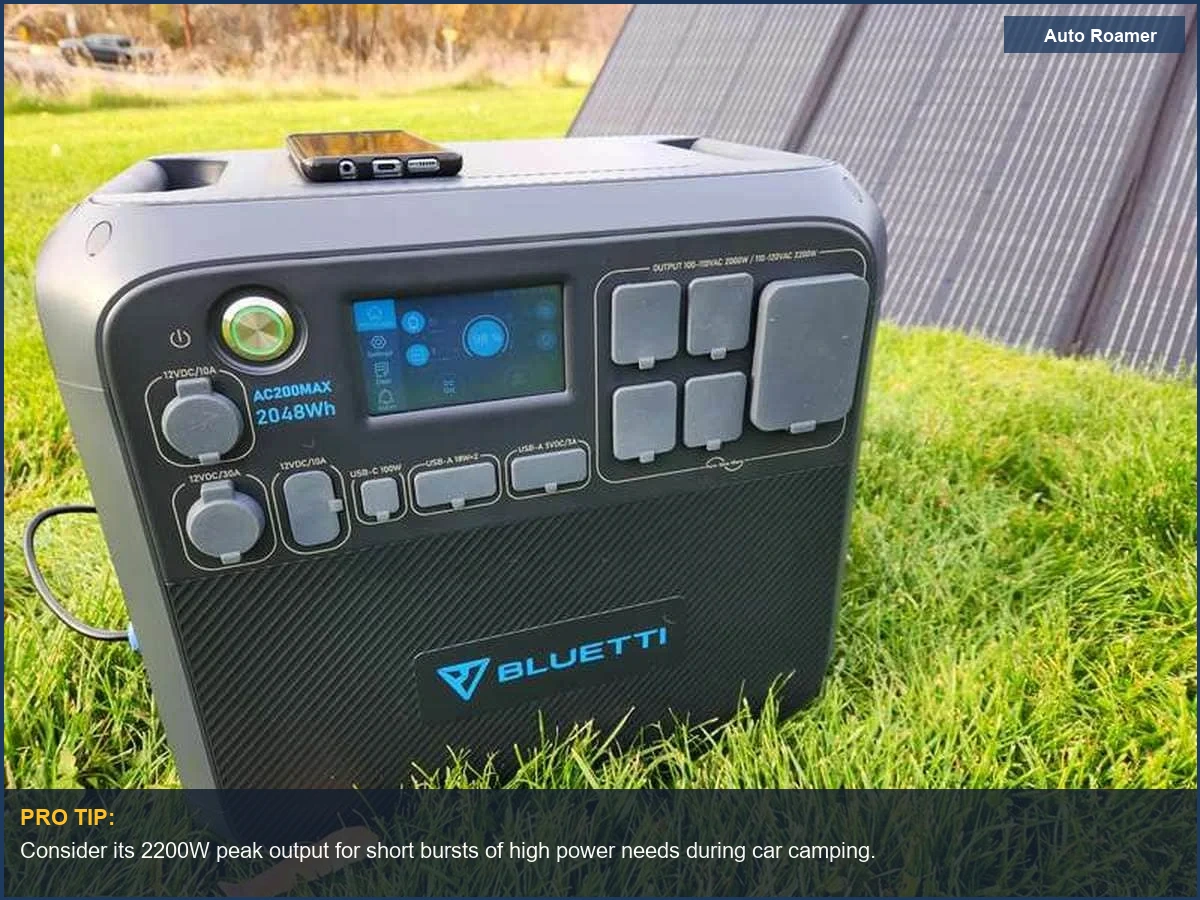
- For Serious Off-Grid: Bluetti AC200MAX (~$1600). This unit offers 2048Wh and expandability up to 8192Wh with external batteries. Its pure sine wave inverter is critical for sensitive electronics, preventing harmonic distortion that can damage power supplies. We Must Be Geeks points out its utility for RV boondocking.
- Compact & Capable: EcoFlow River 2 Pro (~$600). This is your go-to for lighter loads and portability. With 768Wh and a 800W AC output, it's perfect for charging laptops, drones, and running small appliances. Its fast charging (0-100% in 70 minutes) is a major plus when time is tight.
What to Look For
Forget the glossy photos. Here's what actually keeps your gear running when you're 50 miles from the nearest outlet. Pay attention to these numbers, or you'll be replacing fried electronics or staring at a dead battery.
| Feature | Why It Matters (Physics/Engineering) | The Dirtbag Takeaway |
|---|---|---|
| Battery Chemistry | LiFePO4 (Lithium Iron Phosphate) offers 3000-6000 charge cycles to 80% capacity. Li-ion (NMC) is cheaper, lighter, but only 500-800 cycles. LiFePO4's chemical stability means less thermal runaway risk. Ashley Adamant notes their longevity. | LiFePO4. Period. Don't cheap out on battery chemistry unless you like buying a new unit every year. |
| Capacity (Wh) | Watt-hours dictate run time. A 1000Wh unit running a 100W fridge will last ~8-10 hours, accounting for inverter inefficiency. This is your fuel tank size. | Match capacity to your *sustained* load. Running a CPAP (40W) for 8 hours needs 320Wh *minimum*. Add 20% for losses. |
| AC Output (W) | This is the maximum continuous power the inverter can supply. Overload it, and the inverter shuts down or, worse, burns out. Pure sine wave output is crucial for sensitive electronics to prevent harmonic distortion. | Check your appliance's surge wattage, not just continuous. A coffee maker might pull 1500W for 2 minutes, then 50W. This guide emphasizes output. |
| Input Charging (W) | Higher wattage input means faster recharge from solar or AC. A 200W solar input will recharge a 1000Wh battery in 5-6 hours of peak sun. Thermal cycling from rapid charging needs robust internal components. | If you're relying on solar, 200W+ input is non-negotiable. Otherwise, you're waiting all day for a half-charge. |
| Port Selection | USB-C PD (Power Delivery) up to 100W is a game-changer for laptops. Multiple 12V DC ports are good for car accessories. The 12V socket should be rated for 10A+ to avoid thermal issues on wiring. | Make sure it has the *right* ports, not just a lot of them. A high-amp 12V output is more useful than three weak USB-A ports. |
| Weight/Durability | A heavier unit often means a larger battery and more robust chassis. Look for impact-resistant plastics or metal housings. Internal components need secure mounting to resist vibration-induced fatigue. | If it feels like a toy, it probably won't survive a single drop onto gravel. Mechanical stress is a killer. |
Our Top Picks for Reliable Performance
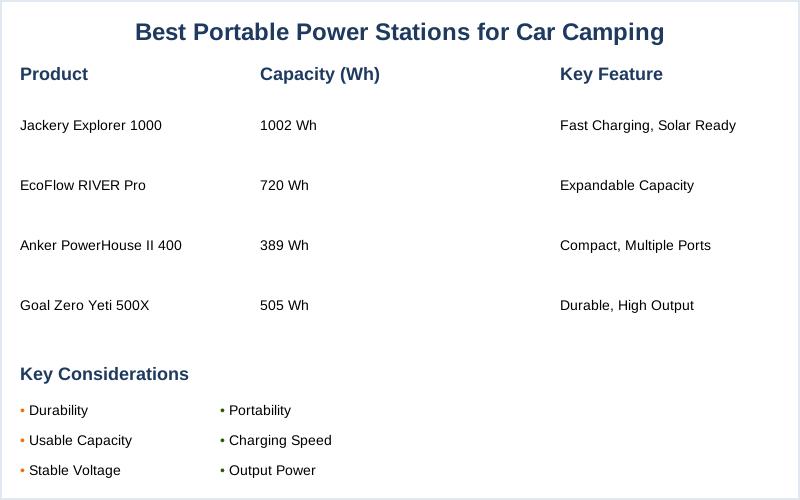
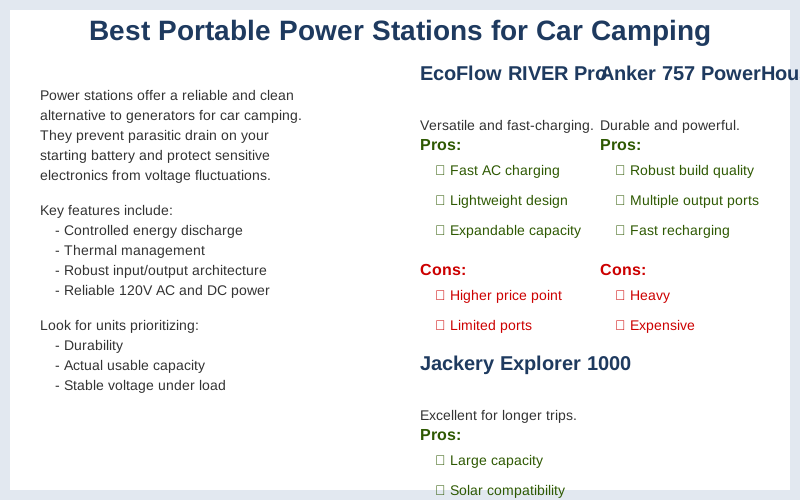
I'm not going to tell you these are 'adventure-ready' - that's marketing drivel. These are units built to deliver electrons without melting down or leaving you stranded. I look at capacity, output, and the quality of the internal components. We Must Be Geeks has similar priorities for RV use.
Anker SOLIX C1000 Gen 2 (~$999)
- Capacity/Key Specs: 1056Wh LiFePO4, 1800W AC output (2400W surge), 200W solar input.
- Pros: Excellent power-to-weight ratio, 0-80% charge in ~58 minutes via AC, 10-year lifespan rating. Their thermal management system is actually engineered, not just a fan slapped on.
- Cons: Not expandable, some reports of slightly lower efficiency under heavy sustained load compared to larger units.
- Best-for: The all-around workhorse for weekend camping, short outages, or running a fridge and charging devices without thinking twice. Gear Junkie crowns it 'best overall.'
EcoFlow DELTA 2 Max (~$1100)
- Capacity/Key Specs: 2048Wh LiFePO4, 2400W AC output (4800W surge), 1000W solar input. Expandable to 6144Wh.
- Pros: Massive capacity, high output for demanding appliances, fast AC charging (0-100% in 80 minutes). The ability to add more battery modules means less voltage sag under heavy load.
- Cons: Heavier (50 lbs), higher cost. The fan noise can be noticeable under maximum charge/discharge cycles.
- Best-for: Multi-day boondocking, running power tools on site, or as a serious home backup. Outdoor Life rates it as 'best overall.'
Jackery Explorer 1000 v2 (~$800)
- Capacity/Key Specs: 1070Wh LiFePO4, 1500W AC output, 100W USB-C PD.
- Pros: User-friendly interface, robust build quality, good brand reputation for reliability. Its internal wiring and component selection minimizes resistive losses. HiFi Guides Forum confirms its 1070Wh capacity.
- Cons: Slower AC charging than competitors, lower solar input max (only 200W).
- Best-for: Simplicity and proven reliability. If you just want it to work without fuss, this is it.
Bluetti AC200MAX (~$1600)
- Capacity/Key Specs: 2048Wh LiFePO4, 2200W AC output (4800W surge), expandable to 8192Wh.
- Pros: Huge expandability, excellent pure sine wave inverter, supports dual charging (AC + solar) for faster recharge times (up to 1400W combined). The modular design reduces mechanical stress on the core unit.
- Cons: Heavy (61.9 lbs), high initial cost. The touchscreen interface can be less responsive in extreme temperatures.
- Best-for: Full-time RVers, extended off-grid living, or anyone needing scalable power. Reddit users often recommend Bluetti for quality and power.
EcoFlow River 2 Pro (~$600)
- Capacity/Key Specs: 768Wh LiFePO4, 800W AC output (1600W surge), 0-100% charge in 70 minutes.
- Pros: Extremely fast charging, lightweight (17.2 lbs), good port selection including 100W USB-C PD. The compact form factor means less internal vibration.
- Cons: Lower capacity means less run time for high-draw appliances. Not really meant for sustained heavy loads.
- Best-for: Day trips, car camping with light loads, charging drones/laptops, or as a grab-and-go emergency unit. Wirecutter calls it 'best for most people.'
Head-to-Head Comparison
Forget the marketing brochures. Here's a quick look at how these units stack up where it counts: the hard numbers. This isn't about 'user experience,' it's about what the internal components can actually deliver under mechanical and thermal stress. Reddit threads often cut through the fluff with raw data.
| Feature | Anker SOLIX C1000 Gen 2 | EcoFlow DELTA 2 Max | Jackery Explorer 1000 v2 | Bluetti AC200MAX | EcoFlow River 2 Pro |
|---|---|---|---|---|---|
| Capacity (Wh) | 1056 | 2048 | 1070 | 2048 (expandable to 8192) | 768 |
| AC Output (W) | 1800 (2400 surge) | 2400 (4800 surge) | 1500 | 2200 (4800 surge) | 800 (1600 surge) |
| Battery Type | LiFePO4 | LiFePO4 | LiFePO4 | LiFePO4 | LiFePO4 |
| Weight (lbs) | 28.2 | 50 | 25.4 | 61.9 | 17.2 |
| AC Charge Time (0-100%) | ~1 hour | ~1.3 hours | ~1.7 hours | ~2 hours | ~1.2 hours |
| Max Solar Input (W) | 200 | 1000 | 200 | 900 | 220 |
| Lifecycles to 80% | 3000 | 3000 | 3000 | 3500 | 3000 |
| Cost Per Wh (~$USD) | 0.95 | 0.54 | 0.75 | 0.78 | 0.78 |
The cost per Wh is a critical metric. It tells you how much you're paying for raw energy storage. A lower number means more bang for your buck on the fundamental component. Notice the EcoFlow DELTA 2 Max offers a significantly lower cost per Wh, showing its efficiency in scaling up capacity. Campers on Reddit often point out these value propositions.
Weight is another factor often overlooked. Moving a 60-pound box around a campsite is a mechanical stressor on you, and eventually, on the unit's handle and chassis mounts. Consider the structural integrity of the carrying points. If the handle feels flimsy, it's a failure mode waiting to happen.
Budget vs Premium: Where Your Money Actually Goes
You can find a 500Wh power station for $300 or $700. The difference isn't just a prettier label. It's about the quality of the silicon, the gauge of the internal wiring, and the thermal management system. Outdoor Life highlights the efficiency differences.
| Feature | Budget (~$300-600) | Premium (~$700-1200+) |
|---|---|---|
| Battery Chemistry | Often older Li-ion (NMC), fewer cycles (500-800 to 80% capacity). Higher thermal runaway risk if poorly managed. | Almost exclusively LiFePO4, 3000+ cycles to 80%. Superior thermal stability, longer lifespan. |
| Inverter Quality | Modified sine wave or lower-quality pure sine wave. Higher Total Harmonic Distortion (THD) can damage sensitive electronics. Less robust thermal dissipation. | High-quality pure sine wave, low THD (<3%). More efficient, less heat generated, better for all electronics. Over-engineered for continuous load. |
| Build Materials | Cheaper, thinner plastics. Less impact resistance. Internal components may have more play, leading to vibration-induced failure. | Thicker, reinforced plastics or aluminum alloy chassis. Components securely mounted, less susceptible to mechanical stress from drops or vibration. |
| Charge Controller | Basic MPPT or PWM, slower solar charging, less efficient energy conversion. Can lead to more thermal cycling on the battery. | Advanced MPPT with higher conversion efficiency (95%+) and faster charging. Better battery protection, less thermal stress. |
| Warranty/Support | Often 1-2 years, limited support. Good luck finding replacement parts. | 3-5 years, often with dedicated support. Companies stand behind the engineering. |
| Thermal Management | Minimal fans, less robust heatsinks. Prone to overheating and throttling under sustained load. Higher internal operating temperatures accelerate component degradation. | Multiple fans, larger heatsinks, intelligent fan control. Maintains optimal internal temperatures, ensuring consistent output and component longevity. |
A budget unit might save you $400 upfront, but if the battery degrades in two years, or the inverter fries your laptop, you're out a lot more. The mechanical integrity of the enclosure and the thermal pathways for heat dissipation are often the first things cut in a budget design. That's a direct path to early failure. Apparently, 'premium' means the same garbage with a nicer label, except here, it actually means better engineering.
The Bottom Line
Don't get suckered by marketing fluff. When choosing a portable power station, focus on the hard engineering facts: battery chemistry, actual watt-hour capacity, and the continuous AC output rating. A LiFePO4 battery with 3000+ cycles is non-negotiable for long-term reliability. Wirecutter agrees on the importance of robust build.
The real cost isn't just the sticker price; it's the cost of replacing dead batteries, fried appliances, or dealing with a unit that simply won't perform under load.
Pay attention to the maximum solar input if you plan on extended off-grid use. Faster charging means less time tethered to a wall socket or listening to a generator.
My advice? Buy once, cry once. The Anker SOLIX C1000 or EcoFlow DELTA 2 Max represent the sweet spot for performance and longevity. They're built to withstand the thermal cycling and mechanical stress of real-world use, not just look good in a product photo.
Your gear and your sanity will thank you when you're 100 miles from the nearest power grid.