Setting the Scene
Running appliances off-grid while car camping used to mean lugging a noisy gas generator or just going without. Now, portable power stations offer a quiet, convenient way to keep your electronics and even some kitchen gadgets humming. They're essentially big rechargeable batteries with built-in inverters, letting you plug in your devices just like you would at home.
The trick is knowing what your power station can actually handle.
It's not just about having a big battery; it's about matching that battery's output to the demands of your gear. My first attempt to power a small electric kettle fried a cheap power bank in under 5 minutes. Rookie mistake, but a valuable lesson.
Understanding the watt-hours (Wh) and wattage ratings is key. Think of watt-hours as the total fuel in your tank and wattage as how fast you can burn through it.
You need enough fuel to get where you're going, and an engine that can handle the load. This is the basic math you need to get right before you even think about plugging in your fancy coffee maker. It's not rocket science, but it's not guesswork either.
The Core Answer
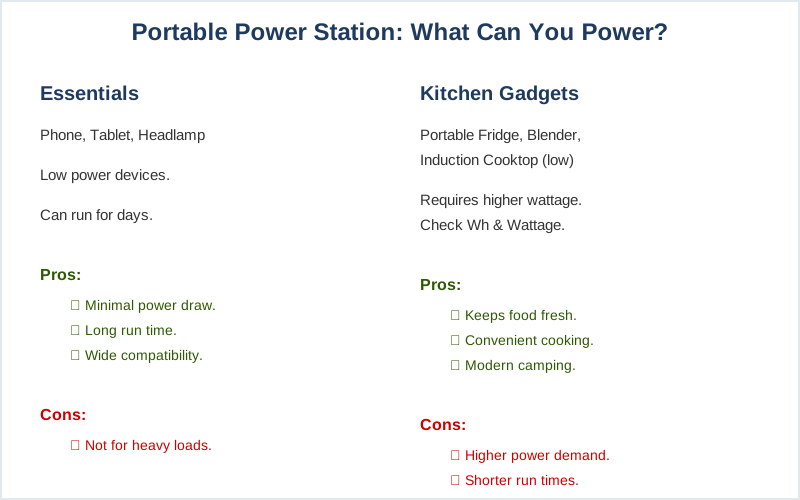
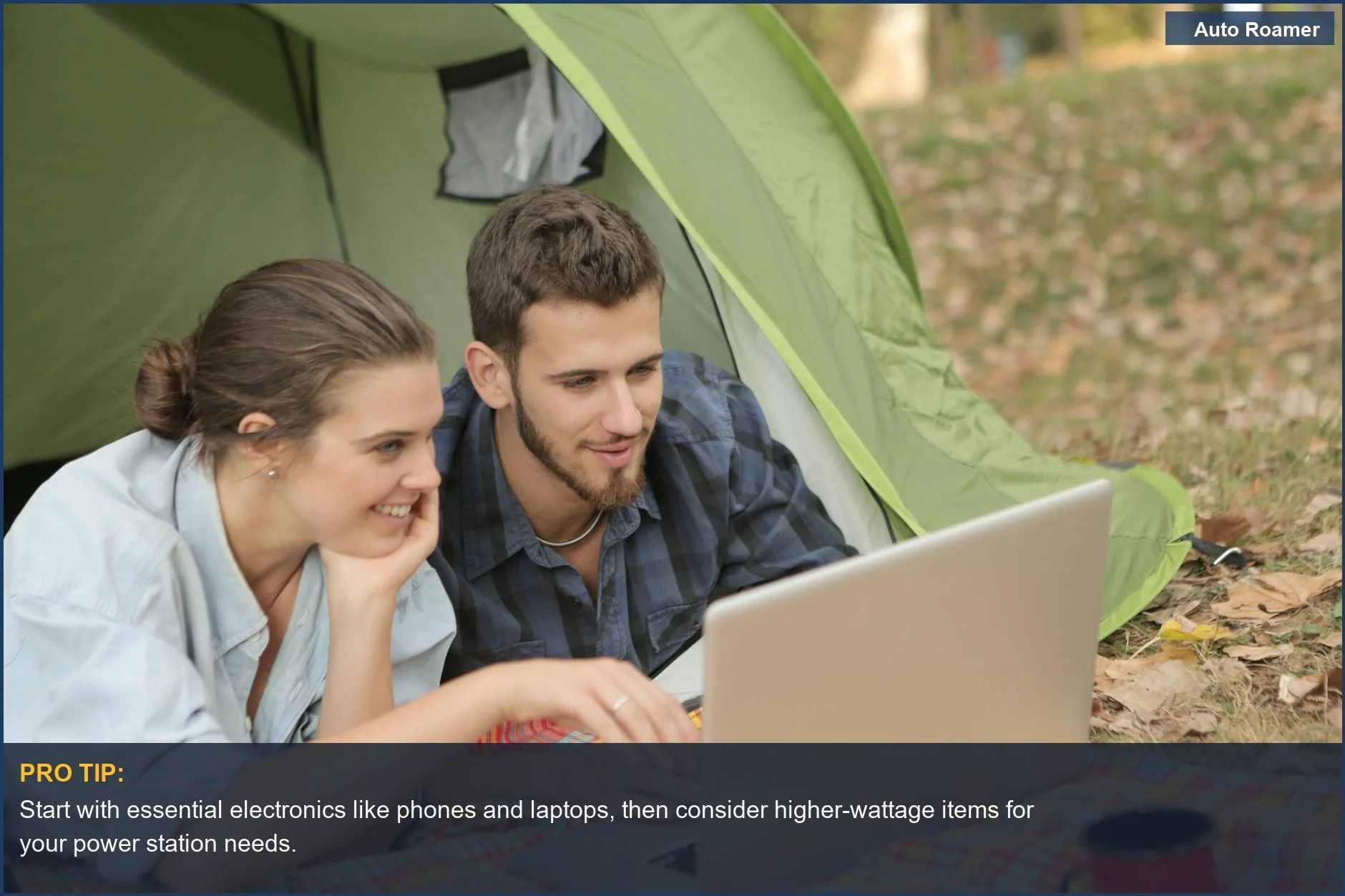
The real move with portable power stations is figuring out what you actually need versus what you think you need. For most car campers, the core essentials are charging your phone, maybe a tablet for navigation or entertainment, and a good headlamp. These low-wattage items sip power, and almost any decent power station can handle them for days.
Then you get into the slightly more power-hungry stuff. A portable refrigerator or freezer is a game-changer for keeping food fresh.
I learned this the hard way on a 3-day trip to Joshua Tree; my cooler turned into a lukewarm soup by day two. A power station rated around 1000 watts can usually keep a small 12V fridge running for a solid 24-48 hours, depending on how often you open it. These 12V fridges are way more efficient than their AC counterparts.
Fans are another popular item.
A small 12V or USB fan might only draw 10-20 watts, meaning you can run it all night without draining your battery. I used one on a sweltering night in Arizona, and it was the difference between sleeping and staring at the tent ceiling. It's all about matching the appliance's draw to the station's capacity.
What about cooking? This is where things get tricky. A microwave, for example, might draw 1000 watts or more just to start up.
Most standard portable power stations won't handle that surge, or they'll drain their entire battery in minutes. The honest version: forget the microwave unless you have a seriously beefy, expedition-grade power station.
A small electric kettle or coffee maker is also a gamble. They often have high wattage draws for short periods. My first attempt with a small camping kettle on a 500Wh power station lasted about 3 minutes before the low-voltage cutoff kicked in. Brilliant engineering, that.
You're better off with a propane stove for hot drinks unless you've done your homework on the power station's surge capacity. Check the surge wattage, not just the running wattage.
CPAP machines are a surprisingly common use case. They use very little power, often under 50 watts. A decent power station can easily run one for multiple nights. For longer trips, though, you'll want to consider recharging options like solar panels.
People are running everything from laptops to small pumps, but it's all about that power math. The $50 version of powering your phone is fine, but if you want to run a fridge, you're looking at a bigger investment. Don't overload it on day one.
Why This Matters for Your Setup
Why does this matter? Because showing up to a campsite with a power station that can barely charge your phone when you planned to run a mini-fridge is a recipe for a miserable trip. I once saw a guy at a dispersed campsite in Moab, Utah, with a tiny power station that he was trying to run his entire camp kitchen off of.
He spent more time looking at error codes than enjoying the stars.
Here's the breakdown:
- Essential Electronics: Phones, tablets, laptops, headlamps. Most power stations handle these easily for days. My phone gets charged at least twice a day, and my power station barely notices.
- Comfort Items: Fans, small LED string lights. These are usually low-draw (under 30 watts) and can run for a long time. A fan saved my sanity during a heatwave at an unbearably hot state park.
- Food Savers: Portable refrigerators/freezers.
This is where you need to pay attention to wattage. A 12V fridge might draw 40-60 watts. A power station with at least 1000 watt-hours and 1000 watts of output is a good starting point. Don't skimp here if you want cold drinks.
- Kitchen Gadgets (Use Caution): Coffee makers, kettles, microwaves. These often have high surge requirements or continuous high wattage.
Unless you have a power station with a very high surge capacity (2000+ watts) and large capacity (2000+ Wh), you're probably better off with propane. My first attempt to make coffee resulted in a very expensive, very dead power bank.
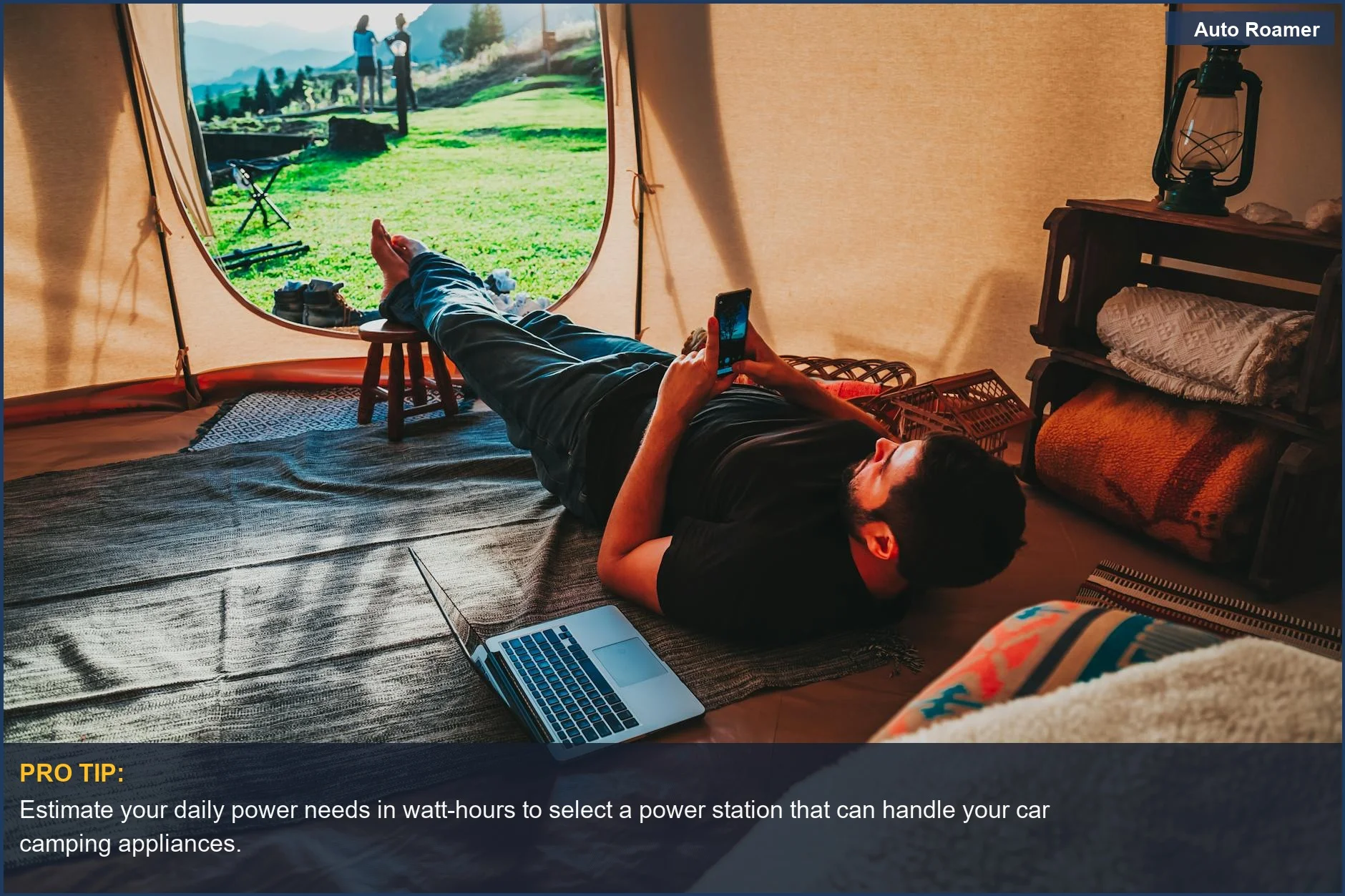
The real move is to list out everything you want to power, find its wattage (usually on a sticker on the appliance), and then add it all up. Then, check your power station's continuous and surge wattage ratings.
Making the Right Choice
Choosing the right power station isn't about buying the biggest, most expensive unit. It's about understanding your actual needs and matching them to the device's capabilities. My first trip, I packed a cooler that leaked and a power station that couldn't run my electric toothbrush. Lesson learned.
Here's the honest version:
- Know Your Wattage: Always check the running and surge wattage of your appliances. This is non-negotiable.
- Capacity is King: Watt-hours (Wh) tell you how long you can run things. For a weekend trip, a 500Wh to 1000Wh unit is often sufficient for essentials and maybe a small fridge. For longer trips or more demanding gear, you'll need more. A 1500Wh unit is a good middle ground for multiple days.
- Start Small: If you're new to this, focus on charging devices and running a fan or lights.
You can always upgrade later once you figure out what you really use.
- Consider Recharging: If you plan on extended trips, look into units that support solar charging. It's a game-changer for staying powered up in remote locations.
The goal is to power your experience, not to become an electrician in the woods. Keep it simple, keep it functional.