What You Need to Know
The lifespan of a portable power station isn't a single, simple number. It's a mix of how long the battery itself lasts and how long it can keep your gear running on a single charge. Think of it like a car: you have the engine's overall life and how many miles you get per tank of gas. Both matter, but they're different beasts runtime vs. lifespan.
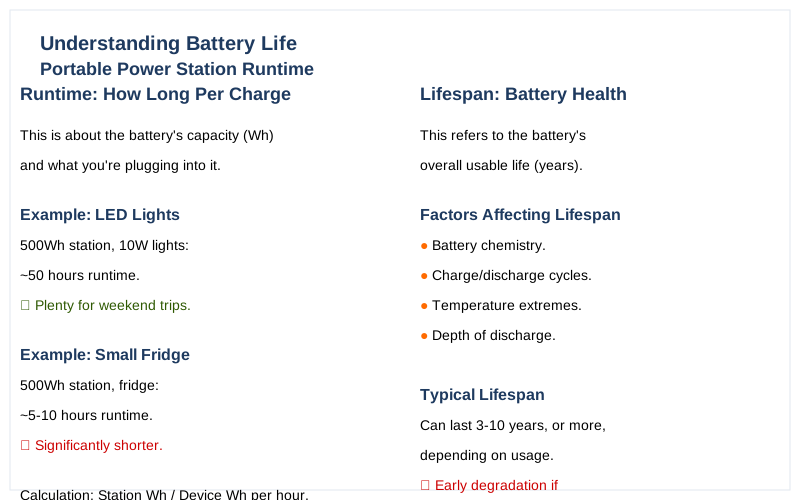
Understanding this difference is key to not getting ripped off or ending up with a brick when you need power most. My first power station lasted about 3 years before it felt like it was holding about half a charge. That was a rookie mistake in understanding battery chemistry battery chemistry.
The Core Answer
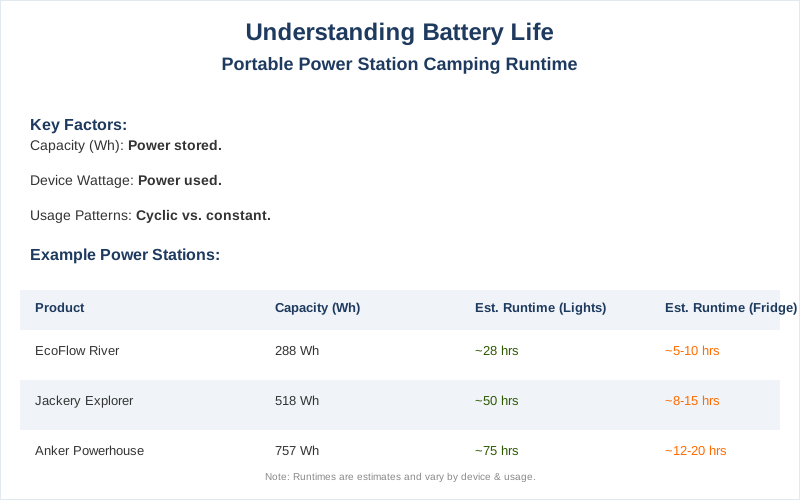
The big question is how long a portable power station will actually keep your stuff charged. This is all about the battery's capacity, measured in Watt-hours (Wh), and what you're plugging into it. My 500Wh unit can run my LED camp lights (about 10W) for a solid 50 hours, which is way longer than I ever need on a weekend trip camping trip.
But if I try to run a small fridge, that same 500Wh might only last 5-10 hours, depending on how often it cycles on load dependent. It's a simple math problem: divide the Watt-hours of the power station by the Watt-hours your device uses per hour. What nobody tells beginners is that most devices don't run at their advertised wattage constantly.
My laptop charger says 65W, but it only pulls that when it's really charging, not when it's topped off. The real move is to check your device's power draw, usually listed on the power brick itself, and then do the math. For example, a 100W panel charging a 500Wh battery on a sunny day might take 5-7 hours to fully recharge it, assuming ideal conditions properly maintained. This is why understanding your power needs is critical.
You don't want to buy a tiny 200Wh unit if you plan on running a CPAP machine all night, which can pull 30-50W. That would drain your battery in 4-6 hours. Brilliant engineering, right? It's all about matching the power station's capacity to your specific devices and how long you need them running. So, while the average might be 3-13 hours of runtime, your actual experience will vary wildly average portable power station.
Why This Matters for Your Setup
So, why should you care about all this battery math? Because it directly impacts your comfort and convenience in the middle of nowhere.
- No Dead Phones on Arrival: Knowing your power station's runtime means you can confidently charge your phone, tablet, or even a small laptop for the whole weekend. I learned this the hard way on a trip where my phone died on day two because I underestimated how much it would drain charging my camera batteries too.
The $50 version of a power bank just couldn't cut it.
- Keeping the Chill (or Warmth): If you're running a small electric cooler or a heated blanket, runtime is everything. My friend's 300Wh unit barely lasted one night with his portable fridge running intermittently.
He needed a bigger one, plain and simple.
- Avoiding the "What Ifs": Having enough power means you're prepared for unexpected needs, like running a small fan on a hot night or powering a medical device. My neighbor's power went out for 12 hours last winter, and his portable power station kept his essential medical equipment running without a hitch.
- Smart Charging Strategy: Understanding how long it takes to recharge means you can plan your solar charging sessions effectively.
Don't just plug it in and forget it; know when you'll have enough juice for your next device. My first attempt at solar charging was a disaster because I didn't factor in cloud cover. That was a lesson learned.
Making the Right Choice
Picking the right portable power station isn't just about the biggest battery. It's about matching that battery to your actual camping needs.
- Know Your Devices: List everything you plan to power and their wattage. This is the most critical step. My friend thought his 200Wh unit would be enough for his weekend fishing trip, but it died before dinner on the first night because he forgot to account for his portable speaker and charging his headlamp. Ouch.
- Consider Your Trip Length: A quick overnight is different from a week-long expedition.
Don't overbuy if you only need a little juice, but don't underbuy if you need sustained power. The honest version is that most people overestimate their power needs for short trips.
- Think About Rechargeability: If you're car camping with access to an outlet, you might not need a huge battery.
But for dispersed camping, solar recharging becomes important, and you need a unit that can handle that input efficiently.
- Battery Chemistry Matters for Longevity: While runtime is immediate, the battery's overall lifespan is determined by its chemistry. LiFePO4 batteries, like those in higher-end units, last significantly longer in terms of charge cycles, meaning more years of reliable service LiFePO4.