
Smart Car Tech

How to Choose the Right Size Portable Power Station for Your Car Camping Trip

Casey - The Weekend Warrior
5 min read
Includes Video

The size of your portable power station is like figuring out how much water to pack for a hike: too little and you're miserable, too much and you're lugging around dead weight. For car camping, this means balancing your need for creature comforts with the reality of what you can actually haul and use.

The size of your portable power station is like figuring out how much water to pack for a hike: too little and you're miserable, too much and you're lugging around dead weight. For car camping, this means balancing your need for creature comforts with the reality of what you can actually haul and use.

It's not about having the biggest battery; it's about having the right battery for your specific weekend setup, whether that's just keeping your phone alive or running a mini-fridge. Ignoring this step is a rookie mistake that leads to either a dead battery or a sore back. Choosing a portable power station can feel overwhelming with all the specs, but it boils down to a few key questions about your trip.

Think of it as packing for a weekend, not moving across the country. What size power station do you need depends entirely on what you plan to plug in. My first trip, I packed a $100 battery that couldn't even charge my phone twice. Lesson learned.
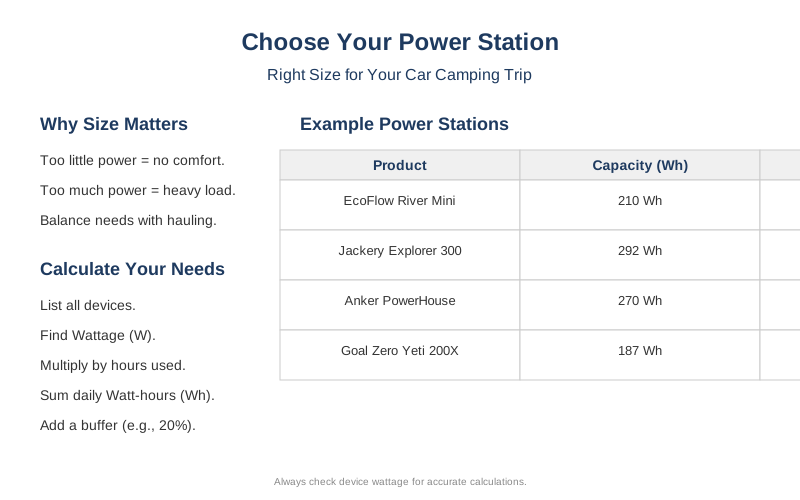
How to Choose the Right Size Portable Power Station for Your Car Camping Trip — Key Specifications C
Key specifications for How to Choose the Right Size Portable Power Station for Your Car Camping Trip

The Core Answer

The core answer to choosing a portable power station size is to calculate your total Watt-hour (Wh) needs for a trip, then add a buffer. You do this by listing every single device you plan to power, finding its Wattage (W) - usually printed on the device or its power brick - and then multiplying that by how many hours you expect to use it each day. So, a phone charger that pulls 15W used for 3 hours a day is 45 Wh. Calculating your weekend power needs involves this simple math. For a typical 3-day car camping trip, I might have my phone (15W x 4 hours = 60 Wh), a laptop for a few hours (65W x 3 hours = 195 Wh), and some LED lights (10W x 6 hours = 60 Wh). That's 315 Wh per day. Multiply that by 3 days, and you're at 945 Wh. Multiply appliance wattage by usage time. Now, here's the kicker: this is the *absolute minimum*. You always want a buffer. Things like charging efficiency aren't perfect, and you might use something more than you planned. I'd add at least 20-30% for safety. So, for my 945 Wh calculation, I'm looking for something closer to 1200-1300 Wh. Anything less and you're playing with fire, or rather, a dead battery. A 500 Wh unit might be fine for just charging a phone and a headlamp for a single night, but anything more complex and you'll be wishing you had more juice. If it's just a phone and headlamp, a 500w would work fine. But that's rarely the whole story. The real move is to overestimate slightly. My first power station was a tiny 200 Wh model, and it died before my coffee was even brewed on day two. That was a $150 mistake I won't repeat. For most weekend warriors who want to run a small cooler, charge devices, and have some lights, a unit in the 1000-1500 Wh range is a solid starting point. Anything over 1000Wh is generally considered a good all-around size for camping. A unit within 1000Wh is likely all you need for phones and drones. But don't forget that portable fridge draws a lot more. Think about surge wattage too; some devices need a big initial kick to start up, like a small compressor fridge. Your power station needs to handle that initial surge without tripping. The honest version: calculate what you *need*, then buy something about 30% bigger. It's cheaper than buying a second one later.


To ensure you choose the best option, consider our tips on choosing the right size for your needs.
Calculate your total Watt-hour needs by listing devices and their wattage to determine the right power station capacity.
Planning your car camping trip is key to selecting the right portable power station size. Estimate your total Watt-hour needs for all devices to ensure adequate power. | Photo by Tima Miroshnichenko

Why This Matters for Your Setup

Why does this matter? Because showing up to a campsite with a power station that dies after six hours is a special kind of misery. I learned this the hard way at a state park in Utah when my phone died on the first night, and I had no way to navigate back to the main road the next morning. Brilliant engineering, that. Here's the breakdown for your setup:
  • Device Wattage: This is the power your gadget sucks. A phone charger is usually 5-20W. A laptop might be 45-65W. A portable fridge? That's where it gets serious, easily 40-100W depending on how hard it's working. Device wattage is your starting point.
  • Hours of Use: How long are you actually running it? A phone gets charged for maybe an hour or two a day. A fridge runs 24/7. Lights might be on for 4-8 hours. Be realistic. My habit of leaving my headlamp on all night cost me dearly on my second trip. Rookie mistake.
  • Total Watt-hours (Wh): Multiply wattage by hours. This is your daily energy budget. You need a power station with a total capacity that exceeds your daily budget, multiplied by the number of days you're out, plus that all-important buffer. Total energy requirements are key.
  • Recharge Capability: If you're out for more than a couple of days and running heavy loads like a fridge, you might need to recharge your power station. Solar panels are an option, but they add complexity and cost. For most weekend trips, a unit with enough capacity to last the whole time is simpler. Recharge options matter for longer trips.
  • To ensure you're fully equipped, understanding portable power station sizes is crucial for your camping setup.
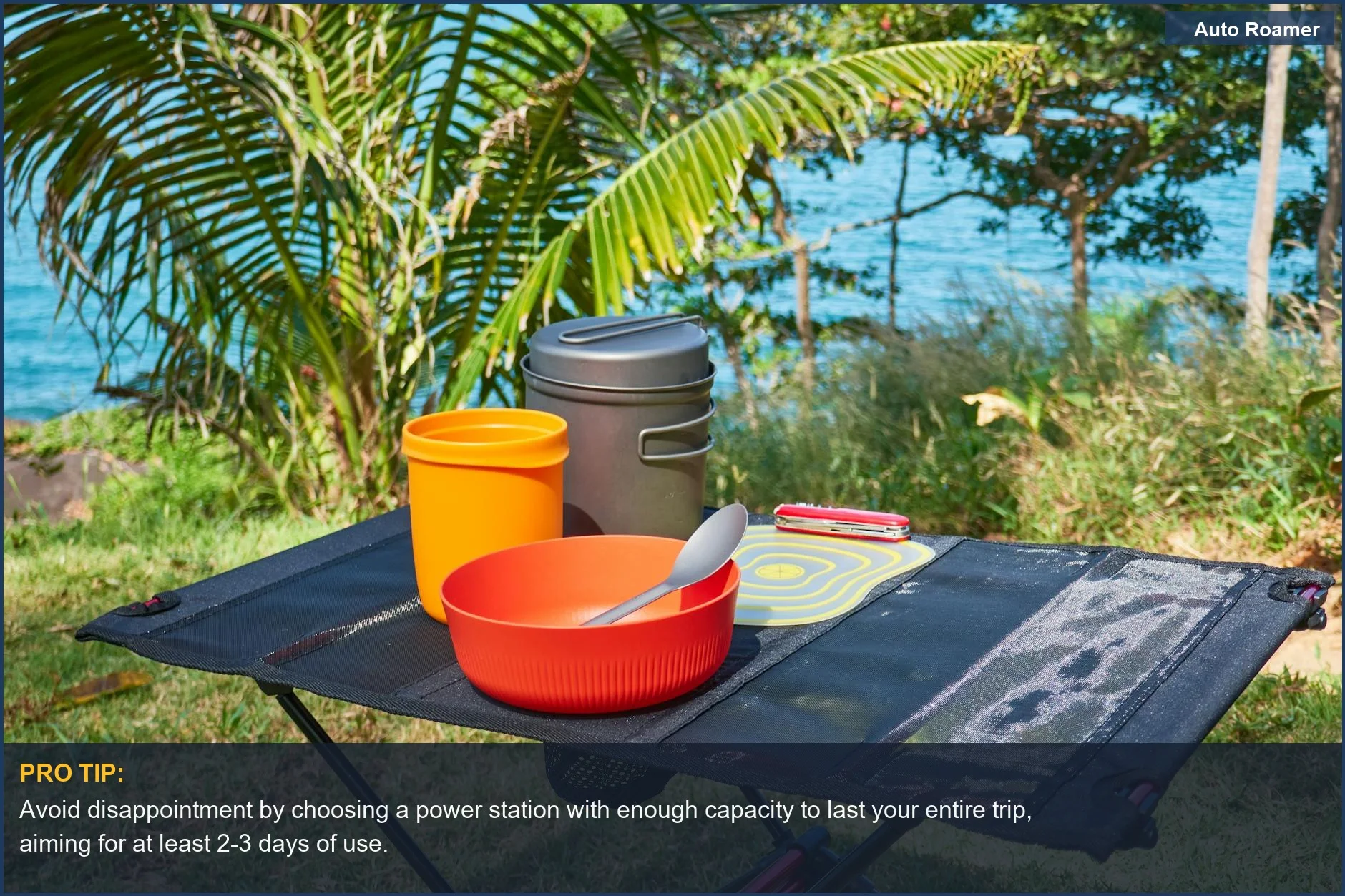
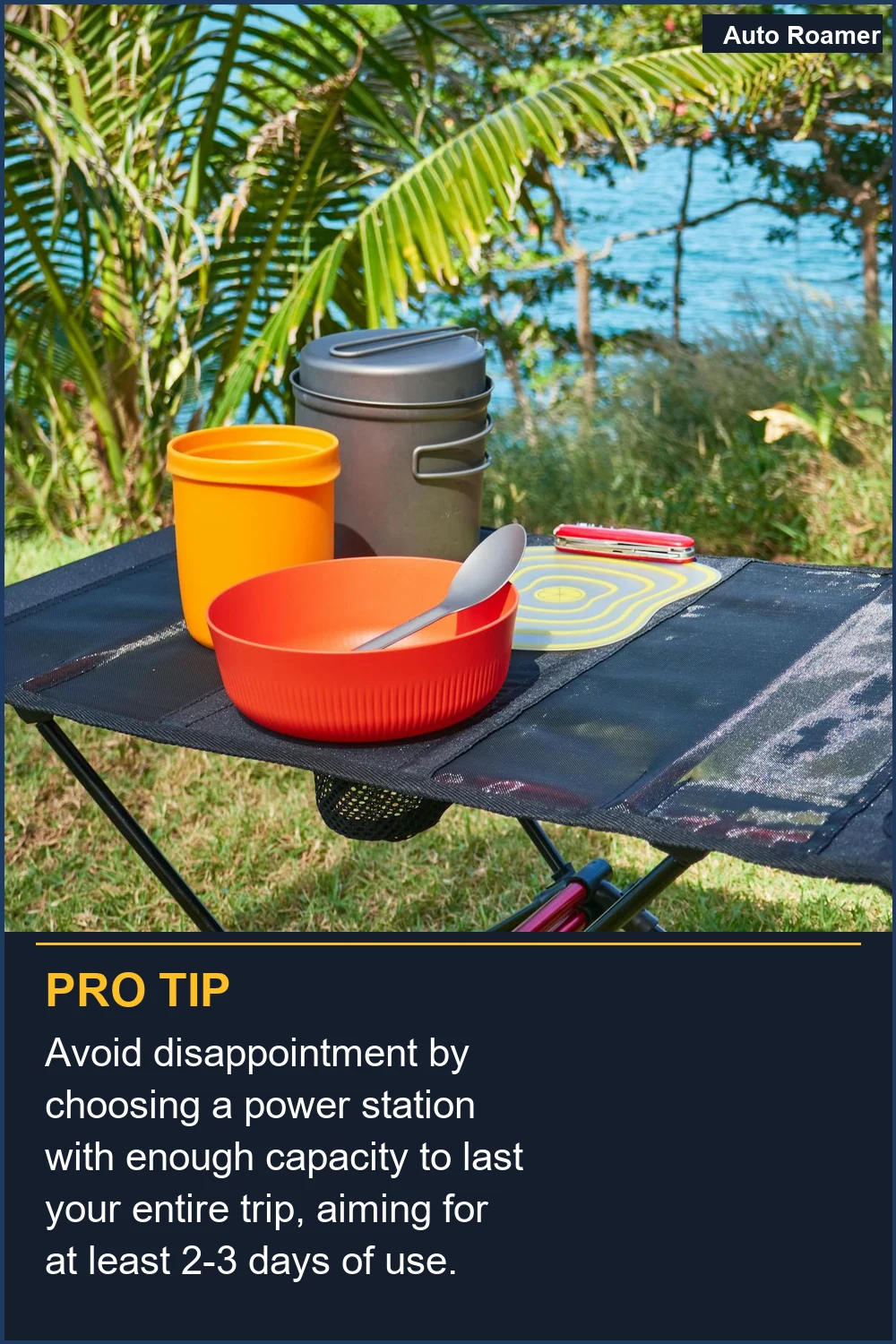
    Avoid disappointment by choosing a power station with enough capacity to last your entire trip, aiming for at least 2-3 days of use.
    Don't let dead batteries ruin your trip. Understanding your car camping power needs ensures you select a power station with enough capacity for essential devices. | Photo by Mykhailo Petrushchak

    Making the Right Choice

    Picking the right size power station isn't rocket science, but it does take a little pre-trip homework. Don't just grab the first one you see; that's a recipe for disappointment. My first power station was a cheap $50 thing that barely lasted a night. Choosing the right size means understanding your own needs.
  • Know Your Devices: List everything you plan to power, from your phone to your fan. Calculate power needs before you buy.
  • Do the Math: Wattage x Hours = Watt-hours. Sum it up for each day. Device wattage and usage duration are critical.
  • Add a Buffer: Always go bigger than you think you need. A 20-30% buffer is a good rule of thumb. This is the real move to avoid dead batteries. Capacity needs vary.
  • Consider Your Trip Length: For a single overnight, a smaller unit might suffice. For a long weekend with a cooler, you'll need more. Don't skimp on capacity if you want comfort. My 1000Wh unit is perfect for 3 days.
  • To complement your solar setup, understanding what size portable power station you need is essential; explore options in our article on power station sizes.
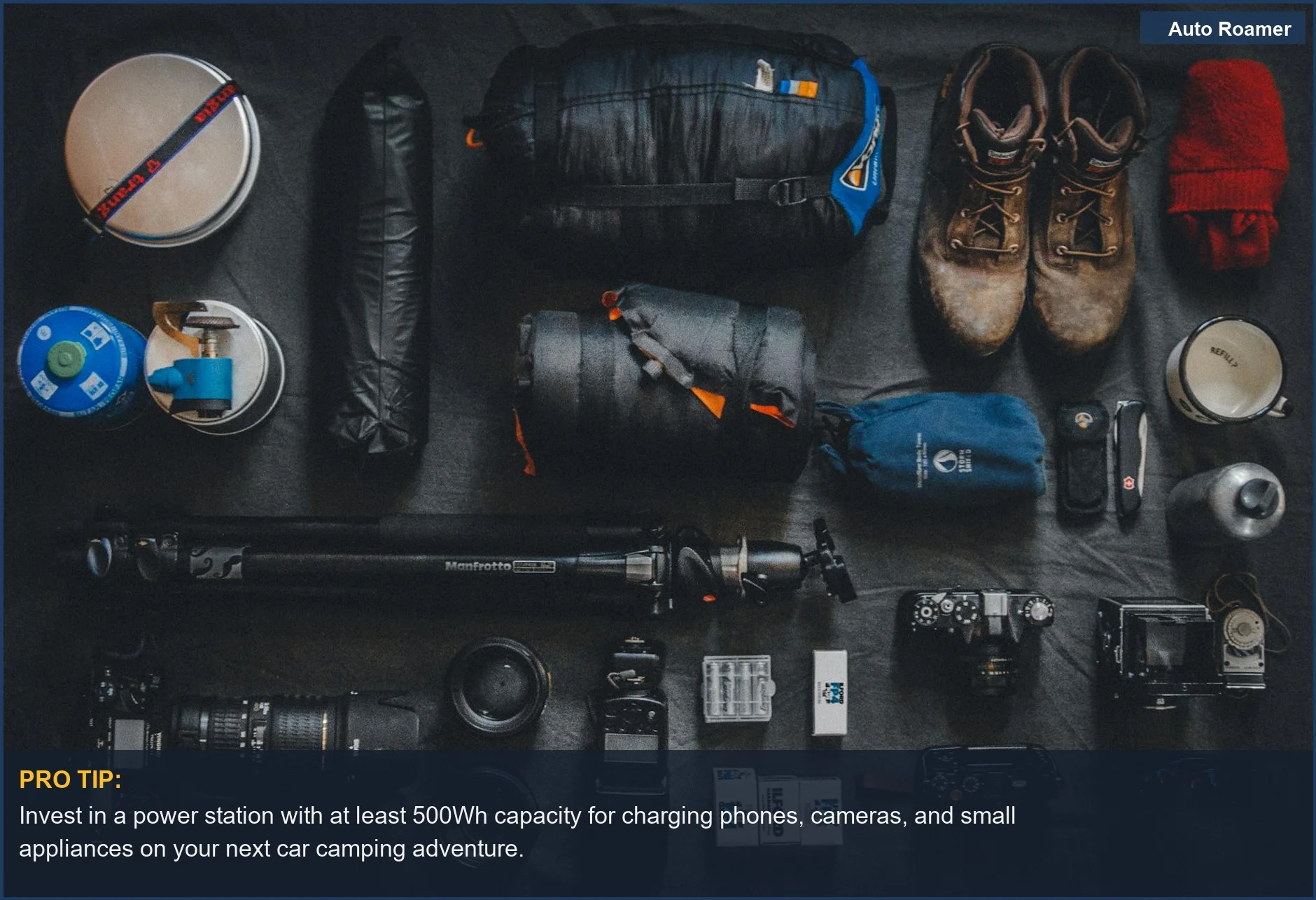
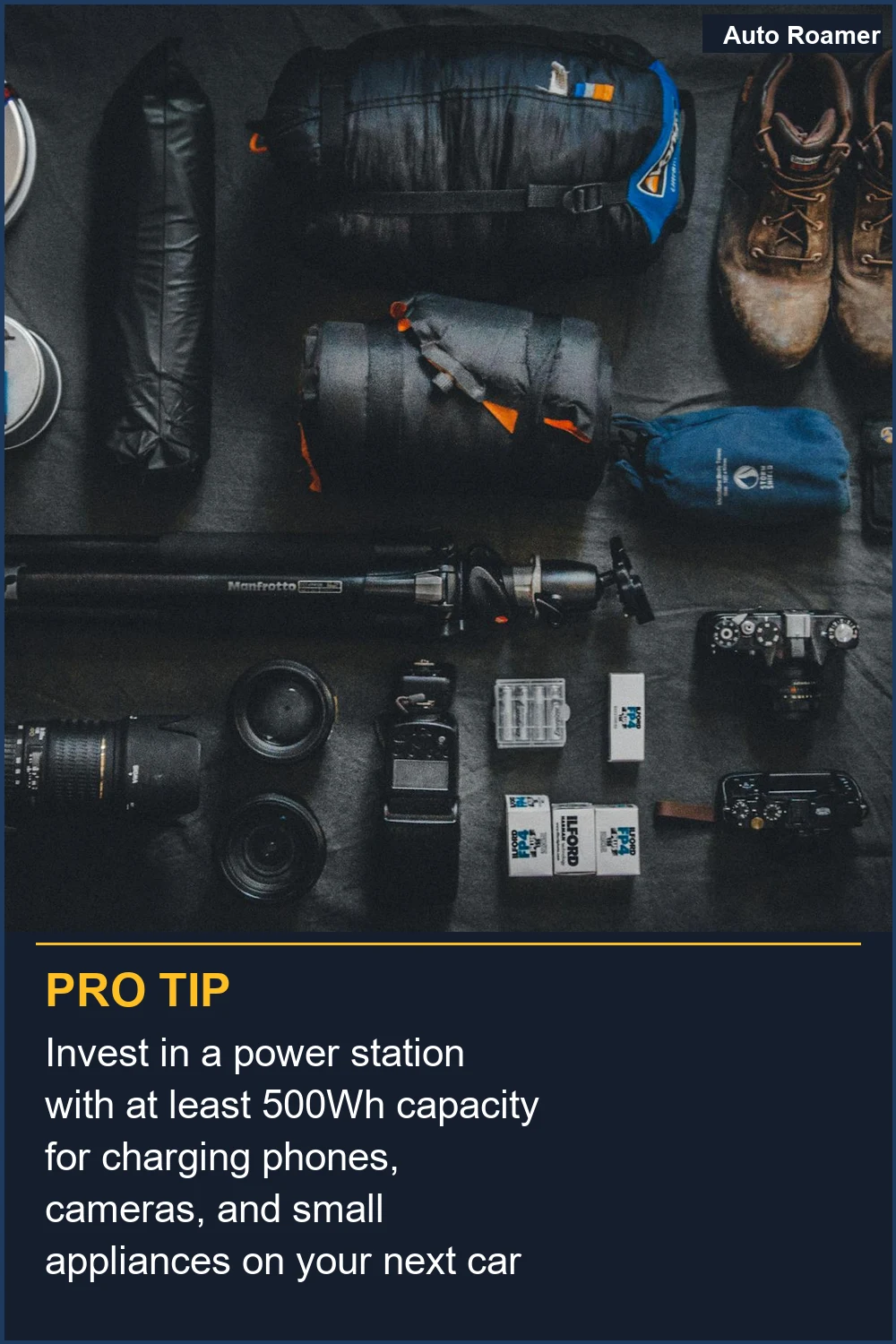
    Invest in a power station with at least 500Wh capacity for charging phones, cameras, and small appliances on your next car camping adventure.
    Organized gear means a well-planned trip. Picking the right portable power station size requires homework, so don't just grab the cheapest option. | Photo by Alex Andrews

    Frequently Asked Questions

    I saw a small portable power station for $50, but the one you're talking about is closer to $300. Is it really worth spending that much more, or is the cheap one good enough for just my phone?
    Look, that $50 unit is probably going to disappoint you faster than a flat tire in the rain. For just your phone, it *might* work for one night, maybe two if you're lucky. But if you want to charge a laptop, run a small fan, or even a tiny LED light for more than a few hours, you're going to run out of juice. My first $100 unit died before I finished my first cup of camp coffee. Save yourself the headache and invest in something closer to the 500Wh range, which usually starts around $200-$300. You'll thank yourself when your phone is still at 80% on day two. A 500w would work fine for just phone and headlamp, but that's it.
    Do I need some fancy meter to figure out how many watts my devices use, or can I just eyeball it?
    No, you don't need a degree in electrical engineering or a $50 multimeter. The wattage is almost always printed right on the device itself, or on its power adapter. Look for a label that says 'W' or 'Watts.' For example, my laptop charger says '65W.' If you can't find it, a quick Google search for '[your device model] power consumption' usually does the trick. It's not rocket science, just basic label reading. Finding your devices' wattage is straightforward.
    What if I buy a power station that's too small and it dies halfway through my trip? Can I just plug it into my car's cigarette lighter to recharge it?
    You *can* recharge a power station from your car, but it's usually painfully slow and drains your car battery if the engine isn't running. Think hours and hours for a partial charge, and you risk leaving yourself stranded. It's not a game-time fix. The real move is to buy the right size from the start. If you underestimate, your best bet is to conserve power religiously: turn off anything non-essential, dim lights, and accept a lower level of comfort. Recharging options are important to consider before you buy.
    Can running a power station too low, like to 0%, permanently damage the battery inside?
    Yeah, absolutely. Draining a lithium-ion battery pack completely to zero is a rookie mistake that significantly shortens its lifespan. Most manufacturers recommend keeping a charge of at least 10-20% when storing it long-term. Think of it like over-exercising; you can strain the muscle. Repeatedly running it to empty is like that for the battery cells. Battery maintenance is key for longevity.
    I heard you can't use a power station in the cold. Is that true, or is it just a myth?
    It's not entirely a myth, but it's more nuanced than 'it won't work.' Extreme cold temperatures, like below freezing degrees F, can reduce the efficiency and capacity of lithium-ion batteries. They might not charge as well, and their output can be lower. The best move is to keep the power station inside your tent or car overnight, where temperatures are milder. My first trip in the mountains, my battery acted sluggish because it sat in the car all night at 20 degrees F. Power station performance can be affected by weather.

    🏅 Looking for Gear Recommendations?

    Check out our tested gear guides for products that work with this setup:

    C

    Casey - The Weekend Warrior

    Weekend car camper and road trip enthusiast. Focuses on practical, budget-friendly solutions for families and first-time campers.

    Sources

    Related Articles