
Car Camping

What Size Portable Power Station Do You Need for Car Camping Appliances?

Casey - The Weekend Warrior
4 min read
Includes Video

Figuring out what size portable power station you need for car camping can feel like trying to decipher ancient hieroglyphics. It's not just about picking the biggest one; it's about matching the capacity to what you actually plan to power.

Figuring out what size portable power station you need for car camping can feel like trying to decipher ancient hieroglyphics. It's not just about picking the biggest one; it's about matching the capacity to what you actually plan to power. My first trip, I brought a tiny battery bank that died trying to charge my phone and a headlamp. That was a rookie mistake.

These units are basically rechargeable batteries with outlets, and understanding their 'fuel tank' size, measured in watt-hours (Wh), is key. Think of watts as how much power a device demands right now, and watt-hours as how long that power can last. You need both numbers to make sense of it all.
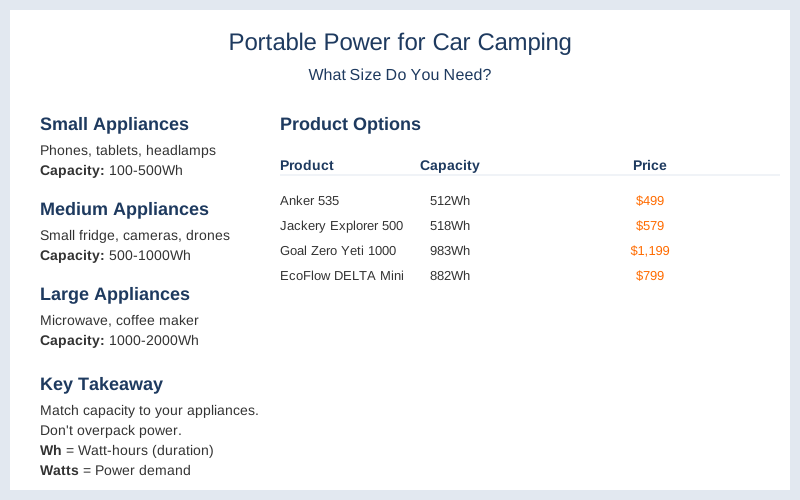
What Size Portable Power Station Do You Need for Car Camping Appliances? — Key Specifications Compar
Key specifications for What Size Portable Power Station Do You Need for Car Camping Appliances?

The Core Answer

The honest version is that for most car camping, you don't need a behemoth. I learned this the hard way at Zion National Park when I packed a mid-sized unit thinking I'd run a blender. I used it for about 10 minutes before realizing my whole setup was overkill. A 100-500Wh station is usually enough if you're just keeping phones, tablets, or a small portable fan alive. That's what I use now for my weekend trips, and it's way lighter. For a basic fridge or running a few more things, you'll want to step up. Aiming for something in the 500Wh to 1000Wh range is a solid bet for keeping more gear going without breaking the bank. This size can handle charging cameras, drones, and running some lights. If you're planning on running a microwave, a coffee maker, or a more power-hungry appliance, you're probably looking at the 1000Wh to 2000Wh mark, sometimes even higher. A 2000W station can often manage those bigger kitchen gadgets. It's all about adding up the wattage of the devices you want to use simultaneously and then multiplying that by how many hours you think you'll need them. Then, tack on an extra 20-30% buffer, because batteries never perform at 100% in the real world, especially when it's cold. That buffer is non-negotiable. Don't forget to check the 'surge' wattage too; some appliances need a big kick to start up, like a mini-fridge. You don't want your power station to just blink out when your food needs to stay cold. The real move is to list out everything you *actually* use, not what you *wish* you could use. My second trip, I cut my gear in half and was twice as happy.
To better understand what to consider, explore how to choose the right size portable power station for your car camping trip here.
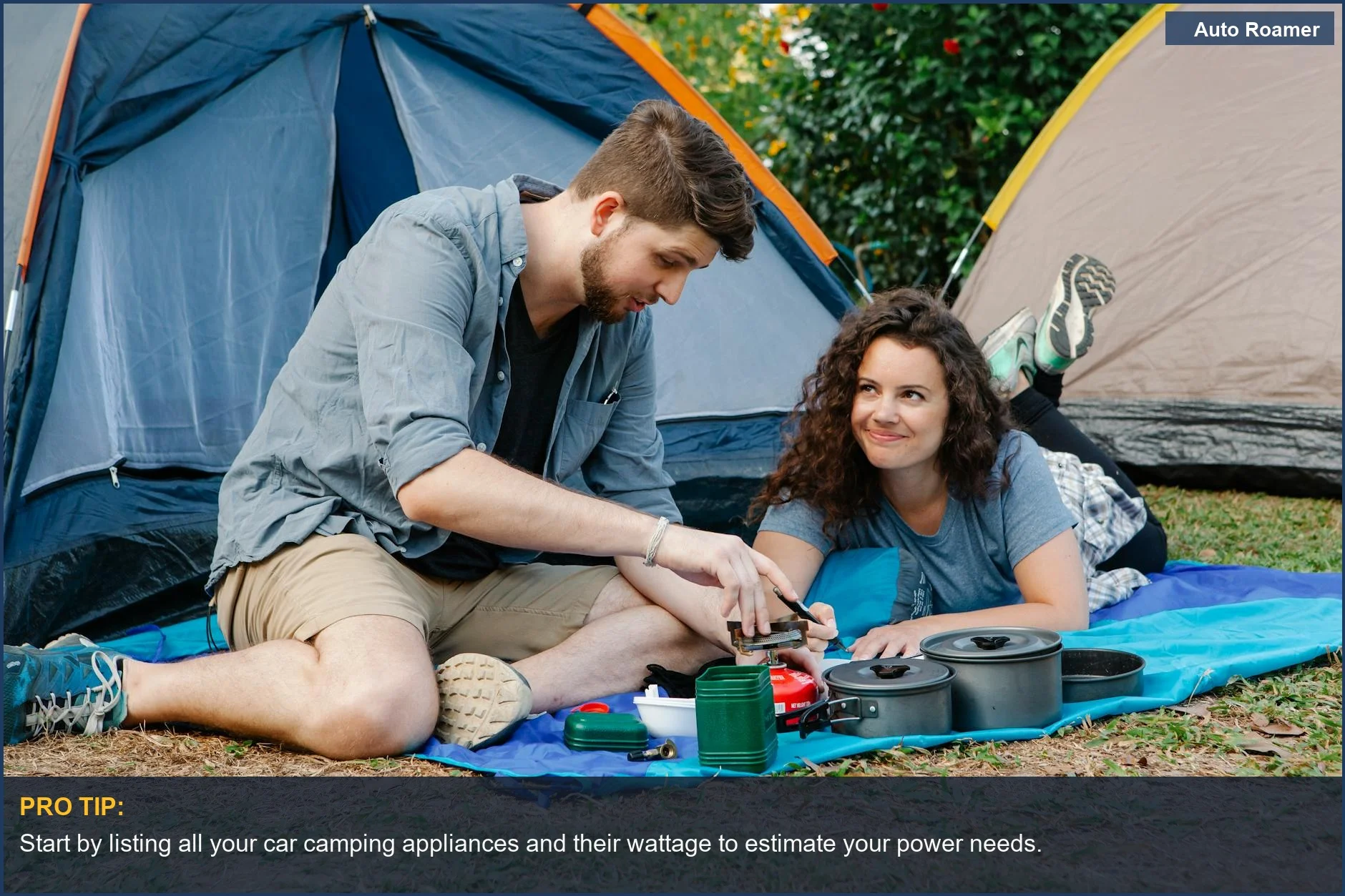
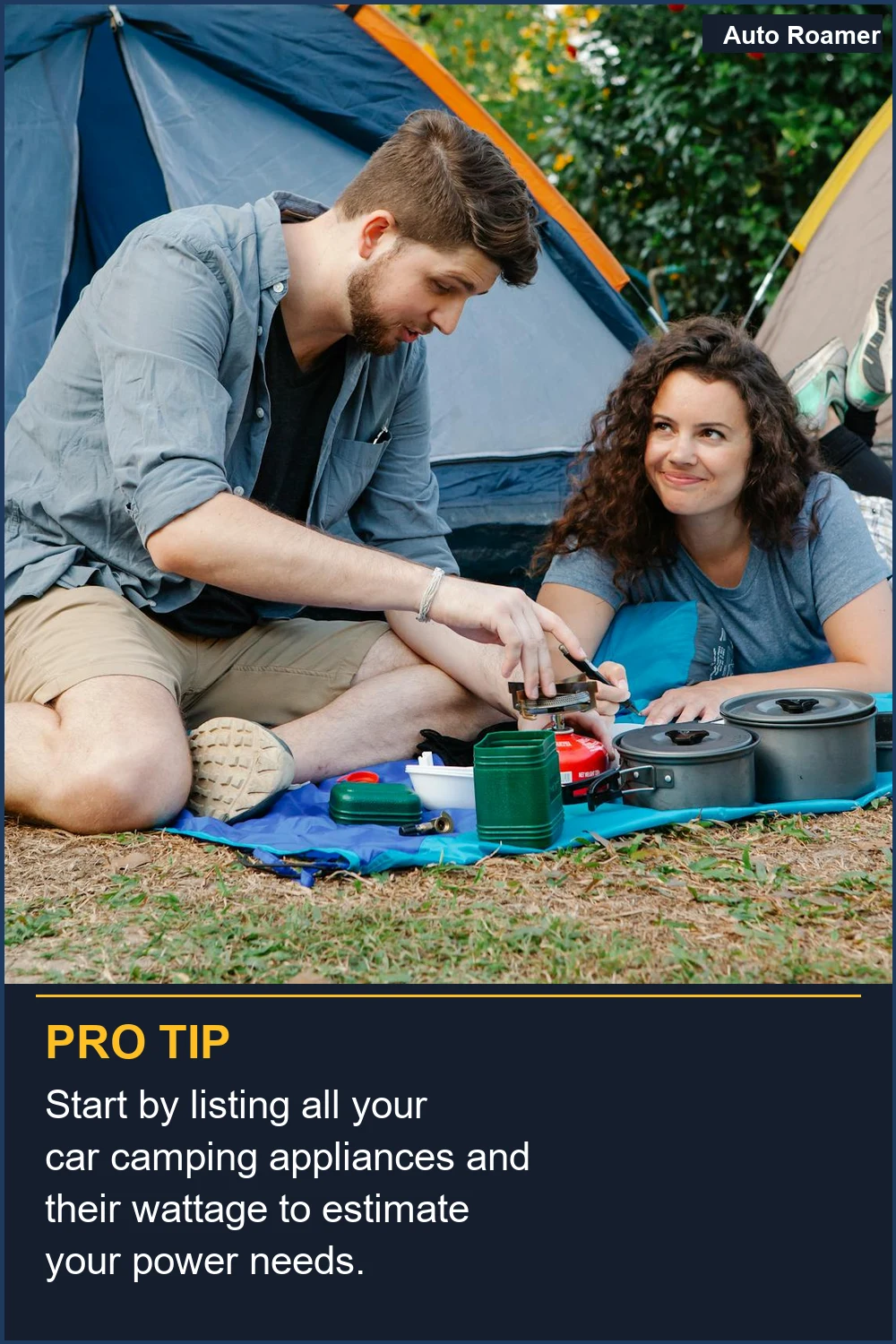
Start by listing all your car camping appliances and their wattage to estimate your power needs.
Don't overpack your portable power station capacity. This couple enjoys cooking with a modest setup, perfect for most car camping adventures. | Photo by Vanessa Garcia

Why This Matters for Your Setup

This isn't just about keeping your phone charged so you can post epic campfire pics. It's about practical comfort and safety. I was at a campsite in Colorado last fall, and my portable fridge died overnight because my power station was too small. My entire cooler of food was toast. That's a costly mistake.
  • Powering Essentials: For most weekend warriors, a unit around 500Wh is game-time. It'll keep your phone, headlamp, and maybe a small fan going for days. This is the $50 version of not being stuck in the dark.
  • The Comfort Factor: Want to run a portable fridge or a CPAP machine? You're looking at least 500Wh, probably more. Don't skimp here; spoiled food or a bad night's sleep isn't worth it.
  • Appliance Ambitions: If you're trying to run anything with a heating element, like a microwave or a decent coffee maker, you'll need a serious unit, likely 1000Wh or more. Running an Instant Pot for 1.5 hours on a 1050Wh station means you're using most of its juice. Plan accordingly, or you'll be making coffee on a camp stove like a peasant.
  • Battery Longevity: Bigger isn't always better if it means you're constantly draining it to 0%. LiFePO4 batteries tend to last longer with more charge cycles, so if you're a heavy user, consider that tech.
  • To maximize your camping experience, consider what appliances you can power with a portable power station.
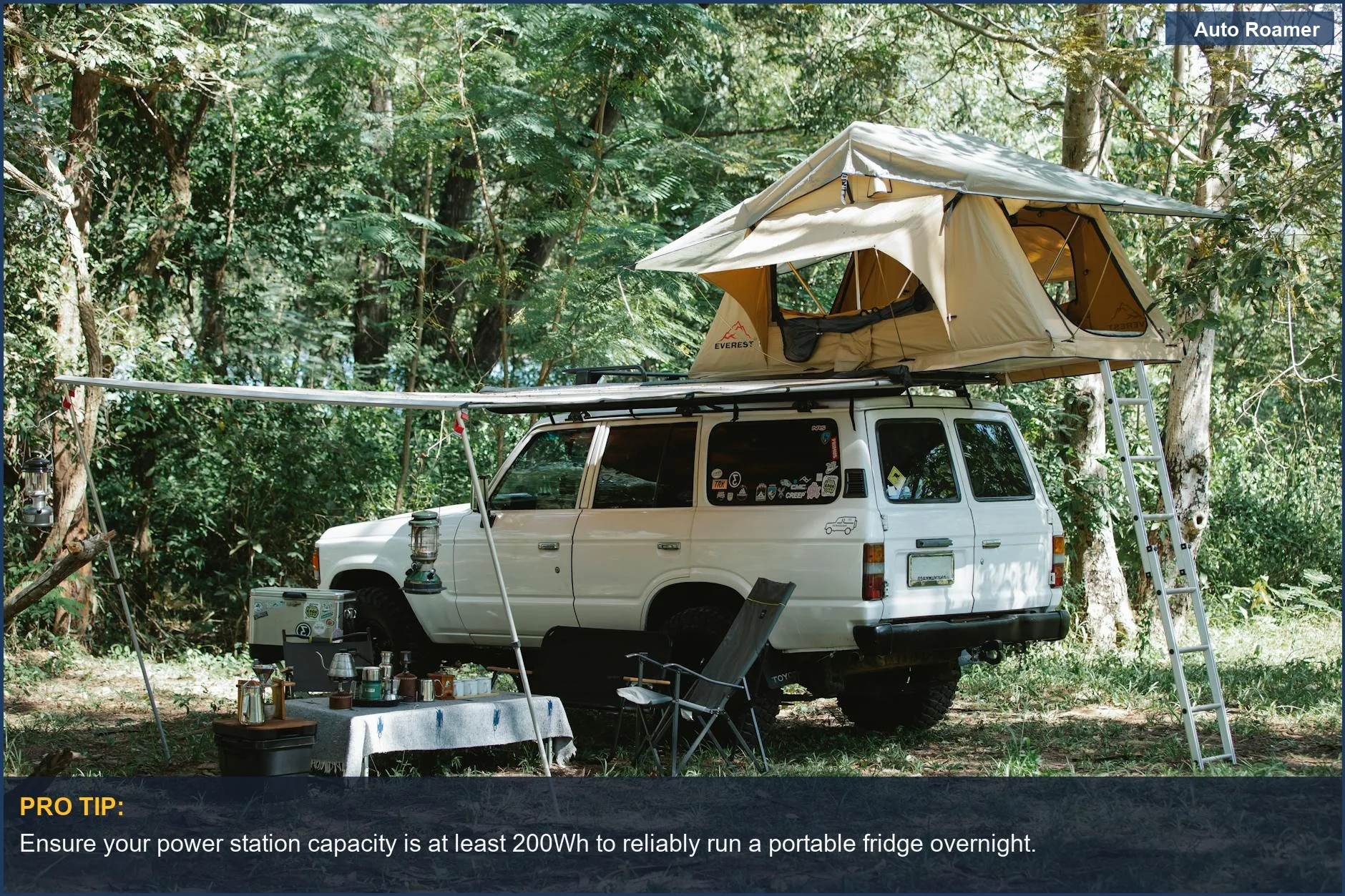
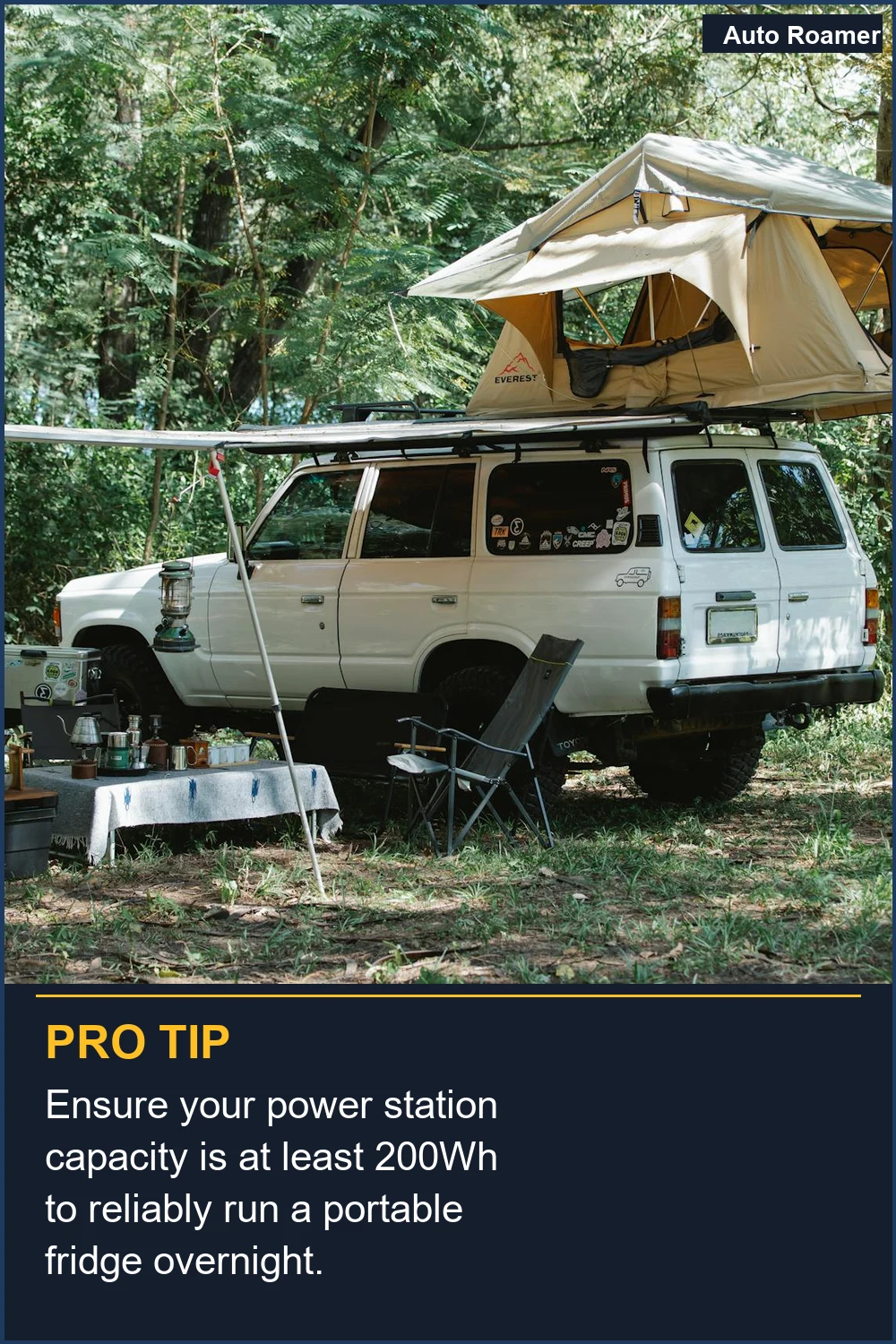
    Ensure your power station capacity is at least 200Wh to reliably run a portable fridge overnight.
    A reliable portable power station is crucial for keeping car camping appliances like this fridge running, preventing food spoilage. | Photo by Uriel Mont

    Making the Right Choice

    Choosing the right size power station boils down to honesty about your camping habits. Don't pack for a Hollywood movie set if you're just weekend camping. Start by listing your devices and their power draw.
  • Small Stuff: Phones, lights, cameras? A 100-500Wh unit is probably your sweet spot. It's the $50 version of staying connected.
  • Medium Needs: Fridge, fan, charging multiple devices? Look between 500-1000Wh. This is where I live now, and it's comfortable. It's a good balance.
  • Heavy Hitters: Microwaves, blenders, or anything with a heating element? You'll need 1000Wh or significantly more. Factor in surge power too.
  • The Buffer: Always add a 20-30% buffer to your calculation. It's the difference between peace of mind and a dead battery at 2 AM.
  • To ensure you have enough power for your needs, learn about what appliances you can power while camping.
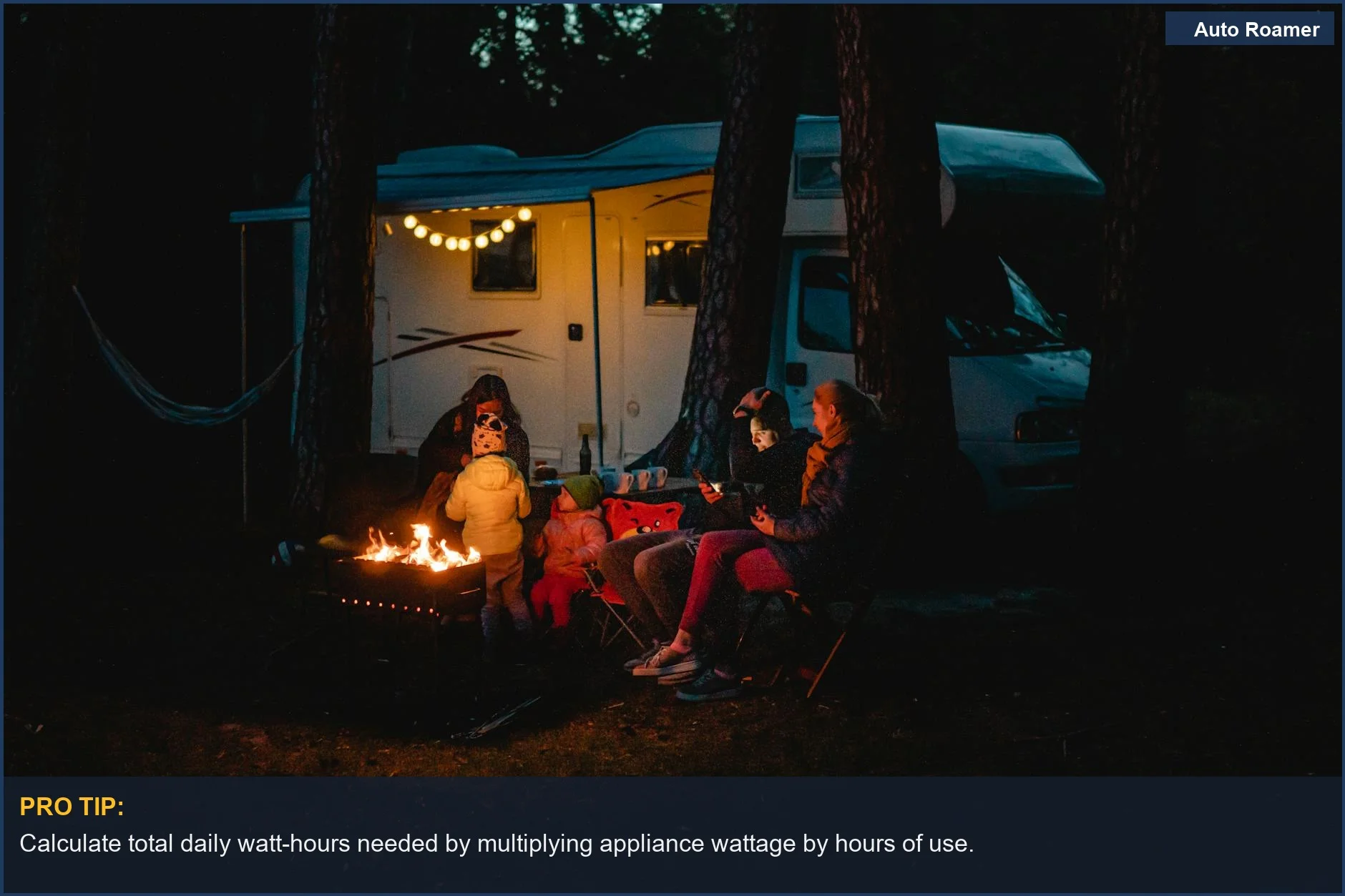
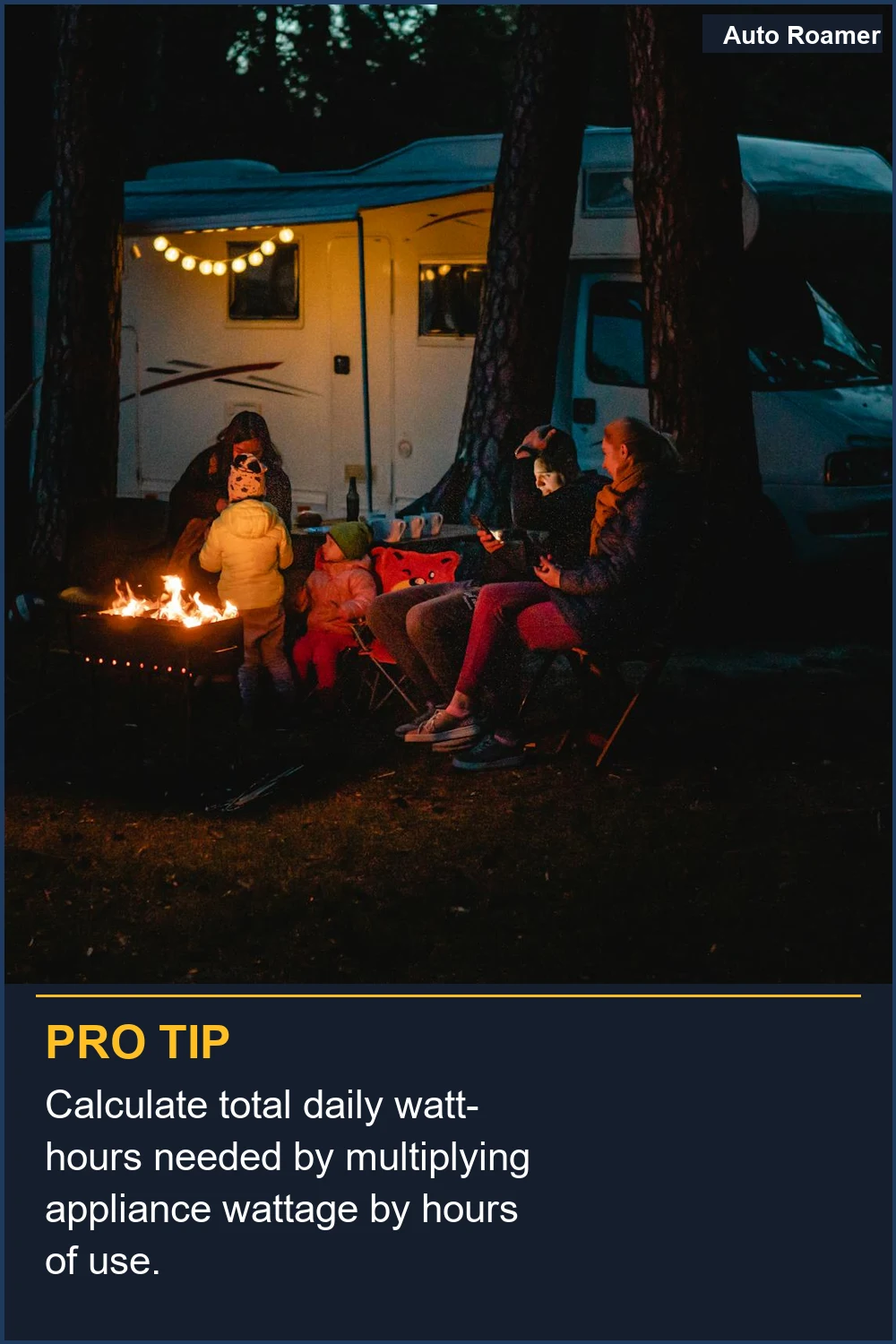
    Calculate total daily watt-hours needed by multiplying appliance wattage by hours of use.
    From powering lights to charging devices, understanding your car camping appliances' power draw is key to selecting the right power station capacity. | Photo by Gantas Vaičiulėnas

    Frequently Asked Questions

    My buddy said I can just buy a big car battery and hook it up to an inverter for way cheaper than a power station. Is he right?
    Your buddy is technically right that a car battery and inverter *can* provide power, but it's a terrible idea for camping. A standard car battery isn't designed for deep, repeated discharges like a power station. Drain it too much, and you'll kill it permanently, leaving you stranded. Plus, a decent deep-cycle marine battery and inverter will still cost you a few hundred bucks and weigh a ton, with none of the safety features of a dedicated power station. Stick to the $50 version of not getting stranded.
    Do I really need one of those fancy power meters to figure out my wattage needs, or can I just guess?
    Look, I learned to camp by making mistakes, but guessing your power needs is a rookie mistake that costs money. Get a cheap USB power meter that plugs into the port, or even just look at the label on your device. Most chargers list their wattage. My first trip, I guessed and ended up with a power station that couldn't even run my LED lantern. You don't need a multimeter, just basic common sense and a quick look at the sticker.
    What if I buy a 500Wh power station and it's not enough? Can I just plug it into my car's 12V outlet to charge it while camping?
    You *can* charge a power station from your car, but it's painfully slow. Most car 12V outlets are rated around 100-150 watts. So, charging a 500Wh unit would take 3-5 hours of driving, assuming your car's alternator can keep up without draining your car battery. It's not a game-time solution if you realize you underestimated your needs mid-trip. You're better off bringing a solar panel if you anticipate needing to top up.
    Can I permanently damage my portable power station if I try to run something too powerful, like a microwave?
    Yes, absolutely. If you try to draw more wattage than the power station is rated for, you'll likely trigger its overload protection and it'll shut down. Do it repeatedly, or try to push it way past its limit, and you can definitely damage the internal circuitry or the battery management system. It's like redlining your engine constantly; it's not built for that abuse and will eventually break. The $50 version of not breaking your gear is to respect its limits.
    I heard that power stations lose capacity over time, so should I just buy the biggest one I can afford now to future-proof?
    That's a common misconception. While batteries do degrade over hundreds or thousands of charge cycles, a properly cared-for power station will last you many years. The key is to avoid draining it to 0% constantly and keeping it out of extreme temperatures. Buying the biggest one you can afford now just means you're lugging around extra weight and paying for power you don't use, which isn't the 'real move' for most campers. Get what you need for your current setup, and upgrade later if your needs change.

    🏅 Looking for Gear Recommendations?

    Check out our tested gear guides for products that work with this setup:

    C

    Casey - The Weekend Warrior

    Weekend car camper and road trip enthusiast. Focuses on practical, budget-friendly solutions for families and first-time campers.

    Sources

    Related Articles