Car Camping

How to Choose the Right Size 12V Car Cooler for Your Camping Trip

Casey - The Weekend Warrior
5 min read
Includes Video

My first 12V cooler was a $200 gamble on Amazon that I bought after my cooler full of ice melted by 10 AM on a 2-day trip to Ricketts Glen State Park. It was August, and I thought I was being smart by draining the melted ice water every few hours.

My first 12V cooler was a $200 gamble on Amazon that I bought after my cooler full of ice melted by 10 AM on a 2-day trip to Ricketts Glen State Park. It was August, and I thought I was being smart by draining the melted ice water every few hours. Turns out, that just makes everything warm up faster. The real move? A 12V cooler that plugs into your car.

It's not as complicated as the fancy overland blogs make it sound, and you don't need a second mortgage to get one. Reddit has plenty of people asking the same questions I did when I started. This is the lowdown from someone who learned it the hard way. YouTube is full of experts, but I'm just a weekend warrior who wants cold drinks without the hassle.
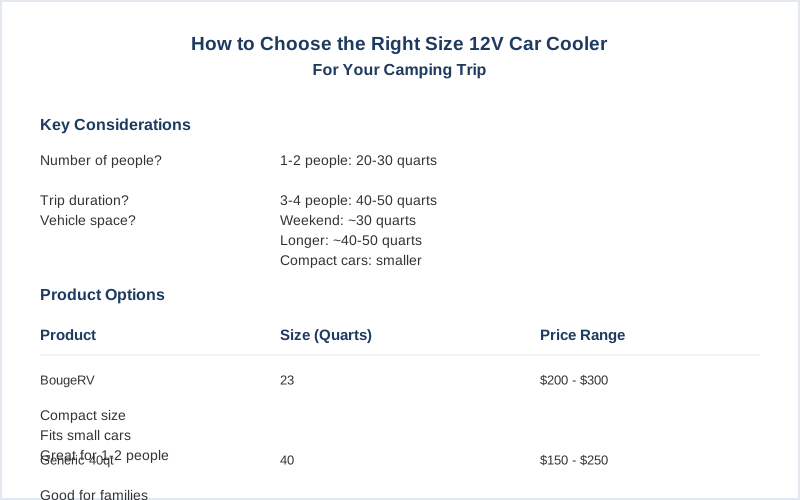
How to Choose the Right Size 12V Car Cooler for Your Camping Trip — Key Specifications Compared
Key specifications for How to Choose the Right Size 12V Car Cooler for Your Camping Trip

The Core Answer

The biggest rookie mistake when buying a 12V cooler is thinking bigger is always better. On my first few trips, I grabbed what looked like a decent size, maybe 40 quarts, thinking I'd pack for every possible scenario. Turns out, a 40-quart cooler in a Honda Civic hatchback takes up half your trunk space and makes you play Tetris every time you pack. Car Talk mentions size and durability as key, and they aren't wrong. For one or two people on a weekend trip, a 20-quart to 30-quart cooler is usually the sweet spot. I use a 23-quart BougeRV now, and it fits nicely behind the passenger seat in my Civic. That gives me room for groceries and my camping gear. Car and Driver even highlighted the BougeRV's compact size for smaller cars. If you're rolling with a family of three or four, or going for longer than a weekend, then you might need to step up to a 40-quart or even 50-quart. But be honest with yourself: how much food do you actually *need* to keep cold? Most of my early camping meals were things that didn't require refrigeration anyway, like pasta and canned chili. Camping World points out that how long you camp and how many people are going are big factors. Think about your vehicle. A massive 75-quart cooler might be awesome for a massive SUV or truck bed, but trying to shove it into a compact sedan is just asking for trouble. You'll be sacrificing all your legroom or cargo space. The honest version: measure your available space before you even look at cooler dimensions. Bouge RV talks about fitting coolers in trucks, which is a similar problem to fitting them in smaller cars. Don't get caught up in the fancy features unless you really need them. Most basic 12V coolers will keep things cold down to 0 degrees F. My first one, a $200 Alpicool C20, kept everything frozen solid, which was overkill for just keeping drinks cold. It cost about $85 and had a 20-liter capacity. Kermode Overland has a good breakdown of different sizes and prices, and you can find similar options all over the place. Ultimately, the real move is to buy the smallest cooler you can realistically fit your food in for the duration of your trip. It's better to have a slightly smaller cooler you can actually use than a giant one that takes up your whole car. The $50 version is usually a 20-quart model that's perfect for solo trips or couples.
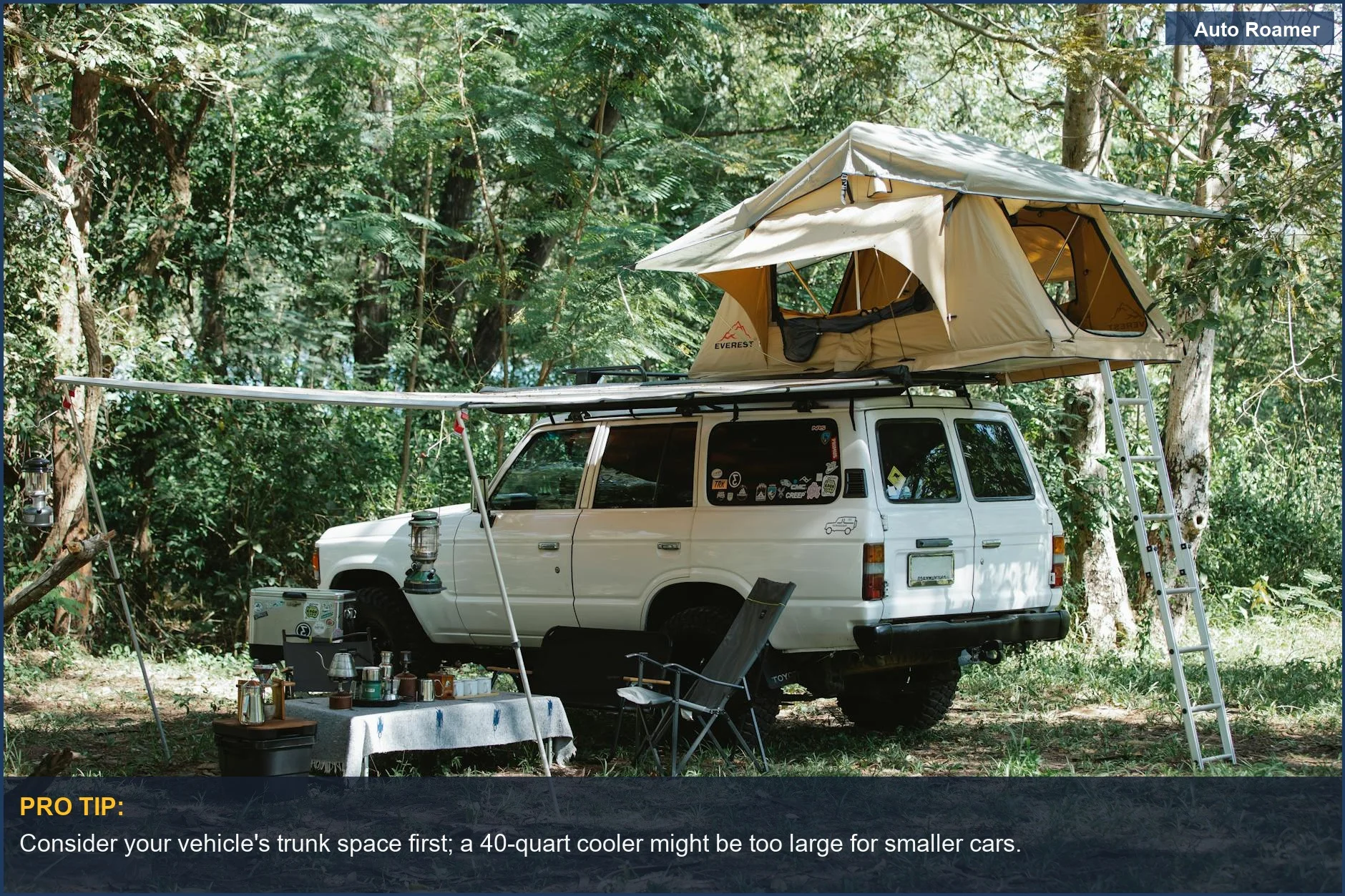
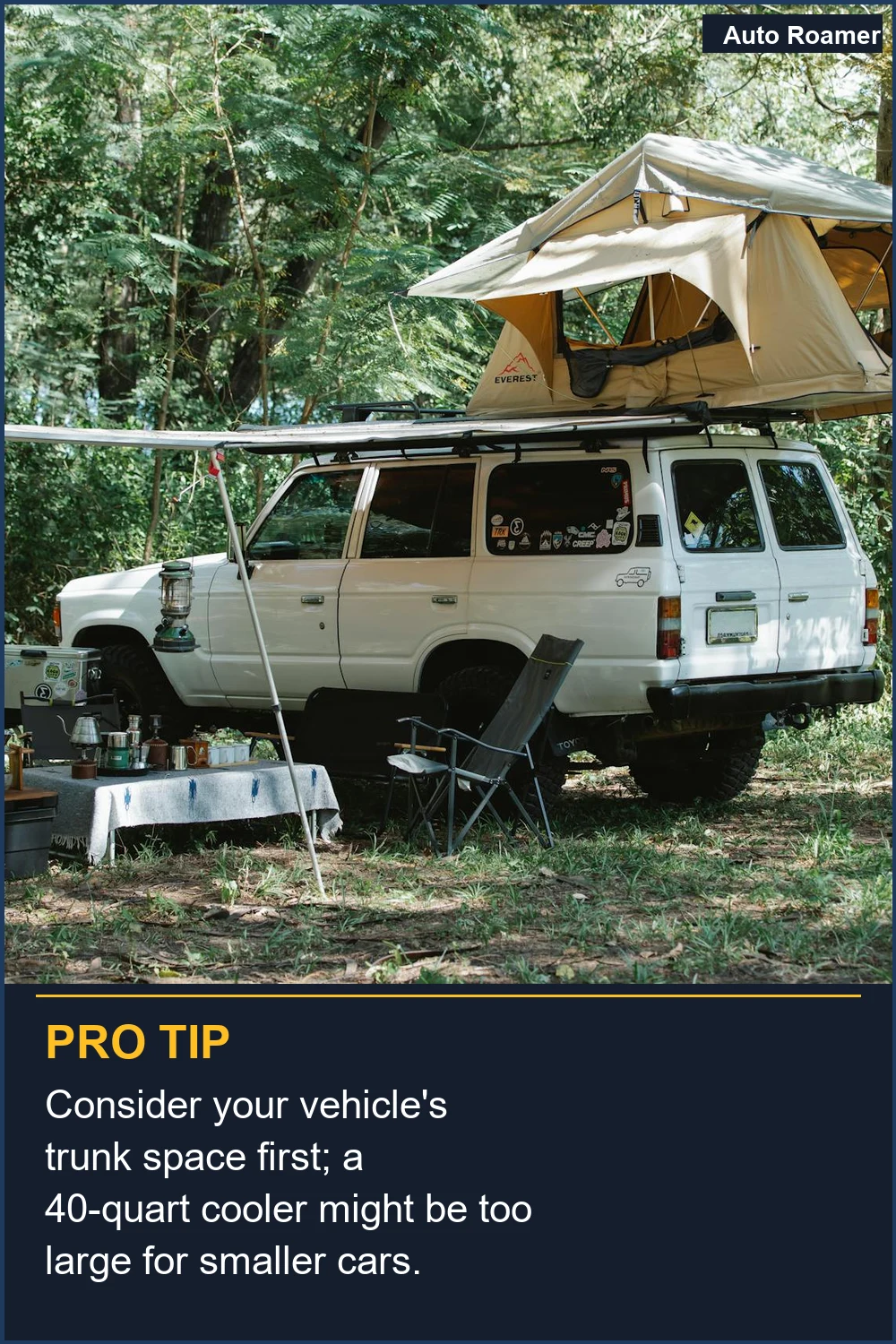
To ensure you get the best fit for your needs, consider these tips in our article on choosing electric cooler size.
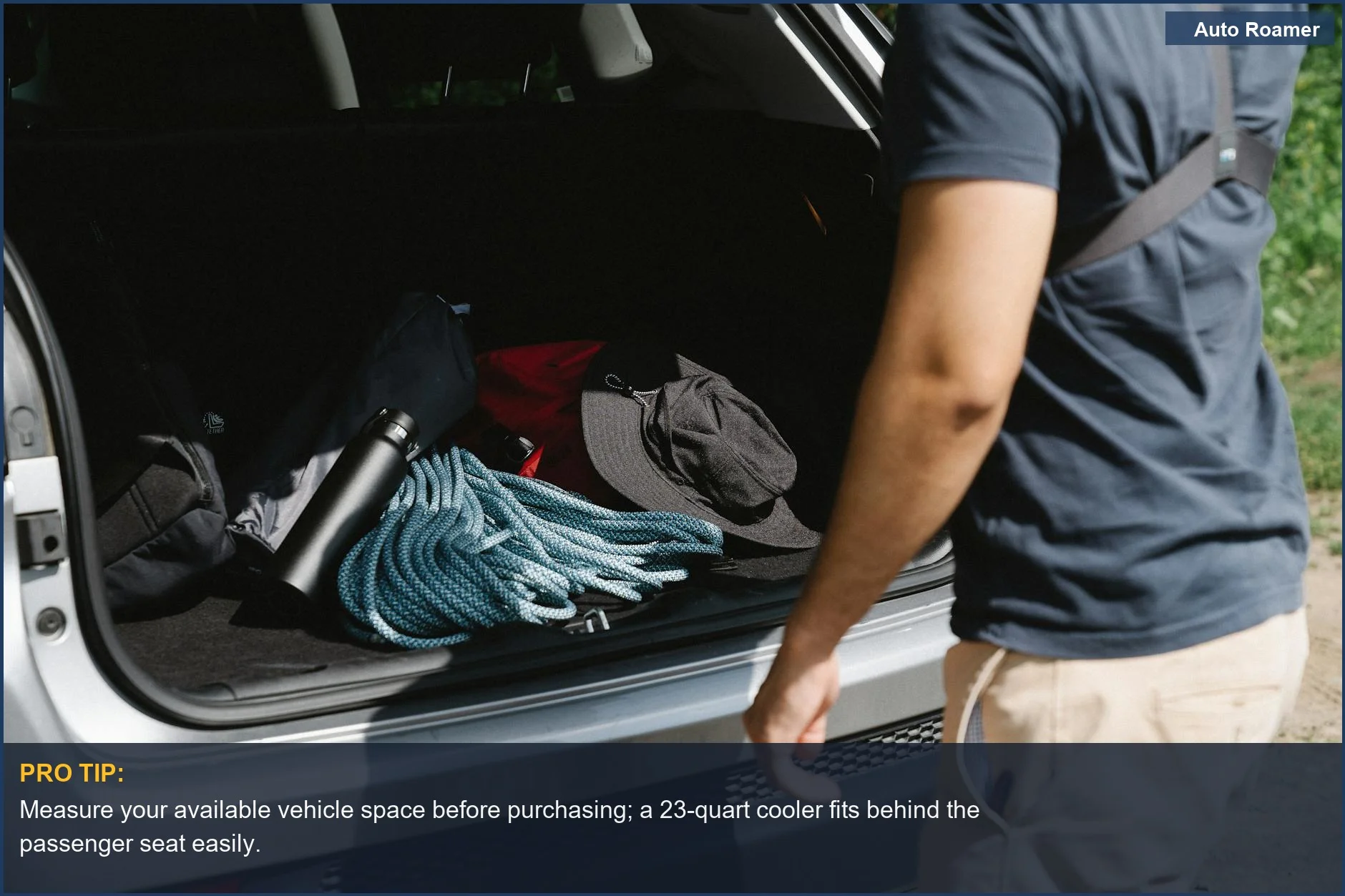
Consider your vehicle's trunk space first; a 40-quart cooler might be too large for smaller cars.
Don't fall into the trap of buying the largest 12v car cooler size thinking it's always best. This setup shows how much space a larger cooler can consume. | Photo by Uriel Mont

Why This Matters for Your Setup

  • Vehicle Space: I learned this the hard way at Ohiopyle State Park. My first cooler was so big I couldn't even open my trunk all the way. It was a $300 mistake. Now, my 23-quart cooler fits perfectly behind the passenger seat, leaving my trunk free for camping gear. It's about fitting the cooler to your car, not the other way around.
  • Facebook groups often have people asking about fitting these in specific cars.
  • Power Consumption: These coolers draw power from your car's 12V outlet. A huge cooler running on high will drain your car battery faster than you can say "dead battery." Most modern coolers have battery protection, but a smaller unit running at a moderate temperature uses less juice. My current cooler has an eco mode that's a lifesaver on longer drives.
  • Car Talk mentions the automatic shutoff features.
  • Trip Duration: For a single overnight trip, you might get away with a smaller cooler and a modest amount of ice packs. But if you're going for three days or more, especially in warmer weather, a powered cooler is a game-changer. It's the difference between eating lukewarm sandwiches and enjoying cold cuts on day three. Camping World stresses this point.
  • Food Needs: Be realistic about what you're packing.
  • If your camping menu consists of instant noodles and jerky, you don't need a chest freezer. If you're planning on bringing cheese, yogurt, and fresh veggies, then a 12V cooler that can maintain a consistent temperature is essential. My buddy tried to keep cheese from melting in a regular cooler on a 90-degree day in the Poconos; it was a sad, greasy mess.
    Understanding your cooler's size is also crucial for road trip needs to ensure a smooth journey.
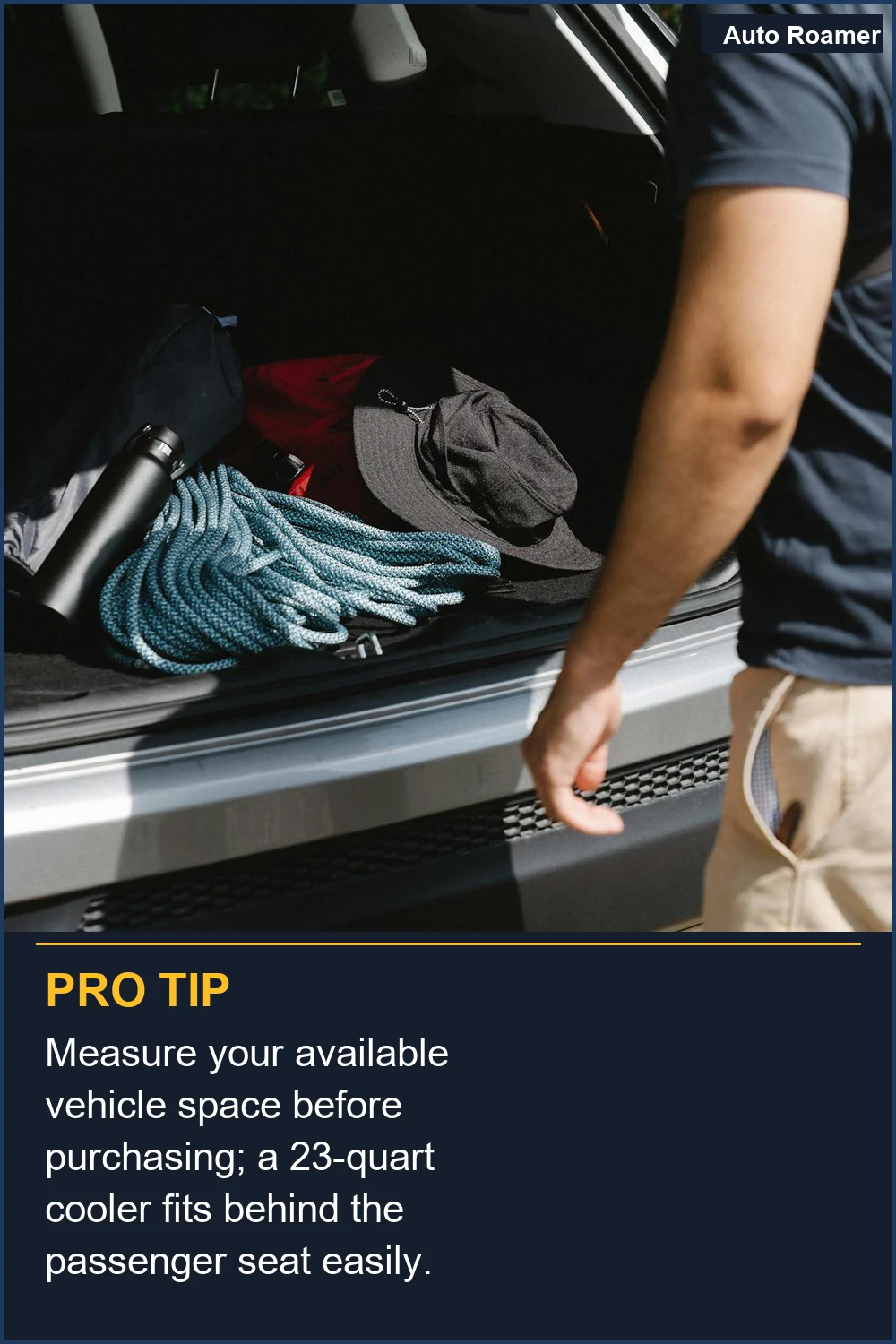
    Measure your available vehicle space before purchasing; a 23-quart cooler fits behind the passenger seat easily.
    Efficiently organize your camping gear and ensure your 12v car cooler fits perfectly. This image highlights smart packing for road trips. | Photo by Katya Wolf

    Making the Right Choice

  • Start Small: For your first 12V cooler, aim for the 20-30 quart range. It's the $50 version that works for most weekend warriors. You can always upgrade later if you find you need more space. Car and Driver has options for smaller vehicles.
  • Know Your Car: Measure your available space before you buy. Seriously. Don't be like me and show up with a cooler that won't fit.
  • It's the difference between a fun trip and a frustrating one. Bouge RV discusses fitting coolers in trucks, a similar challenge.
  • Consider Power: Make sure your car can handle the draw, especially if you plan to run the cooler while the engine is off for extended periods. Look for models with battery protection features. Reddit users often discuss power management.
  • Read Reviews: Don't just buy the cheapest one.
  • See what other people are saying about reliability and actual cooling performance. A few bad reviews can save you a lot of headaches down the road. Kermode Overland offers a good starting point for research.
    To ensure your cooler meets all your travel needs, consider how to choose the right size for your road trip by reading this helpful guide.
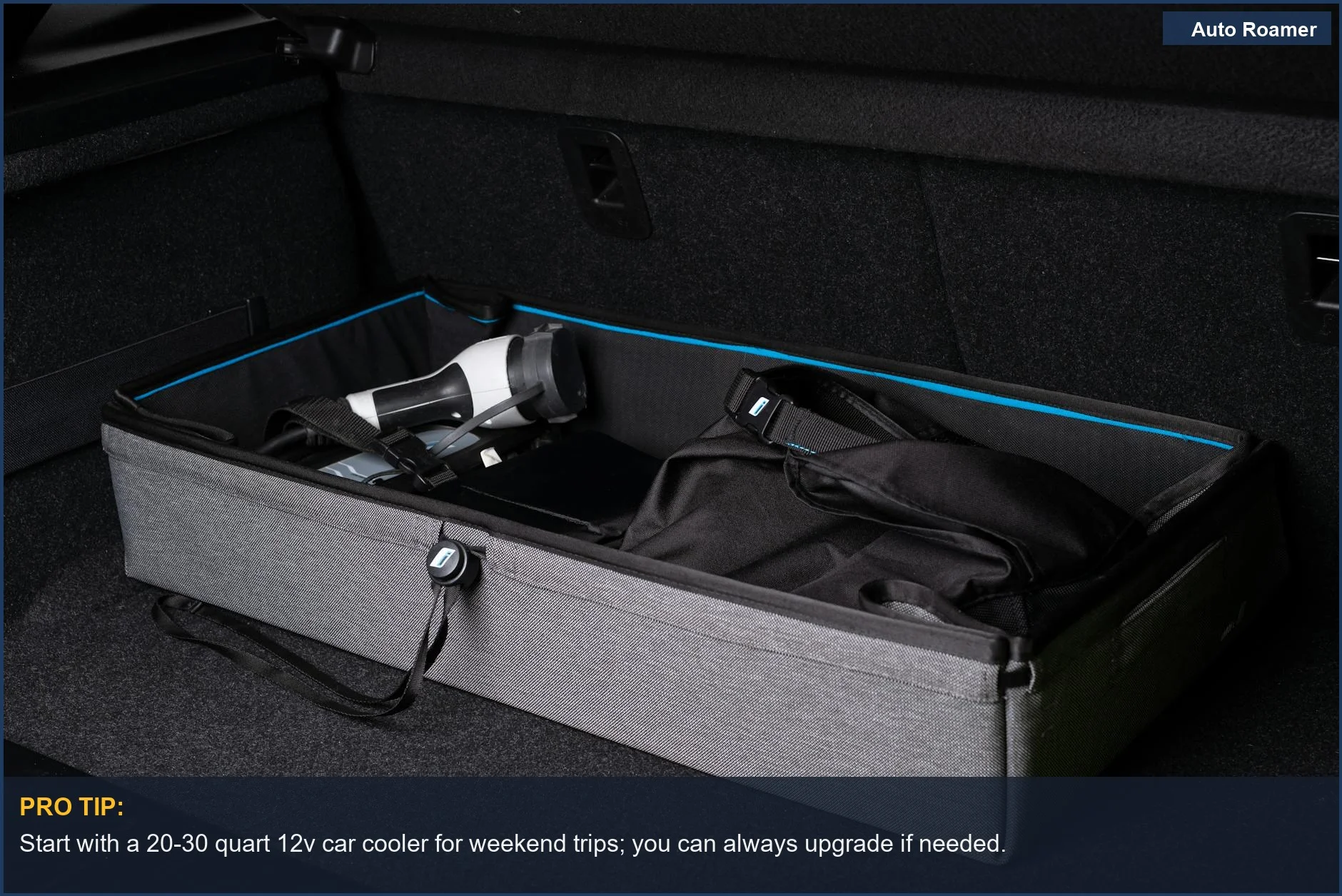
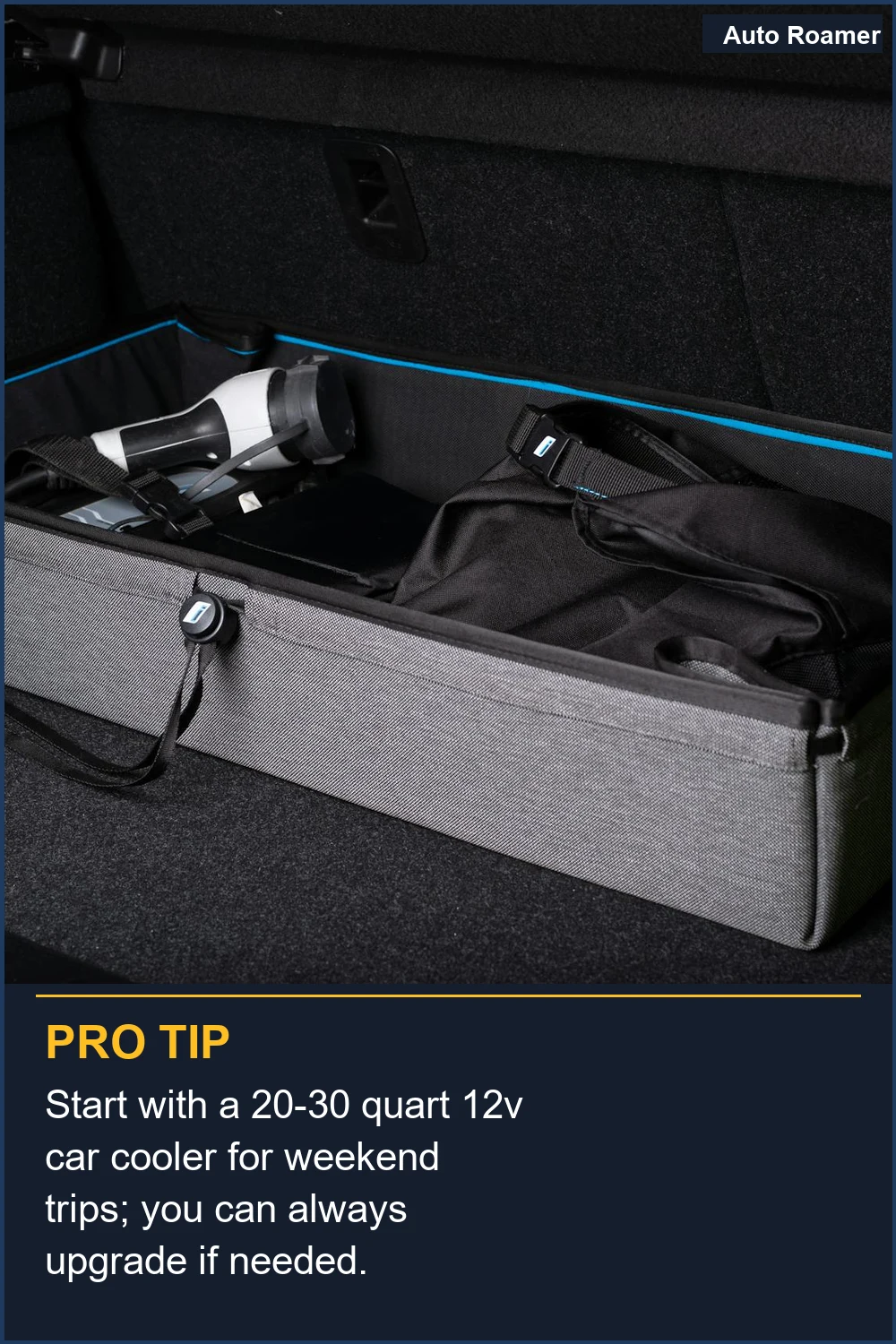
    Start with a 20-30 quart 12v car cooler for weekend trips; you can always upgrade if needed.
    For many weekend warriors, a 20-30 quart camping cooler capacity is ideal. This organized trunk shows how to maximize space. | Photo by Vitali Adutskevich

    Frequently Asked Questions

    If a basic 12V cooler is around $200, could I just buy a bunch of ice packs and a really good insulated cooler for less and get the same result?
    You absolutely could. A high-end insulated cooler like an RTIC or Yeti might set you back $300-400, plus another $50 for a good set of ice packs. So, yeah, it's more upfront cost than a 20-quart 12V cooler. But the real move is that the 12V cooler keeps things consistently cold without you having to constantly monitor ice levels. You're paying for convenience, not just insulation.
    Do I really need a special 12V adapter or can I just plug it into any old cigarette lighter port?
    Most 12V coolers come with a standard cigarette lighter plug. The key is making sure that port in your car actually provides 12V power and can handle the amperage draw. Your car manual should tell you, but generally, any port meant for charging devices will work fine. I've never needed a special adapter; my $200 BougeRV just plugged right in.
    What if my 12V cooler stops cooling mid-trip? Is there anything I can do besides eating warm sandwiches?
    If your cooler stops cooling, first check the power connection and make sure it’s securely plugged in. Then, check your car’s fuse box for a blown fuse related to the accessory outlet. If it's still not working, you might be looking at an internal fault. At that point, you're probably stuck with the sandwiches unless you have a backup plan or can troubleshoot the specific model with the manufacturer.
    Can running a 12V cooler too much permanently damage my car's battery?
    Yes, absolutely. If you run a 12V cooler with the engine off for too long, you can completely drain your car's battery, leaving you stranded. This is why most coolers have a low-voltage cutoff feature, which is supposed to prevent this. But don't rely on it entirely; it's best practice to only run it while the engine is on or for short periods when it's off.
    I heard that 12V coolers are actually just fancy thermoelectric coolers that don't get very cold. Is that true?
    That's a common misconception, and it's usually referring to the cheap, plug-in thermoelectric coolers that are more like glorified lunchboxes. True 12V *refrigerator* coolers (often called chest coolers or portable fridges) use a compressor, just like your home fridge. They can actually freeze things, not just cool them down a few degrees. The ones I'm talking about, like my BougeRV, are compressor-based and get seriously cold.

    🏅 Looking for Gear Recommendations?

    Check out our tested gear guides for products that work with this setup:

    C

    Casey - The Weekend Warrior

    Weekend car camper and road trip enthusiast. Focuses on practical, budget-friendly solutions for families and first-time campers.

    Sources

    Related Articles