
Water Pressure and Flow Rate: What to Expect from a 12V Portable Shower
The force that pushes water through a hose is what we call water pressure, and for a portable 12V shower, it's the difference between a refreshing rinse and a sad dribble. Think of it like trying to wash mud off your hiking boots with a leaky garden hose versus a pressure washer.
The force that pushes water through a hose is what we call water pressure, and for a portable 12V shower, it's the difference between a refreshing rinse and a sad dribble. Think of it like trying to wash mud off your hiking boots with a leaky garden hose versus a pressure washer. Portable shower performance, especially for car camping, is directly tied to how many pounds per square inch (PSI) that little pump can push out this site explains.
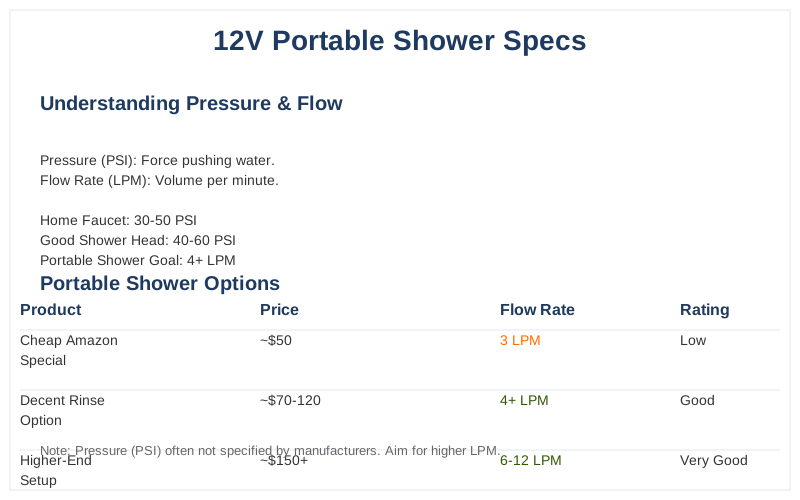
Most home faucets need between 30-50 PSI, and a good shower head is usually in the 40-60 PSI range according to plumbing standards. Anything less and you're essentially just misting yourself, which isn't going to cut it after a dusty trail day.
The Core Answer
The honest version is that most 12V portable showers don't deliver the kind of pressure you get from your house. My first one, a cheap $50 Amazon special, had a flow rate that felt like a dying houseplant seriously, save your money and embrace the dirt. It was rated at 3 liters per minute (LPM), which sounds okay on paper, but in practice, it was barely enough to wet my hair. You really want to aim for at least 4 LPM for a decent shower experience that's the minimum for a decent rinse. Some of the higher-end, or DIY setups, can hit 6 or even 12 LPM this YouTube video shows some beefier pumps. That 12 LPM pump, for example, is probably closer to what you'd find in an RV, pushing around 40 PSI when it's running RV showers can get surprisingly good pressure. The trick is that most of these 12V pumps are not designed to maintain consistent high pressure like your home's municipal water supply. They often have pressure switches that shut them off when they reach a certain PSI, and then turn back on when that pressure drops this forum post explains how those switches work. It's a rookie mistake to expect a spa-like experience straight out of the box with the cheapest option. When I finally upgraded to a unit that claimed 6 LPM, it was a game-changer. Instead of just getting a light mist, I could actually feel the water hitting my skin and rinsing off soap. It wasn't residential quality, not by a long shot, but it was functional. The key is understanding that the pump, the water source (bucket, tank, etc.), and the showerhead all play a role. A powerful pump with a restrictive showerhead will still feel weak. Conversely, a great showerhead with a weak pump is just sad. It's also worth noting that some systems use a pressurized tank, like a RinseKit, instead of a pump. These can offer consistent pressure until the tank is depleted, but you have to manually pressurize them first, either with a hand pump or a 12V compressor. That manual pressurization step can add a bit of extra effort before your shower they have different ways of pressurizing. The real move for a good car camping shower is finding that sweet spot between flow rate and ease of use, and usually, that means spending a little more than the $50 version.
The Bottom Line
The bottom line is that most 12V portable showers are not going to give you a residential-quality shower. My first attempt at a car camping shower involved a pump that sounded like it was choking on dirt, delivering maybe 2 LPM. That's not enough to wash off anything more than a light dusting of pollen seriously, some are that bad. You're looking for a flow rate of at least 4 liters per minute to feel like you're actually showering that's the bare minimum. Anything above 6 LPM will feel significantly better and more effective for rinsing off soap and grime. Don't expect miracles from the cheapest options; they're usually designed for rinsing dishes, not washing off a week of trail sweat. Invest a bit more, or consider a DIY setup if you're handy, for a truly enjoyable car camping clean-up.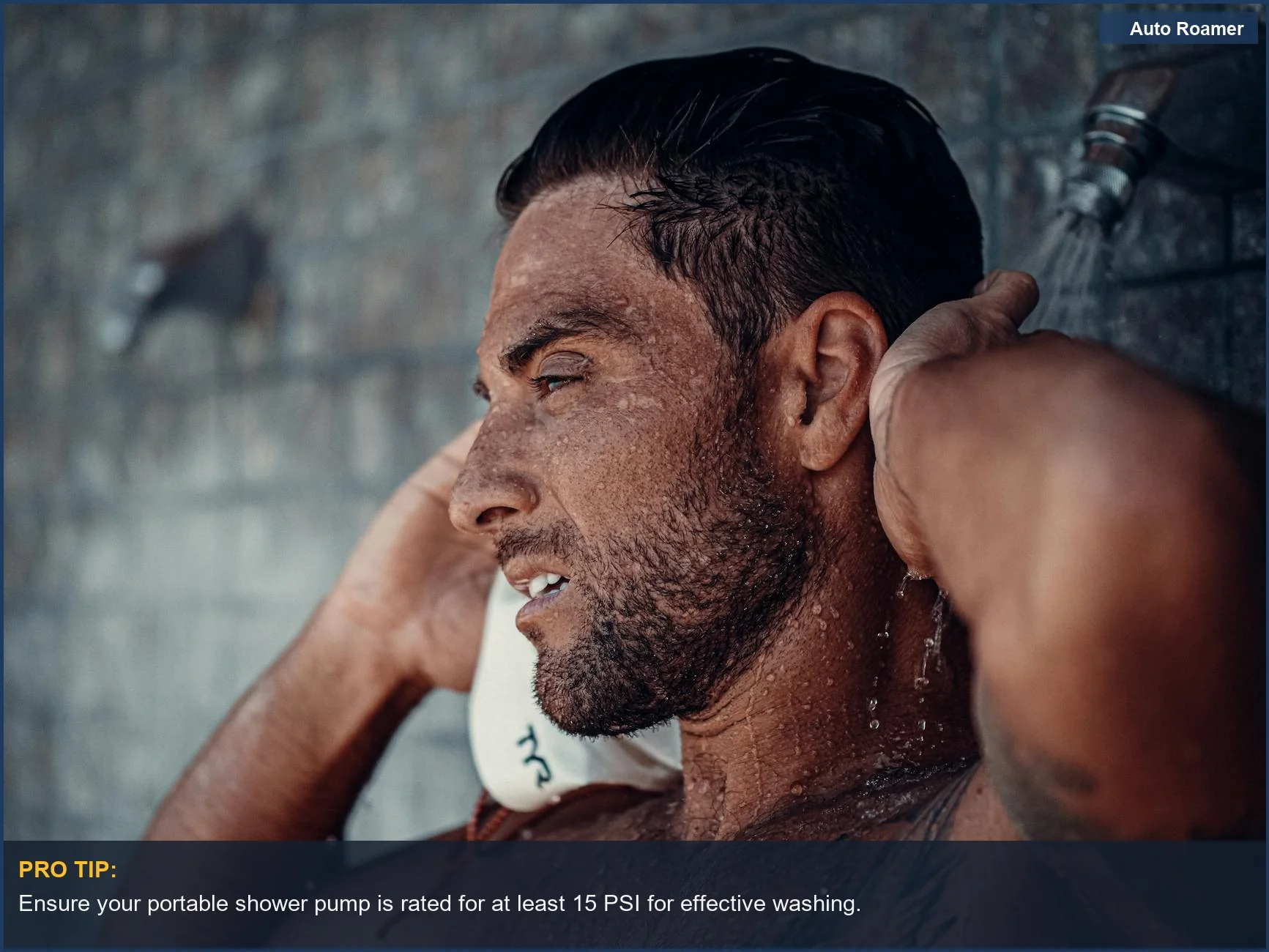
Frequently Asked Questions
Okay, so if I want better pressure, should I just build my own with a beefier pump? How much would that cost compared to buying one?
Do I really need a special gauge to measure the PSI of my shower pump, or can I just feel it?
What if I get a 12V shower and the pressure is still weak? Can I somehow boost it?
Could running a weak 12V shower pump for a long time, like 20 minutes, damage my car battery?
I heard you can just use a bucket and squeeze it to get water pressure. Is that true?
🏅 Looking for Gear Recommendations?
Check out our tested gear guides for products that work with this setup:
Sources
- What is normal water flow with 12v pump?
- Does your shower flow/pressure give you a "residential ...
- Shower water pump specs?
- Why Water Pressure Matters When It Comes to Portable ...
- Portable Camping Showers: The Ultimate Water Pressure ...
- KickAss 12 volt water pressure pumps. 6 and 12 Litres per ...