
What to Consider When Choosing a 12V Portable Shower for Car Camping
A 12-volt portable shower can turn a dusty car camping trip into something actually comfortable, especially after a long day of hiking or just existing outside. These gizmos pull water from a bucket or a tank and spray it out, usually powered by your vehicle's cigarette lighter or a battery pack.
A 12-volt portable shower can turn a dusty car camping trip into something actually comfortable, especially after a long day of hiking or just existing outside. These gizmos pull water from a bucket or a tank and spray it out, usually powered by your vehicle's cigarette lighter or a battery pack. The real move is understanding what makes one worth your cash versus just a glorified garden hose attachment.
It's not just about the spray; it's about how much water it can move, how long it can run, and if you'll end up with lukewarm dribbles or a decent rinse. Choosing the right one means looking past the fancy packaging and focusing on what actually gets you clean. Field Mag put it best: some come pretty close to a home shower, and that's the goal.
The Core Answer
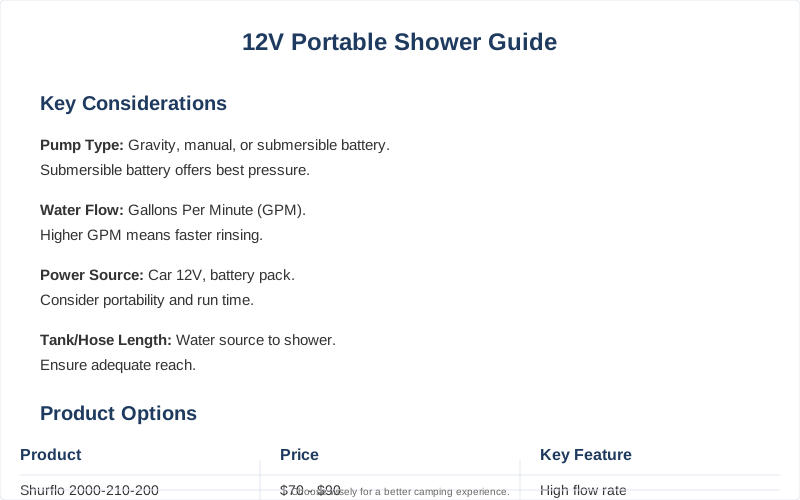
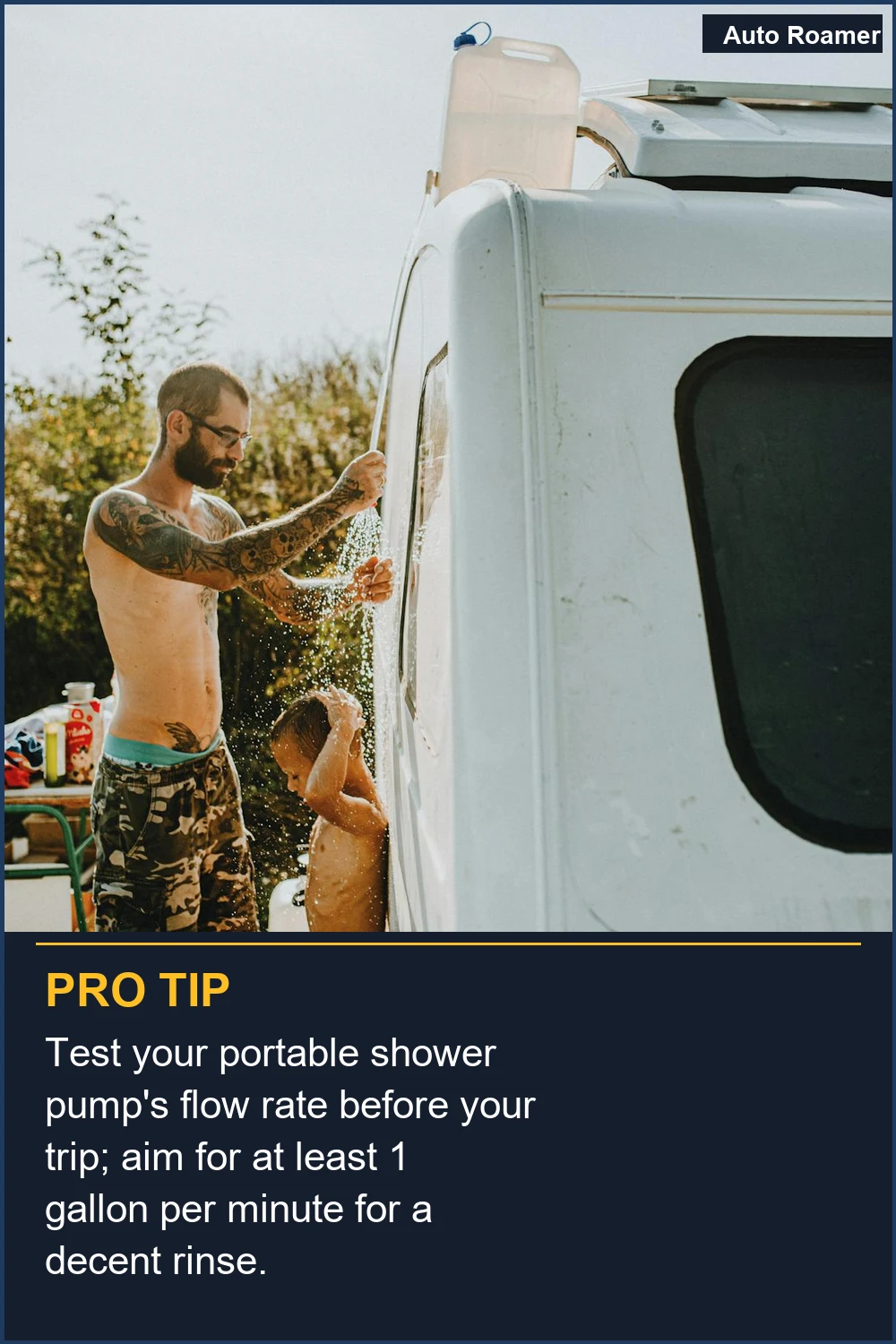
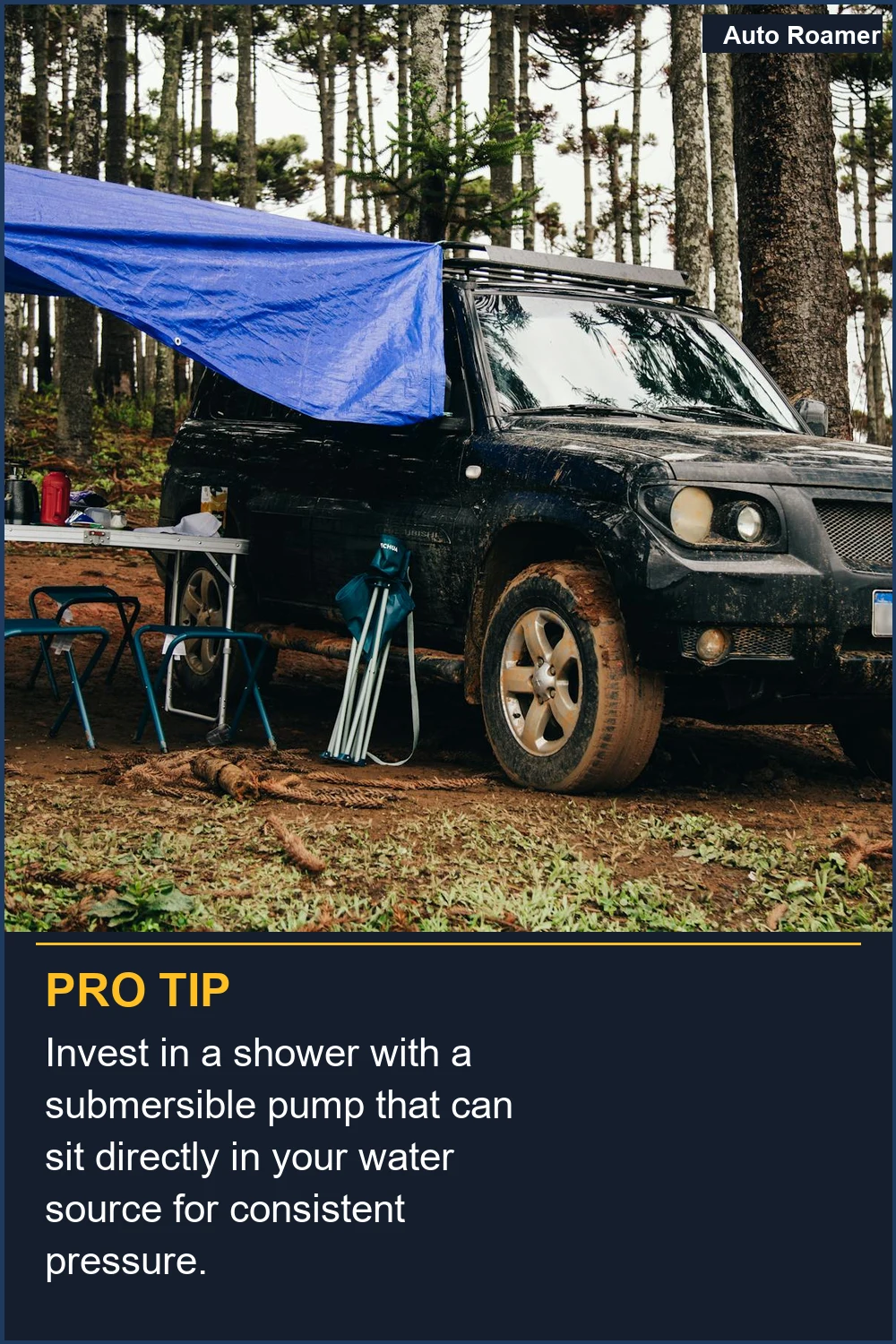
When you're looking at a 12-volt portable shower, the first thing you'll notice is the pump type. You've got your gravity-fed ones, which are basically just a bag you hang up. They're simple, sure, but the water pressure is usually about as exciting as watching paint dry. These are the simplest option. My first trip with one of those felt like I was trying to wash off mud with a leaky water balloon. Not ideal. Then there are the manual pump showers. These have a container and you pump it yourself. It's better than gravity, but you're basically doing a workout just to rinse your feet. These eliminate the need for electricity. I tried one of these in Yosemite, and after 10 minutes of pumping, I was more tired than when I started my hike. The game-changer is the battery-operated submersible pump. These sit in your water source and run off a battery, or often directly from your car's 12V outlet. This is where you get actual water pressure. My $60 version from Amazon, which I bought after the manual pump incident, felt like a luxury. It pulled water from a five-gallon bucket and gave me a decent spray for about 8 minutes straight. People online swear by these, often rigging them up with car wash pumps. Think about your water source too. Some showers come with their own tank, which is convenient but bulky. Others just have a hose you stick in a bucket or a natural water source. For car camping, a five-gallon bucket is usually the sweet spot - enough water for a quick rinse without taking up half your trunk. A jug to heat water and a bucket works. I learned this the hard way when I tried to use a tiny soda bottle at a campsite in Colorado. Rookie mistake. Also, consider the showerhead itself. Does it have multiple spray patterns? Can you turn it off at the head without fumbling with the pump? These little things matter when you're trying to conserve water and not spray yourself in the eye. A good showerhead means you're not just getting wet, you're getting *clean*. They test spray coverage for a reason, and it's not for bragging rights. Finally, how much water can it pump per minute? This is often listed as flow rate. For a decent shower, you want at least 1.5 gallons per minute. Anything less, and you're going to feel like you're being spit on. My current setup, which cost me about $75 total for the pump and a decent hose, gives me a solid 2 gallons per minute. They compare low-cost generic models, and that's often where the sweet spot is for beginners.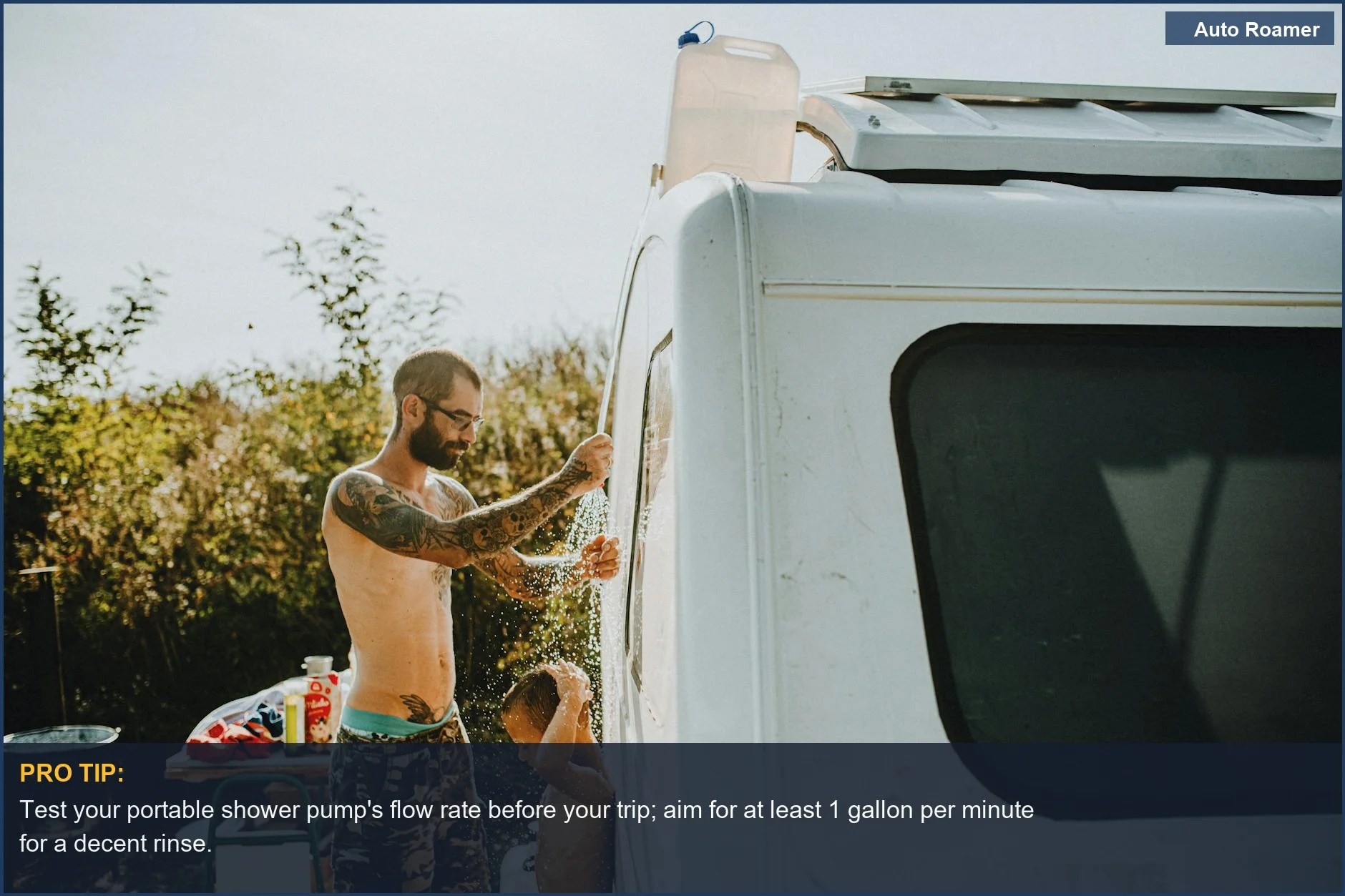
The Bottom Line
Look, nobody needs to spend $300 on a fancy camping shower unless they're living out of a custom overland rig. The real move for most car campers is a $50 to $80 setup that includes a 12-volt pump and a decent hose. I've seen people spend way more and get less. They tested units from $50 to $200, proving you don't need to break the bank. What nobody tells beginners is that a simple five-gallon bucket as your water source is usually plenty for a weekend trip. You fill it up, stick the pump in, and you're good to go for a couple of decent rinses. It's way more practical than hauling a giant tank. Design and construction matter for the best possible experience, so don't skimp on the pump itself. If you're just starting out, aim for something that's easy to set up and doesn't require a degree in engineering. A good submersible pump that runs off your car's 12V outlet is your best bet. You'll get enough pressure to actually feel clean, and it won't cost you a fortune. Trust me, after shivering through a few trips with a pathetic drizzle, a good shower feels like pure gold.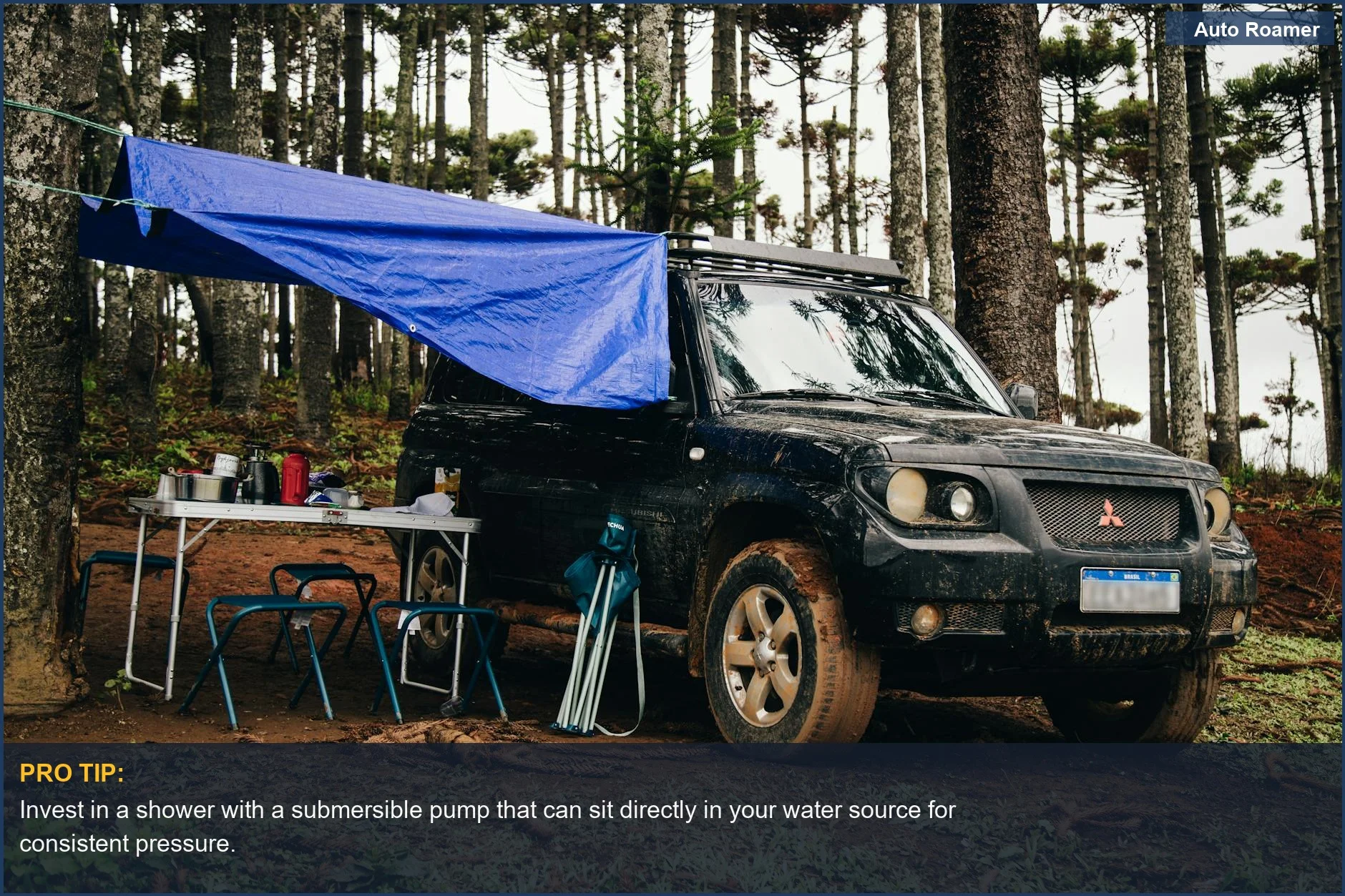
Frequently Asked Questions
Is it cheaper to buy a 12V pump and hose separately or get a pre-made kit?
Do I need a special adapter to plug these into my car's 12V outlet?
What if I run out of battery power halfway through my shower?
Can using a 12V shower damage my car's electrical system?
I heard you can just use a regular garden hose with a special adapter. Is that true?
🏅 Looking for Gear Recommendations?
Check out our tested gear guides for products that work with this setup:
Sources
- What is the Best Portable Camping Shower? Comparing ...
- Any recommendation for portable shower? : r/camping
- 11 Best Camp Showers of 2026, Tested
- 12 Volt Camping Shower Comparison
- An Essential Buyer's Guide for Portable Showers
- The Best Camping Shower of 2026 | Tested & Ranked
- What is the best camping shower?
- Your Guide to Portable Camping Showers