The Short Version
The moment you realize your "refreshing dip" in a questionable lake has left you smelling like a swamp monster, that's when the portable car camping shower stops being a luxury and starts being a hazmat necessity. I learned this the hard way on a 3-day desert expedition when my entire crew started smelling like a lost sock collection. Your tactical advantage here is a proper shower pump, not just a bucket.
Field Mag notes that these systems have evolved far beyond basic gravity bags, and they're right.
Key Features to Consider
| Feature | Chaos Aunt's Mandate | Why It Matters (Extraction Protocol) |
|---|---|---|
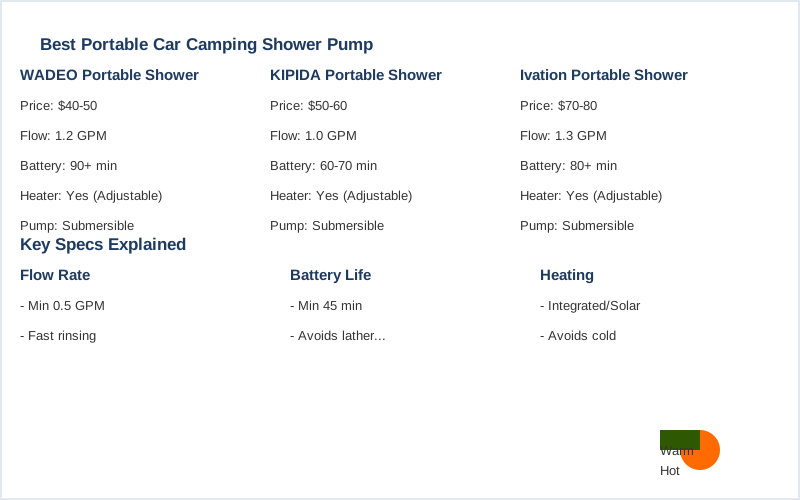
| Water Flow Rate | Minimum 0.5 GPM (gallons per minute). | Anything less feels like a leaky faucet. You need to rinse off a full layer of trail grit in under 2 minutes, not stand there for 5 minutes trying to get a shampoo bubble to pop.
Your water supply has a half-life. |
| Battery Life | At least 45 minutes on high. | A dead battery mid-lather is a Code Red. You have 3 minutes before soap starts turning into a sticky residue on your skin. An 8000mAh battery can give you up to 180 minutes, as seen with some models, which is pure gold. Source. |
| Heating Capability | Integrated electric heater or solar bag compatibility. | Cold showers are for polar bears and emergencies.
A dedicated heater or a solar bag means you're not relying on ambient temperatures. Otherwise, you're pouring boiling water from a kettle into a plastic bag, which is a burn hazard waiting to happen. |
| Pump Type | Submersible electric pump. | Foot pumps are fine for a leisurely day. When you're dealing with a muddy dog or a kid covered in s'mores, you need consistent, hands-free pressure.
OutdoorGearLab emphasizes strong water pressure for washing away grime. |
| Water Capacity | Minimum 2.5 gallons. | This is enough for a quick, tactical rinse for one person. Any less, and you're just getting wet, not clean.
For a full family or a truly filthy situation, you'll want something closer to 5 gallons, or a refill plan. |
| Hose Length | At least 7 feet (84 inches). | You need to reach from the water source to your head without contorting yourself into a pretzel. A short hose means you're either standing in a puddle or trying to balance the water container on a precarious rock. Some hoses reach 86.6 inches, which is ideal. |
Our Top Picks
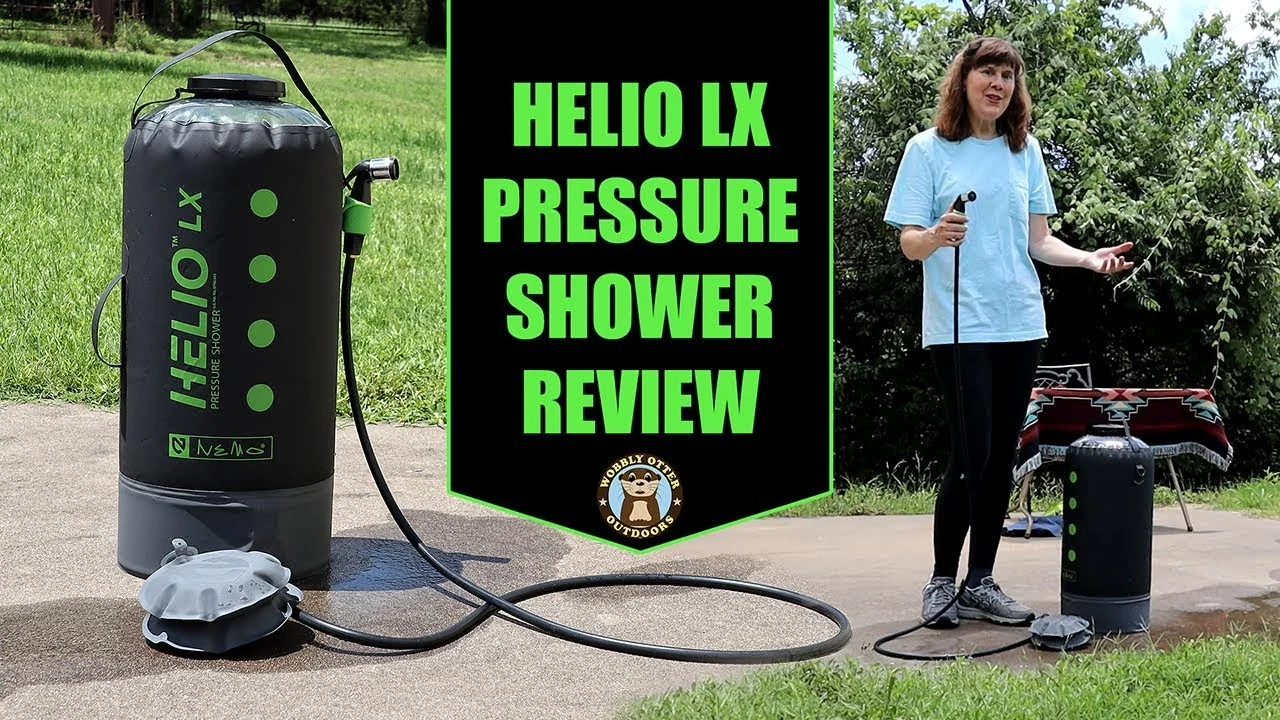
3 gallons capacity, foot-pump pressurized. Pros: Great pressure for a foot pump, durable, quick to heat in the sun. Cons: No integrated heater, manual pumping required. Best for: Car campers who prioritize pressure over an electric pump and can pre-heat water. Field Mag calls this the best overall.
Ivation Portable Outdoor Battery Shower (~$40)
Submersible pump, 45-minute battery. Pros: Rechargeable, easy to use, decent flow. Cons: No heating element, lower pressure than dedicated pressure systems. Best for: Budget-conscious campers needing a simple, electric rinse for dishes or a quick body wash. Wilderness Times lists this as a top battery-powered option.
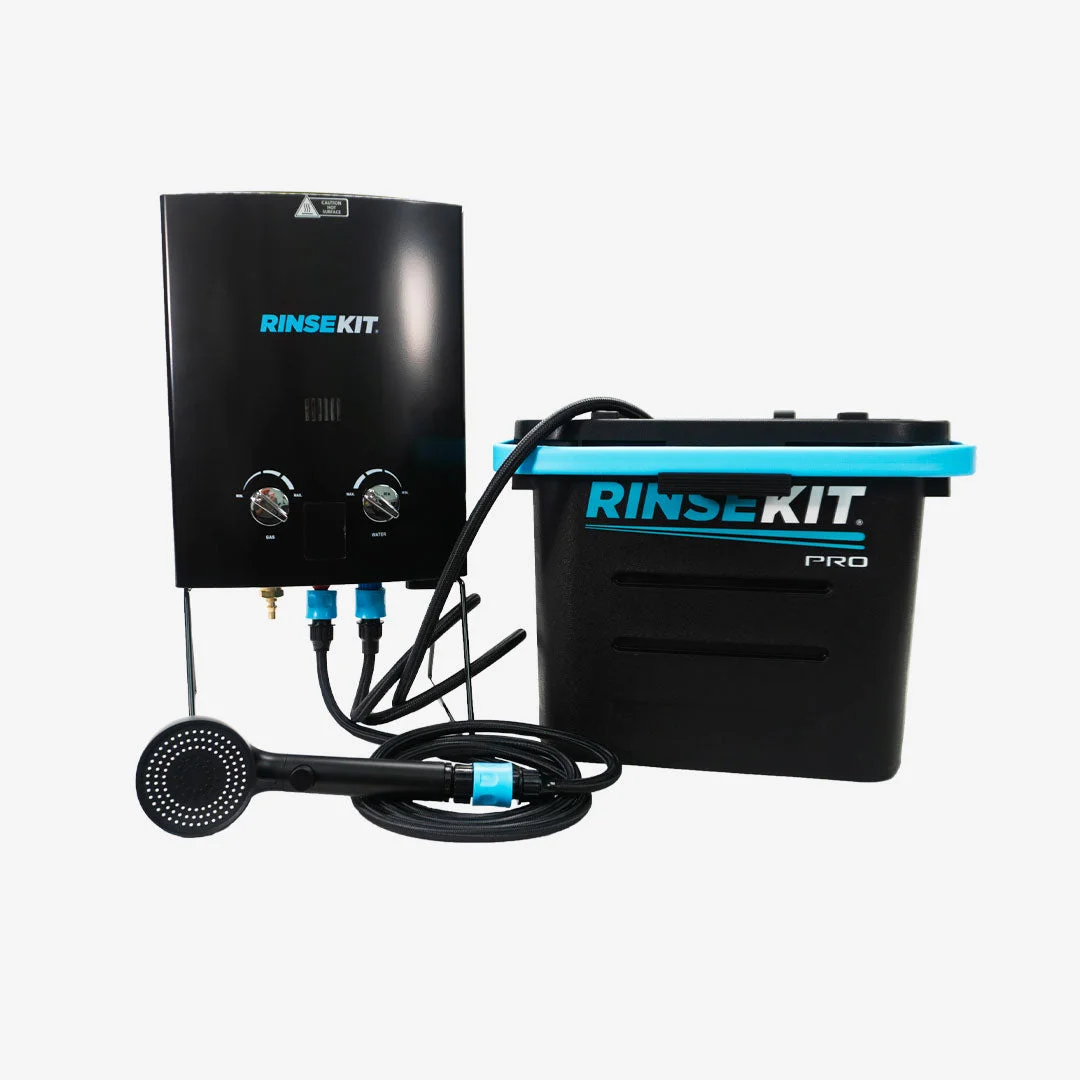
RinseKit PRO + HyperHeater 2.0 (~$400)
2-gallon capacity, pressurized, electric heater. Pros: Self-contained, excellent pressure, instant hot water. Cons: Expensive, heavier, requires 12V power for heating. Best for: Overlanders or van-lifers who demand home-shower level comfort and have a vehicle power source. RinseKit highlights this system for its power and portability.
Decathlon Quechua Solar Pressure Shower 500 (~$50)
2.6 gallons capacity, solar heating, foot pump. Pros: Affordable, heats water passively, good pressure for a solar option. Cons: Solar heating is weather-dependent, manual pump. Best for: Campers who want a balance of budget, solar heat, and decent pressure without needing electricity. Outdoor Life names this their best overall.
FLEXTAILGEAR MAX Shower (~$50)
Submersible pump, 0.79 GPM max flow, 86.6-inch hose. Pros: Compact, powerful for its size, long hose. Cons: No integrated heating, battery life can vary. Best for: Backpackers or minimalist car campers needing a small, strong electric pump for quick rinses. Amazon reviews confirm its impressive flow.
WADEO Portable Shower Pump (~$45)
8000mAh battery, 180 minutes run time. Pros: Exceptionally long battery life, good pressure, affordable. Cons: No heater, requires external water source. Best for: Extended trips where charging isn't frequent, or for multiple short showers over several days. This upgraded model offers serious endurance.
Budget vs Premium Options
| Category | Budget Options (~$25 - $75) | Premium Options (~$150 - $450+) |
|---|---|---|
| Heating | Solar bags, or manual pouring of pre-heated water. | Integrated electric heaters, propane on-demand heating. The RinseKit PRO + HyperHeater 2.0 is a prime example. |
| Pressure | Gravity-fed or basic foot/hand pumps. Variable flow. | Electric submersible pumps, dedicated pressure tanks, consistent high flow. |
| Portability | Lightweight, compact, often collapsible bags. | Larger, often rigid units with integrated tanks.
More robust, but take up more cargo space. |
| Durability | Basic plastics, susceptible to punctures or extreme temps. | Heavy-duty plastics, reinforced hoses, impact-resistant designs. Built for sustained field abuse. |
| Battery Life | Usually shorter, 30-60 minutes on basic models. | Extended life, often 90+ minutes, or continuous power from a vehicle.
The WADEO offers 180 minutes. |
| Extra Features | Basic on/off nozzle, simple hanging straps. | Multiple spray patterns, LED lights, digital temperature displays, quick-connect fittings. |
| Cost vs. Consequence | A $30 solar bag might save you $200 in laundromat fees, but a cold shower on day 3 can break morale. | A $300 heated system prevents a spouse-induced mutiny when they realize "roughing it" means no hot water for 5 days.
That's a sanity-saver. |
Reddit users often debate if a Milwaukee M18 transfer pump, a premium option for some, is worth the investment for its multi-use capability.
Setup and Installation Tips
- Scout Your Water Source (2 minutes): Locate a clean, accessible water source. This isn't just about filling the bucket; it's about not introducing sediment into your pump. A clear stream or a large water jug works. Avoid stagnant puddles unless you enjoy showering with algae. Reddit discussions often point to simple solar bags as a quick solution here.
- Pre-Heat (If Applicable, 30-90 minutes): If using a solar bag, fill it and lay it flat in direct sunlight. A black bag can heat 5 gallons of water to a comfortable temperature in about 60-90 minutes on a sunny 70-degree F day. For electric heaters, connect to 12V power and monitor the display. Don't eyeball it; you'll either freeze or scald yourself.
- Assemble the Pump System (5 minutes): Connect the hose to the pump, and the showerhead to the other end of the hose. Ensure all connections are tight. A loose connection is a leak, and a leak means wasted water and a soggy campsite. The FLEXTAILGEAR MAX, for example, has an 86.6-inch hose, giving you plenty of reach. This allows flexible positioning.
- Position for Drainage (1 minute): Set up your shower area away from your tent and water sources. Greywater needs to dissipate. You are not creating a swamp. This is biohazard containment. I've seen too many people flood their sleeping area because they didn't think about where the water would go.
- Submerge and Activate (1 minute): Place the pump into your water container. Ensure it's fully submerged to prevent air pockets, which can damage the pump.
Turn it on. Do a quick spray test to check pressure and temperature. Total setup time for a basic electric pump: under 10 minutes. No excuses.
Care and Maintenance Tips
- Drain and Dry Immediately (5 minutes): After every use, drain all remaining water from the pump, hose, and showerhead. Standing water is a breeding ground for mold and mildew, which have a half-life of about 24 hours before they become a permanent biohazard. This also prevents mineral buildup. Outdoor Life stresses proper care for longevity.
- Rinse with Clean Water (2 minutes): If you used lake or river water, run a gallon of clean, potable water through the system. This flushes out any sediment or microscopic organisms. Ignoring this step turns your shower pump into a petri dish on wheels.
- Inspect Hoses and Seals (1 minute): Check for cracks, kinks, or wear on the hose and seals. A compromised seal will lead to leaks and reduced pressure.
Early detection prevents mid-shower failures, which are morale killers. A small crack can become a full rupture in 30 minutes of high-pressure use.
- Charge Battery (As Needed, 2-6 hours): Recharge your battery pack immediately after use, or at least before storage. A fully charged battery is a ready battery. A dead battery when you need it most is a tactical failure.
Some units like the WADEO boast 180 minutes of run time, but that doesn't mean it'll stay charged indefinitely.
- Store Properly (1 minute): Store the completely dry unit in a cool, dry place, ideally in its original bag or a dedicated plastic bin. Do not coil the hose tightly; this can cause permanent kinks. Protect it from extreme temperatures. Your pump is a piece of mission-critical gear, not a toy.
Final Recommendations
My final recommendations are based on field-tested effectiveness and minimal logistical footprint:
- For all-around reliability and pressure, the NEMO Helio Portable Pressure Shower is a solid, if manually intensive, choice. It's a workhorse.
- If instant hot water is non-negotiable, the RinseKit PRO + HyperHeater 2.0 is the premium solution, provided you have the power. This is the closest you'll get to a home shower in the field.
- For budget-conscious, no-frills cleaning, the Ivation Portable Outdoor Battery Shower or the WADEO Portable Shower Pump will get the job done without breaking the bank. They're your basic, reliable sidearms.