
Privacy is the difference between a weekend and a week on the road
You can shower with a jug and a swimsuit for one night. Do it for a week — at a busy trailhead, a packed campground, or a Walmart lot — and the thing you'll wish you had is four walls and a zipper. A shower and privacy tent is the small piece of gear that turns a rinse into an actual shower, gives you somewhere to change out of wet clothes, and doubles as a discreet toilet enclosure when there's no bathroom for miles.
There are really only two shapes worth your money, and they solve the problem differently. A pop-up pod springs open in seconds and folds to a flat disc you can slide behind a seat. A cabin-style tent is taller, roomier, and steady in wind, at the cost of a few minutes of setup and more packed bulk. This guide walks both, names the specs that actually matter, and tells you which one fits how you travel. Add a portable camping toilet to pair with the privacy tent.
The pop-up pod: up in seconds, gone just as fast
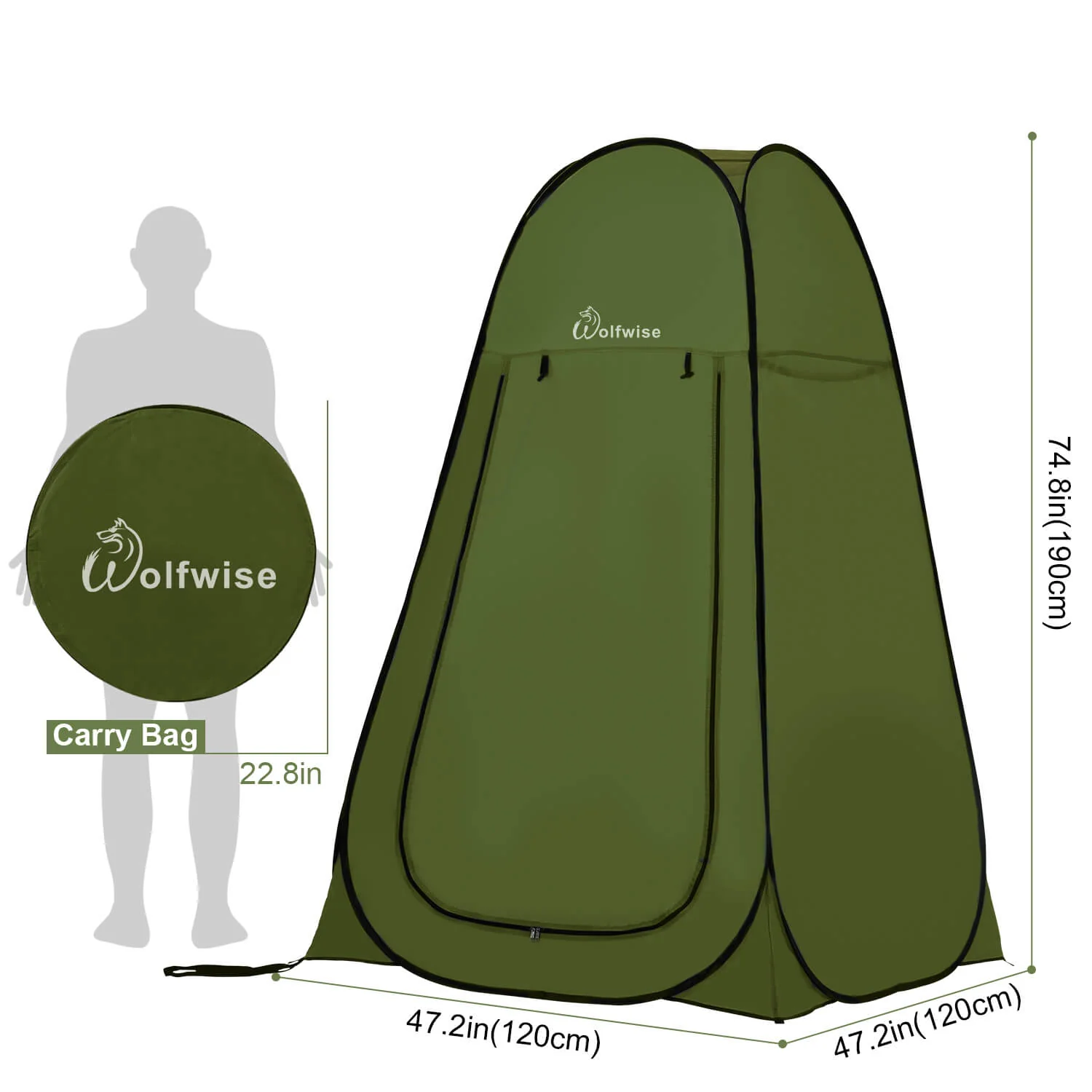
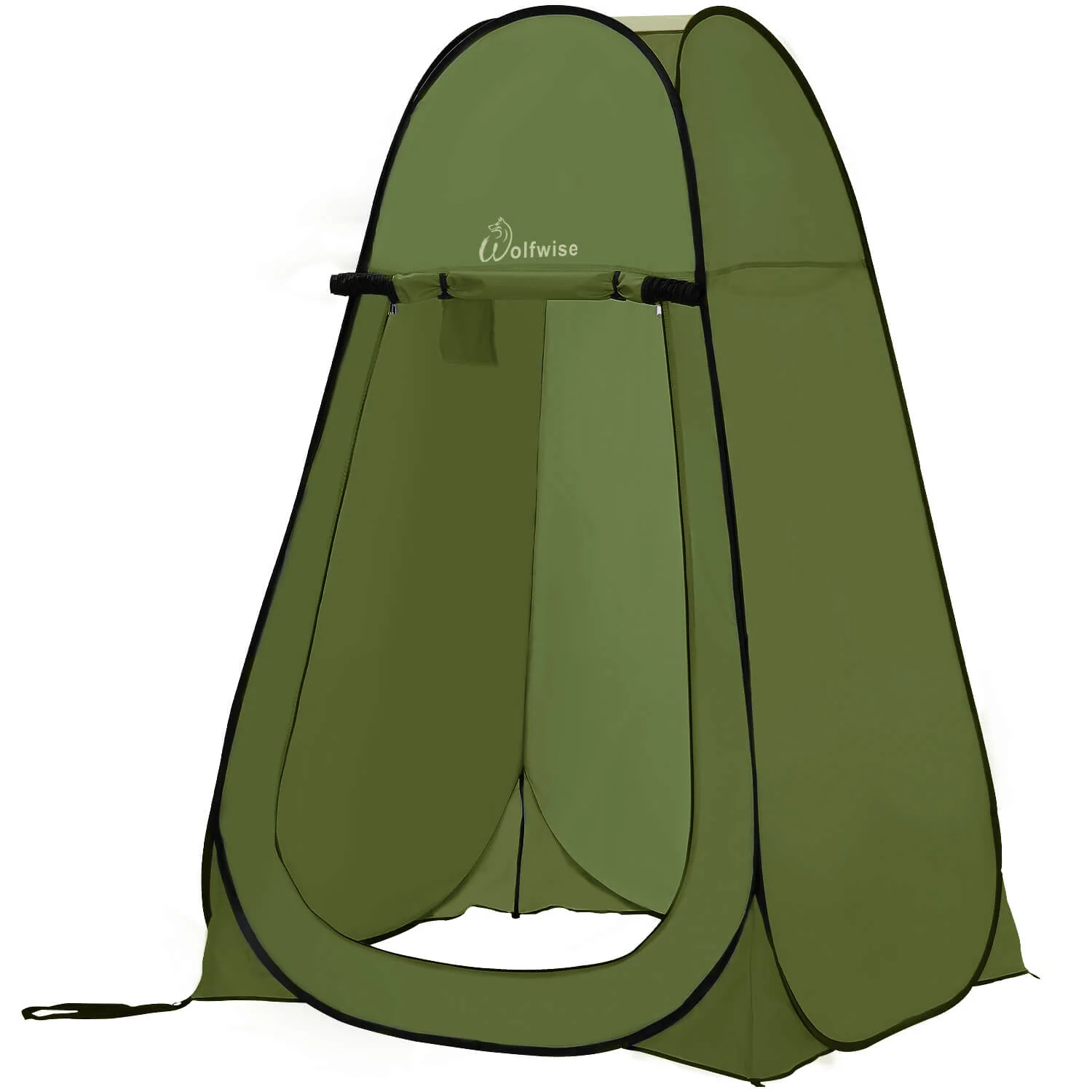
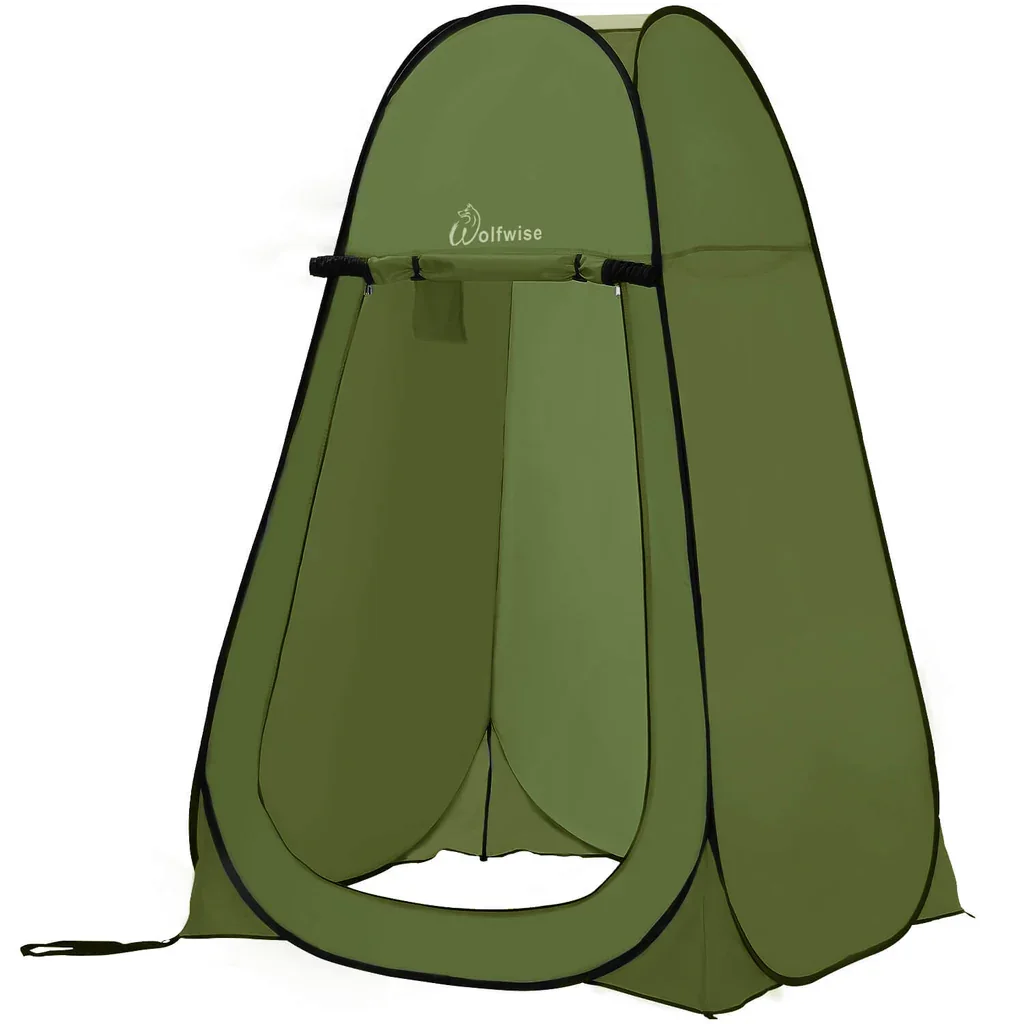
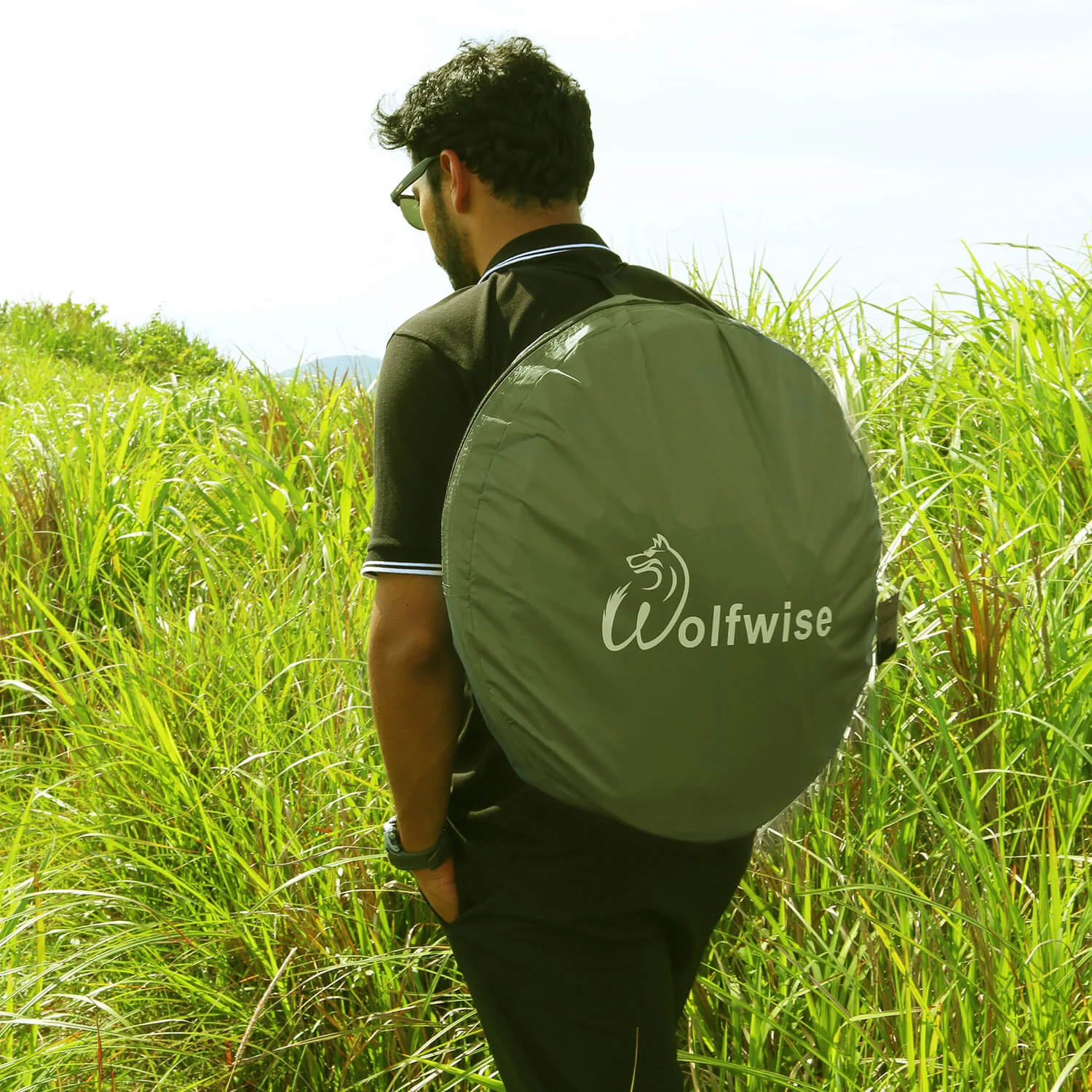
The pop-up is the car camper's default for a reason: there is nothing to assemble. You unclip it from a flat round bag, it springs into a full-height pod, and you stake the corners. The WolfWise pop-up shower tent is the archetype — about 75 inches tall on a 47-inch square floor, water-repellent polyester, a top vent, and interior hooks for a solar shower bag, a towel, and your clothes. Folded, it disappears behind a seat or under the cargo floor.
The trade-offs are honest ones. A single-wall pop-up is lighter and less rigid than a cabin, so in real wind you'll want every stake and guy line in the ground. And the famous learning curve is real: popping it up takes two seconds, but folding it back into the disc is a twist-and-tuck motion that takes everyone a few tries to learn. Watch the folding video once and it's muscle memory forever.
The two-room cabin: a shower and a dry changing room
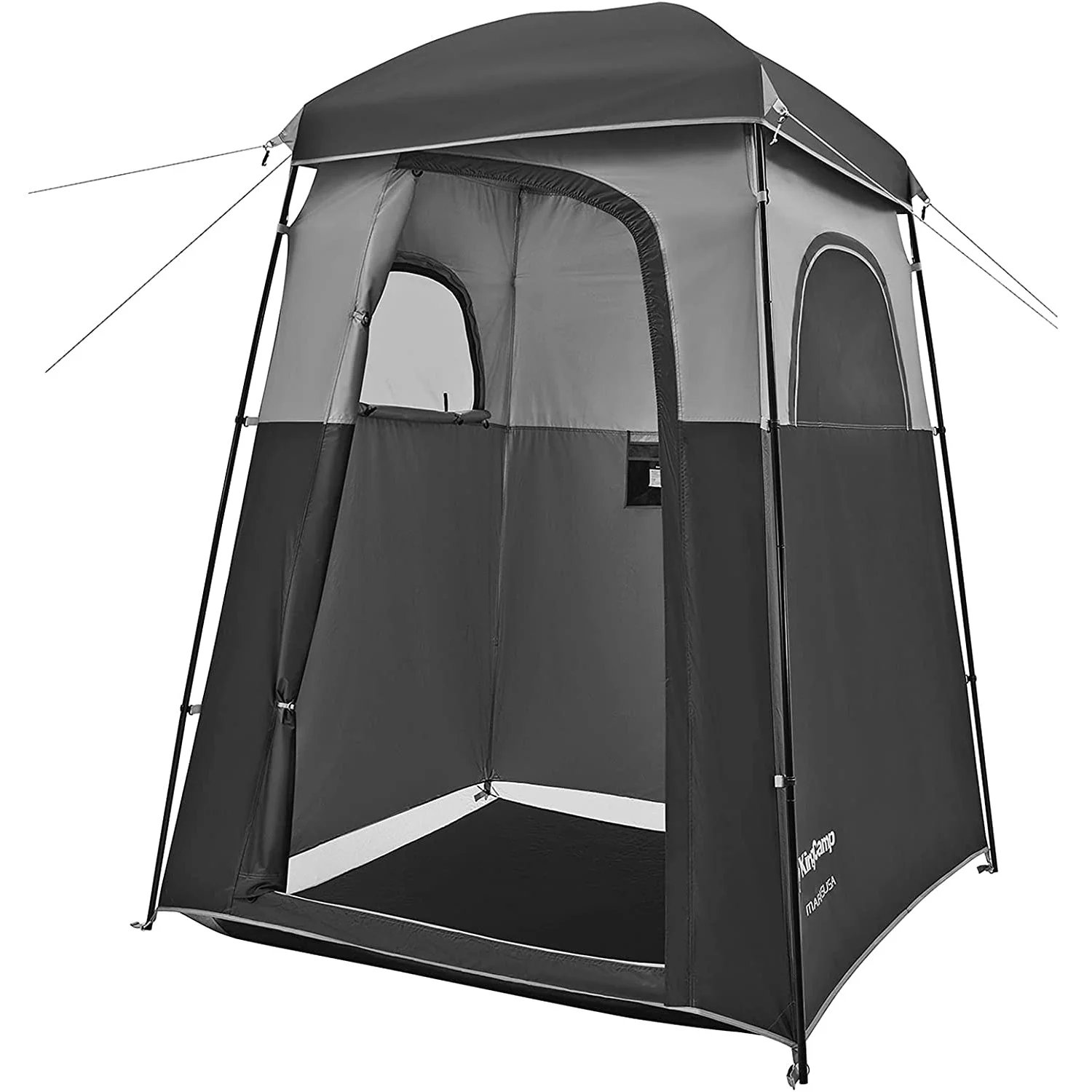
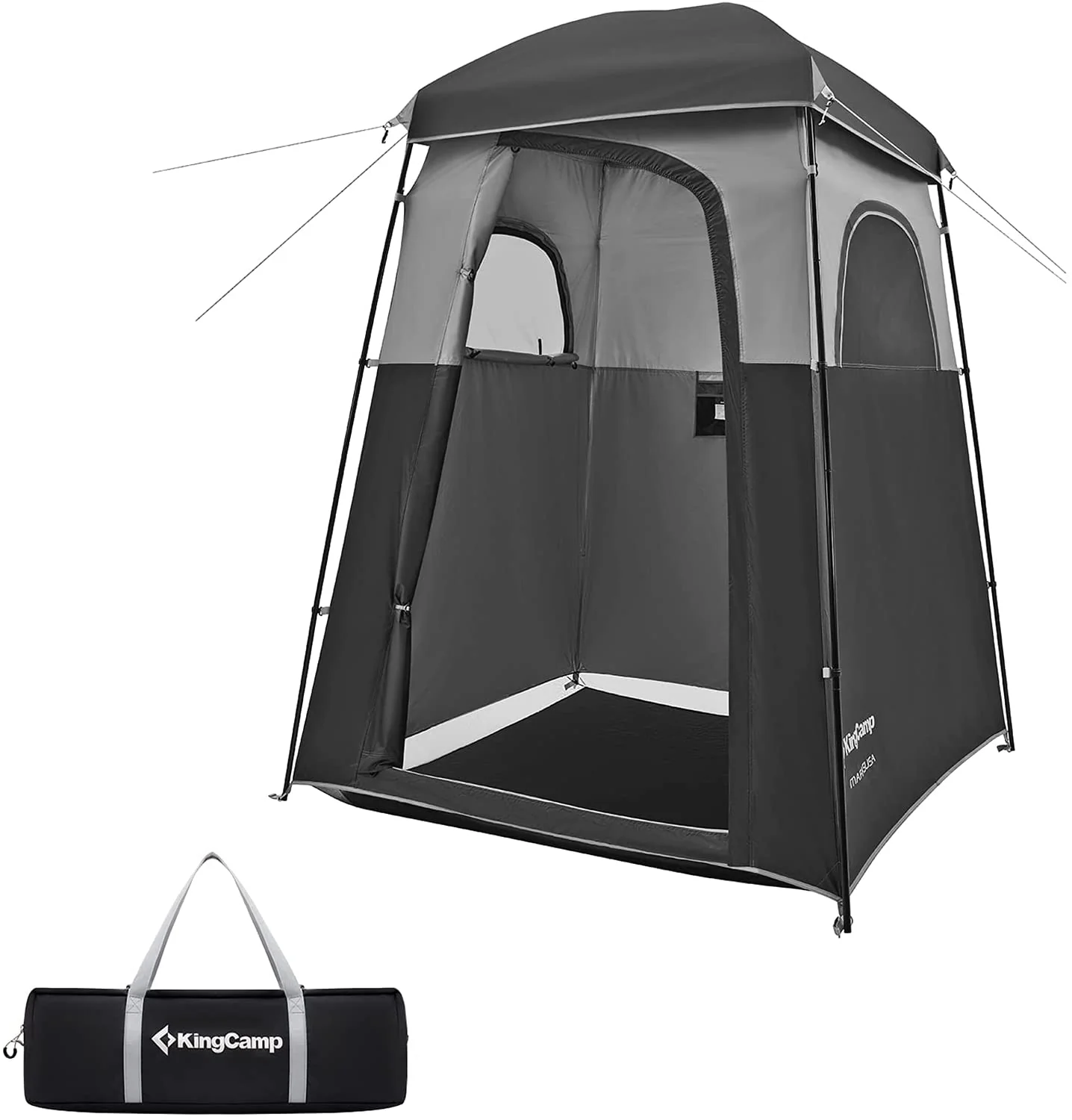
If the pop-up is the minimalist's pick, the cabin is the setup for people who live out of the vehicle. A two-room design like the KingCamp double shower tent gives you a wet side to rinse in and a separate dry side to towel off, dress, and keep your phone and clean clothes off the ground. Framed by real poles rather than a springy hoop, it stands close to seven feet tall and shrugs off a breeze that would flatten a light pop-up.
What you pay for that comfort is packed size and setup. A cabin rolls into a long duffel, not a flat disc, and it wants a few minutes and a handful of stakes to pitch. For a base camp you'll occupy for days, that is a trade most people happily make — the tent goes up once and becomes the campsite bathroom for the whole trip.
The specs that actually matter
Ignore the marketing and check these six things — they decide whether a shower tent is a joy or a wobbly regret:
- Standing height. You want 75 inches or more so you can rinse your hair without crouching. Anything under 6 feet is cramped for an average adult.
- Floor, or no floor. A removable or zip-out floor keeps mud out when you change; for showering, many people prefer an open bottom so water drains straight onto the ground.
- Ventilation. A top vent and a mesh window stop the tent from turning into a sauna and let steam escape while you shower.
- Stakes and guy lines. A shower tent is a sail. The models that stay upright in wind ship with real stakes and at least a couple of guy lines — use all of them.
- Interior hooks and pockets. A hook up top to hang a solar shower bag, plus pockets for soap, phone, and a towel, is the difference between a shower and a juggling act.
- Packed size and weight. A flat disc rides behind a seat; a long duffel needs real cargo space. Match it to what your vehicle can spare.
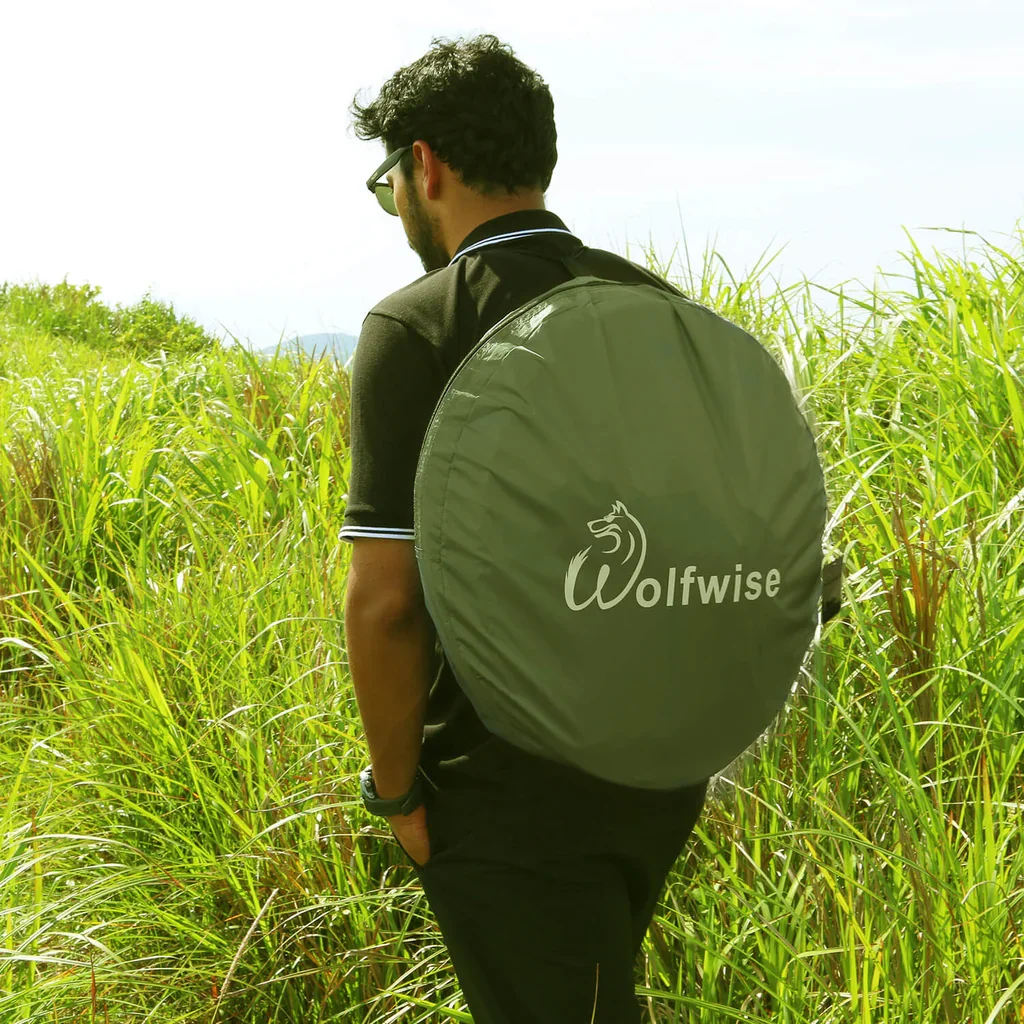
Pop-up or cabin: which one is for you?
Choose by trip length and space: the pop-up wins for grab-and-go weekends and tight trunks; the cabin wins for multi-day base camps and travelers who want room to change dry.
Get a pop-up like the WolfWise if you move camp often, pack light, or just want a private rinse and a place to change without thinking about setup. It's the lower-commitment, lower-cost, lower-bulk choice, and for most weekend car campers it's all the tent they'll ever need.
Get a cabin like the KingCamp if you settle into one spot for days, want a dry room to dress in, or camp with a partner who'd rather not shower in a swaying pod. The extra height, rigidity, and second room earn their keep the longer you stay put.
Setup, siting, and keeping it upright
Wherever your water comes from — a portable or solar camp shower is the usual pairing — the tent only works if it stays standing. Two habits cover it. First, always stake and guy it, even on a calm evening; wind comes up fast, and an unstaked shower tent will cartwheel across the campground the moment you step out. Second, site it with a slight slope so greywater drains away from where you stand, and downwind of your sleeping setup so steam and splashes don't blow back onto dry gear.
For privacy, put a solid backdrop — the vehicle, a hedge, a rock — behind the door so a gust can't flash the whole campsite, and face the entrance away from foot traffic. Do that and either style gives you a genuinely private, genuinely pleasant place to get clean, which is the entire point of carrying one.
The verdict
A shower and privacy tent is one of the highest-value pieces of car-camping gear you can buy, because it unlocks the two things that make longer trips livable: a real shower and a private place to change or use the toilet. The decision is not about which brand is best — it's about which shape fits your travel.
For most people, a pop-up pod like the WolfWise is the right first buy: cheap, light, instant, and small enough to always have along. If you base-camp for days or want a dry second room, step up to a cabin like the KingCamp. Either way, stake it down, pair it with a good camp shower, and you've solved the single biggest obstacle to staying out longer.