Setting the Scene
The first time I learned about the half-life of a human biohazard in a sealed vehicle, it was 2 AM on a dirt road, 45 minutes from the nearest gas station. My passenger, a 5-year-old with a sudden stomach revolt, turned the back seat into a Level 4 containment breach in under 120 seconds. This is not a 'fun camping story' - this is a field debrief on why a $15 portable toilet is non-negotiable for any car camping operation.
You cannot outrun biology. Source: YouTube
Forget romantic notions of 'communing with nature.' Your primary objective is logistic survival and biohazard containment. The wilderness doesn't care about your dignity; it cares about waste disposal. A poorly managed human waste situation can turn a scenic overlook into a permanent stench hazard in 3 hours, especially in summer heat. My current load-out prevents this. Source: Take The Truck
I've seen enough 'dig a cathole' attempts that end up with someone stepping in something they shouldn't. That's a 30-minute extraction protocol involving hand sanitizer, baby wipes, and a profound sense of regret. Your car's interior is a high-traffic zone, and every potential spill or leak needs a pre-planned extraction. No improvisation. Source: Life inTents
My field-tested reality is that a portable toilet isn't a luxury; it's a sanity-saver. It prevents emergency stops at questionable roadside facilities and maintains your operational tempo. For less than $100, you can secure your vehicle's interior from biological contamination and maintain mission readiness. That's not a suggestion; that's an order.
Consider the operational costs: a single gas station bathroom incident can cost you 45 minutes of travel time and a $20 cleaning fee for the inevitable collateral damage. My current portable toilet system eliminates this variable entirely. It's about efficiency, not comfort.
Key Features to Consider
| Feature | Why it matters (Chaos Aunt Protocol) | Threat Level if Ignored |
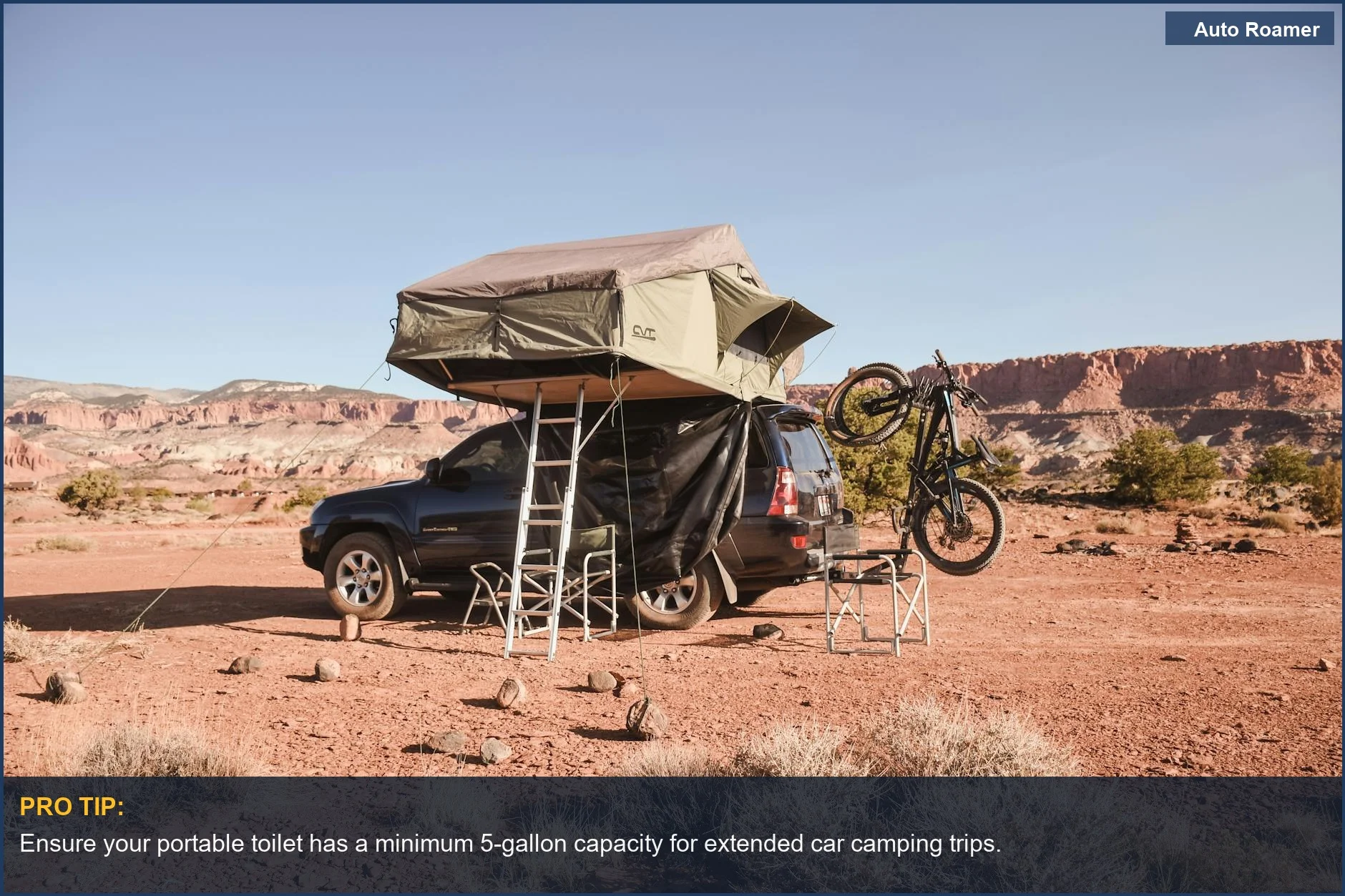
| Capacity | A 5.3-gallon tank (like the Camco Portable Travel Toilet) handles two adults for a 2-day trip, minimum. Smaller tanks mean more frequent, unscheduled extraction protocols. | Code Brown: 4-hour odor half-life in a sealed vehicle. |
| Portability/Weight | If it's over 15 lbs empty, your designated hazmat disposal tech (you) will curse it. My Thetford weighs 8 lbs, easily moved for discreet disposal. Source: Outdoor Life | Logistic Failure: Unwillingness to deploy or dispose leads to internal contamination. |
| Seal Integrity | A robust seal around the waste tank isn't optional; it's essential for odor containment. Without it, your vehicle becomes a mobile biohazard. The Camco models typically have good seals. | Environmental Contamination: Permanent olfactory damage to vehicle interior. |
| Ease of Cleaning | Smooth, non-porous surfaces are your friend. You need a quick, efficient wipe-down. Complex nooks and crannies become breeding grounds for bacteria. | Cross-Contamination: Residual bio-agents leading to repeat incidents. |
| Stability | No one wants a wobbly base. A stable unit prevents accidental tip-overs, which is a catastrophic containment failure. A wide base is tactical. | Containment Breach: Full-scale biohazard spill requiring immediate, extensive extraction. |
Our Top Picks
I don't recommend; I command. These units have been field-tested to minimize biohazard risk and maximize logistic efficiency. Your choice depends on your specific operational parameters. Source: YouTube
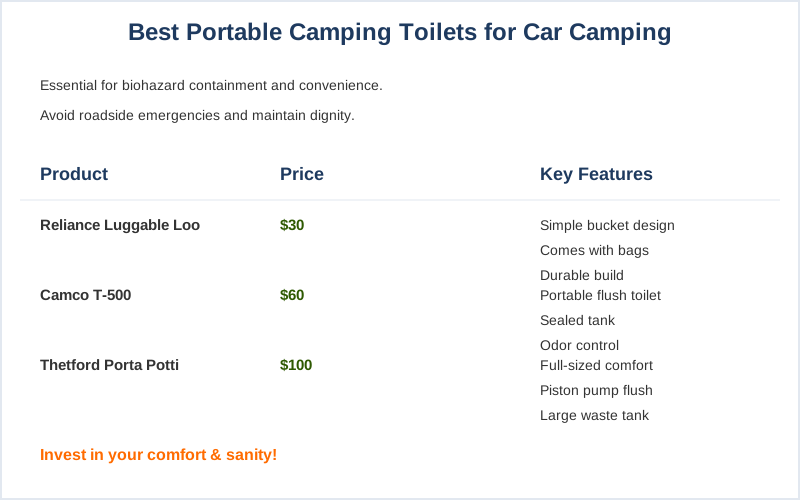
Thetford Porta Potti 565E: This is my go-to. It's the same height as a home toilet, preventing ergonomic failures during critical moments. The 5.5-gallon freshwater tank and 4-gallon waste tank provide enough capacity for two people for a 3-day weekend. It weighs just under 8 pounds empty, making it manageable for disposal. Source: Reddit
Its piston pump flush is a sanity-saver, ensuring efficient waste transfer and minimizing residual odors. The integrated tank level indicator prevents unexpected overflow situations, which is a catastrophic failure mode. Total cost: around $150. It's an investment in uninterrupted travel.
Camco Portable Travel Toilet (5.3 Gallon): A solid, budget-friendly option for those prioritizing cost-effectiveness. The 5.3-gallon capacity is adequate for short deployments, and its detachable tank simplifies the disposal process. It's a workhorse, not a show pony. Source: TopNotch Outdoor
The Camco's robust seals are critical for odor containment. For around $113, you get a reliable unit that prevents your vehicle from smelling like a long-forgotten porta-potty. This is a crucial piece of tactical gear. Source: Life inTents
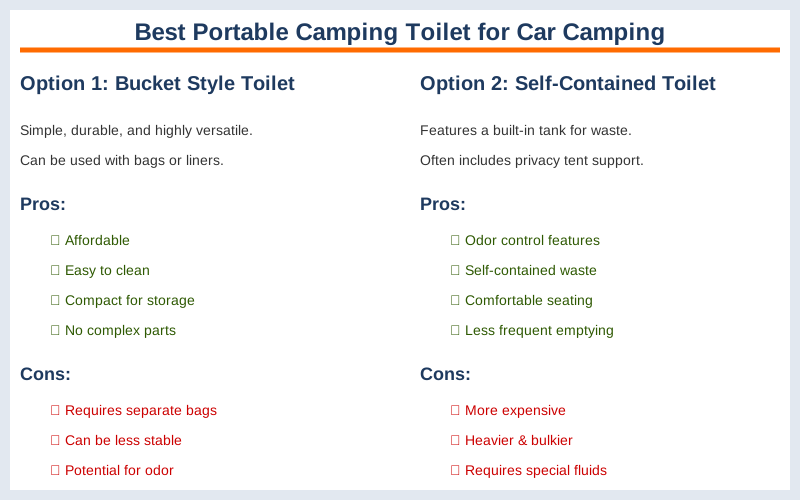
Reliance Luggable Loo: This is the bare-bones, emergency-only option. It's a 5-gallon bucket with a snap-on toilet seat. Total cost: $20. Its primary advantage is its simplicity and low cost. You add a heavy-duty contractor bag and some waste-gelling powder, and you're operational. Source: YouTube
However, its odor containment is minimal. This is for when a full flush system is not feasible or for situations where immediate, rudimentary waste collection is paramount. It's a last resort, not a primary strategy. The half-life of odor in a Luggable Loo without proper sealing is 60 minutes in a hot car before it becomes unbearable.
Trelino Evo Composting Toilet: For extended deployments, a composting toilet like the Trelino Evo is a significant upgrade. It separates solid and liquid waste, drastically reducing odor and volume. This is a more complex system, but it's designed for long-term biohazard management. Source: Adventurous Way of Life
While the initial investment is higher (around $700), the operational benefits for multi-week trips are clear. No water needed, less frequent emptying, and virtually no odor if managed correctly. This is advanced tactical waste management for serious operators. Source: YouTube
Budget vs Premium Options
| Category | Budget (e.g., Reliance Luggable Loo) | Premium (e.g., Thetford Porta Potti 565E) |
| Cost | $20 - $50 (plus bags and powder) | $100 - $200 (includes flush system) |
| Containment | Basic bucket/bag system. Odor containment is minimal, 30-minute half-life for strong odors without additives. | Sealed waste tanks, flush mechanisms, and odor-reducing chemicals. 8-hour odor containment. |
| Setup Time | 2 minutes: insert bag, attach seat. | 5 minutes: fill freshwater tank, add chemicals, assemble. |
| Disposal Complexity | Bag removal and sealing. Requires immediate disposal in a trash receptacle. | Tank emptying at designated RV dump stations or approved facilities. Less frequent. |
| Durability | Basic plastic bucket. Can crack if dropped from 3 feet. | Thicker, more robust plastic, designed for frequent use and transport. Resists impacts. |
View on Amazon — $20 - $50 (plus bags and powder)
View on Amazon — $100 - $200 (includes flush system)
View on Amazon — 2 minutes: insert bag, attach seat.
View on Amazon — 5 minutes: fill freshwater tank, add chemicals, assemble.
View on Amazon — Bag removal and sealing. Requires immediate disposal in a trash receptacle.
View on Amazon — Basic plastic bucket. Can crack if dropped from 3 feet.
Setup and Installation Tips
Proper setup is the first line of defense against a biohazard incident. Don't skip steps; you're inviting a critical failure. Source: OutdoorGearLab
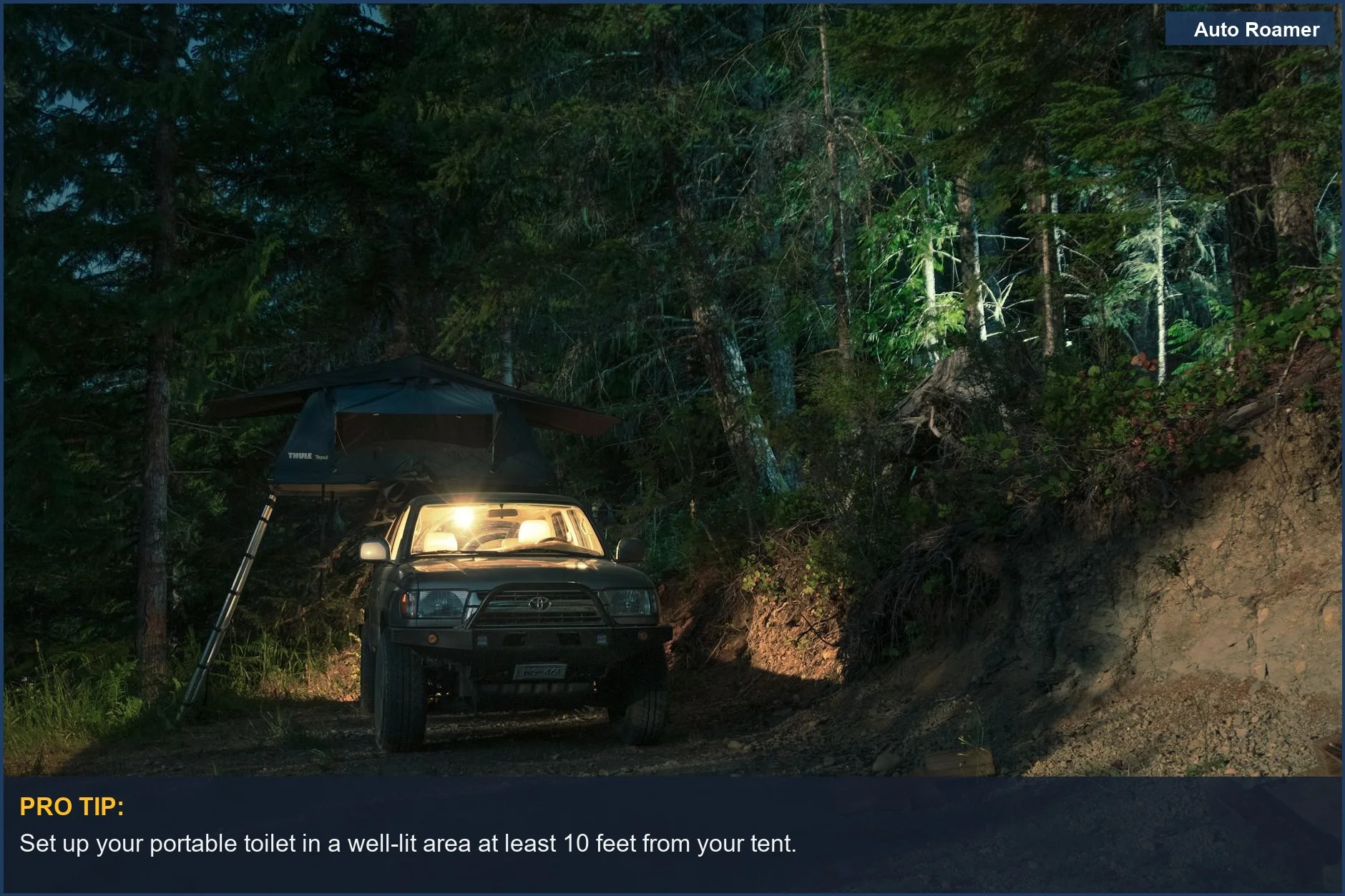
1. Site Selection (The Tactical Position): Choose a level, stable surface. Inside your vehicle, this means securing it from shifting during movement. In a tent, ensure it's on flat ground, away from high-traffic pathways. A portable privacy shelter is recommended for external deployment, but the internal car setup is for emergencies.
2. Pre-Load (The Readiness Protocol): For flush toilets, fill the freshwater tank to capacity (typically 2-5 gallons) and add the appropriate waste tank chemical. This chemical breaks down solids and neutralizes odors, critical for containment. For bucket systems, insert a heavy-duty waste bag and add a scoop of gelling powder.
3. Stabilize (Secure the Perimeter): If your unit has a locking mechanism for the waste tank, engage it. Ensure the lid is securely latched. For bucket systems, confirm the seat is firmly snapped onto the bucket. A wobbly toilet is a disaster waiting to happen.
4. Access (Rapid Deployment Zone): Position the toilet where it's easily accessible but not an obstruction. In a car, this often means behind the passenger seat or in the cargo area, clear of doors and emergency exits. You don't want to be fumbling in the dark during a Code Brown.
5. Supply Cache (The Ancillary Load-out): Keep a gallon Ziploc bag nearby, loaded with toilet paper, hand sanitizer, and extra waste bags/gelling powder. This ensures all necessary tools are within arm's reach for immediate post-incident cleanup. This is your emergency resupply kit.
Care and Maintenance Tips
Neglecting maintenance is inviting a biological catastrophe. Your portable toilet isn't a magical waste disappearance device; it's a system requiring constant vigilance. Source: TopNotch Outdoor
1. Emptying Protocol (The Extraction): Never let the waste tank fill to the brim. A full tank increases the risk of splashback and spills during transport. Empty it when it's two-thirds full, or every 2-3 days for a typical 5-gallon unit, whichever comes first. Use designated RV dump stations or approved facilities. Source: Life inTents
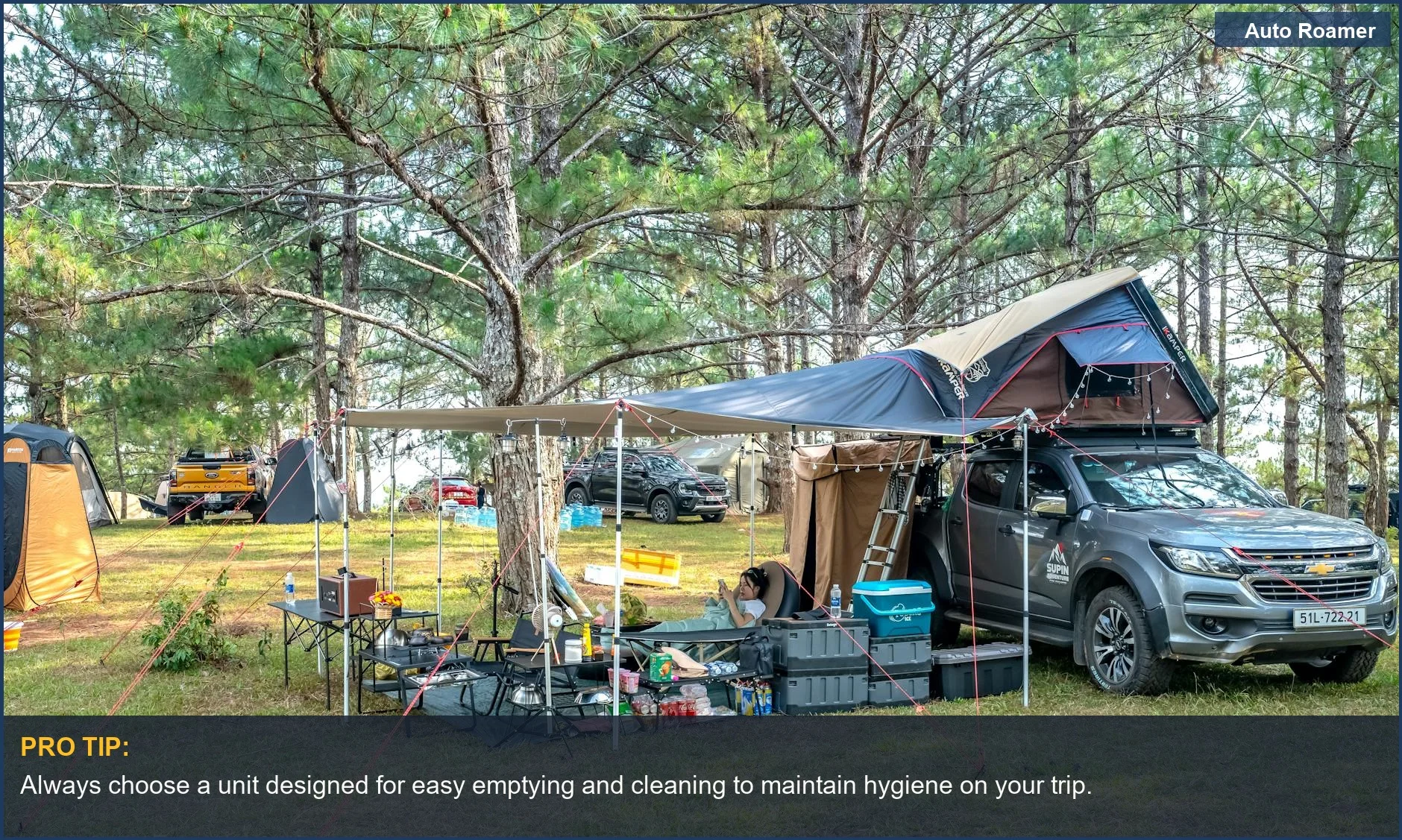
2. Rinse and Sanitize (Decontamination Procedure): After emptying, rinse the waste tank thoroughly with clean water. For flush toilets, add a small amount of water and a cleaning solution, swish it around, and dump again. For bucket systems, a quick rinse with a hose and a spray of disinfectant is sufficient. Ensure all surfaces are clean.
3. Seal Inspection (Integrity Check): Regularly inspect the rubber seals on your waste tank and lid. These are critical for odor containment. If they show signs of cracking or wear, replace them immediately. A compromised seal has a 100% failure rate for odor control.
4. Chemical Refresh (Odor Neutralization): Always use proper waste tank chemicals. These aren't just for smell; they aid in breaking down solids. Never use harsh household cleaners like bleach, as they can damage seals and plastic components, leading to leaks. Use specific RV or marine toilet chemicals.
5. Storage (Long-Term Containment): When not in use, ensure the unit is completely empty, clean, and dry. Store it in a cool, dark place to prevent plastic degradation and mildew growth. Leaving residual waste in a stored toilet guarantees a biohazard event upon next deployment.
Final Recommendations
Your choice of portable toilet is a tactical decision, not a lifestyle one. Prioritize containment and logistics over comfort. A single biohazard event can ruin an entire trip and permanently damage your vehicle's interior. Source: Outdoor Life
- For weekend warriors: The Camco Portable Travel Toilet (5.3-gallon) is your best bet. It offers a solid balance of capacity, containment, and affordability for around $113. Its flush system and sealed tank are critical for odor control.
- For extended deployments/van life: Invest in a Thetford Porta Potti 565E or a composting unit like the Trelino Evo. The higher upfront cost (around $150-$700) is justified by superior containment, comfort, and reduced maintenance cycles.
This is long-term operational efficiency.
- Emergency-only/Budget Extreme: The Reliance Luggable Loo ($20) is a last-ditch effort. It's better than nothing, but be prepared for high-frequency emptying and a higher risk of odor leakage. This is a survival tool, not a convenience item.
- Always have a load-out: Regardless of your toilet choice, always carry a gallon Ziploc with toilet paper, hand sanitizer, and extra waste bags/chemicals. This is your immediate response kit for any unexpected incidents.
Preparedness is non-negotiable.
Remember, the goal is to avoid pulling over again for a biological imperative. Your car is an asset; protect it from internal contamination. This is not about being fancy; it's about being smart.