Setting the Scene
Choosing the right water capacity for your portable camping shower isn't as simple as just grabbing the biggest one. You've got to think about how much you'll actually use, because hauling around extra water is just extra work. I learned this the hard way at a state park in Oregon, thinking I needed a giant 10-gallon tank for a weekend trip. Turns out, 5 gallons was more than enough and way easier to lug around.beach shower sizing guide.
This isn't rocket science, but it does require a little bit of foresight beyond just wanting to feel human again after a long hike.camping shower capacity.
The Core Answer
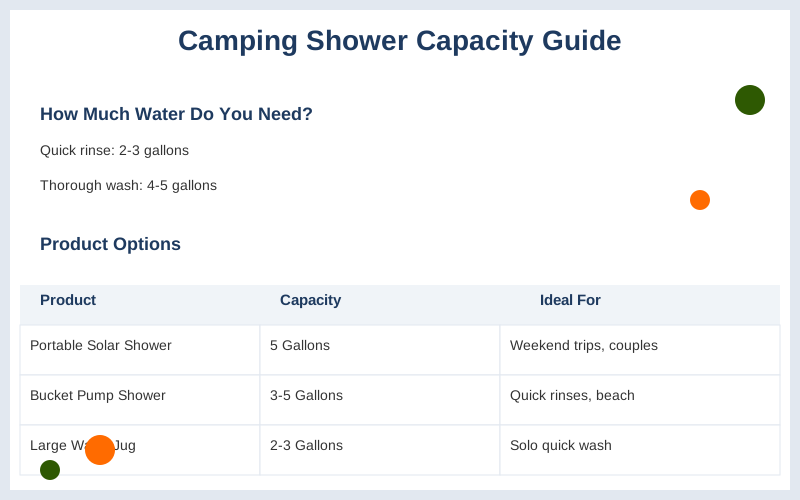
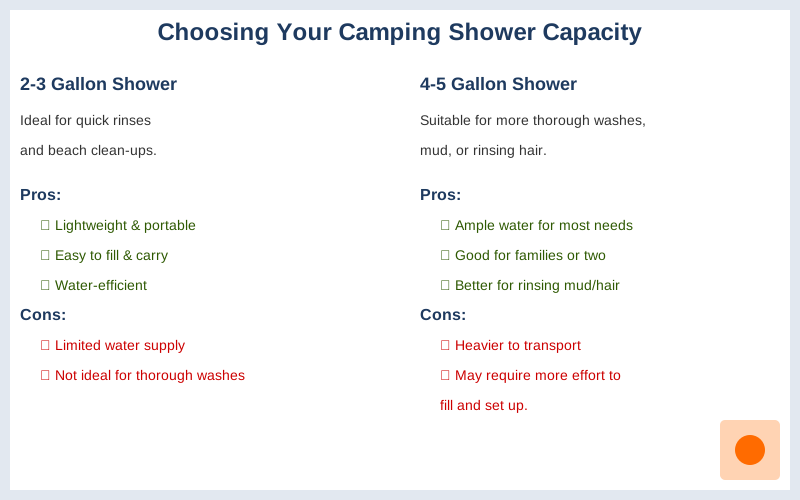
The real move here is figuring out how much water you actually need for a shower, not just what fits in the tank. For a quick rinse-off, like washing off sand from the beach or just feeling less grimy after a day of hiking, you probably only need about 2 to 3 gallons. That's enough to get the job done without feeling like you're wasting water or spending forever under the spray. beach shower capacity.
For a more thorough wash, maybe you're washing off mud or need to rinse out your hair properly, you might push that up to 4 or 5 gallons. This is where a 5-gallon portable shower starts to look pretty good for most people. I used a 5-gallon bucket with a small pump shower attachment on my trip to Moab, Utah, and it was perfect for two people to get a decent rinse after a dusty day.
Anything larger than 5 gallons starts to get heavy and unwieldy. Think about carrying that much water from your car to your campsite, or up a hill. It's a rookie mistake to overestimate your needs and end up lugging around an extra 20 pounds of water you'll never use. Plus, a smaller tank heats up faster if you're using solar power to warm your water. Brilliant engineering, right? solar shower heating.
If you're camping with a group of four or more, and everyone wants a proper shower, then you might start looking at larger capacities, maybe 8 gallons or more. But even then, the honest version is you can often get by with two smaller tanks or a refill strategy. Don't buy a 10-gallon monster if you're only going to use it for a quick foot wash. It's like bringing a sledgehammer to crack a nut. larger shower capacity.
Ultimately, think about your typical camping scenario. Are you just rinsing off after a swim? Or are you trying to get squeaky clean after days in the backcountry? Most portable showers use about 1 to 2 gallons per minute of flow, so a 5-gallon tank gives you a solid 2-5 minutes of shower time, which is plenty for most folks. water usage per minute. You do not need a complex system for a simple rinse.
You need enough water to get clean. That's it.
Why This Matters for Your Setup
This whole water capacity thing matters more than you'd think, especially if you're trying to keep your gear light and your campsite organized.
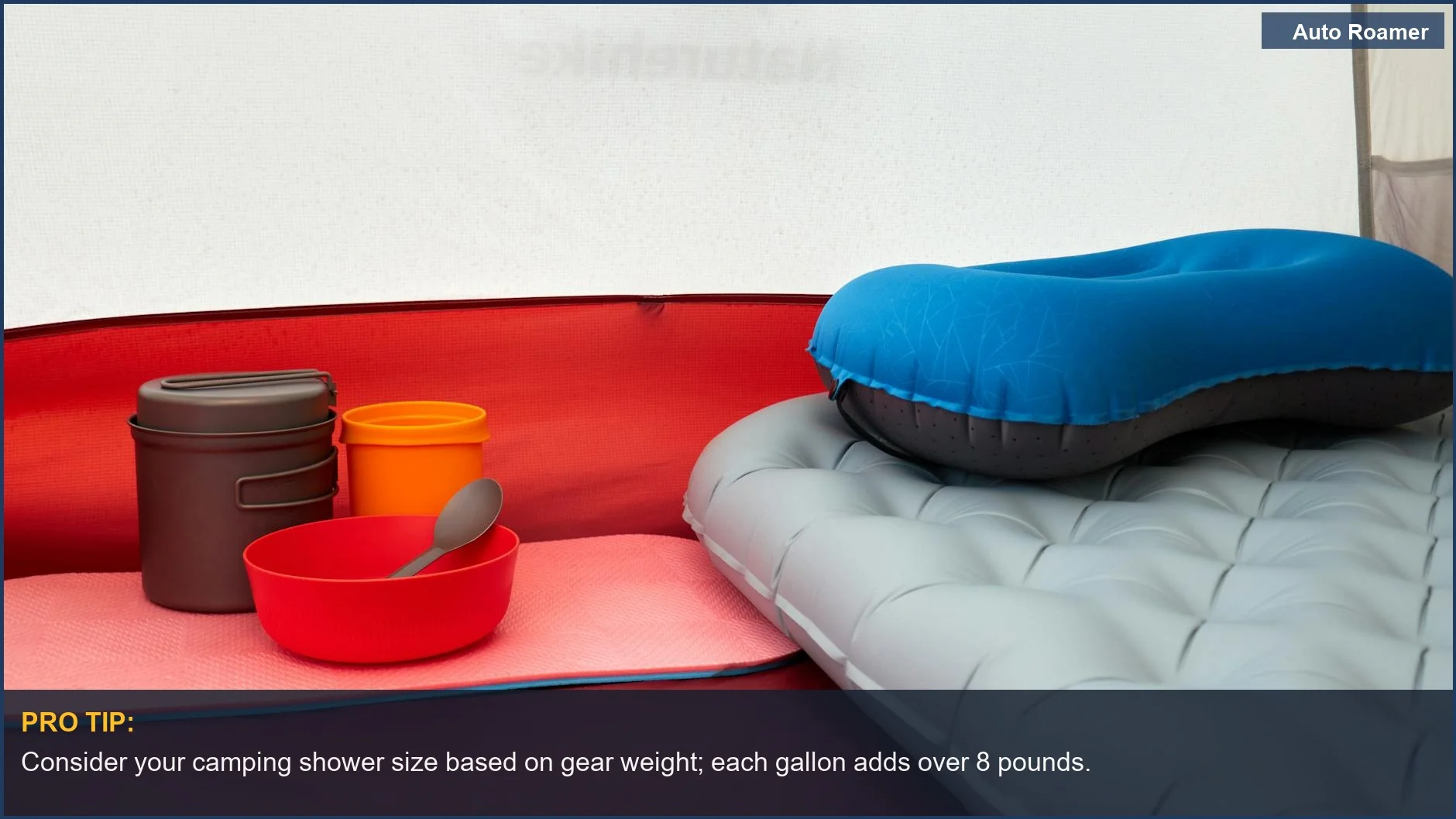
- Weight is a Big Deal: A gallon of water weighs about 8.3 pounds. Hauling around an extra 5 gallons means an extra 40+ pounds. That's like carrying a small human. My first car camping setup in Big Sur, I learned that lesson when I tried to lug a massive, full water container up a slight incline to my tent. Never again.
- Packing Efficiency: Larger tanks take up more space. If you've got a compact car, like my old Honda Civic hatchback, every cubic inch counts. A smaller, collapsible shower tank is way easier to shove into a corner or under a seat than a rigid, bulky one. storage space.
- Setup Speed: Less water means less time filling, less time pumping (if it's a manual one), and less time waiting for it to heat up in the sun. If you just want a quick rinse and get back to your campfire, you don't want to be wrestling with a giant, full water bladder for 10 minutes. ease of use.
- Water Conservation: Smaller tanks encourage you to be more mindful of your water usage. This is a good thing, especially in arid areas or if you're trying to be more eco-friendly. It forces you to be efficient. Who knew a shower could teach you about conservation? water conservation.
Making the Right Choice
Picking the right water capacity for your camping shower is all about matching it to your actual needs. Don't get swayed by the biggest number; think about what you'll realistically use it for.
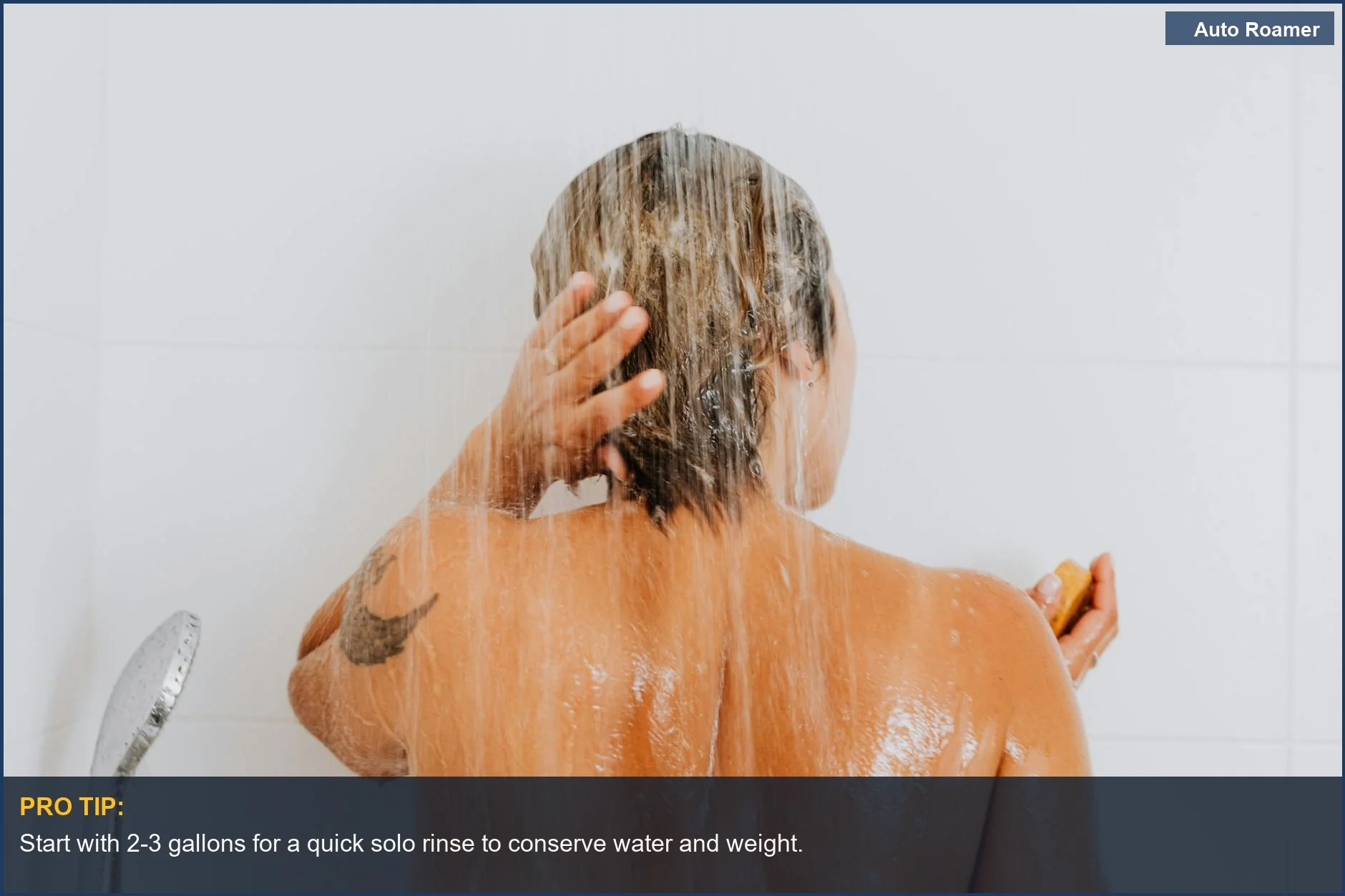
- Solo Rinses: If it's just you, a 2-3 gallon capacity is often plenty for a quick wash. My first solo trip to Joshua Tree, I used a small gravity bag and it was perfect. solo shower needs.
- Couples or Small Groups: For two people, or if you want a more substantial shower, aim for 5 gallons. This is the sweet spot for most car camping situations. I've seen plenty of people at campgrounds with 5-gallon buckets and they're usually happy campers. two person shower.
- Larger Groups or Extended Trips: If you have more than two people or are going on a longer trip where you won't have access to water refills, consider 8 gallons or more, or a system that allows for easy refilling. But remember, weight and bulk increase significantly. larger group showers.
- Consider Your Pump: If you're using a manual pump shower, a smaller tank requires less pumping to get to pressure, which is a win for your arm. If you have an electric one, it might not matter as much, but still, less water is less hassle. pump shower efficiency. The real move is to be practical, not ostentatious.