
Why build a platform instead of just throwing down a mattress?
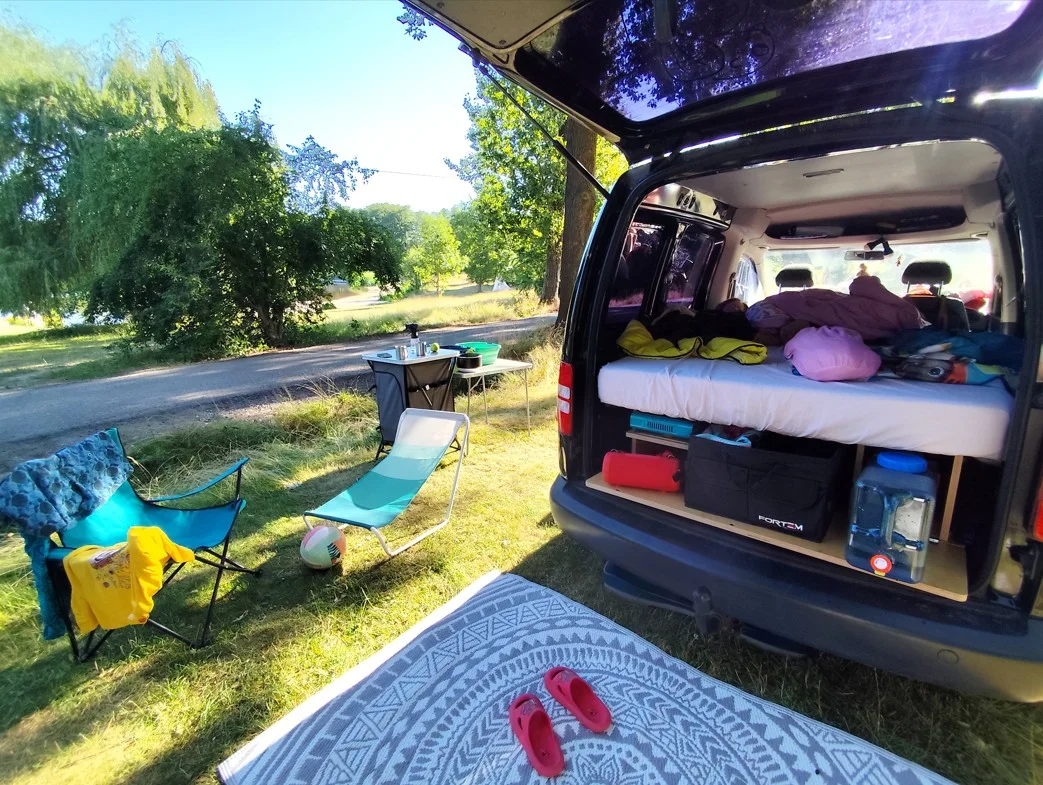
You can sleep in most SUVs by folding the seats and unrolling a pad — so why build anything at all? Because a folded-seat floor is almost never flat, almost never long enough, and wastes the best storage space you have. A simple sleeping platform fixes all three at once.
A platform gives you one level surface at a height you choose, turns the space underneath into a slide-out garage for gear, and — built right — extends past the folded seats so a taller sleeper actually fits. It is the single highest-value weekend project in car camping, and you do not need to be a carpenter to pull it off.
This guide covers the one measurement that dictates the whole design, a cheap build and a stronger one, six steps to a basic SUV platform, the truck-bed and drawer variations, and how to stay warm and dry on top of it. If you would rather not build at all, our best car inflatable beds and sleeping-system guide cover the no-tools route.
The one dimension that dictates the whole build
Before you buy a single board, settle one number: the flat length you can create from the back of the folded front seats to the closed tailgate. That number, not your budget or your tools, decides whether the platform works.
Measure it in your own vehicle with the seats in their real sleeping position, because folded-seat geometry varies wildly between models. Then plan the platform height around what has to live underneath — a couple of storage bins set the minimum, and your remaining sitting-up headroom sets the maximum. The sweet spot is the lowest platform that still clears your bins.
Be realistic about length, because this is where most builds disappoint. If your flat length comes up shorter than you are tall, you have three honest choices: sleep slightly diagonally, build the deck so it cantilevers a little over the folded front seats, or accept the platform as a one-person setup. What you should not do is pretend the number is bigger than it is and discover the problem on your first cold night at a trailhead.
Build to the length you can actually make flat, at the lowest height that clears your storage — every other decision follows from those two numbers.
One more early check: the wheel wells. They intrude into the load area on almost every SUV, and your frame either sits above them (simplest, costs headroom) or works around them (lower, more cutting). Decide which before you design the frame, not halfway through building it. Our SUV air-mattress guide has useful interior-dimension notes for common models.
Materials: the cheap build vs the strong build
There are two honest ways to build a platform, and the right one depends on how often you will use it and how much weight it must carry.
The cheap build is a single sheet of plywood on a few lengths of framing timber, screwed into a simple ladder frame. It is light, costs very little, and is perfect for occasional trips and one or two sleepers.
The strong build uses thicker ply, more cross-members and proper corner bracing, so it takes real load without flexing and survives frequent use on rough tracks. Here is the short shopping list either way:
- Plywood sheet — 12 mm for the cheap build, 15–18 mm for the strong one.
- Framing timber (roughly 45 mm) for the ladder frame and legs.
- Wood screws, plus corner brackets for the strong build.
- Carpet, felt or foam to face the top and kill rattles.
- Optional: drawer slides, hinges and a cut-out lid for access.
Skip exotic materials. Ordinary hardware-store ply and timber, cut well and braced properly, outlasts most people's interest in the vehicle.
A word on weight, because it is the trap first-time builders fall into. It is tempting to over-build — thicker ply, more timber, heavier hardware — but every extra kilo is weight you lift in and out and fuel you burn hauling it around. The goal is the lightest platform that is genuinely rigid, not the heaviest-duty one you can imagine. Good bracing beats brute thickness: a triangle of corner brackets stiffens a frame far more, per gram, than a thicker sheet of plywood ever will.

Build it: a basic SUV platform in six steps
With your length and height settled, the build itself is straightforward. Work through it in order:
- 1. Template the floor. Lay cardboard in the load area and trace the real outline, including the wheel-well intrusions. This becomes your cut guide.
- 2. Cut the deck. Transfer the template to the plywood and cut the top panel, testing the fit before you go further.
- 3. Build the frame. Screw the framing timber into a ladder of cross-members sized to your chosen platform height; add legs where the deck spans open space.
- 4. Join deck to frame. Screw the ply down onto the frame, checking it sits level front to back and side to side.
- 5. Face the top. Staple or glue carpet or foam over the deck so it is quiet, grippy and kinder to a mattress.
- 6. Add access. Cut a lid or fit a drawer so you can reach the storage underneath without dismantling the bed.
Take your time on steps one and three — a good template and a square frame are what separate a platform that feels solid from one that creaks all night.
Truck-bed and drawer variations
The same principles scale up and down. In a pickup, the truck bed is already a flat rectangle, so the platform becomes a raised deck that clears the wheel arches and hides a full-width drawer system beneath — the classic overland layout. Because a truck bed is open to the weather, seal the timber and plan for a canopy or topper.
Drawer builds are the upgrade most people want eventually: instead of lifting a lid, you pull out kitchen and gear boxes from the tailgate. They cost more timber, a pair of heavy-duty slides per drawer and more careful measuring, but they transform how usable the space is on a longer trip. If a roof setup is on your mind too, our roof-rack gear guide covers what to move up top to free the cabin.
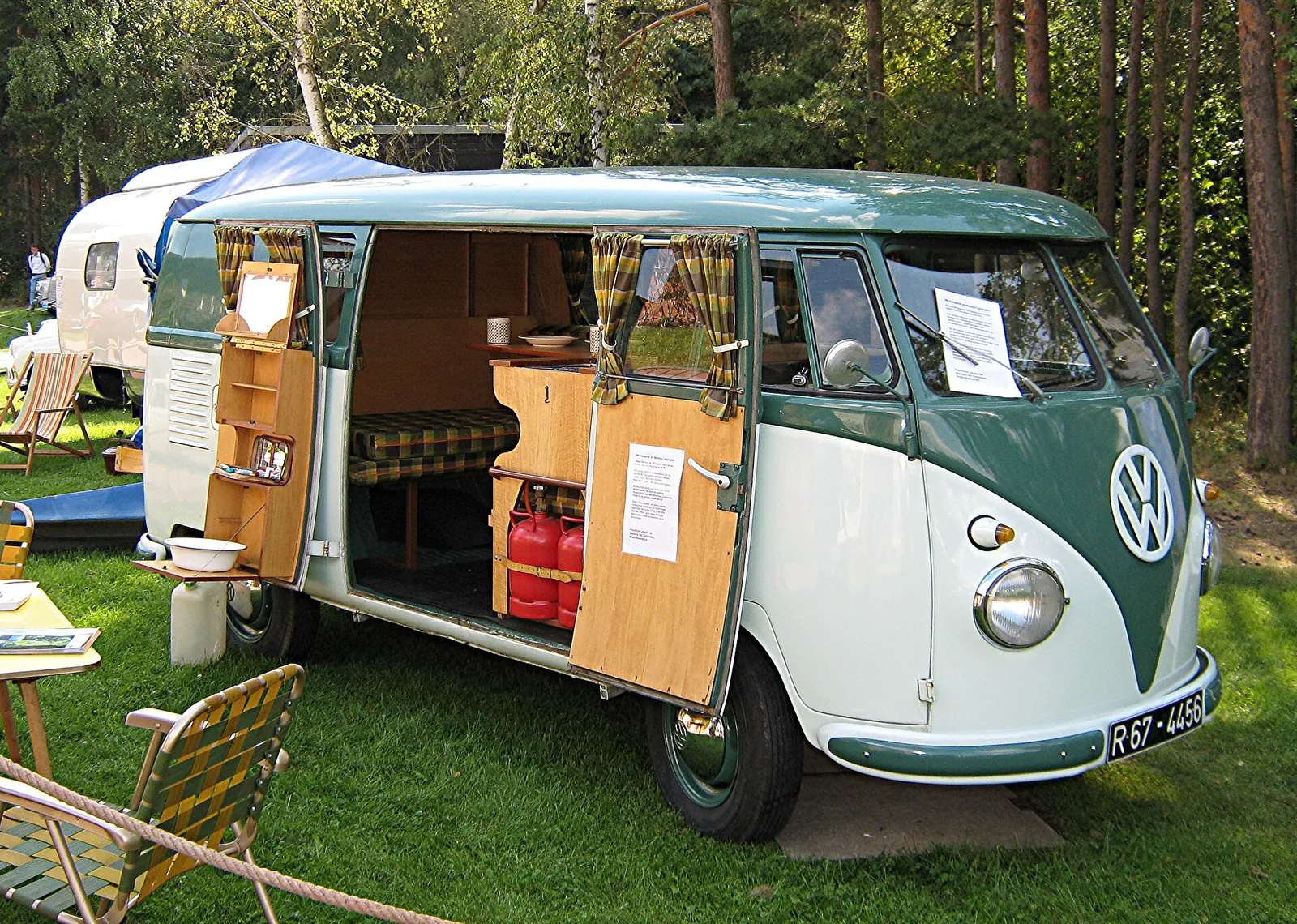
The heritage here runs deep — the built-in beds and cabinetry of classic camper vans are exactly this idea, refined over decades. You are building a simpler, removable version of the same good idea.
Insulation, condensation and airflow — then you're done
A platform solves the flat-bed problem, but two comfort issues remain, and both are easy to handle once you know to plan for them.
The first is cold from below. A raised deck actually helps — the air gap and your stored gear insulate you far better than lying on the metal floor — but on cold nights add a foam mattress or a proper sleeping pad on top so the deck itself does not pull heat out of you. Our sleeping-pad guide covers the R-values worth having.
The second is condensation. Bodies breathe out a surprising amount of moisture overnight, and a sealed vehicle turns it into damp bedding and fogged glass by morning. Crack two windows an inch on opposite sides for cross-flow, and leave the storage bays under the platform slightly vented so trapped air can move. Do those two things and the platform you built becomes what it was always meant to be: a flat, dry, ready-when-you-are bed that also swallows all your gear.