
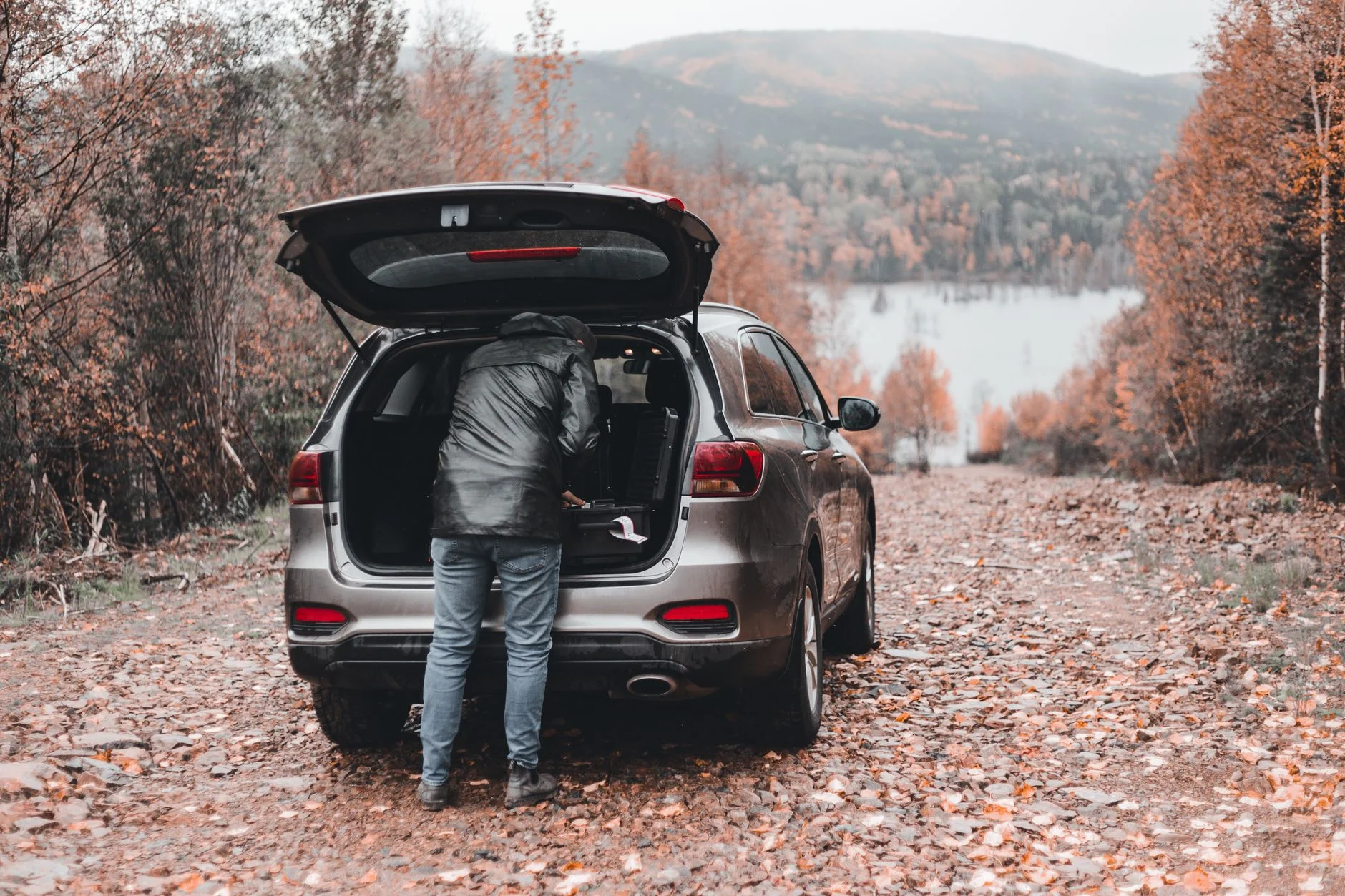
Kia Telluride Cargo Space, Seats Folded: The Numbers at a Glance
If you are sizing up a Kia Telluride for hauling gear or sleeping in the back, the figure that matters most is the maximum cargo volume with the rear seats folded. According to Kia's published specifications, the Kia Telluride offers up to 87 cubic feet of cargo space behind the first row — that is, with both the second and third rows folded flat. Fold only the third row and you have 46 cubic feet behind the second row, and with all seats up there is 21 cubic feet behind the third row.
Those three numbers describe three completely different vehicles. Twenty-one cubic feet is a grocery-run trunk; 46 is a comfortable road-trip hauler that still seats five; and the full 87 cubic feet is a long, mostly flat cargo bay that runs from the back of the front seats to the liftgate — the configuration that makes the Telluride genuinely usable as a sleeping platform. The Telluride sits among the more generous three-row midsize SUVs for maximum cargo volume, which is a big part of why it shows up so often on car-camping shortlists.
Here is the whole picture in one place, drawn from Kia's published cargo figures:
- Behind the 3rd row (all seats up): 21 cu ft
- Behind the 2nd row (3rd row folded): 46 cu ft
- Behind the 1st row (2nd + 3rd folded, maximum): 87 cu ft
Cubic feet tell you how much will fit, but they do not tell you whether you can lie down flat in the back — for that you need the actual length, width, and height of the load floor once the seats are down. The rest of this guide translates Kia's published volumes into the usable dimensions that decide whether the Telluride works as a cargo hauler and as a sleeping platform, and explains how those numbers behave in the real world. If you want the broader camping picture, our guide to sleeping in a Kia Telluride covers the full setup.
How the Folding Configurations Change the Space
A three-row SUV like the Telluride is really three different cargo vehicles depending on which seats are up. Understanding the three configurations is the key to deciding how to pack it and whether it can sleep you, because the jump between them is dramatic — the bay more than quadruples from smallest to largest.
Working from least to most space:
- All seats up (behind the third row): 21 cu ft. This is daily-driver mode with seating for seven or eight. It is enough for a grocery run, a stroller, or a few duffel bags, but it is tight for a full family's luggage. For most three-row SUVs this is the least flattering number, and the Telluride is no exception.
- Third row folded (behind the second row): 46 cu ft. Drop the 60/40-split third row flat and you keep five seats while gaining a deep, long cargo bay. This is the sweet spot for most road trips: passengers up front, gear in back, and a flat floor you can actually use.
- Second and third rows folded (maximum): 87 cu ft. Fold both rows and you reach the headline volume — a long, mostly flat floor from the back of the front seats to the liftgate. This is the configuration for hauling bulky cargo or building a sleeping platform.
The practical takeaway is to match the configuration to the trip rather than assuming you always need the maximum. Many travelers leave the second row up and live with 46 cubic feet so passengers ride in comfort, reserving the full fold-flat only for gear-hauling or sleeping nights. A solo camper, by contrast, can fold everything flat and treat the entire rear of the Telluride as one continuous bed-and-storage space.
It is worth knowing how the folding works on the Telluride: the second-row seats fold in a 60/40 split and the third row in a 50/50 split, so you can mix passengers and cargo in fine increments — carry one extra rider on the second row while the rest of the back is open, for example. That flexibility is exactly what makes the Telluride adaptable for trips where the people-versus-gear ratio changes day to day.
Length, Width, and Height: The Dimensions That Decide What Fits
Cubic feet are a volume, and volume can be deceiving — a tall, narrow space and a long, low space can list the same number yet hold completely different gear. What you actually need are the three linear measurements of the folded cargo bay, because those are what a mattress, a bike, or a sheet of plywood has to fit inside.
Kia publishes the cargo volumes rather than a full set of inside-the-tape linear cargo dimensions, so the most useful approach is to combine the published numbers with the Telluride's known exterior proportions and to verify the critical measurement yourself with a tape measure before you buy gear. For reference, Kia lists the Telluride at roughly 196.9 inches long overall, about 78.3 inches wide, on a 114.2-inch wheelbase — a genuinely large midsize SUV. As a planning baseline, here is how the folded bay tends to break down:
- Load-floor length (both rows folded): roughly 6 feet of flat floor from the back of the front seats to the closed liftgate. This is the make-or-break number for sleeping flat, and it is right at the threshold for a six-foot adult.
- Width: the cargo area is widest across the open floor and narrows between the rear wheel wells. The usable width between the wheel housings is the limiting dimension for wide items, and it is the number to tape-measure if you plan to lay a wide mattress or slide in a sheet of plywood.
- Height (floor to ceiling): a three-row SUV gives you generous vertical room over the folded floor — enough to stack bins or sit up partway, though not enough to stand. This is why tall, bulky loads that defeat a sedan or crossover slide easily into the Telluride.
The single most valuable thing you can do before relying on any published cargo figure is to put a tape measure in the actual vehicle, seats folded, and record the flat length, the width between the wheel wells, and the height. Volume tells you how much fits; those three numbers tell you whether the specific thing you care about fits.
Why insist on measuring rather than trusting a single cubic-foot number? Because two vehicles can quote similar volumes while one has a long flat floor and the other a tall but short one. For sleeping and for long cargo (lumber, skis, a kayak inside), length wins; for filling the space with boxes, volume wins. The Telluride is strong on both counts, but the length is what makes it genuinely sleepable, and length is the number worth confirming in person.
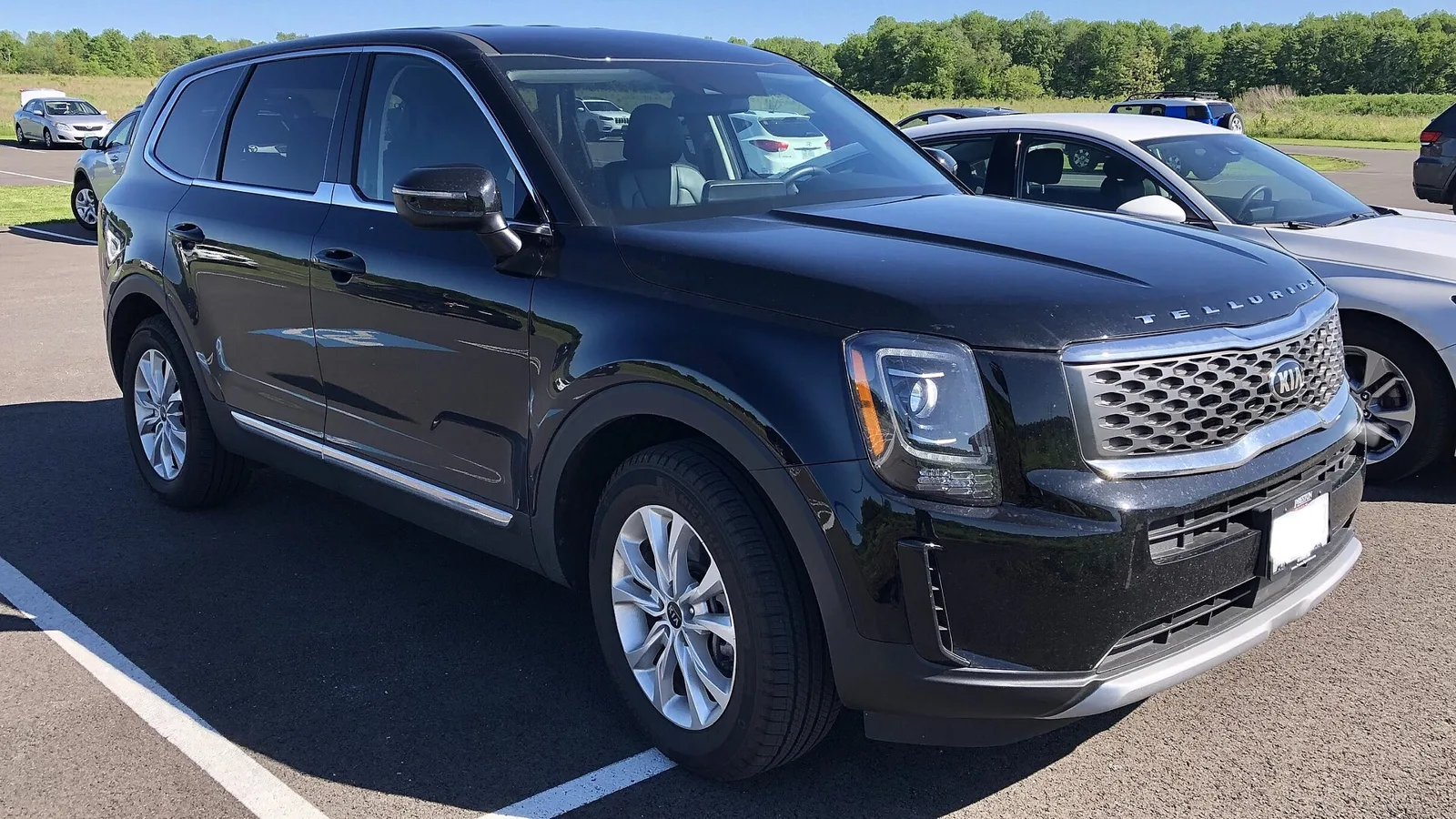
Load-Floor Flatness: How Level Is the Telluride, Really?
"Folds flat" is one of the most overused phrases in SUV marketing, and it almost never means a perfectly level surface. For anyone planning to sleep in the back or slide long cargo in, the honest question is not whether the seats fold but how level the resulting floor is — because a small step or slope is what separates a comfortable night from a miserable one.
On the Telluride, folding the second and third rows creates a long and usefully flat load floor, but a few realities apply here as they do to essentially every three-row SUV:
- The folded seatbacks rarely sit perfectly flush with the rear cargo floor. There is usually a slight rise or a small gap where the folded second-row seatbacks meet the permanent cargo floor behind the third row. It is modest on the Telluride, but it is not a single uninterrupted plane.
- There can be a gentle slope. The folded seatbacks often angle very slightly downward toward the front, which you feel as a subtle tilt when lying down.
- The seams and seat contours create minor unevenness. Seat sculpting and the joints between sections mean the surface is firm-flat, not table-flat.
None of this is a dealbreaker — it is simply the reality of folding passenger seats into a cargo floor. The fix is the same one experienced car campers use in every vehicle: a thick, supportive sleeping pad or a purpose-built platform that bridges the small steps and evens out the surface. A self-inflating pad of two to three inches, or a foam-topped wood platform, turns the Telluride's already-good floor into a genuinely flat, comfortable bed. If you want to build a permanent solution, our guide to a DIY car-camping sleeping platform walks through bridging exactly these gaps.
The bottom line on flatness: the Telluride is one of the better midsize three-row SUVs for this, but plan on padding the floor rather than expecting to lie directly on bare folded seats. Treat the manufacturer's "fold-flat" claim as "folds nearly flat, then you finish the job with a pad."
Can a 6-Foot Adult Sleep Flat in a Kia Telluride?
This is the question that actually drives most cargo-dimension searches, so it deserves a direct answer: yes, a six-foot adult can sleep flat in a Kia Telluride with both rear rows folded, though it is close. The roughly six-foot flat load length sits right at the threshold for a six-foot person, so a six-footer fits but with little margin — and a couple of simple tricks turn "just barely" into "comfortable."
A few practical points decide how comfortable that sleep actually is:
- Sleep front-to-back, not side-to-side. The length runs the long axis of the vehicle, so you lie with your head toward the front seats and feet toward the liftgate. Two adults can sleep this way side by side if they are not broad-shouldered; the width between the wheel wells is the constraint, not the length.
- Reclining or sliding the front seats buys length. If your flat floor ends an inch or two short for a taller sleeper, sliding the front seats forward and reclining them, or letting feet extend into the front footwell, recovers the room you need. This is the standard trick that lets people right at six feet stretch out without their feet hitting the liftgate.
- One sleeper is roomy; two is workable. A single adult sleeps easily on the folded Telluride floor. Two adults fit across the width for a quick overnight, but broad-shouldered pairs will find it snug — many couples solve this with two narrow pads rather than one shared surface.
For one average-height adult, the Telluride sleeps flat with room to spare. For a six-footer it works, especially with a pad and the front seats nudged forward. For two adults, it is comfortable for a quick overnight and snug for a longer stay — plan your pad setup accordingly.
Beyond raw length, sleeping well in any vehicle comes down to flatness (covered above), blocking light and prying eyes, and managing temperature and condensation. For the privacy side, see how to block your car windows for sleeping privacy; for the damp-morning problem common to sleeping in a sealed vehicle, our guide to reducing condensation when sleeping in a car is worth reading before your first night out.
What Size Mattress or Sleeping Pad Fits?
Once you know the Telluride sleeps flat, the next question is what to put on that floor. The honest guidance here is to match the pad to the measured width between the wheel wells rather than to a marketing mattress size, because that wheel-well width — not the wide-open floor — is what limits a rigid or inflated sleeping surface.
How common sleeping surfaces tend to fit the folded Telluride:
- A single self-inflating or foam pad (around 20-25 inches wide): Fits easily for one sleeper, with length to spare. This is the simplest, most reliable setup and the one most solo campers use.
- A wide single or narrow double pad: Generally workable across the open floor; just confirm the width clears the wheel wells if your pad is rigid or fully inflated. Softer pads can compress slightly to fit.
- A queen air mattress (60 inches wide): This is where people get caught out. A full-size queen is wider than the space between the Telluride's rear wheel housings, so it will not lie perfectly flat — the edges ride up over the wheel wells. Some campers accept that and let the mattress contour; others prefer two narrower pads that sit flat on the floor.
- Two separate pads side by side: Often the best two-person solution. Two narrow pads laid the length of the vehicle fit the floor better than one wide mattress fighting the wheel wells, and each person can choose their own firmness.
The reliable method is always the same: measure your folded cargo floor's flat width (between the wheel wells) and its flat length, then buy a pad sized to those real numbers rather than assuming a bed size will fit. For help choosing a surface, our roundup of the best car-camping mattresses for SUVs and sedans covers options sized for vehicles like the Telluride.
It is also worth thinking about thickness, not just footprint. Because the folded floor has minor steps and a slight slope, a thicker pad (two to three inches and up) does double duty: it makes the surface comfortable and it bridges the small unevenness left by the folded seatbacks. A pad that is too thin will telegraph every seam and step into your back, which is the most common complaint from people who try to sleep on a bare folded floor.
Power Outlets and Living-In-It Features
A big cargo hold is only half of what makes a vehicle livable for road trips and car camping; the other half is being able to keep devices and gear running. The Telluride is reasonably well-equipped here, and the relevant point for cargo-and-camping planning is where the power lives once the seats are down and the bay is your living space.
Across Telluride trims, Kia distributes charging points front to rear, which typically include:
- 12-volt accessory outlets for powering coolers, inflators, and 12V camp gear — commonly found in the front console area and toward the rear of the cabin, so power is reachable from the cargo bay.
- Multiple USB ports (USB-A and USB-C) distributed across the rows for charging phones, tablets, lights, and other small devices — useful when several people are traveling together.
- An available 110-volt household-style AC outlet on higher trims, useful for charging laptops or running small mains-powered devices — subject to the outlet's wattage limit, so check your trim's rating before relying on it for anything substantial.
The practical implication for a camper is encouraging: with a rear-accessible 12V outlet and, on the right trim, a household outlet, the Telluride can keep a portable fridge, a fan, lights, and your devices going without an external power source for short stints. The usual caution applies, though — running accessories with the engine off draws on the starting battery, so for multi-night stays a dedicated power station is far safer than leaning on the vehicle's battery overnight. Our guide to the best portable power stations for car camping covers sizing one to your gear.
Equipment and outlet availability vary by model year and trim, so confirm the exact outlet count and the AC outlet's wattage on the specific Telluride you are considering. The window sticker and owner's manual are the authoritative source for what your vehicle actually has.
Is the Kia Telluride a Good Car-Camping Vehicle?
Pulling the dimensions together, the honest verdict is that the Telluride is one of the more camping-friendly three-row midsize SUVs on the market — not because it was designed as a camper, but because its 87-cubic-foot maximum bay, its near-six-foot flat floor, and its rear-accessible power add up to a vehicle you can genuinely live out of for a night or two.
Where the Telluride is strong, and where it asks for compromise:
- Strong: maximum cargo volume. Eighty-seven cubic feet puts it among the roomier vehicles in its class, with space for gear and a sleeping setup at the same time when you organize the bay well.
- Strong: sleeping length for one or a snug two. The roughly six-foot flat floor sleeps a solo adult comfortably and a six-footer with a pad and a seat nudge.
- Compromise: width for two. Like most midsize SUVs, the wheel-well width makes a wide queen mattress fight the space — plan on two narrow pads for couples.
- Compromise: flatness needs a pad. The folded floor is good, not table-flat; a quality pad or platform is what makes it a real bed.
Boil it down to one question: do you need a comfortable, spacious base for occasional car camping and big gear hauls without buying a dedicated camper? For that, the Telluride is an excellent answer — spacious, flexible, and sleepable once you add a good pad.
If you are cross-shopping for the best camping platform, it helps to compare footprints. Our guide to which SUV is best for camping puts the Telluride next to its rivals, and for a very different sleeping footprint our Subaru Outback cargo dimensions for sleeping guide shows how a wagon compares. To kit out the Telluride once you have chosen it, see our Kia Telluride camping gear guide.