
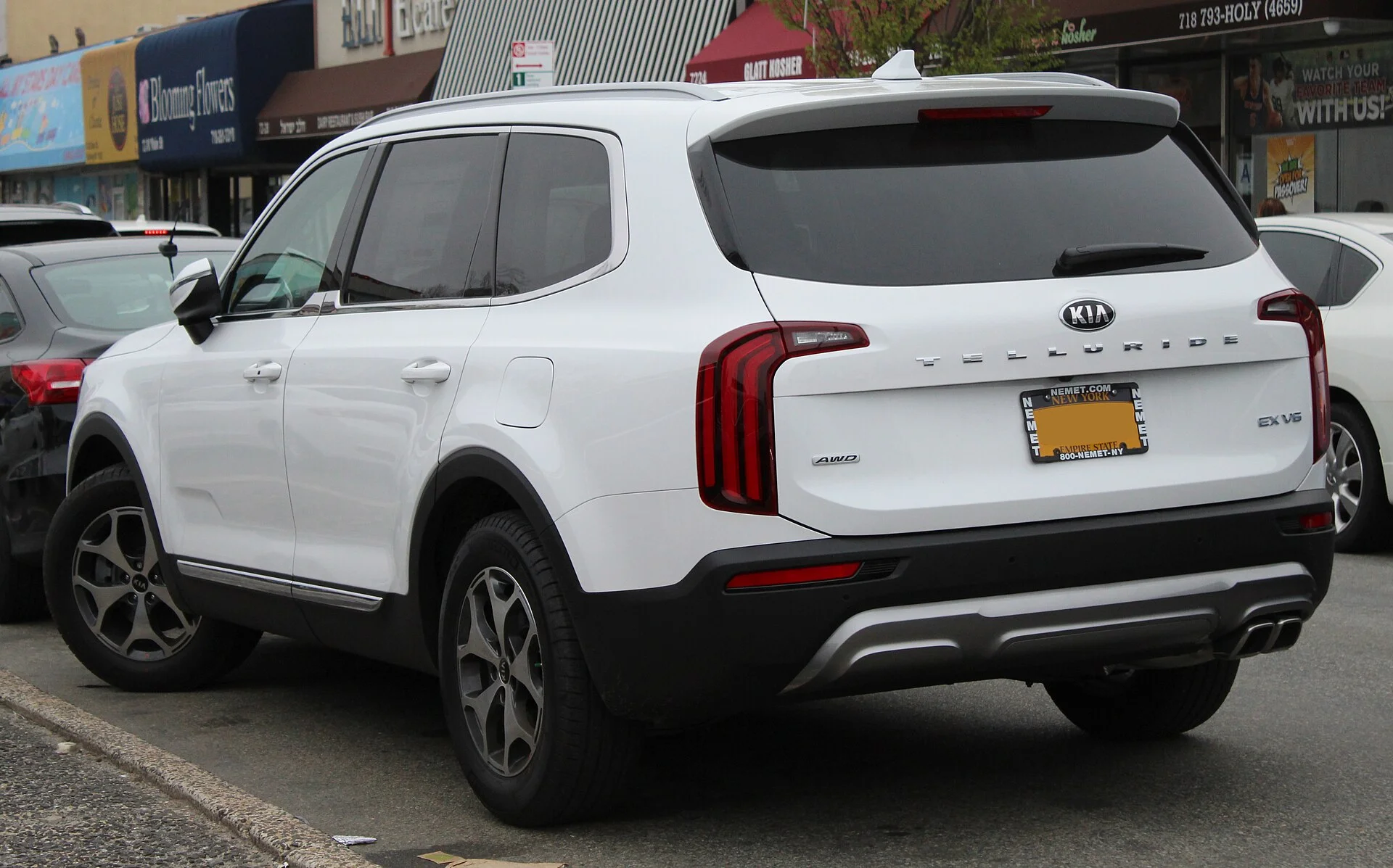
The short answer: yes, and better than most three-row SUVs
Yes, you can sleep in a Kia Telluride, and it is one of the more comfortable mainstream SUVs to do it in. Fold both rear rows and the flat-ish floor runs past 80 inches from the tailgate toward the front seats, which is long enough for a tall adult of 74 inches to lie out completely flat rather than curled or diagonal. That single number is why the Telluride belongs in a different conversation than a compact crossover.
The reason comes down to its size. The Telluride is 196.9 inches long overall and rides on a 114.2-inch wheelbase, and Kia turned that footprint into 87 cubic feet of cargo volume with the second and third rows down. Very few three-row family SUVs give you a truly usable full-length sleeping floor, and the Telluride is one of them. This guide is research and spec synthesis, not a first-hand test: we have not personally slept in or measured a Telluride, so every dimension below comes from published specs and owner measurements, cited at the end. For a tighter footprint, compare the sleeping space in the smaller Kia Sportage.
How the three-row fold-flat actually works
The Telluride's party trick for camping is that it collapses in two stages. With all seats up you have 21 cubic feet behind the third row, which is genuine luggage space, not the token slot most three-row SUVs leave. Drop the third row and that grows to 46 cubic feet. Fold the second row as well and you reach the full 87 cubic feet that turns the back of the vehicle into a bedroom.
The third-row seatbacks fold nearly level with the cargo floor, and the 60/40 second row tips forward from there. On higher trims the second-row release is a one-touch power fold, which is a small luxury when you are setting up in the dark. What you end up with is a long, mostly continuous deck from the liftgate to the backs of the front seats. It is not showroom-flat, which we will get to, but the raw length and volume are what let two people and their gear share the space instead of choosing between sleeping and storage.
A detail worth planning around: how far you slide the front seats forward changes your usable length. Because the folded floor runs into the back of the first-row seats, nudging those seats forward before bed can buy you a few extra inches at the head or foot of the platform. If you are on the tall end, set the front seats first, then build the bed to the space you actually have rather than the space the brochure implies. It is a two-minute adjustment that turns a snug fit into a comfortable one.
It helps to picture the cargo box in three stages, because each one unlocks a different kind of trip:
- All three rows up, 21 cubic feet: genuine luggage room behind the third row, enough for a weekend of bags with seven people aboard.
- Third row folded, 46 cubic feet: a five-seat hauler with a deep boot, but the floor is still too short to lie out flat.
- Both rear rows folded, 87 cubic feet: the full bedroom, with the 80-plus-inch floor that makes flat sleeping possible.
The near-full-length flat floor is the Telluride's real strength
Most car-camping guides bury the one number that matters, so here it is up front: owners who measure their own Tellurides report the folded floor running past 80 inches. That is the difference between a vehicle you can actually stretch out in and one where a six-foot adult sleeps with bent knees. For comparison, folding only the third row leaves about 53 inches behind the second row, and that shrinks or grows between roughly 50 and 62 inches depending on where sliding captain's chairs are parked.
Fifty-three inches is a footwell, not a bed.
You need both rows down to unlock the length.
This is where the Telluride pulls ahead of smaller sleepers. A tidy compact like the one covered in our Mazda CX-5 sleeping guide forces most adults to sleep at an angle, and even a solid two-row option like the Honda CR-V tops out shorter than the Telluride. The Kia's extra length is the whole reason people cross-shop it against far more expensive camper conversions.
It is worth sitting with what that 80-inch floor actually buys you. A 74-inch adult lying on an 80-inch deck has roughly six inches of slack to spare, and that margin is exactly what a pillow at the head and a stuffed duffel at the feet quietly consume without ever leaving you cramped. Fall below that length, as most two-row crossovers do, and those six inches vanish into bent knees or a diagonal sleep that never quite settles. The Telluride's 196.9-inch body and 114.2-inch wheelbase are doing the quiet work here: that long footprint is precisely what pushes the folded floor past the height of the person lying on it.
Width: a genuine two-person platform, not a solo cot
Length gets you a bed; width decides whether one person or two sleep in it. The Telluride's load floor measures about 44 inches across at its narrowest, between the rear wheel-well intrusions, and opens to roughly 56 inches higher up at shoulder height. Here is how that stacks up against standard mattress widths:
- 44 inches — the Telluride's narrowest point, between the rear wheel wells
- 54 inches — a standard full mattress
- 56 inches — the Telluride at shoulder height
- 60 inches — a queen mattress
That lands the Telluride squarely in full-to-small-queen territory across the shoulders.
In practice that means two average-sized adults can lie side by side without either one hanging off a self-inflating pad, as long as you plan the bed around the 44-inch pinch at the wheel wells rather than the wider dimension above it. A single camper has room to spare, and can run the pad down one side and stage a cooler or duffels along the other. If you want a bigger flat sheet of space, a three-row rival like the Hyundai Palisade shares the same platform and nearly identical numbers, so the choice usually comes down to trim and price rather than sleeping room.
The honest catch: a load-floor step and a slight incline
Here is where honesty matters, because the glossy brochure will not tell you. The Telluride's folded floor is not a single dead-flat plane. The second-row seatbacks fold forward at a gentle downward incline rather than lying perfectly level, and there is a low step at the seam where those seatbacks meet the raised cargo floor behind them. Lie directly on the bare deck and you will feel both the slope toward the front of the vehicle and the ridge at the joint.
None of this is a dealbreaker, and it is normal for fold-flat SUVs, but you have to solve it rather than ignore it. The fix is bridging: a firm mattress, a tri-fold foam pad, or a plywood-and-foam sleeping platform spans the step and evens out the incline into one continuous surface. Owners often add a rolled towel or a foam wedge in the low spot near the front to level the last inch. Done right, the Telluride sleeps like a near-queen platform. Skip the bridging and you will slide toward the tailgate all night.
There are two schools of thought on how to solve it. The lightweight approach is a thick pad alone, trusting the foam to absorb the step, which works well for most people and packs away in seconds.
The permanent approach is a low bed platform built from plywood panels on a simple frame, sitting level above the step with storage drawers underneath and a thinner pad on top. The platform is more work and eats a little headroom, but it gives you a dead-flat surface every night and turns the wheel-well pinch into a non-issue because the deck sits above it. For occasional trips, go with the pad; for a rig you sleep in dozens of nights a year, the platform pays off.
Test your setup in the driveway before the first trip, so you discover the slope at home, not at 2 a.m. at the campsite.
2020-2023 versus 2024-plus: does the model year change your bed?
For sleeping purposes, good news: the core cargo box has not meaningfully changed across the Telluride's run, so the 80-plus-inch floor, the 87 cubic feet, and the fold pattern are the same whether you buy an early 2020 or a current one. What changed is around it, in two updates:
- 2023 refresh: restyled front and rear ends, a larger standard touchscreen, a new digital instrument cluster, and a reworked center console.
- 2024 update: mostly cosmetic, adding standard amber daytime running lamps and pushing all-wheel drive earlier into the lineup.
The two things a camper should actually check are the household power outlet and the ruggedized trims. Both eras offer the 110-volt outlet only on upper trims, and both offer X-Line and X-Pro versions with 0.4 inch of extra ride height on top of the standard 8.0 inches of ground clearance, which helps on rough forest-road pullouts. If your priority is the bed, buy on price and mileage; if it is trail access or in-vehicle power, shop by trim, not by year.
What fits, and how to stage gear around the bed
The rear hatch opens to about 46.75 inches wide by 32 inches tall, which is a wide, square mouth that makes loading bins and a rolled mattress easy. Because the total volume is 87 cubic feet and a two-person bed only uses part of the floor, the Telluride lets you keep most of your kit inside overnight instead of leaving it exposed. That is a real advantage over smaller crossovers where the bed swallows the entire cargo area.
A workable layout for two follows a simple order:
- Build the sleeping platform across the full width for a couple, or down one side for a solo trip.
- Line the footwell space behind the front seats and the near wheel well with soft bags.
- Stage hard coolers at the tailgate end, where you can reach them through the hatch.
- Keep the heavy, low items forward so they do not shift toward your feet.
With 178.1 cubic feet of total passenger volume, there is genuinely enough room to sleep, cook prep from the open tailgate, and store a week of gear without a roof box.
A repeatable system beats reshuffling every night. Pack your sleep kit and your day kit into separate bins so that setting up the bed does not mean unpacking the whole car.
Soft duffels are worth more than hard cases here because they squash into the odd spaces around a mattress and the wheel wells, while rigid coolers and water jugs stay by the hatch where the wide 46.75-inch opening lets you slide them straight out. If you camp as a couple, agreeing on which side of the platform is whose keeps small items from migrating into the middle. The Telluride gives you enough volume that organization, not capacity, is the thing that makes or breaks a comfortable night.
Mattress reality: what actually works on this floor
Because the Telluride's deck has that step and incline, the mattress choice matters more than in a flatter vehicle. You want something firm enough to bridge the seam and thick enough that you never feel the ridge underneath. Two formats do this well, and both fit the roughly 44-by-80-inch usable footprint.
For couples who want the closest thing to a home bed, a plush self-inflating pad like the Therm-a-Rest MondoKing 3D is our top pick here. Its thickness smooths out the load-floor step better than a thin air pad, and its width lets two people share the shoulder-level space without rolling into the wheel-well pinch.
Condensation and ventilation: the part nobody plans for
A sealed metal box with two breathing adults becomes a wet box by morning. The Telluride has no built-in sleeping ventilation, so condensation on the glass and headliner is the single most common complaint from people who try car camping without preparing for it. The fix is airflow: crack two windows on opposite sides an inch or so to create a cross-draft, and if your trim has the dual sunroofs, remember that a fixed panoramic glass roof adds cold surface area that sweats, so it helps to vent it if it opens.
Practical add-ons make a real difference:
- Mesh window covers or bug screens let you leave the windows down without inviting mosquitoes.
- A small battery fan moving air toward a cracked window keeps the glass clear.
- In cold weather, a moisture-absorbing pad under your mattress and a wool base layer beat trying to seal the vehicle tight, which only traps more breath.
Ventilate first, insulate second.
The Telluride's tall, upright glass area is a double-edged sword here. It makes the interior feel open and easy to move around in, but it is also a lot of cold surface for warm breath to condense on. Reflective window covers cut both the morning sweat and the heat load on hot afternoons, and they double as privacy shades, which matters when you are parked somewhere public. Cut a set to the exact glass shapes once and they live in the cargo area folded flat, adding almost nothing to your load.
Timing matters as much as airflow. Condensation is worst in the pre-dawn hours, when the outside air is coldest and the metal skin of the vehicle chills to that temperature while two sleepers keep pumping warm, humid breath into the cabin. Setting the cross-draft before you sleep, rather than waking to wipe a fogged interior at four in the morning, is the difference between a dry start and a clammy one. If rain forces the windows nearly shut, a hand-sized gap on the sheltered side plus a small battery fan still moves enough air to keep the worst of the moisture off the glass and the headliner.
Power inside the Telluride: know your trim
Do not assume your Telluride can run appliances. What you get depends entirely on trim:
- Top trims (X-Pro, SX Prestige): a household-style 110-volt outlet, but a modest 150-watt inverter — enough for a laptop, phones, or a small fan, not a kettle, a heater, or anything with a heating element.
- Lower and mid trims: a 12-volt accessory socket and USB ports, which cover device charging but not much else.
For serious camping, treat the built-in outlet as a bonus, not a plan. A portable power station is the reliable path to running a 12-volt fridge, string lights, and a fan through the night, and it works in every trim regardless of what the factory installed. Check your specific vehicle before a trip; the difference between trims here is easy to overlook until you are standing in a dark campsite wondering why the outlet is dead.
Solo, couple, or family: who the Telluride actually fits
For one person, the Telluride is close to ideal. You get the full 80-plus-inch length, room to leave gear set up on one side, and a wide hatch to work from. For a couple, it is one of the best non-van options on the market: two average adults genuinely fit across the 44-to-56-inch width, and the length means neither of you compromises.
It is a two-person sleeper that happens to also seat seven or eight when you are not camping.
Where it stops is a family of four sleeping inside at once; there simply is not a second flat level, so kids end up in a rooftop tent or a ground tent while the adults take the interior.
If you routinely need to sleep more than two, pair the Telluride with a rooftop or annex tent rather than trying to stack bodies inside. For couples and solo travelers who want to sleep flat, keep their gear dry and inside, and still drive a normal family SUV the other 360 days a year, the Telluride is one of the smartest sleepers you can buy. If you are cross-shopping smaller and cheaper, our Nissan Rogue sleeping guide shows exactly what you trade away in length and width.
What tips the Telluride from good to genuinely excellent is that it asks almost nothing of you the rest of the year. There is no roof tent parked overhead hurting your fuel economy, no permanent build you have to explain to passengers, and no compromise on the school run or the airport pickup. You fold two rows, drop in a pad, and you have a bed; you fold them back up and you have a seven- or eight-seat family hauler.
That dual life is the quiet reason so many people choose a big SUV sleeper over a dedicated van: the camping capability rides along for free inside a vehicle they were going to own anyway. If your trips are one or two people, a handful of nights at a time, the Telluride covers the assignment without a single aftermarket dollar spent, and rewards you further if you add a good mattress and window covers.
A note on how we sourced this
To be transparent: this guide is built from published Kia specifications and owner-reported measurements, not from us personally sleeping in or measuring a Telluride. Volume figures, ground clearance, and exterior dimensions come from Kia and major automotive references; the folded-floor length, the wheel-well width, and the load-floor step come from owners who measured their own vehicles and shared the numbers in Telluride forums. Where owners disagree slightly, we used the conservative figure. Always verify your specific trim and second-row configuration before buying gear, since captain's chairs, bench seats, and slide position all shift the usable length by several inches.
Two figures in particular deserve a tape measure of your own before you spend a dollar on gear: the exact folded-floor length in your trim, and the width at the wheel-well pinch, since a second-row bench and second-row captain's chairs leave slightly different footprints on the floor. Measure with the front seats set where you actually drive, not shoved all the way forward, so the number reflects the bed you will really sleep on rather than a best-case figure you can never reproduce on the road.