The short answer is one number: about 73 inches
Yes, you can sleep in a Honda CR-V. Fold the rear seats down and the cargo area opens into a roughly 73-inch flat bed, measured from the folded seatbacks to the closed tailgate. A 6-foot adult stands 72 inches tall, so the math works with almost nothing to spare, and that is the whole ballgame.
Everything else in this guide is really a footnote to that number. Slide the front seats forward and a person up to about 6 feet can stretch out straight. Go taller than that and you sleep on a diagonal, drop the front passenger seat, or accept bent knees. The CR-V is a genuinely usable one-person camper and a snug two-person one, but it is a fit measured in inches, not feet, and the details below decide whether those inches fall in your favor.
One thing up front, because it matters for trust: none of the numbers here come from us personally sleeping in a CR-V. This is a synthesis of Honda's published cargo dimensions, dealer and specification databases, and owner reports. Where the sources agree we say so plainly; where the real-world fit is fuzzier than the spec sheet, we say that too.
Which CR-V do you actually have? The generation split changes the fit
People search "can you sleep in a CR-V" as if there is one CR-V. There are effectively two very different beds hiding under that one badge, and knowing which you own changes your whole plan.
The 5th generation ran from 2017 through 2022. With the seats folded, its cargo box measures roughly 40 inches wide, 73 inches long, and 33 inches tall. It is the tighter, lower cave of the two, but its low load floor and near-flat fold made it a quiet favorite among minimalist campers.
The 6th generation arrived for 2023 and is the largest CR-V yet. Folded, it runs about 44 inches wide, the same 73 inches long, and about 36 inches tall. That is roughly 4 extra inches of width and 3 extra inches of height over the older car, with a squared-off cargo opening that makes the space feel more like a box and less like a wedge.
- Length is the constant: both generations give you about 73 inches flat, so tall sleepers gain nothing by upgrading.
- Width is where the 6th gen wins: about 44 inches versus 40 inches is the difference between a workable two-person squeeze and a hard no.
- Height helps sit-up comfort: 36 inches of interior height beats 33 inches for changing clothes, reading, and not clocking your head on the ceiling.
If you want the current car's numbers specifically, our Honda CR-V cargo dimensions breakdown digs into the load floor in more detail. The short version: newer is roomier, but only sideways and upward, never longer. Round out the kit with a folding camp table for the campsite.
The hybrid problem almost no guide mentions: your battery took your bed
This is the single most important thing a shopper can know, and most sleeping guides skip it entirely. A CR-V Hybrid does not sleep the same as a gas CR-V, because the hybrid battery lives under the cargo floor and pushes that floor upward.
On the current car, the hybrid's load floor sits about 2 inches higher than the gas model's. Two inches sounds trivial until you are lying inside a space that is only 33 to 36 inches tall to begin with, at which point it is a meaningful chunk of the headroom you have left when propped on an elbow.
The volume numbers tell the same story. A 5th-gen gas CR-V holds 39.2 cubic feet behind the rear seats and 75.8 cubic feet with them folded. The 5th-gen hybrid drops to 33.2 cubic feet up and 68.7 cubic feet folded, losing roughly seven cubic feet purely to the battery pack. On the gas 6th gen you are back up to 39.3 cubic feet and 76.5 cubic feet folded, the roomiest CR-V bed on offer.
The practical takeaway is blunt: if you are buying a CR-V with camping as a real priority, the gas model is the friendlier bed. The hybrid is still sleepable, but you are giving up floor depth and a couple inches of ceiling in exchange for the fuel economy. Know that trade before you sign, not after your first night. The raised floor also stacks with whatever you sleep on: a 3-inch pad in a hybrid sits you a full 5 inches higher than the gas car's bare floor once you add the battery step, so a side-sleeper propped on an elbow runs out of ceiling first. And because the hybrid's floor loses roughly seven cubic feet to the pack, there is less room to stash gear beside you, which pushes bins up toward the sleeping surface on exactly the nights you were hoping to spread out.
The real flat length, and why "seats folded" is a half-truth
Spec sheets love the phrase "folds flat." The CR-V's rear seats fold nearly flat, which is not the same thing, and the gap between those two words is exactly where a bad night's sleep lives.
When you fold the 60/40 rear seatbacks, they rest slightly higher than the cargo floor behind them, leaving a low step and a gentle incline rather than a perfectly level plane. It is close, close enough that many owners just throw a foam pad over it and sleep fine, but it is not a billiard table. Your torso ends up marginally higher than your feet, or the seam under your hips announces itself around 3 a.m.
The 73-inch length also assumes you have reclaimed space from the front seats. Out of the box, the flat run behind folded seats is shorter; you unlock the full length by sliding the front seats all the way forward and, for the tallest sleepers, tipping the front passenger seatback forward too. Do that and a person up to roughly 6 feet lies straight. Skip it and you are working with closer to five feet of truly level room.
- Fold the 60/40 seat fully, both sides, for maximum flat width, not just one side.
- Slide front seats forward to convert the footwell area into usable bed length.
- Plan to bridge the step under the folded seatbacks, because it will not disappear on its own.
Width for your shoulders: what 40 to 44 inches really allows
Length decides whether you fit head to toe. Width decides whether a second person fits beside you, and this is where honest expectations save a relationship.
The CR-V gives you about 40 inches of width between the folded seats on the 5th gen and about 44 inches on the 6th gen. For reference, a standard twin mattress is roughly 38 inches wide and a full is about 54 inches wide. So even the roomier new CR-V lands well short of a full-size bed and just past a single twin. That 40-to-44-inch figure is the width between the rear wheel wells, which is the true pinch point: the arches intrude at roughly hip height, so the floor is widest down near your feet and narrows exactly where your shoulders and hips sit. It is why a pad that measures fine on paper can still feel squeezed at the middle once it is wedged between the arches, and why cutting a foam mattress to hug the wheel-well shape buys back more usable width than forcing a rectangular one flat.
For one person, that is luxurious; you have room to sprawl and stash gear alongside you. For two adults, 40 to 44 inches means shoulders touching, sleeping bags overlapping, and no independent tossing and turning. It is doable for a couple who genuinely do not mind closeness, and cramped for anyone who does. There is no platform or mattress trick that adds width the vehicle does not have.
If two-up comfort is the goal, it is worth honestly comparing footprints before you commit. Our CR-V versus Subaru Forester camping comparison lays the two boxes side by side, and the Forester's slightly different proportions matter more for couples than the badge on the hood.
Computed fit: every dimension this page states, run against the page's own ceiling on the same axis. Nothing here is a spec-sheet import — it is arithmetic on figures this page already states (40-to-44-inch, 57 inches, 54 inches, 44 inches, 38 inches). The formula is the plain one: margin = the page’s stated ceiling on that axis − the figure. Each row subtracts on ONE axis only, and a figure the page never labels by axis is left out rather than guessed at.
| What the page states | Figure | Axis | Ceiling this page states | Margin |
|---|---|---|---|---|
| …it is 57 inches wide fully inflated… | 57 inches | wide | 40-to-44-inch | over by 17 in |
| …wide and a full is about 54 inches wide | 54 inches | wide | 40-to-44-inch | over by 14 in |
| …it runs about 44 inches wide… | 44 inches | wide | 40-to-44-inch | over by 4 in |
| …a standard twin mattress is roughly 38 inches wide and a full is about… | 38 inches | wide | 40-to-44-inch | 2 in spare |
Read the last column first, because it settles the question before anything else does: 1 clear the ceiling this page states (most room to spare: 2 in) and 3 go over it (worst overage 17 in). Each row is measured only against the ceiling on its own axis (40-to-44-inch wide).
What actually fits lying down: a height-by-height reality check
Enough theory. Here is who fits how, based on the roughly 73-inch flat length and the near-flat fold.
- Up to about 5 feet 8 inches: comfortable straight-line sleeping with room to spare. You can leave a little gear at your feet and still stretch out.
- 5 feet 8 to about 6 feet: fits straight with the front seats slid fully forward. You are using nearly all 73 inches, so keep pillows and bags out of the footwell.
- About 6 feet to 6 feet 2 inches: the tight zone. Straight sleeping works only with front seats forward and the passenger seatback tipped down, or you switch to a diagonal.
- Taller than 6 feet 2 inches: plan on sleeping diagonally, curling slightly, or looking at a longer vehicle. The CR-V will not magically grow past 73 inches.
Two people change the calculation. Side by side, you are both constrained to the 73-inch length and splitting 40 to 44 inches of width, so this configuration realistically suits two people who are both around 5 feet 8 inches or shorter and comfortable being close.
The diagonal trick and the platform question
When straight-line length runs out, the corner-to-corner diagonal is the oldest trick in the car-camping book, and it buys real inches. Lying from one rear corner toward the opposite front corner turns the CR-V's rectangle into its longer diagonal, which can add several inches of usable run for a solo sleeper. The cost is that it only works for one person; two bodies cannot both take the diagonal.
The bigger structural decision is whether to build a sleeping platform. A platform is a raised deck, usually plywood on a simple frame, that does two useful things at once: it creates a genuinely flat surface above the not-quite-level folded seats, and it opens storage underneath for bins, water, and gear. The trade is height. In a cabin that is only 33 to 36 inches tall, every inch of platform is an inch of headroom you no longer have, and on the hybrid's already-raised floor that math gets unforgiving fast.
- Choose a platform if you value a dead-flat bed and under-deck storage, and you sleep on your back or side without needing to sit fully upright.
- Skip the platform if headroom and simplicity matter more, and use a thick pad to smooth the step instead.
- Hybrid owners especially should think twice before adding height to an already-tall floor.
Whichever way you go, the mattress on top matters as much as the structure underneath, which is the next question worth getting right. To level things out, build a DIY sleeping platform for a flat bed.
Mattress reality on a floor that is not flat
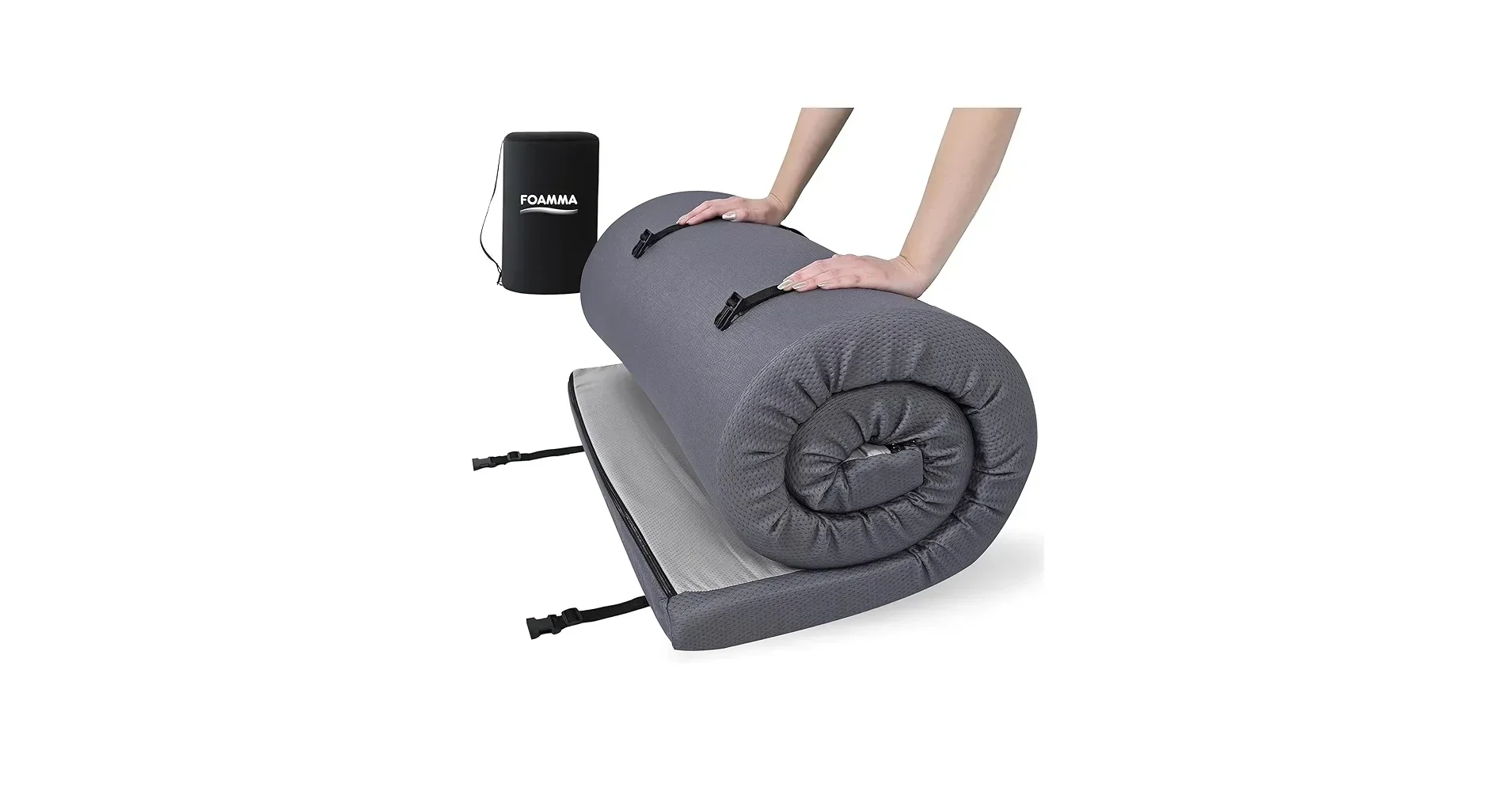
Because the CR-V's folded seats leave a slight step and incline, your sleep surface has to do two jobs: cushion you and hide the terrain. That rules out the thinnest options for most people.
Fit is the other half. With about 40 to 44 inches of width and 73 inches of length to play with, a twin-width pad or mattress at roughly 38 inches is the natural single-sleeper size, leaving a little margin for gear. Two-person setups usually mean two overlapping pads rather than one wide mattress, since a 54-inch full simply will not lie flat between the wheel wells. For a deeper walk through pad types and sizing for this class of vehicle, our guide to car-camping mattresses for SUVs and sedans covers the trade-offs in detail.
Condensation and ventilation: the sealed-box problem
The CR-V is a well-sealed modern car, which is wonderful on the highway and works against you overnight. A sleeping adult exhales a surprising amount of water vapor, and in a closed cabin that moisture condenses on cold glass and metal, leaving you with fogged windows, a damp sleeping bag, and clammy air by morning. Rough figures put the overnight output of one sleeping adult near a pint of water from breath and skin combined, and in a sealed cabin this small there is nowhere for it to go but the coldest glass and the metal around the tailgate.
- Vent on opposite sides so air actually crosses the cabin rather than stagnating.
- Add bug mesh to the vented gaps so ventilation does not cost you a night of mosquitoes.
- Watch the tailgate seam and glass in the morning; visible beading means you under-ventilated and should open more next time.
Field tip: a single low-speed fan moving air across the cabin does more to stop morning condensation than cracking the windows wider, and it costs you no warmth.
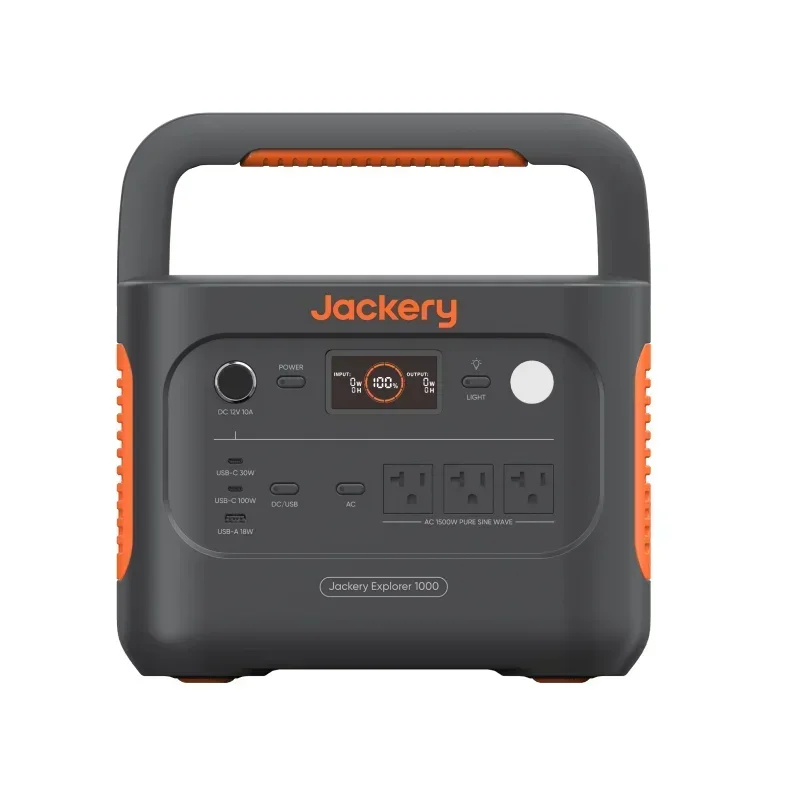
If you are running a fan every night, power it from a portable station rather than the car. A unit like the Jackery Explorer 1000 v2 Portable Power Station holds about 1,070 Wh, enough to run the fan all night and top off phones and a cooler without ever touching the CR-V's starter battery. Running the engine or heater to stay warm through the night is not a substitute for ventilation and carries a real carbon-monoxide risk in an enclosed space, so it is not a trade worth making. Insulation, a properly rated sleeping bag, and a little airflow beat a running engine every time.
Temperature, insulation, and privacy: the unglamorous half of a good night
Fit gets you into the CR-V. Staying comfortable once you are in it comes down to three things the spec sheet never mentions: temperature, glass, and light. Owner reports converge on the same lesson, which is that a compact SUV is a thin metal-and-glass shell that follows the outside temperature closely, warming fast in morning sun and shedding heat quickly on a cold night.
Your sleeping bag does most of the work. Match its rating to the season honestly, and add an insulating pad underneath, because the ground-side cold conducts up through the cargo floor faster than most first-timers expect. On cold nights the CR-V's large glass area is the weak point; simple reflective panels or foam-board inserts cut to each window shape slow the heat loss and, conveniently, do the second job you need anyway.
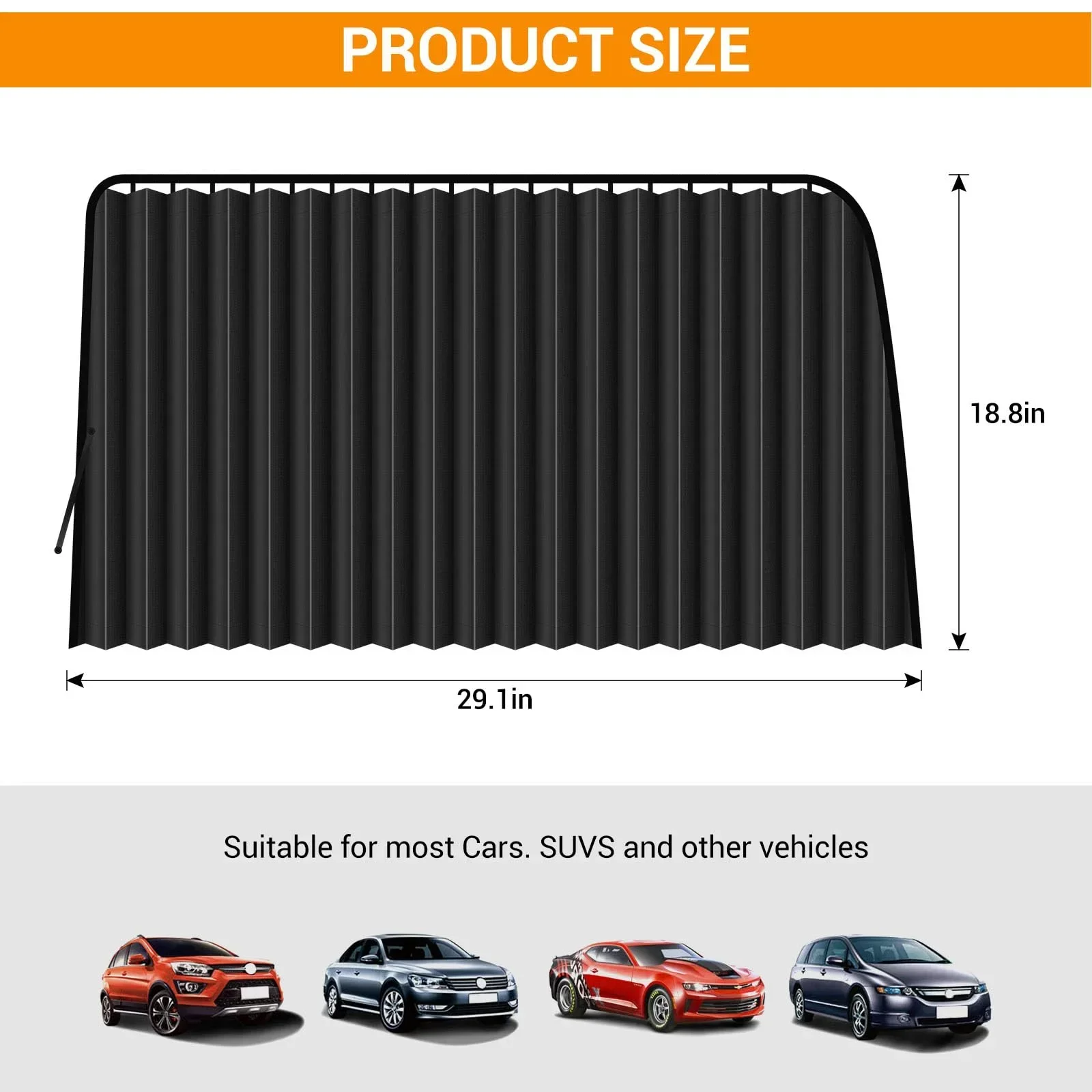
That second job is privacy and darkness. The same window covers that hold heat also block streetlights and curious eyes, which matters both for sleep quality and for staying unremarkable wherever you have parked. For the side glass specifically, snap-on magnetic panels like the ZATOOTO Magnetic Car Side Window Sun Shades press onto the CR-V's steel door frames in seconds with no adhesive, giving you privacy and a darker cabin without cutting a custom insert for every window. A few practical habits go a long way:
- Cover the glass with cut-to-fit reflective or foam panels that serve triple duty: insulation, blackout, and privacy.
- Insulate the floor, not just the air, since the cold you feel usually comes up through the pad, not down from the ceiling.
- Park level and legal, because a flat spot fixes the not-quite-flat floor, and the wrong lot ends a trip faster than any temperature swing.
None of this is exotic, and none of it costs much. It is the difference between technically fitting in the CR-V and actually wanting to do it again the next weekend.
How the CR-V stacks up, and who it is really for
Put next to its rivals, the CR-V is a middle-of-the-pack compact-SUV bed: longer and flatter than a small crossover, shorter than a proper wagon or a minivan. It shares the same fundamental constraint as the Toyota RAV4 and Mazda CX-5, a flat length in the low 70s of inches that puts a hard ceiling on how tall a straight sleeper can be. If you are actively comparing, our RAV4 camping guide and CX-5 sleeping guide walk the same measurements for those two so you can line the boxes up yourself.
So who should actually sleep in a CR-V? It is an excellent solo camper for anyone up to about 6 feet, a workable one for slightly taller people willing to sleep diagonally, and a cozy-to-cramped two-person option best suited to shorter couples who like being close. Gas models sleep better than hybrids thanks to that lower floor, and the newer 6th gen adds width and headroom without adding the length tall sleepers actually crave.
What it is not is a stealth condo. You are trading a tent's space for a car's security, weatherproofing, and five-minute setup, and for a lot of trips that is a trade well worth making. Go in knowing the 73-inch number, respect the not-quite-flat floor, keep a window cracked, and the CR-V will get you through the night far better than its modest footprint suggests.