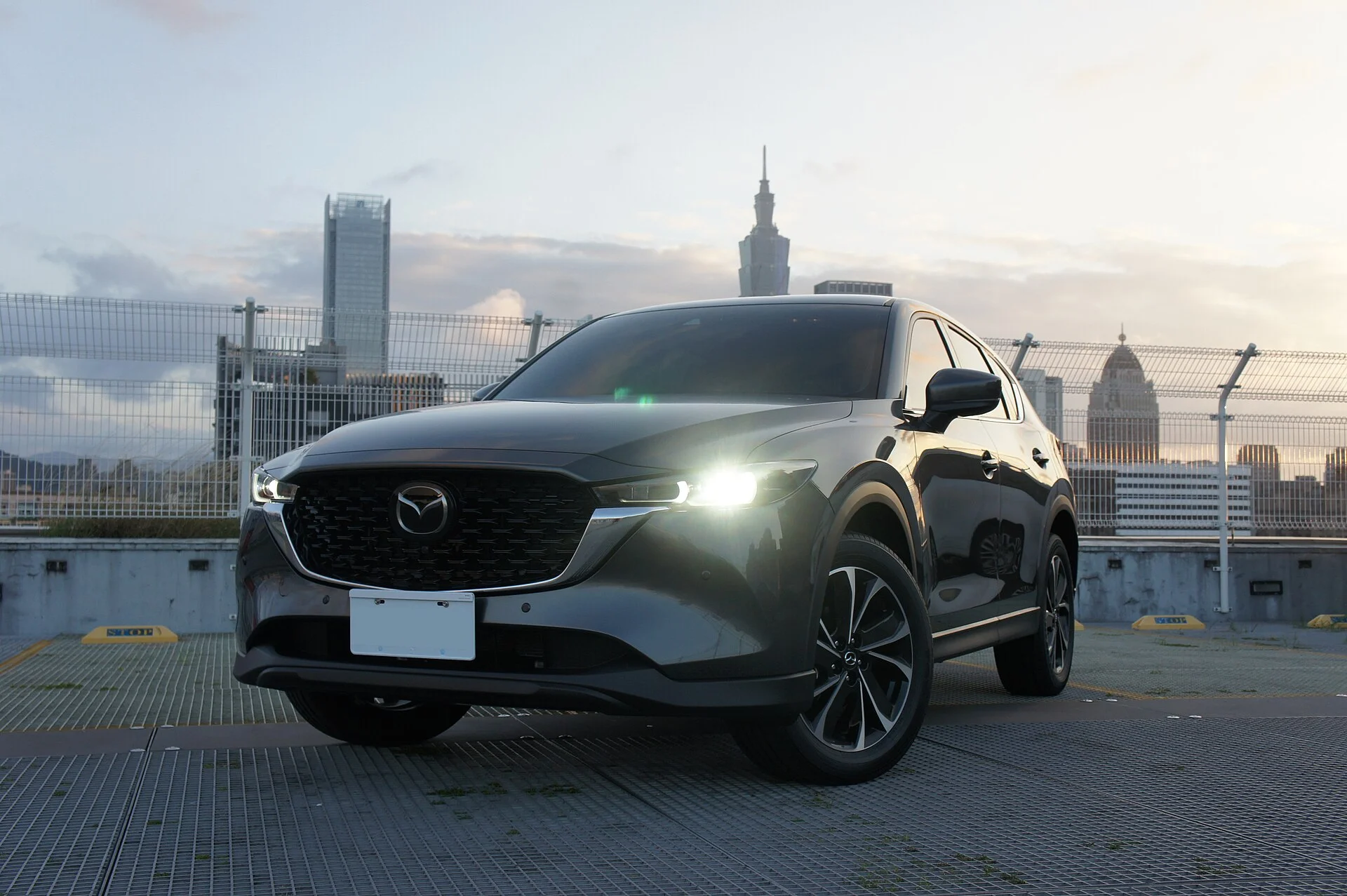
The short answer: yes, if you are about 6 feet or under
Yes, you can sleep inside a Mazda CX-5, and a sleeper up to about 6 ft (72 in) tall can lie almost fully stretched out. With the 40/20/40 rear seats folded and the front seats slid all the way forward, the flat run from the tailgate to the reclined front seatbacks measures roughly 73 in. That is the single number that decides everything: a person around 6 ft 1 in fits straight, and taller campers can still make it work on a diagonal.
But the raw length hides the real story. The CX-5 is a compact SUV, not a wagon, and its sleeping space has three quirks that generic "can you sleep in it" articles skip: a load-floor step, a narrow width between the wheel wells, and a gap behind the folded seats where your head goes. Understand those three, and you can turn a cramped cargo hold into a genuinely flat bed. This guide walks each one, using measurements pulled from Mazda's published specs and from owners who have actually built platforms in the back. Nothing here comes from us personally sleeping in the car; it is a synthesis of Mazda's dimensions and the numbers CX-5 owners have measured and posted. See camping accessories for the smaller Mazda CX-30. See also Mazda 3 camping accessories.
The real flat length: 70 inches of floor, stretched to 73 by a trick
Here is where numbers get slippery online. The genuinely flat load floor behind the folded seats runs about 70 in long and about 41 in wide. That is the honest, level surface you get before you do anything clever. Seventy inches falls just under 6 ft, which is why owners of average height report the CX-5 is "doable" but tight straight out of the box, and why a camper who is exactly 6 ft feels their toes brushing the tailgate.
The extra length comes from two moves. First, folding the front seatbacks forward and sliding the seats up recovers the space behind them. Second, there is a gap between the folded rear seatbacks and the front seats, and that gap is exactly where you rest your head. Bridge it with a cushion or a slide-out board and the usable run climbs to about 73 in. One CX-5 owner measured about 6 ft 9 in of total length with the front seat tilted fully forward, though that last stretch is uneven and better for feet than for a flat mattress. The lesson from owners is consistent: the CX-5 gives you just enough length for an average-height adult, and every extra inch has to be engineered, not assumed.
The practical takeaway: plan your bed around a 70 in flat core, then extend the head end into the gap. Do not expect a full 73 in of level, firm surface without building for it. If you want the fuller measurement picture, our Mazda CX-5 cargo dimensions breakdown walks through Mazda's published cargo numbers in detail.
Computed fit: every dimension this page states, run against the page's own ceiling on the same axis. Nothing here is a spec-sheet import — it is arithmetic on figures this page already states (70 in, 41 in, 75 in, 54 in, 38 in, 23 in). The formula is the plain one: margin = the page’s stated ceiling on that axis − the figure. Each row subtracts on ONE axis only, and a figure the page never labels by axis is left out rather than guessed at.
| What the page states | Figure | Axis | Ceiling this page states | Margin |
|---|---|---|---|---|
| A standard twin mattress is about 75 in long… | 75 in | long | 70 in | over by 5 in |
| …a full-size mattress is about 54 in wide… | 54 in | wide | 41 in | over by 13 in |
| A twin air mattress runs about 38 in wide… | 38 in | wide | 41 in | 3 in spare |
| One documented build sets the platform about 23 in wide at the front and angles the sleeper so you get a… | 23 in | wide | 41 in | 18 in spare |
Read the last column first, because it settles the question before anything else does: 2 clear the ceiling this page states (most room to spare: 18 in) and 2 go over it (worst overage 13 in). Each row is measured only against the ceiling on its own axis (70 in long, 41 in wide).
The load-floor step nobody warns you about
Fold the CX-5's rear seats and the surface is not one continuous plane. Owners consistently report that the rear cargo section sits about 1.5 in lower than the folded seatbacks, leaving a shallow trough right where your torso lands. Sleep straight on it and you feel a lip under your lower back or hips all night.
This is the CX-5's signature sleeping flaw, and it is also the easiest to fix. The 1.5 in drop is small enough that a couple of strips of 2x2 lumber, a folded blanket, or a firm foam block under a platform board levels it completely. A thicker self-inflating pad also spans the step well enough that many campers never build anything. What you should not do is throw a thin air mattress straight down and hope, because the mattress will sag into the low section and telegraph the edge. Knowing the step is there is half the battle; every serious CX-5 build starts by leveling it.
- 2x2 lumber strips laid under the lower rear section — cheap and rock solid.
- A folded blanket or quilt — the no-tools fix that works in a pinch.
- A thick self-inflating pad that simply spans the 1.5 in step on its own.
You can measure the step at home in a minute: fold the seats, lay a broom handle or any straightedge from the folded seatback across to the tailgate, and you will see the rear cargo section dip below the line. That visible gap is exactly why a thin air mattress telegraphs a ridge under your hips — the mattress bridges the two high points and sags into the low middle. Level the trough first, then choose your sleep surface, and the whole platform reads as one continuous plane.
Width is the CX-5's true ceiling, not length
Length gets all the attention, but width is what actually limits the CX-5. Between the wheel wells you have about 41 in, opening to roughly 54 in at the widest point higher up. Forty-one inches at floor level is narrower than a standard full mattress (about 54 in) and only a little wider than a twin.
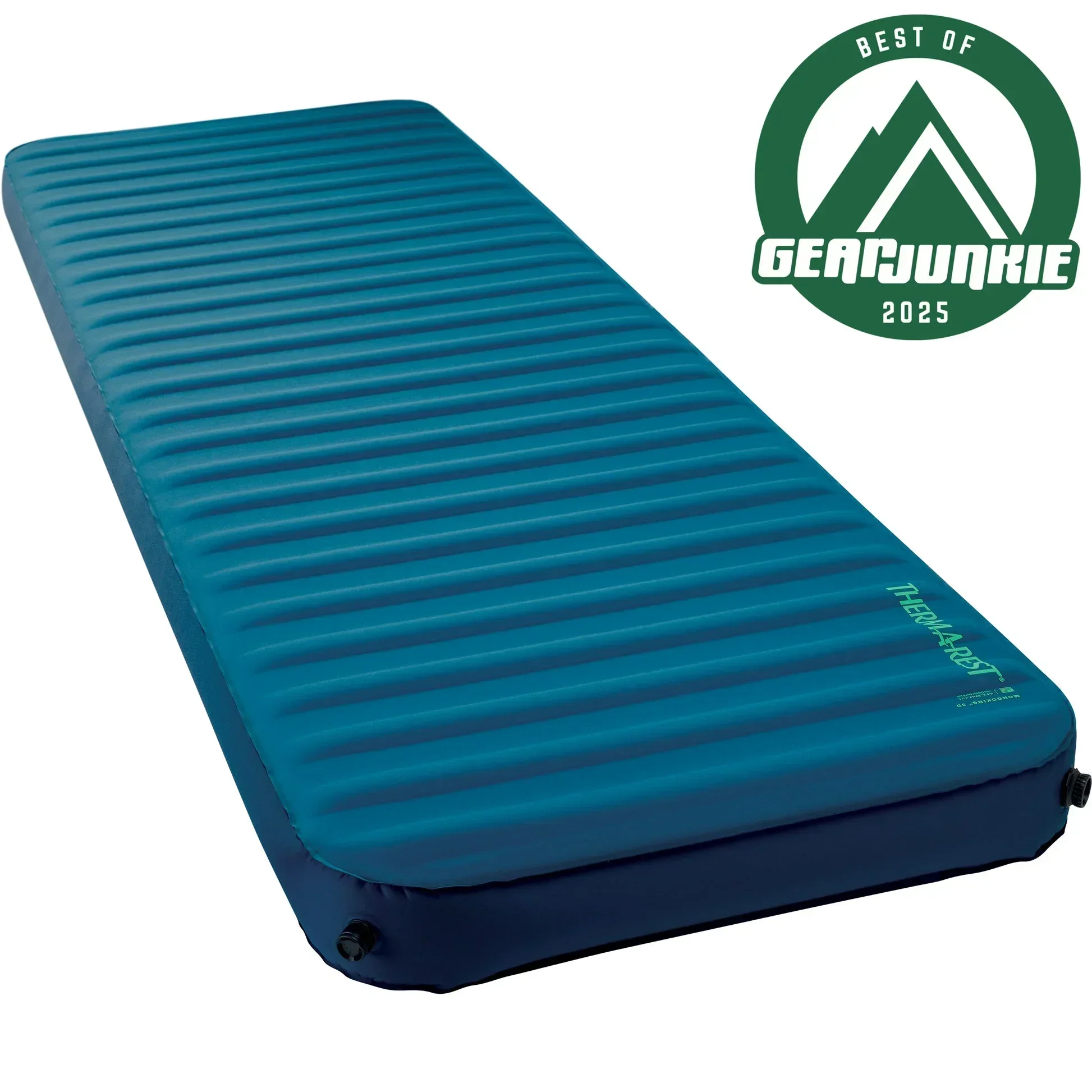
For one person, 41 in is comfortable, even roomy. For two, it is tight: two adults sleeping shoulder to shoulder will be pressed together, and anyone with broad shoulders will feel the wheel wells. For context, a full-size mattress is about 54 in wide, so the CX-5's 41 in floor gives up more than a foot of shoulder room versus a bed at home. A twin air mattress runs about 38 in wide, so it drops between the wheel wells cleanly, which is the neat trick most CX-5 campers land on for a single sleeper. For a solo camper the cleaner answer is a single wide self-inflating pad like the Therm-a-Rest MondoKing 3D, which fills that 41 in floor almost edge to edge and whose thick loft erases the 1.5 in load-floor step in the same move. Two people who want real space usually give up on sleeping fully flat side by side and instead stagger their positions, sleep head-to-toe, or simply accept the squeeze. If a couple wants to camp inside routinely, a wider vehicle like the Honda CR-V or Toyota RAV4 buys meaningful extra shoulder room.
How much headroom you get lying down and sitting up
The CX-5's roofline slopes, so ceiling height is best down the center. Measured from the folded seatback up to the roof, the high point is about 34 in in the middle, tapering about 4 to 5 in lower toward the sides. Lying down, 34 in is plenty; you are nowhere near the roof. Sitting up is where the compact packaging bites: you can prop on an elbow to read or change clothes, but you cannot sit fully upright cross-legged without ducking. In that low, propped-up position a compact headlamp like the Black Diamond Spot 400 beats twisting toward the dome light to read or find gear. That taper toward the sides also means the most comfortable sleeping line is straight down the center, another reason a single sleeper fares better than a pair jammed against the wheel wells.
Keep the sleeping line straight down the center: the 34 in high point tapers 4 to 5 in lower toward the sides, so the middle is the only place you clear the roof comfortably.
For reference, the cabin itself offers 39.3 in of front headroom and 39 in of rear headroom, with 41 in of front legroom and 39.6 in of rear legroom. Those passenger numbers matter for the person who ends up reclining a front seat as an overflow sleeping spot, or for anyone changing clothes up front before crawling into the back. None of it is generous, but for a single camper the CX-5's interior is workable.
The diagonal trick: how taller campers actually fit
If you are over about 6 ft 1 in, sleeping straight down the middle means your feet hit the tailgate or your head jams the front seats. The fix owners have refined is sleeping on a diagonal, corner to corner, which is the longest line inside any rectangular cargo bay.
One documented build sets the platform about 23 in wide at the front and angles the sleeper so you get a usable strip roughly 20 in wide and about 6 ft 6 in long with the corners knocked off. That is enough for a camper over 6 ft to stretch out. The cost is that the diagonal eats the width, so it is strictly a one-person solution, and you lose the tidy rectangular storage you would otherwise have under and around the bed. Combine the diagonal with sliding the front passenger seat fully forward and tilting its back, and even a taller camper can find a flat-enough line for the torso, with the lower legs running up toward the front footwell. It is not luxurious, but it is honest: the CX-5 rewards campers who are willing to sleep at an angle. The trade is real, though, and worth naming plainly. A diagonal bed cannot be shared, it complicates any under-bed storage build, and it demands you get the platform width right or you slide off the level zone. This is the single most useful technique for tall CX-5 campers, and also the one that most clearly marks the car as a solo sleeper.
What actually fits: mattresses and pads that work
Mattress shopping is where people waste money on the CX-5. A standard twin mattress is about 75 in long, which will not lie flat in the roughly 70 in flat zone, so it either curls up the seatbacks or wedges at an angle. Skip full rigid mattresses entirely.
- Self-inflating foam pads are the sweet spot. They span the 1.5 in load-floor step, add real cushioning, and roll away by day. A single wide pad or two standard pads laid side by side covers the 41 in width.
- Twin air mattresses at about 38 in wide drop neatly between the wheel wells for one person, but they can feel firm and cold, and they exaggerate the floor step unless you level it first.
- Foam mattress toppers cut to the cargo shape work well as a fixed setup, though they are bulky to store.
For a deeper comparison of pad types across compact SUVs, see our car camping mattress guide for SUVs and sedans. Whatever you pick, buy for the 70 in flat length and the 41 in width, not for the optimistic 73 in headline number.
On cold nights, insulation matters as much as thickness. A pad's R-value is what stops the cold cargo floor from wicking heat out of your back, and a self-inflating foam pad typically insulates far better than a bare air mattress, which lets cold air convect underneath you all night. If you cut a foam topper to the cargo shape instead, trace the wheel-well intrusions with cardboard first so the foam drops flush to the 41 in floor rather than riding up over the arches. Two inches of topper clears the load-floor step without eating much of the roughly 34 in of center headroom.
Building a simple level sleeping platform
You do not need a workshop to fix the CX-5's two flaws. A minimal platform solves both the 1.5 in step and the head-gap in one afternoon.
- Level the step first. Set 2x2 strips or thin blocks under the rear (lower) section so the whole surface reads flat with the folded seatbacks.
- Bridge the head gap. A short board that slides out from under the mattress supports the gap behind the folded seats, turning 70 in of floor into a continuous 73 in run. Owners report using thin material, even 1/8 in board, for that small bridging section to avoid stealing headroom.
- Keep it thin. Every inch of platform is an inch of lost ceiling. With only about 34 in of center height, a low-profile build matters more here than in a taller SUV.
If you would rather not build at all, the no-tools version is: fold the 40/20/40 seats, slide the front seats forward, level the step with a folded quilt, and top it with a thick self-inflating pad. That gets most campers to a comfortable single bed.
One person versus two: the honest comfort call
For one camper, the CX-5 is a genuinely good little sleeper: 70-plus inches of length and 41 in of width is a comfortable single bed once the floor is level. Solo travelers rarely feel cramped.
For two, be realistic. The 41 in between the wheel wells is about the width of a small double, which means two adults will sleep touching, with no room to roll away. It is fine for a couple who does not mind closeness on occasional trips, and cramped for regular two-person camping. There is also the gear problem: two people means two people's worth of bags, and with the bed filling the cargo floor, that gear has to migrate to the front seats or a rooftop box. The redesigned 2026 CX-5 grows cargo volume to as much as 66.5 cu ft (up from 59.3 cu ft on the 2025), which helps gear storage more than shoulder width, but every inch counts. If you camp as a pair often, a Subaru Forester or the CR-V give more usable width for two.
With the bed filling the cargo floor, the loose gear needs a home so it does not migrate onto the mattress:
- Front seats and footwells for soft bags you want within reach.
- A rooftop box for the bulky, low-frequency items.
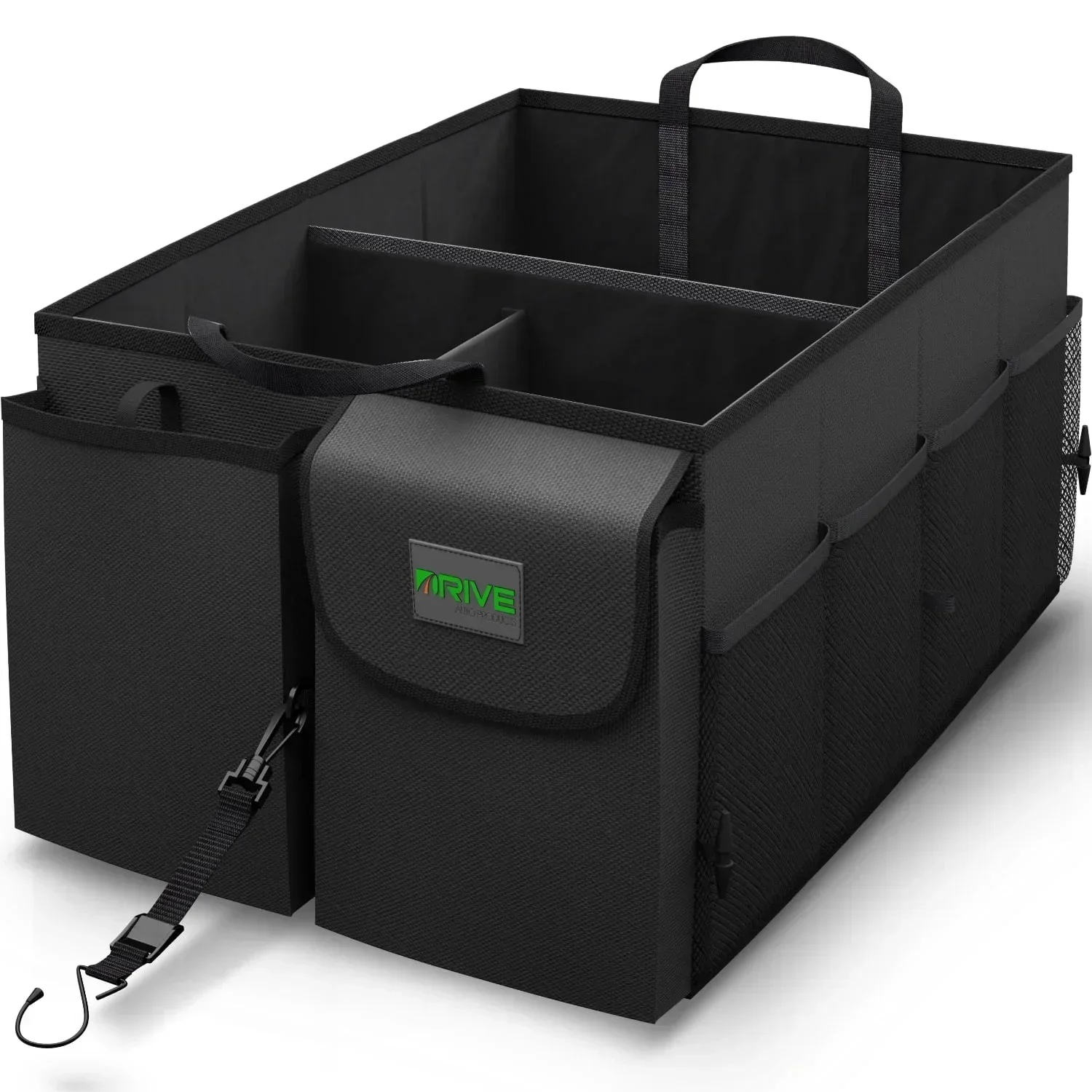
- A collapsible bin such as the Drive Auto Products Car Trunk Organizer to corral cookware and small gear that would otherwise slide across the floor.
Model-year differences that matter for sleeping
The CX-5 ran a similar footprint from 2013 through 2025, so sleeping dimensions changed little across that long generation: expect roughly 70 in of flat floor, about 41 in between the wheel wells, and 59.3 cu ft of cargo with the seats folded on recent 2025 models (30.8 cu ft seats up). The 40/20/40 split fold has been a constant, and it is genuinely useful, letting a solo camper drop the center pass-through for skis or a fishing rod while keeping a side seat up.
The redesigned 2026 CX-5 is the meaningful break. It grows overall and pushes maximum cargo volume to about 66.5 cu ft with the seats down. That extra volume mostly means more gear capacity and a slightly longer bay; the fundamental width limitation of a compact SUV remains. If you are shopping used specifically to sleep in one, any 2013-2025 CX-5 behaves about the same for camping, so buy on condition and price rather than chasing a camping-specific model year.
- 2013-2025: roughly 70 in flat floor, about 41 in between the wheel wells, 59.3 cu ft with the seats down.
- 2026 redesign: maximum cargo grows to about 66.5 cu ft and the bay runs slightly longer.
- The 40/20/40 split fold has stayed constant across every model year.
Windows, condensation, and staying comfortable overnight
In a cabin this small the glass fogs within an hour of two people breathing — treat cross-ventilation as essential kit, not an optional nicety.
Because the cargo glass is large and low, window covers do double duty for privacy and insulation. Reflective panels cut to each window keep heat in on cold nights and out on warm mornings, and blackout material helps you sleep past sunrise. A single camper generates less condensation and has an easier time here than a couple. None of this is CX-5-specific gear; it is the same kit that works in any compact SUV, and it makes the difference between tolerable and genuinely restful.
Reflective panels do the most work when they seal the window edges: gaps let warm cabin air reach the cold glass and condense there, so cut each panel a touch oversize and tuck it into the rubber trim. Keep a microfiber cloth by the bed to wipe the inevitable morning fog off the inside of the glass before you drive off. In genuinely cold weather a thin film of moisture will still form where your breath pools near the low tailgate glass, so parking with the nose angled slightly downhill helps that damp air settle toward your feet instead of your head.
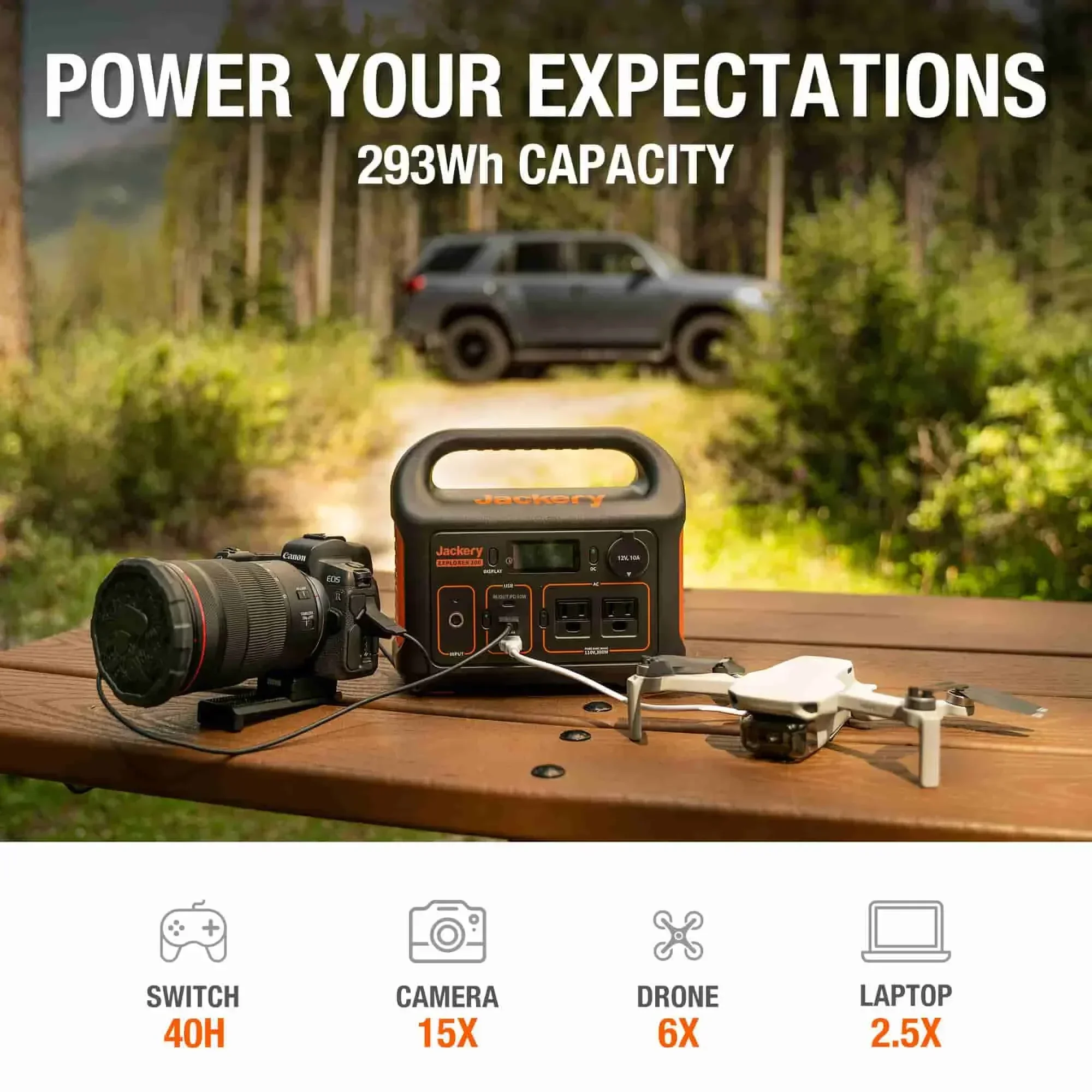
Anything you plan to run overnight — a fan, a light, phone charging — is better fed by a portable power station such as the Jackery Explorer 300 than by the CX-5's own starter battery, which you need to start the car in the morning.
Verdict: who the CX-5 is right for
The Mazda CX-5 is a strong solo car-camping vehicle and a compromise for two. If you are up to about 6 ft 1 in, you fit straight; if you are taller, the diagonal and the head-gap trick stretch you to roughly 6 ft 6 in of usable length. The two things that separate a good CX-5 setup from a bad one are leveling the 1.5 in load-floor step and accepting that 41 in of width is a single-sleeper number.
Buy a self-inflating pad, level the floor, sort your ventilation and window covers, and a CX-5 becomes a comfortable, stealthy place to sleep on the road. Ask it to be a two-person bedroom every night and the width will frustrate you; for that, look at a wider compact SUV. Judged as what it is, a well-built compact you already enjoy driving, the CX-5 sleeps one traveler very well. For a side-by-side on a close competitor, see can you sleep in a Honda CR-V.