
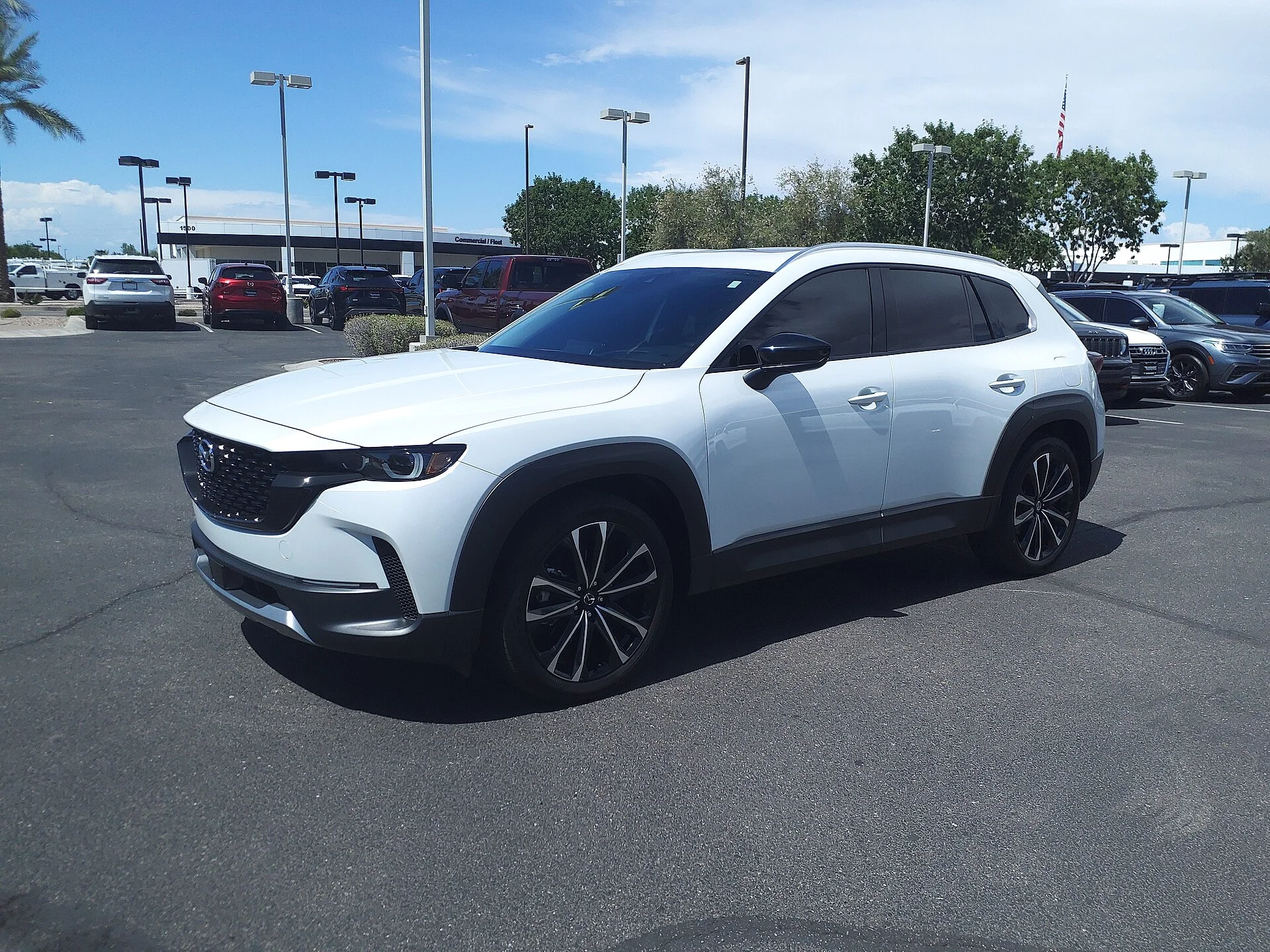
Quick Answer: Can You Sleep in a Mazda CX-50?
Yes — you can sleep in a Mazda CX-50, and for a compact SUV it is a surprisingly good place to do it. Mazda publishes roughly 31.4 cubic feet of cargo space behind the rear seats and about 56.3 cubic feet with the 60/40 rear seats folded down. Folded, the load floor runs close to six feet from the seatbacks to the liftgate, which is the single number that decides whether you fit: one adult sleeps comfortably, and two fit snugly.
The catch is flatness, not length. When the 60/40 seats fold, they leave a gentle slope and a small step where the seatbacks meet the cargo floor, rather than one perfectly level platform. The fix is simple and is the heart of a good CX-50 sleep setup: an SUV-shaped air mattress or a couple of firm foam pads that bridge that seam so you wake up level instead of sliding toward the tailgate.
The CX-50's sleeping verdict in one line: long enough for most people at about six feet, wide enough for one in comfort or two if you are friendly, and flat enough once you bridge the seatback seam with the right mattress.
This guide walks through the dimensions, how to set the bed up so it actually lies flat, what size mattress to buy, and how to handle privacy, power, and condensation. Everything here is built from Mazda's published CX-50 specifications and standard car-camping practice, attributed throughout — not from any claim of having slept a season in one. For the gear that pairs with this setup, see our Mazda CX-50 camping accessories guide. See also CX-30 camping accessories. For sedan camping, see our Mazda 3 accessories guide.
Cargo Dimensions and the Real Sleeping Footprint
Sleeping in any vehicle comes down to three numbers: usable length, usable width between the wheel wells, and how flat the floor sits. Here is how the CX-50 measures up against Mazda's published figures and the realities of its cargo shape.
- Length (the make-or-break number): with the 60/40 seats folded, the load floor stretches to roughly six feet from the seatbacks to the closed liftgate. That clears a person up to about 6 feet tall who sleeps with knees slightly bent or the front seats nudged forward.
- Width between the wheel wells: the wheel-well intrusions are the real constraint on a two-person setup. The floor is wide enough for a single sleeper with room to spare, but two adults side by side are shoulder to shoulder — comfortable for a weekend, tight for a week.
- Total volume: about 31.4 cubic feet behind the rear seats and roughly 56.3 cubic feet seats-folded, per Mazda's published specifications. That folded figure is generous for the class and leaves room to store gear at the foot of the bed.
The number people overlook is flatness. The CX-50's 60/40 seatbacks do not fold perfectly level with the cargo floor; they leave a modest slope and a small ridge at the seam. This is normal for compact crossovers and is exactly what a sleeping platform or the right mattress is for. Plan to fill that gap rather than ignore it — a slope you do not notice at setup becomes the reason you wake up bunched against the tailgate at 3 a.m.
It helps to picture the space as a box with two pinch points. The first is the pair of wheel-well humps that narrow the floor in the middle; the second is the seam where the seatbacks meet the load floor at a slight downward angle toward the front of the vehicle. Neither is a dealbreaker, but both are why a flat household mattress fights you and an SUV-cut one does not. A bed that sits above the wheel wells and fills the seam reclaims the full footprint the cubic-foot number implies.
One more dimension worth measuring yourself: headroom. With a 3-to-4-inch sleeping surface in place, there is enough clearance to lie down and roll over comfortably, but not to sit fully upright. That is the trade every compact SUV makes, and it is why a thick air mattress that feels plush in the showroom can leave you hunched in the cargo bay. If you want the seats-down measurements broken out on their own before you buy a mattress, the principles here carry straight into your purchase decision in the next section.
Setting Up a Flat Bed: Bridging the Seatback Seam
A comfortable CX-50 sleep setup is almost entirely about turning that not-quite-flat folded floor into a level surface. There are three reliable approaches, from no-build to a simple platform, and all of them work with the factory cargo area.
- The no-build mattress method (easiest): fold the 60/40 seats, then lay an SUV-shaped air mattress that is designed to fill the footwell and seam. These mattresses have raised sections or built-in bolsters that sit in the gap behind the folded seatbacks, so the sleeping surface ends up level even though the floor underneath is not. This is the fastest setup and stores small.
- The foam-pad fill method (cheapest): use one firm foam pad across the main floor and a folded blanket or a second wedge of foam to fill the slope at the seatbacks. Less tidy than a purpose-built mattress, but it costs little and packs into a stuff sack.
- The simple platform method (most level, most room): a low plywood or modular platform spans the wheel wells at one height, creating a dead-flat bed with usable storage underneath. It is more effort and eats a few inches of headroom, but it is the most comfortable and the most organized — and it keeps gear out from under your back.
Whichever method you choose, set the bed up before dark. Inflating a mattress or seating a platform is easy in daylight and miserable by headlamp at a dark campsite. And keep the front seats in mind: sliding them forward and reclining slightly buys an extra few inches of diagonal length for taller sleepers.
A couple of small touches separate a passable bed from a good one. Lay a moving blanket or a thin foam layer down first to protect the cargo liner and to mute the hollow drum sound a load floor makes when you shift; it also adds a hair of insulation from the cold metal underneath. And orient your head toward the tailgate rather than the front seats, so the gentle slope of the folded seatbacks works with you, raising your head slightly instead of tipping it down.
The whole job is bridging one seam. Get the seatback gap filled so the surface is level, and the CX-50 sleeps far better than its compact footprint suggests.
Mattress Sizing for the Mazda CX-50
The most common CX-50 sleeping mistake is buying a full-size or queen mattress and assuming it will fit. It will not lie flat. The CX-50's folded cargo area is shaped for an SUV-cut mattress, not a household bed, and the difference is the slope at the seatbacks and the wheel-well intrusions.
Use Mazda's roughly 56.3 cubic feet of seats-folded space and the near-six-foot load length as your sizing reference, then match a mattress to it:
- SUV-shaped air mattress: the best general choice. It is cut to fill an SUV cargo bay, with raised sections that bridge the seatback seam, and it deflates to store in a stuff sack. Check the listed inflated dimensions against the CX-50's near-six-foot length before buying.
- Self-inflating foam pad (camping pad): a 3-inch pad gives firm, even support and is the most reliable for a single sleeper. Two narrow pads side by side cover the width for a couple, without the cold spots a thin air mattress can develop on a chilly night.
- Custom-cut foam: for frequent campers, foam cut to the CX-50's exact floor outline lies perfectly flat and lasts for years. It is bulkier to store and the priciest option, but the most comfortable.
A practical thickness note: aim for a 3-to-4-inch sleeping surface. Thicker feels luxurious in the store but eats headroom you do not have in a compact SUV and makes sitting up awkward. For the full breakdown of mattress types and sizing, our guide to the best car air mattress for SUV camping compares the options, and the best car camping mattresses for SUVs and sedans covers fit across vehicle sizes.
Budget is the other axis to weigh. An SUV air mattress is the cheapest path to a level bed and the easiest to store, but a thin-walled one can feel cold from below on a frosty night and may need a top-up of air after a few hours as it equalizes with the cold. A self-inflating foam pad costs a bit more, insulates better, and never goes flat. Custom foam is the priciest and least portable but the most comfortable for someone who camps in the CX-50 often. Match the spend to how many nights a year you will actually use it — there is no prize for the most expensive bed in a vehicle you sleep in twice a season.
Why the CX-50 Suits Camping: AWD, Clearance, and Trim
The CX-50 was positioned by Mazda as its outdoorsy crossover, and the specs back that up in ways that matter once you leave pavement. These are the published figures worth knowing before you plan where you will sleep.
- Standard all-wheel drive: the CX-50 comes with Mazda's i-Activ AWD as standard equipment, which means even the base trim can handle a wet gravel forest road or a snow-dusted trailhead to reach a quieter site.
- Ground clearance around 8.6 inches: taller than many compact crossovers, which keeps rutted access roads and the lip of a rough campsite from scraping the underbody.
- Reinforced roof: Mazda designed the CX-50's roof to carry meaningful load, which is what makes a roof tent or a loaded cargo box a real option on aftermarket crossbars — useful if you would rather sleep up top and keep the cabin clear.
- Meridian Edition trim: the outdoorsy Meridian package leans into this with trail-oriented touches, and higher trims add a Bose audio system for the cabin.
None of this changes the sleeping footprint, but it changes where you can take the footprint. A vehicle that can reach a remote, level pull-off is worth more for a good night's sleep than an extra inch of interior length — flat, quiet ground beats a marginally bigger bed on a slope. For the gear that turns those capabilities into a base camp, the CX-50 camping accessories guide covers crossbars, tents, and storage.
It is worth being clear-eyed about what the CX-50 is and is not. It is not a body-on-frame off-roader, and you should not plan to crawl boulders to a campsite. But the combination of standard AWD, real ground clearance, and a roof rated for load means it comfortably outruns the average sedan or low crossover on the dirt-and-gravel access roads that lead to the best dispersed sites — the places where you are not parked next to a neighbor and where sleeping in the vehicle actually feels like camping. That reach is the CX-50's real camping advantage, more than any single interior measurement.
Privacy, Window Covers, and Staying Cool
Once the bed is sorted, the next priority is controlling light, heat, and prying eyes. Window covers do all three, and they are the cheapest comfort upgrade you can make to a CX-50 sleep setup.
Reflective covers cut by hand from a roll of insulating material or a set of custom-fit shades both work. Cover the rear glass first, since that is where your head ends up and where dawn light hits, then the side windows for privacy. Covers reflect heat away during the day and hold a little warmth at night, which smooths out the temperature swings that wake you in an uninsulated vehicle.
- Privacy: full coverage of the side and rear glass lets you change and sleep without being seen, which matters most in a parking lot or developed campground.
- Light control: blackout-style covers on the rear glass keep early sun from cooking the cabin at sunrise — the difference between waking at 5 a.m. and sleeping until you are ready.
- Heat: reflective material on the windshield and rear glass keeps a parked CX-50 noticeably cooler on a sunny afternoon nap.
How you attach the covers matters more than the material. Suction cups, magnets, or a friction fit that wedges the panel against the door frame all work; what you want to avoid is anything that leaves a gap at the edge, because that thin strip of glass is exactly where a streetlight or sunrise sneaks in. Custom-fit sets win here because they are cut to the CX-50's specific window shapes and seal cleanly, while a universal reflective roll costs far less and takes only a few minutes with scissors to trim to each window.
Cover the rear glass first. It is where your head rests and where the sunrise lands, so it does the most for both privacy and an extra hour of sleep — the side windows can wait if you are buying in stages.
If you are deciding between styles, our comparison of reflective versus blackout sun shades breaks down which does what, and the best car window shades for camping covers fit and material.
Power, Ventilation, and Condensation
The two systems that make or break a night inside a CX-50 are power and airflow. Get both wrong and you wake up to a dead phone in a cabin streaming with condensation; get them right and the SUV feels like a small, dry cabin.
Power. The CX-50's 12V socket and USB ports are fine for topping up phones while you drive, but the 12V outlet is typically switched with the ignition, so it is not an overnight source — leave a fridge or fan running on it and you risk the starting battery. For anything that runs all night, plan a separate portable power station that recharges off the 12V outlet while you drive the next day. Our guide to the best portable power stations for car camping covers sizing capacity to your loads.
Ventilation and condensation. Two people breathing in a sealed vehicle put out a surprising amount of moisture overnight, and it condenses on cold glass and metal. The fix is cross-ventilation:
- Crack two windows slightly on opposite sides so air moves through rather than pooling — even a half-inch helps.
- Add a small 12V or rechargeable fan to push air and pull damp air out, which also keeps a warm night bearable.
- Use a moisture absorber in the cargo area to soak up what ventilation does not clear, so bedding does not feel damp by morning.
Seasons change the calculus. On a hot night, the goal is moving air, so a fan and two cracked windows do most of the work, and reflective covers stop the cabin from baking before you even lie down. On a cold night, the instinct is to seal everything up, but that is exactly what coats the glass in condensation by morning — you still need a sliver of ventilation, paired with a warm sleeping bag rated below the expected low rather than a sealed cabin. The CX-50 has no insulation in the cargo area, so your bag and pad, not the vehicle, are what keep you warm; budget for them accordingly.
For the full method, our guide to reducing condensation when sleeping in a car goes deeper on managing moisture across seasons.
Solo vs. Two, Where to Park, and Final Verdict
How well the CX-50 sleeps depends a lot on whether it is one of you or two. Be honest about that before you plan a trip around it.
- Solo: the CX-50 is genuinely comfortable for one. The near-six-foot floor and the full width give you room to stretch out and still store gear at your feet — this is where the SUV shines.
- Two: doable for a weekend, snug for longer. The wheel wells put two adults shoulder to shoulder, so couples who camp often should weigh a roof tent to free the cabin, or simply accept the closeness for short trips.
Where you park matters as much as how you sleep. Seek out level, legal ground — a designated campsite, a permitted dispersed area, or somewhere overnight parking is explicitly allowed. A flat pull-off beats a scenic but sloped one every time, and knowing the local rules saves a midnight knock on the window. Our guide to where you can legally sleep in your car by state is worth a read before a road trip.
Trip length is the last honest filter. For a night or two, the CX-50 needs almost nothing beyond a mattress, covers, and a cooler — throw the bed in, drive to a site, and sleep. For a week or for two people, the small frustrations compound: the shoulder-to-shoulder width, the limited headroom, the single fridge draw on a finite battery. None of those are dealbreakers, but they are the reasons a regular two-person setup eventually grows a roof tent or a more deliberate platform build. Start simple, camp a few times, and let your own trips tell you which upgrade is worth it rather than buying the whole catalog up front.
The verdict: the Mazda CX-50 is one of the better compact SUVs to sleep in. Standard AWD and about 8.6 inches of clearance get you to good ground; roughly 56 cubic feet folded and a near-six-foot floor sleep you well once you bridge the seatback seam with the right mattress. Add window covers, a portable power station, and cross-ventilation, and you have a capable, no-fuss camper out of an SUV you can also commute in. For the gear list that completes the setup, see our Mazda CX-50 camping accessories guide, and for another compact option, the Mazda CX-5 sleeping guide compares well.