
The Short Answer
Reflective shades are the better choice for cutting daytime cabin heat: the silver or metallized surface bounces incoming sunlight back out instead of letting it convert to heat inside the car. Blackout shades win on privacy and darkness, blocking light so people cannot see in and so you can sleep. Many car campers run both — reflective on the windshield for heat, blackout on the side and rear glass for privacy.
Those are two genuinely different jobs, and the confusion comes from treating “sun shade” as one product. A reflective shade is a radiant-heat tool. A blackout shade is a light-blocking and privacy tool. They overlap, but neither is a drop-in replacement for the other. The rest of this guide breaks down how each material behaves, the situations where one clearly beats the other, and the trade-offs that catch people out — including a real safety caveat about reflective shades and chipped windshields.
If you only remember one thing, make it this: pick by the problem, not by the product. Ask whether you are fighting heat or fighting visibility. If the answer is heat — a scorching parking lot, a baking commute, a dashboard you want to protect — reflective is the tool. If the answer is visibility — sleeping in the car, changing clothes, keeping gear out of sight overnight — blackout is the tool. And if the honest answer is “both, at different times of day,” which is the typical car-camping reality, then you want reflective on the windshield and blackout on the rest, not a single compromise shade trying to do everything halfway.
How a Reflective Shade Actually Works
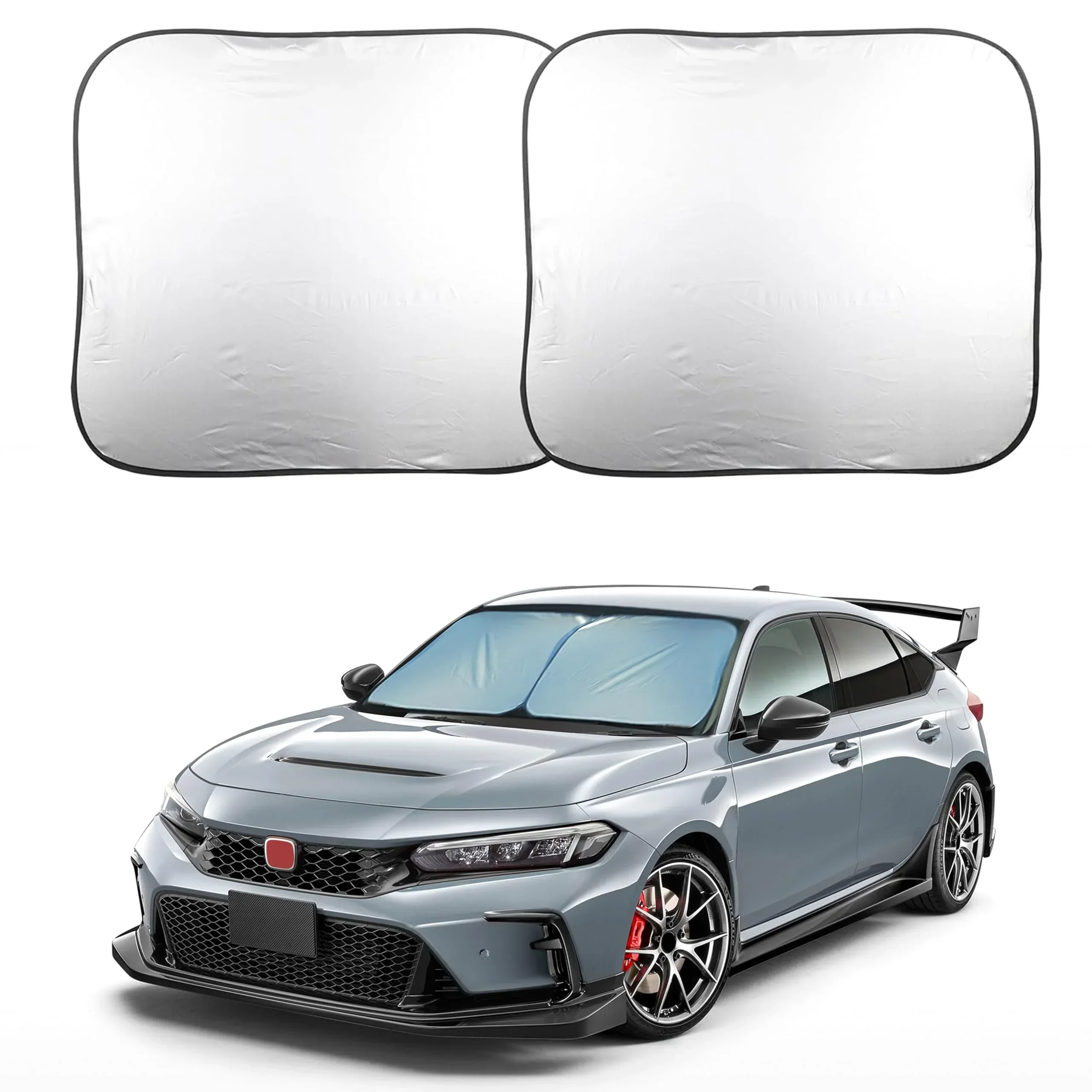
A reflective sun shade is built around a shiny, metallized outer layer — usually an aluminized polyester film or a foil-faced foam laminate — that faces the glass and the sun. The physics it exploits is straightforward: light-colored, polished metallic surfaces reflect a large share of incoming solar radiation, while dark, matte surfaces absorb it. Anything a surface absorbs becomes heat; anything it reflects leaves the car as light. That is the entire mechanism.
When sunlight hits the dashboard, seats, and steering wheel directly, those dark interior surfaces absorb it and re-radiate it as heat — and because car glass traps long-wave infrared (the greenhouse effect that makes a parked car so brutal), that heat builds up fast. A reflective shade intercepts the sunlight before it reaches those surfaces and sends most of it back out through the windshield. Less energy lands inside, so less of it turns into trapped heat.
Manufacturers lean hard on this. The core claims line up across sources:
- EcoNour states that silver and metallic shades are the most effective at keeping a car cool and protecting the interior from UV, because the reflective face bounces sunlight away rather than soaking it up.
- Endurance frames a good shade as doing more than blocking light — reflecting solar energy and shielding the dash from UV degradation.
- Independent breakdowns like Moore Robinson’s note the aluminum-foil-style exterior exists specifically to maximize that reflective effect.
It is worth being precise about what “reflective” buys you, because the marketing numbers vary. A reflective shade does not magically air-condition the car; it reduces the rate at which solar heat accumulates while the car sits. The cabin will still warm up on a hot day — just slower and to a lower peak than it would with bare glass or a dark shade. The honest framing in independent coverage like this discussion of reflective versus non-reflective shades is that reflection minimizes heat absorption by bouncing sunlight away, which is a real and repeatable effect, not that it produces a fixed dramatic temperature drop in every car. Cabin size, glass area, parking angle, and how well the shade seals all move the number.
What a reflective shade does not reliably do is make the car private or dark inside. Many reflective shades are translucent at the edges, are only sized for the windshield, and are designed to be removed when you drive. So they are a heat tool first and a privacy tool a distant second — which is exactly where blackout shades come in. If your need is the opposite of heat rejection — keeping eyes out and light down so you can sleep — a reflective windshield panel alone will leave you exposed on every other window.
How a Blackout Shade Actually Works
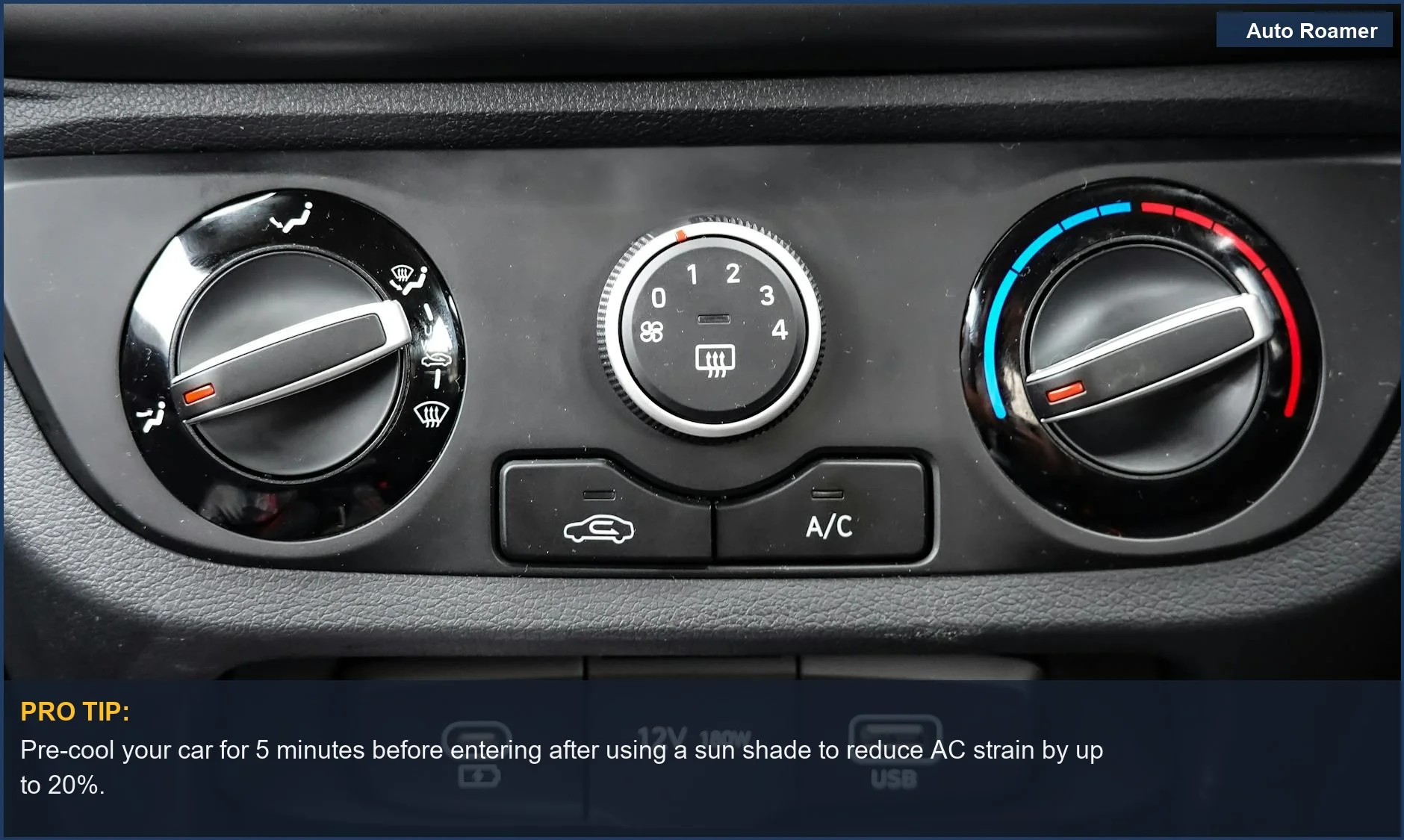
A blackout shade is built for the opposite priority: stopping light from passing through the glass in either direction. Instead of a polished reflective face, it uses dense, opaque, usually dark material — layered fabric, foam, or a curtain-style panel — that absorbs and blocks visible light. The point is darkness and privacy: people outside cannot see in, and you cannot see the streetlight that would otherwise keep you awake.
That makes blackout shades the right tool for sleeping in a car and for stealth. If you are parked overnight, side- and rear-window blackout panels are what keep your setup invisible and your sleep uninterrupted. This is a different need than heat, and it is why dedicated guides treat privacy and darkness as their own category — see our overview of how to block car windows for sleeping privacy and our roundup of car camping privacy curtains.
The trade-off is heat. Because the material is dark and opaque, it absorbs more of the solar energy that hits it rather than reflecting it back out — and absorbed energy becomes heat near the glass. Discussions among van-dwellers reflect this real-world split: in threads like this one comparing reflective material to black window covers, people report that black covers are great for privacy and insulation against light, but that for pure daytime heat rejection a reflective face does measurably better. A blackout panel can still help at night — when there is no sun to reject, its insulating bulk slows heat transfer either way — but in direct midday sun it is working against the material’s own absorptive nature.
The key insight: blocking light and rejecting heat are not the same physics. A reflective face bounces solar energy back out through the glass; a dark interior cover lets that energy through the window first, then absorbs it inside the cabin.
That subtlety trips people up. A blackout shade mounted on the inside of the glass has already let the sunlight through the window before the shade absorbs it, so the heat is being trapped in the cabin rather than reflected away outside. That is the opposite of what a reflective shade does at the windshield, where the goal is to bounce light back out through the glass. It is why a dark interior cover and a silver windshield panel can feel so different on the same hot afternoon even though both “block the sun.”
Blackout shades also come in meaningfully different forms, and the form changes the experience. Rigid foam or laminate panels cut to the window shape press into the frame and black out hard. Fabric curtains on a track or magnets are easier to stow and let you open one window at a time, but they tend to leave thin light gaps at the edges. Reflectix-style cut panels — the silver bubble insulation many DIY car campers use — straddle the categories, since they have a reflective face but are usually deployed as opaque, light-blocking blocks. For the privacy-and-sleep job, what matters is total light block and a clean seal, not the headline color.
Reflective vs Blackout: Side-by-Side
Put the two side by side and the division of labor is clear. Reflective shades exist to keep daytime cabin temperature down and protect the interior from UV. Blackout shades exist to deliver privacy and darkness. The table below summarizes how each behaves across the factors that actually drive a buying decision — and the consistent pattern is that the “best” one depends entirely on which problem you are solving.
Two points are worth pulling out of the table. First, on UV protection both help by simply blocking direct sun off the dashboard, but reflective shades are the ones manufacturers market for interior preservation. Second, fit and seal matter more than the headline material: a loose, thin shade of either type leaves gaps that let sunlight or prying eyes right past it. Getting the size right is a real variable — our guide to choosing the right windshield shade size walks through measuring for a snug fit.
Notice what the table does not say: it never crowns one shade the universal winner. Read down the “daytime heat” row and reflective wins; read down the “privacy / darkness” row and blackout wins; read the “best window” row and they split the car between them. That is the whole point of laying it out this way — the comparison only produces a clear answer once you decide which row matters most to you. Someone parking a daily driver in a sunny lot weights the heat row; someone sleeping in the back of an SUV weights the privacy row; a full-time car camper weights both and ends up buying both.
When Each One Wins
Choose reflective when heat is the enemy. If your car bakes in a parking lot all day, if you live somewhere with brutal summer sun, or if your main goal is a cooler cabin and a steering wheel you can actually touch, a reflective windshield shade is the straightforward answer. It is also the better daytime tool for keeping the dashboard from cracking under UV. For the windshield specifically, that is the workhorse — see our picks for the best windshield sun shades and the best options sized for SUVs.
Choose blackout when privacy or sleep is the enemy. If you are car camping, napping at a trailhead, or parking overnight in town, the priority is that nobody can see in and that the cabin goes dark. A reflective windshield shade does nothing for the side and rear glass where you actually need coverage to sleep. Blackout panels or curtains on those windows are the right call — our roundup of car window shades for camping covers the privacy-first options.
Run both when you do both. This is the most common car-camper setup, and it is not a compromise — it is using each tool for its actual job. A reflective shade on the windshield fights the daytime heat that pours in through the largest piece of glass, while blackout panels on the side and rear windows handle privacy and darkness at night. If staying cool while sleeping is the goal, pair the shades with the ventilation and airflow tactics in our guide to staying cool sleeping in a car in summer; shades alone do not move air.
Covering the Whole Car: Windshield vs Side and Rear Glass
Most of the “reflective vs blackout” debate quietly assumes the windshield, because that is the biggest piece of glass and the one that does the most damage on a hot day. But a car has a lot of other windows, and they have different jobs. Thinking about coverage window-by-window usually resolves the choice faster than arguing material in the abstract.
The windshield is where reflective earns its keep. It is the largest glass area, it faces the sun for hours when you park nose-out, and it sits right over the dashboard you are trying to protect. A foil-faced reflective panel here gives the biggest single drop in heat gain, and it is removable for driving anyway. This is the one window where almost everyone should start reflective, sizing it correctly for the vehicle — our SUV windshield shade guide covers the larger formats.
The side and rear windows are where blackout earns its keep. During the day they let in less total heat than the windshield simply because they are smaller and often more vertical, so the heat argument is weaker there. At night they are the windows people can see through to your sleeping setup, so privacy dominates. That flips the priority: on side and rear glass, a light-blocking blackout panel or curtain is usually the better tool, which is exactly what privacy-focused setups in our car window shades for camping roundup lean toward.
This is the real reason the “which is better” question has no single answer: a complete setup is not one shade type, it is the right type per window. Reflective up front for heat, blackout around the back for privacy. The mistake is buying one reflective windshield shade, leaving the rest of the glass bare, and then wondering why the car is neither cool enough to sit in nor private enough to sleep in.
Materials, Fit, and the Quality That Actually Matters
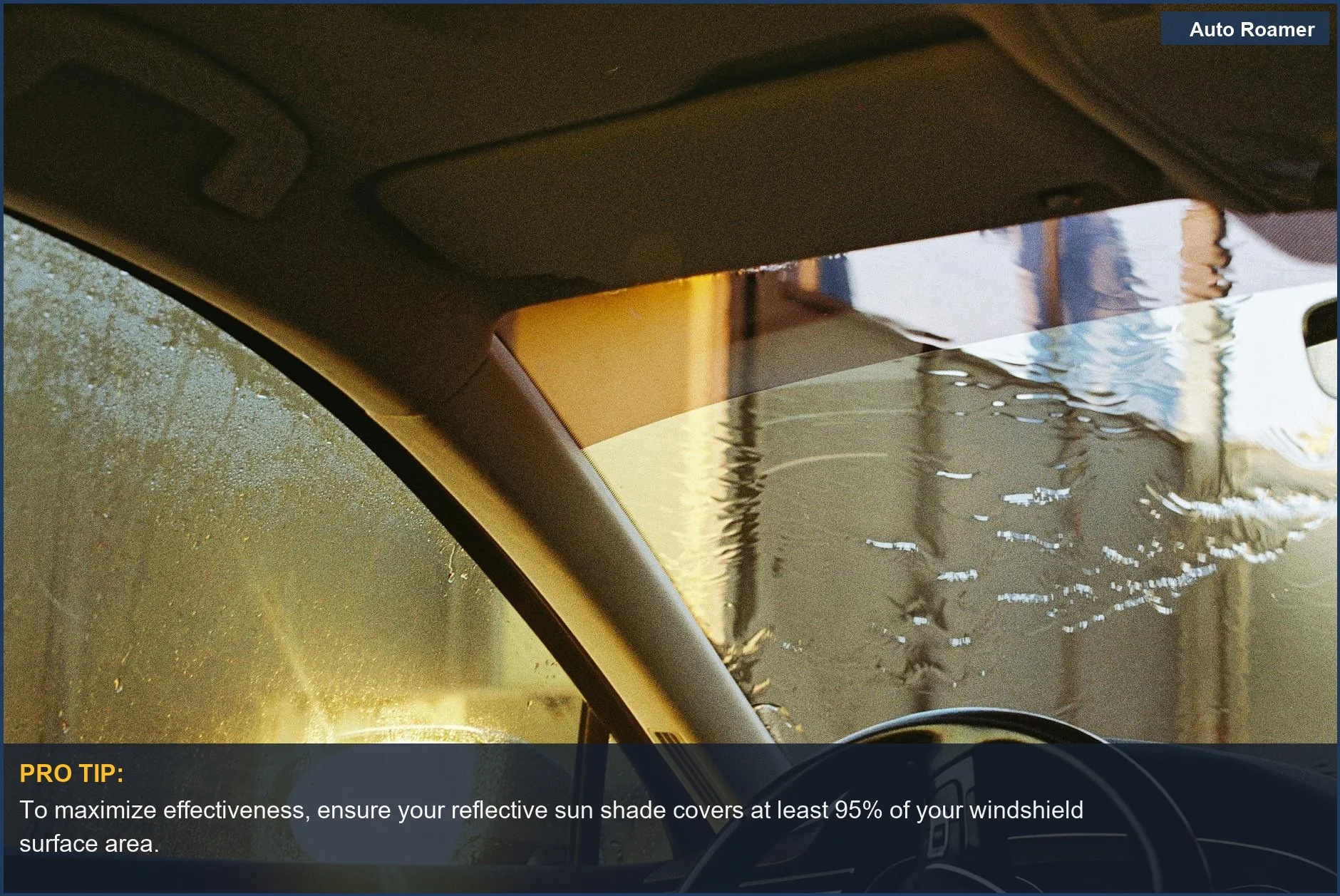
Within each category, build quality swings the result more than the label does. Reflective shades range from flimsy single-layer foil that crinkles and tears within a season to rigid foam-cored, foil-faced panels that hold their shape and seal tightly to the glass. The reflective principle is the same; the difference is how much of the windshield is actually covered and how well the edges seal. A shade that leaves gaps at the corners lets a wedge of direct sun straight onto the dash, undercutting the whole point.
Blackout shades split mainly by how they mount and how completely they black out. Custom-cut magnetic or snap-in panels seal to the window frame and block essentially all light; generic suction-cup or drape-style covers are cheaper but leave light gaps and can sag. For overnight privacy those gaps are the whole ballgame — a panel that leaves a glowing seam around the edge defeats the stealth you bought it for.
Mounting deserves its own thought, because it determines whether a shade actually stays put. Windshield reflective shades typically wedge between the glass and the sun visors or use small suction cups; the rigid foam-core ones hold a sprung shape that presses into the corners, which is why they seal better than floppy foil. Blackout panels for side glass do best with magnets that grip the door frame or with a friction-fit cut to the exact window outline — suction cups on side windows tend to creep and fall overnight, and a panel on the floor at 3 a.m. is no privacy at all. The more your shade depends on you fussing with it, the less often it gets used the way it should.
Durability separates the cheap from the worthwhile more than any spec sheet:
- Thin reflective film cracks and flakes after a few seasons of folding; once the metallized coating sheds, it reflects less and looks worse.
- Thicker laminates and foam cores tolerate repeated folding and the heat cycling of a parked car far better.
- Blackout fabric holds up well but can fade and develop pinholes of light over time.
- Rigid blackout panels resist pinholing but are bulkier to store.
None of this is exotic — it is just the difference between a shade you replace every summer and one that lasts years.
Two practical notes that apply across both. Fit beats price: a well-sized shade of either type outperforms an expensive one that does not seal, which is why measuring matters more than brand. And reflective and blackout are not mutually exclusive in a single product — some shades layer a reflective outer face with an opaque dark backing to chase both jobs at once, though dedicated single-purpose shades typically do their one job better. For the full-coverage car-camping kit, most people end up with a mix rather than one do-everything product.
The Trade-Offs and One Real Safety Caveat
Neither type is free of downsides. Reflective shades are bulky to store, can be fiddly to seat perfectly behind the mirror, and the cheap ones degrade quickly. Blackout shades trap more heat in direct sun, add weight and storage bulk if you carry a full set of panels, and the good custom ones cost real money. And both are useless if you forget to put them up — the best shade is the one you actually deploy.
The caveat worth flagging is specific to reflective shades and damaged glass. Some installers warn that a highly reflective shade can concentrate heat against the windshield itself — Kissel Paso argues a shiny shade cover can intensify heat on the glass and potentially worsen an existing chip or crack by driving thermal stress into it. If your windshield already has a chip, treat that as a reason to be cautious with a super-shiny shade in extreme heat, and get the chip addressed before it spreads. This is a manufacturer/installer concern rather than a settled universal verdict, but it is a real enough trade-off to weigh.
A reasonable buying order for someone starting from nothing: get one well-fitted reflective windshield shade first, since that single piece of glass drives most of the daytime heat and the shade is cheap and removable. If you also sleep in the car or value privacy, add blackout coverage for the side and rear windows next, prioritizing a clean light-tight seal over price. Skip the do-everything combo shades unless storage space is your hard constraint — two purpose-built shades almost always outperform one that compromises on both jobs. And whatever you buy, measure the glass before ordering; the most common reason a shade disappoints is that it simply does not cover the window it was bought for.
Stepping back: the “reflective vs blackout” question is really “which problem am I solving?” For a cooler car in the sun, reflective. For privacy and darkness to sleep, blackout. For the full car-camping setup, both — and the reflective shade earns its keep on the windshield while blackout panels earn theirs on every other window. For a deeper look at the windshield decision on its own, our windshield sun shade buying guide goes further on sizing and fit.
Shades Worth Running for Each Job
Once you have decided which problem you are solving, the buying decision gets simple. Below are honest picks for each job, drawn from their published specs and how the hardware actually works rather than from first-hand bench testing on our part. The point is the same one the comparison above makes: match the shade to the window and the need, and most car campers end up with a small mix rather than one do-everything product.
If heat is the enemy (windshield, daytime)
Start with a reflective panel on the windshield, because that one piece of glass drives most of the daytime heat gain. A folding foil-faced shade like the EcoNour Foldable Reflective Windshield Sun Shade is the cheap, removable workhorse here — the metallized face bounces sunlight back out before it can land on the dash. The thing that decides whether it works is fit: a shade that seals to the corners stops the wedge of direct sun that a floppy, undersized one lets straight onto the dashboard. Measure the windshield before you order.
If privacy and sleep are the enemy (side and rear glass, night)
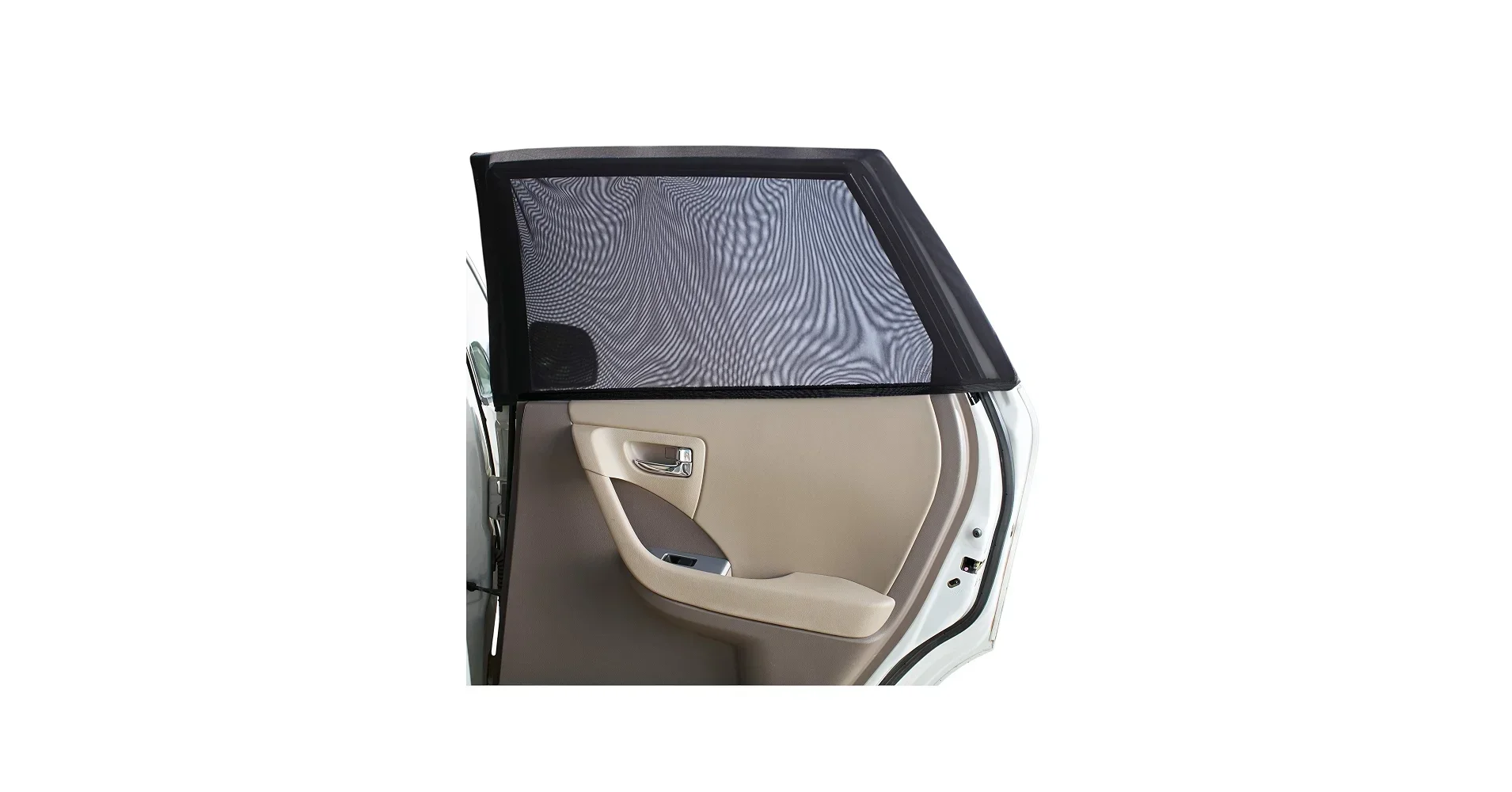
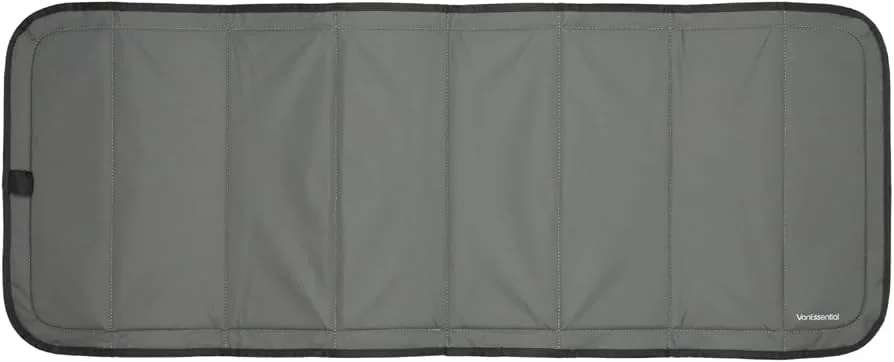
This is where blackout coverage earns its keep, and it belongs on the side and rear windows the reflective windshield panel does nothing for. For fast, no-tools privacy on a steel-framed door, snap-on magnetic panels like the ZATOOTO Magnetic Car Side Window Sun Shades go up in seconds and black out hard at the frame. If you want to crack the window for airflow while still screening eyes and bugs in the daytime, stretch-over sleeves like the Magnelex Sock Style Window Shades slip over the door frame and breathe. For true stealth blackout plus insulation — the full overnight setup — custom-cut magnetic covers like the VanEssential Insulated Blackout Window Cover are the premium answer, provided you match the SKU to your exact van. They cost real money; that is the trade for a light-tight, insulated seal.
If you want one material for both (the DIY straddle)
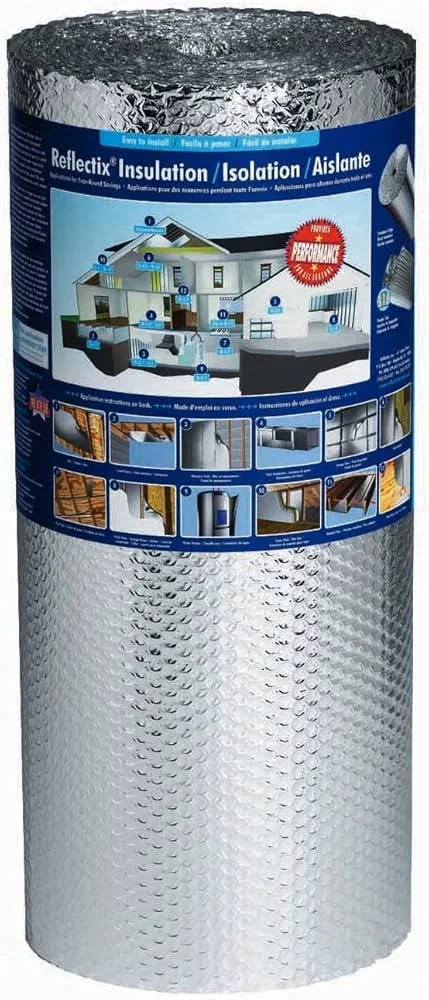
The article keeps coming back to one option that lives in both categories: a roll of reflective bubble-foil insulation such as Reflectix BP24025 Double-Reflective Insulation. Templated and cut to each window, it gives you a reflective face for heat and a 100% opaque block for privacy at the lowest cost per window — the catch is the labor of measuring and cutting friction-fit panels, and the bulk of storing them. It is the honest budget route for someone willing to do the work rather than buy purpose-built shades.
Whatever you choose, the same two rules from the comparison apply: fit beats price, and the best shade is the one you actually deploy. Reflective up front for heat, blackout around the back for privacy, and the cheap reflective-foil roll if you would rather cut your own. None of these replaces the others — they each do one job well.