Setting the Scene
I've seen far too many 'magnetic' phone mounts that are nothing more than glorified suction cups, destined to fail the moment you hit a pothole or the dashboard plasticizer starts to sweat. The market is saturated with landfill-ready garbage constructed from inferior materials, promising industrial-grade performance but delivering only disappointment. My tolerance for such planned obsolescence is precisely zero.
Car and Driver even notes that a good mount is practically a necessity, yet so many fall short.
The fundamental issue with most magnetic mounts is a critical misunderstanding of material science. They rely on cheap, injection-molded ABS or PVC for their load-bearing structures, materials that are inherently susceptible to UV degradation and thermal cycling. Your car's interior can easily reach 150 degrees F on a sunny day, turning these polymers into brittle, fractured husks within a single summer.
This isn't just an inconvenience; it's a safety hazard when your navigation system decides to take an unscheduled dive into the footwell.
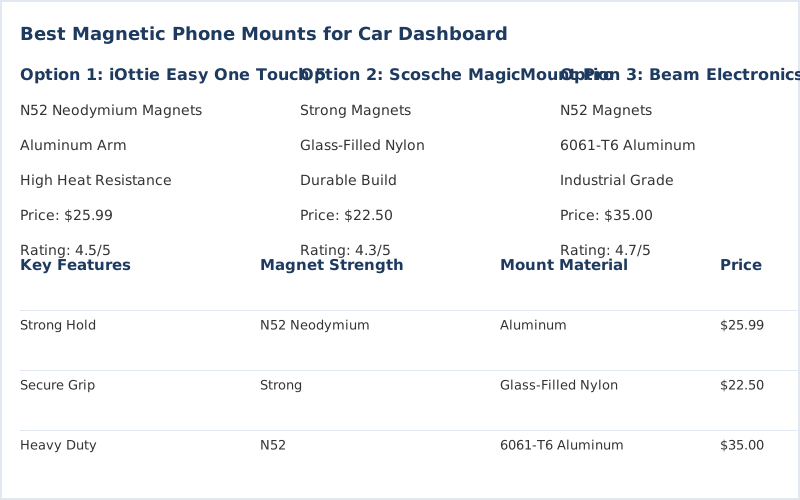
A truly effective magnetic phone mount, one built for longevity and structural integrity, demands specific material compositions. We're talking about N52 neodymium magnets, not the diluted ferrite magnets found in discount toys. The mounting arm itself should be 6061-T6 aluminum, or at the very least, a robust glass-filled nylon (PA6-GF30) for its superior heat resistance and tensile strength.
Anything less is a compromise that guarantees failure.
I'm not interested in something that's 'good enough' for a few months. I demand components that will outlast the vehicle they're installed in. The constant vibration and temperature swings inside a car are a brutal test, and only industrial-grade materials will pass. This isn't about convenience; it's about investing in gear that won't betray you on the highway.
CNN Underscored highlights the need for secure attachment, something flimsy plastic can never truly provide.
Top Picks
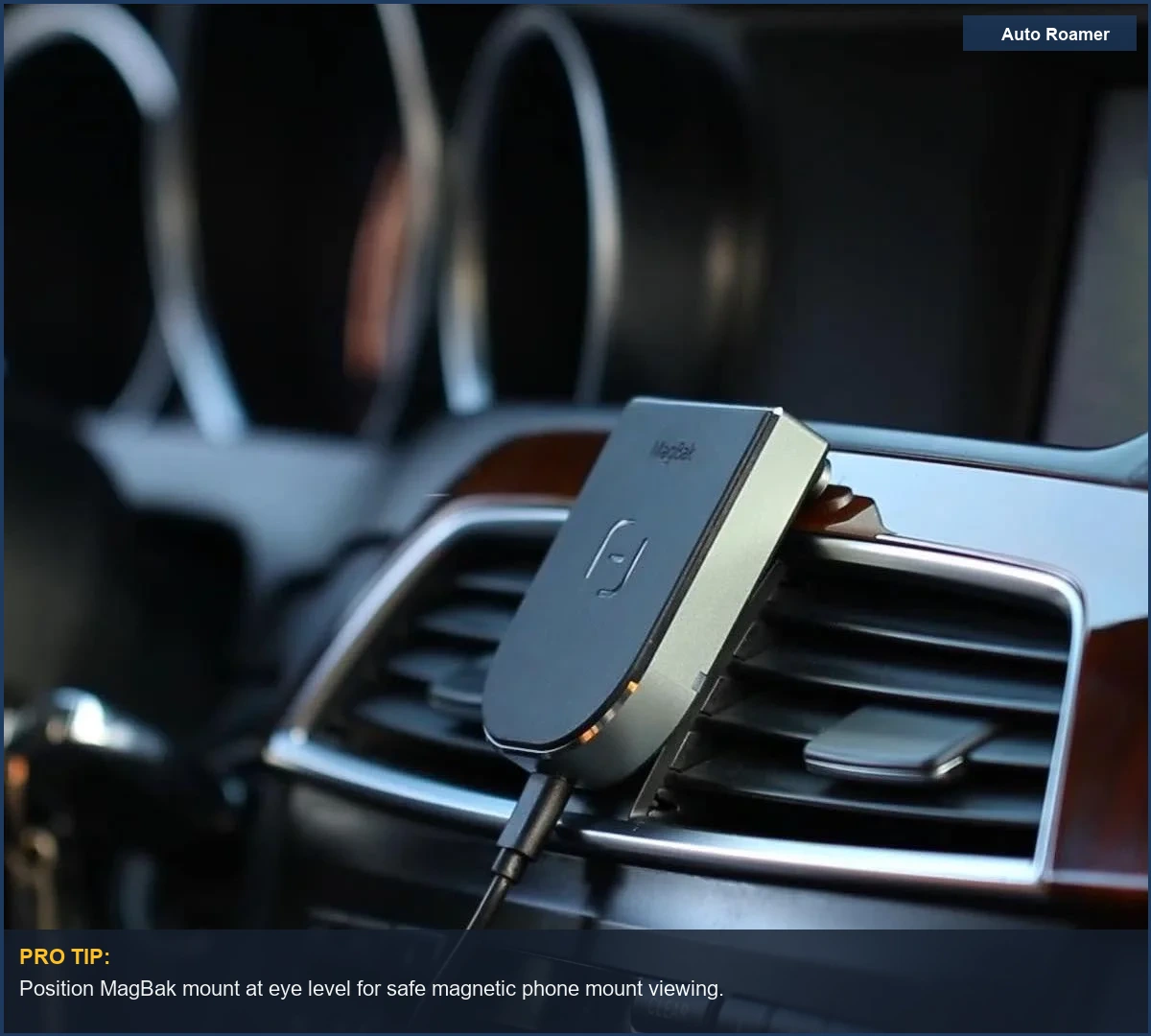
- MagBak Wireless Car Charger (~$69)
Key specs: N52 neodymium magnets, 3M VHB adhesive base, MagSafe compatible.
Pros: Unrivaled hold strength, direct dashboard mounting eliminates vibration. The 3M adhesive is a serious, semi-permanent solution.
Cons: Higher price point, not easily transferable between vehicles.
Best for: Those who prioritize absolute stability and wireless charging, and don't mind a permanent installation. This is industrial-grade adhesion. - iOttie iTap Magnetic 2 Dash & Windshield Mount (~$30)
Key specs: N52 magnets, suction cup with gel pad, extendable arm.
Pros: Strong magnetic hold, versatile mounting options (dash/windshield). The gel pad improves suction longevity compared to basic PVC cups. Wirecutter praises its stability.
Cons: Suction cups, even good ones, are prone to eventual failure due to plasticizer migration and UV exposure. The arm is often polycarbonate, which can become brittle.
Best for: Users who need flexibility and a strong magnetic grip, but understand the inherent limitations of suction cup technology. Treat the plastic with a UV protectant. - Scosche MagicMount Charge Elite 3-in-1 (~$45)
Key specs: Neodymium magnets, multiple mounting options (vent clip, adhesive), wireless charging.
Pros: Offers both vent and adhesive mounting, which provides options. The magnetic array is robust. CNN Underscored highlights its versatility.
Cons: Vent clips are notorious for plastic fatigue cracking, especially when made from cheap ABS. The adhesive option is often a less robust foam tape, not 3M VHB.
Best for: Those needing a compromise between flexibility and hold strength, willing to risk the vent clip or use the less-permanent adhesive. - VICSEED 2026 Upgraded Car Phone Holder for Magsafe Car Mount (~$35)
Key specs: 85 LBS suction strength claim, vacuum magnetic, 360-degree adjustable.
Pros: Impressive suction strength on paper, good adjustability. The vacuum mechanism suggests a more secure suction cup design than typical. Amazon reviews tout its strength.
Cons: The '85 LBS' claim is likely a peak force, not sustained. Still a suction cup, subject to environmental degradation. The arm often uses lower-grade plastics.
Best for: Drivers who need an extremely strong suction mount for a heavy phone, understanding the maintenance required for suction cups. - Anker 613 Magnetic Wireless Charger (~$40)
Key specs: MagSafe compatible, vent clip, wireless charging.
Pros: Seamless MagSafe integration, reliable wireless charging. Anker generally uses decent quality components.
Cons: Vent clips are inherently flawed. The leverage created by a phone on a vent mount puts immense stress on fragile HVAC fins, leading to eventual breakage. This is a design flaw, not a material flaw of the mount itself.
Best for: Dedicated MagSafe users who accept the inherent compromises and potential damage to their vehicle's vents for the convenience.
Quick Verdict
- Adhesive is King (if done right): A 3M VHB adhesive base, like that found on the MagBak Wireless Car Charger (~$69), provides the most robust and vibration-free mounting. It's a semi-permanent solution, but permanence is often synonymous with industrial longevity.
- Suction Cups are a Compromise: Even the 'strongest' suction cups, such as the VICSEED 2026 Upgraded Car Phone Holder (~$35), are subject to plasticizer migration and UV degradation.
They require regular re-application and cleaning to maintain their seal. I would budget for replacement every 12-18 months.
- Vent Clips are a Disaster: Avoid vent clips, like those on the Anker 613 Magnetic Wireless Charger (~$40). They damage your vehicle's HVAC fins and are prone to fatigue cracking at their pivot points. It's an insulting design that sacrifices your car for a few pennies saved.
- Magnetic Strength is Non-Negotiable: Always opt for N52 neodymium magnets.
Lesser grades will lead to your phone becoming a projectile during emergency braking or a sharp turn. This isn't a feature you compromise on. Wirecutter confirms the importance of strong magnets.
- Material Composition Matters: Look for aluminum arms (6061-T6 is ideal) or glass-filled nylon (PA6-GF30) for structural components. Any visible, thin-walled ABS or PP plastic is a red flag for premature failure. You're paying for convenience, not a disposable ornament.