Where to Start
Forget the glossy ads showing phones floating magically on dashboards. I've seen more phones become projectiles than I care to count, usually because some cheap plastic mount failed its thermal cycling test in July. You're looking at a piece of hardware that needs to maintain a clamp load or adhesion through 120 degrees F cabin temps and then -20 degrees F in January, all while absorbing road vibration at 60Hz. Most of the junk out there can't hack it.
Wirecutter tested 16 mounts and found plenty of failures.
The average car phone mount costs you about $25, but a bad one costs you a cracked phone screen or, worse, a distracted driving ticket that runs $300 in some jurisdictions. That's a 1200% markup on a bad decision. We're talking about basic mechanical engineering here: material properties, surface adhesion, and vibration dampening. If it can't hold up, it's garbage. And most of them are.
Automoblog's experts also found Lamicall a good vent mount.
I'm not interested in 'user experience' marketing fluff. I care about the shear strength of the adhesive and the fatigue life of the plastic. This isn't about looking pretty; it's about keeping your 200-gram slab of glass and silicon from becoming a kinetic energy weapon during an emergency stop. You need a mount that functions as a structural component, not a temporary convenience.
This guide is about mounts that stick, grip, and don't fail when your suspension hits a pothole like a jackhammer. CNET's review covers multiple mounting options for various vehicles.
Quick Verdict
Here's what I've found actually works, based on holding power and mechanical integrity, not marketing hype: Plenty of mounts fail, but a few stand out.
- For windshields and dashboards, a strong suction cup is key. Look for a large diameter cup, at least 70mm, and a mechanical locking lever to create the vacuum seal. The plastic needs to be UV resistant, or it'll outgas and lose elasticity in 6 months.
- Magnetic mounts need serious magnets. Neodymium magnets, rated N52 or higher, are what you want. Anything less, and your phone will slide off during a hard corner, especially if it's got a heavy case. A good magnetic mount also needs a strong adhesive for the metal plate on your phone.
- Vent mounts are generally garbage. The plastic fins in your HVAC system are designed for airflow, not supporting 200 grams of phone against 1.2 G's of braking force. You'll bend or snap them. Vent mounts damage vents, simple as that.
- Cup holder mounts offer stability. These use an expanding base, often a threaded collar that cinches down to fill the cup holder. This creates a solid mechanical interface, transferring road vibration to the chassis rather than stressing a delicate adhesive bond. They take up a cup holder, but that's a trade-off for actual stability.
- CD slot mounts are surprisingly robust. They exploit a rarely used slot, providing a rigid anchor point. The clamp mechanism engages the internal structure of the CD player, which is designed for precise mechanical movement, not flimsy plastic. These often have minimal vibration. Smartish has tips on secure mounting.
What to Look For
When you're looking at a car phone mount, you're not buying a gadget; you're buying a piece of mechanical engineering designed to resist shear forces and vibration. Most fail. Here's what actually matters, not the marketing drivel.
Watch some tests to see what I mean.
| Feature | Why it matters (or doesn't) | Failure Mode to Watch For |
|---|---|---|
| Mounting Location | Determines rigidity and line-of-sight. Windshield/dash can be good for GPS, but adhesive or suction cups fail under thermal cycling.
Cup holders or CD slots use existing robust structures. | Adhesion failure (thermal expansion/contraction), vibration fatigue (vent mounts), clamp load loss (poorly designed mechanical grips). |
| Grip Mechanism | How the phone is held. Magnetic requires a metal plate; mechanical clamps rely on spring force. Both need consistent pressure. | Magnetic field degradation (cheap magnets), spring fatigue (mechanical clamps), plastic deformation (phone cradle). |
| Material Quality | Cheap ABS plastic turns brittle under UV exposure and thermal cycling.
Silicone pads dry out and lose grip. | UV degradation, embrittlement, stress cracking, loss of friction coefficient. |
| Adjustability | Ball joints allow rotation. Too much play, and it's a wobbling mess. Needs a high-friction surface or a robust locking mechanism. | Friction clutch slippage, ball joint wear, plastic deformation under static load. |
| Wireless Charging | Adds convenience but introduces heat. If the charger isn't well-ventilated, it'll cook your phone's battery. | Thermal runaway (phone battery), charging coil overheating, inefficient power transfer. |
| Installation Method | Suction cups, adhesive pads, vent clips, or expanding bases.
Each has specific failure points based on underlying physics. | Vacuum seal breach (suction cups), adhesive shear failure, vent fin fracture, inadequate clamping force (expanding bases). |
A good mount is about maintaining a constant, predictable mechanical bond through varying conditions. If it can't do that, it's just a piece of plastic waiting to fail. More criteria here.
Our Top Picks for Reliable Performance
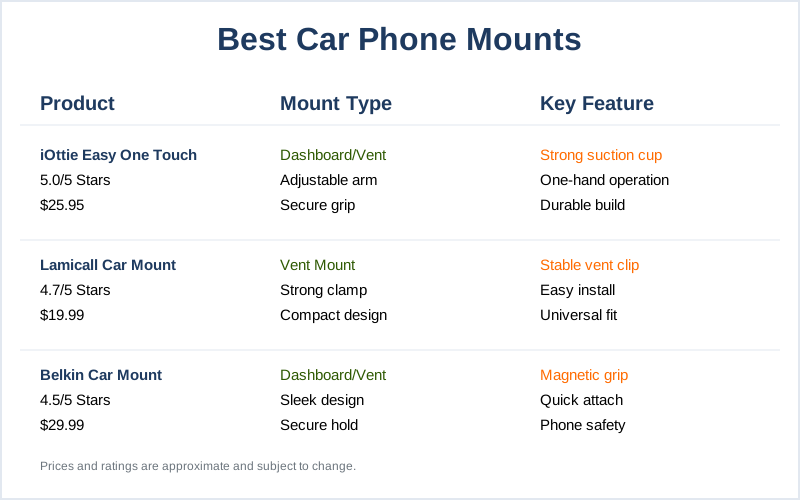
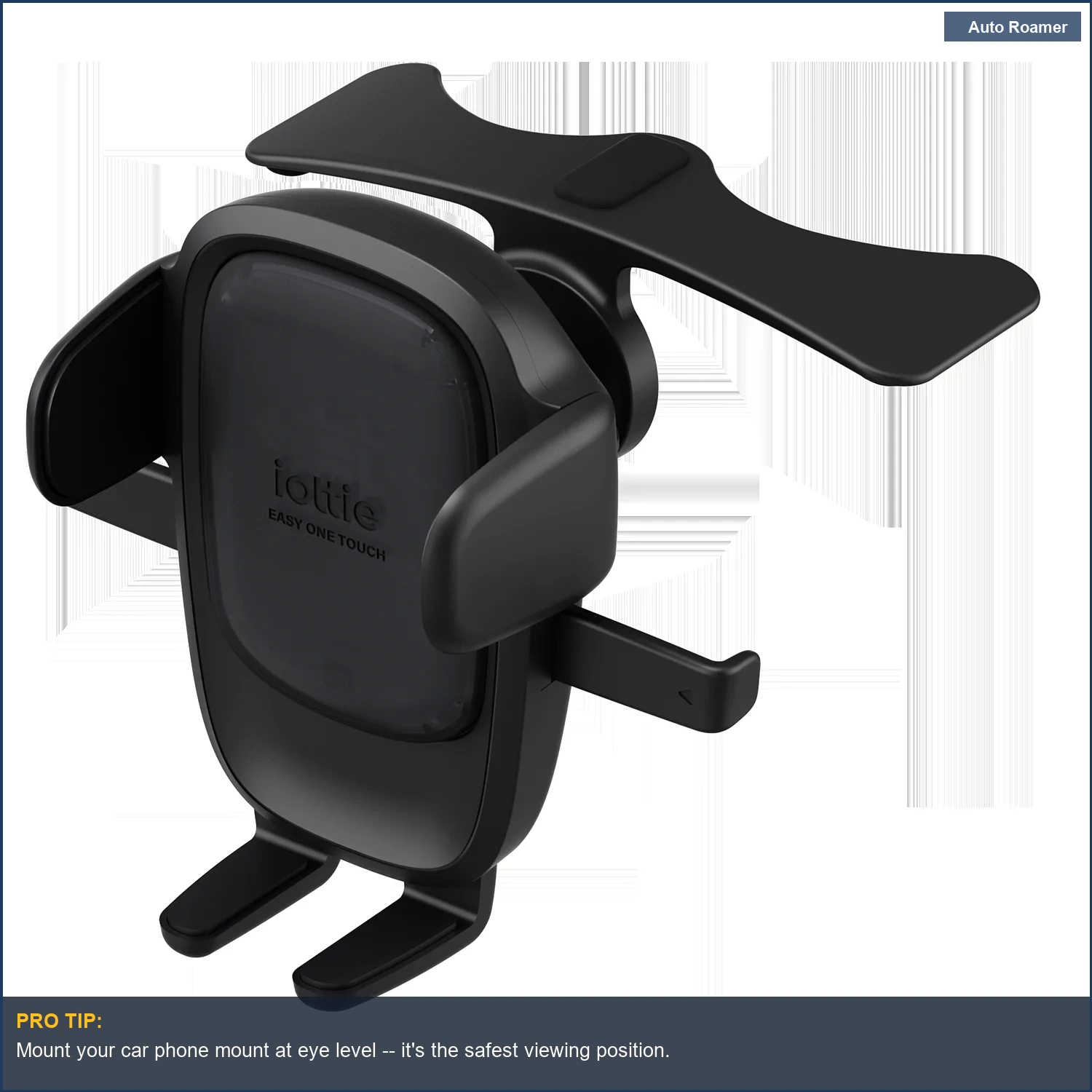
iOttie Easy One Touch 6 (~$25)
Capacity/Key Specs: Spring-loaded mechanical clamp, dash/windshield suction cup, one-touch release.
Pros: The suction cup is a multi-layer design with a sticky gel pad, providing better initial adhesion and resistance to air ingress than plain rubber. The locking lever creates serious vacuum. The mechanical clamp has good spring tension, holding phones up to 3.5 inches wide. Wirecutter's top pick.
Cons: The plastic arm linkage can develop play over time, leading to minor vibration. The gel pad will eventually lose its stickiness if not cleaned.
Best-for: Drivers who need a rock-solid dashboard or windshield mount and are willing to re-seat the suction cup every 6-12 months.
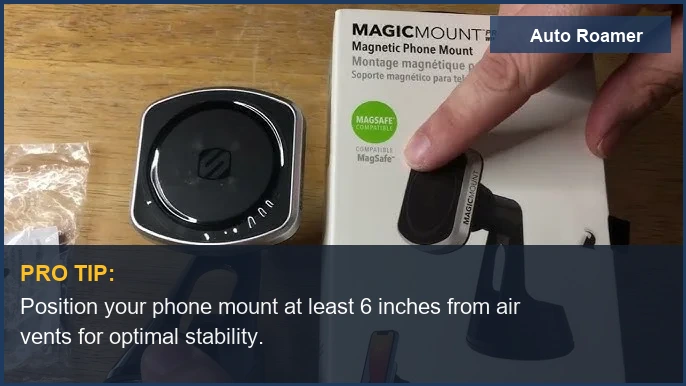
Scosche MagicMount Pro2 (~$30)
Capacity/Key Specs: Neodymium N52 magnets, adhesive dashboard mount, 360-degree rotation.
Pros: These N52 magnets are no joke; they provide 6.5 lbs of pull force. The adhesive pad is a high-bond VHB tape, which, if prepped correctly, offers excellent shear resistance. The ball joint is tight and less prone to slippage. Scosche is a solid choice.
Cons: Requires sticking a metal plate to your phone or case, which isn't always ideal. The adhesive is strong, but removing it can damage delicate dashboard surfaces.
Best-for: Minimalists who prioritize quick attachment/detachment and have a smooth, clean dashboard surface for adhesion.
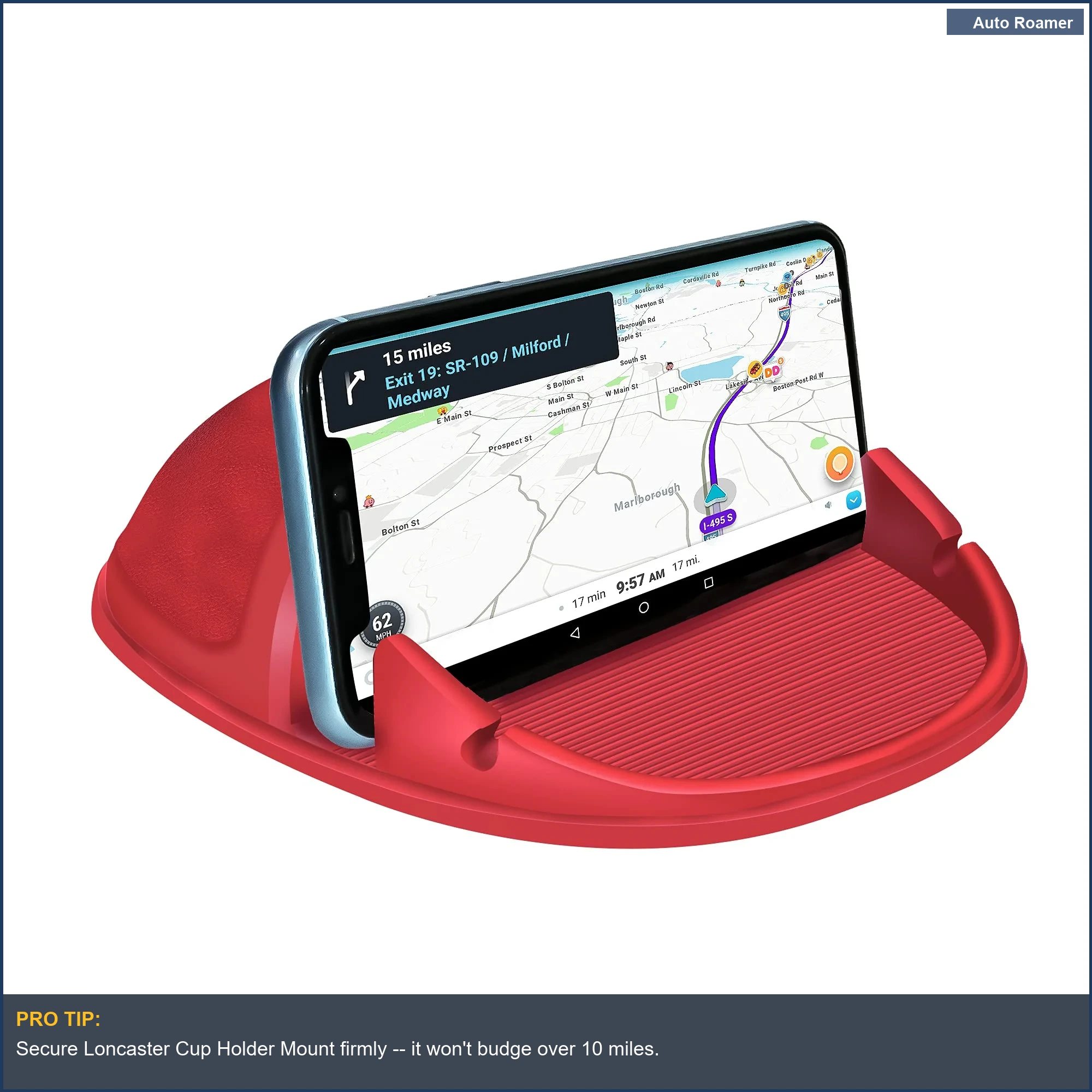
Loncaster Cup Holder Mount (~$20)
Capacity/Key Specs: Expanding base, adjustable phone cradle, 8-inch gooseneck.
Pros: The expanding base mechanism provides a direct, rigid mechanical connection to your vehicle's frame. This eliminates dashboard adhesion issues entirely. The gooseneck, while long, is stiff enough to minimize resonant vibration. Cup holder mounts are stable.
Cons: It takes up a cup holder, obviously. The long gooseneck can introduce more leverage, increasing perceived vibration compared to a direct dash mount.
Best-for: Trucks, SUVs, or any vehicle with accessible cup holders where dashboard mounting is problematic or illegal.
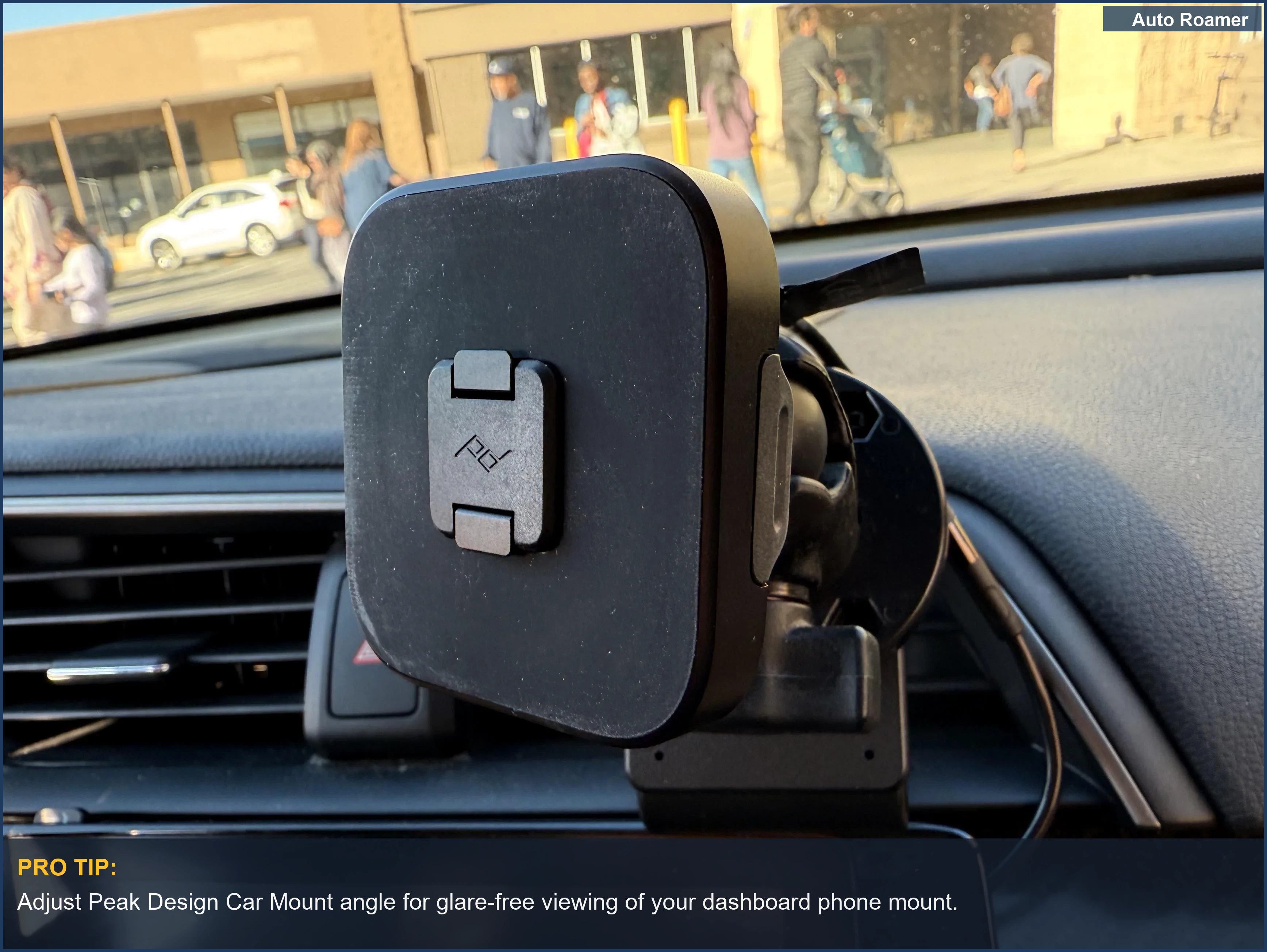
Peak Design Car Mount (~$80)
Capacity/Key Specs: MagSafe compatible, adhesive or vent mount, aluminum construction.
Pros: Over-engineered with precision-machined aluminum, excellent tactile feel. The MagSafe compatibility is robust, offering a strong magnetic bond. The adhesive version uses a semi-permanent VHB pad. Peak Design ranks high for quality.
Cons: Pricey for a phone mount. Requires a MagSafe-compatible phone or case. Vent mount version still stresses vent fins, even with quality materials.
Best-for: iPhone users demanding premium materials and willing to pay for a robust, low-profile MagSafe solution.
VANMASS Universal Dashboard Windshield Mount (~$26)
Capacity/Key Specs: Suction cup with mechanical lock, extendable arm, adjustable cradle.
Pros: This mount uses a robust two-stage suction cup with a strong locking lever, creating a reliable vacuum seal. The extendable arm is stiff, minimizing flex and vibration. The cradle has a decent spring-loaded grip. boasts 'military-grade', which is marketing, but the mechanics are solid.
Cons: The plastic ball joint can wear over time, leading to sag if overtightened. The extendable arm adds leverage, so some vibration is unavoidable on rough roads.
Best-for: Drivers who need maximum adjustability and a strong, reusable suction cup for windshield or textured dashboard surfaces.
Anker 613 MagGo (~$70)
Capacity/Key Specs: MagSafe compatible, wireless charging, adhesive dash mount.
Pros: Integrates 15W wireless charging, which is a convenience if you're battling parasitic drain from navigation apps. The magnetic array provides a firm hold, and the adhesive base is reasonably strong. Anker MagGo is a favorite of TechGearLab.
Cons: Requires MagSafe phone/case. The adhesive, while good, is still subject to thermal cycling failure. The charging adds heat, which can degrade battery life over time.
Best-for: MagSafe iPhone users who want integrated wireless charging and a clean, cable-managed setup on a flat dash surface.
Head-to-Head Comparison
When you put these mounts side-by-side, it's not about which one looks prettier. It's about which one will maintain its mechanical bond and resist the forces of driving. I'm looking at clamp loads, adhesive shear strength, and material fatigue.
| Feature | iOttie Easy One Touch 6 | Scosche MagicMount Pro2 | Loncaster Cup Holder Mount | Peak Design Car Mount | VANMASS Universal Mount | Anker 613 MagGo |
|---|---|---|---|---|---|---|
| Mounting Method | Suction cup (dash/windshield) | Adhesive (dash) | Expanding base (cup holder) | Adhesive/Vent (dash/vent) | Suction cup (dash/windshield) | Adhesive (dash) |
| Grip Type | Mechanical clamp | Magnetic (N52) | Mechanical clamp | Magnetic (MagSafe) | Mechanical clamp | Magnetic (MagSafe) |
| Vibration Resistance | Good (direct connection) | Excellent (low profile) | Good (rigid chassis connection) | Excellent (rigid, low profile) | Fair (longer arm) | Excellent (low profile) |
| Thermal Stability | Fair (suction cup degrades) | Good (VHB adhesive) | Excellent (mechanical; not temperature dependent) | Good (VHB adhesive) | Fair (suction cup degrades) | Good (VHB adhesive) |
| Ease of Install/Removal | Easy to install, moderate to remove | Easy to install, difficult to remove clean | Easy to install/remove | Moderate to install, difficult to remove clean | Easy to install, moderate to remove | Easy to install, difficult to remove clean |
| Cost (~$) | 25 | 30 | 20 | 80 | 26 | 70 |
The key takeaway here is that mechanical connections, like the Loncaster's expanding base, are inherently more stable under thermal cycling and vibration than adhesive or suction cup solutions.
Adhesion is a surface chemistry problem that always loses to physics over time. CNN Underscored tested 12 mounts and found similar trade-offs. Magnets are great for convenience, but the strength of the bond is critical.