
The Belief That Gets Dashboards Wrecked
The common belief, stated fairly: magnetic mounts are risky because magnets and phones do not mix, and vent mounts are risky because they load the air vents — so the safe choice is a flat adhesive pad stuck to the dash, where nothing clips onto anything.
That is wrong on both halves, and the second half is the expensive one. A static magnetic field does nothing to flash memory or a lithium cell; the only thing on a modern phone a magnet reliably upsets is the magnetometer, and only while it is close. Apple settled the argument by building a ring of magnets into the phone. Meanwhile the adhesive pad is the one item on the list with a documented, irreversible chemical mechanism for ruining the surface it sits on.
The correct mental model is this: dashboard damage is a chemistry and pressure problem, not an electronics problem. Rank mounts by what they do to a plasticised polymer skin under heat, and the usual advice inverts.
Plasticiser Migration, the Mechanism Nobody Names
A soft-touch dashboard is not solid plastic. It is a thin PVC or TPO skin over foam, and it is soft because it is loaded with plasticiser — a small mobile molecule wedged between the polymer chains to keep them sliding past each other. Plasticiser is not chemically bonded. It moves.
Put an acrylic adhesive in prolonged contact with that skin and you have created a concentration gradient. Plasticiser migrates out of the dash and into the glue, which does two things at once: the glue softens and gets gummy, and the dash surface directly under it loses the very thing that made it matte and pliable. What you are left with when you peel the pad off is a glossy patch, a tacky patch, or a shallow imprint of the pad's own texture. It is not dirt and it does not polish out, because material actually left the surface.
Heat is the accelerator. Migration is a diffusion process, and as a rule of thumb diffusion roughly doubles for every 10 °C. Cabin air might sit at 40 °C on a hot day, but the dash top in direct sun is routinely measured above 70 °C (160 °F) — call it three doublings above cabin temperature. A pad that looked fine through a mild spring is the pad that leaves a mark in August. That is why this failure always seems to arrive suddenly.
The test that predicts it: if the adhesive feels tackier after a month on the dash than it did out of the packet, migration is already underway. Take it off.
Ranking Every Mount by What It Actually Does to the Car
Same list, judged on mechanism instead of reputation.
| Mount type | Real failure mode | Reversible? |
|---|---|---|
| Adhesive dash pad | Plasticiser migration — glossy or tacky patch, sometimes an imprint | No |
| Suction cup on a dash disc | The disc is an adhesive pad; same mechanism, plus the cup hardens and drops the phone | No |
| Suction cup on glass | Loses seal with thermal cycling and falls; glass is inert, so no marking | Yes |
| Vent mount | Cantilever load fatigues thin ABS louvres; heavy phones crack a vane | Only if you stop in time |
| CD-slot mount | Loads the slot's sprung jaws; mechanically fine, occupies the slot | Yes |
| Cup-holder mount | No dash contact at all; costs you a cup holder and reach | Yes |
| Vehicle-specific bracket | Clips into existing panel seams; no adhesive, no suction | Yes |
| Magnetic head (on any of the above) | Confuses the compass while attached; no effect on storage or battery | Yes |
Read the right-hand column first. Two rows say no, and both of them are adhesive. Everything the internet worries about is in the reversible half.
The vent row is worth a number. A large phone in a protective case is 200–250 g, and a mount holds it 50–80 mm out from the vent face — a steady bending moment on a louvre moulded from roughly 1 mm of ABS, plus a shock load every pothole. That is a fatigue problem, and fatigue does not announce itself before the vane snaps.
What to Actually Use Instead
Given the mechanism, the shopping rule is one line: put the load anywhere except glued to a plasticised surface. Four ways to do that, roughly in order of how little they touch the car.
- A vehicle-specific bracket — the ProClip style, moulded per model to clip into a seam or trim gap the car already has. No adhesive, no suction, and it comes off leaving nothing. The most expensive option and the only one that is genuinely damage-free by design.
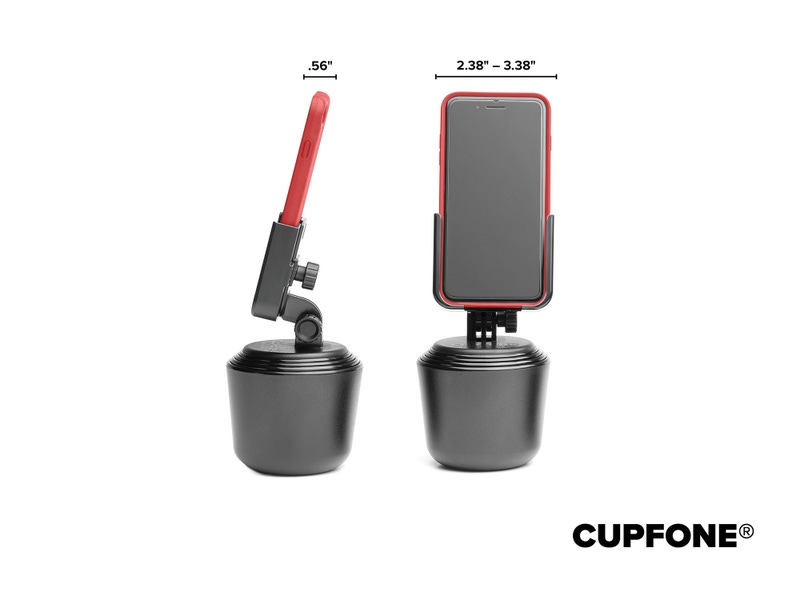
- A cup-holder mount — a weighted or expanding base in the cup holder, phone on an arm. WeatherTech's CupFone is the well-known one. Zero dash contact; you trade a cup holder and you look further down to read the screen.
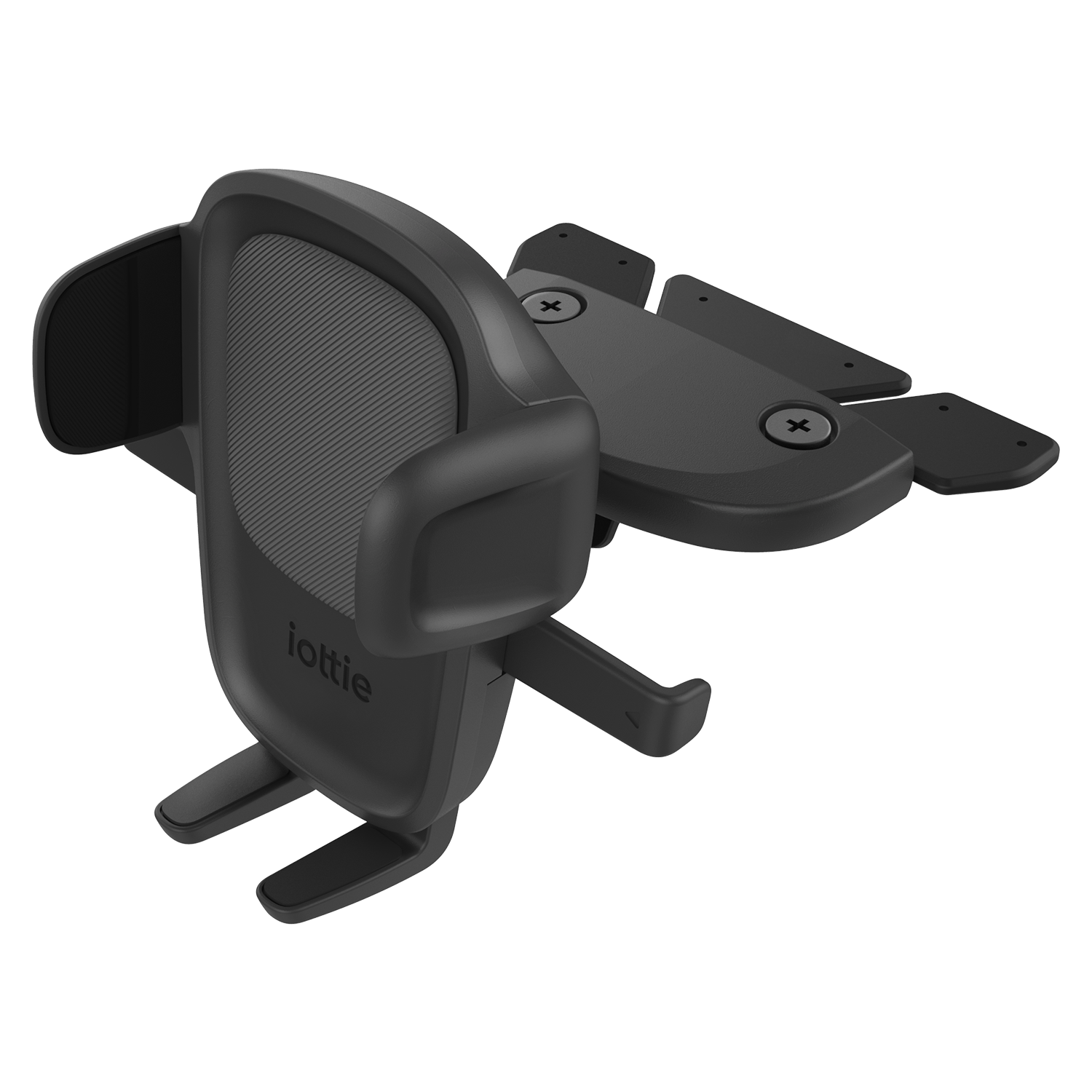
- A CD-slot mount — iOttie and others make these. The slot's jaws are sprung steel, so the load lands somewhere designed to be loaded. Only useful if the car still has a CD slot, which increasingly it does not.
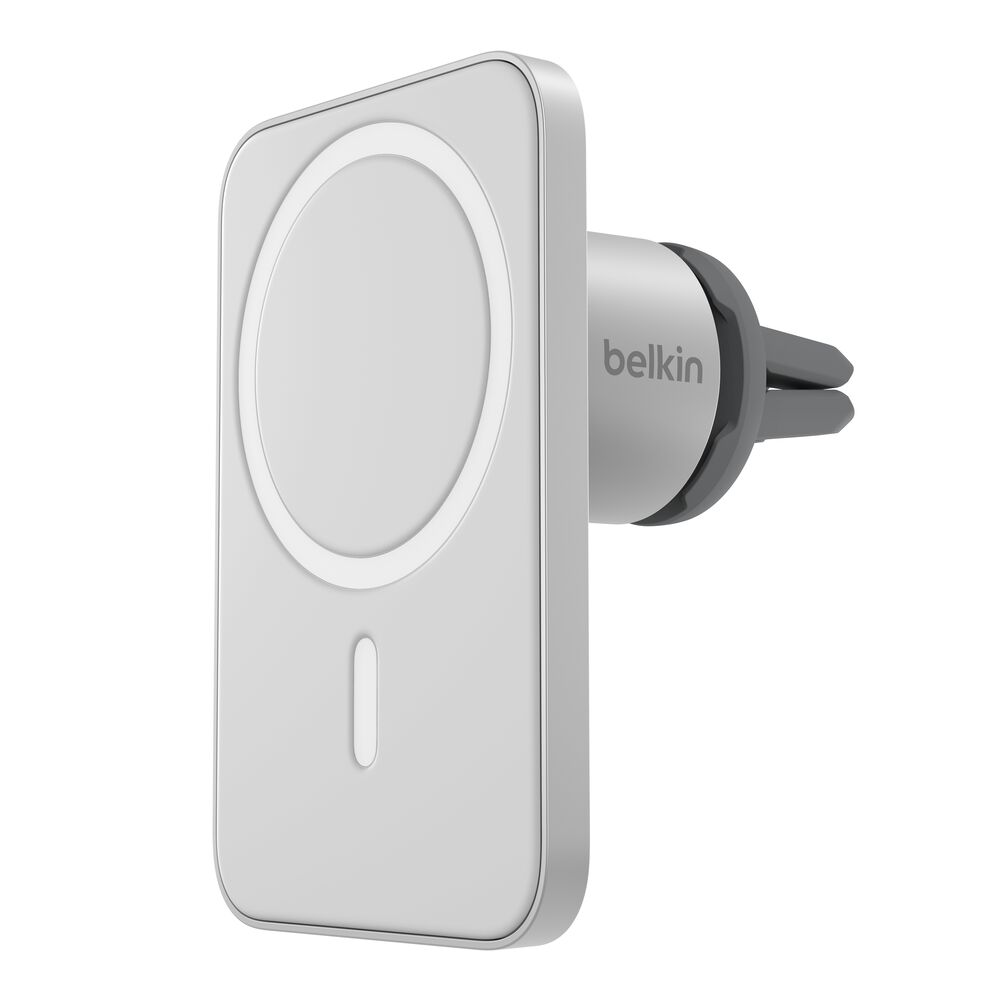
- A vent mount with a light phone — Belkin's MagSafe vent mount is typical. Fine on sturdy horizontal louvres with a phone and no case-mounted wallet; the failure is mechanical fatigue, so keep the moment arm short and do not hang a heavy case off it.
Named, not linked: Amazon blocks automated checks from this server, so we cannot currently confirm that any specific listing for these four is live and selling the product it claims. Rather than send you to a page we have not verified, we have named the products and left the links off. The mechanism above is what you are buying on.
When the Conventional Advice Is Right
Two cases where the crowd has it correct, because a contrarian case that admits nothing is just a hot take.
Hard plastic dashboards are genuinely fine with adhesive. A cheap car with a rigid, unplasticised polypropylene dash top has very little to migrate. Adhesive pads on those surfaces mostly do come off cleanly. If you can press a thumbnail into the dash and it gives, you have the plasticised kind and the pad is a mistake; if it is hard and slightly shiny already, the risk is low.
Magnets are worth avoiding in two narrow cases. If you still carry magnetic-stripe hotel keys or a mechanical hard drive in the same pocket, keep them apart. And a magnet clamped over a wireless charging coil blocks charging even when it does not harm anything — which is why phones designed for it put the magnets in a ring around the coil rather than across it.
Everything else on the standard warning list — vents ruining the HVAC, magnets wiping storage, suction cups pulling paint off glass — is folklore. The pad is the problem.
Taking a Pad Off Without Making It Worse
If a pad is already on the dash, the removal does more damage than the pad did when it is done badly. The order matters.
- Warm it first. Acrylic adhesive loses tack sharply with temperature. Two to three minutes with a hairdryer at 60–70 °C on the pad — warm to the touch, never hot enough to distort the dash skin — does most of the work.
- Pull at a shallow angle, slowly. Peeling back on itself at close to 180 degrees puts the stress into the glue line. Lifting straight up puts it into the dash skin, which is what tears the surface.
- Never a blade. A plastic trim tool at most. A metal edge on a soft-touch skin cuts it, and that damage is not subtle.
- Residue: 70% isopropyl or a citrus remover, on the cloth, not the dash. Work in small passes. Do not soak it, and keep solvent off any adjacent piano-black trim.
Then accept the outcome honestly: the glue comes off, the gloss does not. Where plasticiser left the skin, the surface is chemically different from the dash around it. A matte interior dressing evens out the appearance; nothing restores it. That asymmetry — five minutes to stick on, permanent to undo — is the whole argument of this page.