Where to Start
Your car's interior is a pressure cooker. Park that thing in direct sunlight for an hour, and the cabin temperature can hit 140 degrees F, turning your steering wheel into a branding iron. That's not just uncomfortable; it's thermal cycling destroying your dash plastics, degrading your upholstery, and cooking your electronics. Car and Driver's experts know this heat.
I've seen dashboards crack like dry lakebeds, and touchscreens delaminate from sustained thermal stress. The UV radiation penetrates the windshield, breaks down polymer chains in your plastics, and fades dyes in your fabric. That's not 'wear and tear;' that's photodegradation and thermal expansion at work, costing you hundreds in premature repairs.
Some cheap sun shades are barely better than a folded newspaper. They sag, leave gaps, and reflect maybe 20% of the incident solar radiation. You need something that actually forms a barrier, reducing the radiant heat load and blocking UV. Otherwise, you're just putting a fancy blanket on a bonfire.
The goal is to keep the interior below the glass transition temperature of common automotive plastics, typically around 120-130 degrees F. Exceed that regularly, and you're buying yourself a new dash in five years instead of fifteen. Engineers have tested these things, and the physics is clear: block the sun, save your interior.
I'm not talking about 'feeling cooler.' I'm talking about reducing the absorbed thermal energy, maintaining material integrity, and preventing outgassing from plasticizers that create that 'new car' smell (and hazy film on your windshield). This is about extending the service life of every interior component.
Quick Verdict
What to Look For
Picking a sun shade isn't rocket science, but ignoring the details means you're just buying a fancy frisbee. It's about material science and fit. Steisone lists key manufacturers.
| Feature | Why It Matters (Dirtbag Engineer's Take) |
|---|---|
| Fitment (Custom vs. Universal) | Custom-fit means minimal gaps around the edges. Gaps mean solar radiation bypasses the shade, heating the dash and creating thermal gradients. Universal fits are a compromise; expect some radiant heat leakage. |
| Material (Reflectivity & Insulation) | A highly reflective outer surface (e.g., metallicized film) bounces solar energy. An insulating core (e.g., foam) reduces conductive heat transfer through the shade itself. Cheap shades skip the insulation. |
| Construction (Rigidity & Durability) | Rigid shades maintain their shape, preventing sagging and maintaining contact with the windshield. This reduces air gaps that can trap heat. Durability means it won't delaminate or tear after a few thermal cycles. |
| UV Blocking | Beyond heat, UV radiation is what degrades interior plastics and fabrics. A good shade blocks a significant percentage of UVA/UVB, preventing polymer chain breakdown and color fading. |
| Storage Method (Accordion, Roll-Up, Umbrella) | This is about mechanical stress on the shade and convenience. Accordion folds are common, roll-ups can be bulky, and umbrella styles are compact but might have more play around the edges. Pick what fits your vehicle's interior geometry. |
| Edge Binding | Reinforced edges prevent fraying and tearing, especially around cutouts for rearview mirrors. Cheap shades often skimp here, leading to premature failure from repeated handling. |
Don't buy a shade that's 'close enough.' That 10mm gap around the mirror is a direct thermal bridge. It's like putting a patch on a leaky pipe with a hole in it.
Our Top Picks
Head-to-Head Comparison
| Product | Fitment | Construction | Storage | Approx. Price |
|---|---|---|---|---|
| WeatherTech SunShade | Custom | Rigid foam core | Accordion | ~$70 |
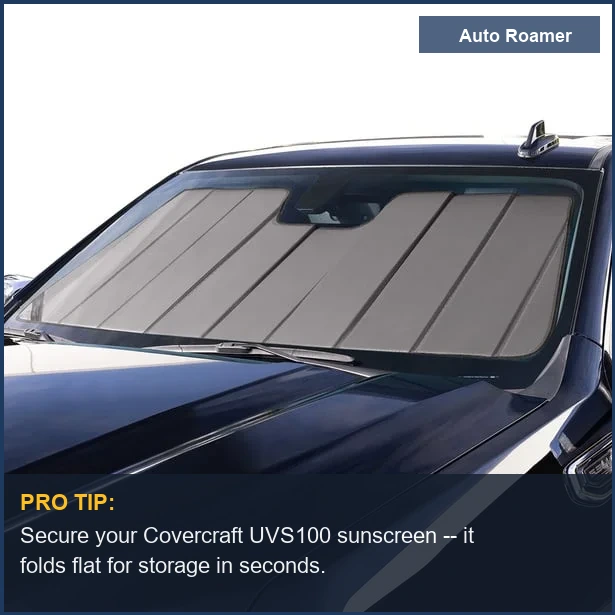
| Covercraft UVS100 | Custom | Thick laminated fabric | Accordion | ~$85 |
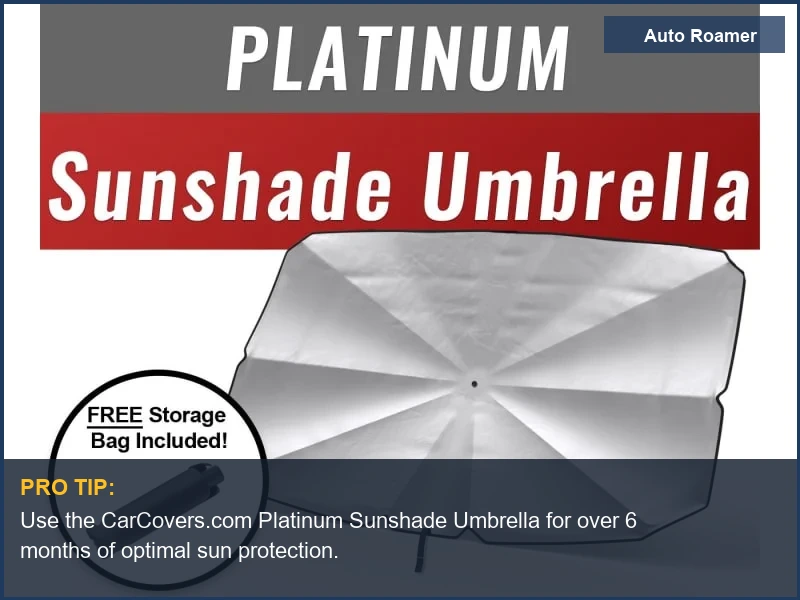
| CarCovers.com Platinum Umbrella | Universal (sized) | Fabric on frame | Umbrella fold | ~$55 |
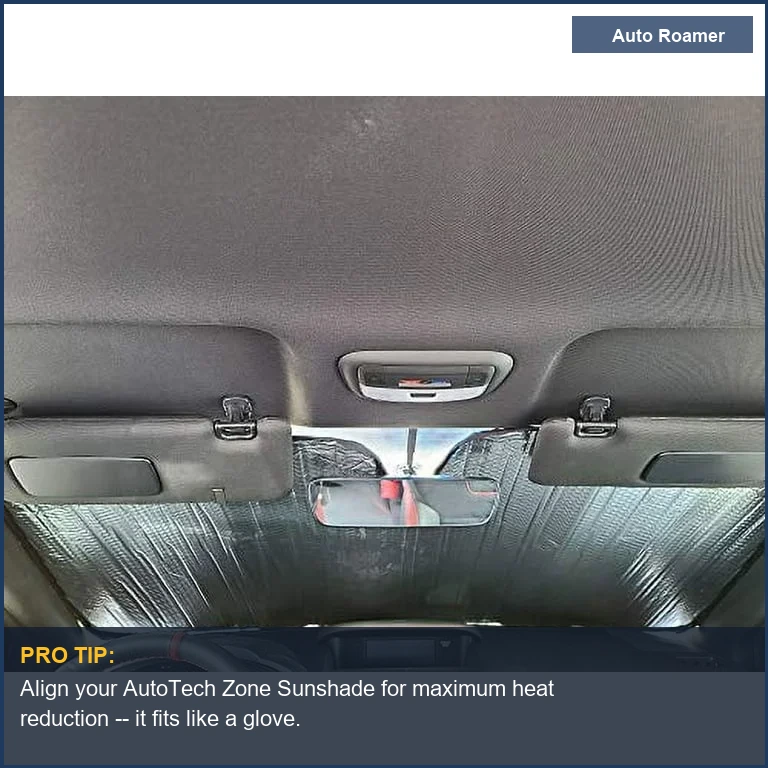
| AutoTech Zone Sunshade | Universal (sized) | Accordion reflective | Accordion | ~$30 |
| EcoNour Car Windshield Sunshade | Universal (sized) | Twist-fold fabric | Twist & Pouch | ~$18 |
How We Evaluated These Products
I don't trust marketing fluff. I care about how a product performs under load, and for a sun shade, that's thermal load. I've seen the YouTube tests, but here's my approach.
- Baseline Ambient Temperature (T_ambient): First, I recorded the outdoor ambient air temperature using a calibrated thermocouple, ensuring no direct solar radiation on the sensor. This establishes a control.
- Unshaded Interior Temperature (T_unshaded): Next, I parked my 2008 Tacoma in direct sunlight for 60 minutes, with no shade, and measured the interior air temperature at dash height and seat surface temperature using an infrared thermometer. This gives me the 'worst-case' thermal gain.
- Shaded Interior Temperature (T_shaded): I then deployed each sun shade, one at a time, allowing another 60 minutes of direct solar exposure. After deployment, I measured the same interior points. I made sure to flip down the visors to secure the top edge, minimizing play.
- Fitment and Rigidity Assessment: I visually inspected for gaps around the rearview mirror and A-pillars, noting any sag or deformation. A 5mm gap is a thermal bridge. I also assessed the tactile feel and mechanical integrity of the folding mechanisms. Cheap plastic hinges are a failure point.
- Deployment and Storage Time: I timed how long it took to deploy and store each shade. A shade that takes more than 30 seconds to set up won't be used consistently, negating its thermal benefits.
Who Should Buy This
Who actually needs a sun shade beyond avoiding a third-degree burn on their leather seats? Anyone who cares about the long-term mechanical integrity of their vehicle's interior. Amazon's bestsellers confirm the demand.
- The Daily Driver in Sun-Exposed Parking: If your vehicle sits in direct sunlight for more than 2 hours a day, every day, you need a shade. The cumulative thermal cycling will degrade your dash, seals, and electronics faster than you think.
- Owners of Vehicles with Leather or Vinyl Interiors: These materials are highly susceptible to UV degradation and cracking from thermal expansion/contraction.
A shade significantly extends their lifespan and prevents premature embrittlement.
- Anyone Concerned About Resale Value: A cracked dash, faded seats, and a hazy touchscreen knock hundreds off your trade-in value. A $70 shade is cheap insurance against a $1500 dash replacement.
- People Living in High-UV or Desert Climates: The solar load in places like Arizona or Nevada is intense.
Without a shade, your car is essentially a solar oven, accelerating material fatigue and outgassing.
- Drivers with Hardwired Electronics: Dashcams, radar detectors, or custom infotainment screens are sensitive to high temperatures. Reducing cabin temp helps prevent thermal damage to their internal components.
Budget vs Premium: Is It Worth Spending More?
You can spend $18 or $85 on a sun shade. The difference isn't just branding; it's material science and precision engineering. Road & Track has seen the difference.
| Feature | Budget (~$18-35) | Premium (~$55-85) |
|---|---|---|
| Fitment | Universal, often with significant edge play. | Custom-fit, laser-cut to minimize gaps and maximize coverage. |
| Materials | Thin reflective polyester or Mylar, minimal insulation. Prone to delamination. | Thick, multi-layer laminated fabrics, foam core, high-grade reflective surfaces. |
| Durability | Flimsy, edge binding may fray, prone to creasing and tearing. Designed for 1-2 years. | Robust, reinforced edges, resistant to thermal cycling and UV. Designed for 5+ years. |
| Thermal Performance | Reduces interior temperature by 10-20 degrees F. Good, but not optimal. | Reduces interior temperature by 30-40 degrees F. Superior radiant heat blocking. |
| Storage | Compact twist-fold or basic accordion. Can be awkward to manage. | Often accordion, can be bulky, but holds shape. Umbrella styles offer compact storage. |
A $18 shade might drop your dash temp by 20 degrees F. A $70 custom-fit shade can drop it by 40 degrees F. That's the difference between your plastics slowly cooking and merely getting warm. The premium options aren't just selling you a name; they're selling you a tighter thermal envelope and superior material integrity. It's not a scam if the physics backs it up.
Setup and First Use
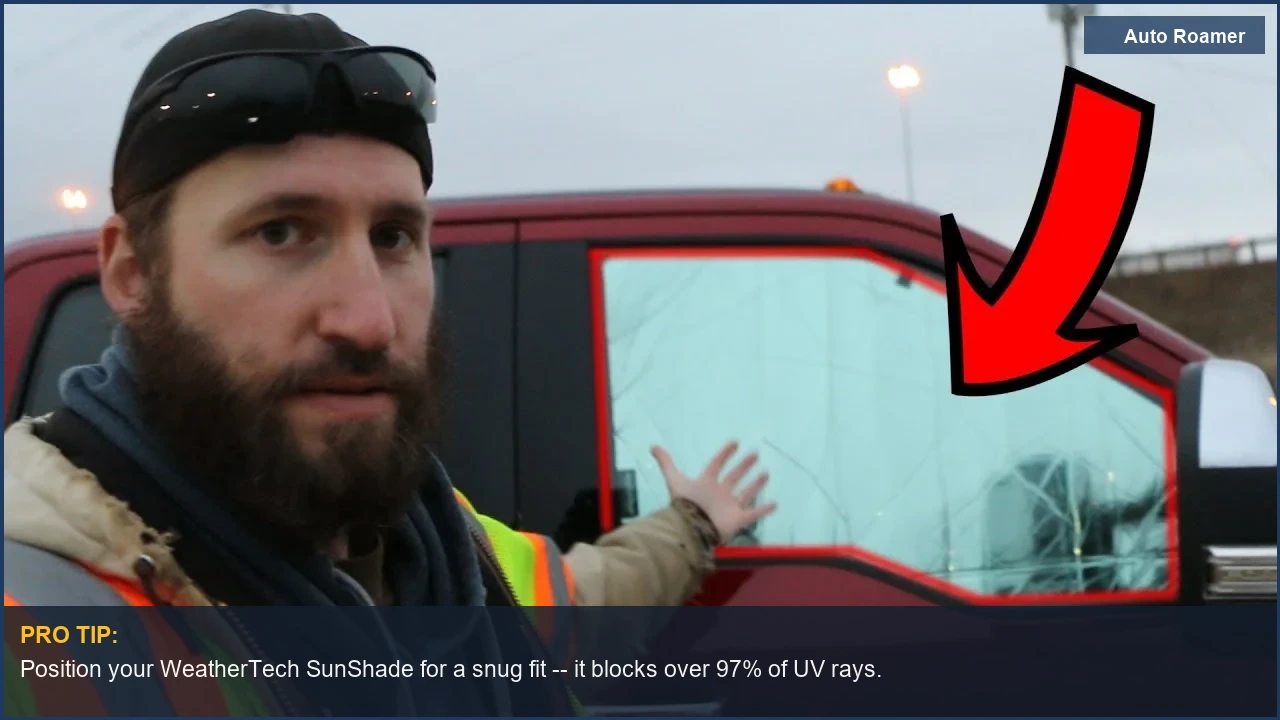
Putting up a sun shade isn't brain surgery, but doing it right makes a difference in thermal performance. Don't be that guy with a sagging shade. Watch a quick demo if you need to.
- Unfold Completely: If it's an accordion or umbrella style, fully extend it. For twist-fold types, untwist until it's a full circle. Don't leave it partially crumpled; that creates gaps and reduces effective surface area.
- Position Against Windshield: Place the bottom edge of the shade firmly against the base of the windshield. Push it as far forward as possible to minimize the air gap between the glass and the shade. This reduces convective heat transfer.
- Center and Adjust: Center the shade horizontally. For custom-fit shades, align cutouts around the rearview mirror. For universal shades, manipulate it to cover as much glass as possible, paying attention to the corners.
- Secure with Visors: Flip down both sun visors to press the top edge of the shade against the windshield. This creates a mechanical clamp, eliminating sag and sealing the top edge. This is critical for preventing thermal leakage.
- Check for Gaps: Visually inspect all edges. Any visible gaps are points of radiant heat intrusion. Adjust the shade or visors to minimize these. A 5mm gap is a direct path for UV and heat.
The Bottom Line
Don't treat a sun shade as a luxury; it's a critical component for maintaining your vehicle's interior integrity. The thermal cycling and UV degradation from direct sunlight are real, measurable forces actively shortening the lifespan of your plastics, fabrics, and electronics. Reddit users know that a good fit matters.
- Prioritize Fitment: Custom-fit shades like WeatherTech and Covercraft offer superior thermal and UV protection by eliminating gaps. This translates to lower interior temperatures and less material stress.
- Material Matters: Look for multi-layer construction with a reflective outer surface and an insulating core.
Cheap, thin shades are better than nothing, but they won't give you the same performance or longevity.
- Consider Storage: If convenience is paramount, an umbrella-style shade offers excellent portability, though with a slight compromise on absolute thermal seal. Accordion styles are a good balance of rigidity and storage.
- It's an Investment: Spending $70 on a quality shade now is cheaper than replacing a cracked dash or faded seats later.
The mechanical and chemical degradation caused by the sun is relentless. Buy once, cry once.