
Sleep in Your CX-5: Expert Car Camping Guide
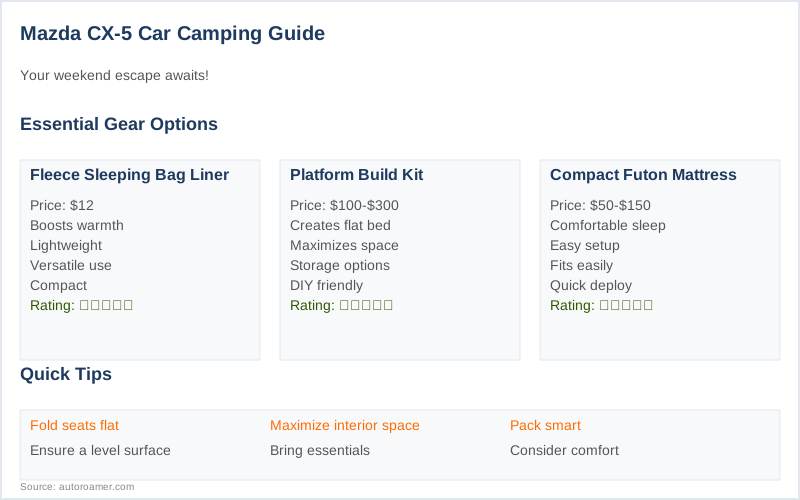
Ever looked at your Mazda CX-5 and thought, "This could be a bed"? It's not a wild dream. Imagine this: no more battling for campsite spots or shelling out for dingy motels. Your CX-5, with a few clever upgrades, is your stealthy, mobile hotel, ready to whisk you away to stunning, off-the-beaten-pat
Best Sleeping Setups for the Mazda CX-5
Ever looked at your Mazda CX-5 and thought, "This could be a bed"? It's not a wild dream. Imagine this: no more battling for campsite spots or shelling out for dingy motels. Your CX-5, with a few clever upgrades, is your stealthy, mobile hotel, ready to whisk you away to stunning, off-the-beaten-path locations. Forget wrestling with tent stakes in the dark; your next unforgettable sunrise is just a parked car and a good night's sleep away.
Storage and Organization Tips
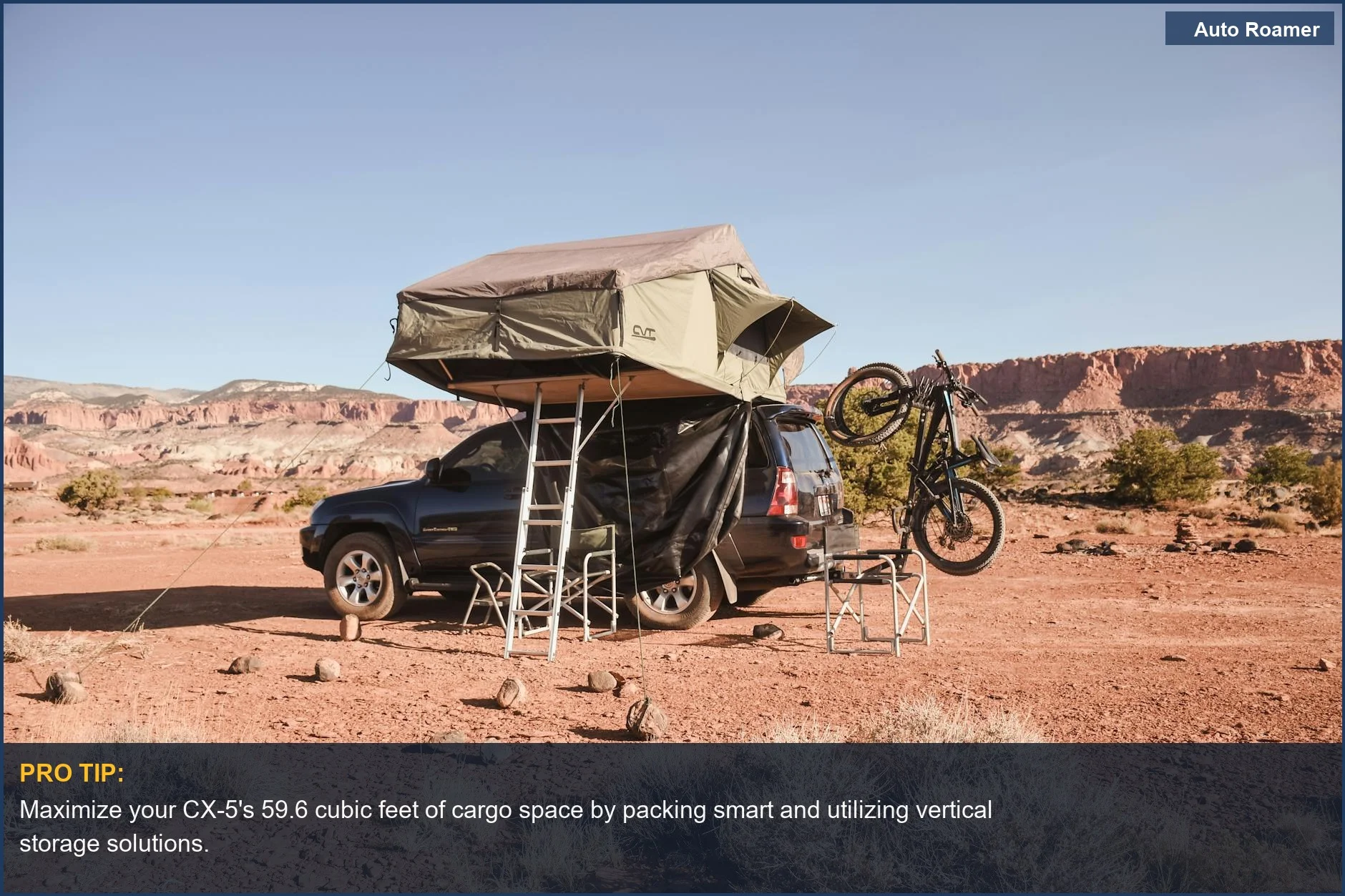
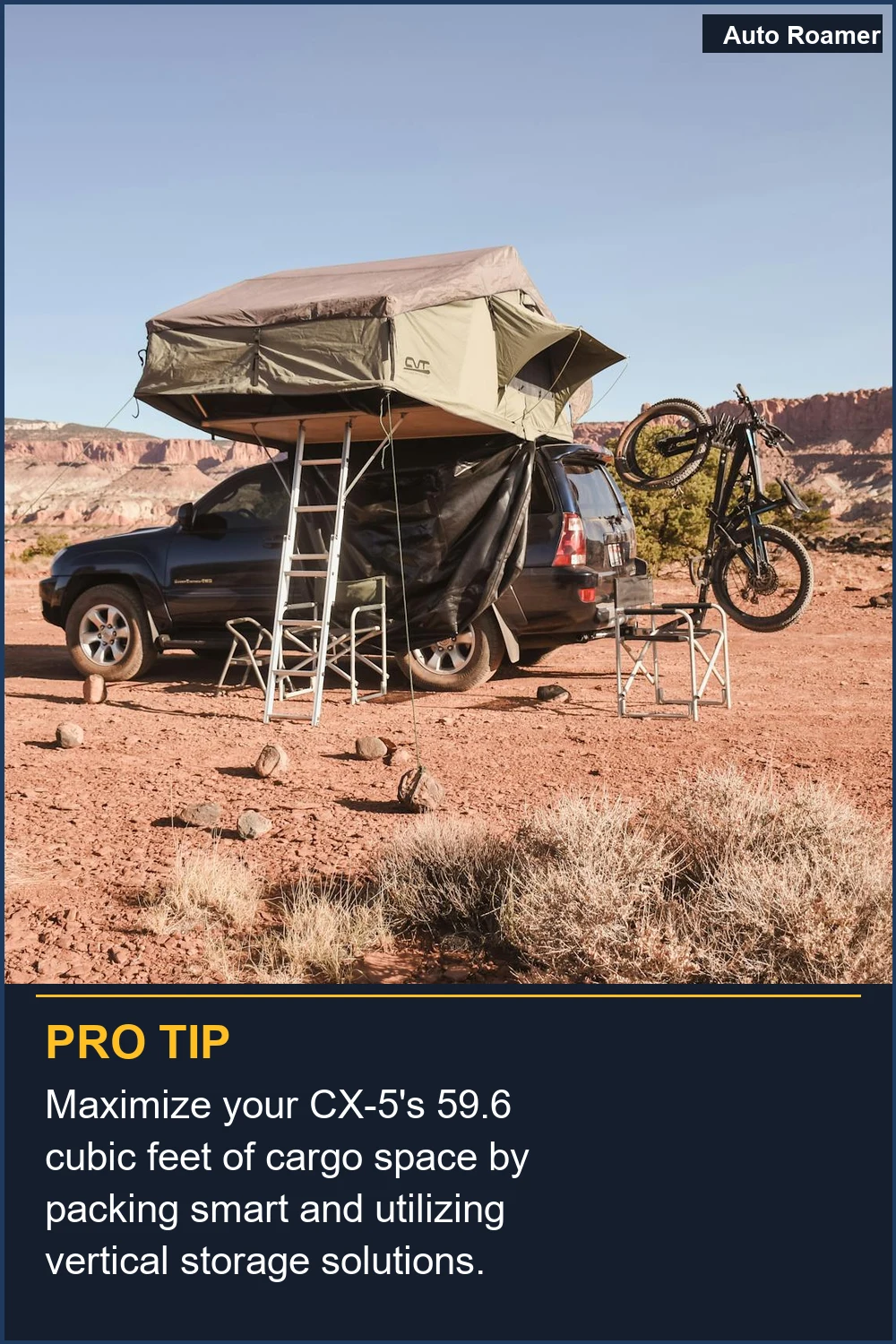
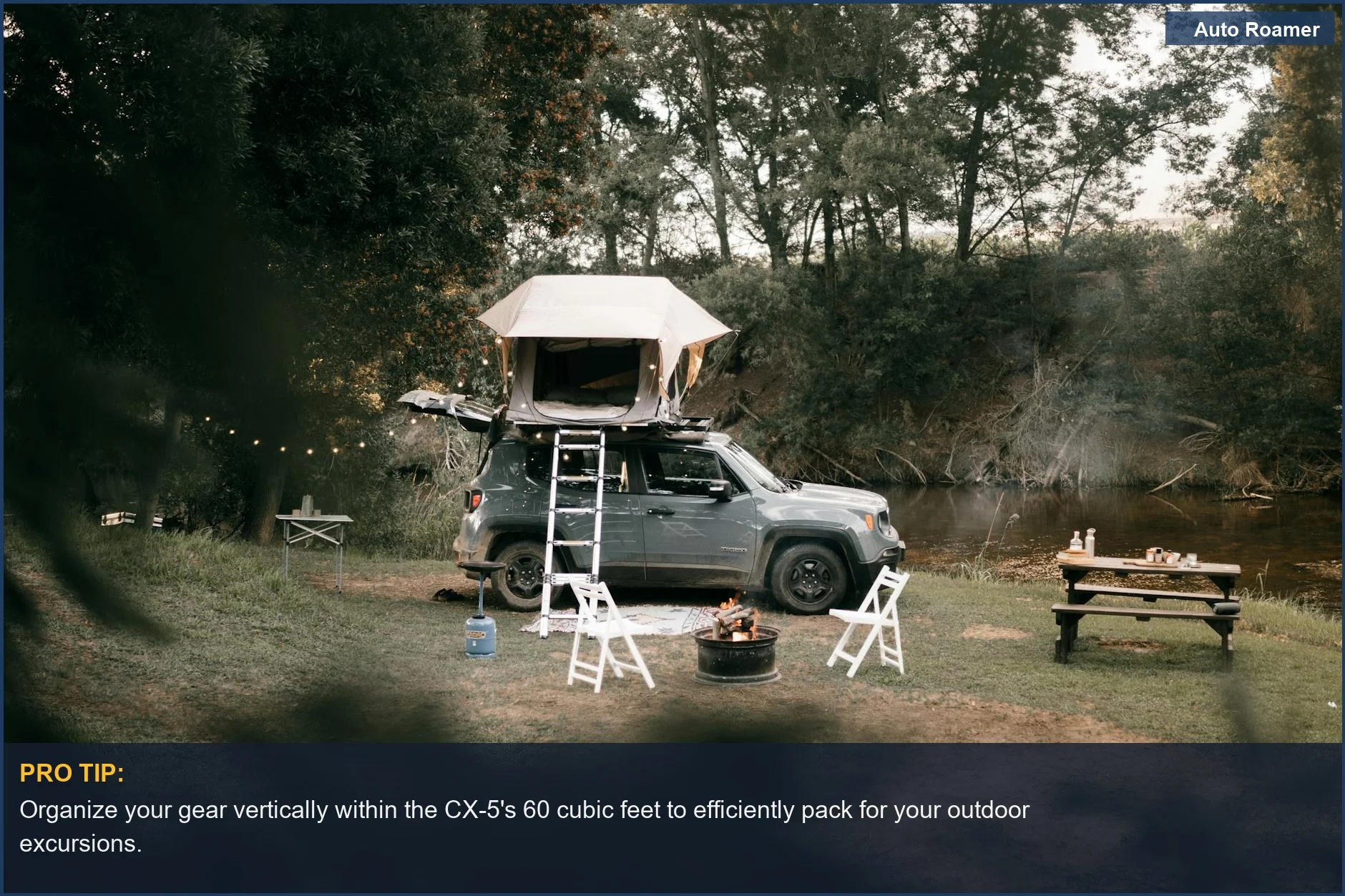
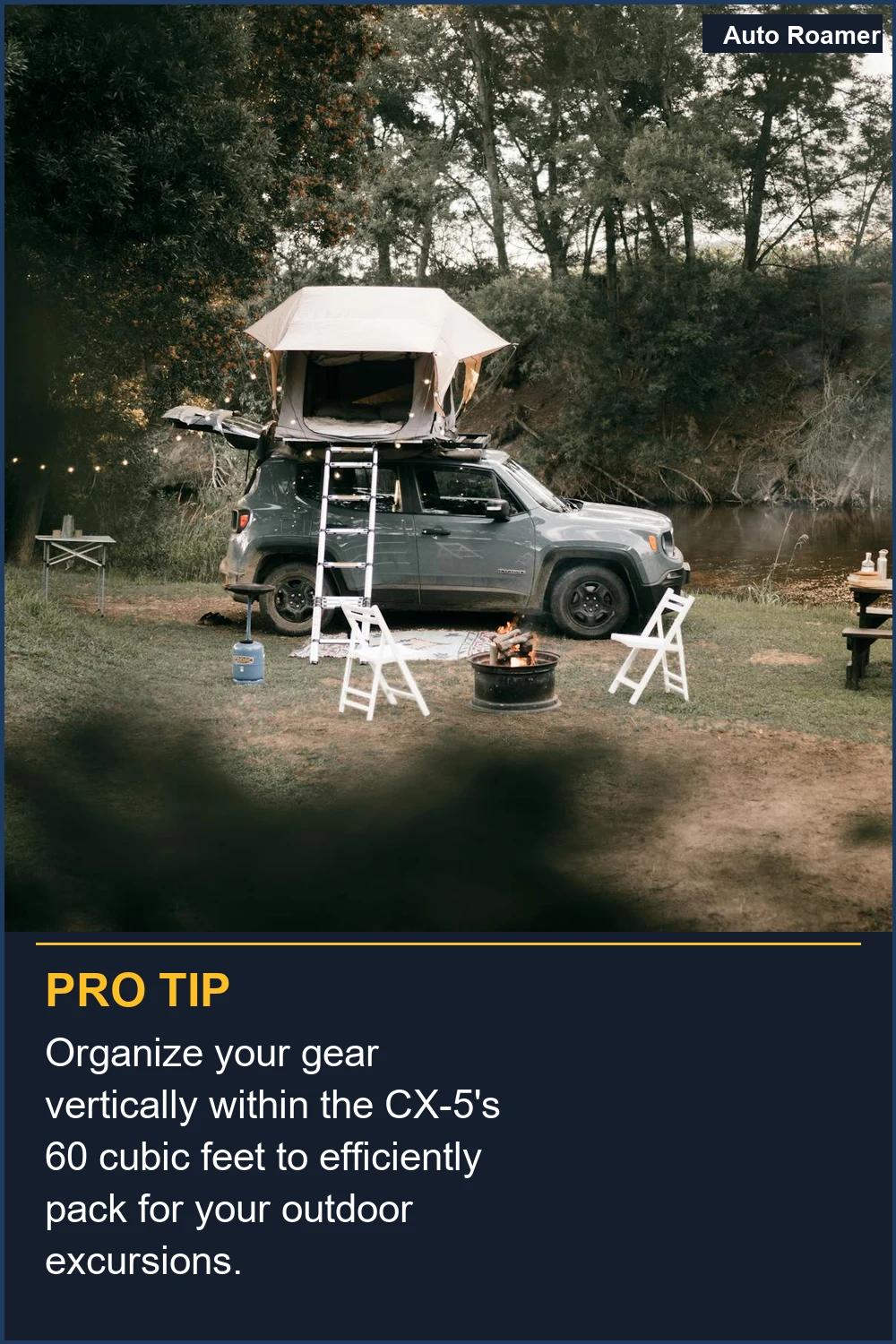
You've got about 60 cubic feet of space, which sounds like a lot until you start packing. The key is vertical organization and soft-sided gear. Hard plastic bins are great for durability, but they're not flexible. Cargo Organizer Ideas.
- Use soft-sided bags: Duffel bags, soft coolers, and collapsible fabric bins are your friends. They can be stuffed into odd-shaped gaps and compressed when empty. This maximizes your usable volume and reduces rattling.
- Front seat organizer: A simple seat-back organizer on the front passenger seat can hold essentials like headlamps, snacks, and charging cables. This keeps small items from rolling around and becoming projectiles during sudden braking.
- Roof rack for bulky items: If you're bringing a lot of gear - like kayaks, bikes, or a full-size cooler - a roof rack is almost mandatory. A cargo box adds aerodynamic drag and reduces fuel economy, but it frees up crucial interior space. Just remember the 20-foot height limits at some parks. Congratulations, you just paid $500 for a roof box you can't use.
- Under-platform storage: If you do opt for a minimalist wooden platform (maybe 4 inches high), you can store flat items underneath. Think recovery boards, a collapsible shovel, or spare shoes. This keeps heavy, dirty items out of your sleeping area.
- Door pocket utilization: The CX-5's door pockets are decent. Use them for water bottles, maps, and small tools. Keep frequently accessed items here to avoid rummaging through your entire setup.
- Rear cargo net: A cheap cargo net across the back of the trunk can secure loose items and prevent them from sliding forward into your sleeping area during travel. This reduces impact forces on your gear and keeps your space cleaner.
Power Options for Car Camping
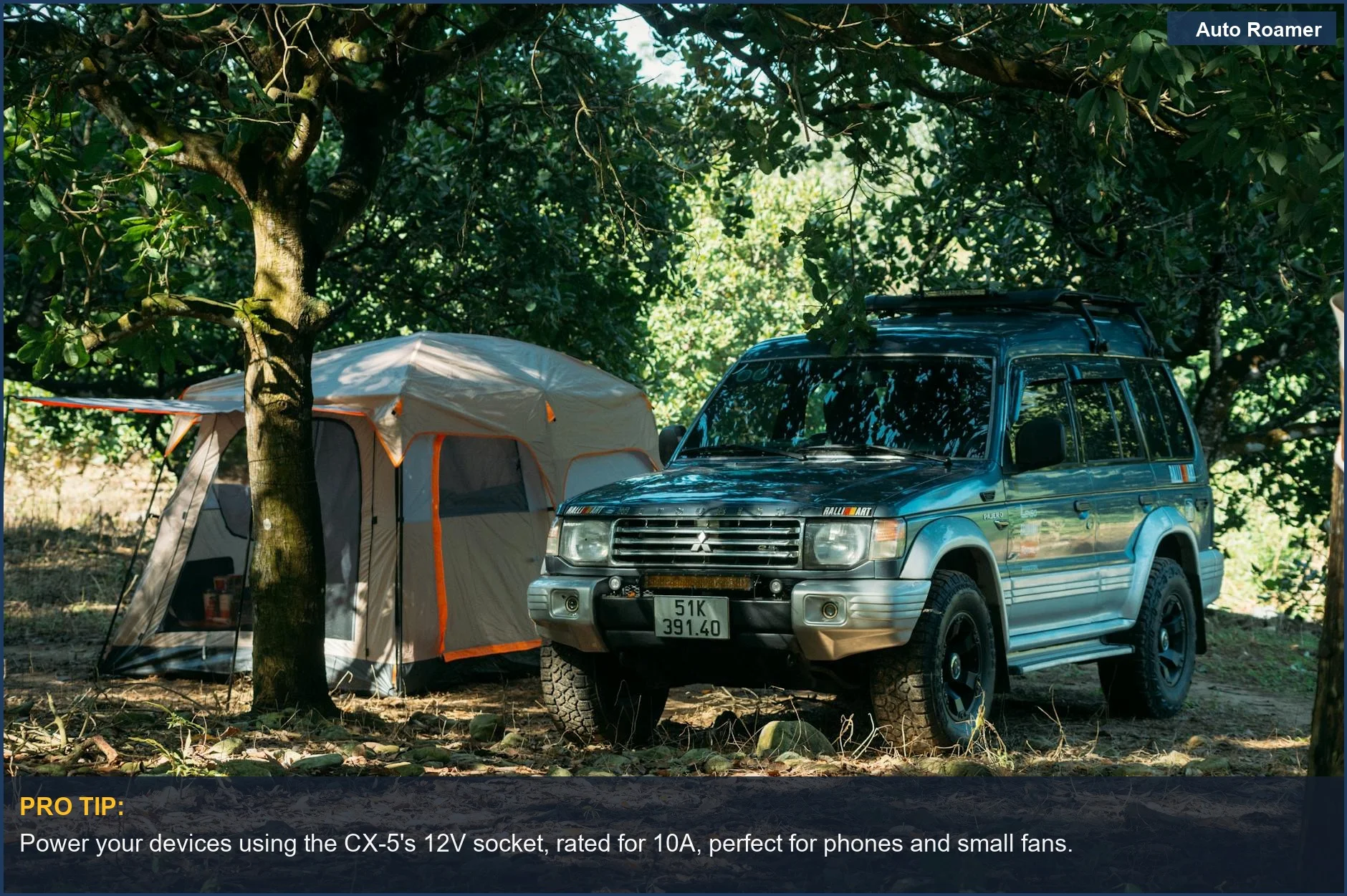
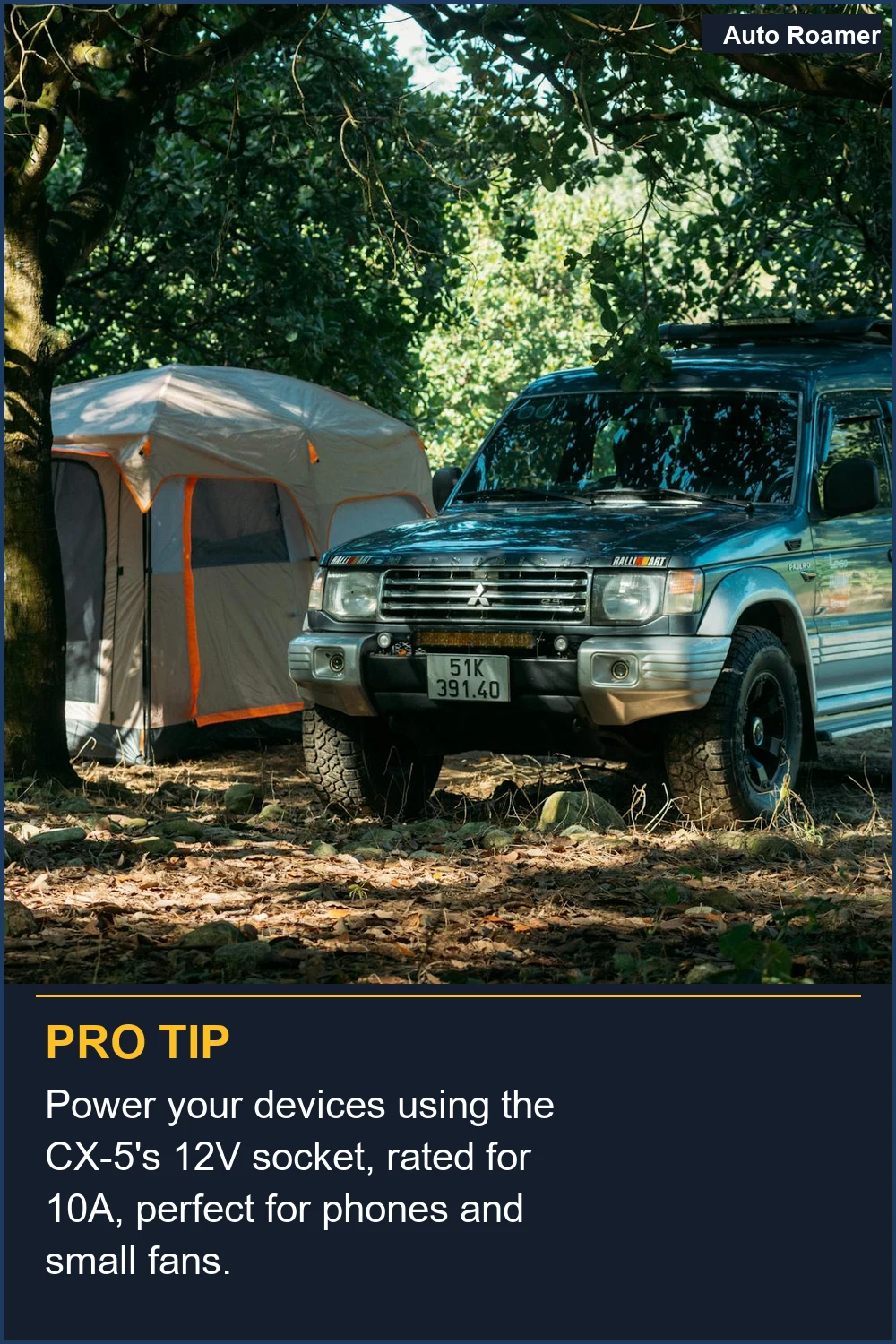
Your CX-5 has a 12V cigarette lighter socket and USB ports. The 12V socket is typically rated for 120W (10A), which is fine for charging phones, running a small fan, or inflating an air mattress. Don't try to run a coffee maker off it, or you'll blow the fuse. CX-5 Power Setup.
- Portable Power Station: This is the gold standard. A 300-500Wh power station (like a Jackery 300 or Goal Zero Yeti 400) provides 120V AC outlets and multiple USB ports. It can run a small fridge for 24-48 hours, charge laptops, and keep your phone alive for days. Cost: $300-$500.
- Charging via 12V: Most power stations can be charged from your car's 12V socket while driving. This converts the car's DC power to recharge the station's internal battery. Expect a 0-80% charge in about 6-8 hours of driving. The thermal cycling on the power station's battery cells is designed for this.
- Solar Panel Option: A 100W portable solar panel can recharge a 300Wh power station in about 4-6 hours of direct sunlight. This is a good option for extended stays or if you're parked for long periods. Costs an extra $150-$250.
- Car Battery Parasitic Draw: Be extremely careful using your car's battery directly for anything significant. Running an inverter off your car battery while the engine is off will kill it in a few hours. A 60Ah lead-acid battery has about 30Ah usable without risking damage. A 100W draw will drain that in 3 hours. Then you're stranded.
- Key Fob Drain: Leaving your key fob inside the car can keep some systems awake, causing a parasitic draw. Some forums suggest putting the fob in a Faraday pouch to prevent this, minimizing current leakage. Key Fob Discussion. This prevents unnecessary thermal cycling on your battery and associated control modules.
2023 mazda cx-5 camp springs
Hey there! So you're looking at camping in your 2023 Mazda CX-5 and wondering about "camp springs." That's a great question! While the CX-5 isn't designed as a dedicated camper, it can definitely work for short, simple trips. When people talk about "camp springs" in this context, they're usually referring to making the sleeping surface more comfortable. Since the rear seats don't fold completely flat, you'll likely have a bit of an angle or a gap. To combat this, consider bringing some inflatable sleeping pads or a thick foam mattress topper. These will help level out the floor and provide crucial cushioning. You might also need to strategically place some rolled-up blankets or towels to fill any significant gaps, ensuring a more restful sleep. Think of it as creating your own custom sleeping platform within the car. It’s all about maximizing comfort in the space you have!
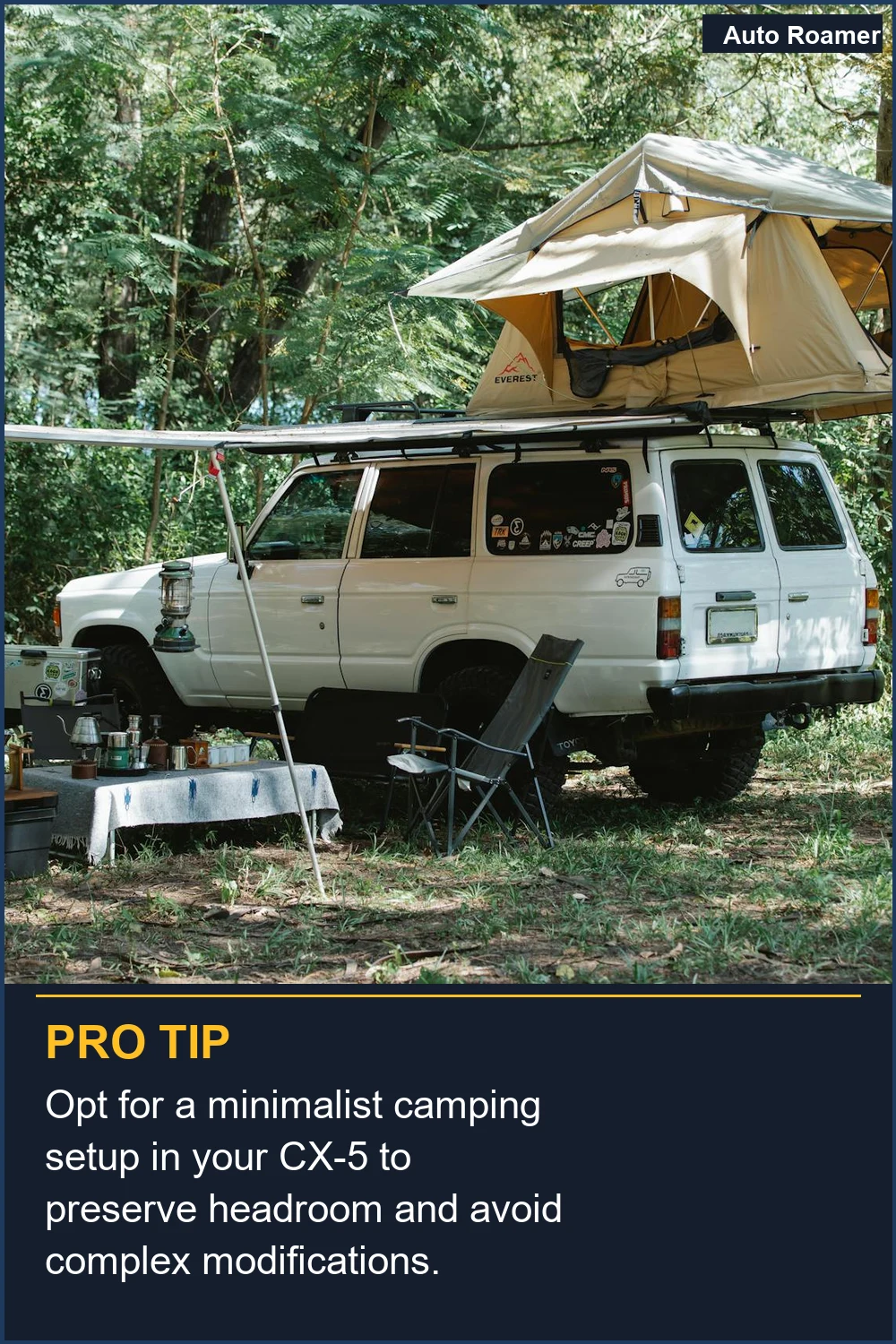
Ventilation and Climate Control
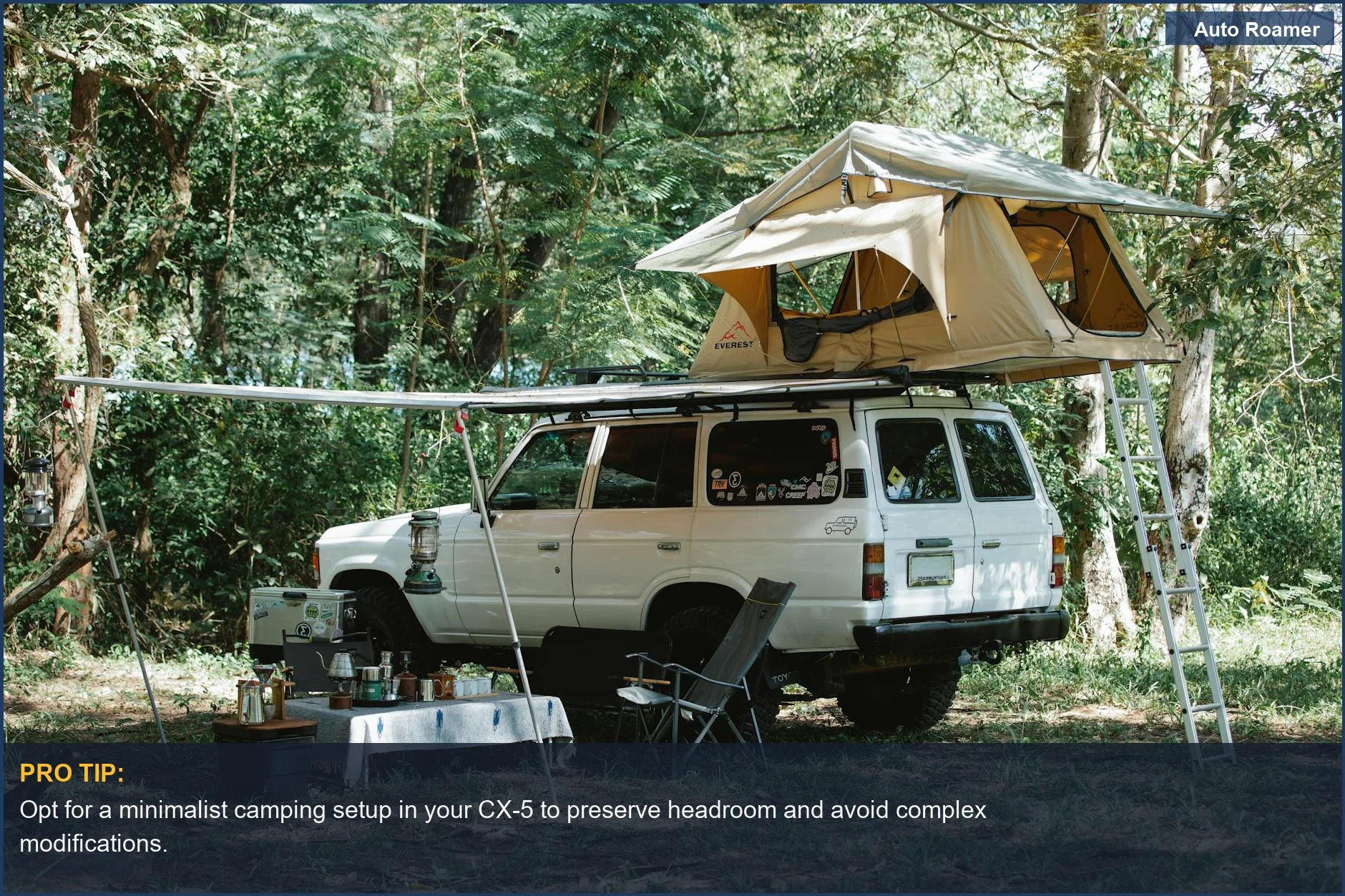
Sleeping in a sealed metal box is a recipe for condensation and stale air. You'll wake up feeling like you spent the night in a damp cave. Airflow is crucial for thermal management and preventing the outgassing of interior plastics from accumulating. Camping Checklist for Airflow.
- Window socks/screens: These mesh covers slip over your rear windows and allow you to crack them open without letting bugs in. This creates cross-ventilation, reducing humidity and bringing in fresh air. It's a $15 fix that prevents mold growth and that clammy feeling.
- Battery-powered fan: A small USB-powered fan can dramatically improve airflow inside the cabin. Position it to draw air in from one cracked window and push it out another. This increases convective heat transfer, making it feel cooler.
- Crack the sunroof (if equipped): If you have a sunroof, crack it open a few inches. This acts as a chimney, allowing hot air to escape upwards. Just make sure it's not going to rain.
- Condensation management: In cold weather, your breath will condense on the cold interior surfaces. This isn't just annoying; it can lead to mold. Keep a small microfiber towel handy to wipe down windows in the morning. Running the fan helps, too.
- Thermal insulation: Reflectix window covers (mentioned earlier) also act as insulation. They reduce the rate of heat exchange through the glass, keeping the interior temperature more stable. This means less thermal cycling for you and your gear.
- Carbon Monoxide Detector: If you plan on running any combustion device (like a small heater) outside the vehicle, always have a CO detector inside. Never run a heater inside a vehicle. The gas permeation rate through the seals isn't zero, and you'll be dead. Simple physics.
Mazda CX-5 Camping: Pros and Cons
| Pro | Con |
|---|---|
| Fuel Economy: Around 24-30 MPG, depending on AWD/FWD and engine. Better than a full-size SUV. This means fewer fuel stops and more cash for actual gear. | Limited Space: At 70 inches long, it's cramped for anyone over 5'10". You'll be playing Tetris with your gear and your body. |
| Maneuverability: Easy to park and navigate tight trails. Less mechanical stress on the chassis in sketchy spots. | Payload Capacity: Typically around 900-1000 lbs. Two adults and gear can push this limit. Overloading increases suspension wear and braking distances. |
| Stealth Camping: Looks like a normal SUV, so you're less likely to attract unwanted attention. Less visual noise means less social friction. | No Stand-Up Room: You cannot stand up inside. Period. You're crawling around, which gets old fast. This is a fundamental ergonomic limitation. |
| Reliability: Mazdas are generally reliable, with lower failure-rates than some competitors. Less chance of a breakdown in the middle of nowhere. | Rear Hatch Access: Opening the hatch from the inside requires manually pulling a lever behind a trim cover. Not ideal for quick exits. Hatch Release Info. |
| Cost: Significantly cheaper than a dedicated van or large SUV. You can get into car camping for a few hundred bucks for accessories, not thousands. | Limited Off-Road Capability: 7.5 inches of ground clearance is not for serious trails. The suspension travel and tire choices are not designed for extreme mechanical stress from off-roading. |
Final Verdict
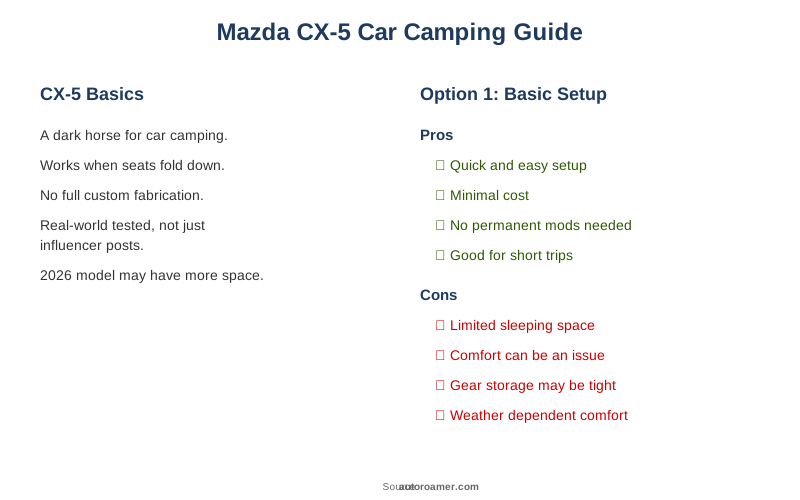
- The Mazda CX-5 is a solid contender for minimalist car camping, especially for solo adventurers or couples who pack light. It's not an over-engineered behemoth, but it gets the job done without breaking the bank.
- Manage your expectations on space. At 70 inches long and 40 inches wide, it's a cozy setup. If you're over 6 feet tall, prepare to sleep diagonally or with your feet in the passenger footwell. This is a hard physical constraint.
- Prioritize ventilation and power. Window screens and a portable power station will drastically improve your comfort and functionality. Without them, you'll be dealing with condensation and dead electronics.
- Don't overspend on unnecessary gear. You don't need a $2,000 rooftop tent to enjoy camping in a CX-5. A $100 sleeping pad and some Reflectix will get you 90% of the way there. The dealer will try to sell you the whole catalog, but most of it is just marketing fluff. CX-5 Versatility.
- The CX-5 is a versatile choice for those who want to dip their toes into car camping without committing to a larger, more expensive vehicle. It's about maximizing the utility of what you already have, not buying into the latest trend.
Frequently Asked Questions
My car battery died after a night of charging my phone. The dealer wants $250 for a new one and $150 for 'diagnosis.' What's the real cost?
Do I really need a portable power station, or can I just use an inverter plugged into my car's 12V socket?
What if I get condensation even with window screens and a fan? Is my CX-5 just a sweatbox?
Can sleeping with the seats folded flat for extended periods permanently damage my CX-5's interior or seats?
Some guy on a forum said I need to remove my rear seats entirely for more space. Is this a good idea?
🏅 Looking for Gear Recommendations?
Check out our tested gear guides for products that work with this setup:
Sources
- Mazda Cx 50 Camping Accessories (2026 Complete Guide)
- Anyone tried car camping in cx5 ? If yes, what did you use - Reddit
- Minimalist Car Camping Setup in a Mazda CX-5 - Facebook
- Minimalist Car Camping Setup in a Mazda CX-5 - Facebook
- Can You Sleep in a Mazda Cx5 Car Camping Guide (2026 ...
- Ultimate Camping Checklist: 42 Car Camping Essentials
- Mazda CX-5: Ideal for Families and Adventurers
- Mazda CX-5 Car Camping Setup – Easy Conversion for Beginners
- 2022 CX-5 Key fob question regarding car camping | Mazdas247