The short answer: yes, if you are around six feet or under
Yes, you can sleep in a Nissan Rogue. Fold the 40/20/40 rear seats flat and a 2021-or-newer Rogue opens a flat load floor about 72.0 inches long — right at the 6 feet mark — so a single adult of roughly six feet or under can stretch out fully, and a taller sleeper can lie diagonally.
The catch is width, not length. The floor is about 43.0 inches wide between the wheel wells, which is a comfortable solo bed but a snug squeeze for two adults. Everything below is a research synthesis of Nissan's published specs and what owners report — not a first-hand test. Nobody on our team has slept in a Rogue, so treat this as a map of the numbers, not a campfire story.
First, figure out which Rogue you actually have
This is where most generic guides go wrong: they quote one flat length for every Rogue ever built and call it a day. In reality the sleeping platform changed dramatically across generations, and the year on your title — not the badge on the tailgate — decides whether you have a real bed or a cramped nook. Before you buy a pad or plan a trip, pin down exactly which Rogue you own.
The second-generation Rogue (T32, 2014–2020) started life short. On 2014–2019 models the cargo floor with the seats folded measures about 62.3 inches — roughly five-foot-two — which forces almost every adult into a diagonal or curled position. There is no getting around it with a mattress; the floor simply is not long enough for most people to stretch out straight. For 2020, Nissan stretched the folded floor to about 72.0 inches, a nearly ten-inch jump that made a straight-line sleep realistic for the first time. That 2020 model year is the quiet hinge point in the whole Rogue camping story, and it is the detail cookie-cutter guides miss.
The third-generation Rogue (T33, 2021 and newer) was a ground-up redesign and kept that longer floor: about 72.0 inches folded, with a wider, more usable rear opening and a lower liftover height that makes climbing in and out easier. So the honest split is this — a 2014–2019 Rogue is a diagonal-only proposition for most adults, while a 2020-or-newer Rogue gives you a near-full-length flat bed. Behind the second row with the seats up you only get about 35 inches (2014–2019) to 36 inches of floor, so folding is non-negotiable for sleeping in any Rogue.
One more source of confusion worth clearing up: the Rogue is not the Rogue Sport (sold as the Qashqai elsewhere), which was a smaller, shorter model with noticeably less cargo floor. If your paperwork says Rogue Sport, the numbers on this page do not apply — you have a tighter platform and should measure your own floor before committing to a sleep build.
Quick generation cheat-sheet for the folded cargo-floor length:
- 2014–2019 (T32): about 62.3 inches — diagonal-only for most adults.
- 2020 (T32 refresh): about 72.0 inches — the quiet hinge point where straight sleep becomes realistic.
- 2021 and newer (T33): about 72.0 inches with a wider opening and a lower liftover.
The real flat length, and who fits without folding themselves in half
On a 2020-or-newer Rogue you are working with about 72.0 inches of flat floor and a cargo opening roughly 34.2 inches tall from load floor to ceiling. That height number matters more than people expect: it is enough to sit up partway on an elbow to change clothes or read, but not enough to sit fully upright, so you will be doing most of your in-vehicle living lying down or hunched. Total cargo volume with everything folded is around 74.1 cubic feet, which sounds enormous until you remember volume counts the tall space up near the ceiling that you cannot actually lie in.
Practically, here is who fits. If you are up to about six feet, you sleep straight with your head near the liftgate and your feet toward the folded seatbacks, and the 72.0 inch floor is right at your length. If you are between six feet and roughly six-foot-two, you fit but with your head or feet touching an end, which most people solve by sliding the front seats forward to open a little footwell room past the second row. Push much past six-foot-two and a straight sleep gets cramped, so the diagonal layout becomes your friend — more on that below.
For context, the Rogue's overall body is 183 inches long and 72.4 inches wide, so it is a compact-SUV footprint. That is the whole appeal and the whole compromise in one sentence: it is small enough to park anywhere and drive like a normal car, and in exchange the interior gives you a real, usable bed — just not a limousine. Set your expectations to "efficient one-person camper" and the Rogue delivers; expect a minivan and you will be disappointed.
Width is the true limiter: one sleeper easy, two sleepers tight
The number that decides whether this is a one-person or two-person rig is the width between the wheel wells: about 43.0 inches. For one person that is genuinely generous — a typical solo sleeping pad eats up only about half that, leaving room to roll onto your side, tuck a bag beside you, and keep a water bottle within reach without knocking it over. Solo, width is simply not a problem in a Rogue; the wheel wells are far enough apart that you never feel boxed in.
The floor flares out to about 54 inches at its widest point higher up near the seatbacks, but that upper width does not help a flat bed sitting on the floor — your shoulders live down at the 43.0 inch level, so that is the number that counts. It is a common trap to read the wider spec-sheet figure and assume two adults will be comfortable; the usable sleeping width is the narrower one.
Two adults on 43.0 inches is doable but intimate — two adult pads sit side by side with no gap between them, so you are touching all night. Owners consistently report that a parent and a child fit comfortably with room to spare, while two full-size adults sleep shoulder-to-shoulder and usually stagger their heads (one toward the liftgate, one toward the seats) so all four shoulders are not fighting for the same pinch point at the same time. That head-to-toe stagger is the single trick that makes two-up survivable in a Rogue. If two-up comfort matters more than anything else in your build, a wider SUV is the better tool — see how the Rogue stacks up against roomier rivals further down.
Who actually fits across that 43.0 inch width:
- Solo adult: genuinely roomy — a pad, a bag, and a water bottle all fit with space to roll over.
- Adult plus child: comfortable, with room to spare.
- Two adults: doable but shoulder-to-shoulder; stagger your heads to survive the night.
The Divide-N-Hide floor: your secret weapon and your flatness problem
Here is the Rogue-specific detail no cookie-cutter guide covers. Many Rogues came with the Divide-N-Hide adjustable cargo floor — a set of removable panels and shelves Nissan advertises in up to 18 configurations. It is the difference between a lumpy bed and a genuinely good one, if you understand it.
In its upper position the adjustable floor sits higher and hides storage underneath, which changes your cargo-behind-the-seats number from about 31.6 cubic feet (standard floor) to roughly 36.5 cubic feet when set up. For sleeping, the panels are the trick: when you fold the rear seats, the folded seatbacks sit slightly higher than the cargo floor, leaving a shallow step and a gap right where your hips and lower back land.
Owners on Nissan forums solve this by lifting the Divide-N-Hide panels to the upper track so the cargo-floor level rises to meet the folded seatbacks, closing most of the step and creating one continuous surface. If your Rogue does not have the system, you bridge the same step with rolled towels, a cut piece of foam, or a thick pad. Either way, plan for that step — it is the single biggest comfort factor in a Rogue bed, and it is exactly what a thin air mattress fails to hide.
Field tip: before you spend a dollar on a pad, lift the Divide-N-Hide panels to their upper track and lie down on the bare floor. If the seatback step disappears, your pad only has to add comfort — not bridge a canyon.
Mattress reality: this is where a Rogue bed is won or lost
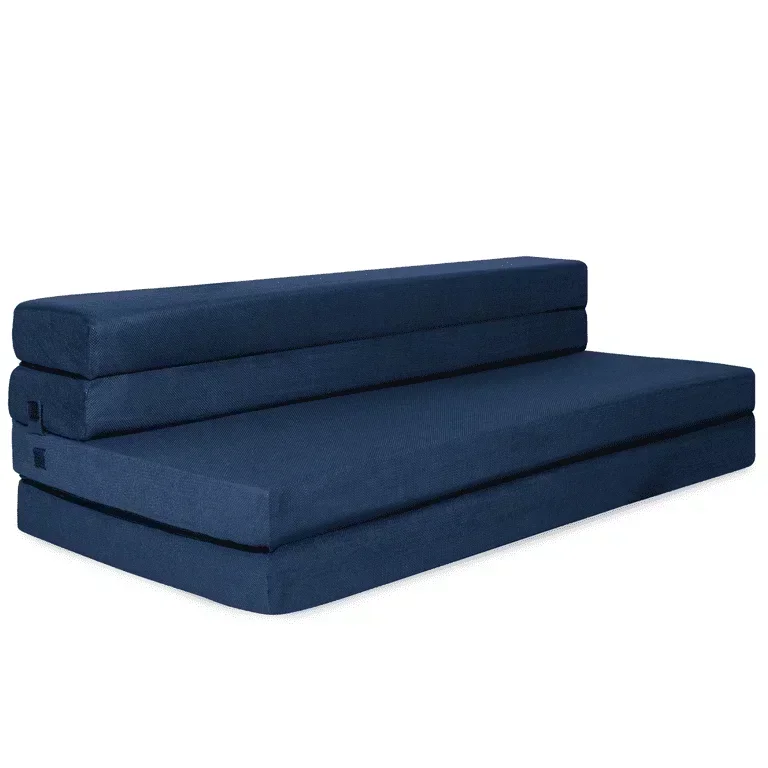
Because the folded floor has that step and gap, a cheap flat air mattress is the wrong answer — it drapes across the dip and you sink into it all night. The two setups that actually work on a Rogue's 72.0 inch by 43.0 inch floor are a thick self-inflating foam pad or a folding foam mattress that spans the seam without collapsing into it.
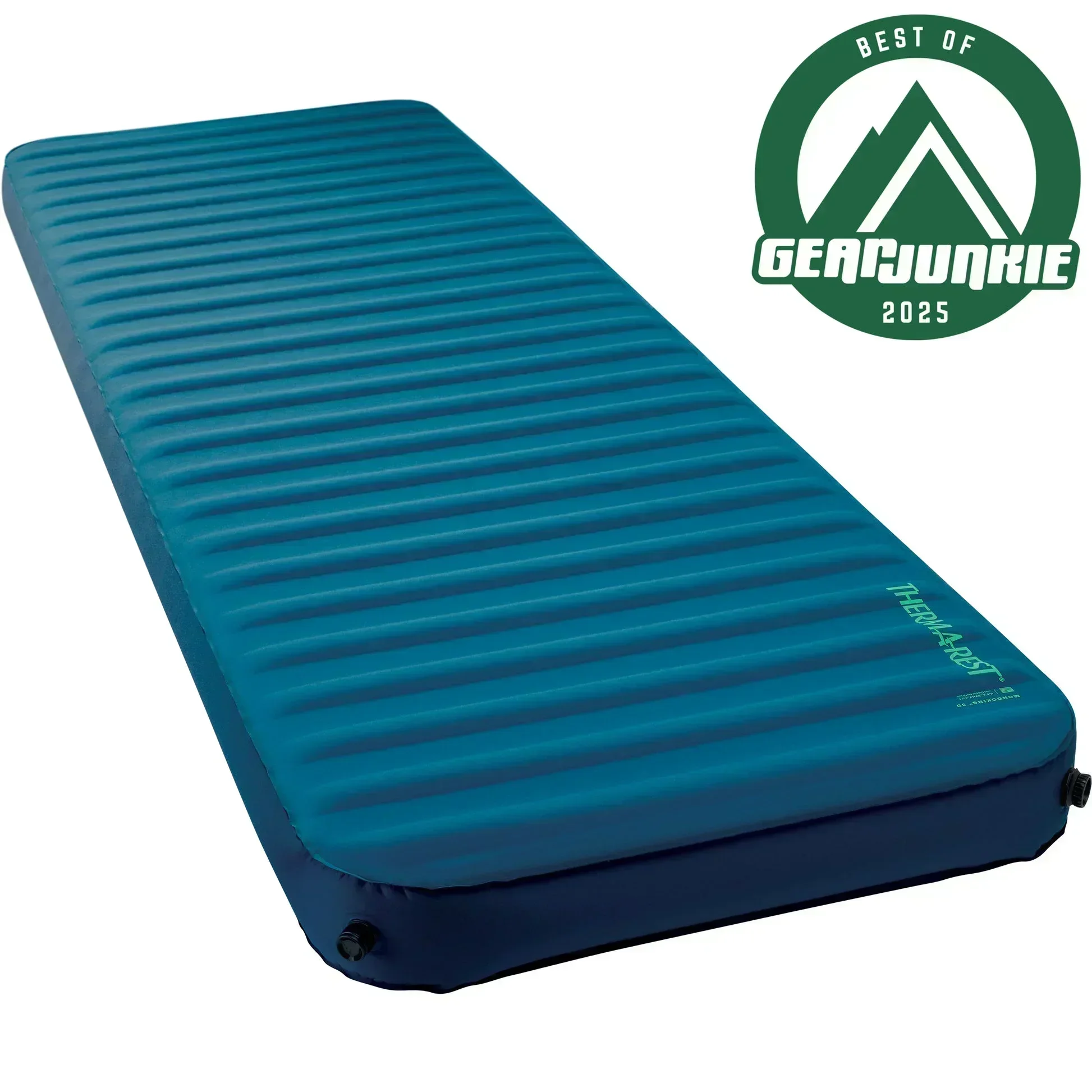
A plush self-inflating pad like the Therm-a-Rest MondoKing 3D is the comfort-first pick: its dense foam rides over the seatback step instead of sagging into it, and it packs down when you need the cargo space back for daytime driving. If you would rather have a firm, edge-to-edge surface, a Milliard tri-fold foam mattress unfolds to cover most of the floor and its stiff core bridges the gap at the seatbacks better than any inflatable. Trim or angle it to clear the wheel wells and you have a flat, stable platform. Whichever you choose, the goal is the same: a surface stiff enough to span the seatback step so your spine does not fold into the dip, and thick enough to insulate you from the cold cargo floor. A thick, firm foam pad is the practical minimum for the Rogue's seam; go too thin and you feel the step through the night, and an air-only mattress is the one thing to avoid because it flexes straight into the gap. For a deeper comparison of pad types across vehicle sizes, our guide to the best car-camping mattresses for SUVs and sedans walks through thickness, R-value, and packed size.
What actually fits back there besides you
A bed is only half the problem — the rest of your kit has to go somewhere, and on a Rogue that space is finite. Once your sleeping platform covers the 72.0 inch by 43.0 inch floor, your remaining storage is the footwells, the space under a raised Divide-N-Hide floor, and the two front seats. Planning that Tetris before you leave is what separates a comfortable night from a miserable one spent shoving bins around at midnight.
The smartest Rogue setups keep the sleeping surface clear and push everything else forward: soft duffels ride on the front seats, a cooler sits in a front footwell within arm's reach, and low-profile bins live under the raised adjustable floor where they claim the difference between the 31.6 cubic feet standard and 36.5 cubic feet raised-floor cargo figures. Soft-sided bags beat hard cases here because they mould into the odd spaces the wheel wells create. Shoes and anything wet go in the very back corners or outside in a bag, never on your bed. If you are car camping for more than a night or two, a rooftop cargo bag or a hitch box is the honest fix for the Rogue's modest interior volume — there is only so much you can ask 74.1 cubic feet of mostly-vertical space to do once a human is lying in it.
A workable place-everything order for a Rogue:
- Front seats: soft duffels and clothing bags.
- Front footwell: the cooler, within arm's reach.
- Under the raised Divide-N-Hide floor: low-profile bins.
- Rooftop or hitch box: the honest fix for anything past a night or two.
Tricks for taller sleepers and two-person nights
If you are over six feet, do not give up on the Rogue — reclaim length instead of fighting the 72.0 inch floor. Slide both front seats all the way forward and, on trims that allow it, tip the seatbacks forward too; this opens a footwell extension past the folded second row and can add several usable inches. Point your feet into that gap and your head stays clear of the liftgate.
The diagonal layout is the other lever. Because the floor is 43.0 inches wide and flares to about 54 inches higher up, sleeping corner-to-corner gives a taller person more effective length than the straight 72.0 inch measurement suggests — at the cost of any second sleeper. For two, stagger head positions and accept that the Rogue is a snug two-person bed, not a spacious one. If you routinely camp two-up, a longer-floored crossover like the Toyota RAV4 or the Subaru Forester buys you meaningful extra room.
The taller-sleeper move in one line: point your feet into the footwell you open by sliding the front seats forward, keep your head clear of the liftgate, and go diagonal before you ever give up on the Rogue.
Leveling, privacy, and where you park
The most overlooked comfort factor in any SUV bed is whether the car is sitting level, and the Rogue is no exception. Even a slight slope has you sliding toward the liftgate or the seatbacks all night. Scout your spot in daylight, point the nose slightly uphill if anything (feet-downhill is worse for your head), and carry a couple of leveling blocks or flat boards for one wheel if you camp on uneven ground regularly. Two minutes of leveling does more for your sleep than any mattress upgrade.
Privacy is the other piece. The Rogue's rear glass is large, so window covers made from reflective foam or simple cut-to-fit panels turn the cargo area into a private, darker, and better-insulated space. They also cut the morning sun that would otherwise wake you at dawn. For where to park: established campgrounds, trailhead lots that permit overnight stays, and dispersed camping areas are the honest options — check the rules for each, because a compact SUV that looks like a normal parked car still needs to be somewhere overnight parking is actually allowed. The Rogue's ordinary-crossover looks are an advantage here; it does not scream "camper" the way a built-out van does.
Where overnight parking is actually allowed, in plain terms:
- Established campgrounds with marked overnight sites.
- Trailhead lots that explicitly permit staying the night.
- Dispersed camping areas on public land — check each area's rules first.
Ventilation, condensation, and the power problem
A sealed Rogue with one or two people breathing overnight fogs up fast — you will wake to water beaded on the glass and, in cold weather, dripping onto your bag. The fix is airflow: crack two windows on opposite sides an inch or so to create a cross-draft that carries moist air out, and add cut-to-fit bug screens or mesh over those gaps if the season calls for them. Wet gear and wet breath are what soak your bedding, so keep damp clothes in a bag up front, wipe down condensation before it drips, and never seal yourself in completely to "stay warm" — that just makes the moisture worse.
Power is the Rogue's real limitation for camping. The cabin runs on 12V and USB outlets with no household AC outlet, so anything wall-powered — a CPAP machine, an electric blanket, or a fan — needs a portable power station. Do not count on the car's 12V battery to run accessories with the engine off; it is not designed for deep cycling and you can wake up to a car that will not start. Size a power station to your actual overnight draw and charge it while you drive.
Above all, the safety rule that overrides everything else: do not idle the engine to run the heater while you sleep. Carbon monoxide can pool around and seep into a parked vehicle, and a Rogue cannot safely climate itself through the night. Warm the cabin before bed, shut the engine off, and rely on a good cold-rated sleeping bag, the insulation of a thick sleeping pad beneath you, and those cracked windows to get through the night. Insulation from below matters as much as your bag — the cold floor pulls heat out of you faster than the air does.
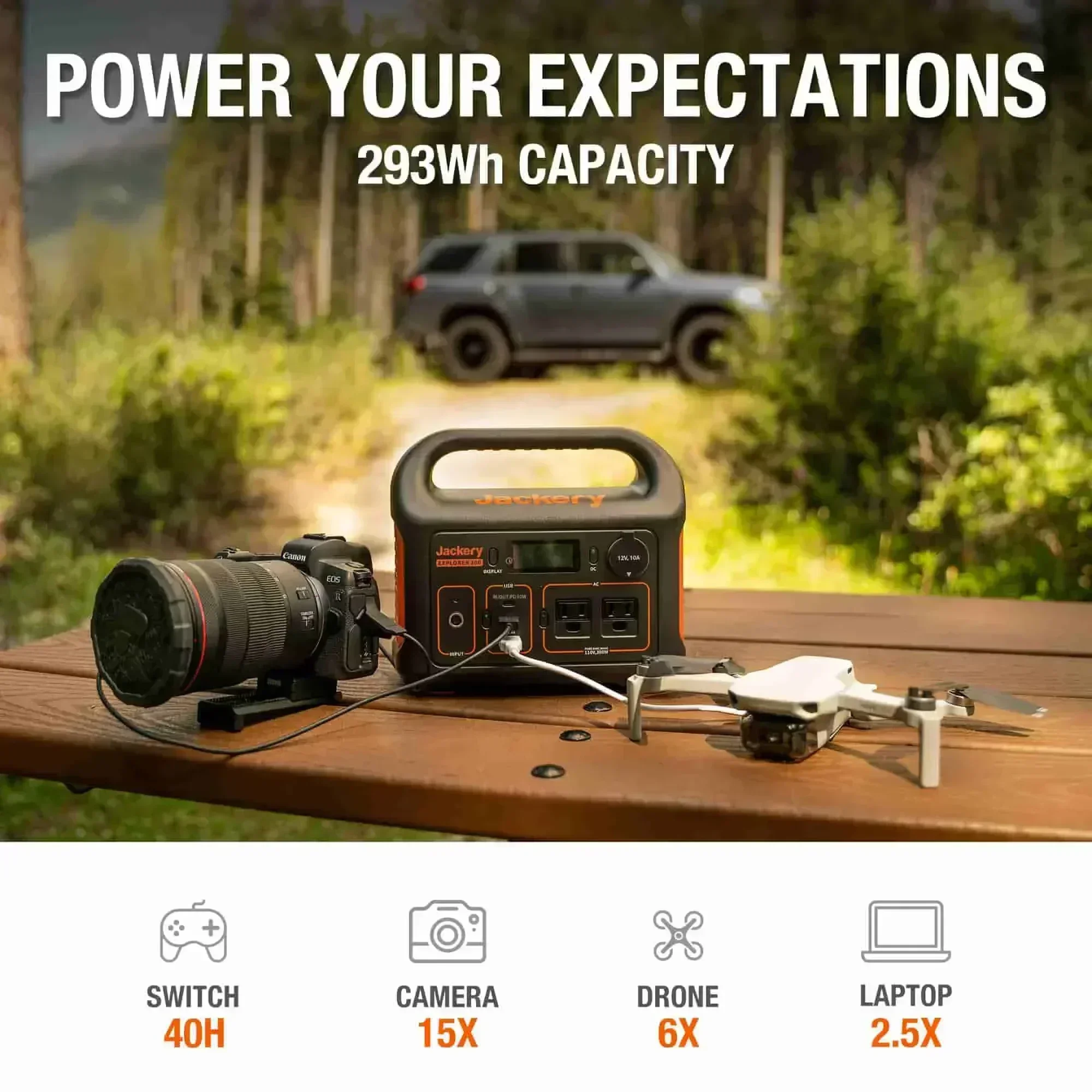
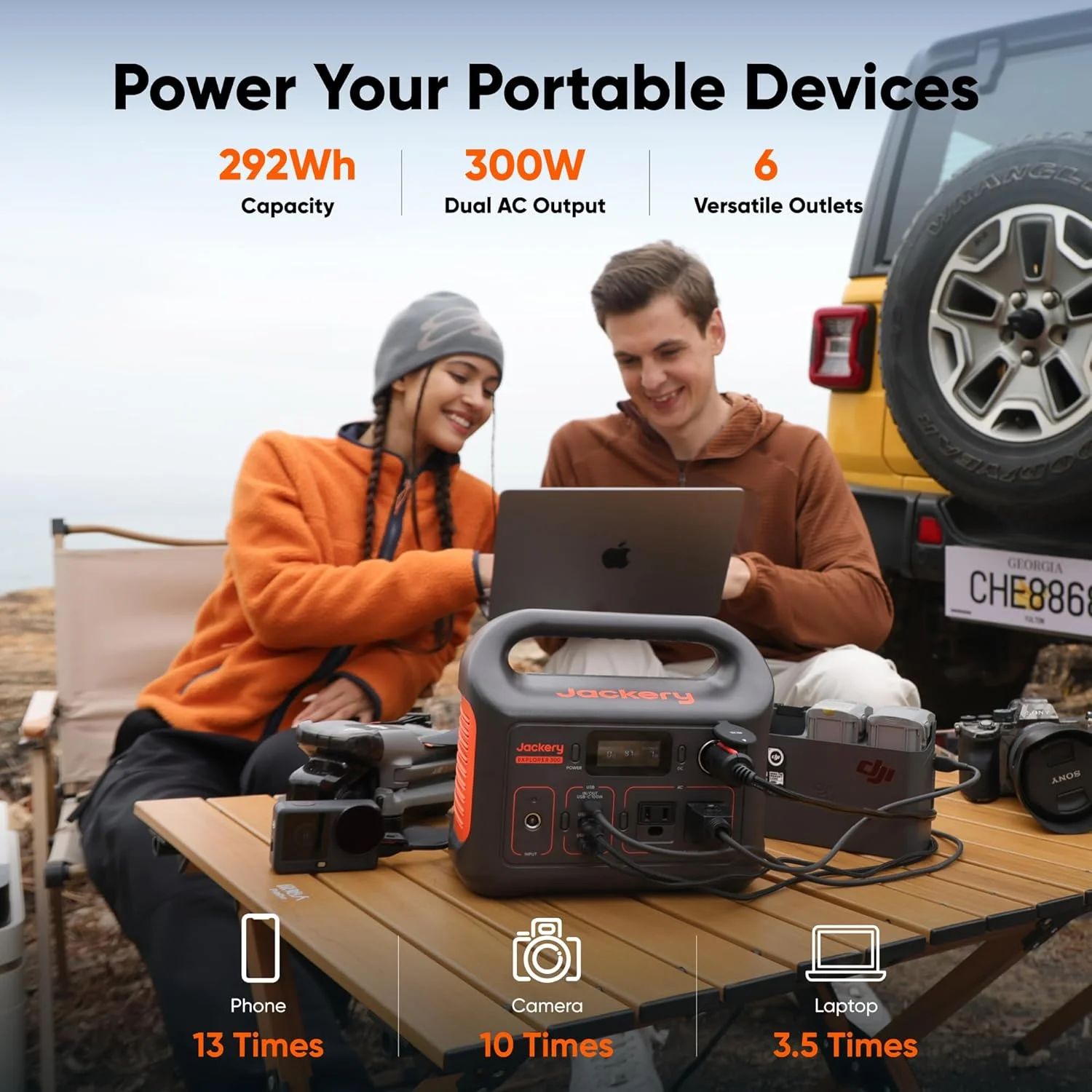
For the power gap, a compact station like the Jackery Explorer 300 is the honest answer: it runs a CPAP, tops up phones and a fan, and recharges off the 12V socket while you drive, so you never lean on the starter battery overnight. Size it to your real overnight draw — add up the watt-hours of everything that has to run till morning and buy a little above that number.
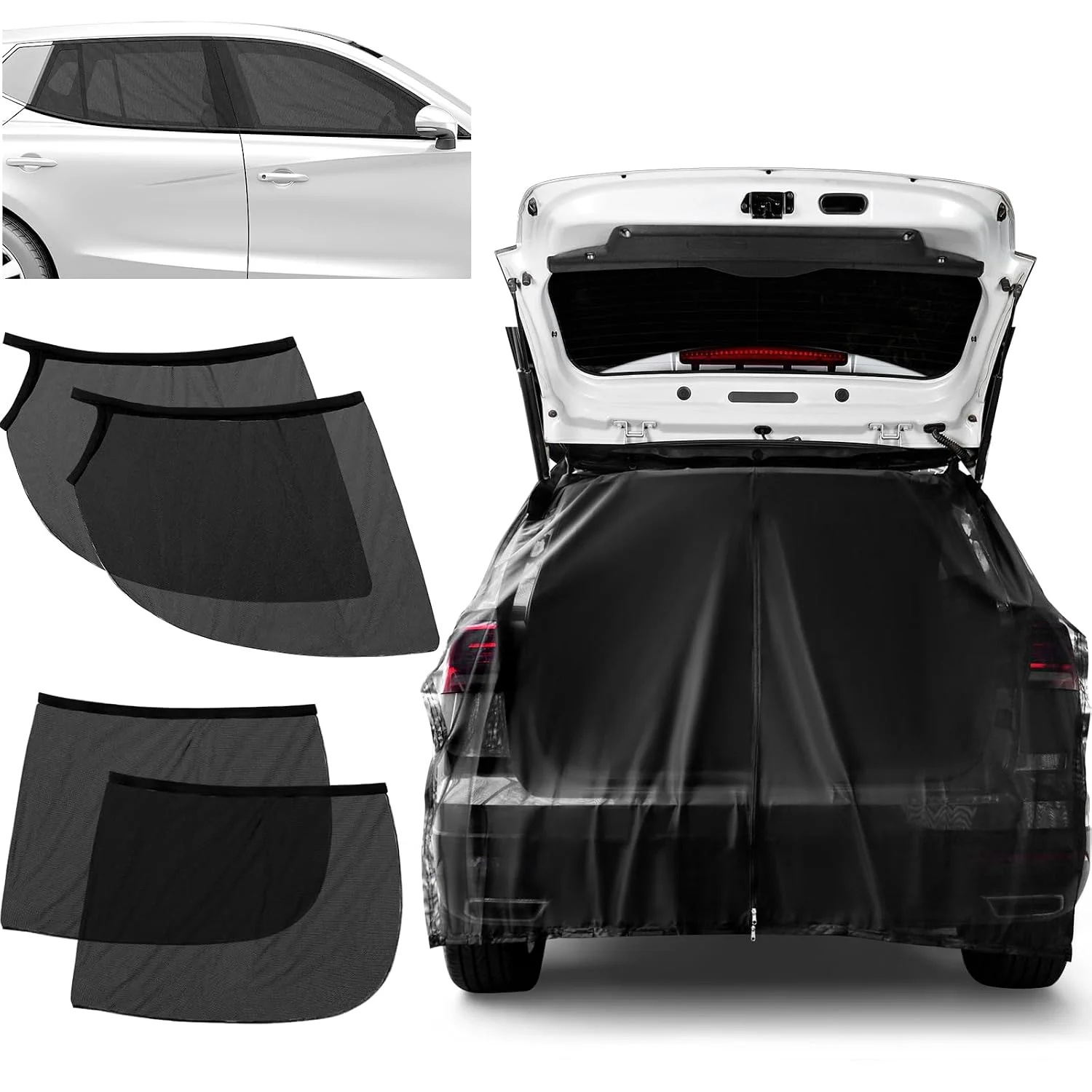
Bugs are the other warm-weather headache, and the fix that matches how you actually use a Rogue is a screen set rather than a single net. The Yahenda Car Window Screens ship five pieces: a tailgate screen that goes over the open liftgate — about 68 by 59 inches in the standard size, sized for support rods roughly 47 to 49 inches apart, with a two-way zipper down the middle so you can get in and out without taking it down — plus two front-window screens and two rear-window shades for the gaps you sleep with cracked. The mesh is a stretchy, breathable nylon, so air still moves; because it is black it also cuts the sun and keeps people from seeing in, which matters more than you expect at a trailhead. It all goes back in the supplied storage bag once you seal the car up for the night.
Safety line worth repeating: warm the cabin before bed, then kill the engine — never idle to run the heater, because carbon monoxide pools around a parked car. Let the quilt, the pad, and two cracked windows carry the night.
How the Rogue compares to the usual car-camping crossovers
The Rogue sits in the middle of the compact-SUV camping pack. Its 72.0 inch folded floor matches most rivals for length, and its Divide-N-Hide floor is a genuine advantage for killing the seatback step — something many competitors leave you to solve with foam. Where it gives ground is width and load-floor flatness versus the boxier options.
If you are cross-shopping, the Honda CR-V and the newest CR-V offer a similarly long but slightly flatter floor, the Mazda CX-5 trades cargo room for a nicer interior, and the taller-roofed RAV4 and Forester lead on sheer usable space. The Rogue's honest pitch: a comfortable one-person or parent-plus-kid bed, a clever adjustable floor, and a compact 183 inch footprint that is easy to park at a trailhead.
The honest bottom line
A 2020-or-newer Nissan Rogue is a legitimately good solo car-camping bed: about 72.0 inches of flat floor, 43.0 inches of width, 34.2 inches of headroom over the load area, and a Divide-N-Hide floor that — used right — erases the one flatness problem that plagues folded-seat SUV beds. A 2014–2019 Rogue, with its 62.3 inch floor, is diagonal-or-nothing for most adults.
Go in clear-eyed: it sleeps one comfortably and two snugly, it has no household power, and the Divide-N-Hide panels plus a thick foam pad are what turn the numbers into a real night's sleep. None of this comes from us personally sleeping in a Rogue — it is Nissan's published specifications lined up against what owners consistently report, so you can plan your build before the first night out.