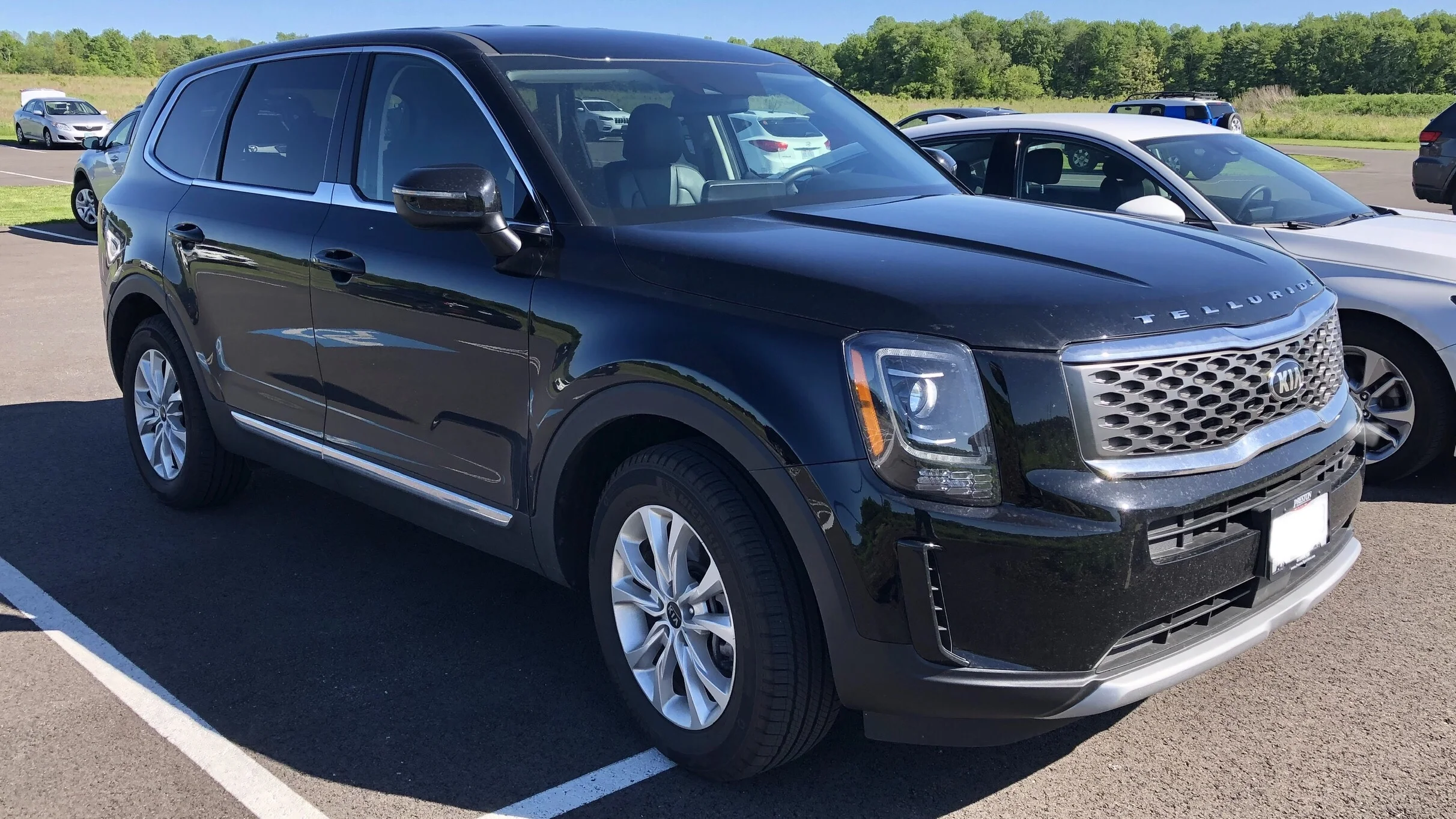
What power does the Telluride actually give a camper?
Here's the question worth answering before you plan a single watt: what can the Kia Telluride's electrical system actually do while you're parked and asleep? Reasoned like a power budget, the honest answer is not much overnight - three 12V sockets that all die with the key, a device ceiling under 15 amps, and a household outlet on one trim that only works with the engine running. Useful while you drive, close to nothing while you sleep.
That's not a knock; it's just the design, and it's the same story across most of this class. The Telluride doesn't pretend to be a power station, so once you know its actual limits you build around them instead of getting surprised. This page maps the three sockets and where they live, tiers the device ceiling against the fuse rating (they're not the same number), lists the fuse slots with an honesty flag on where they come from, sorts out the 115-volt inverter's trim and engine caveats, and lands on the overnight plan a switched-power SUV forces on you.
Where are the three sockets, and which trims get them?
The Telluride is generous on socket count for the class - three 12V outlets - which is one of its genuine camping strengths. Each has its own dedicated fuse in the box, so the wiring supports all three across the range, though base trims aren't cleanly confirmed to carry the cargo socket.
- Front socket: lower dash or console area - the one everyone uses.
- Rear console socket: at the back of the center console for second-row use.
- Cargo socket: in the luggage area - the useful one for a fridge or fan back where you sleep. Confirm it's physically there on your trim before you count on it.
Three sockets sounds like plenty, and for spreading small loads it is - but reason it as one budget, not three, because the ceiling below is a device limit, not a per-socket free-for-all. The engineering point: more sockets let you place power where you need it, they don't multiply how much power you have.
Think about where those three sockets sit relative to where you actually sleep. The front socket lives up in the cabin where you won't be at 2 a.m., the rear-console one serves the second row, and only the cargo socket sits back by the load floor where a fridge or a fan wants to live. That geography is the real value of three outlets: you can top off a phone from the front while a cooler pulls from the cargo tap, without threading a cable the length of the vehicle. It doesn't add amps, but a short cable run means less voltage drop and one less thing to trip over when you climb out in the dark.
Why isn't the 20-amp fuse your real limit?
Here's the trap the spec sheet sets, and it's worth getting right: the Telluride's outlet fuses are 20 amps, but Kia's manual caps the device you plug in at less than 15 amps - roughly 180 watts. The fuse protects the wiring; the 15-amp figure protects your gear and the circuit. Read the fuse as permission for 20 amps of load and you're inviting a blown fuse or worse at the worst time.
The number that decides your gear isn't the 20-amp fuse - it's the under-15-amp device ceiling in the manual. Build to about 180 watts and the Telluride's electrical system stays out of your way.
What that ceiling covers, translated to real loads:
- A 12V compressor fridge (40-60W): comfortable, with headroom for a fan and charging.
- A laptop on a small inverter (65-90W): fine, tighter if the fridge cycles on at the same moment.
- Resistance heat (150W+): the load to keep off these sockets - a kettle or a hard-pulling blanket is where trouble starts.
So respect 180 watts, not 240. It's a comfortable budget for cooling, lights and charging together, and it's more generous than the 120-watt compacts - just don't let the fuse rating talk you past the manual's line.
Reason about why the two numbers differ and the caution makes sense. A fuse is sized to protect the copper behind it - it lets 20 amps flow just long enough to blow before the wiring overheats, which is a wiring-safety number, not a keep-your-device-happy number. The manual's under-15-amp line is the one written for the socket contacts, the connector, and the accessory on the end of the cord, all of which cook long before that fuse ever notices. I won't invent a fuse number the manual doesn't give, and I won't pretend the 20-amp rating is headroom you can spend - the way I'd reason it, treat 15 amps as a hard ceiling and the 20-amp fuse as nothing more than the backstop that keeps a fault from becoming a fire.
Do any of the sockets stay live with the key out?
Short answer, and it's the one that shapes your whole setup: no. Kia's manual has the Telluride's sockets working in the on position and warns of battery drain with the engine off, and no source confirms a factory always-on socket on any trim. Pull the key and the power's gone.
There's a forum rumor of a constant-12V fuse slot you can tap, but it's unverified owner lore, not a documented feature - so treat every Telluride socket as switched and don't plan a fridge around a constant tap that may not exist. Why it matters more to a camper than a commuter:
- A switched socket can't hold a cooler cold overnight without slowly killing the battery you need in the morning.
- Leaving it in accessory to cheat that just moves the drain onto the starter battery - same dead-crank ending, a few hours later.
- The design is Kia sparing you a dead battery by default - no key, no draw - which is safe but useless for overnight cooling.
So the reasoned conclusion is the same as its rivals: the Telluride gives you no key-off power, and the overnight job goes to a battery you bring, not one of its three sockets.
Put real numbers on the overnight problem and it stops being abstract. A small 20-liter compressor fridge draws somewhere around 30 to 40 watt-hours per running hour once it's holding temperature - call it a ten-hour night and you're asking for 300 to 400 watt-hours before sunrise. A modest power station in the 256 watt-hour class covers most of that on its own, but a Telluride socket that dies with the key covers none of it. That's the whole gap in a single comparison: the fridge needs a few hundred watt-hours overnight, and a switched socket delivers zero of them the moment the ignition clicks off. Every workaround that leaves the car in accessory just spends those watt-hours out of the same battery you need to crank the engine in the morning.
Which fuses control the outlets, and how sure are we?
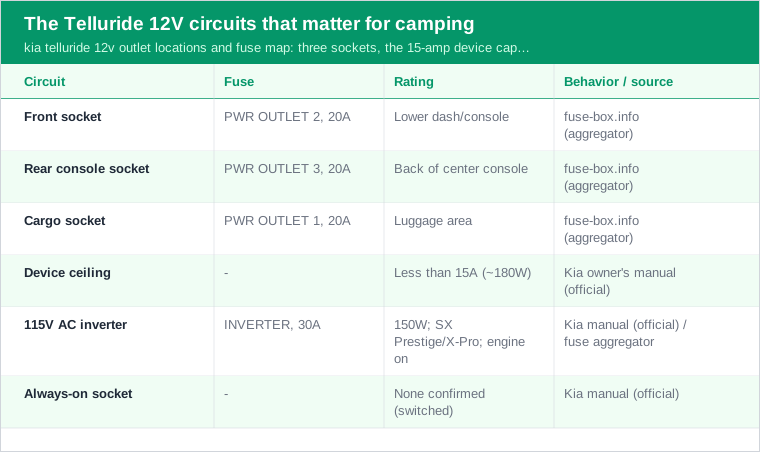
Here's where to look when a socket goes dead, with the honesty flag up front: these fuse numbers are aggregator-sourced (fuse-box.info), not confirmed off Kia's own diagram, so verify against your fuse-lid label before pulling anything.
- Power outlets: the three sockets map to PWR OUTLET 1, 2 and 3, each 20A, in the engine-bay box - outlet 1 the cargo socket, 2 the front, 3 the rear console (aggregator).
- Inverter: a dedicated INVERTER fuse at 30A feeds the 115V outlet, with a small module fuse in the interior box controlling it (aggregator).
- USB: separate accessory circuits at 10-15A feed the USB ports front and rear (aggregator).
The engineering caution: aggregator fuse maps are a strong starting point, not gospel, and Kia revised port layouts across model years (the 2023 facelift moved most USB to Type-C). Which physical socket a given fuse feeds is inferred from labels, not spelled out by Kia. Treat the table as a map to confirm on the lid, not a wiring diagram to trust blind - that's the difference between a five-minute fix and a chased gremlin.
My rule with any aggregator diagram is to trust the ratings more than the position labels. The current a slot is fused for tends to stay stable across sources, but which physical socket a slot actually feeds is exactly the detail that shifts between model years and gets copied wrong down the chain. So I'd meter the dead socket first, then match it back to the lid legend, rather than pull the first fuse an internet table points me at - that order is the difference between fixing the problem and creating a second one two slots over.
Does the Telluride have a 110-volt outlet?
Yes, but read the trim and the engine caveat before you count on it. Kia's manual documents a 115-volt, 150-watt AC inverter outlet in the rear cargo area - and it's not standard across the range. It comes on the SX Prestige, or via the X-Pro package on the SX trims, and the manual is explicit that it needs the engine running.
The Telluride's 115-volt outlet is a top-trim, engine-on feature rated at 150 watts. It's a device outlet for charging, not an appliance one - and it does nothing for you overnight, because it dies with the ignition.
Two practical notes reasoned from how these units behave:
- 150 watts runs a laptop, phone chargers, or a CPAP on many models - not a fridge and nothing with a heating element.
- A blinking inverter light is usually the unit's overdraw or low-voltage auto-shutoff, not a fault - back off the load, don't assume it's broken.
So even on the trim that has it, the inverter is an engine-running convenience, not an overnight supply. Plan your AC power as if the Telluride provides none while you sleep, because it does.
One more way to reason the 150-watt number: it's a ceiling the inverter enforces on itself, so a laptop charger pulling 90 watts leaves almost no room for a second device, and a heating element never fits at all. If that little light starts blinking, that's the unit telling you it hit its limit or the voltage sagged - not that it failed. Drop a device and it comes right back. Worth knowing before you write the outlet off as broken and go chasing a fuse that's perfectly fine.
What does the overnight plan look like?
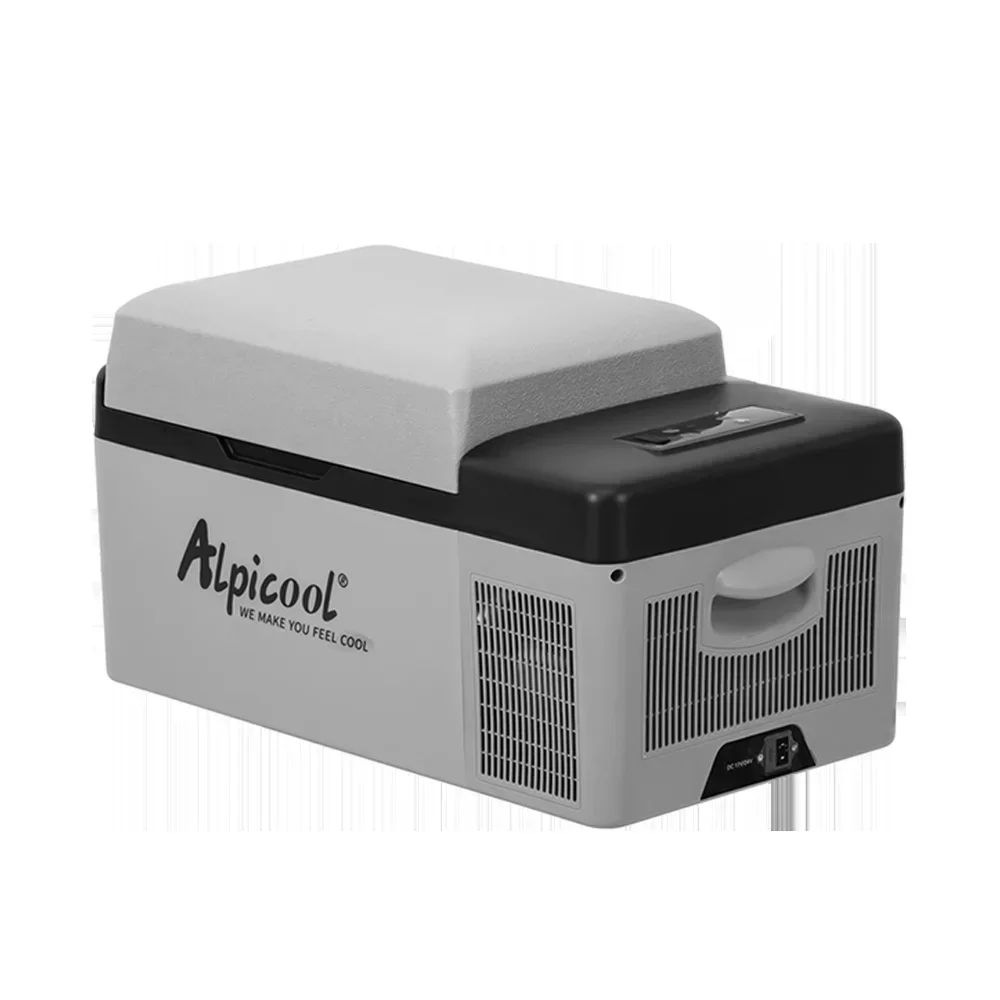
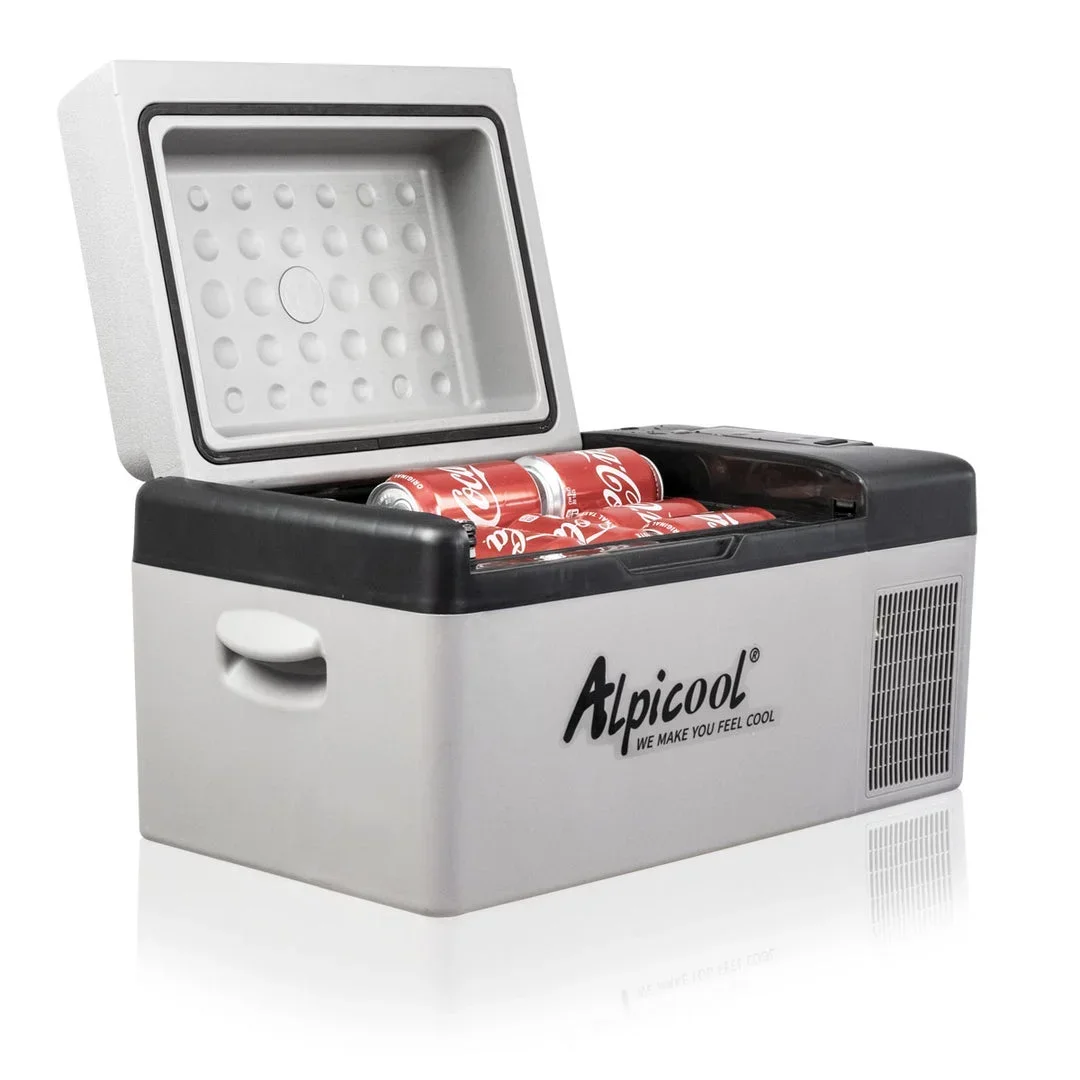
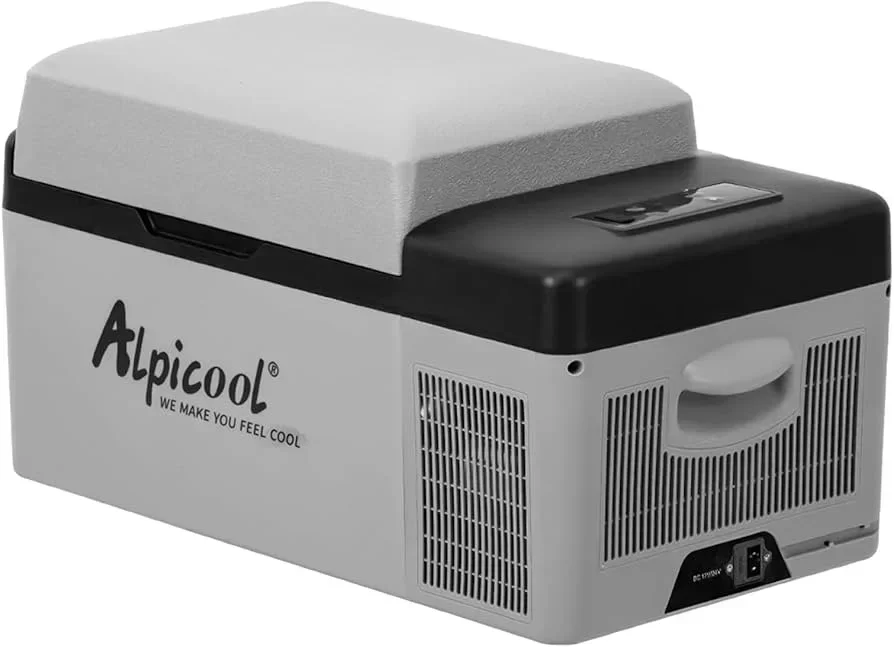
Reason it from the constraints and one setup falls out. Because the sockets die with the key and the inverter needs the engine, the thing you never want is to run an Alpicool C20 fridge straight off a Telluride socket overnight - it quits when the car's off, or drains the start battery if you leave accessory power on. That's the failure that strands you.
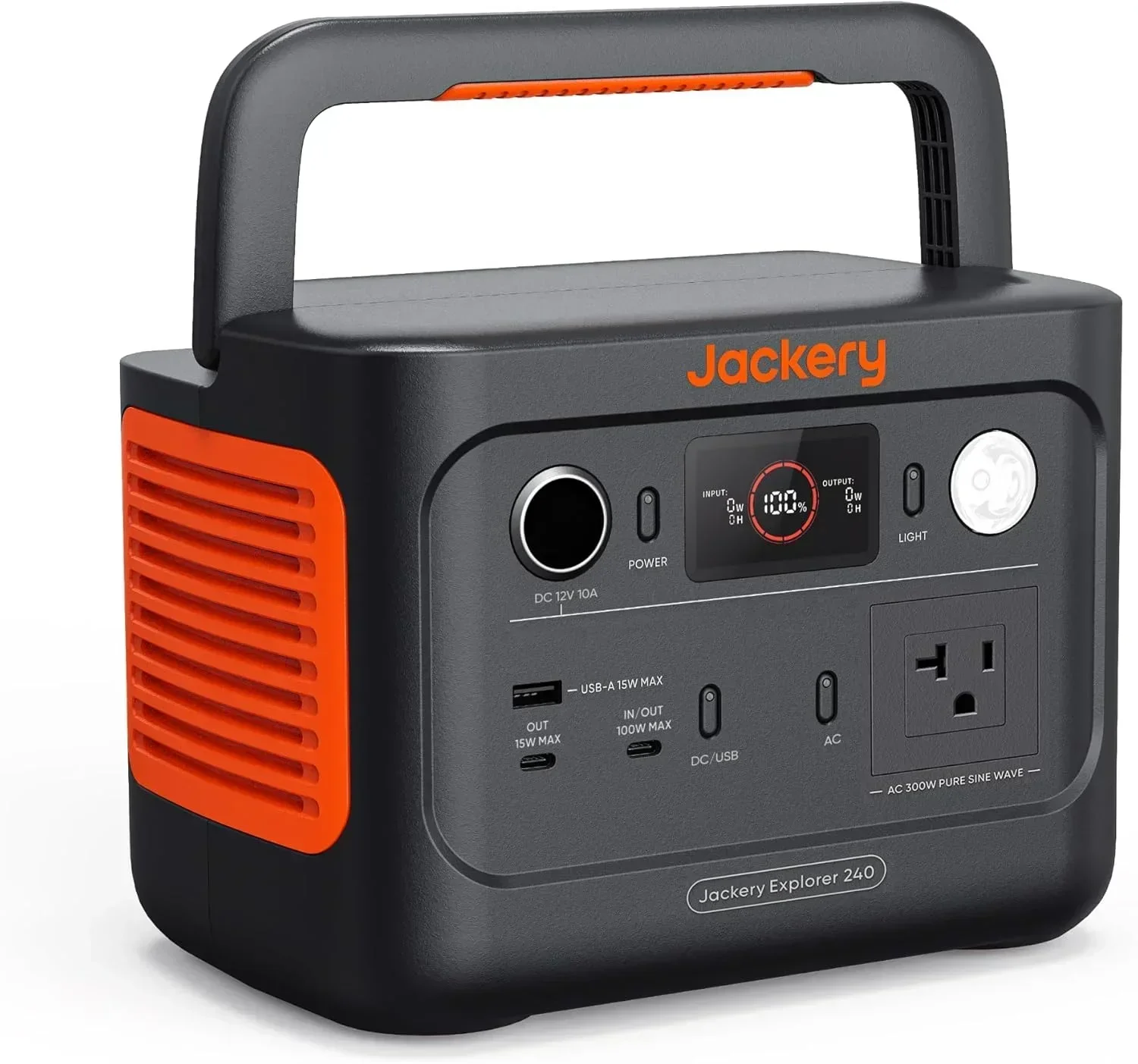
The budget-engineered answer: a Jackery Explorer 240 v2 power station carries the fridge, a fan and a night of charging off its own 256 watt-hours, then recharges from the 12V socket while you drive - the Telluride's battery never gets touched. If you camp often, a fused direct-to-battery lead with a low-voltage cutoff does the same job hardwired.
- Cost vs capability: a mid-size power station is cheaper and simpler than a dual-battery build for most weekenders.
- Recharge on the move so the fridge leans on a pack that refills daily, not the starter battery.
- Match the pack to the trip: more nights parked in one spot means a bigger station or a folding solar panel.
The full gear list lives in our Kia Telluride camping gear guide - but the principle is simple: on a Telluride, house power is something you bring.
Size it the way you'd size any reserve - from the load, backward. If the fridge wants 300 to 400 watt-hours a night and a mid-size pack holds around 256, a single warm night lands right at the edge, which is exactly why the recharge-as-you-drive habit matters: an hour of highway tops the station back up before the next evening's pull, so it never starts empty. Park two nights in one spot without moving and that math tightens fast, and the honest answer is a bigger station or a folding solar panel to refill it - not a heavier ask of the Telluride's switched sockets, which still deliver nothing once the key is out.
How does the Telluride compare on power?
Worth placing it against the class, since the sockets-and-outlet story is where these three-row SUVs split. The Telluride's strengths are the three sockets and a genuine 180-watt device ceiling - more than the Pilot's 120 watts - and its weakness is the same one they all share: no key-off power.
- Versus the Honda Pilot: the Telluride gives a higher device ceiling (about 180W vs 120W) and one more socket, but both are fully switched.
- Versus the Chevy Tahoe: the Tahoe actually has an always-on socket and a 400-watt outlet - genuinely more capable - so if onboard power is the priority, the full-size rig wins.
- Where the Telluride lands: a well-equipped switched system that needs a power station for anything overnight.
So the Telluride is a solid, not standout, power platform: reason around its switched sockets and 180-watt ceiling, carry your own overnight reserve, and it does everything a weekender needs.
The reason the Tahoe pulls ahead is worth being specific about. An always-on socket means a small fridge can idle overnight straight off the vehicle within reason, and its 400-watt household outlet more than doubles the Telluride's 150-watt inverter - that's the difference between charging a laptop and actually running a small appliance. The Pilot sits on the other side: a 120-watt device ceiling and, like the Telluride, no key-off power, so it asks for the same brought-along battery. Placed between them, the Telluride's 180-watt ceiling and three well-placed sockets read as the better switched system, while the Tahoe reads as the one that genuinely cuts how much power you have to haul yourself.
Five things to check before you plan power
Before you build a system around a Telluride, confirm these five with the car in front of you - it's ten minutes that saves a bad assumption.
- Cargo socket present? Look for the physical outlet in the luggage area and meter it.
- Your device ceiling: plan to under 15 amps / ~180 watts, not the 20-amp fuse.
- Inverter trim: confirm whether your Telluride has the 115V outlet (SX Prestige / X-Pro) - and remember it's engine-on.
- Fuse lid legend: check the PWR OUTLET numbers on your own label against the aggregator table above.
- Overnight reserve: size a power station to your fridge's nightly watt-hours, since no socket runs it off the key.
Those five turn a switched-power SUV into a predictable one. The Telluride gives you good daytime power and clear limits; plan to them and it never leaves you with a dead battery.
The verdict on Telluride camp power
The Kia Telluride is a well-equipped but strictly daytime power platform. You get three 12V sockets, a device ceiling under 15 amps (about 180 watts), aggregator-mapped fuses (PWR OUTLET 1/2/3 at 20A, a 30A inverter circuit), and a 115-volt, 150-watt inverter on the SX Prestige - all of it switched, none of it alive with the key out.
Bring your own battery to a Telluride. Reason the loads to its 180-watt ceiling, ignore the 20-amp fuse as a target, and let a power station handle everything overnight - the three sockets are for while you drive.
Confirm your cargo socket, keep loads under 15 amps, check whether your trim has the engine-on inverter, and carry your house power, and the Telluride handles a weekend cleanly. If you wanted an always-on socket, this isn't the SUV that has one - and that's the honest reason a fridge needs a plan here it wouldn't need in a Tahoe.
Related on Auto Roamer: Kia Telluride cargo space and sleeping measurements; Telluride vs Pilot for car camping; sleeping in a Kia Telluride.