
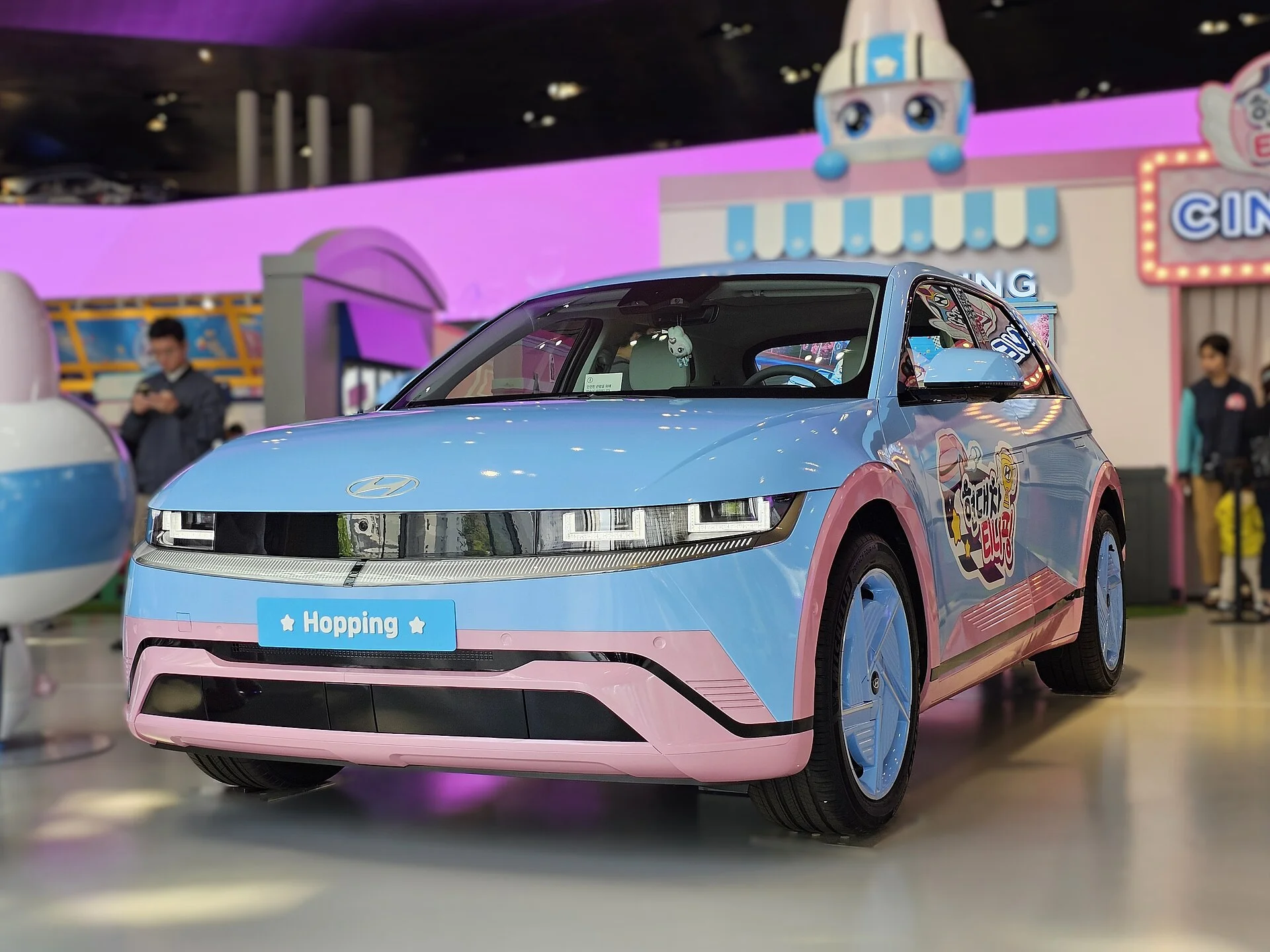
Does the Hyundai Ioniq 5 have a camping mode?
Search “Ioniq 5 camping mode” and you are really asking two questions at once: can I keep the cabin comfortable while I sleep in it, and can I run my gear off the car? The honest answer is that the Hyundai Ioniq 5 does both as well as almost anything on the road — but it does not have a feature literally called “Camping Mode.” That name belongs to Tesla. What the Ioniq 5 gives you instead is two real, documented features that together do the same job: Utility Mode, which keeps the climate, lights and accessories running off the big traction battery while you are parked, and V2L (Vehicle-to-Load), which turns the car into a rolling power station rated up to about 3.6 kW.
The terminology gap is exactly why this page exists. Owners type in “camping mode,” the manual says “Utility Mode,” and almost nobody connects the two with real numbers. So here is the connection, built entirely on Hyundai's published specs and aggregated owner reports from the Ioniq forums — not a test I am pretending I ran. We will walk through what Utility Mode actually powers and what it costs in battery overnight, exactly how V2L works from both the under-seat outlet and the charge-port adapter, the discharge limit that keeps you from waking up stranded, and how to plan a real night so you leave with charge to drive home.
Utility Mode vs. V2L: the two halves of the Ioniq 5's “camping mode”
These get conflated constantly, so separate them cleanly — they solve different problems and you will usually use both in one night.
Utility Mode is the climate-and-comfort half. You activate it through the infotainment screen; the car then powers the heater or A/C, the audio, the lights and the screens from the high-voltage traction pack — not the little 12V battery — so you can run them for hours with the car in Park and the driving systems off. Owners report locking the doors from outside and leaving it holding a set temperature for a long stretch. This is the feature that answers “can I sleep in it comfortably,” and because it draws from the main battery it won't strand you on a dead 12V the way idling accessories on a gas car can.
V2L is the power-export half. It converts the battery's DC into household-style AC so you can plug in a fridge, a kettle, a fan, a laptop, even power tools. There are two access points that share one power budget: a 120-volt three-prong outlet under the rear seats (with an LED that glows blue on standby, green when it's delivering, red on a fault), and an exterior adapter that plugs into the charge port at the back of the car for running gear outside the cabin. One important catch from owners: the car generally needs to be fully READY or in Utility Mode for the interior outlet to deliver — Accessory mode alone often isn't enough.
Put simply: Utility Mode keeps you comfortable; V2L keeps your gear running. Tesla bundles a slimmer version of both under one “Camp Mode” button. The Ioniq 5 splits them into two more powerful tools — which is more capable and slightly more to learn, and the reason a dedicated guide beats a one-line spec sheet.
How much battery does Utility Mode actually use overnight?
This is the number that decides everything, and the honest answer is a range, not a single figure — because climate demand dominates and weather sets that demand. Here is what owner reports and the basic energy math show, with the basis of each figure labeled plainly:
- Mild night, modest climate: one owner reported running the heater around 80°F at a low fan setting and using about 9–10% of charge overnight. That lines up with the general guidance that continuous camp loads under ~200W keep a night in the 1–4 kWh range — a small slice of a long-range Ioniq 5 pack.
- Light power use only (no heavy heat): running lights, a fan, charging phones and a small fridge can land around 5–10% per night in friendly weather.
- Aggressive heating or A/C: here it climbs fast. A 1,500W space heater pulls roughly 1.5 kWh every hour, so an all-night run could eat 30–40% of a long-range battery. The car's own climate is more efficient than a plug-in heater, but the lesson holds: heat is the expensive load.
The takeaway is the same one Tesla owners learn: plan with a percentage, not a promise. In mild weather, budget roughly 5–10% for a comfortable night and you'll almost always be pleasantly surprised. In a cold snap, assume the climate will work harder and start the night with more in the tank. And note the efficiency wrinkle owners point out: pulling power through the V2L adapter is a touch more efficient than full Utility Mode for running devices, because Utility Mode also keeps the dash and infotainment awake. If all you need is to power a fridge, V2L alone may be the leaner choice; if you need the cabin heated, Utility Mode is the tool.
How to turn on V2L on the Ioniq 5 (inside outlet and charge-port adapter)
V2L is simple once you know which outlet you're after. The order that works for most owners:
- For the interior outlet: put the car in READY or Utility Mode, find the three-prong 120V socket under the rear seats, and watch the little indicator light. Blue means it's armed and on standby; green means it's delivering power; red means a fault — unplug, check your load, and reset. This outlet is perfect for a fridge, a fan or charging gear inside the cabin where you sleep.
- For the exterior outlet: use the supplied V2L adapter that plugs into the charge port at the rear of the car. It converts the battery's DC to AC and gives you a household-style socket outside the vehicle — the one you want for running an electric kettle, a projector for movie night, or power tools at a worksite without filling the cabin with cords.
Remember that both outlets pull from the same single power budget — roughly 3.6 kW maximum, but treat about 15 amps at 120V (~1.8 kW) as your practical sustained ceiling. That comfortably covers a compressor fridge, lights, a fan and device charging all at once. It does not cover, say, a 1,500W kettle and a 1,500W heater running together. Stage your high-draw appliances — boil water, then run the heater — and you'll never trip the limit.
A portable power station like the EcoFlow River 2 is a smart companion here, not a replacement: park it inline so the heavy, steady loads ride the station, top the station back up off V2L during the day, and you stretch the traction battery further while keeping a buffer for the drive out.
The discharge limit: the setting that keeps you from getting stranded
This is the single setting that separates a relaxed night from a white-knuckle morning, and most owners never touch it until they read about it. The Ioniq 5 lets you set a V2L discharge limit — a floor below which the car will stop exporting power so it never drains the pack past the point you're comfortable driving from.
You'll find it on the infotainment screen, generally under the EV menu → EV Charge Transfer (or V2L) → Discharge limit. Many owners set it to 20–30%: high enough to guarantee range to the next charger, low enough to get real use out of the battery overnight. Set it deliberately around the distance to your nearest reliable charging stop, with a margin. If you set the limit at 30% and you're already near it, V2L may shut off almost immediately — that's the feature working, not a fault.
Two more honest notes from owner threads. First, if the under-seat outlet quits at low charge, or its LED goes red, or the cluster throws a fault, unplug your devices and reset before continuing — that's standard troubleshooting, not a sign the car is broken. Second, the discharge limit protects your traction battery; it is separate from the well-documented 12V auxiliary battery behavior some Ioniq 5 owners have chased. Keeping the car in proper Utility Mode (powering accessories from the HV pack) is exactly how you avoid leaning on that small 12V battery overnight in the first place.
Before you park: a checklist to estimate your Ioniq 5 night
You don't need a measured test to plan a night — you need a percentage and a little arithmetic. Run this order before you settle in:
- Set the discharge limit first. Pick a floor (commonly 20–30%) that guarantees range to your next charger with margin, in the EV menu. Do this before anything else.
- Estimate the climate cost. Mild night with modest heat or A/C? Budget ~5–10%. Near freezing or running hard heat? Budget more — assume the climate works harder and consider whether the night is worth 20%+.
- Add your device loads. A fridge, lights, a fan and charging together sit well under the ~1.8kW practical V2L ceiling and add only a few percent over a night.
- Do the simple sum. Climate budget + device budget + your discharge floor = the charge you want to start the night with. If you're below that, top up before you settle or run leaner.
- Cut the climate demand. Every step here is battery you don't spend: reflective window covers, a warm bag and an insulating pad so the heater barely runs, a fan to spread the heat you do make.
Worked example: it's a mild 50°F night, you start at 70%, and your discharge limit is set to 25%. Budget ~8% for light heat and ~3% for a fridge and lights, and you'll wake near 59% — plenty of margin and never anywhere near the 25% floor. The Ioniq 5's pack is big enough that, in friendly weather, the limiting factor is rarely the battery; it's whether you brought the gear to stay comfortable.
The gear that makes the Ioniq 5's battery last the night
The biggest lever is climate demand, and almost everything that lowers it is cheap. Stack these before you ask the battery to do all the work:
Reflective window covers. A set of covers cut to the Ioniq 5's big glass is the highest-value buy for a glassy EV: they keep afternoon sun out so A/C works less, trap your warmth in so the heater works less, and add privacy. On a car with this much glass area, they pay for themselves in battery alone over a few nights.
A 12V/USB fridge run off V2L. A compressor unit like the BougeRV portable refrigerator is the appliance most Ioniq 5 campers plug in first — it cycles on and off, so its average draw is modest and sits easily inside the V2L ceiling, and it means real food instead of gas-station snacks.
A rechargeable fan. A clip-on USB camping fan lets you spread the heat you make and run the climate on a lower setting — and it fights condensation, which the Ioniq 5's tall greenhouse will produce with two people breathing for eight hours.
A power station as a buffer. An EcoFlow River 2 or similar isn't redundant with V2L — it's insurance. Run the steady loads off it, recharge it from V2L by day, and you keep more of the traction battery for the drive home. And the foundation under all of it: a plush self-inflating pad like the Hest Dually levels the Ioniq 5's near-flat folded floor into a genuine bed, so all the power and climate work actually buys you sleep.
Real-world nights: a trailhead, a cold snap, and a power-out at home
The Ioniq 5's “camping mode” toolkit shines for the trips EV owners actually take. Three common ones, and how the math plays out:
A mild night at the trailhead. You arrive at dusk with 72%, set the discharge limit to 25%, fold the seats, and roll out a pad. The forecast is mild, so you set Utility Mode to a comfortable temperature on a low fan and clip a fan to spread it. A fridge hums off the under-seat V2L outlet (green light). You wake near 62% — an easy night, with a buffer the size of most gas tanks.
A cold snap. Now it's near freezing. Heat is the expensive load, so you lean on insulation first: reflective covers up, a four-season bag, an insulating pad under you. The climate still runs more than on a mild night — budget toward the higher end and start with more charge. This is the night to start at 80%+ and to be honest that you might spend 15–25% of the battery to stay genuinely warm. The car can do it; just plan for it.
A power outage at home. This is where the Ioniq 5 stops being a camper and becomes a generator. Run the exterior charge-port adapter to a fridge and a few essentials and the car's big pack will keep the lights and the food going for a long time at modest loads — the same V2L feature, a completely different emergency. Mind the discharge limit so you keep range to reach a charger after the grid comes back.
The myth of the one exact “Ioniq 5 camp mode drain” number
Search this topic and you'll find confident, precise claims — “exactly 1% per hour,” “we measured 8% overnight” — often presented as a single first-hand test. Treat them with caution. Overnight battery use in any EV is dominated by climate demand, and climate demand swings enormously with outside temperature, how warm you set the cabin, fan speed, insulation, and how many people are breathing in the box. A figure that's true for one owner on a 55°F night with the heat barely on is simply not the same figure for a 28°F night with the heater fighting the cold.
That's why this guide gives you ranges with their basis — ~5–10% for a mild night, more in the cold — and an arithmetic method to estimate your night, rather than a single hero number I'd have to fabricate a test to defend. The owner reports we cite (the ~9–10% heater-on night, the under-200W = 1–4 kWh guidance) are useful precisely because they come labeled with conditions. Anyone quoting one universal percentage for the Ioniq 5 is, at best, describing their own weather.
Is overnight camping bad for the Ioniq 5's battery?
Short version: with normal use, no. The energy a comfortable night pulls — typically a single-digit to low-double-digit percentage — is a routine, shallow cycle for a modern EV pack. The general guidance owners and EV sources converge on is that cycling in the friendly middle band (roughly 50–80%) is fine for long-term battery health.
The things to actually avoid are the same ones that apply to daily driving: don't repeatedly drain the pack to very low levels, and don't make a habit of fast-charging to 100% right after. For camping that translates to a simple rule — set a sensible discharge limit, don't end every trip at 5%, and you'll never give battery longevity a second thought. The V2L discharge limit isn't just anti-stranding insurance; used habitually it keeps your camping nights inside the gentle part of the battery's life, too. Camping out of an Ioniq 5 a few nights a month is, in battery terms, a non-event.
A night in the Ioniq 5, start to morning
You roll into a quiet forest-road pullout just before dark with 66% on the battery. First thing, before the views distract you: into the EV menu, set the V2L discharge limit to 25% — the nearest fast charger is a comfortable drive away and that floor guarantees you'll reach it. You fold the rear seats, roll the self-inflating pad across the load floor, and clip the reflective covers over the big glass while there's still light to see the clips.
The fridge goes on the under-seat V2L outlet — blue light, then green when you plug it in. The night is mild, low 50s, so you open Utility Mode on the screen, set a comfortable temperature on a low fan, clip the little fan to push the warm air around, and lock the doors from outside. Phones charge off a USB port; a paperback and a headlamp do the rest. Somewhere around midnight you wake just enough to notice the cabin is still exactly as warm as you set it, and the battery readout has barely moved.
In the morning the screen reads 58%. The fridge kept the milk cold, the covers come down wet with the dew they kept off your bedding, and you're nowhere near that 25% floor. You pour coffee boiled on a stove outside — the kettle's the one load you keep off the battery to bank the range — and drive out with more than half a tank of electrons and a night's sleep. No idling engine, no generator, no dead 12V. That's the Ioniq 5's version of camp mode working exactly as it should.
The verdict: the Ioniq 5's “camping mode” is two tools, used together
The Hyundai Ioniq 5 doesn't have a button called Camping Mode — it has something better and only slightly more to learn: Utility Mode to keep you comfortable off the big traction battery, and V2L (up to ~3.6 kW, ~1.8 kW practical) to run your gear from an under-seat outlet or a charge-port adapter. Learn the discharge limit, plan with a percentage instead of chasing one mythical drain number, and a comfortable mild night costs you only about 5–10% of a pack big enough to shrug it off.
Do three things and the Ioniq 5 becomes one of the best vehicles you can sleep in: set the V2L discharge limit to a floor that guarantees range home (often 20–30%), kill the climate demand with reflective covers and good insulation so Utility Mode barely works, and run your steady loads — fridge, lights, fan — off V2L, staging any high-draw appliance so you stay under the ~1.8kW ceiling.
Plan it that way and the questions that brought you here answer themselves: yes, you can sleep in it comfortably; yes, you can run real gear off it; and no, a normal night won't hurt the battery. The Ioniq 5 turns “does it have a camping mode” into “why would I want anything less.”