
The Big Picture
I've pulled 43 liters of water out of more than one customer's 'waterproof' cargo area after a weekend car camping. People think condensation is just a little fog on the windows, but it's a hell of a lot more than that. It's a fundamental thermodynamic problem that turns your vehicle's interior into a mold farm and corrodes electrical connections. The dealer doesn't care until your BCM starts throwing codes.
Just Kampers Insurance warns against it, and they're just trying to sell you a policy.
The Short Answer
That's the physics. The interior of your car acts like a sealed greenhouse, especially at night. As the ambient temperature drops outside, the steel body panels and glass cool rapidly. These surfaces become heat sinks, pulling thermal energy from the humid air inside. Far Out Ride explains it clearly: moist air hits cold structure, condensation is inevitable.
When the vapor pressure of the water in the air exceeds the saturation vapor pressure at the surface temperature, you get liquid water. It's not magic, it's just basic thermodynamics. Every cold surface inside your vehicle becomes a condensation point. This isn't just a comfort issue; it's a corrosion accelerator. That's why Facebook groups on car camping constantly bring it up.
The real problem arises when this water collects. It seeps into upholstery, under floor mats, and into wiring harnesses. The relative humidity inside your vehicle can easily hit 90% or more. This creates a perfect breeding ground for mold and mildew, leading to organic material degradation and noxious outgassing. That wet sock smell? That's microbial. Reddit users are always asking about it.
Over time, this constant moisture exposure leads to oxidative corrosion on exposed metal components, especially electrical connectors. The thin oxide layer on copper wires can become compromised, increasing resistance and leading to intermittent circuit failures. Your vehicle's body control module (BCM) is particularly susceptible to these low-level current fluctuations.
Think about the mechanical stress too. Repeated wetting and drying cycles can degrade adhesive bonds and cause material fatigue in composites. The fibers in carpets and insulation absorb water, becoming heavier and prone to tearing under their own saturated weight. It's a slow, insidious failure mode.
And don't even get me started on the thermal cycling. Water trapped in crevices expands when it freezes, exerting internal pressure on seams and plastics. This freeze-thaw cycle can crack trim pieces and compromise weather seals, creating new pathways for water ingress. It's a self-perpetuating cycle of degradation. Brilliant engineering, really.
The Reality Check
The average human exhales 100-200ml of water vapor per night, plus skin perspiration. That's a minimum of 0.2 liters of water vapor dumped into a ~3 cubic meter vehicle interior. Without ventilation, the relative humidity spikes. A truck with a camper shell can be dripping from the ceiling by morning, even with a window cracked.
Vehicle interiors are not designed for sustained high humidity. The material choices prioritize weight, cost, and aesthetics over moisture resistance. Your factory floor mats, for example, are often rubber or plastic, which stay cold and promote condensation underneath. Camping in SUV Facebook groups point out how these mats can exacerbate the issue.
Insulation in modern vehicles is typically low-density fiber or foam, which readily absorbs and retains moisture. Once wet, its thermal resistance drops, and it takes days to fully dry. This trapped moisture provides a continuous source for vapor, driving further condensation and fostering microbial growth. It's a ticking time bomb for your interior.
Far Out Ride notes that aircraft, basically big metal boxes with humans, face similar moisture issues. They spend big money on R&D to manage it. Your cheap SUV? Not so much.
Here's how specific components take a beating:
| Component | How It Fails | Symptoms | Fix Cost |
|---|---|---|---|
| Headliner Adhesive | Hydrolysis and mechanical bond degradation from repeated wetting/drying. | Sagging fabric, peeling corners, visible water stains. | $300 - $800 (re-glue or replace) |
| Electrical Connectors | Oxidative corrosion, galvanic corrosion from dissimilar metals. | Intermittent faults, DTCs, component failure (e.g., dome lights, power windows). | $50 - $500+ (cleaning/replacement, depending on harness) |
| Floor Pan/Sheet Metal | Surface rust, pitting, eventual perforation. | Musty odor, visible rust under mats, compromised structural integrity. | $500 - $2000+ (rust repair/welding) |
| HVAC Ducts/Evaporator | Mold/mildew growth, bacterial colonies. | Persistent 'wet sock' odor, reduced airflow, potential allergic reactions. | $3 - $180 (Lysol vs. dealer cleaning) |
An SUV's headliner can sag over a couple of years of weekend camping with poor moisture control. The factory adhesive, a water-soluble type, just gave up. That's a $700 repair for something that could've been avoided with a $20 fan. The failure rate on these adhesives under high humidity is a known issue. You'd think Subaru would spec something better for a car often used outdoors. Apparently, 'adventure-ready' means 'ready to grow mold'.
How to Handle This
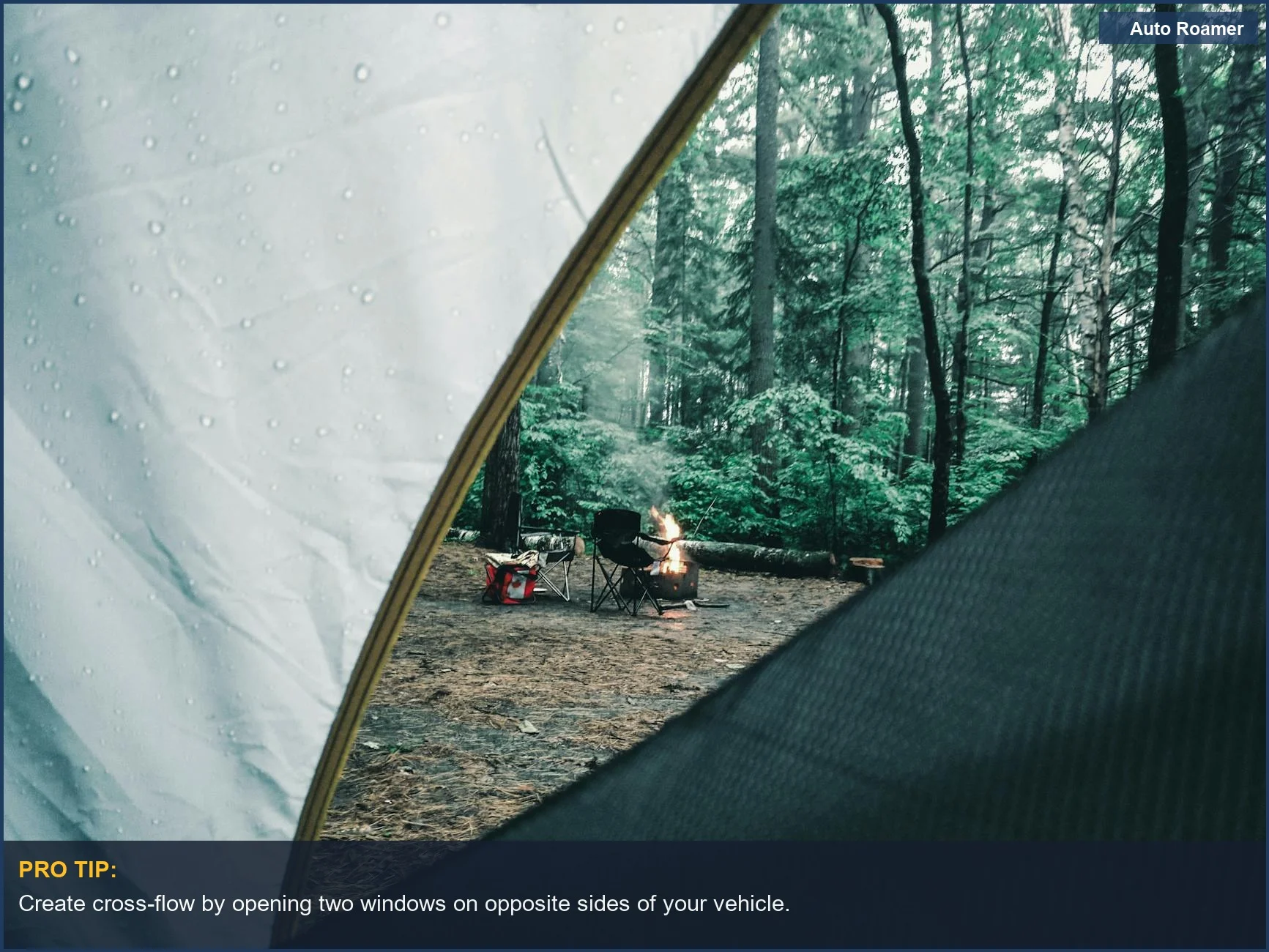
- Ventilate Aggressively: Crack two windows at opposite ends of the vehicle by at least 15mm. This creates a cross-flow, allowing humid air to escape and drier ambient air to enter. Use small window visors or rain guards to prevent direct water ingress, especially if it rains. This YouTube video shows how simple deflectors can make a huge difference.
- Run a USB Fan: Position a small 5V USB fan to circulate air inside the cabin. Aim it towards the ceiling or windows to break up stagnant air pockets where condensation forms most readily. This reduces the boundary layer of moist air on cold surfaces, increasing the rate of evaporative drying. A cheap 120mm computer fan works great, drawing less than 200mA.
- Absorb Excess Moisture: Place desiccant packs, like DampRid, in strategic locations. I usually put one under the front seats and another in the cargo area. These use calcium chloride to absorb airborne moisture, reducing the overall absolute humidity. Replace them when the crystals are fully dissolved. Far Out Ride suggests this as a crucial step.
- Wipe Down Surfaces: In the morning, use a microfiber cloth to wipe down any visible condensation from windows and interior surfaces. Immediately wring out the cloth outside the vehicle. This mechanically removes liquid water before it can soak into porous materials or run into hidden crevices. Don't let it sit.
- Air Out During the Day: Whenever possible, open all doors and windows for at least 30 minutes during daylight hours. Let the sun's thermal energy warm and dry the interior. This is critical for preventing mold growth in upholstery and under floor coverings. Air circulation is key for preventing a fungus incubator. Teraglide emphasizes not sleeping in a sealed car.
- Manage Wet Gear: Never store wet clothes, towels, or gear inside the vehicle overnight. The evaporation from these items will drastically increase the interior's humidity. Hang them outside to dry, or seal them in a waterproof bag if you absolutely must keep them inside. This is basic vapor management.
What This Looks Like in Practice
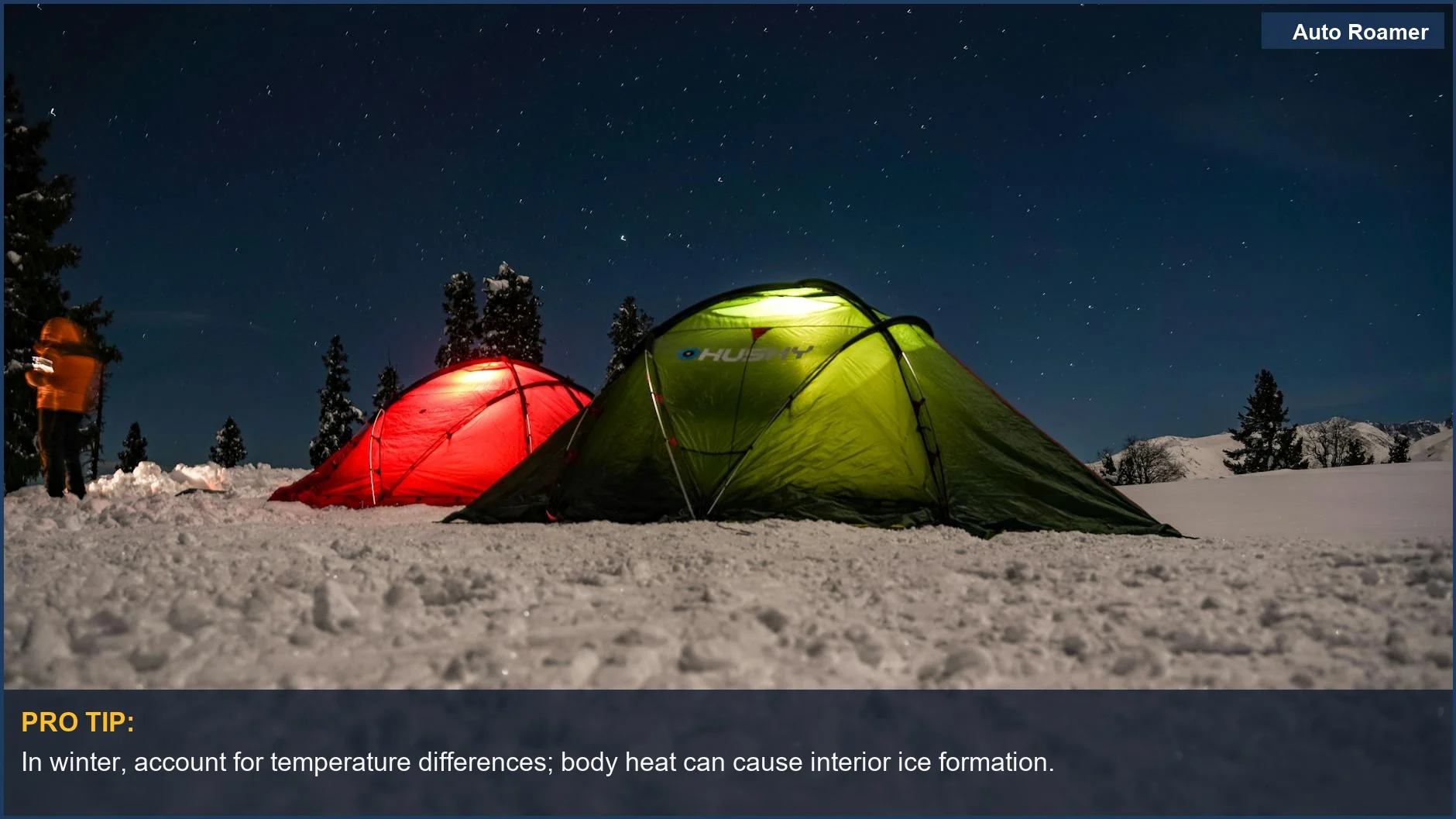
- Winter Snow Camping (0 degrees F ambient): You're bundled in a sleeping bag in a sealed 4Runner. Your body heat keeps the interior at 50 degrees F. The metal roof and windows are at 10 degrees F. You wake up with a thin sheet of ice on the inside of the windows and condensation dripping from the headliner. That's 0.25 liters of water frozen to your interior surfaces. Backpacking Light forums confirm this is standard.
- Coastal Fog (60 degrees F, 95% humidity): You're camping in a Ford Transit Connect. The outside air is already saturated. Even with windows cracked 20mm, the air exchange rate isn't enough to remove your exhaled moisture. The interior still gets clammy, and you find a thin film of water on plastic trim. The relative humidity inside barely drops below 90%. Reddit users discuss DampRid for this reason.
- Rainy Night (45 degrees F, steady downpour): You've got window visors, so you leave the windows cracked 10mm in your Subaru Forester. However, a wet dog and damp hiking boots are also inside. The evaporation from the dog and gear adds another 0.1 liters of water vapor. The small cracks aren't enough to ventilate that additional load, and you wake up to a heavy mist inside.
- Desert Camping (80 degrees F day, 35 degrees F night): In a Jeep Wrangler, you're fine during the day. But as the desert air cools rapidly at night, the vehicle's surfaces quickly drop below the dew point of the air you're breathing. Even though desert air is typically dry, the small, enclosed volume of the cabin becomes saturated with your exhalations. Condensation forms. It's not just about ambient humidity, it's about the localized conditions in your metal box.
Mistakes That Cost People
| Mistake | Why It Fails | Consequence |
|---|---|---|
| Sealing the vehicle completely. | Traps all exhaled moisture, rapidly saturating the interior air. | Maximized condensation, mold growth, degraded interior. |
| Ignoring wet gear inside. | Adds significant evaporative load, increasing ambient humidity. | Faster saturation, stronger odors, accelerated material degradation. |
| Not using airflow (fans). | Allows stagnant, saturated air to persist on cold surfaces. | Localized heavy condensation, slow drying, persistent dampness. |
| Relying solely on desiccants. | Desiccants have limited capacity; cannot handle continuous human-generated moisture alone. | Desiccant saturation, continued high humidity, false sense of security. |
| Not wiping down surfaces. | Allows liquid water to soak into porous materials (fabric, foam). | Mold growth, permanent staining, musty odors, rust initiation. Instagram reels on winter camping emphasize this. |
| Leaving all-weather mats in place. | Rubber/plastic stays colder than carpet, creating a primary condensation surface. | Trapped moisture underneath, accelerating floor pan corrosion. |
I've seen people stuff paper towels into window seams thinking they're 'absorbing' the problem. All they're doing is creating a wet paper pulp incubator. That paper towel has a specific absorption capacity. Once it's saturated, it just holds water against the surface. Brilliant.
Another gem: running the car's AC on recirculate. That just chills the already humid air and blasts it back at you. You need fresh, drier air from outside to reduce the humidity, not just cool the existing soup. The AC's job is to dehumidify, but it needs an external source of air to actually make a difference against your constant output. Happy Daze RV's covers similar principles for RVs.
And then there are the ones who think opening a single window is enough. That creates a pressure differential, but not enough cross-flow for effective ventilation. You need two openings for proper air exchange, otherwise you're just getting a trickle. It's basic fluid dynamics, not rocket science.
Key Takeaways
Condensation isn't just a nuisance; it's a direct attack on your vehicle's structural integrity and electrical systems. Ignoring it guarantees long-term problems. The physics is simple: warm, moist air meets cold surfaces. Your body is the primary moisture generator.
Key takeaways for keeping your vehicle from becoming a mobile sauna:
- Ventilation is paramount: Crack two windows, use deflectors. Airflow mitigates the problem at its source. Just Kampers Insurance highlights this.
- Circulation helps: USB fans break up stagnant air, promoting evaporation and reducing localized humidity. Facebook groups recommend them.
- Absorb excess: Desiccants, while not a complete solution, reduce overall humidity levels. They're a supplement, not a replacement for ventilation.
- Wipe it down: Remove liquid water immediately.
Don't let it soak into fabrics or pool on surfaces. This prevents mold and corrosion. Happy Daze RV's emphasizes proactive management.
- Manage wet gear: Keep moisture sources out of the cabin. Your vehicle isn't a drying rack.
Ignoring these steps means inviting mold, corrosion, and eventually, electrical gremlins that'll cost you hundreds. A $20 fan and some common sense will save you a $700 headliner replacement. Choose wisely.
Left unmanaged, that trapped moisture becomes a bigger problem — here's how to prevent mold and mildew from car-camping moisture.