The Short Answer, and Why "It Depends" Is the Honest One
With the engine running, you can run your car's AC essentially indefinitely — the limit is your fuel and local idling laws, not the AC itself. With the engine off, a standard gas car can't run the AC compressor at all; only EVs and hybrids keep the cabin cool while parked.
The reason that one-line answer splits so cleanly in two is that a conventional automotive air conditioner is not an electrical appliance the way a window AC unit is. The component that actually produces cold air — the compressor — is bolted to the engine and spun by a belt off the crankshaft. No spinning engine means no spinning compressor, which means no refrigeration cycle and no cold air. This single mechanical fact is the thing most online answers get wrong, and it's why the popular "15 to 30 minutes" figure is misleading enough to be worth correcting.
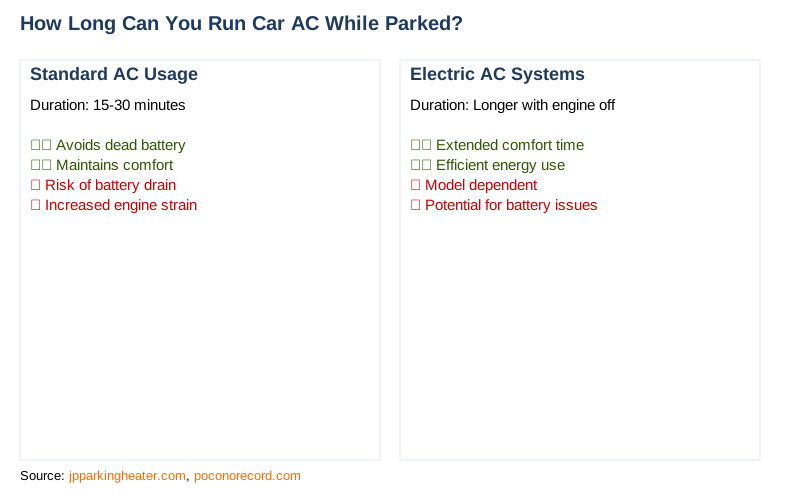
That 15-to-30-minute number describes how long a car battery can run the cabin fan (the blower that moves air through the vents) before the battery is too flat to crank the engine. But a fan blowing warm air is not air conditioning. The compressor that would make that air cold is not running, because the engine that drives it is off. So in a standard gas car, "running the AC with the engine off" mostly means circulating ambient-temperature air for a few minutes — not cooling the cabin.
Once the engine is running, the picture flips entirely. The compressor spins, the alternator recharges the battery faster than the accessories drain it, and the only real limits become how much fuel you're willing to burn and whether local law lets you idle that long. The rest of this guide walks through both cases in detail, the fuel and battery math behind them, the safety issues that genuinely matter (carbon monoxide is the big one), and the practical setups that let you stay cool in a parked vehicle without leaving the engine running for hours.
Engine Running: Effectively Indefinite, Bounded by Fuel and Law
With the engine idling, your AC can run for as long as you have fuel in the tank and the law on your side. There is no mechanical clock counting down. The alternator, turning with the engine, keeps the 12V battery topped up while simultaneously powering the blower, the AC's electric clutch, and the radiator and condenser fans. The compressor draws its power mechanically from the crankshaft, not from the battery, so the battery is never the bottleneck while the engine runs.
The practical limit is fuel. A typical passenger car burns roughly 0.2 to 0.5 gallons of gasoline per hour at idle, and running the AC adds a modest amount on top of that because the engine has to work a little harder to spin the compressor. These are widely published idling-consumption figures from energy agencies, not original measurements of ours; the U.S. Department of Energy and Argonne National Laboratory have published idle-fuel-use estimates in this range for years, with larger engines and trucks sitting toward the high end. At, say, 0.4 gallons per hour, a half tank of fuel could keep a car idling with the AC on for many hours — long enough that fuel is rarely the first thing you run out of.
The more common real-world limit is the law. Many U.S. states and cities have anti-idling ordinances, often capping idling at three to five minutes when you're stopped and not in traffic, with exceptions that vary widely — some carve out passenger comfort in extreme heat, some don't, and enforcement is inconsistent. The rules differ by jurisdiction and change over time, so the honest guidance is to check your own state and municipal regulations rather than trust a blanket figure. The point worth internalizing is that the constraint on engine-running AC is external (fuel cost, emissions law, courtesy to neighbors) rather than a hard mechanical ceiling on the car.
There is one genuine engine-side caution. Idling for very long stretches in extreme heat asks a lot of the cooling system, because at idle there's little airflow through the radiator beyond what the fans push. A healthy car handles this fine — the electric fans are designed for exactly this — but a vehicle with a marginal cooling system, a tired water pump, or low coolant can creep toward overheating while sitting still. If the temperature gauge climbs, that's the signal to shut down, not push through.
Engine Off: Why a Standard 12V Car Can't Run the AC at All
This is the part that surprises people, so it's worth being precise. In a conventional internal-combustion car, turning the ignition to "accessory" or "on" without starting the engine lets you run the radio, the lights, and the climate-control blower — but not the air-conditioning compressor. The compressor has no independent motor; it is a belt-driven pump that only turns when the engine turns. So with the engine off, the most your AC system can do is blow cabin air that is the same temperature as the air it's pulling in. On a hot day, that's warm air.
That's why the famous "15 to 30 minutes" answer needs an asterisk. What that window really describes is battery endurance for 12V accessories. A car's starting battery is built to deliver a huge burst of current for a few seconds to crank the engine, not to sustain a steady draw for an hour. Run the blower on high, the headlights, and the infotainment screen with the engine off and you are pulling perhaps 15 to 30 amps from a battery with maybe 40 to 70 amp-hours of usable capacity. Do the arithmetic and you get well under an hour before the battery sags below the roughly 11.8 to 12.0 volts it needs to reliably crank — and starting batteries dislike being deeply discharged, which shortens their life. But again: during that window you are running a fan, not refrigeration.
The takeaway for a standard gas car is simple and a little deflating. You cannot meaningfully "run the AC" to cool a parked car with the engine off. If you want cold air in a parked combustion vehicle, the engine has to be running. Everything else — cracking the windows, parking in shade, a sunshade on the windshield — is heat management, not air conditioning.
It's worth naming the practice some people resort to: turning the key to accessory mode and running the blower on full to at least move air. That does technically work for a short while, but it's the fastest way to find yourself stranded. A starting battery that's been drawn down to crank-failing voltage isn't just inconvenient in the moment — repeated deep discharges measurably shorten its service life, so you pay for it twice. If you regularly want air movement in a parked car, the answer is never the car's own battery; it's a separate power source, which is exactly what the alternatives section covers.
EVs and Hybrids: The Exception That Actually Sustains Cooling
Electric and most hybrid vehicles break the rule above, because their air conditioning is fundamentally different. Instead of a belt-driven compressor chained to a gas engine, an EV uses an electric compressor powered by the large traction battery — the same pack that drives the wheels. That pack stores far more energy than a 12V starter battery (think tens of kilowatt-hours versus under one), and the compressor can run independently of any engine. The result is that an EV or plug-in hybrid can keep its cabin genuinely cold while parked, for hours, without idling anything.
Most EVs formalize this with a feature variously branded as "Camp Mode," "Keep Climate On," "Dog Mode," or a cabin-overheat protection setting. Tesla's Camp Mode and Dog Mode, Rivian's Camp Mode, and similar settings in other models are designed to maintain a set cabin temperature while parked, drawing from the main battery. The cost is range: published owner accounts and manufacturer guidance generally put sustained cabin cooling at somewhere around a low single-digit percentage of battery per hour, varying with outside temperature and how cold you set it. That's an energy figure from the vehicles' own range readouts and manufacturer documentation, not a number from any lab work of ours — but the direction is unambiguous: an EV can do for hours what a gas car can't do for five minutes.
Conventional hybrids sit in between. Many will automatically start their gas engine periodically to keep the AC running and the hybrid battery charged when you leave the climate control on while parked, so they behave more like an automated version of the engine-running case than like a pure EV. If sleeping in or working from a parked vehicle in the heat is a real use case for you, the vehicle's drivetrain matters more than any single number: a full EV is the only type that quietly keeps you cool without burning fuel or running an engine.
What Changes the Answer: Heat, Battery Health, and Vehicle Type
Both of the two cases above have a clean headline answer, but a handful of real-world variables push the numbers around the edges. Knowing them is the difference between a rule of thumb and an answer you can actually plan around.
Outside temperature. The hotter it is, the harder the AC system works. With the engine running, a blistering day means the compressor cycles more and the engine works slightly harder, nudging fuel burn toward the higher end of the idle range. With the engine off, heat is purely your enemy: a closed car in direct sun can climb past 130 degrees Fahrenheit inside within an hour, which is why the engine-off blower feels useless almost immediately and why shade and ventilation matter so much.
Battery age and health. The 15-to-30-minute engine-off accessory window assumes a healthy battery. A battery that's a few years old, has sat through a cold winter, or is already marginal can lose the ability to crank after just a few minutes of accessory load. If your battery is near the end of its life, treat engine-off accessory use as a no-go rather than a 30-minute allowance. A battery tested and known to be in good condition is the only one those rough numbers apply to.
Vehicle type. This is the big one, and it's worth stating plainly because it reframes the entire question. A conventional gas car: engine on for cold air, engine off for warm air only. A full EV: hours of genuine cooling from the traction battery, engine-free, with a few percent of range lost per hour. A hybrid: usually behaves like an automated engine-on case, self-starting its gas engine to maintain cooling and charge. A diesel truck or RV with a deep-cycle house battery and an inverter is a different animal again — some are wired to run accessories far longer than a passenger car. Before you trust any number, identify which of these you're sitting in.
Accessory load. Finally, the AC blower isn't the only thing pulling on the battery when the engine's off. Headlights, the infotainment screen, charging phones, interior lights, and a running dashcam all add up. Strip the load down to just the blower and you stretch the engine-off window; pile on accessories and you shorten it. None of this turns warm air cold — it only changes how long the fan keeps spinning.
The Battery and Fuel Math, Spelled Out
It helps to see the two governing equations side by side, because they explain every answer above. Engine-off endurance is a battery problem; engine-on endurance is a fuel problem.
Engine off (12V accessories only). Usable endurance is roughly the battery's usable capacity divided by the current you're drawing. A starter battery might offer 40 to 70 amp-hours of capacity, but you should only lean on a fraction of that before risking a no-start, and the blower plus accessories pull on the order of 15 to 30 amps. That math lands you in the familiar tens-of-minutes range — and remember, that's for moving air, not cooling it. Deep-cycling a starting battery this way also ages it faster than its designers intend, which is a hidden cost of treating the car as a place to run accessories with the engine off.
Engine on (idling with AC). Here the battery is irrelevant because the alternator keeps it full; the meter that runs is the fuel tank. At a published idle burn of roughly 0.2 to 0.5 gallons per hour — call it a quarter to half a gallon, with the AC compressor nudging it toward the upper part of that band — a single gallon of gas buys you somewhere in the neighborhood of two to four hours of idling with cool air. A larger SUV or truck with a big engine burns faster; a small four-cylinder burns slower. These are ballpark figures drawn from published idle-consumption studies, not stopwatch readings of our own, and your real number depends on engine size, AC load, and outside temperature.
The reason this matters practically: people reach for engine-running AC because it's the only thing that actually cools a gas car, but it's also the expensive, emissions-heavy, sometimes-illegal option. That tension is exactly why the alternatives at the end of this guide exist.
Carbon Monoxide and the Real Danger of Sleeping in a Running Car
If there is one section here to take seriously, it's this one. The headline risk of running a car's AC with the engine on while parked — especially if you plan to nap or sleep — is carbon monoxide poisoning. Carbon monoxide (CO) is the colorless, odorless gas in engine exhaust. It binds to your blood far more readily than oxygen does, and at high concentrations it can cause unconsciousness and death with little warning. People do die this way every year, often after falling asleep in a running vehicle.
Two scenarios are genuinely dangerous. The first is idling in any enclosed or semi-enclosed space — a garage, even with the door open, or a carport — where exhaust accumulates. Never run the engine to power the AC in a garage, full stop. The second is more insidious: a parked car with a clogged or snow-blocked exhaust pipe, or a leak in the exhaust system, can pull CO into the cabin even outdoors, particularly when the car is stationary and there's no airflow to disperse the fumes. After a snowstorm, clearing the tailpipe before idling is a documented life-saver.
The safety authorities are consistent on this. The CDC and fire and safety agencies advise never sleeping in a running, parked vehicle, keeping the exhaust pipe clear, and ensuring fresh-air ventilation if the engine must run. The same caution applies to idling overnight and to leaving a dog in a car with the AC running, both of which carry the same engine-off-versus-engine-on tradeoff. A battery-powered CO detector in the cabin is cheap insurance for anyone who car-camps. None of this is fearmongering — it is the single reason "just leave the engine running with the AC on overnight" is advice you should refuse. If you want to stay cool while sleeping in a parked vehicle, the safe path is an EV's climate hold or a battery-powered cooling setup, never a running gas engine.
Practical Alternatives: Staying Cool Without Idling for Hours
Once you accept that a gas car can't safely or cheaply cool itself while parked for long stretches, the better question becomes: how do you stay comfortable without leaving the engine running? There are a few honest, proven approaches, and they stack well together. None of them refrigerate the cabin the way an engine-driven compressor does — that physics doesn't change — but together they solve the problem that actually sends people reaching for the AC: a hot cabin, warm air on your skin, and drinks going lukewarm.
The recommendations below are built from each product's published specs and from how the hardware works, not from first-hand bench testing on our part. The point is to match the right tool to your real constraint — body comfort, food, or insurance against a dead starter battery — so you spend on what your situation needs and skip what it doesn't.
The core setup: a power station plus a fan
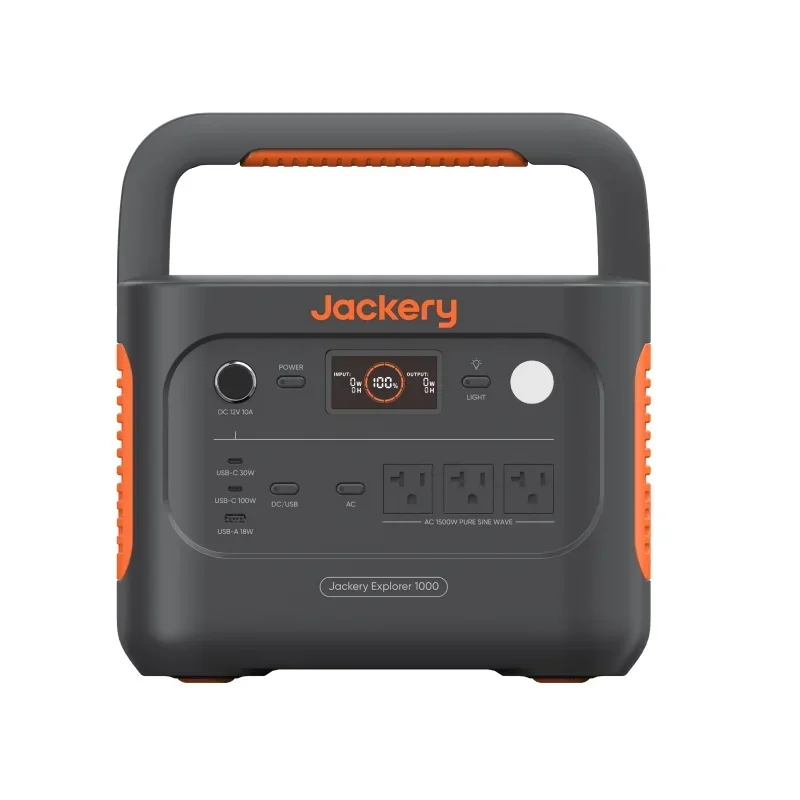
A portable power station is the foundation. It's essentially a big lithium battery with regular AC outlets, USB, and 12V ports, and it keeps your car's starter battery completely out of the equation — no risk of a no-start in the morning. The Jackery Explorer 1000 v2 (about 1,070 Wh) is the size most car campers settle on: enough to run a fan all night for days, top off phones and a laptop, and still have headroom for a 12V cooler. If you want to spend less and pack lighter, the EcoFlow River 2 Pro (768 Wh, around $430) covers a fan plus device charging for a night or two and recharges fast from a wall outlet or your car's 12V port while you drive. Our full breakdown of power stations for car camping walks through sizing in detail.
If your real problem is keeping food and drinks cold
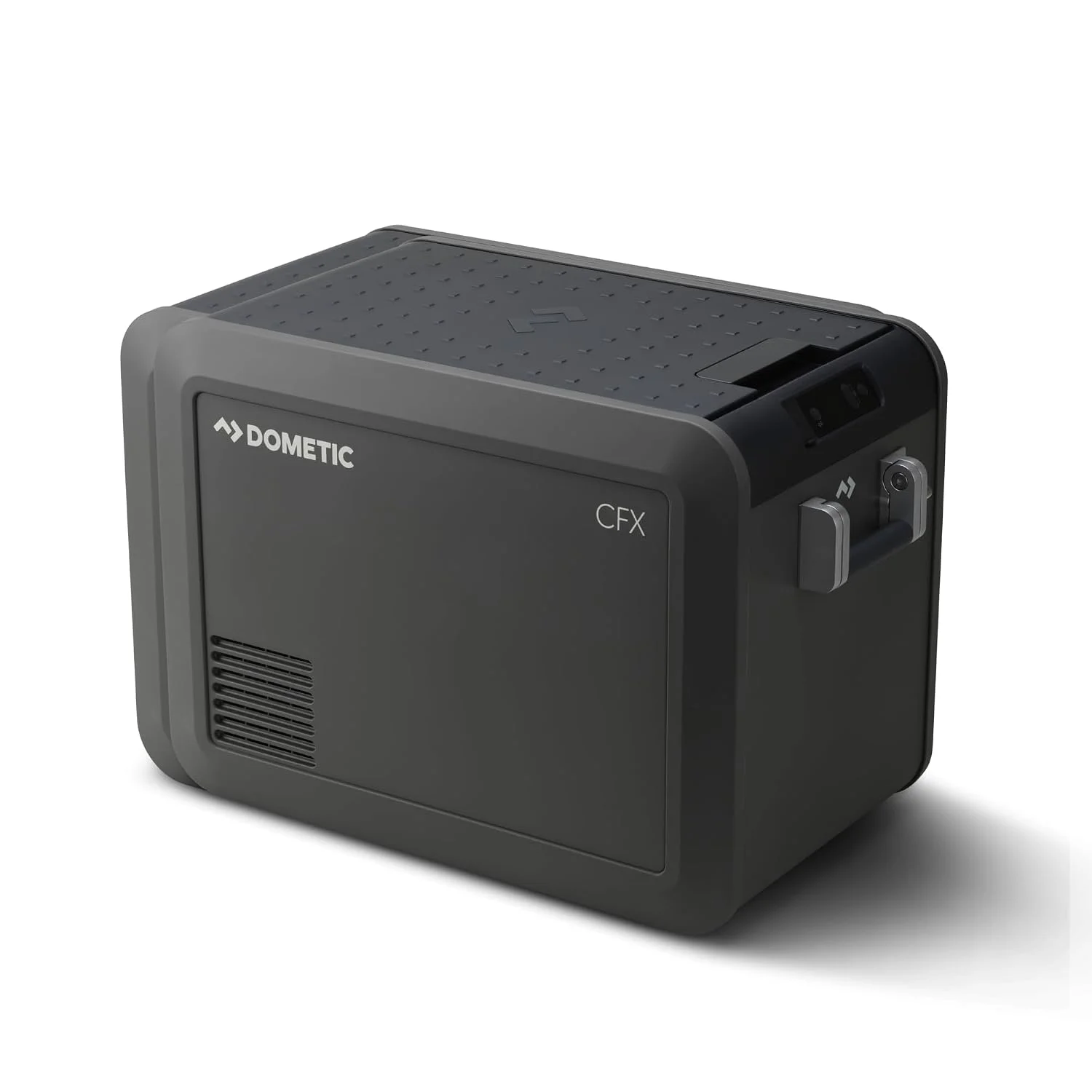
Sometimes the discomfort isn't about your body temperature at all — it's that your food and drinks are going warm, and the AC is just the only cooling tool you can think of. If that's the case, a 12V compressor cooler sidesteps the entire AC question. The Dometic CFX5 Electric Cooler in its 45-litre size is a true compressor fridge-freezer (not an ice chest, not a thermoelectric box) that holds a set temperature and cycles on and off, drawing far less energy than trying to refrigerate an entire cabin. Run it off the same power station and it solves the problem that usually sends people idling on a long stop. Our guide to the best 12V car coolers compares capacities and power draw.
Insurance against a dead starter battery
If you do run accessories off the car's own 12V battery — a fan wired to the lighter socket, the blower on accessory mode — you run a real risk of flattening it past the point it can crank the engine. A portable lithium jump starter is cheap insurance against exactly that morning. It lives in the trunk, weighs a couple of pounds, and turns a no-start into a thirty-second fix; most double as a USB power bank for your phone too. See our roundup of portable jump starters for cars for sizing to your engine. It won't keep you cool, but it removes the one downside of leaning on the car's electrical system.
The free wins, first
Shade, sunshades, and ventilation are the cheapest win of all, and they make everything above work better. Park in shade, put a reflective sunshade across the windshield, crack the windows a couple of inches (with rain guards or screens if bugs are a concern), and you keep the cabin meaningfully cooler without spending a watt. For car campers, window screens that let you sleep with the windows down do more for overnight comfort than almost anything else you can buy. And if you have a gas car and just need to take the edge off, running the engine and AC for a few minutes to chill the cabin, then shutting down, is far safer and cheaper than continuous idling — do it only outdoors, never while asleep, and never in an enclosed space.
The honest bottom line ties the whole guide together. “How long can you run car AC while parked” has two answers because there are two completely different machines hiding behind one question: an engine-driven compressor that needs the engine, and a battery-driven one that doesn't. Know which one your vehicle has, respect the carbon monoxide risk, and for the long hauls lean on a power station, a fan, good shade, and — if food is the issue — a 12V cooler. That's the setup that actually keeps you comfortable in a parked car without burning fuel for hours.