Why a Rechargeable Clip Fan Beats Idling the Engine
Idling the engine to run the climate control is the alternative most people fall back on, and it is a bad one for sleeping. It burns fuel, it is loud, it is illegal to do overnight in plenty of parking areas, and on a gas car it produces exhaust you do not want pooling near where you sleep. A battery fan sidesteps all of that. It runs silently enough to sleep through, costs nothing once charged, and leaves your engine off and your starter battery untouched.
The U.S. Department of Energy notes that moving air feels cooler than still air at the same temperature because it speeds evaporation from your skin. In a closed car that effect is the difference between a stuffy, sweaty night and a sleepable one, even when you cannot lower the actual temperature. A small fan aimed across your body does more for comfort than its size suggests.
Battery Capacity and Runtime: The Spec That Decides the Night
For overnight use, battery capacity is the number that matters most. It is measured in milliamp-hours (mAh), and it sets how many hours the fan runs before it dies. The lineup below splits cleanly into two camps:
- 10000mAh, 8-inch fans — the long-haul option. At a low or medium speed these routinely run most of a night and often into the next day, which is what you want if you do not want to wake up to a dead fan at 3 a.m.
- 4000mAh and smaller clip fans — lighter and cheaper, with shorter runtime. Fine for a few hours of airflow as you fall asleep, or for topping up from a power bank, but they will not coast through a full eight-hour night on high.
Watch the fine print on advertised runtime, because it is almost always quoted at the lowest speed with any light turned off. A fan rated for '24 hours' may give you a third of that on high. The honest way to read a listing is to look at the mAh figure and the speed-by-speed runtime table if the brand publishes one, then assume your real-world number sits between the medium and low figures.
Rule of thumb: if you want to set the fan and forget it for a full night, start at 10000mAh. If you mostly want a breeze while you drift off and can recharge daily, 4000mAh saves weight and money.
Clamp and Mount: Will It Actually Stay on Your Window?
A camping fan lives or dies by where you can put it. The clamp is what lets you perch it on a partly-open window, a seat rail, a grab handle, or a headrest post, and clamp quality varies far more than fan power. There are three patterns to watch for:
- Wide sturdy clamps on the 8-inch fans grip a window frame, a cooler edge, or a cargo bar securely. This is the most useful mount for car camping because it positions the fan at the window gap where the air exchange happens.
- Small spring clips on the lighter models hold to thin edges and stroller-style bars but can slip off a thick door frame. Check the listed clamp opening against the lip of glass you plan to clip to.
- 3-in-1 clip/stand/hang designs give you a fallback: when nothing is the right thickness to clamp, you set it on a flat surface or hang it from a hook overhead.
Before you buy, picture the exact spot you will mount it. If your plan is to clip it to a cracked rear window, you need a clamp deep enough to clear the door's plastic trim and grab the glass or frame. A fan with a beautiful motor and a flimsy clip is just a desk fan that falls in your lap every time you roll over.
Positioning: Pull Cool Air In, Push Warm Air Out
How you aim the fan matters as much as which one you buy. A parked car at night is usually warmer inside than the air outside, so the goal is to set up a flow that swaps stale cabin air for cooler outside air. The simplest effective setup uses one fan and two cracked windows:
- Crack a window on each side of the cabin, ideally diagonally opposite (front-left and rear-right, for example), to create a cross-breeze path.
- Clip the fan at one gap and aim it inward to push cooler outside air across your sleeping area, letting the warm air escape the other gap.
- Or flip it: aim the fan outward at one window to actively exhaust hot, humid cabin air, pulling fresh air in through the other.
Either direction works; the key is having an intake and an exhaust so air actually moves rather than just recirculating. A single sealed-up window with a fan blowing in a closed box accomplishes very little. With two gaps and one well-aimed fan, even a modest breeze keeps the cabin from turning into the stuffy oven that ends most car-camping nights early.
This pairs directly with how you cover those gaps for privacy. If you are blocking the windows for blackout, leave a breathable gap for the fan to work through rather than sealing every pane.
Noise, Speeds, and Sleeping Through It
A fan you cannot sleep next to is useless for camping. Noise is measured in decibels (dB), and the clip fans worth buying for overnight use sit roughly in the 25-45 dB range at low speed, which most people find quiet enough to sleep through or even soothing as white noise. The trade-off is always the same: more airflow means more noise.
That is why multi-speed control matters more than peak power. A fan with three or four speeds lets you run it loud while you set up, then drop it to a whisper-quiet low for actual sleeping. Single-speed or two-speed fans often force a bad choice between too much noise and not enough air. Look for a published low-speed dB figure, and treat marketing words like 'whisper quiet' as a starting point to verify, not a promise.
Brushless motors, common on the 8-inch models, tend to run quieter and last longer than cheap brushed motors, which is a reasonable thing to pay a little more for if all-night quiet is your priority.
Charging: USB-C, Pass-Through, and Doubling as a Power Bank
How the fan recharges shapes how it fits into a trip. The features worth checking on the listing:
- USB-C input — the modern standard, so the fan charges from the same cable and adapter as a recent phone. Older micro-USB fans still work but mean carrying an extra cable; confirm the port type before you buy.
- Pass-through use — many of these fans run while plugged in, so you can keep them going off a 12V car outlet or a portable power station without draining the internal cell. Handy on a base-camp night where power is available.
- Power-bank output — some of the bigger 10000mAh models have a USB output port and will top up a phone in a pinch. It is a genuine bonus for car camping, where charging options are limited.
Plan your charging around your trip. If you are off-grid for several nights, a 10000mAh fan you recharge from a power station during the day is more dependable than a tiny fan you have to nurse. If you are car camping near outlets, a smaller fan you top up nightly is perfectly fine and easier to pack.
Matching the Fan to Your Vehicle and Sleep Setup
The right fan also depends on the car. A compact hatchback, a mid-size SUV, and a converted van all move air differently, and the fan that suits one can be overkill or underpowered in another:
- Sedans and hatchbacks — small cabins where even a 4000mAh clip fan can keep air moving. The bigger challenge is finding a clean window edge to clamp to, so a slim fan with a versatile mount earns its place.
- SUVs and wagons — more cabin volume to ventilate and usually a flat cargo area to sleep in. An 8-inch fan with a strong clamp on the rear quarter window or the open tailgate gap moves enough air to matter back there.
- Vans and dedicated builds — the most air to shift. These often run a 10000mAh fan, sometimes two, and lean on pass-through power from a house battery so runtime is not a worry.
Think about your bed orientation too. If you sleep with your head toward the rear, clip the fan near a rear window so the breeze reaches your face rather than your feet. If you sleep diagonally in a small car, a fan with a rotating head lets you fine-tune the angle without re-clamping. The best fan for you is the one whose mount and reach fit how you actually lie down, not the one with the highest airflow number on the box.
REI's car-camping guidance puts ventilation and a comfortable sleep system near the top of the gear that makes or breaks a trip, and a fan is the cheapest item on that list. Spending twenty to forty dollars to sleep well is an easy trade against a hundred-dollar sleeping pad that does nothing if you are lying awake sweating.
Our Picks: Real Rechargeable Camping Window Fans to Compare
Every option below is a real, currently-listed product so you can verify the exact battery capacity, clamp size, charging port, and runtime before buying. We have not run these head to head on a test bench; the honest way to choose is to match the specs that decide an overnight in a parked car — capacity, clamp fit, speed range, and noise:
- As a live Amazon listing you can confirm the exact battery capacity, clamp size, and charging port against your own vehicle before you buy.
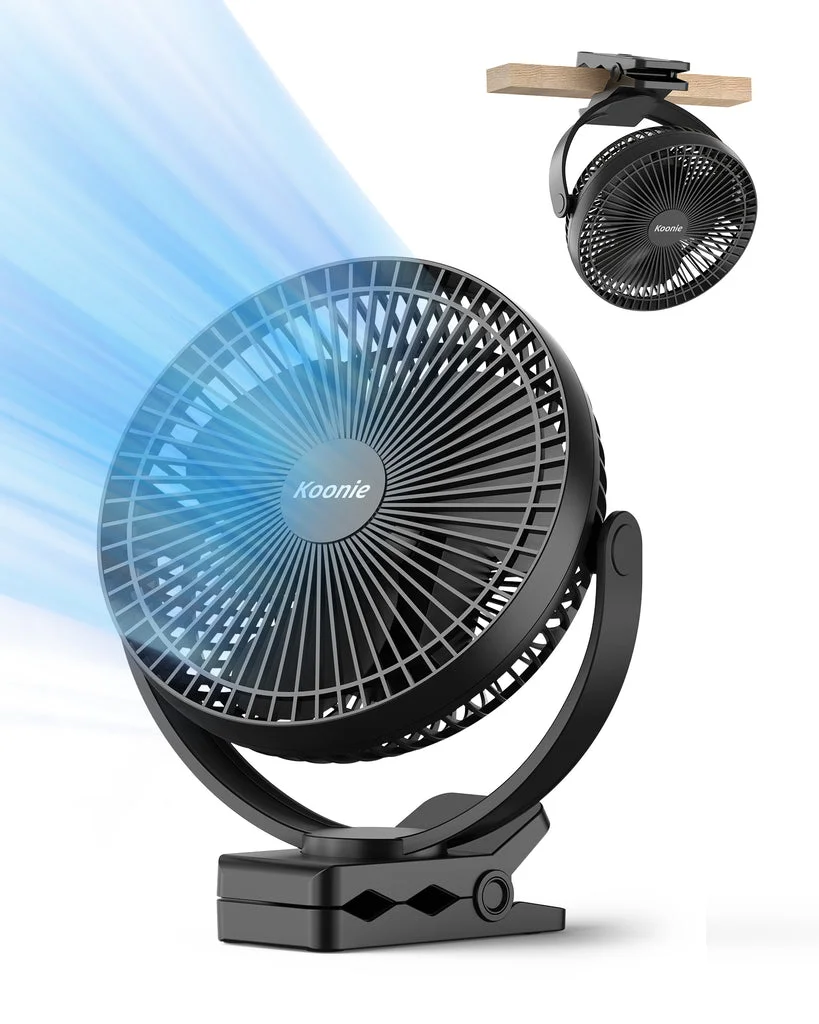
- Koonie 10000mAh Clip On Fan, 8-Inch Battery Operated Desk Fan (around $45, check current) — another 8-inch 10000mAh workhorse with a 4-speed range and a strong clamp, the type that pushes real air across the cabin rather than just stirring it near your face. As a live Amazon listing you can confirm the exact battery capacity, clamp size, and charging port against your own vehicle before you buy.
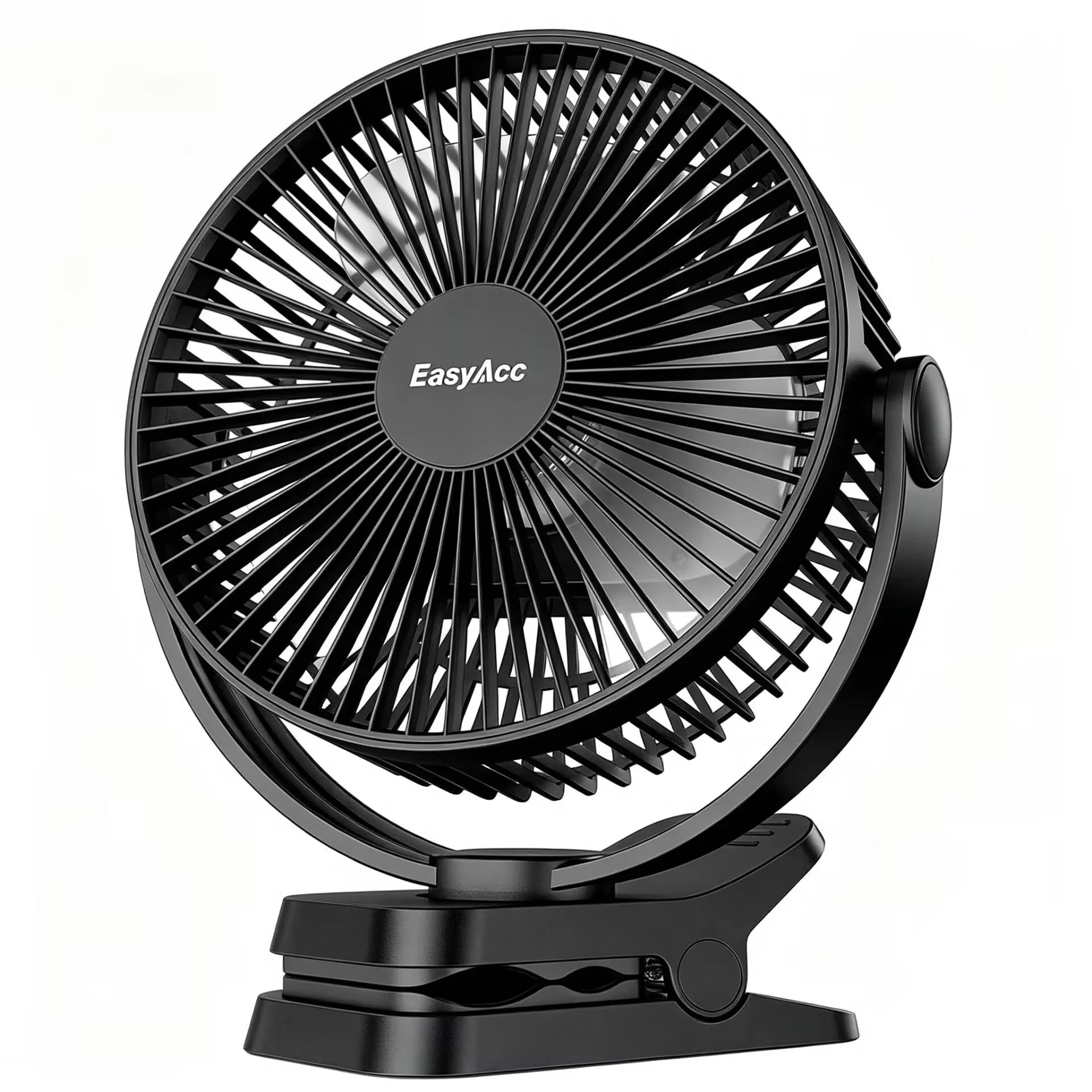
- EasyAcc 10000mAh Portable Clip On Fan, 8-Inch with Digital Display (around $40, check current) — a 10000mAh fan with a digital battery readout, so you know exactly how many hours are left before you commit to running it overnight. As a live Amazon listing you can confirm the exact battery capacity, clamp size, and charging port against your own vehicle before you buy.
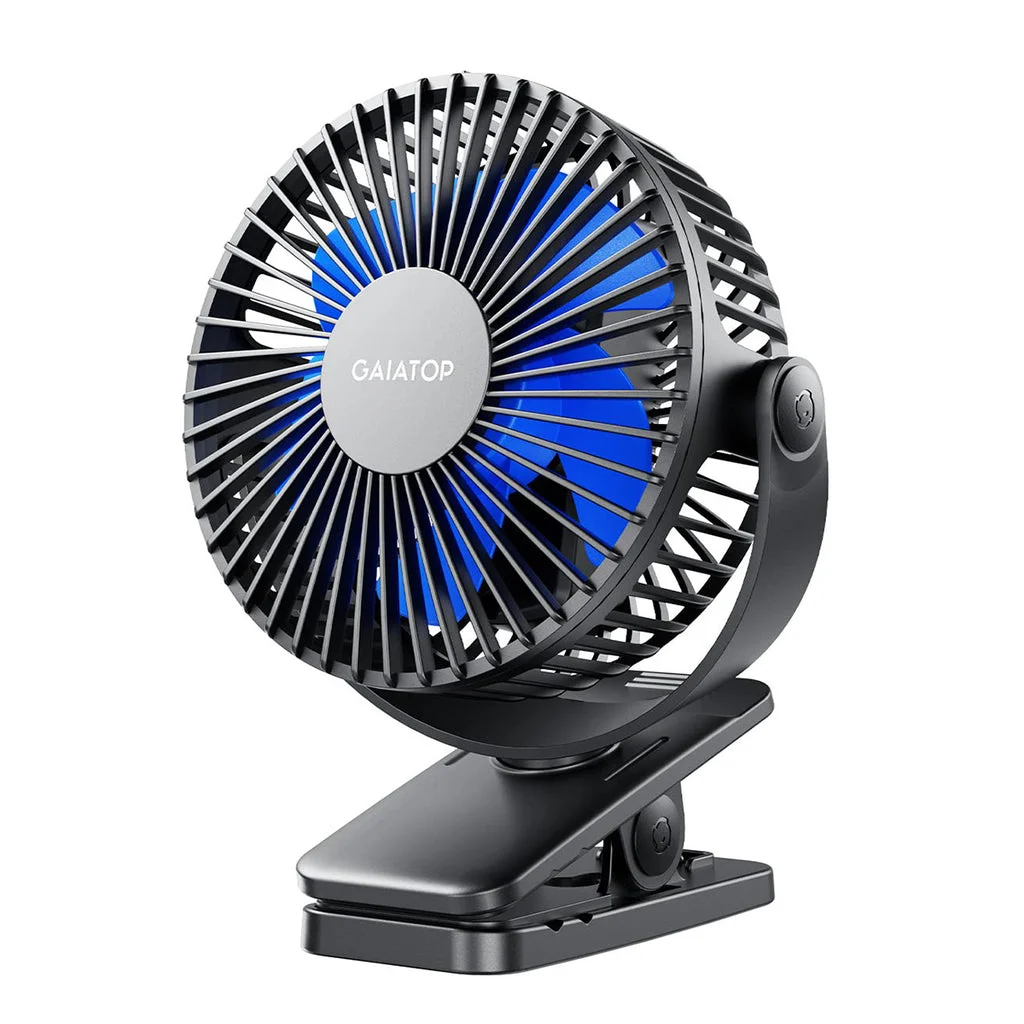
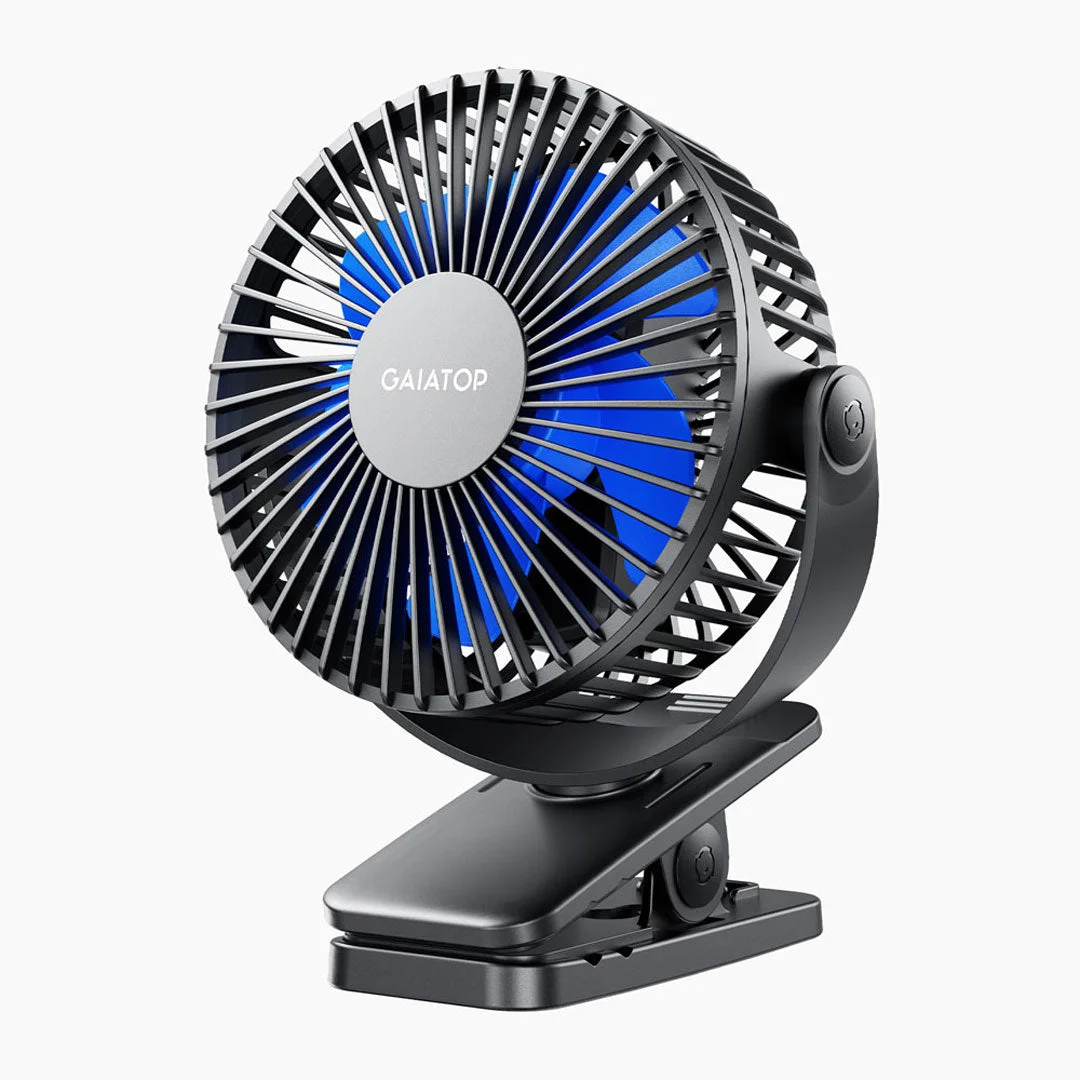
- Gaiatop Portable Clip On Fan, USB Rechargeable 360 Rotate (around $20, check current) — a compact, lightweight clip-on with 360-degree rotation, the kind you aim precisely at a partly-open window to pull cooler outside air in. As a live Amazon listing you can confirm the exact battery capacity, clamp size, and charging port against your own vehicle before you buy.
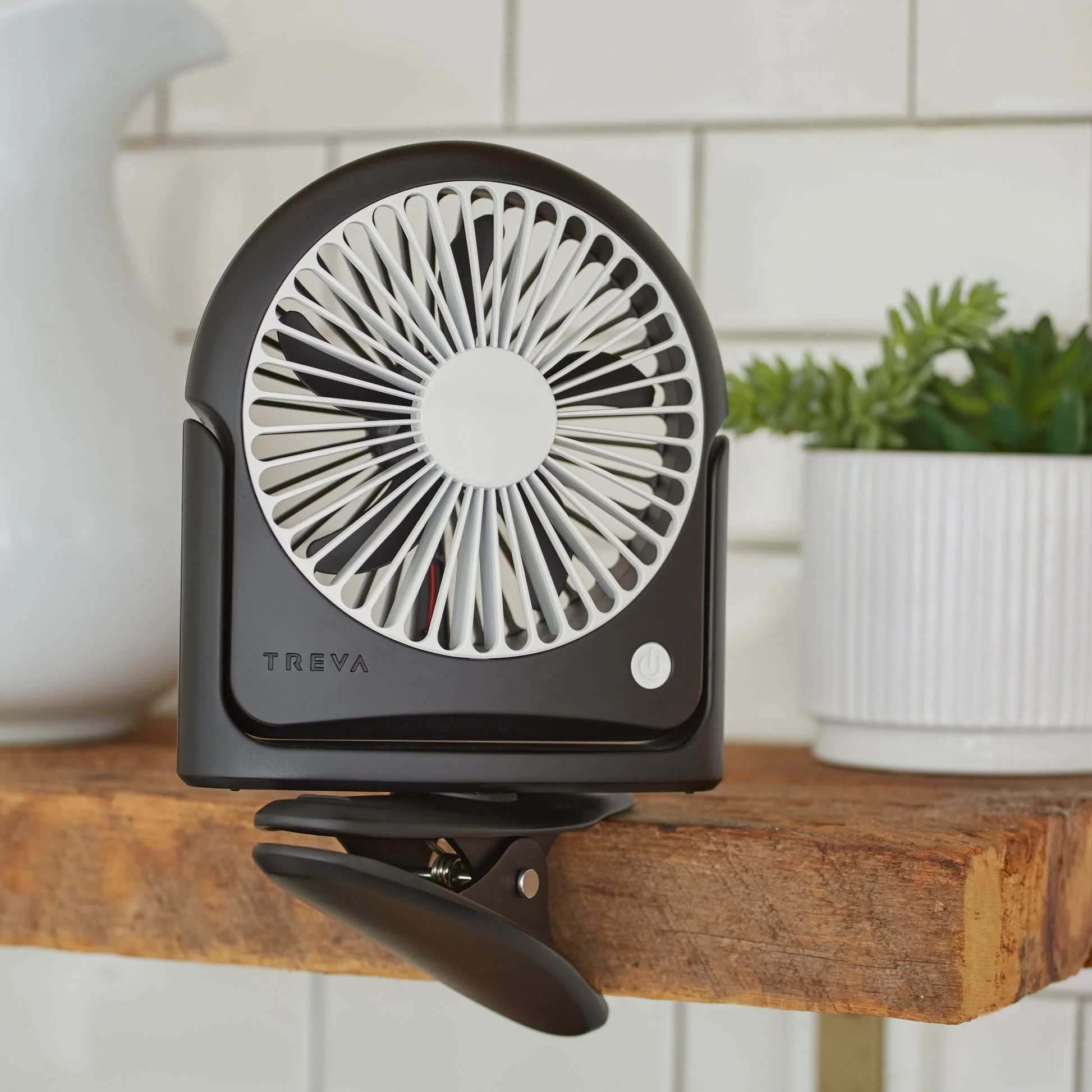
- Treva 5-Inch Rechargeable Clip Fan, 3-Speed Portable (around $25, check current) — a slim 5-inch USB-rechargeable clip fan that trades all-night runtime for portability, easy to tuck away and clip wherever the airflow is needed most. As a live Amazon listing you can confirm the exact battery capacity, clamp size, and charging port against your own vehicle before you buy.
Whichever you pick, read the listed clamp opening and battery runtime table against your own plan. An 8-inch 10000mAh fan is the safe default for set-and-forget overnight airflow; a smaller 4000mAh clip fan is the lighter, cheaper choice if you can recharge it daily and only need a breeze as you fall asleep. Prices shift constantly on these, so treat the figures above as a ballpark and confirm the current price on the listing.
Setup, Storage, and the Honest Bottom Line
A few habits keep a camping fan working trip after trip:
- Charge it fully before you leave, and recharge during the day from a power station or 12V outlet rather than running it flat overnight.
- Test the clamp on your actual window frame at home, so you are not discovering at the trailhead that it slips off the door trim.
- Wipe dust off the blades and store it in a bag; grit in the bearing is what makes a quiet fan start to whine.
The U.S. National Park Service reminds campers that heat builds fast in an enclosed vehicle, so never rely on a fan alone in genuinely dangerous heat — ventilation helps comfort, not extreme temperatures. For sleeping comfort on an ordinary warm night, though, a good clip fan is one of the highest-value items you can pack.