Car Camping

Understanding Battery-Powered Fan Heater Safety for Car Camping

Casey - The Weekend Warrior
5 min read
Includes Video

My first car camping heater was a $16 Amazon special that promised to turn my Honda Civic into a sauna. It barely warmed my toes and smelled vaguely of burnt plastic. That was three years ago, and I learned the hard way that not all battery-powered heaters are created equal, especially when you're trying to stay warm in your car at 30 degrees F.

My first car camping heater was a $16 Amazon special that promised to turn my Honda Civic into a sauna. It barely warmed my toes and smelled vaguely of burnt plastic. That was three years ago, and I learned the hard way that not all battery-powered heaters are created equal, especially when you're trying to stay warm in your car at 30 degrees F.

Most guides talk about voltage and wattage, but what nobody tells beginners is that a cheap heater might be a fire hazard waiting to happen. You need to understand the real risks before you plug something into your car's battery or a portable power station. It's about more than just comfort; it's about not burning down your vehicle or your tent. Portable heaters can be safe, but only if you choose wisely and follow the rules.

This isn't about buying the most expensive gear; it's about making smart choices so you don't end up shivering or worse. The honest version is that safety comes first, always.
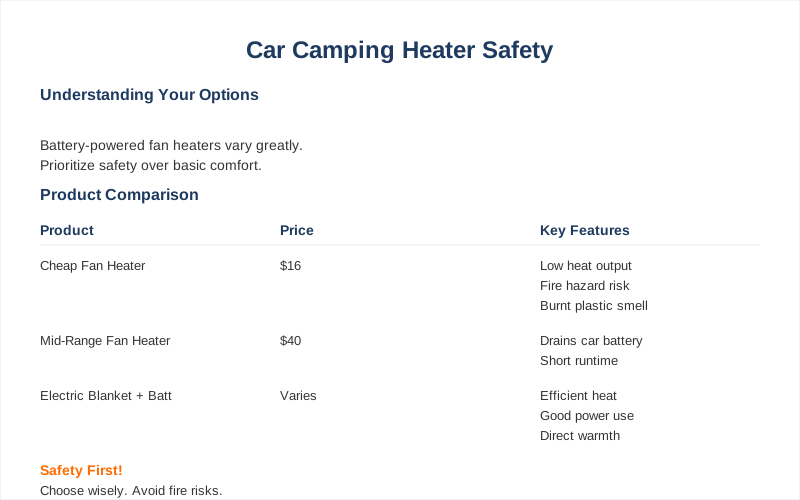
Understanding Battery-Powered Fan Heater Safety for Car Camping — Key Specifications Compared
Key specifications for Understanding Battery-Powered Fan Heater Safety for Car Camping

The Core Answer

Look, I've tried a few of these battery-powered fan heaters for car camping, and the main thing nobody tells you is that most of them are glorified hair dryers with a battery pack. They draw a ton of power and don't actually put out that much heat. My first attempt was a $40 unit that killed my car battery in 45 minutes. Brilliant engineering. A 12V electric blanket and a 100Ah Li battery is a much better use of your power. The real move for staying warm in your car without frying your electrical system is to think about efficiency. You want something that uses less power for more heat. That usually means focusing on radiant heat or things designed to keep *you* warm directly, not the entire car. Think electric blankets, heated sleeping bag liners, or even small catalytic heaters if you're willing to deal with fuel. Air flowing through a heater core is one thing, but a cheap fan heater just blows air. Battery-powered fan heaters, especially the cheap ones, are often not designed for the continuous, high-draw use of keeping a car warm. They can overheat, drain your battery faster than you can recharge it, and some have questionable safety features. A Jackery 290/300/500 and an electric blanket is a safer bet, but you still need to manage recharging. If you *are* looking at a battery fan heater, check the wattage. Anything over 150 watts is going to drain a typical car battery or small portable power station in no time. You'd need a massive battery bank, like a 100Ah lithium battery, to run one for more than a couple of hours. And even then, you're just heating air, which escapes easily from a car. Safety features are crucial. Look for tip-over switches that shut the heater off if it falls. Also, a low oxygen sensor is a must if you're considering anything that burns fuel, but that's a whole other can of worms. For electric, it's about not overloading your power source. They use a tip sensor to prevent fire, but that doesn't help if your battery is dead. My field notes suggest that for car camping, an electric blanket rated at 150 watts or less is your game-time player. Paired with a decent portable power station (like a 300Wh unit), you can get 4-6 hours of warmth. That's enough to get you through the coldest parts of the night without killing your battery. Using a heater in a confined space like a tent poses risks, and a car is just a bigger, more expensive tent.
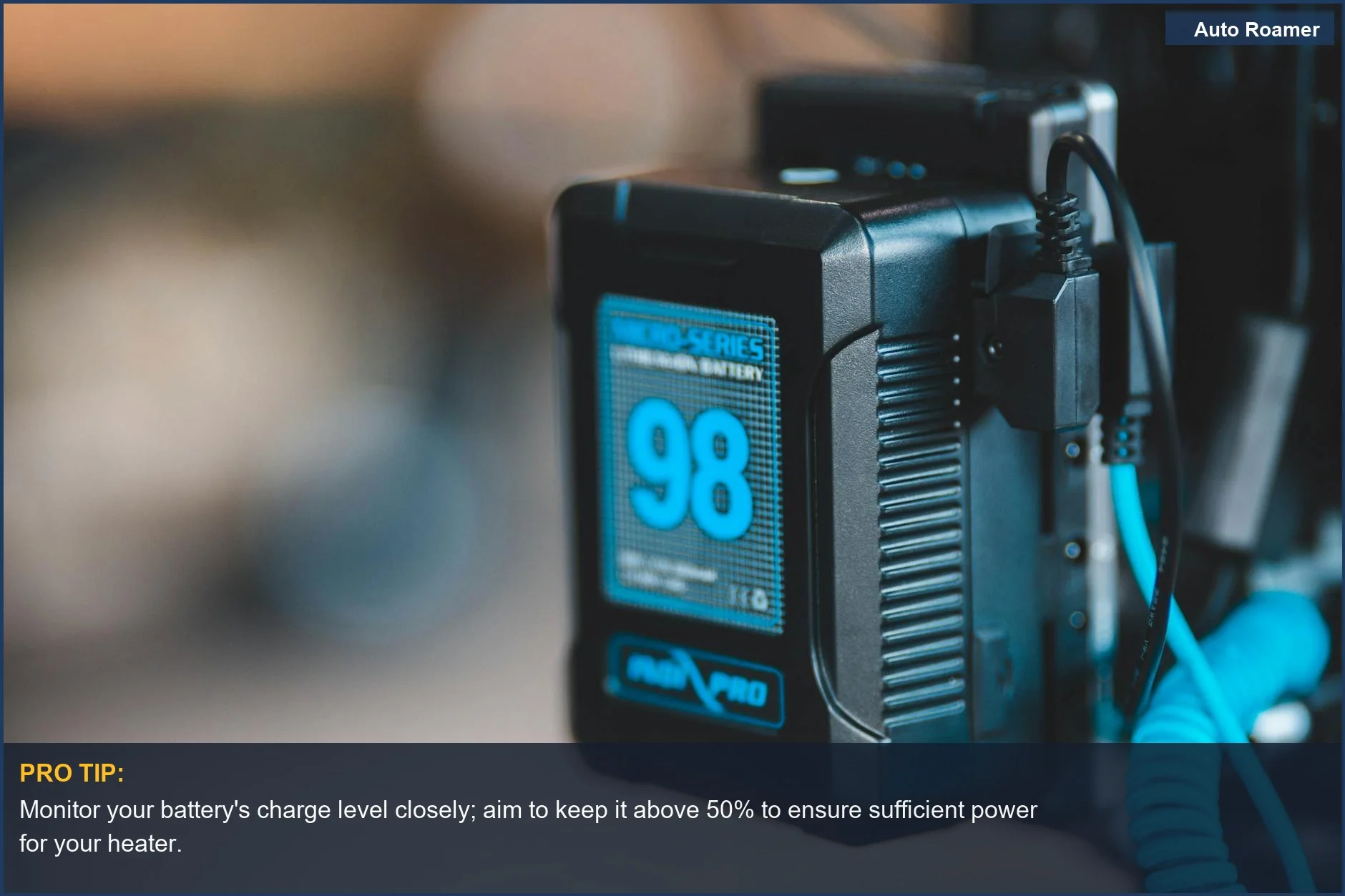
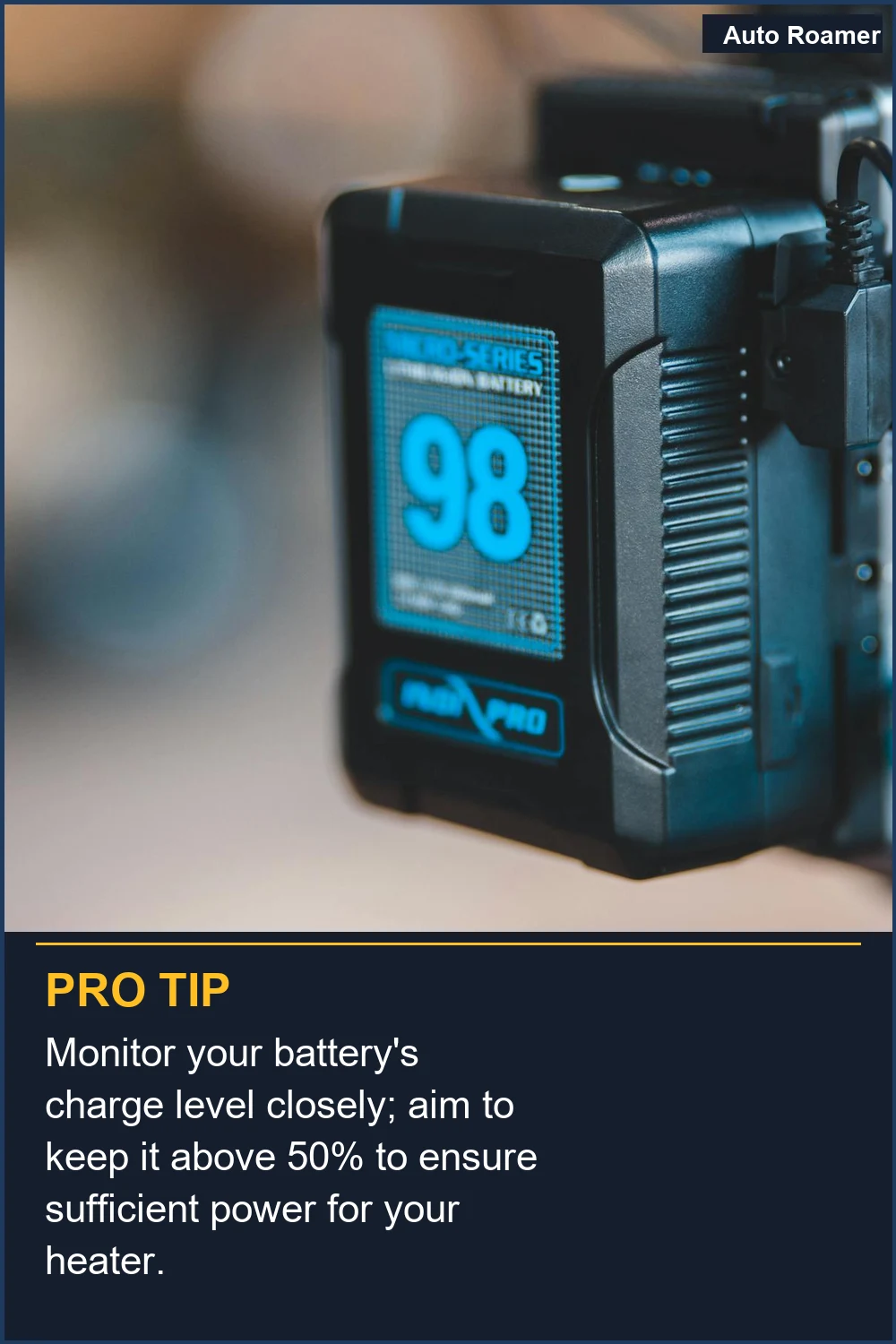
To maximize your heater's efficiency, understanding battery capacity is crucial for your car camping experience.
Monitor your battery's charge level closely; aim to keep it above 50% to ensure sufficient power for your heater.
A fully charged portable battery is crucial for car camping heater safety. Ensure your power source can handle the demands of your device, as many units drain power quickly. | Photo by Erik Mclean

Why This Matters for Your Setup

  • Power Draw is Everything: That $20 portable heater from the auto parts store might seem like a steal, but if it pulls 150 watts, it'll drain a standard 50Ah car battery in about 2-3 hours. My first trip, I learned this the hard way when my Civic wouldn't start after running a "defrost" heater all night. Place your portable car heater in an area wherein it is not prone to fall over.
  • Battery vs.
  • Fuel: True battery-powered heaters are rare and expensive. Most "battery-powered" heaters are actually fuel-burning with battery ignition. If you're using one, you *need* ventilation, which is tough to manage in a car without freezing.
  • The "Electric Blanket" Hack: This is the real move for most car campers. A 12V electric blanket uses way less power than a fan heater. I use one that draws about 75 watts, and it gets me through the night on my 300Wh power station.
  • How to use a heater in your tent, but the principle applies to cars too.
  • Don't Cook Yourself: Cheap heaters often lack robust safety features. Overheating is a real risk, and the plastic can melt or ignite. Always ensure there's plenty of space around the unit and nothing flammable nearby. It is not prone to fall over, especially.
  • To ensure your heater operates effectively, understanding its runtime can be crucial, which you can explore in our article on battery-powered fan heater runtime.
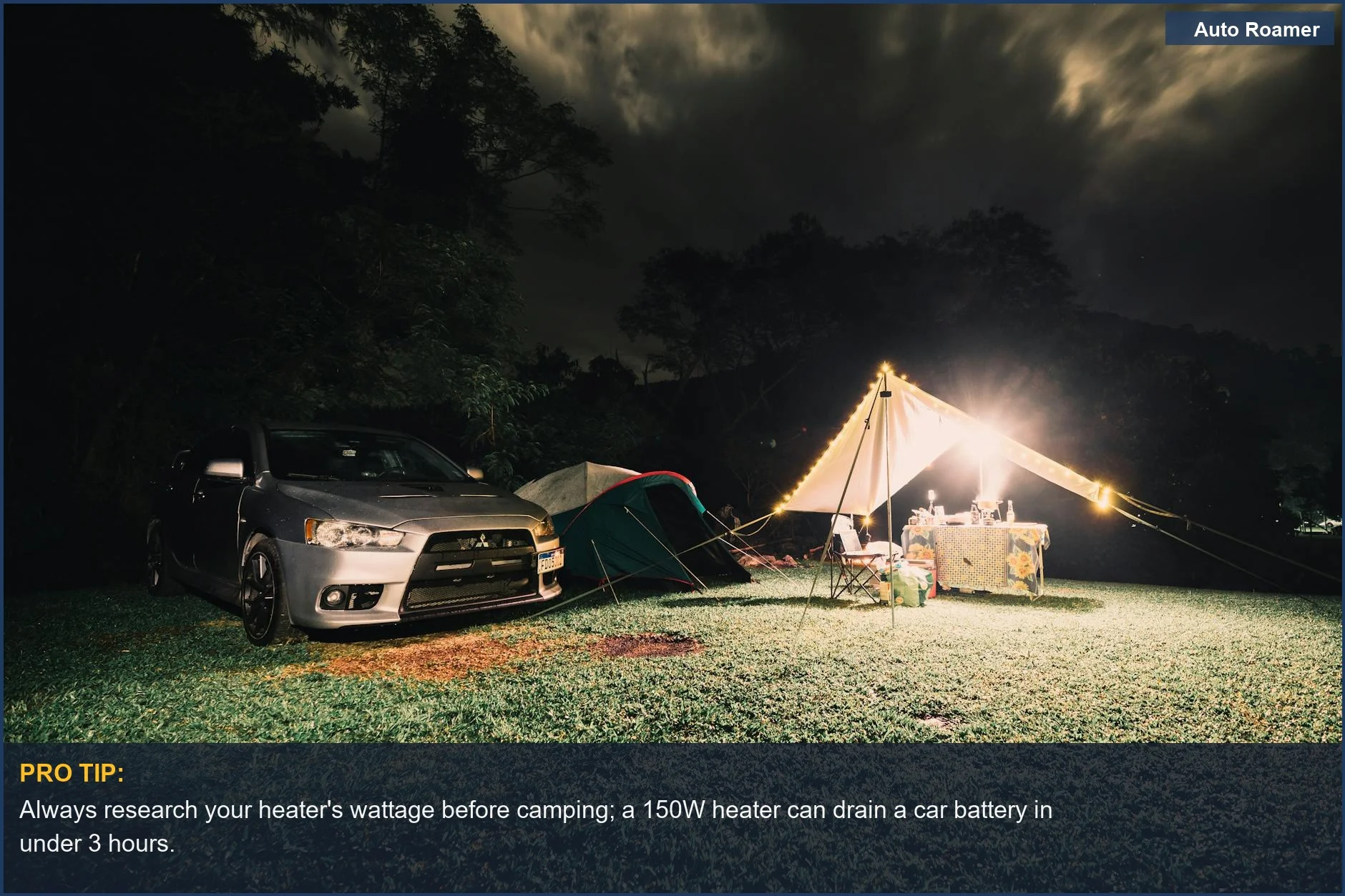
    Always research your heater's wattage before camping; a 150W heater can drain a car battery in under 3 hours.
    A peaceful car camping setup at night underscores the need for portable heater precautions. Understand that even small heaters can drain your car's battery significantly. | Photo by Matheus Bertelli

    Making the Right Choice

  • The $50 Version: Forget those tiny 12V plug-in heaters that barely take the edge off. For actual warmth, you're looking at a good quality electric blanket or a small, efficient ceramic heater designed for indoor use. My understanding is that they use a tip sensor.
  • Power Station is Key: If you're going the battery route, invest in a portable power station with at least 300Wh capacity.
  • This will give you enough juice for an electric blanket for several hours. Trying to run anything significant off your car's alternator is a rookie mistake. You will have to find a place to plug into to recharge.
  • Ventilation is Non-Negotiable: Even with electric heaters, it's good practice to crack a window slightly. This prevents condensation buildup and ensures fresh air. If you're even *thinking* about a propane heater, do your homework on CO detectors.
  • Mr Heater Buddy because it has a couple of good safety features.
  • Read the Fine Print: Always check the wattage and power draw of any heater you consider. If it sounds too good to be true for the price, it probably is. The honest version is that safety features and build quality cost money.
  • To enhance your camping experience, consider the implications of battery life options for your fan heater.
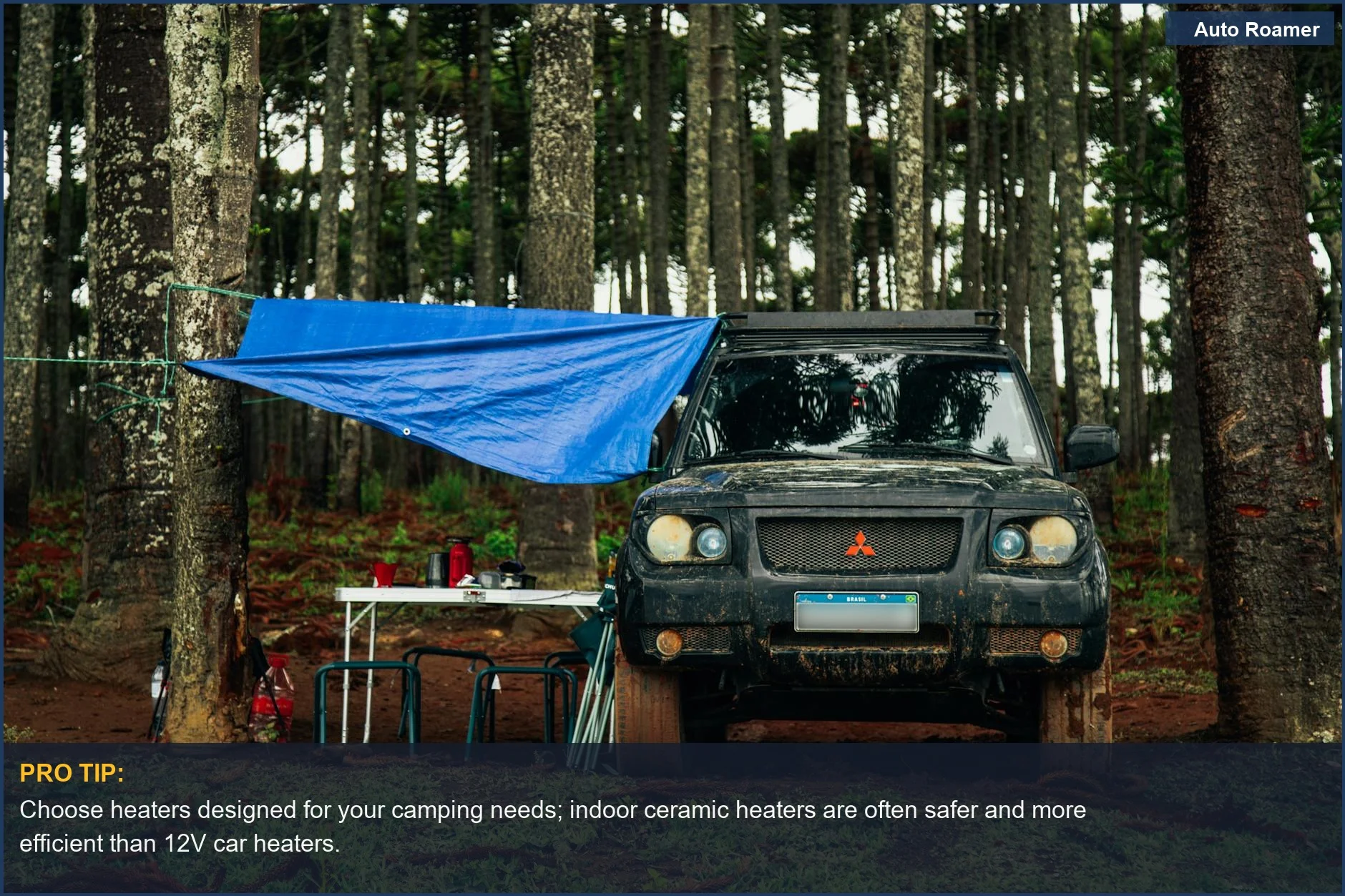
    Choose heaters designed for your camping needs; indoor ceramic heaters are often safer and more efficient than 12V car heaters.
    This rugged vehicle is ready for adventure, but remember battery fan heater risks. Opt for efficient indoor heaters over basic 12V models for better car camping safety. | Photo by Matheus Bertelli

    Frequently Asked Questions

    I saw a $30 "car heater" online that plugs into the cigarette lighter. Is that a scam compared to a $300 battery power station and electric blanket?
    That $30 heater is probably a scam for keeping you truly warm. It's usually designed to just defrost your windshield a little. A 300Wh power station might cost more upfront, but it'll actually keep you comfortable and won't drain your car battery. My first $16 one was useless.
    Do I need a special multimeter to check my car battery voltage before using a heater?
    Nah, you don't need a multimeter to be a weekend warrior. Just know that most car batteries are around 12 volts. If your heater pulls more than 100 watts, you're going to drain it fast. For a 120-watt heater, you'd need a battery that can handle at least 10 amps for a few hours. Just stick to electric blankets and power stations.
    What if I plug in a battery fan heater and my car still won't start?
    That's the classic rookie mistake. If your car won't start, you likely drained your battery completely. The real move is to have a portable jump starter pack, like the kind that costs around $70, or a set of jumper cables and a friendly neighbor. Don't rely on your car's battery alone for heat.
    Can running a cheap battery fan heater in my car permanently damage my car's electrical system?
    While unlikely to cause permanent damage to the car's *system*, running a high-draw heater that overloads your alternator or battery can lead to premature battery failure. Think of it like overworking an engine; it just wears out faster. You will have to find a place to plug into to recharge your power station.
    I heard that battery-powered heaters don't produce carbon monoxide, so they're totally safe in a tent or car.
    That's mostly true for *electric* battery-powered heaters. They don't burn fuel, so no CO. But if you're looking at something that uses propane or kerosene with a battery igniter, then yes, you absolutely need ventilation and a CO detector. Using a heater in a confined space like a tent poses risks such as fire, burns, or carbon monoxide buildup.

    🏅 Looking for Gear Recommendations?

    Check out our tested gear guides for products that work with this setup:

    C

    Casey - The Weekend Warrior

    Weekend car camper and road trip enthusiast. Focuses on practical, budget-friendly solutions for families and first-time campers.

    Sources

    Related Articles