
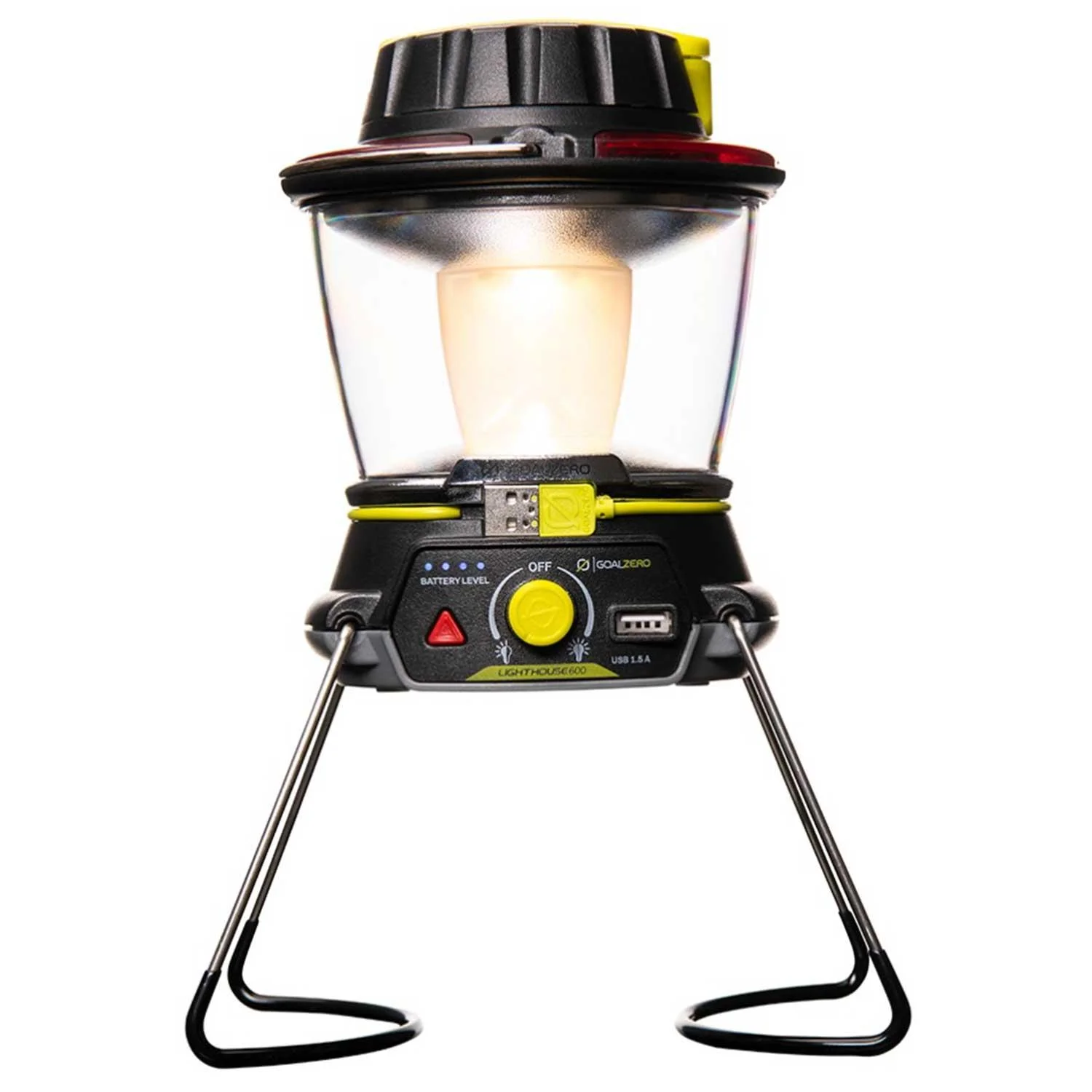
Lumens sell lanterns; runtime is what you actually use
As an Amazon Associate we earn from qualifying purchases.
The number on the box of a rechargeable camping lantern is almost always peak lumens, and based on published specs and what owner reviews consistently report, that is the least useful number for a car camper. Brightness sells; runtime at a usable brightness is what you live with at the campsite. A lantern that hits 1,000 lumens for forty-five minutes and then dies is worse for camp life than a 300-lumen one that glows all weekend.
So this guide reads the spec sheet the way it actually matters: runtime versus brightness first, then the battery and recharge story, then light quality, then how well it survives a trunk. Nail those and a modest lantern outshines a flashy one.
The good news for car campers is that you get to ignore the one constraint that drives backpacking lantern design: weight. Because the car carries the gear, you can buy the bigger battery, the tougher body, and the warmer light without paying a grams penalty. That single freedom changes the whole shopping calculus — the right car-camping lantern is often one a backpacker would reject as too heavy, and that is exactly why it lasts the trip. For the rest of the after-dark kit, our car camping essentials guide covers what pairs with good light.
Read runtime at a real brightness, not the peak number
Reviewers consistently flag the same trick: the headline lumens and the headline runtime are measured at different settings. A lantern advertises 800 lumens and 100 hours, but the 100 hours is on a dim low setting and the 800 lumens lasts a fraction of that.
The honest move is to find the runtime at a mid setting — the brightness you would actually use to cook or play cards, often 150 to 300 lumens. That is the number that tells you whether the lantern covers an evening, a weekend, or just dinner. Owners who buy on peak lumens are the ones who report being in the dark by night two; owners who check mid-setting runtime rarely complain.
It helps to think in trips, not in hours. A typical evening of camp light runs three to four hours; a weekend is two of those, plus a little late-night fumbling. If a lantern only states peak and low runtime, the real mid number usually sits somewhere in between, and you can estimate it — but a spec sheet that publishes runtime at several brightness levels is itself a sign the maker is being honest with you. A second rechargeable lantern as backup is cheaper than betting an entire trip on one battery, and it doubles your light for the nights you actually want it.
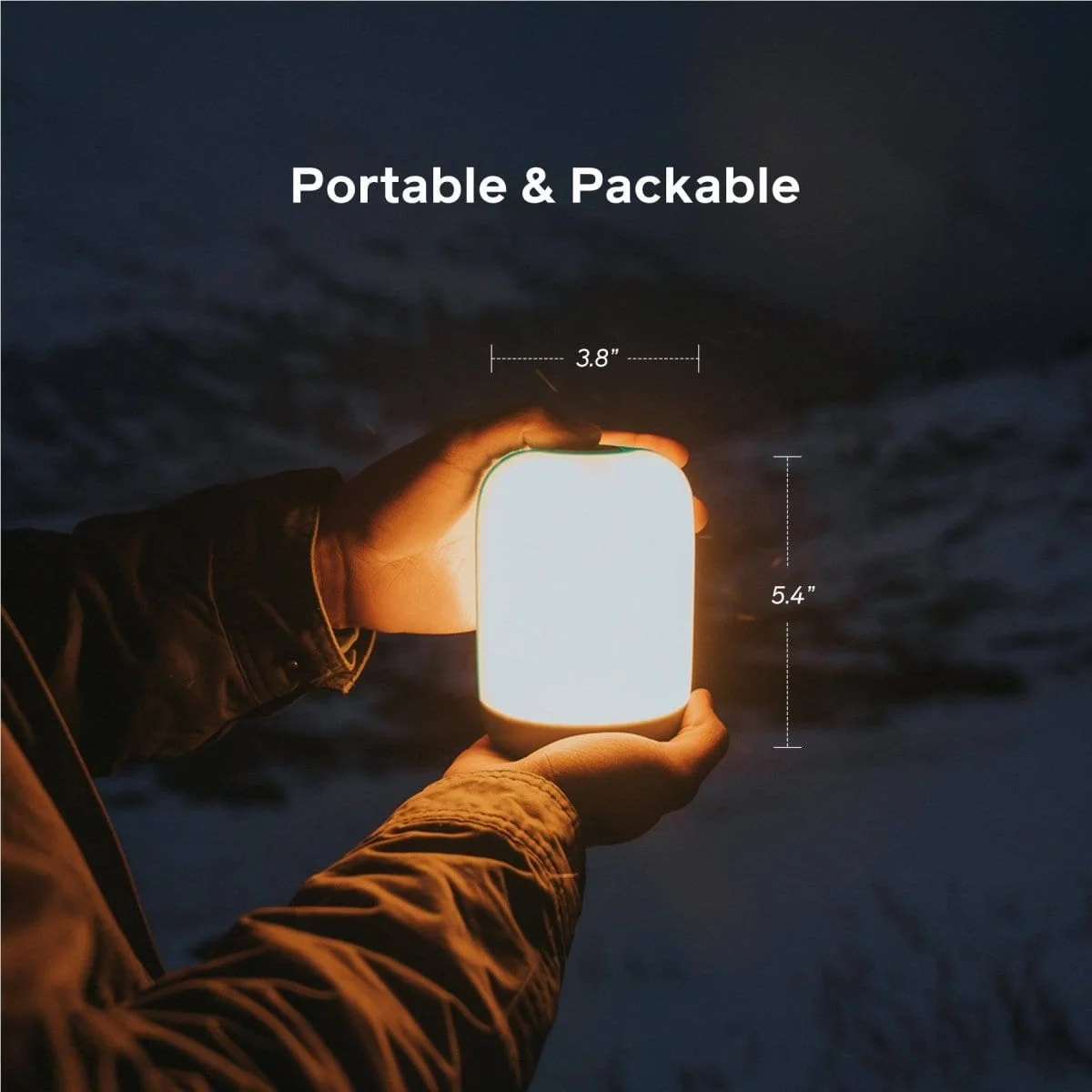
Battery capacity, recharge speed, and the power-bank bonus
The battery is the lantern, really. Capacity in milliamp-hours (mAh) drives runtime, and recharge speed drives how painful it is to top up from a portable power station or the truck.
Look for USB-C recharging — reviewers strongly prefer it over aging micro-USB for speed and for sharing one cable across devices. Many modern lanterns also double as a power bank, reverse-charging a phone off the lantern's cell; owners rate that genuinely useful on longer trips, with the honest caveat that a phone charge meaningfully drains the lantern's own runtime. Treat the power-bank feature as an occasional bonus, not a primary charger.
A model with a fuel-gauge readout beats one with a single mystery LED — knowing you are at 20 percent before dark is worth a lot, and it is the difference between topping up at the truck before sunset and being caught short at midnight. Capacity matters in absolute terms too: a larger cell costs a little more weight and money but buys the multi-night runtime that car campers, who are not counting grams, should happily take. Backpackers obsess over weight; car campers can simply buy the bigger battery and stop worrying about it.
Light quality: warmth, dimming, and a red mode
Two lanterns at the same lumens can feel completely different, and owner reviews zero in on three quality factors.
Color temperature (warm vs cool white) sets the mood; a warm 2700-3000K light is easier on the eyes at camp than a harsh cool-white, while cool white reads brighter for tasks. The best lanterns offer both. Smooth dimming matters more than a few fixed steps — a true dimmer lets you set ambient light without burning runtime. A red or warm night mode preserves dark-adapted vision and keeps bugs away, which campers who value it rate as a must-have rather than a gimmick. A simple dimmable warm-white lantern beats a brighter fixed-output one for most evenings.
Durability: the trunk and the campsite are hard on lights
A car-camping lantern lives in a trunk, gets dropped on rocks, and sits out in dew or a passing shower. The spec that captures this is the IP rating — the two-digit water-and-dust resistance number — and reviewers say it separates a lantern that survives a season from one that dies after a damp night.
Look for at least an IPX4 splash rating for anything that will sit outside, and higher if you camp in real weather. Build quality matters too: a metal or rubber-armored body shrugs off the drop that cracks a bare-plastic shell. Owners also praise a hook or magnetic base — small features, but the difference between a lantern hung over the kitchen and one rolling around the dirt.
The cheapest lanterns skip both the IP rating and the rugged body, and the reviews show it: cracked lenses, dead units after a damp night, charging ports that corrode. A car-camping lantern does not need to be a tactical tank, but it does need to survive being tossed in a bin with the stove and the stakes, rained on once, and dropped on gravel at least annually. Owners who buy for that reality report lanterns that last years; owners who buy the flimsiest bright option tend to be shopping again next season.
Where to spend, and where it's wasted
Owner feedback points the budget at the parts that govern real use.
Spend on: battery capacity and USB-C recharge, honest mid-setting runtime, a fuel gauge, and an IP rating that matches your weather. Those four decide whether the lantern is reliable.
Don't overspend on: peak-lumen bragging numbers you will never run for long, app connectivity and color-changing party modes, or a power-bank feature you treat as a main charger. Reviewers note the best-value lantern is the one with steady mid-brightness runtime and a tough, weather-sealed body — not the brightest spec on the shelf.
The bottom line: buy for runtime and weather, not peak lumens
For most car campers, the honest pick is a USB-C rechargeable lantern with a real fuel gauge, strong runtime at a mid 150-to-300-lumen setting, warm-and-cool output with smooth dimming, and at least an IPX4 body. A weather-sealed USB-C lantern in that mold covers nearly every trip.
Skip the 1,000-lumen hero number unless you genuinely need a floodlight, treat the power-bank trick as a bonus, and ignore color-changing party modes. Buy the lantern that still glows on night three.
Check the mid-setting runtime, confirm USB-C and a fuel gauge, and match the IP rating to your weather. Do that and you are buying light that lasts the trip, not a bright spec that quits at dinner. The lantern owners keep for years is rarely the brightest one they ever bought — it is the dependable one with honest runtime, a warm dimmable glow, and a body that shrugs off a wet, bumpy weekend.