
What Brightness (Lumens) Do You Really Need for Car Camping?
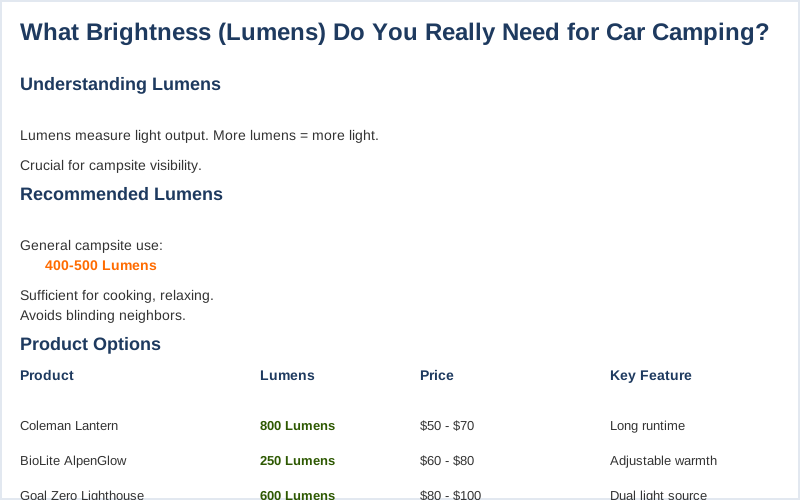
Understanding lumens is less about the physics and more about not fumbling around in the dark like a newborn deer. Lumens are just a measurement of how much light a bulb puts out, plain and simple. Think of it like gallons for a gas tank, but for light.
Understanding lumens is less about the physics and more about not fumbling around in the dark like a newborn deer. Lumens are just a measurement of how much light a bulb puts out, plain and simple. Think of it like gallons for a gas tank, but for light. More gallons means more gas, more lumens means more light. Source. It's not some fancy technical jargon to scare you; it's just a number. Source.
For us car campers, it directly translates to how well you can see your camp table or find that rogue marshmallow bag in the dark. Source. My first trip, I brought a headlamp that claimed 100 lumens and thought that was the bee's knees. Turns out, it was only good for reading the back of my hand. Source.
The Core Answer
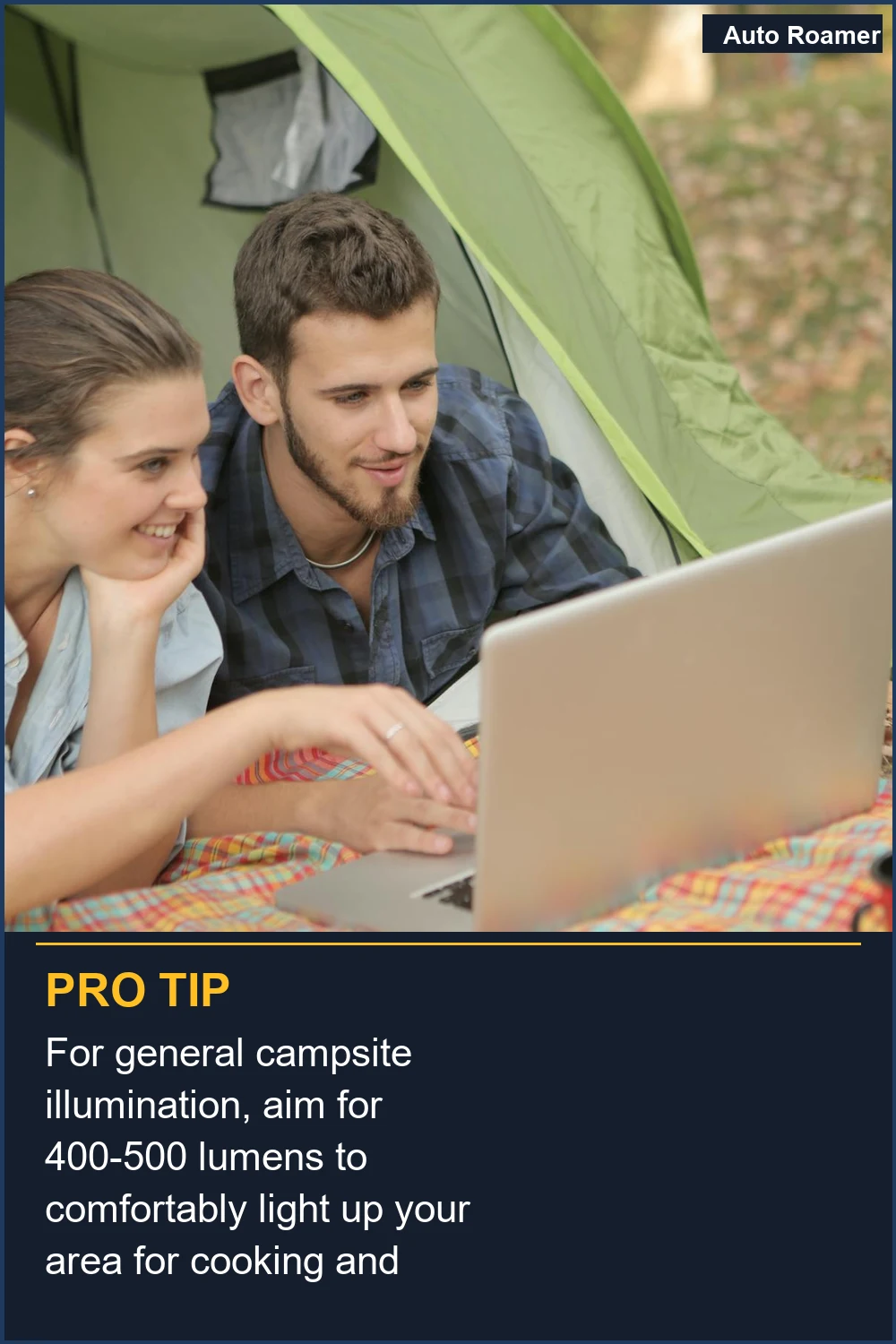
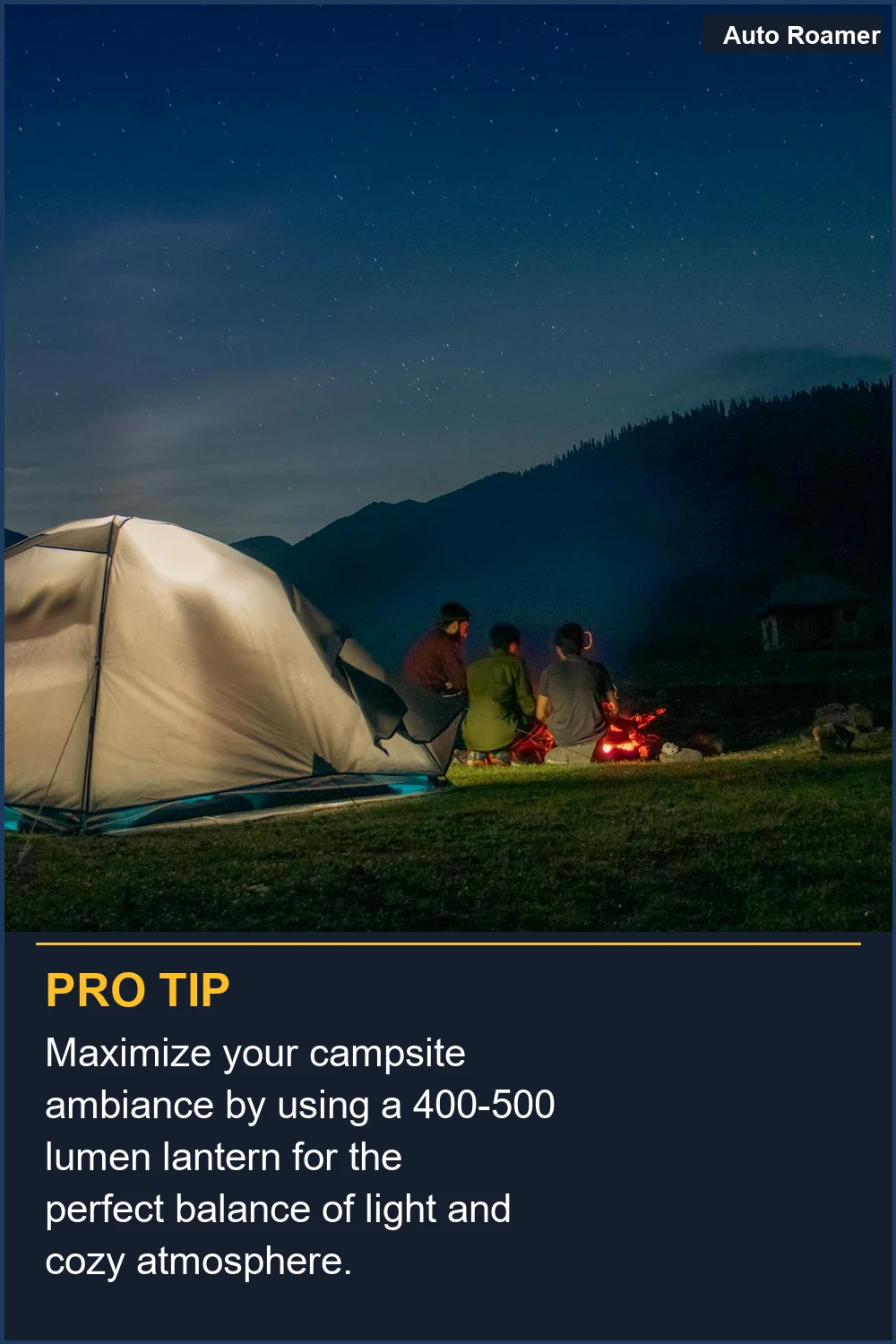
For car camping, where you're not worried about packing light for a 10-mile hike, you want a lantern that can do a few things. For general campsite illumination, like sitting around the fire or cooking dinner, aim for something in the 400-500 lumen range. This is the sweet spot that lights up your immediate area without being blindingly obnoxious to your neighbors. Source. I learned this the hard way at a crowded state park in Ohio; my puny 150-lumen lantern made it impossible to see if I was dropping my hot dogs directly into the dirt. Source. Inside your tent, you need way less light. Think 60 to 100 lumens. Anything more is overkill and will make your eyeballs feel like they're being microwaved. Source. I used to bring a massive lantern into my tent on my first few trips, thinking it would be cozy. Nope, just made it impossible to sleep. The real move is a small, dim light for reading or finding your phone. Source. If you're with a group and have a larger campsite, having two or three 500-lumen lanterns spread out is more effective than one giant spotlight. Brilliant engineering. This provides ambient light rather than a harsh beam. Source. Trying to light up a whole campsite with a single 200-lumen flashlight is like trying to paint a house with a Q-tip. Source. For tasks requiring a focused beam, like setting up camp in the dark or navigating a trail, a headlamp is your best friend. Around 200 lumens is plenty for hiking. Source. Honestly, anything over 400 lumens for a headlamp on a casual camping trip is just showing off and will blind everyone around you. Source. I once saw a guy with a headlamp so bright it looked like he was signaling aliens. It was completely unnecessary and frankly, a little rude. Source.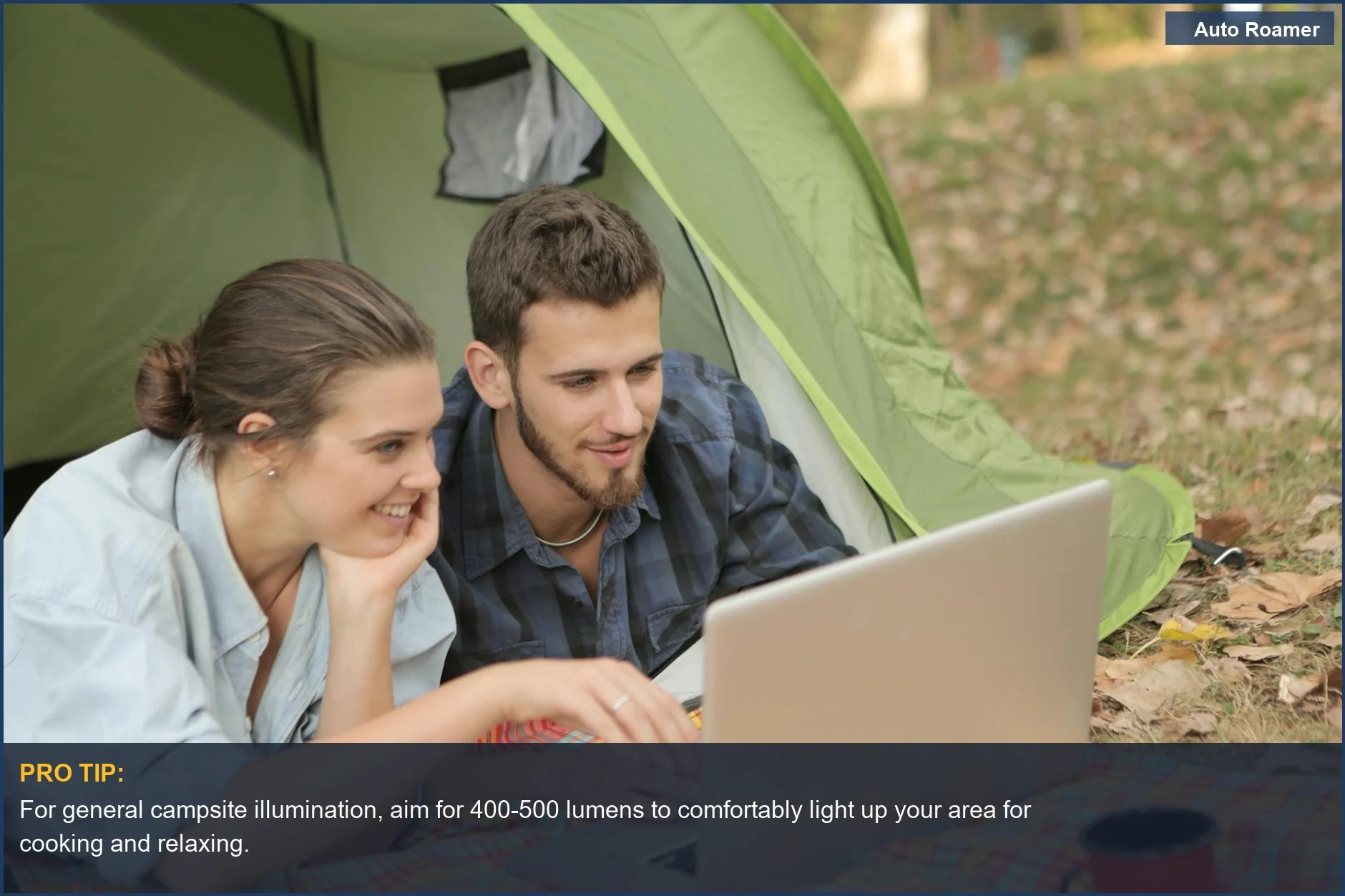
Why This Matters for Your Setup
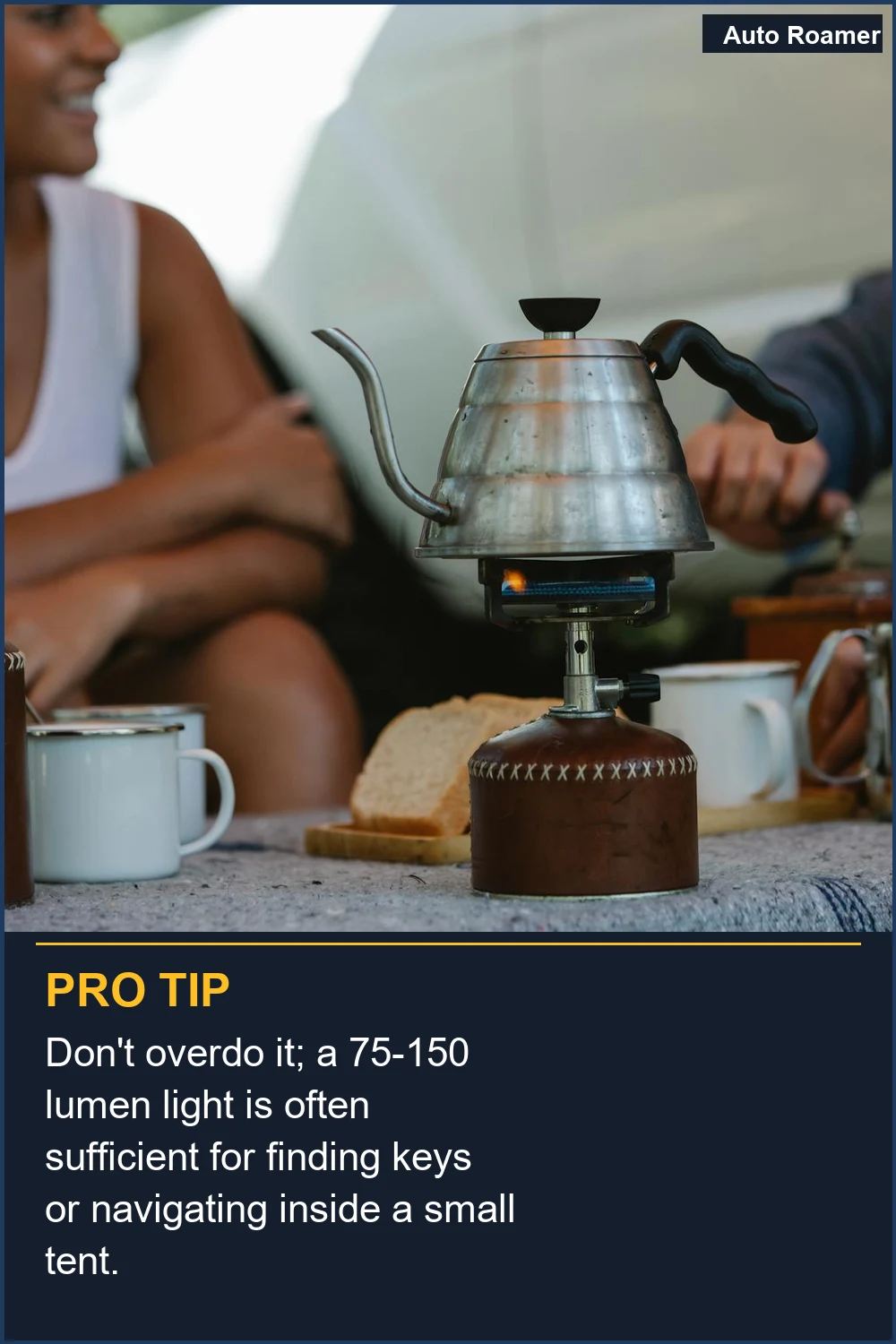
The honest version is that you don't need a searchlight to find your car keys. Source. For a small tent, a light around 75-150 lumens is usually more than enough to read or play cards. Source. Setting up camp or cooking at the picnic table? You'll want something in the 250-500 lumen range. This gives you enough light to chop veggies or find that dropped tent stake. Source. I learned this when I tried to make s'mores with just a headlamp and nearly set my eyebrows on fire. Source. For a larger campsite or when you have a group, a couple of 500-lumen lanterns spread out is a good bet. Source. This is where you can really avoid those harsh shadows and create a nice ambiance. Source. And for hiking or trail walking, 200 lumens is generally sufficient. Source. You don't need to light up the entire forest; just the path in front of you. Source.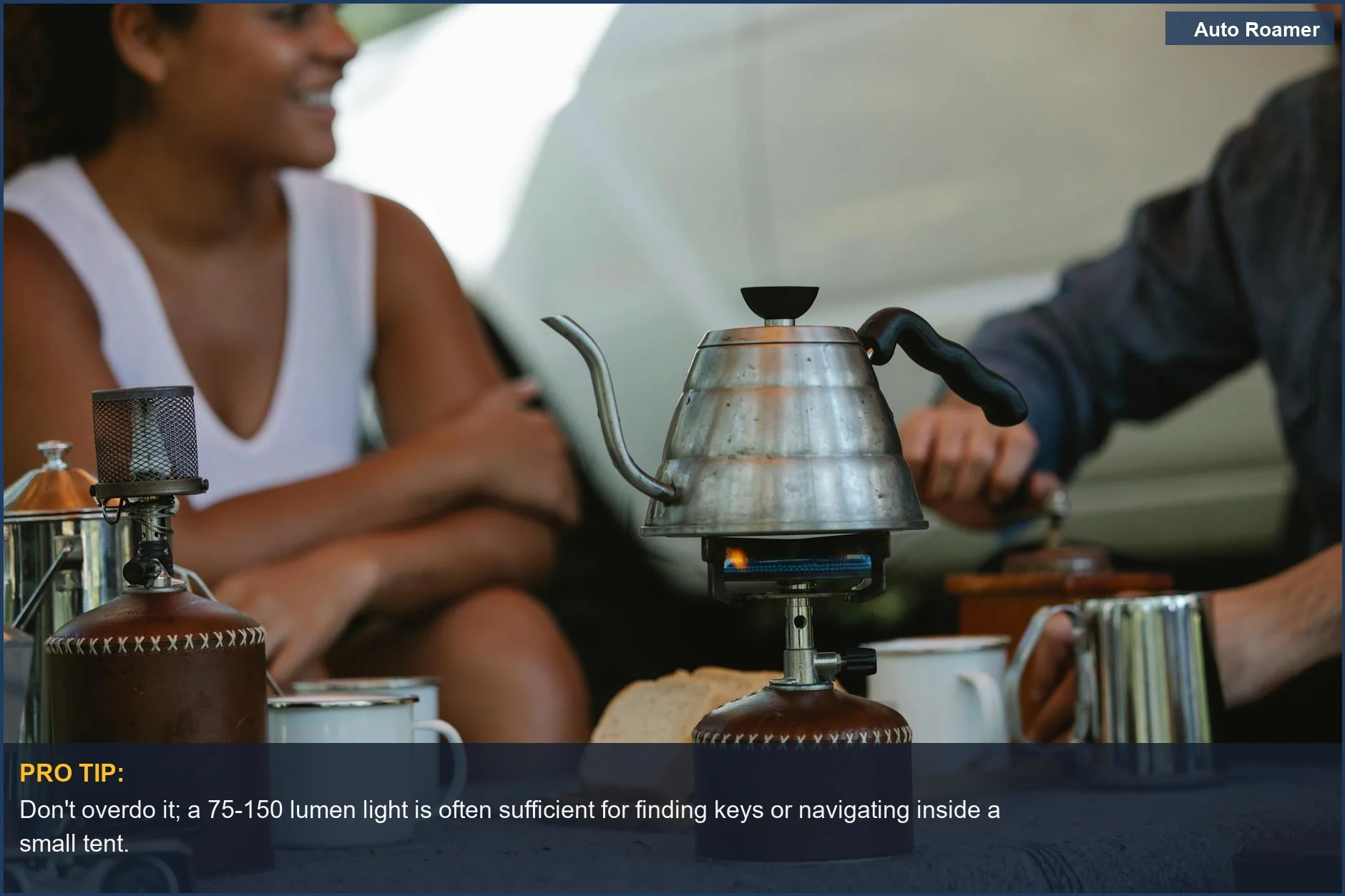
Making the Right Choice
So, what's the real move? For most car camping situations, a lantern in the 400-500 lumen range is your workhorse for general campsite lighting. Source. For inside your tent, dial it back to 60-100 lumens. Source. Don't get caught up in the hype of super-high lumen counts unless you're lighting up a football stadium. Source. My buddy brought a 10,000-lumen flashlight to a campsite once. It was absurd and completely unnecessary. Source. Stick to what actually works for real-world camping, not theoretical brightness. Source. Consider if the light has dimming features. This is clutch for adjusting brightness on the fly. Source. It's the difference between a cozy evening and a rave. Source.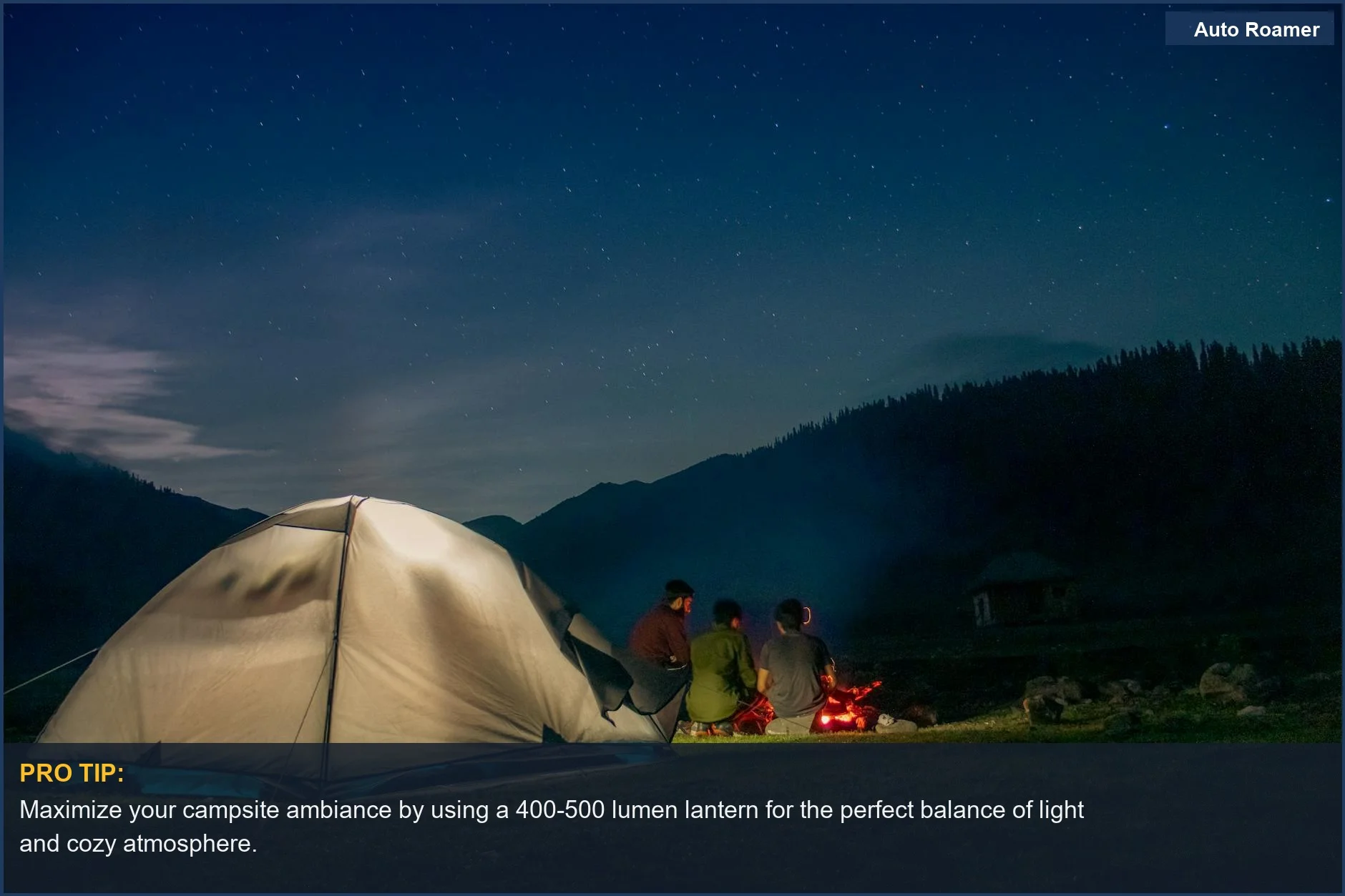
Frequently Asked Questions
I saw a headlamp online that claims 1000 lumens for $15. My decent lantern was $40. Is that cheap headlamp just as good?
Do I really need a special camping lantern, or can I just use my regular household LED bulb in a jar?
What if I buy a 500-lumen lantern and it's still too dim?
Can using a super bright flashlight in my tent damage my eyes permanently?
I heard that more lumens drain the battery faster, so I should just get the dimmest light possible.
🏅 Looking for Gear Recommendations?
Check out our tested gear guides for products that work with this setup:
Sources
- How Many Lumens Do I Need? Lanterns Edition - BioLite
- How Many Lumens Do You Actually Need? - YouTube
- Headlamps for Camping: Brightness That Won't Disturb the Campsite
- How many lumens do you use for camping/hiking?
- 63695
- A brief guide to lumens, battery consumption and key features on an ...
- reddit.com
- What lumen level is enough for camping and night hiking? - Facebook