
How to Choose the Right Brightness (Lumens) for Your Car Camping Headlamp
My first car camping headlamp was a $15 absolute junker from Amazon that promised 500 lumens and delivered the illumination of a dying firefly. I bought it thinking more lumens equaled better camping, a rookie mistake I learned the hard way at the bottom of a canyon in Utah.
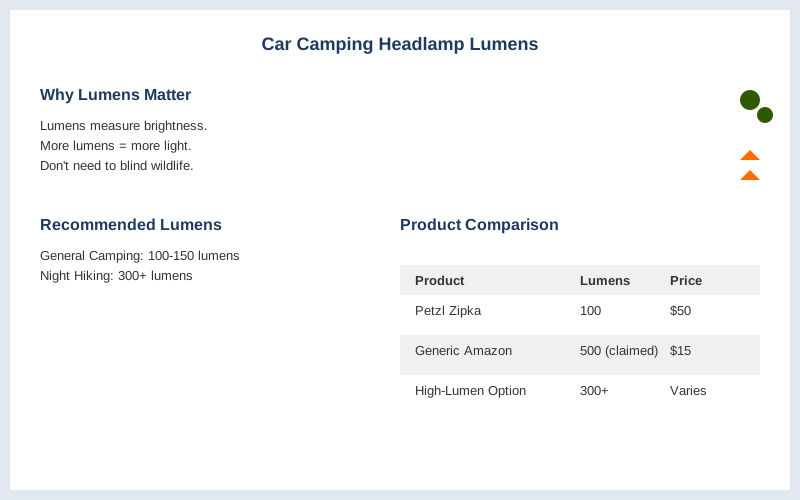
My first car camping headlamp was a $15 absolute junker from Amazon that promised 500 lumens and delivered the illumination of a dying firefly. I bought it thinking more lumens equaled better camping, a rookie mistake I learned the hard way at the bottom of a canyon in Utah. It was pitch black, and I couldn't even see the trail markers my buddy with his $50, 150-lumen Petzl could.
The honest version: you don't need a searchlight to find your keys, but you also don't want to trip over a root and faceplant into a bear's dinner. REI's guide mentions lumens, but doesn't tell you the real move. That's where I come in.
The Core Answer
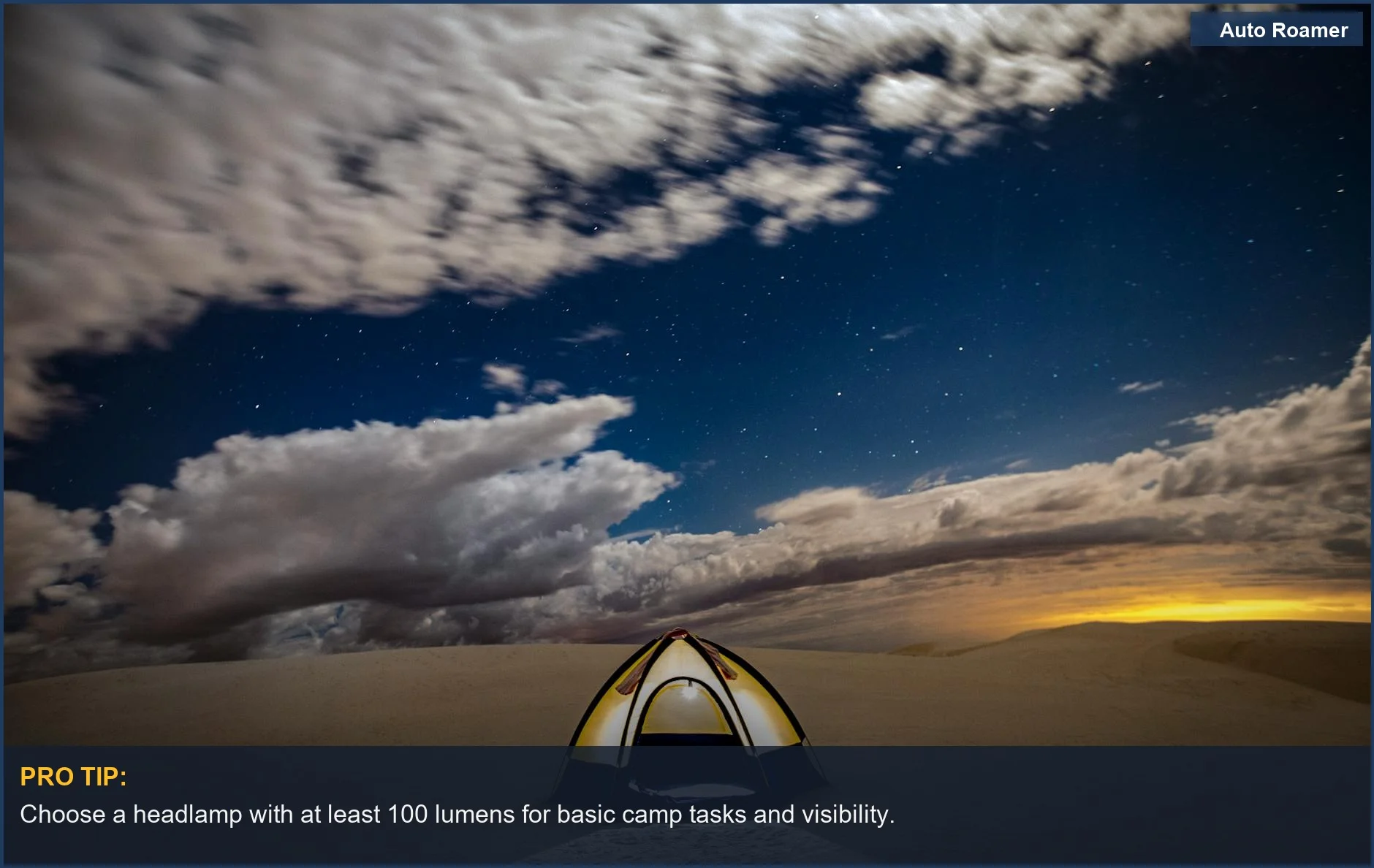
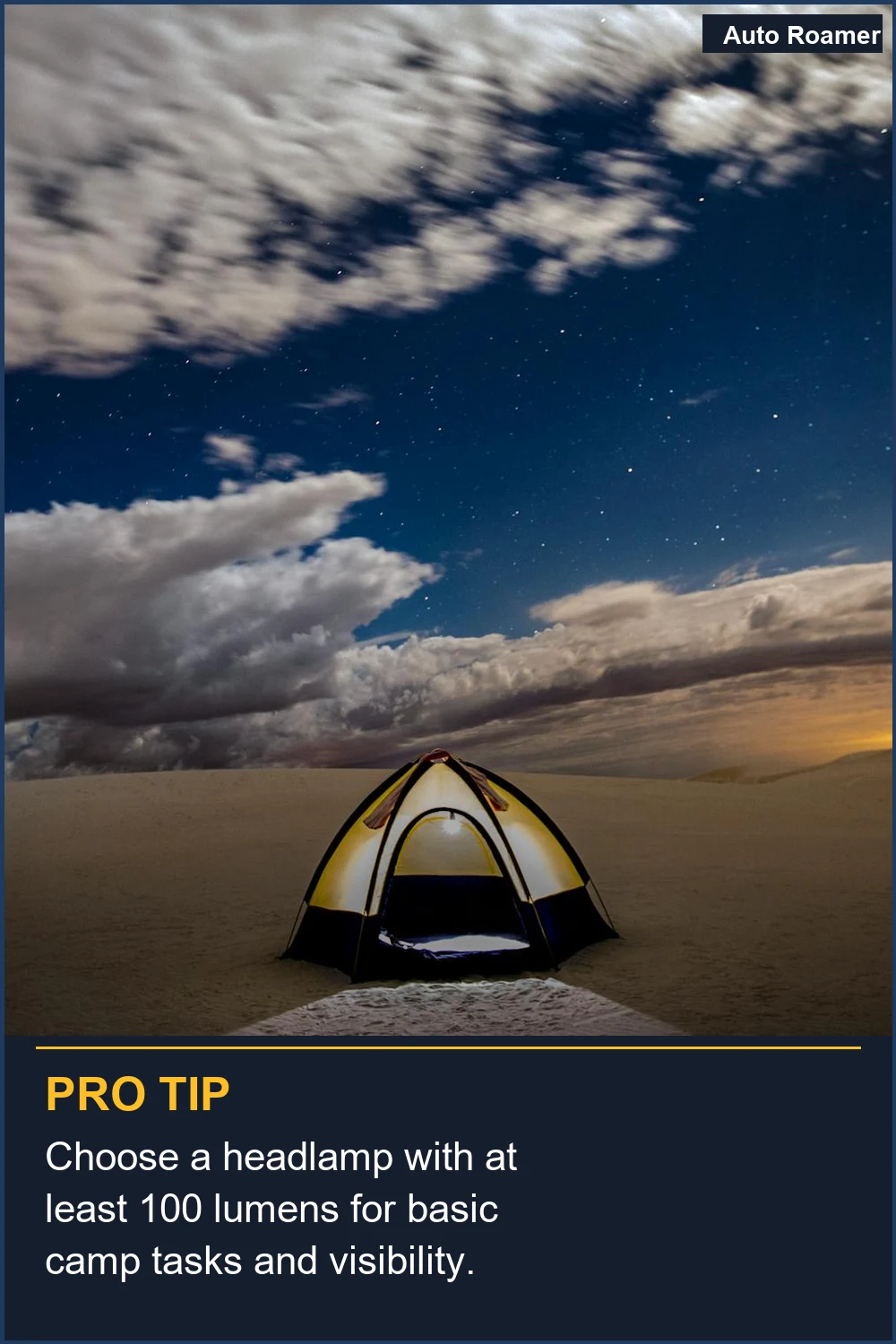
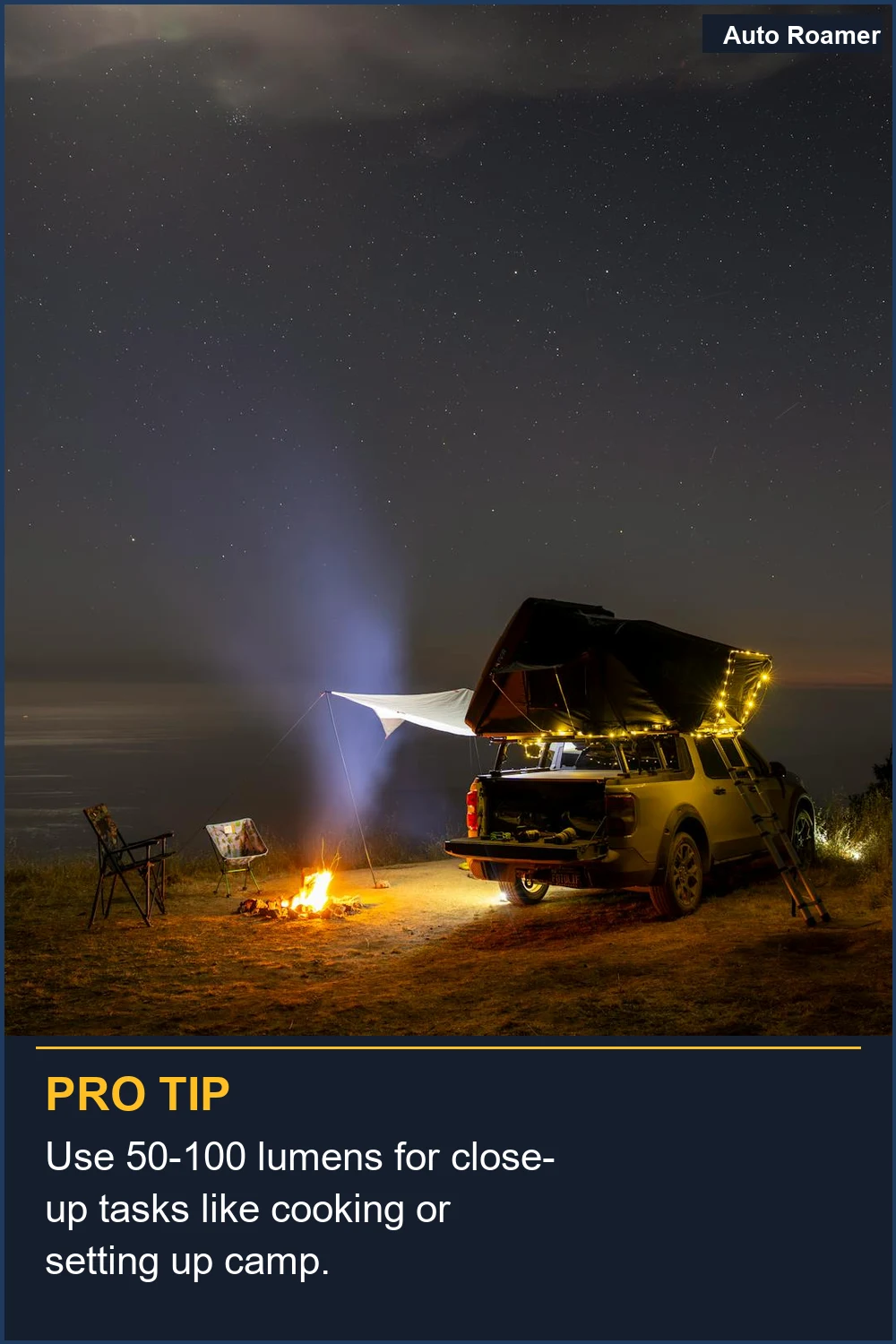
Look, the whole lumen number game can feel like a math test you never studied for. But it's simpler than it sounds. Lumens are just a measure of brightness, like how many tiny light bulbs are crammed into your headlamp. More lumens means more light. Klarus explains it. For general car camping, where you're mostly setting up your tent, cooking, or reading by the fire, you don't need to blind the squirrels. Something in the 100 to 150 lumen range is usually plenty. My $50 Petzl Zipka, which is around 100 lumens, is my go-to for camp chores. Public Lands agrees. If you're doing more serious stuff, like night hiking or navigating a tricky trail after dark, then you'll want to bump that up. I've found that 300 lumens is a solid sweet spot for when I need to see further ahead and identify obstacles quickly. Fenix Lighting calls 300 lumens ideal for everyday use, which is basically car camping.Anything over 400 lumens starts to feel like overkill for most car camping situations. You're just burning through batteries faster and potentially annoying your fellow campers with a beam that could be seen from space. I remember one trip where a guy had a 1000-lumen monster and kept shining it around like he was directing traffic. Brilliant engineering, that.
The real move is to get a headlamp with multiple brightness settings. This way, you can use the low setting (around 10-20 lumens) for reading or just finding your way to the latrine without needing sunglasses. Then, you can crank it up to the higher settings when you actually need to see what you're doing. Backcountry mentions this.
Don't fall for the 1000-lumen hype unless you're planning on spelunking or signaling for help. For your average weekend warrior, 100-300 lumens is the sweet spot. It's the $50 version of not tripping over your own feet in the dark. Reddit users generally agree you don't need a lighthouse on your head.
Why This Matters for Your Setup
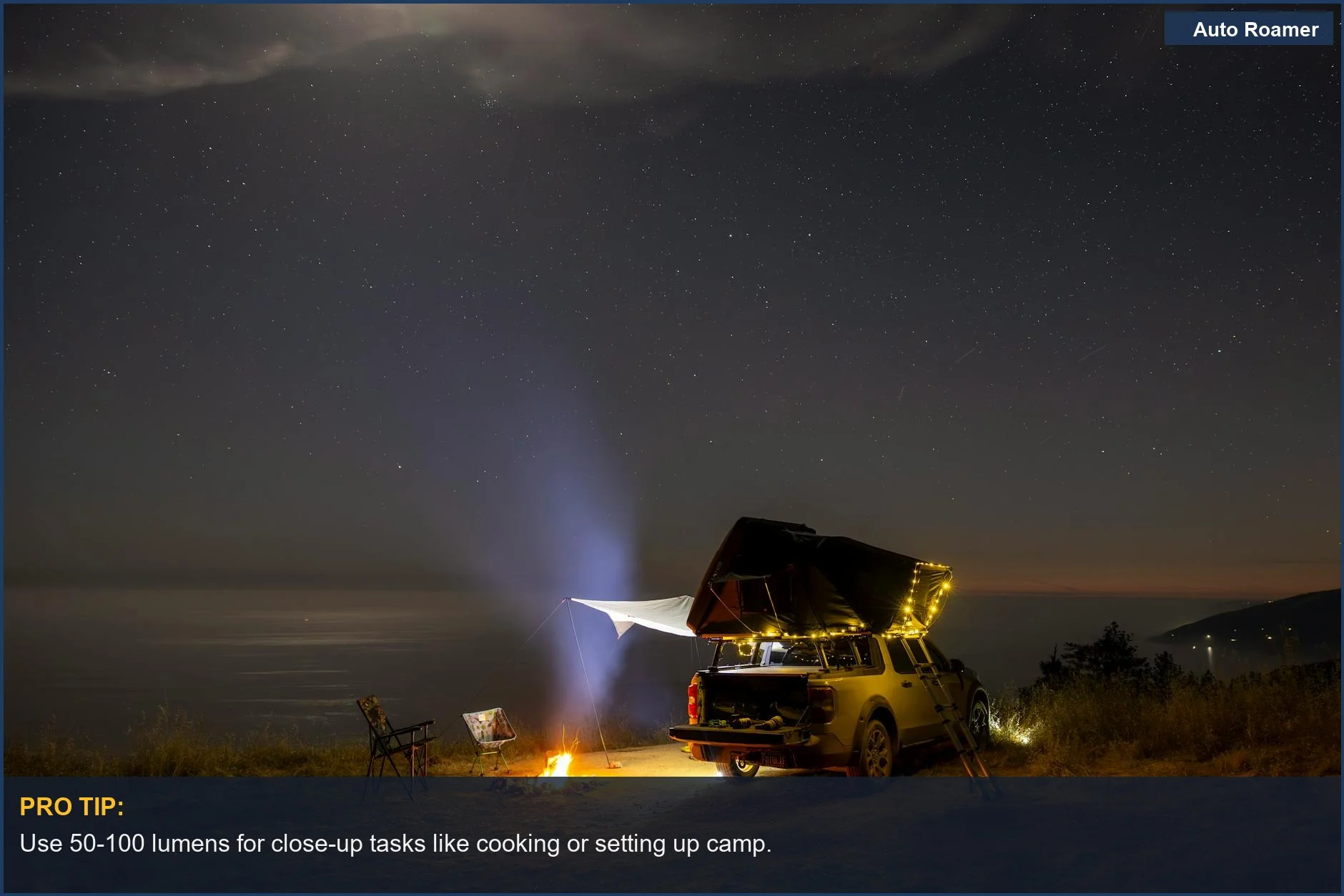
* Navigating the Campsite: You don't want to be the person stumbling around, tripping over tent stakes, and waking everyone up.
* Reading or Relaxing: Sometimes you just want to read a book in your tent or play cards. A headlamp with a dim setting (around 10-20 lumens) is ideal for this. Blasting 300 lumens will just give you a headache and make your eyes water. Fenix Lighting talks about different modes.
* Emergency Situations: If you need to signal for help or navigate rough terrain quickly, you'll want that higher lumen output. But for most car camping, that's not game-time. Stick to the reasonable range unless you're expecting to fend off a pack of wolves.
Making the Right Choice
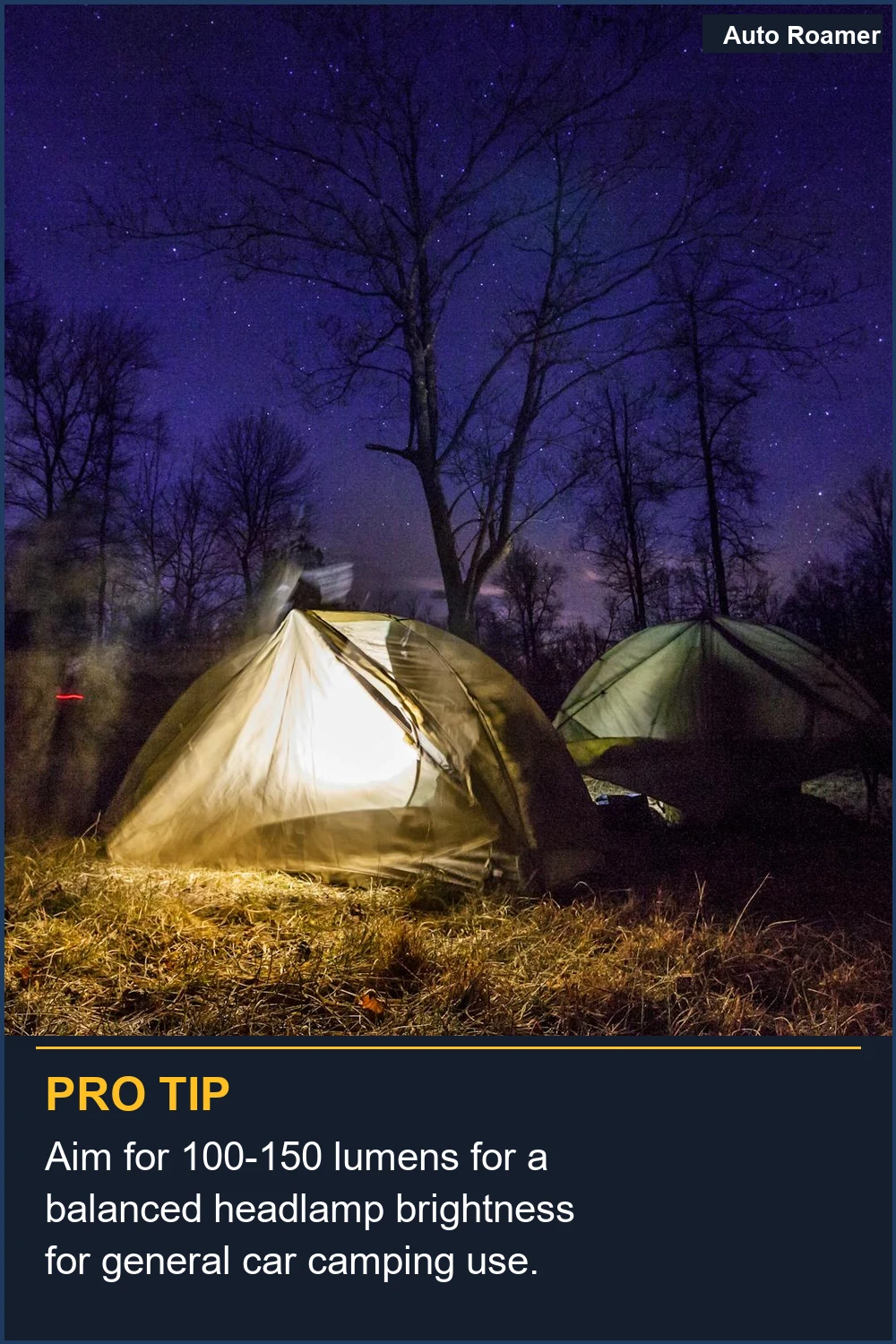
Forget the super-bright, astronomically priced headlamps. For most car camping, you want a headlamp that's bright enough to be useful but not so bright it becomes a nuisance. Think of it as Goldilocks - not too dim, not too bright, just right. My field notes say 100-150 lumens is your sweet spot for camp tasks and general campsite navigation. If you find yourself needing to see further or identify hazards on a trail at night, then 300 lumens is your best bet. Public Lands backs this up. What nobody tells beginners is that multiple brightness modes are gold. You can use the low setting for reading and save the higher settings for when you actually need them. This saves battery and your sanity. Backcountry also highlights this. So, aim for a headlamp in the 100-300 lumen range, preferably with adjustable brightness. It's the $50 version of not looking like a dork fumbling in the dark. Reddit agrees.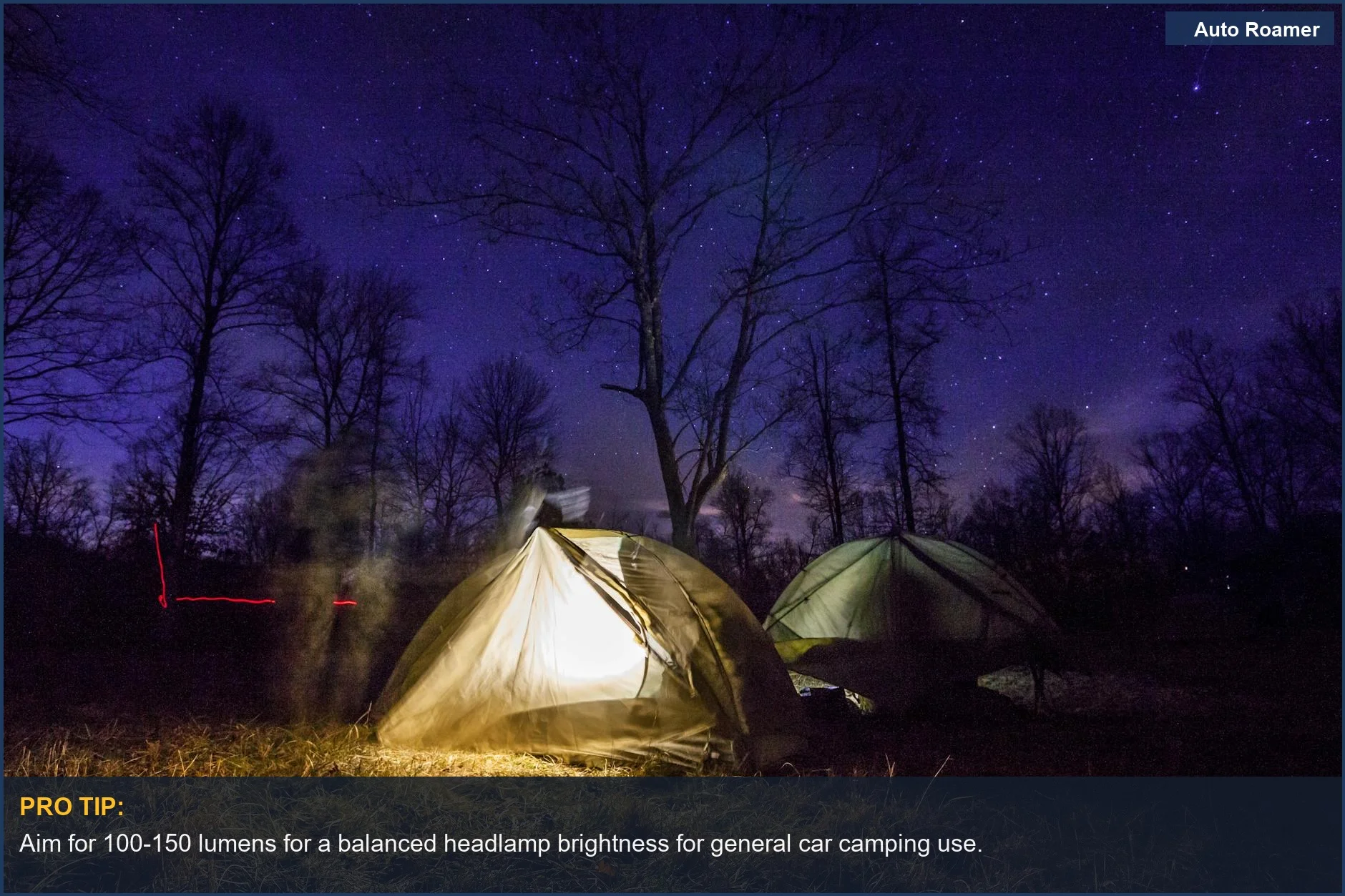
Frequently Asked Questions
If I buy a cheap $15 headlamp that claims 500 lumens, is that really worse than a $50 one that says 100 lumens?
Do I need a special tool to measure lumens, or can I just trust the box?
What if I buy a 300-lumen headlamp and it feels way too bright for my campsite?
Can using a super-bright headlamp for too long permanently damage my night vision?
Is it true that higher lumens always mean shorter battery life, no matter what?
🏅 Looking for Gear Recommendations?
Check out our tested gear guides for products that work with this setup: